This guide is independent and contains no paid placement. If affiliate links are added later, they will be clearly marked and will not change our editorial checks.
Check the tide times and the seasonal beach ban before anything else. Outside the summer ban, the whole beach is the dog’s; in summer, use the sands north and south of the restricted zone. Walk at low tide, keep the dog on a lead on the promenade, and save the Tower for a split visit.
The tide comes first, everything else second
Blackpool’s beach is one of the widest in England, and it is also one of the most tidal. At low tide the sand stretches for hundreds of metres, flat, firm and empty, and a dog can run for as long as its legs will carry it. At high tide the sea comes right up to the sea wall, the beach disappears, and there is nowhere to walk at all. The difference between the two is a matter of hours, and it is the single most important fact about visiting Blackpool with a dog.
Check the tide times before you leave home, and plan the day around them. The best window is the two hours either side of low tide, when the sand is at its widest and firmest. Arrive at low tide and the dog gets a proper beach walk; arrive at high tide and you will be walking the promenade instead, which is a different and much busier experience. The tide comes in fast at Blackpool — faster than it looks from the promenade — so keep an eye on the water while the dog is running, and do not let the dog chase the retreating sea so far out that the return journey becomes a swim.
The tide also shapes the sand. At low tide the beach is firm and easy to run on, with shallow pools and rippled sand that dogs love to investigate. Near the sea wall, the sand is softer and the going is harder, especially for a small dog or an older one. The wet sand near the water’s edge is the best running surface, but it is also where the tide returns first, so walk parallel to the water rather than straight out to sea, and keep the dog in sight at all times.
One more thing about the tide: it brings things in. After a storm, the beach can be littered with driftwood, seaweed and the occasional jellyfish, and a dog that eats whatever it finds will need watching. The seaweed is the main hazard — it smells wonderful to a dog and can cause stomach trouble if eaten in quantity. Keep the dog moving, keep an eye on what it picks up, and carry water so the dog is not tempted to drink from the rock pools.
Beach zones: where dogs can and cannot go
Blackpool’s beach is divided into zones, and the rules for dogs change with the season. During the summer months, usually from May to the end of September, dogs are banned from the main beach — the stretch between North Pier and the southern end of the promenade — because it is the busiest part of the beach and the council keeps it clear for families. Outside the ban period, dogs are welcome on the whole beach, and in winter the sands belong to the dog walkers.
The ban’s boundaries matter, because the beaches north and south of the restricted zone remain open to dogs all year round. The beach north of North Pier, towards Bispham, is a long, wide stretch of sand that is popular with local dog owners and quiet even in summer. The beach south of the restricted zone, towards St Annes, is longer still, and it is the best summer option for a dog that needs a proper run. Check the official guidance before you travel for the current dates and the exact boundaries, because the ban’s dates and the zone markers can change, and the signs on the beach are the final authority.
The zones are marked on the beach itself, with signs at the access points and on the promenade. Read them before you let the dog off the lead, and if you are unsure whether you are inside or outside the restricted area, stay on a lead until you are certain. The ban is enforced, and a fine is a poor souvenir of a beach holiday. The good news is that the dog-friendly zones are generous: even in high summer, a dog can have a long, empty beach within a short walk of the town centre.
The zones also affect the promenade. The beach ban does not apply to the promenade itself, where dogs on leads are welcome all year round, but the promenade is busiest exactly where the beach ban is in force, because the crowds that cannot use the main beach spill onto the walkway. A dog on the promenade in high summer needs a short lead, a steady temperament and a willingness to weave through crowds — or, better, a walk on the quieter northern or southern stretches, where the promenade is calmer and the beach is open.
Low tide: the best hours on the sand
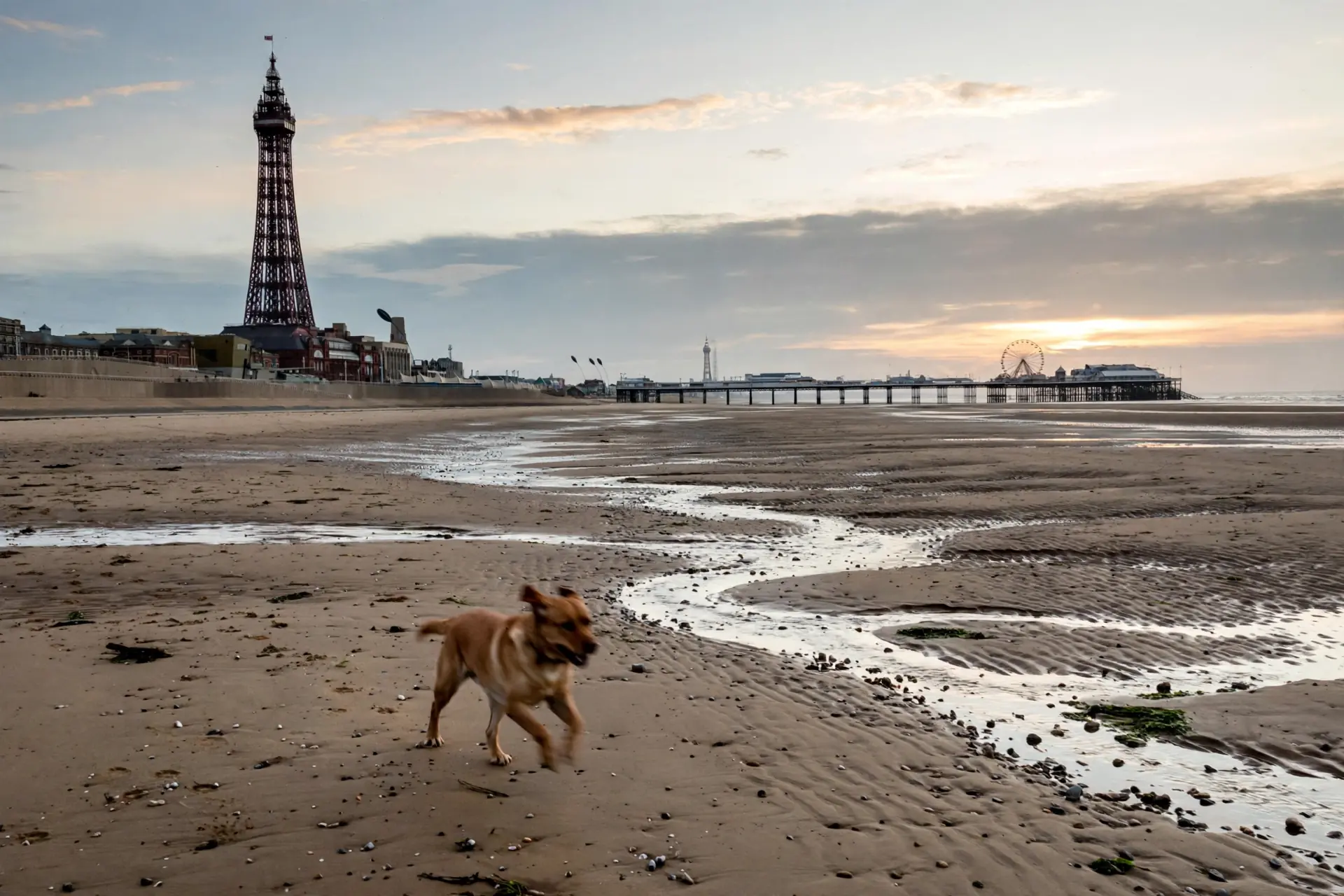
Low tide at Blackpool is the best beach walking in the north-west, and it is worth planning the whole day around it. The sand at low tide is firm, flat and wide, with shallow pools that reflect the sky and a horizon that seems to go on forever. A dog can run here in a way that is impossible on a narrow Cornish cove or a shingle beach: long, straight runs, big arcs, and the kind of joyful, full-speed sprinting that makes a dog’s day.
The best low tides are the spring tides, when the sea retreats furthest and the beach is at its widest. Check the tide tables when you plan the trip — a spring low tide in the morning, with the sun behind you and the Tower on the skyline, is the Blackpool dog walk at its best. The neap tides, when the sea barely retreats, are still worth walking, but the beach is narrower and the sand is softer, so the running is less good and the crowds are closer.
At low tide, the dog’s main risks are the pools and the gullies. The shallow pools are harmless, but the deeper gullies that drain the beach can be surprisingly deep, and a small dog can be caught out by a sudden drop. Keep the dog in sight, and if the dog is a swimmer, let it paddle in the pools rather than in the open sea, where the current is stronger than it looks. The sea at Blackpool is cold even in summer, and a dog that swims in it will need a warm towel and a dry car afterwards.
Low tide is also the quietest time. The early morning low tides, before the day-trippers arrive, belong to the dog walkers, the fishermen and the occasional horse rider, and the beach feels like a private place. The evening low tides are the second-best option, when the light is golden and the Tower is lit, and the dog’s last run of the day is the one it will remember. Plan for the morning if you can — the beach is at its emptiest then, and the dog gets the best of it.
The promenade, the trams and the crowds
Blackpool’s promenade runs for miles along the seafront, from Bispham in the north to St Annes in the south, and it is the town’s main street. Dogs on leads are welcome on it all year round, but it is a busy, noisy place, and a dog needs to be comfortable with crowds, trams, street performers and the general hurly-burly of a seaside resort. The promenade is a walk, not a run — save the running for the beach.
The trams are the promenade’s defining feature, and they need respect. The heritage trams and the modern trams run along the promenade on tracks set into the roadway, and a dog that steps onto the tracks can be startled by a tram approaching silently from behind. Keep the dog on the pavement side, away from the tracks, and be ready to step aside when a tram passes. The tram stops are pinch points where crowds gather, so walk past them briskly rather than lingering.
The crowds are the other feature. In summer and during the illuminations, the promenade is packed, and a dog on a lead becomes a trip hazard for everyone. A reactive dog will find the promenade hard work, and a nervous dog may panic in a crowd with no easy exit. The quieter stretches are the northern and southern ends, where the promenade is calmer and the crowds thin out. Walk those stretches, and save the central promenade — the part by the Tower and the piers — for a brief, brisk pass rather than a long stroll.
The promenade’s attractions — the arcades, the donkeys, the street performers — are mostly not for dogs, and the shops and cafes along the seafront vary in their welcome. Look for the signs on the doors rather than assuming, and use the promenade as a route between the beach and the town rather than as a destination in itself. The best promenade walk is the one that starts at a quiet car park, follows the sea for a mile, and ends at a pub with a garden.
The Tower, the piers and the illuminations
Blackpool Tower is the town’s landmark, a 158-metre iron tower that has dominated the skyline since 1894, and it is the first thing a visitor sees from the beach. Dogs are not admitted to the Tower attractions except assistance dogs, so plan a split visit if you want to go up: one person stays outside with the dog while the other takes the lift to the top, and the visit is short enough that the wait is manageable. The Tower is best admired from the outside anyway — from the beach at low tide, with the dog running in the foreground and the Tower on the skyline, it is one of the great views in English seaside towns.
The three piers — North, Central and South — are the town’s other landmarks, and they are worth a look from the promenade. Dogs are not generally admitted onto the piers, and the piers themselves are not dog destinations, but the views from the beach beside them are excellent, and the piers give the beach its structure: the dog-friendly zones sit between and beyond them, and the piers are useful landmarks for judging where you are on a very wide beach.
The illuminations, which run from late summer into the autumn, transform the promenade into a six-mile display of lights, and they draw huge crowds. For dogs, the illuminations are a mixed blessing: the lights are beautiful, but the crowds, the noise and the traffic are intense, and the promenade becomes very difficult to walk with a dog. The best way to enjoy the illuminations with a dog is from the beach at low tide, where the lights reflect on the wet sand and the crowds are far away, or from a quiet stretch of promenade at the northern end, where the display is calmer.
Fireworks are the illuminations’ other feature, with displays on the promenade through the season. A noise-sensitive dog will hear them from any accommodation near the seafront, so choose a stay a street or two back from the promenade, or out towards the quieter northern end, where the sound is muffled. A familiar bed, a radio left on low, and a long beach walk earlier in the day do more than any calming product.
North and south: the quiet sands
The best dog beaches in Blackpool are not the main beach at all, but the sands to the north and south of it. North of North Pier, the beach runs towards Bispham, wide, flat and quiet even in summer, with the promenade beside it and the cliffs rising behind. It is the beach that local dog owners use, and it is the best summer option for a dog that needs a proper run without the crowds. The car parks at the northern end are close to the beach, and the walk from the car to the sand is short and flat.
South of the restricted zone, the beach runs towards St Annes, longer and quieter still, with sand dunes behind it and the sea in front. The southern beach is the longest stretch of dog-friendly sand in the area, and it is the place to go for a long, empty walk in any season. The dunes are a habitat for wildlife, so keep the dog on a lead in the dunes themselves, but the beach below them is open and free.
Both the northern and southern beaches share the same tide rules as the main beach: low tide is the time to go, the tide comes in fast, and the sand near the water’s edge is the best running surface. Both are also quieter than the main beach, which means a reactive dog can be given space and a nervous dog can watch the world from a safe distance. The northern beach has the advantage of being closer to the town centre; the southern beach has the advantage of being longer and emptier.
The villages at either end — Bispham to the north, St Annes to the south — are worth a visit in their own right. Bispham is a quiet, village-like suburb with a green and a handful of pubs; St Annes is a calmer, more genteel resort with a pier, gardens and a long, sandy beach of its own. Both make good bases for a Blackpool stay, and both are quieter than the town centre for a dog that needs a calm evening.
Weather: wind, rain and the Irish Sea
Blackpool’s weather comes off the Irish Sea, and it is changeable, windy and often wet. The wind is the defining feature: it blows across the beach, it carries the sand, and it can turn a pleasant walk into a battle against the elements in minutes. A dog that is comfortable in wind will enjoy Blackpool in any weather; a dog that is not will need a sheltered walk, and the promenade’s windbreaks and the town’s streets offer the best protection.
Rain is the other constant. The beach in the rain is a different place from the beach in the sun: the sand is firmer, the crowds are gone, and the dog has the whole place to itself. A wet beach walk is a good walk, provided the dog is dried afterwards — bring a towel and a drying coat, and have a warm, dry car to return to. The rain also brings the beach’s best smells, and a dog that has walked Blackpool in the rain will have had a better sniffing walk than one that has walked it in the sun.
Winter is the season that rewards the dog owner most. The summer beach ban is lifted, the crowds are gone, and the wide sands are empty. The weather is the trade-off, with wind, rain and cold sea air, but a dog in a coat, with a warm car waiting, can have the best beach walk of the year in January. The winter light is also the best light: low, golden and long, with the Tower on the skyline and the sea a deep grey-green.
Summer is the season that needs the most care. The sun on the beach is strong, the sand can be hot underfoot, and the crowds are at their thickest. Walk early or late, carry water for the dog, and watch for the signs of heat — panting, slowing down, seeking shade. The beach has almost no shade, so a dog that overheats has nowhere to go except back to the car. The sea is the obvious cooling-off, but the current is strong and the water is cold, so let the dog paddle rather than swim, and only on a long line.
Eating and staying: away from the seafront
The best meals in Blackpool with a dog are the ones eaten away from the seafront. The pubs and cafes on the promenade are built for the crowds — loud, busy, and full of people who have come for the lights and the arcades — while the pubs on the streets behind the promenade, and in Bispham and St Annes at either end, are quieter, calmer and far more forgiving of a dog under the table. Their gardens are smaller, their rooms are less crowded, and a dog that lies quietly on its mat is a normal sight rather than an obstacle.
Lunch is the meal that works. The seafront cafes serve through the day, but their outdoor seating is exposed to the wind off the Irish Sea, and a dog on a windy terrace is a cold dog. The pubs a street back have sheltered gardens and flagstone floors, and a table there at noon — before the evening crowd — is the best seat in Blackpool. Order at the bar, settle the dog, and let the beach walk’s sand settle before you drive home.
Sleeping over needs the same thinking: distance from the promenade matters more than distance from the beach. A guesthouse on the seafront hears the crowds, the music and the fireworks late into the night; a guesthouse a street or two back, or up in Bispham or down in St Annes, is quieter and easier for a dog to sleep in. Before you book, ask where the dog sleeps, whether there is an enclosed space for the last walk of the night, and whether the dog can be left alone in the room — and get the answers in writing, because a cheerful assurance on the phone is hard to rely on when you arrive tired in the evening.
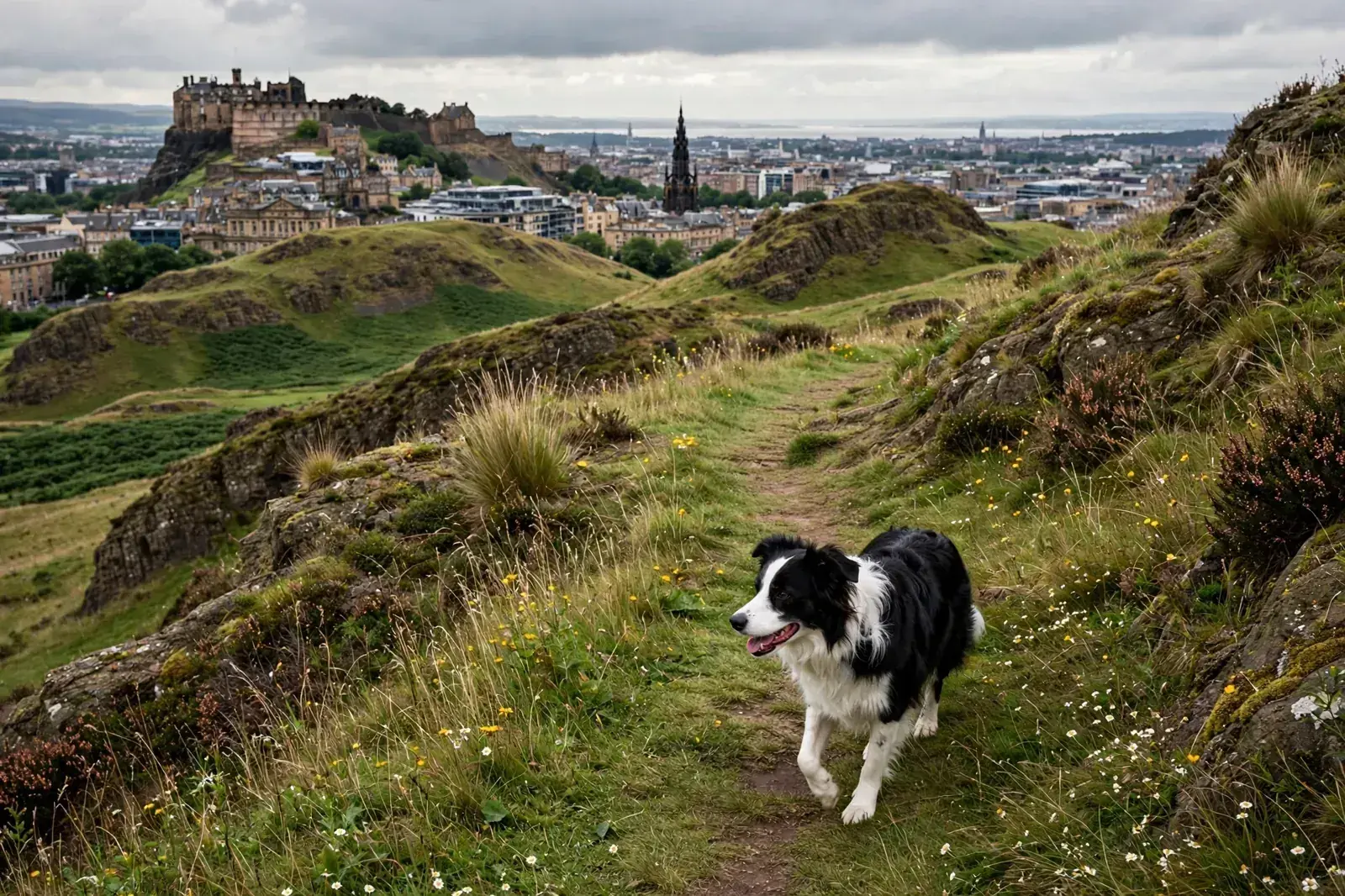
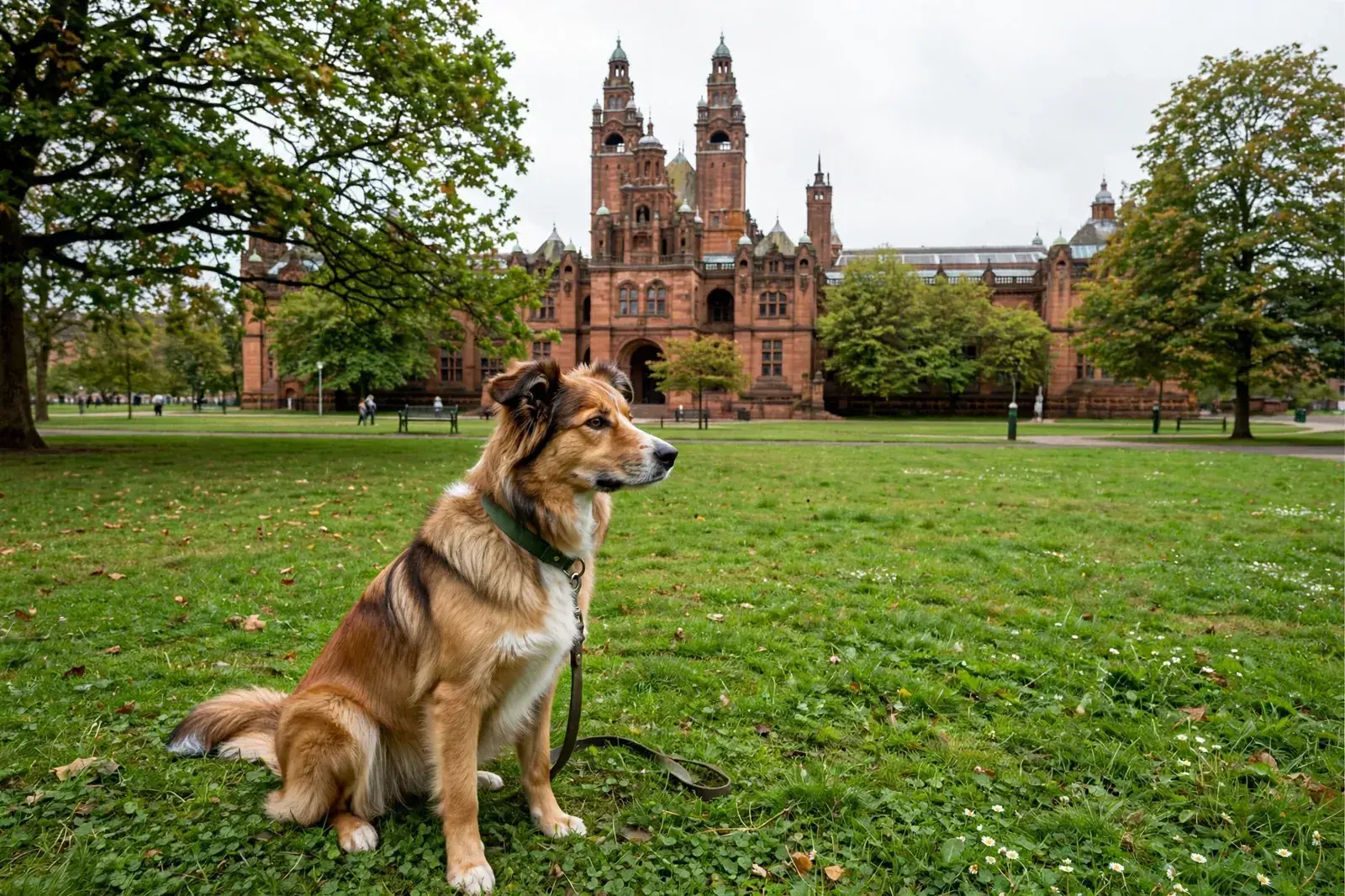
Self-catering flats near the northern and southern beaches suit a longer stay: a kitchen, a door of your own, and no lobby to cross with a sandy dog. Blackpool also makes a base for the wider coast, and the north is full of options: Edinburgh is a longer trip north for a city break, Glasgow is the other Scottish city worth a visit from a Lancashire base, and our guide to the dog-friendly beaches of the UK covers the coastal rules that apply beyond Blackpool’s sands.
Getting there: the M55, the trams and the station
Driving to Blackpool means the M55, and the motorway delivers you almost to the seafront — which is both the convenience and the problem. On a summer weekend or during the illuminations, the roads off the motorway fill with visitors, and the seafront itself moves slowly. Allow extra time, follow the signs to the car parks at the northern or southern ends of the promenade rather than aiming for the centre, and walk in along the sand: it is pleasanter than circling for a space with a dog waiting in the car.
The train is the calmer way in. Blackpool North station is on the line from Preston, with connections from across the north-west, and the walk from the station to the beach takes about ten minutes on flat ground. The services can be busy on summer weekends, so travel off-peak if you can, and remember that a car-free visit is genuinely possible — the beach, the promenade and the trams are all within walking distance of the station.
The trams deserve a note of their own. They run the length of the promenade, from Bispham to St Annes, and they are the easiest way to move along the seafront with a tired dog — but dogs travel on them at the operator’s discretion, and the rules can change, so check the official guidance before you travel rather than assuming. On foot, the promenade is the route: keep the dog on the pavement side, away from the tracks, and step aside when a tram passes.
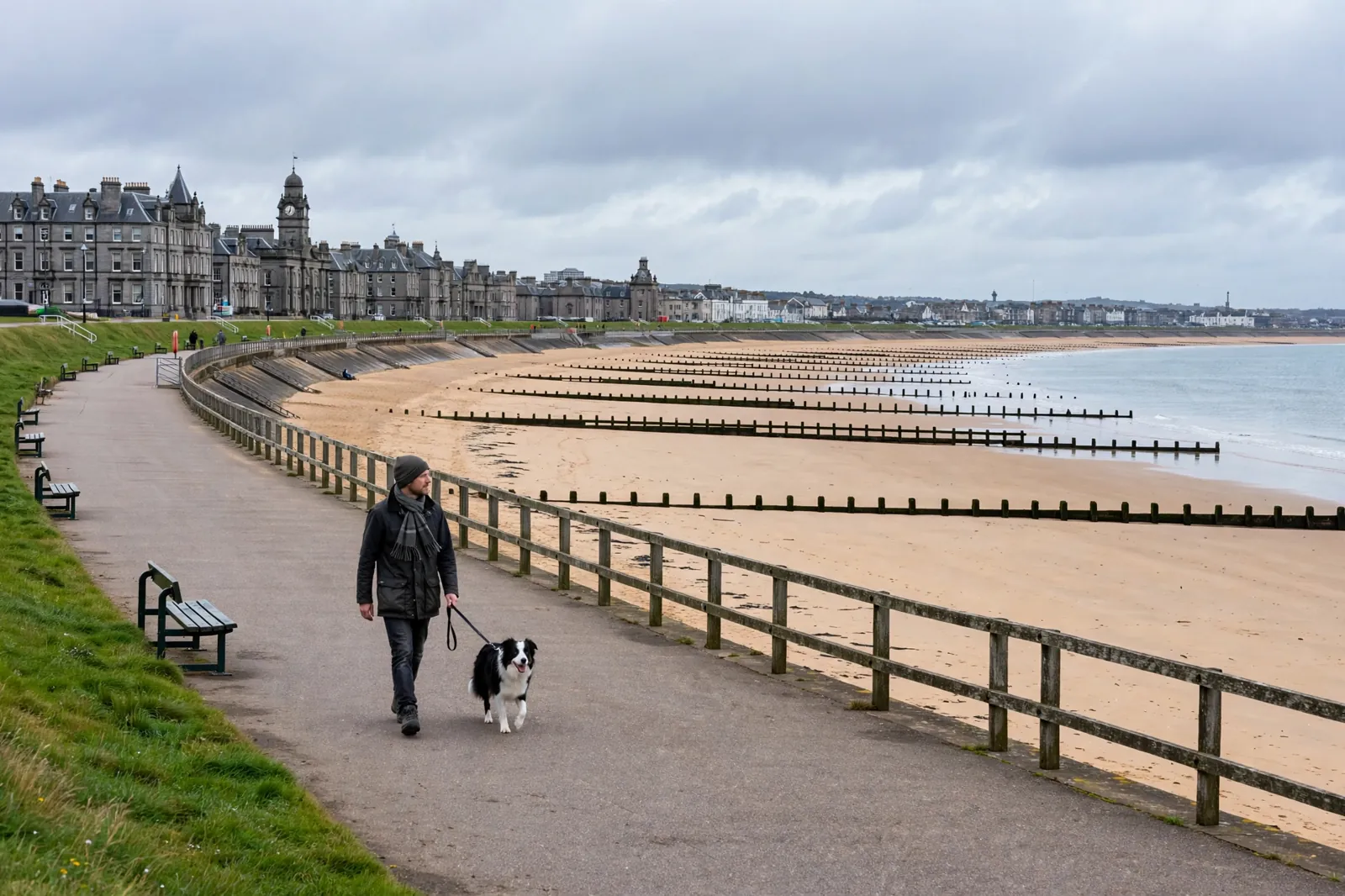
Parking needs the usual care. The seafront car parks have little shade, so in summer get the dog out straight away and walk to the beach, where the sea breeze keeps the air cooler — a parked car heats dangerously fast, and even a few minutes is too long. In winter the same car parks are exposed to the wind off the sea, so have a warm coat ready. Our guide to Aberdeen covers another great northern beach city if you are planning a longer coastal trip.
Practical questions
Before you go
Are dogs allowed on Blackpool beach?
Dogs are allowed on most of Blackpool beach, but there is a seasonal dog ban on the main beach between North Pier and the southern end of the promenade during the summer months, usually from May to the end of September. Outside the ban period, and on the beaches north and south of the restricted zone, dogs are welcome, but check the official guidance before you travel for the current dates and boundaries.
When is the best time to walk a dog on Blackpool beach?
Low tide is the best time, when the sand is firm and wide and the dog has room to run. Check the tide times before you go, because the tide comes in fast at Blackpool and the beach narrows quickly. Early morning at low tide is the quietest and the most rewarding time, especially outside the summer months.
Can dogs walk the Blackpool promenade?
Yes, dogs on leads are a normal sight on the promenade, which runs for miles along the seafront, but it is busy in summer and during the illuminations, with trams, crowds and street performers. Keep the lead short, watch for the tram tracks, and choose the quieter northern and southern stretches if your dog is reactive.
Can dogs go up Blackpool Tower?
Dogs are not admitted to the Tower attractions except assistance dogs, so plan a split visit if you want to go up. The Tower is a landmark to admire from the promenade and the beach, and one person can stay outside with the dog while the other goes up, which works well because the visit is short.
Where do I park in Blackpool with a dog?
Blackpool has large car parks along the seafront and in the town centre, and the ones at the northern and southern ends of the promenade are closest to the dog-friendly beaches. Arrive early on summer weekends and during the illuminations, and walk the dog from the car park rather than driving between stops, as the seafront roads are slow.
Is Blackpool good for dogs in winter?
Winter is one of the best times for dogs in Blackpool: the summer beach ban is lifted, the crowds are gone, and the wide sands are empty. The weather is the trade-off, with wind, rain and cold sea air, so bring a warm coat for the dog, a towel for the car, and check the official guidance before you travel if there are storm warnings.