This guide is independent and contains no paid placement. If affiliate links are added later, they will be clearly marked and will not change our editorial checks.
Base yourself in the West End for Kelvingrove and the Kelvin Walkway, use the Clyde path for long, flat lead walks, save Pollok Country Park for a half-day, and treat museums and glasshouses as exterior stops unless a venue confirms pet dogs are welcome inside. Glasgow then works both as a city break and as a gateway to Loch Lomond.
How Glasgow splits into dog days
Most visitors make the same mistake in Glasgow: they pin ten places on a map, assume the distances between them are short, and end up dragging a tired dog across busy roads between attractions that were never going to admit a pet in the first place. A better approach is geographic. Glasgow divides neatly into four dog-shaped pieces, and each piece makes a satisfying half-day without a car. The West End gives you Kelvingrove Park, the River Kelvin and cafe streets. The river corridor gives you long, level walking along the Clyde in both directions. The east gives you Glasgow Green, the largest and oldest green space in the centre. The south side gives you Pollok Country Park, which feels like a country estate and deserves the most time of all.
Plan one piece per half-day, with a proper rest in between, and the trip changes character. Your dog gets a long morning walk, a quiet middle of the day back at your accommodation, and a shorter evening stroll somewhere familiar. That rhythm matters more in a city than in the countryside, because pavements, traffic noise, scooters, buskers and crowded crossings all add up. A dog that copes happily with a two-hour rural walk may be mentally finished after forty minutes on a busy shopping street, even if its legs are not. Build the plan around mental load, not just mileage.
Two rules simplify every decision that follows. First, assume pet dogs stay outside museums, galleries and glasshouses unless the venue has told you otherwise in writing. Glasgow has outstanding cultural buildings, and several of them sit inside excellent parks, so the exterior visit is still worthwhile: architecture, grounds, riverbanks and a good photograph, followed by a park walk. Second, check the latest official guidance before you travel for anything rule-based in this guide, from venue entry to transport conditions. Policies change, event days change them again, and a football match, concert or festival can transform a normally calm park into a fenced, ticketed space overnight.
If you are travelling with another adult, the tag-team method unlocks the interiors without stress. One person explores inside while the other walks the grounds with the dog, then you swap. Agree a time and a meeting point before you separate, keep phones charged, and never leave a dog tied up outside a venue or shop. If you are travelling solo, be selective: pick one interior that really matters to you, arrange proper care or a dog-friendly alternative for that slot, and let the rest of the trip be an outdoor trip. Glasgow rewards that honesty, because so much of its best dog time is outdoors anyway.
Kelvingrove Park and the museum exterior: plan the park, not just the building
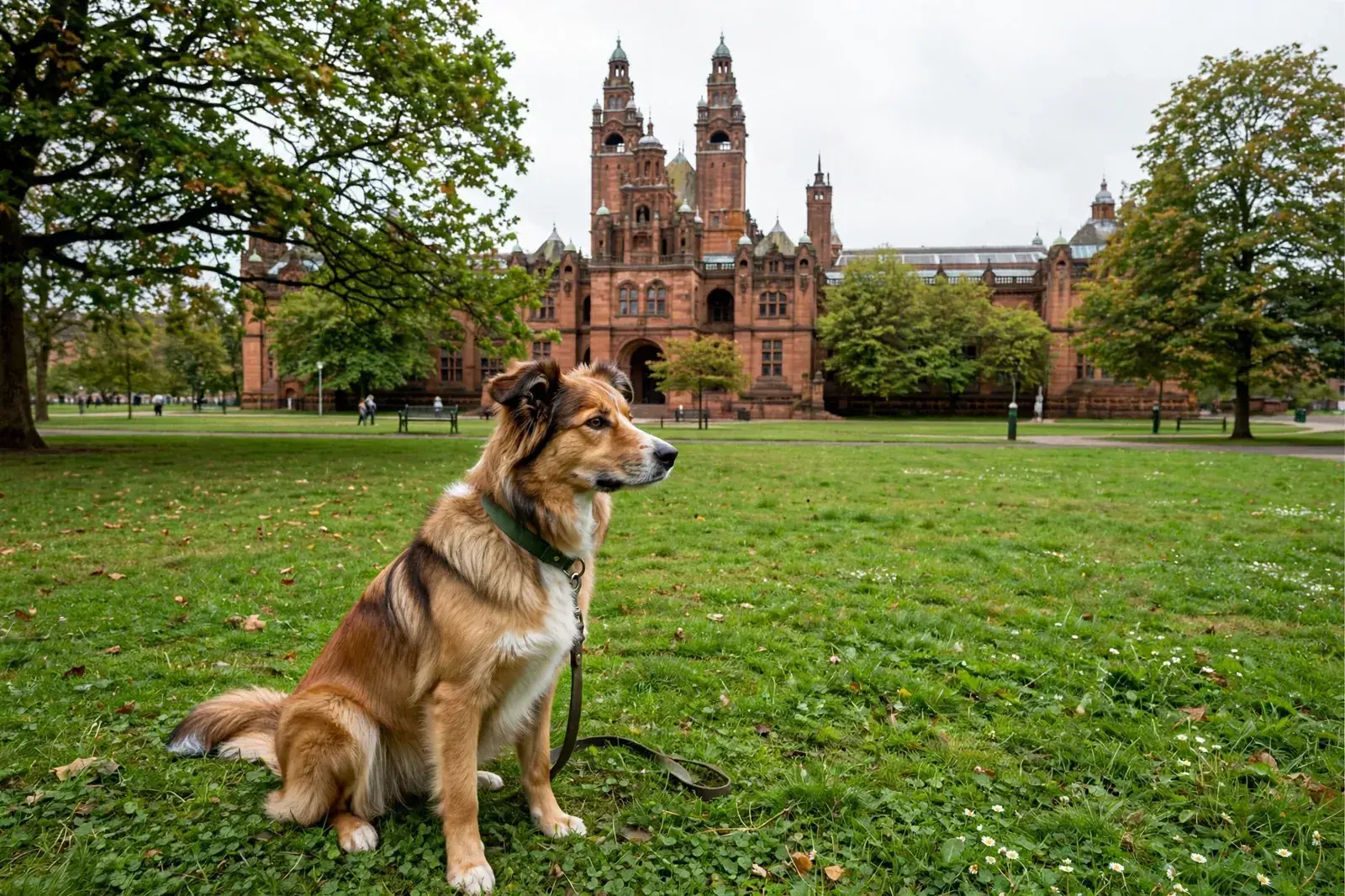
Kelvingrove is where most Glasgow dog trips should start, and not because of the museum. The park itself is a Victorian landscape of sweeping lawns, mature trees, formal paths and riverbank, laid out along the River Kelvin in the West End. It is large enough for a proper morning walk, varied enough to keep a sniff-led dog interested, and connected enough that you can extend or shorten the route as energy allows. Come early if you can. Mornings bring local dog walkers, runners and space to breathe; by midday on a fine weekend the paths near the museum and the skate park grow busy, and picnics spread across the grass that a food-focused dog will find hard to ignore.
The museum building is the visual anchor: a grand red sandstone landmark with towers and spires that looks best from across the lawns and from the bridges over the Kelvin. Plan it as an exterior. Walk the perimeter, take in the architecture from the park side, use the setting for photographs, and check the latest official guidance before you travel if an exhibition is the main reason for your visit, because pet dogs should be expected to stay outside the galleries. Assistance dogs are a separate category. That single expectation prevents the most common Glasgow disappointment, which is arriving at a famous doorway with a dog and no backup plan.
For the walk itself, combine three elements. Start on the broad park paths for an easy warm-up and a toilet opportunity away from the busiest entrances. Drop down towards the Kelvin for the riverside section, where the sound of the water softens the city and the path feels greener, keeping your dog on a lead near steep banks, anglers and fast-moving cyclists. Then loop back across the open grass for any permitted off-lead time, choosing a quiet corner away from play areas, sports activity and other dogs, and only if recall is genuinely reliable around squirrels and picnics. Finish near the West End streets so coffee, water and shade are close at hand.
Watch for the practical details that brochures skip. Paths can be muddy after rain even when the lawns look fine, so footwear matters. Bins are plentiful near main routes and scarcer on quieter loops, so carry bags for the whole walk rather than relying on the next bin. Events in the park, including summer music events in some years, can bring fencing, sound checks and closures to parts of the grounds, so check listings for your dates. And if your dog is reactive, approach from quieter park entrances rather than the museum forecourt, give the skate park and playground a wide berth, and keep the first visit short and successful rather than ambitious.
River Clyde walks that link up: flat, long and easy to shorten
When a dog needs distance without hills, the River Clyde is Glasgow's most useful asset. Surfaced riverside paths run through the centre and out in both directions, giving you the rare city luxury of a walk you can lengthen or cut short simply by choosing which bridge to cross. That flexibility suits older dogs, puppies building stamina within sensible limits, and anyone walking in changeable weather, because you are rarely far from a street, a cafe or a route back. Keep dogs on a lead on shared sections: these paths carry fast commuters on bikes, e-scooters in some areas, runners and other dogs, often with little warning around bends.
A simple central loop works well as a template. Pick up the river path near the city centre, walk out along one bank enjoying the bridges, the modern buildings and the older industrial landmarks, cross at a bridge that suits your dog's confidence, and return along the opposite bank. Grating, open views down to the water and busy road crossings suit some dogs and worry others, so let your dog set the pace at each new surface and never drag a hesitant dog across a bridge deck. If bridges are a problem, walk out and back on the same bank instead; the river looks different in the other direction and your dog will not know the route was meant to be a loop.
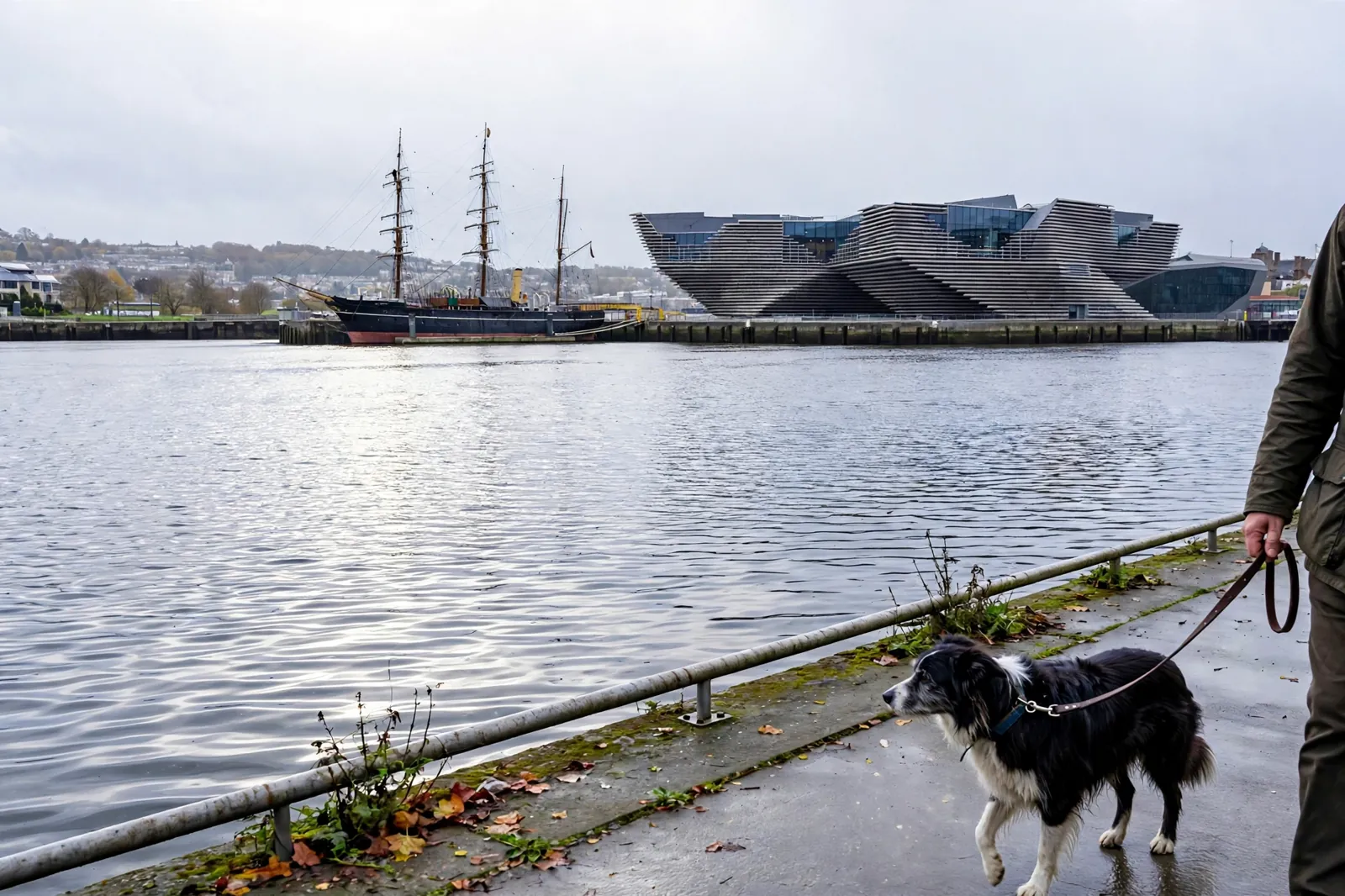
Westward, the Clyde connects naturally towards the Riverside Museum area and the Kelvin, letting confident walkers stitch Kelvingrove, the river and the West End into one longer outing with a cafe stop in the middle. Eastward, the path leads towards Glasgow Green, which makes a natural full stop with grass, space and a slower pace after the hard surfaces of the centre. Both directions reward an early start in summer, when shade is limited on exposed riverside stretches, and both need a wind check in winter, when the river corridor can feel several degrees colder than the sheltered streets a block away.
River safety deserves a short, serious paragraph. The Clyde is a large, tidal-influenced river with strong currents, steep edges in places and cold water in every month. Dogs should not swim in the central river, and a dog that loves water needs a short lead near unfenced edges, especially after rain when banks are slippery. After heavy rain, lower paths and underpasses can flood or close; follow signed diversions rather than improvising around barriers. For genuine dog swimming and paddling, save it for a planned countryside stop such as the loch shore on a Loch Lomond day, with the checks described in our Loch Lomond with a dog guide, including water quality warnings in season.
Glasgow Green and the east end: space, history and breathing room
Glasgow Green is the city's oldest public park and its most democratic: a broad, flat expanse just east of the centre where dog walkers, football games, families and festival crowds all share a very large lawn. For dogs, its value is space. Where Kelvingrove is landscaped and Pollok is wooded, the Green is open, which suits dogs that like to see what is coming, owners who want a simple out-and-back on grass, and anyone based near the centre who needs a real walk without travelling across the city. Early mornings and weekday visits are calmest; event days are the opposite, with major festivals and gatherings periodically taking over large areas.
Build a visit around the landmarks without depending on them. The People's Palace, the Green's famous museum and winter gardens building, has had changing opening arrangements in recent years, so check the latest official guidance before you travel and, as elsewhere in Glasgow, expect pet dogs to enjoy the exterior and grounds rather than the interior. The Doulton Fountain, among the largest terracotta fountains in the world, and the McLennan Arch at the park's edge make good waypoints for a loop. The Templeton building, with its elaborate brickwork modelled on a Venetian palace, rewards a look from the park side on an east-end stroll. None of these requires entering anything, which is exactly why the Green works so well with a dog.
Combine the Green with the Clyde path for a longer half-day: walk out along the river, spend time on the grass, and return by a different bridge, or continue into the east end streets for lunch. The surrounding area has a different feel from the West End: more breweries, markets on some weekends and a growing food scene, with dog policies that vary venue by venue. Markets deserve a specific warning. A weekend market crowd, with food stalls at nose height and leads tangling between shoppers, is enjoyable for a steady, sociable dog and miserable for a nervous one. Walk the perimeter first, judge the density honestly, and be willing to take the park instead.
After dark, stick to lit main paths and the river route you already know from daylight, and keep evening walks shorter. In winter the Green can be waterlogged in patches after sustained rain, so expect mud and bring a towel and a drying plan for the car or accommodation. In summer, carry water: the open grass offers little shade at midday, and a black dog on a still, bright Glasgow afternoon will heat up faster than visitors from cooler places expect.
Pollok Country Park and the Burrell Collection grounds: the big day out
If Kelvingrove is Glasgow's front garden, Pollok Country Park on the south side is its country estate: hundreds of acres of woodland, gardens, riverside paths along the White Cart Water and wide open parkland, all inside the city boundary. This is the place to spend a half-day or more, and for many dogs it will be the highlight of the trip. Highland cattle are a famous presence in the park, which means leads, distance and common sense around livestock are non-negotiable, and fields containing cattle should simply be given a miss with a dog. Woodland sections give shade, scent and softer ground; formal garden areas near Pollok House are best treated as lead-only, look-from-the-path stops, with rules to check on signs as you go.
The Burrell Collection, the park's celebrated museum, sits within this landscape, and the same exterior-first planning applies. The building and its setting are worth the trip across the grounds; the collection inside is a human visit, to be tag-teamed or saved for a dog-free slot. Check the latest official guidance before you travel for current opening and any temporary arrangements. What the dog gets at Pollok is not a consolation prize. A slow circuit linking woodland trails, the river and open parkland, with a picnic well away from other visitors, is a fuller dog day than most countryside stops manage, and there is no admission charge for enjoying the park itself.
Getting there shapes the visit. Pollok is a drive or a train-and-walk or bus journey from the centre, so plan it as an expedition rather than squeezing it between other sights. Pack water, bags, a long line only for suitable open areas where it is permitted and safe, and a towel, because woodland paths and riverbanks stay damp long after the city pavements dry. Parking can fill on fine weekends; arriving earlier beats circling a busy car park with an excited dog. Allow time simply to sit. Country parks reward lingering, and a dog that has had an hour of woodland followed by a settled rest in the shade will travel home far more calmly than one marched around every trail on the map.
Wildlife awareness matters here more than in the central parks. Deer, squirrels and abundant birdlife can test recall, and ground-nesting or young animals in season raise the stakes further, so default to the lead and treat any off-lead moment as a deliberate choice in a clear, permitted area, not a habit. Keep to paths around planted and restored areas, and follow any temporary signs about tree works, flooding or path closures. Pollok is also an excellent wet-weather choice in one specific way: tree cover takes the edge off rain, though it will not keep the paths dry, so waterproofs for humans and a drying coat for the dog turn a showery day from a write-off into a good walk.
Botanic Gardens: what to expect with a dog
Glasgow Botanic Gardens, at the top of Byres Road in the West End, cause more confusion than any other stop in this guide, so here is the practical version. Plan for pet dogs to stay out of the glasshouses, including the Kibble Palace and the main range, and to be on a lead in the outdoor grounds, following signs on the day. Check the latest official guidance before you travel, because garden and glasshouse arrangements can change with restoration work and seasons. Assistance dogs are again a separate category. If tropical plants are the point of your trip, use the tag-team approach and let the dog enjoy the Kelvin Walkway while humans take turns inside.
Understood that way, the gardens still earn their place. The outdoor grounds are a pleasant, manageable lead walk, the setting above the River Kelvin is lovely, and the location stitches together a natural West End route: gardens first, then down to the Kelvin Walkway for the longer, more dog-focused section along the river towards Kelvingrove. That walkway is one of Glasgow's underrated dog walks, green and surprisingly peaceful for somewhere so central, with herons a possibility and mud a certainty after rain in places. Watch for cyclists, keep to one side on narrow stretches, and be careful near the riverbank with a water-obsessed dog.
Timing helps here too. The gardens are popular with families, wedding photographs and tour groups in fine weather, and the paths near the glasshouses can feel crowded for a dog that needs space. Go early, keep the garden section brief if it is busy, and let the Kelvin do the heavy lifting for exercise. In autumn the trees make this route one of the prettiest in the city; in spring, planted areas need particular respect, with dogs kept on paths and out of beds without exception. For a broader sense of how garden and heritage sites set dog rules across Britain, our dog-friendly National Trust guide explains the lead, paw-grade and facilities checks that transfer well to municipal gardens too.
West End cafes and everyday stops: how to check, not just where to go
The West End, around Byres Road, Great Western Road and the lanes between them, is Glasgow's most convenient dog neighbourhood: independent cafes, bakeries, pubs and shops in walkable clusters, with Kelvingrove at one end and the Botanic Gardens at the other. Rather than a list of names that will date, learn the local pattern. Many Glasgow cafes welcome dogs in part of the space or at outdoor tables, some provide water bowls and treats, and policies can differ between a cafe's daytime and evening service. A quick check of a venue's own website or social pages, or a phone call, beats turning up at a busy Saturday brunch with a hungry dog and a queue behind you.
Use a consistent etiquette and you will be welcomed back. Arrive with a dog that has already had a toilet walk, settle them on a mat or blanket under or beside your table rather than in the walkway, keep the lead short and attached, and never let a dog beg at neighbouring tables or sit on seats unless a venue explicitly invites it. Muddy paws after Kelvingrove are a fact of life; a quick towel at the door is a small courtesy that staff notice. If your dog cannot yet settle in a busy room, choose outdoor tables, off-peak times or takeaway and a park bench, and treat cafe visits as training with an exit plan rather than a test the dog must pass. Our dog-friendly cafes across the UK guide covers settling routines, first-visit drills and red flags in more depth.
Everyday logistics cluster well in the West End. Pet shops and vets are within the neighbourhood, larger supermarkets sit a short drive or walk away, and most accommodation is within reach of a green space for the last walk of the day. That last walk deserves thought in any city: choose a lit, familiar loop close to where you are staying, ideally the same route each night, so a half-asleep dog can do what it needs to do without navigating new streets, pub crowds or late-night traffic. On weekend evenings, routes past busy pub strips are best avoided with a nervous dog; a parallel quieter street usually exists a block away.
Where to stay with a dog: areas, fees and the questions that matter
Choose your Glasgow base by its morning walk, not its postcode prestige. The West End suits most dog trips best because Kelvingrove and the Kelvin give you an excellent walk from the door, cafes are close, and the area is lively without the late-night intensity of the very centre. The city centre suits travellers arriving by train who want short stays and easy transport, provided you accept that the morning walk is the Clyde path or a trip to Glasgow Green rather than grass at the door. The south side, near Pollok and the large south-side parks, suits drivers planning a country-park-heavy trip and quieter evenings. Each area works; the wrong choice is the one whose nearest real walk is a twenty-minute lead drag along a main road.
Glasgow's dog-friendly supply includes hotels that accept dogs in selected rooms, aparthotels and serviced apartments that suit longer stays and dogs that need space, and a wide stock of rental flats, where rules are set property by property. Whatever the type, confirm the details that actually shape the stay before paying: the per-dog or per-stay fee, how many dogs and what sizes are accepted, whether dogs may be left alone in the room and for how long, whether they are allowed in breakfast rooms or only in bar and terrace areas, and where the nearest grass is for late-night and early-morning outings. Get the answers in writing, and ask specifically about lifts and floor level if your dog dislikes lifts or struggles with stairs, because converted townhouses and older hotels can involve both.
Arrival routine repays five minutes of effort. Walk the dog before you check in, not after a journey cooped up in a car or train carriage. In the room, water first, then bed and a familiar-smelling blanket in a corner away from the door, then a calm explore on the lead if the dog wants one. Keep corridors and lifts low-drama: wait for an empty lift with a reactive dog, use stairs if the dog prefers them and the building allows it, and never let a dog rush a housekeeping trolley or another guest's luggage. Tell reception your dog is in the room, use any door hanger provided, and arrange cleaning for when you are out with the dog, since many properties will not service a room with a loose dog inside.
Budget honestly. City dog fees are commonly charged per night rather than per stay, which makes a four-night break noticeably pricier than the headline rate suggests, and damage deposits or card holds are more common in rentals. Factor parking too: West End street parking and city-centre car parks add up, and a slightly dearer stay with parking and a park at the door can be cheaper in total friction than a bargain across town. For comparison methods that work in any city, the booking checks in our dog-friendly hotels in the UK guide translate directly to a Glasgow shortlist.
Using Glasgow as a Loch Lomond gateway: the day trip done properly
Glasgow's second identity, for dog owners, is as a serviced base for Loch Lomond and the Trossachs. Balloch, at the southern end of the loch, is roughly a forty-five-minute drive in ordinary traffic and is also reached by train from Glasgow, which makes a loch day possible without moving accommodation, unpacking twice or giving up city dinners. That convenience is real, but it comes with a discipline: a Loch Lomond day is a countryside day, with countryside preparation, not an extension of a city stroll. Start early to beat car-park pressure and summer traffic, and decide in advance whether your focus is a shore walk, a beach stop, a boat-viewing wander or simply a village base with loch views and a long lunch.
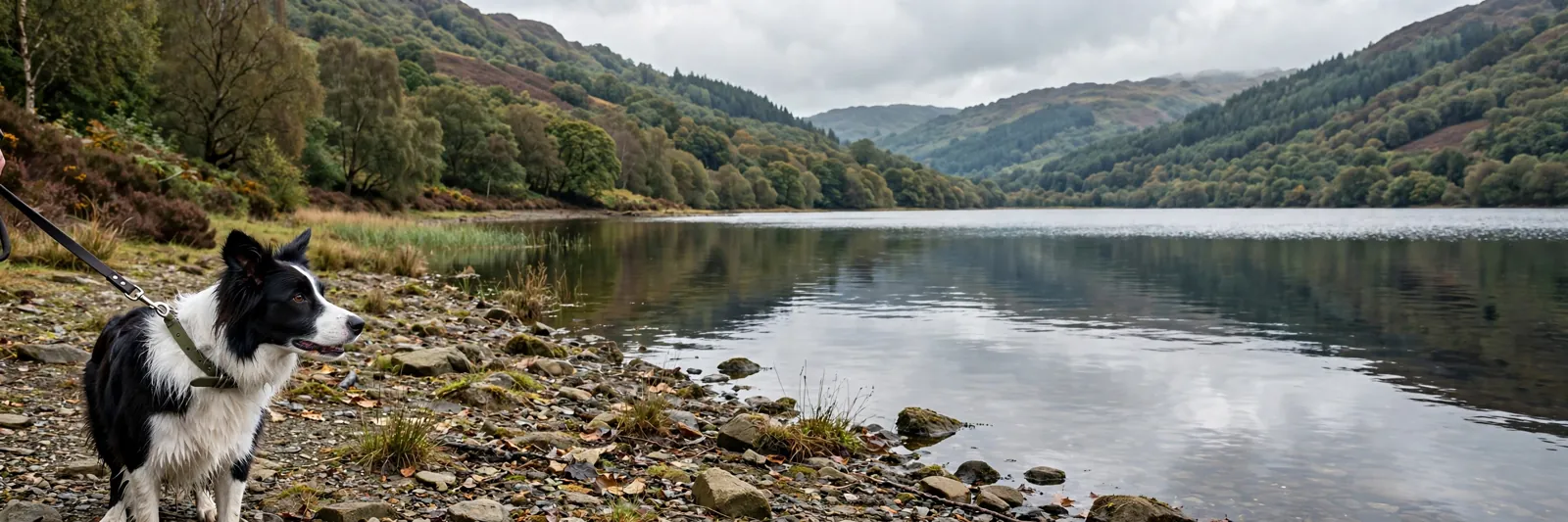
Read our dedicated Loch Lomond with a dog guide before you go, because it covers the detail this overview cannot: east shore versus west shore character, beach choices, boat rules for dogs, camping permits in season and the blue-green algae warnings that can make loch water unsafe for dogs in warm weather. Those algae warnings deserve emphasis. A dog should never be allowed to drink from or swim in water showing signs of a bloom, and checking current local information on the day is part of the walk plan, not an optional extra. Loch Lomond and the surrounding national park also have seasonal byelaws and busy honeypots, so check the latest official guidance before you travel for camping management zones, parking arrangements and any temporary restrictions.
By train, the pattern is simple: dog on a lead, off seats, travel outside the peaks where you can, and a walk built around Balloch and the southern shore paths, with Balloch Castle Country Park providing an easy, dog-friendly green space close to the station and village. By car, you gain the west shore villages and viewpoints, at the cost of narrow, busy roads in season and car parks that fill by late morning on fine weekends. Either way, pack for a different climate from the city: lochside wind, sudden rain and midges in summer on still days. Take more water than the dog will need, a towel and spare lead, and a plan for a wet dog in a hire car or on a train home.
Know when not to go. If the forecast is for all-day heavy rain and wind, the loch day becomes a endurance exercise and Glasgow itself offers the better trip: Pollok's woods in the morning, a long cafe lunch, Kelvingrove at dusk. If you have several nights, consider splitting the stay instead, with Glasgow nights at the start and a lochside or Stirling-area night later; our Stirling with a dog guide shows how another compact Scottish city can anchor the onward journey north. The gateway idea works because Glasgow gives you choices, and choosing the city day is sometimes the experienced traveller's move, not a failure of ambition.
Getting around, weather and vets: the unglamorous essentials
Glasgow is a walkable city in patches and a transport city in between, so plan journeys as carefully as walks. For trains within and beyond the city, dogs are commonly carried under conditions that include leads, keeping off seats and consideration for other passengers; for the Glasgow Subway, rules are stricter and pet dogs may not be permitted, so do not build a plan that depends on it without checking. Always check the latest official guidance before you travel for both networks, and for buses and taxis too, where acceptance can depend on the operator or driver. Taxis and private hire vehicles vary: declare the dog when booking, ask about any cleaning fee, and bring a blanket for the seat or footwell as directed. Walking remains the default: most routes in this guide are designed to need no transport at all once you reach the right neighbourhood.
Weather is Glasgow's co-author. Rain is frequent, often sideways, and a waterproof coat for you and a drying strategy for the dog will be used on most trips, whatever the season. Pavements and park paths can be slick, riverside routes windy, and daylight short in midwinter, when a 4pm dusk changes walk planning completely: headtorch for poo-bag duty, a reflective or lit collar attachment, and main walks completed by mid-afternoon. Summer brings the opposite trap. Glasgow rarely bakes, but a still, sunny week can push city temperatures high enough that midday pavement walking is unfair on paws and dangerous for flat-faced or thick-coated dogs, so shift to early and late walks, carry water, and never leave a dog in a parked car.
Finally, the safety net. Save the details of a veterinary practice near your accommodation and know where out-of-hours cover is provided, because city practices commonly route emergencies to a separate hospital service at night. Keep your own vet's number and your dog's microchip and insurance details on your phone, and photograph vaccination or medication information before you travel. Pack medication with a margin of extra days, a spare lead and collar, and enough of your dog's usual food to avoid a mid-trip diet change in a city where your exact brand may need a trip to a retail park to replace. None of this is pessimism. It is what makes the difference between a minor mishap and the end of a holiday, in Glasgow or anywhere else.
Glasgow, handled this way, is one of Britain's most practical city breaks with a dog: big parks, a proper river, a country estate inside the boundary, neighbourhoods that still feel local, and a famous loch within day-trip reach. Give it geography, daylight and a little honesty about interiors, and it will give you a trip that works for both ends of the lead.
Practical questions
Before you go
Can dogs go inside Kelvingrove Museum in Glasgow?
Plan on the basis that pet dogs are not allowed inside the museum galleries, while assistance dogs are treated separately. Enjoy the park, the riverbank and the building exterior with your dog, then take turns inside if you are travelling with another adult. Check the latest official guidance before you travel, because venue rules can change.
Are dogs allowed in Glasgow Botanic Gardens?
Treat the glasshouses as dog-free for pet dogs and keep dogs on a lead in the outdoor grounds unless signs say otherwise. The surrounding Kelvin Walkway gives a longer, more relaxed walk if your dog needs space. Check the latest official guidance before you travel and follow signs on the day.
Where can dogs go off lead in Glasgow?
Quieter corners of large parks such as Pollok Country Park and Glasgow Green are the usual options, away from play areas, sports pitches, roads and wildlife. Only allow off-lead time where it is permitted, when recall is reliable and when the area is clear. Keep a lead ready near cyclists, picnics and other dogs, and check local signs on arrival.
Is Glasgow a good base for Loch Lomond with a dog?
Yes, if you want city stays and services with a countryside day trip rather than a lochside base. Balloch at the southern end of Loch Lomond is the natural first target by road or rail. Start early, check parking and seasonal boat and beach rules in advance, and keep a city park walk as your backup if the weather closes in.
Can I take my dog on trains and the Subway in Glasgow?
Dogs are commonly carried on ScotRail trains under conditions that include keeping them on a lead and off seats, while the Glasgow Subway has stricter rules and pet dogs may not be permitted. Always check the latest official guidance before you travel for both networks, travel outside peak hours where possible, and have a walking or taxi alternative ready.