This guide is independent and contains no paid placement. If affiliate links are added later, they will be clearly marked and will not change our editorial checks.
Braemar is one of the easiest Highland villages to visit with a dog: the village green, the River Dee paths and the castle grounds are all a short walk from the main street, the Cairngorms start at the edge of the village, and several hotels and cafes welcome dogs. Keep dogs on a lead near livestock and the main road, carry water and a towel on longer walks, and check opening times before you travel — this is a small village, and seasonal hours change.
Start on the village green
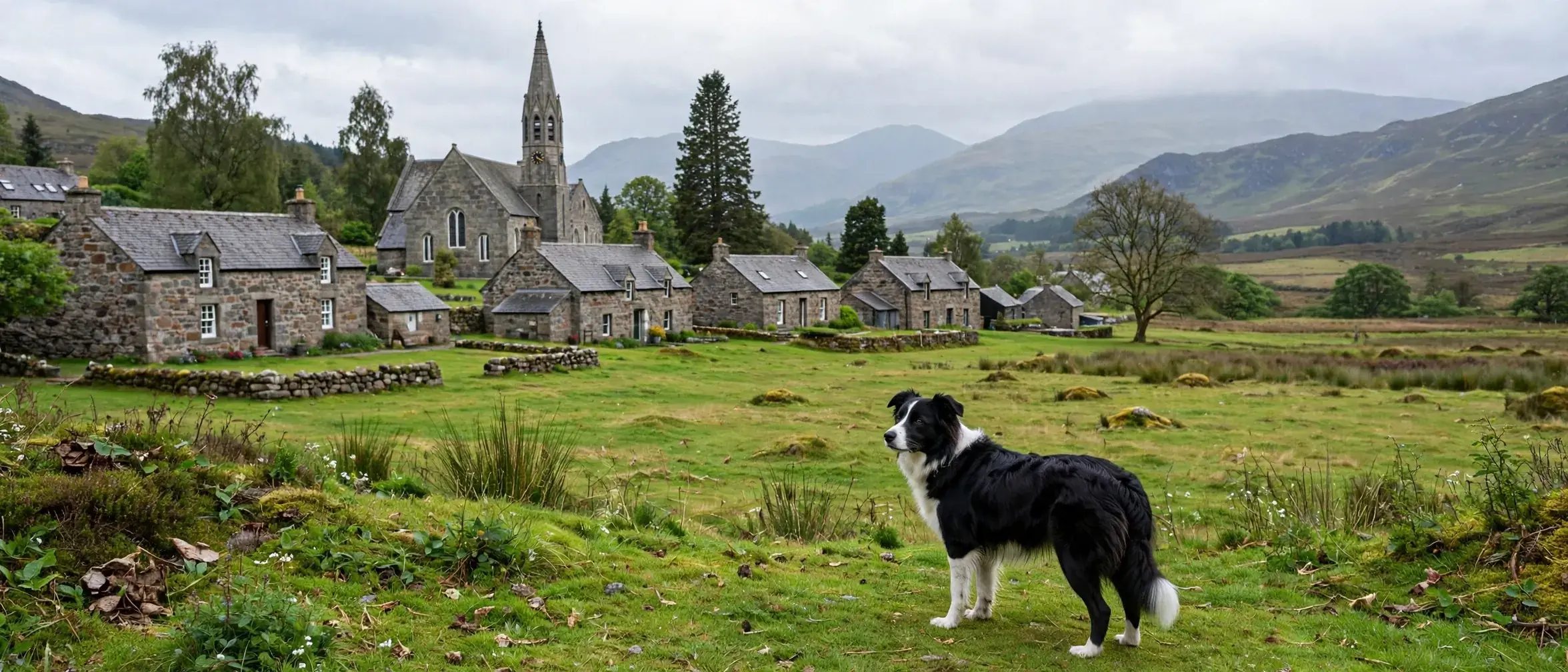
Braemar sits at the meeting point of the River Dee and the Clunie Water, deep in the Cairngorms National Park and about 58 miles west of Aberdeen. It is a small place — a single main street, a village green, a couple of churches, a castle at the edge of the village and the hills rising on every side — and that compact scale is exactly what makes it work so well with a dog. There is no long drive from the car park to the walk, no complicated navigation through a town centre and no need to choose between the village and the countryside, because the two run straight into each other.
The best first move on arrival is the simplest one: let the dog out on the village green and take a slow loop around the centre before doing anything else. The green is the village's front room, a broad stretch of grass where local dogs are walked every day, and it gives a new arrival somewhere flat and open to stretch legs, empty a bladder and get the travel stiffness out. From the green you can see the shape of the whole village at a glance — the stone cottages along the main street, the spire of the parish church, the war memorial and the road rising towards the castle — which makes it easy to plan the rest of the day without a map in one hand and a lead in the other.
Walk the main street slowly and note what matters for a dog owner rather than a sightseer. Look for the outdoor taps and water bowls outside shops and cafes, the benches where a dog can lie while you wait, and the side streets that lead down to the river, because those are the routes you will use again and again. Braemar's shops are few — a village store, a post office, an outdoor shop and a handful of cafes and hotels — so a single unhurried circuit is enough to learn the layout. If you are staying overnight, this first walk is also the moment to find the nearest practical toilet spot for the early morning and the late evening, ideally somewhere lit, close to your accommodation and away from the main road.
One thing to settle early is the lead rule for the village itself. Braemar is not a place with signed dog zones, and the village green is shared with children, other dogs, visitors and the occasional event, so the lead stays on in the centre even when the green looks empty. Sheep and deer graze on the hillsides just beyond the houses, and a dog that chases can be gone over a wall in seconds. The habit that works here is the same one that works across the Highlands: lead on in the village and near roads, lead off only on open ground where you can see a long way in every direction and you are certain there is no livestock nearby.
River Dee walks from the village
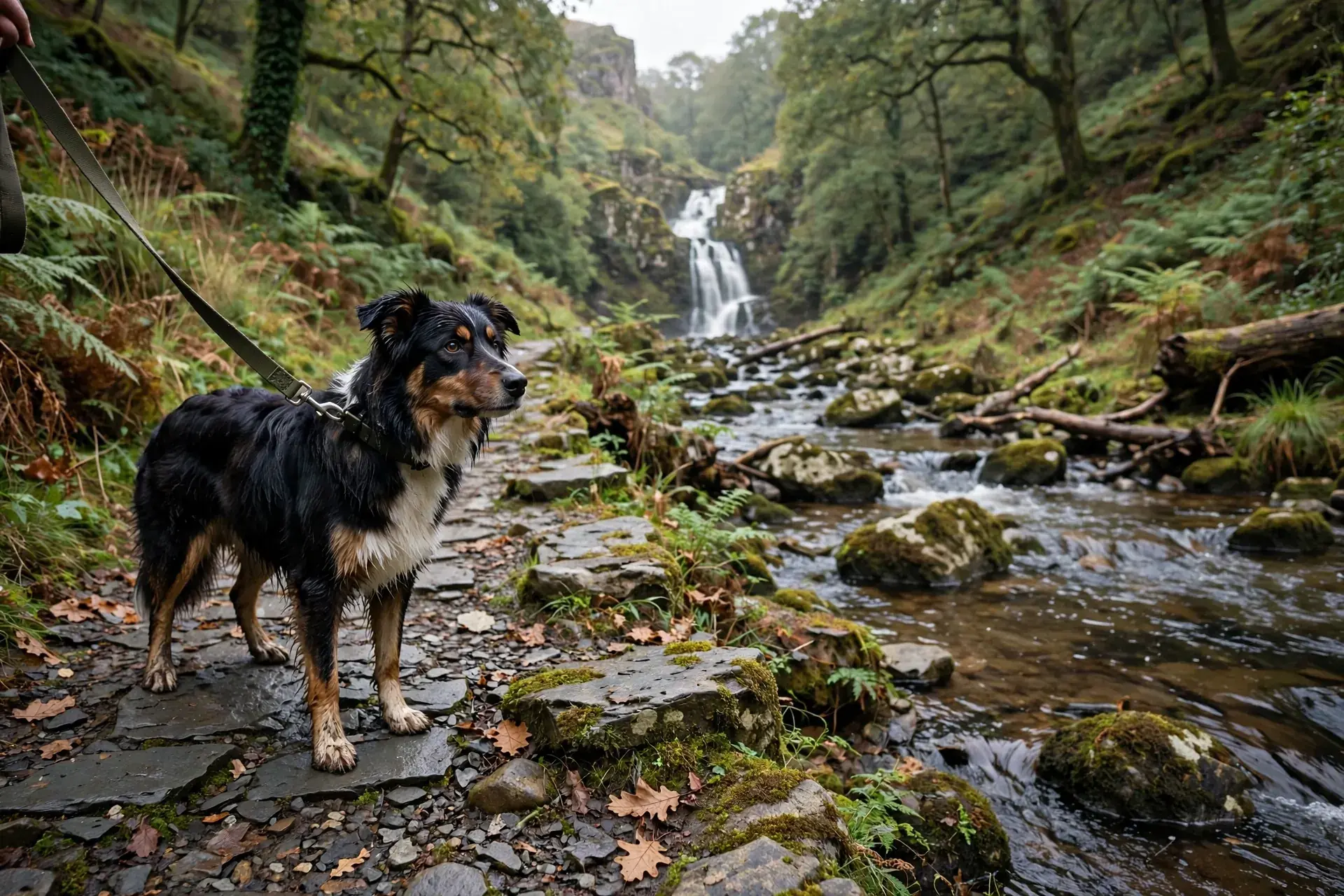
The River Dee is the thread that runs through every Braemar walk. The river rises high in the Cairngorms, flows through the village and then east through Ballater, Banchory and Aberdeen to the sea, and its banks give Braemar its easiest and most forgiving dog walks. The riverside path from the village is mostly flat, mostly obvious and mostly shaded in parts, which matters on a warm day when a thick-coated dog needs water and shade more than it needs distance. The water itself is clean and cold, and many dogs will drink from it, but do not let a dog swim in fast water after rain, and never let one jump in near a weir or a bridge pier where the current is hard to read from the bank.
A good short loop starts at the village green, drops down to the Dee and follows the bank upstream or downstream for twenty to forty minutes before cutting back to the main street. Upstream the river narrows and the banks grow wilder, with gravel beaches where a dog can paddle in low water and sniff along the shingle. Downstream the path stays closer to the fields and the road, which makes it the better choice for a dog that is still learning to walk calmly past other people, cyclists and other dogs. Either direction works as a morning or evening walk, and both are short enough to repeat twice a day without the dog getting bored, because the river changes with the light, the weather and the water level.
Longer riverside walking is possible without ever leaving the Dee. The path network around the village connects to forestry tracks and estate roads that follow the river valley west towards the Linn of Dee, and east towards Invercauld and the road to Ballater. These are not waymarked long-distance trails in the village itself, so carry a map or a charged phone with an offline map, and tell someone your rough plan if you are heading out for several hours. The valley floor is gentle, but the ground can be boggy after rain, the burns run fast in spate, and a dog that is used to pavements will find Highland tracks tiring in a different way — more uneven ground, more scent, more decisions to make about where to put its feet.
Water safety deserves a paragraph of its own, because the Dee looks inviting and can be deceptive. After heavy rain the river rises quickly and the current strengthens, especially where the channel narrows between rocks. A dog that swims confidently in a lake may struggle in a fast river, and a long line can tangle around rocks or a dog's legs in moving water, so many experienced owners prefer a short lead near the river and a harness rather than a collar. Our guide to dogs at waterfalls in the UK covers slippery rocks, rising water and safe viewing distances in more detail, and the same rules apply at the Linn of Dee and at every burn and fall you will pass on the trails around Braemar.
Braemar Castle and the castle grounds
Braemar Castle stands at the eastern edge of the village, a seventeenth-century tower house built by the Earl of Mar in 1628 and later caught up in the Jacobite risings. It is a handsome, slightly forbidding building — thick stone walls, small windows, a curtain wall and a star-shaped defensive wall that is unusual in Scotland — and it is the single most visited sight in the village. The castle has been in community ownership since 2007, which means it is run locally rather than by a distant trust, and the grounds are open parkland that local dog walkers use every day. That combination — a historic building with a community feel and a park that doubles as the village dog walk — is part of what makes Braemar Castle different from a grand estate where dogs are kept at the gate.
For most dog owners the grounds are the main event. The parkland around the castle is open grass and scattered trees with views back across the village to the hills, and it suits a long, slow walk far better than a quick photo stop. A dog on a lead can cover the whole circuit, sniff the walls, watch the rooks and settle on the grass while you read the information boards about the castle's Jacobite history. The ground is mostly level and the paths are firm, so it works for older dogs and for puppies that are still building up their walking distance. In autumn the trees turn well and the park fills with fallen leaves, which most dogs regard as a personal invitation.
Going inside the castle is a different question, and the honest answer is that it depends on the season and the day. Dogs on leads are generally welcome in the grounds, but access to the interior is more restricted and can change with the rooms on show, the event programme and staffing, so check the official guidance before you travel rather than assuming your dog can come in. If the interior is not open to dogs on your date, plan the castle as a grounds visit: walk the parkland, look at the building from the outside, and let the dog have the long walk it wants while you save the interior for a return trip or a day when one of your party can stay outside with the dog.
Two practical points make the castle visit easier. First, the castle is a short walk from the village centre along the main road, and the pavement is narrow in places, so keep a dog close on a short lead on the road section and only relax once you are through the gate and on the parkland. Second, the castle hosts events through the year, including community days and seasonal openings, and a busy event day is a very different experience from a quiet weekday morning. If your dog is nervous in crowds, choose a weekday, arrive early and skip the event days, and check the official guidance before you travel for the opening calendar on your dates.
Royal Deeside Way and the old railway line
The Royal Deeside Way is the long-distance walking and cycling route that follows the old Deeside railway line from Aberdeen to Ballater, roughly 41 miles of mostly gentle, mostly traffic-free path through the Dee valley. Braemar itself sits beyond Ballater, about 17 miles further west up the valley, so the Royal Deeside Way does not pass through the village — but it is the natural partner to a Braemar trip, and the sections around Ballater, Aboyne and Banchory make an easy day out with a dog. The path is the old railway bed for much of its length, which means it is flat, wide and well surfaced, with long straight stretches that suit a dog that likes to trot rather than scramble.
For a dog, the railway line has three real advantages over a hill path. The surface is predictable, so paws stay in good condition over a long day. The route is linear and obvious, so there is little chance of getting lost with a tired dog miles from the car. And the villages along the way — Banchory, Aboyne, Ballater — all have cafes, shops and places to stop, which means you can plan a walk with a proper break in the middle rather than carrying everything for a full day. The Ballater section is the obvious one from Braemar: drive or take the bus down the valley, walk a few miles of the old line, have lunch in the village, and walk back or catch the bus again.
The old railway character shows in the details. Look for the station buildings that survive along the line, the bridges over the Dee and its tributaries, and the cuttings where the path dips between banks of trees. Ballater station is the best known, a handsome royal station building that once served the royal train to Balmoral, and it makes a natural turning point for a walk. Dogs should be on a lead on the shared-use sections, because cyclists use the path too, and a dog that wanders across the line in front of a bike is a hazard to both. Keep the dog to one side, step off the path to let faster traffic pass, and carry a lead you can shorten quickly.
Planning a Royal Deeside Way section from Braemar is straightforward if you treat the bus as part of the plan. The bus down the valley to Ballater or Aboyne runs along the A93, and walking back towards Braemar is not practical in a day, so the usual pattern is a one-way walk with a bus or a car at one end. If you are travelling by public transport for the whole trip, our guide to dog-friendly train stations in the UK covers waiting rooms, platforms and changing trains with a dog, and the same habit — arrive early, keep the dog close, and know where the quiet corner is — works just as well at a rural bus stop on the A93.
Into the Cairngorms: Linn of Dee and beyond
West of Braemar the valley narrows into the Cairngorms proper, and the Linn of Dee is the first great reward — a deep, narrow gorge where the river forces its way between rock walls, about six miles from the village. The car park at the Linn of Dee is the starting point for some of the finest dog walks in Scotland: the short walk down to the gorge itself, the riverside trail to the Linn of Quoich and its famous punch bowl, and the long routes into the heart of the Cairngorms towards Glen Lui and Derry Lodge. The gorge viewpoint is fenced and the path is short, so even a dog that is not up for a long day can see one of the most dramatic pieces of water in the Highlands.
The Linn of Quoich walk is the one to choose if you have a half day and a dog that enjoys a proper trail. The path follows the Quoich Water through pine forest to a natural rock bowl — the Punch Bowl — where the burn drops into a deep pool, and the whole route is a mix of forest track, riverside path and open moor. The ground is uneven in places and the rocks near the water are slippery, so keep the dog on a lead near the gorge and the pool, and only let a strong swimmer paddle in still water well away from the drop. In summer the pine forest is cool and full of scent, which dogs love, and in autumn the colours are some of the best in Scotland.
For fit dogs and experienced hill walkers, the trails from the Linn of Dee car park go much further. The routes through Glen Lui and Glen Derry lead deep into the Cairngorms, towards Derry Lodge and the high passes, and these are full-day or multi-day undertakings that need proper navigation, mountain weather awareness and a dog that is genuinely fit for long distance and rough ground. Do not underestimate them: the Cairngorms are a serious mountain environment, the weather can change in an hour, and a dog that is tired, cold or wet at the far end of a ten-mile walk is a problem that is much harder to solve than a tired dog at the village green. Check the official guidance before you travel, carry a map and compass as well as a phone, and turn back early rather than late.
Wildlife and livestock shape every Cairngorm walk with a dog. Red deer are common in the glens, especially at dawn and dusk, and a dog that chases deer is a danger to itself and to the deer. Sheep graze the lower ground, ground-nesting birds are vulnerable in spring and early summer, and ticks are present in bracken and long grass from spring to autumn, so check your dog thoroughly after every walk and carry a tick remover. Adders are present in the Highlands too, though rarely seen, and a dog that noses into warm rocks on a sunny day is the most likely to meet one. None of this should put you off — these are the same precautions that apply to any Highland walk — but they are the reason the lead stays on until you are certain the ground ahead is clear.
Dog-friendly cafes, pubs and tea rooms
Braemar is a village of a few hundred people, so the eating and drinking scene is small, honest and seasonal — and that is part of its charm. There is no long high street of cafes to work through, but the places that do exist tend to welcome dogs properly, with water bowls, a corner by the fire and staff who know the local dogs by name. The best-known is the village's grand hotel, The Fife Arms, a Victorian hunting lodge turned art-filled hotel that has a long-standing dog-friendly reputation, with dogs welcome in the bar and lounge areas and in selected rooms. It is the natural place for a long lunch after a wet walk, and the bar is the warmest room in the village on a cold day.
Beyond the hotel, the village has a small tearoom and bakery on the main street, a cafe at the outdoor shop, and seasonal food at the castle and at community events, and the dog policy at each of these can change with the season and with staffing. That is the reality of a small Highland village: a place that welcomed dogs in the bar last summer may have a different arrangement this winter, and a tearoom that is dog-friendly on the terrace may not be able to take dogs inside when it is full. The practical rule is to ask on arrival, to check the official guidance before you travel if a particular place matters to your trip, and to have a backup plan — a takeaway sandwich eaten on the village green is a perfectly good lunch in Braemar, and the dog will almost certainly prefer it.
Settling a dog in a cafe or pub is a skill worth practising before the trip, and Braemar is a forgiving place to practise it. Bring a mat or a blanket that smells of home, so the dog has a defined place to lie. Order a drink and a chew at the same time, so the dog has something to do while you wait for food. Choose a corner table away from the door and the kitchen, where the dog is not being stepped over every time someone passes. And keep the lead short enough that the dog cannot reach the next table, because a friendly dog that wanders over to say hello to a stranger's lunch is charming for about five seconds and then becomes a problem.
The other half of eating out with a dog in Braemar is the picnic. The village green, the castle grounds, the riverside benches and the Linn of Dee car park all make good picnic spots, and the village store sells the basics for a packed lunch. A flask of tea, sandwiches, and a bowl and water for the dog turn any walk into a proper outing, and a picnic is often the best option on a day when the cafes are busy or closed. Pack a bag for litter, because there are no bins on the hill paths, and carry the dog's rubbish out with your own. The Highlands stay beautiful because the people who walk them take their rubbish home.
Where to stay with a dog in Braemar
Staying overnight in Braemar with a dog is straightforward, but the village is small and the dog-friendly rooms are limited, so book early — especially for weekends, school holidays and the week of the Braemar Gathering. The Fife Arms is the best-known option, with dog-friendly rooms and a bar and lounge where dogs are welcome, and it suits a stay where you want to eat and drink without leaving the building. Braemar Lodge, a former hunting lodge a short walk from the village, also takes dogs and suits a quieter stay with direct access to the riverside paths. Both are historic buildings, so ask about stairs, room size and where the dog will sleep before you book, because a grand staircase is a different proposition for a nervous spaniel than it is for a confident retriever.
Self-catering is the other main option, and for many dog owners it is the better one. Cottages and lodges around the village and in the wider valley usually come with a kitchen, a garden or a yard, and the freedom to come and go without worrying about restaurant hours or other guests. The details that matter are the same ones that matter everywhere: is the garden enclosed, and how high is the fence; is there a hard floor the dog can sleep on; is there an outdoor tap for washing muddy paws; and how far is the nearest practical toilet walk after dark. Ask for photographs of the garden and the entrance, and get the dog policy and the pet fee in writing before you pay, because "dogs welcome" can mean one small dog in selected cottages or two large dogs anywhere, and the difference matters.
Whatever you book, the first hour in the accommodation sets the tone for the whole stay. Walk the boundary before you unpack, check the garden gate and any gaps in the fence, and move anything the dog should not reach — cleaning products, food left by previous guests, and any rat poison or traps in outbuildings. Give the dog water, its own bed and a familiar chew, and keep the first evening quiet: same feeding time, same bed, same last outing as at home. Dogs read routine as safety, and a boring first evening is the fastest route to a settled first night in a strange house.
Cost is worth a frank word. Braemar is not a budget destination: hotel rooms and cottages in the Cairngorms carry Highland prices, and a pet fee of £20 to £50 per stay is common on top of the room rate. The fee is worth paying when it buys a genuinely dog-friendly room — a ground-floor room near the door, a garden, a drying area — and it is worth questioning when it buys nothing more than permission. Ask what the fee covers, whether there is a deep-clean charge on top, and whether the fee is per dog or per stay, because two dogs at £25 each is a different bill from two dogs at a flat £25. Book direct when you can, and keep every confirmation email until you are home.
Parking, buses and arriving without a car
If you are driving, Braemar is reached on the A93 from Aberdeen through Banchory and Ballater, a road that is itself one of the great Highland drives — wide valley, pine forest, the river alongside for miles and the mountains rising as you climb towards the village. The drive takes about an hour and a half from Aberdeen in good conditions, and it is worth allowing longer, because the road is single carriageway, slow vehicles are common, and the views invite stops. Fuel up before you leave Aberdeen or Ballater, because the village has limited fuel and the next filling station is a long way back down the valley.
Parking in the village is simple but limited. There is on-street parking along the main street and a small public car park near the centre, and both fill up on summer weekends and during the Braemar Gathering, so arrive early or be prepared to walk a few minutes from the edge of the village. The castle has its own car park, and the Linn of Dee car park is the main parking for the gorge and the long walks west of the village — check the official guidance before you travel for current charges, because parking fees and payment methods in the Cairngorms change, and not every car park takes cards. Never leave a dog in a parked car in warm weather, even with a window open, and in winter remember that a car parked in shade at the Linn of Dee can be very cold by the time you get back.
Arriving without a car is entirely possible, and Braemar is better served by public transport than many Highland villages. Buses run from Aberdeen through Banchory and Ballater to Braemar, and the journey is a slow, scenic one that follows the Dee for much of its length. Dogs are normally allowed on the bus at the driver's discretion, so confirm before you board, keep your dog on the floor and out of the aisle, and carry a lead and a muzzle if your dog is large or nervous — a bus is a confined space and a calm dog makes the journey easier for everyone. Once in the village, almost everything is walkable: the green, the castle, the riverside paths and the cafes are all within a few minutes of each other, and the only walks that need a car are the ones west to the Linn of Dee, which can be reached by taxi or by a long walk for a fit dog.
The one road warning that matters in Braemar is the winter one. The A93 climbs over the hills between Blairgowrie and Braemar, and in snow it can close or become passable only with winter tyres, which means a winter trip needs a weather check the day before and a flexible plan. If the road is closed, the village is effectively cut off from the south, and the bus may not run either. Check the official guidance before you travel in the colder months, carry a charged phone and a warm layer for the dog as well as for yourself, and keep the car fuelled — a Highland village in snow is beautiful, but only if you can get home again.
Braemar through the seasons
Braemar changes character with the seasons more than most British villages, because it sits high in the Cairngorms and the weather is a real presence rather than a backdrop. Late spring, from May into June, is the sweet spot for many dog owners: the days are long, the paths are firming up after winter, the birch and pine are fresh, and the midges have not yet arrived in force. The river is full from the spring melt, the lambs are in the fields — which means the lead stays on near livestock — and the village is busy enough to be lively without being crowded. A thick-coated dog will still want shade and water on a warm May afternoon, but the mornings are cool and the walking is generous.
High summer, from late June into August, brings the warmest weather, the longest days and the most visitors. This is also midge season in the Highlands, and the tiny biting insects are worst at dawn and dusk near water and in still, damp air — exactly the places dogs like to walk. A dog that is sensitive to bites will be miserable in a midge cloud, so carry repellent that is safe for dogs, walk in the middle of the day when the midges are less active, and choose open, breezy ground over sheltered riverside at dusk. Heat is the other summer risk: a Highland village can reach the mid-twenties on a still day, and a dog that is used to cool weather can overheat on a long climb. Walk early, carry water, and rest in shade.
Early autumn, from September into October, is many regulars' favourite time in Braemar. The Braemar Gathering, the famous Highland Games, takes place on the first Saturday in September, and the village fills with visitors, pipe bands and athletes — a wonderful spectacle, but a poor day for a nervous dog, because the crowds, the noise and the pipers are a lot for any dog to take in. If your dog is crowd-shy, avoid Gathering weekend entirely. Outside that weekend, autumn is golden: the birch turns yellow, the rowan berries glow red, the air is cool and clear, and the paths are quiet. The light is lower and softer, which makes the photography better and the walking cooler, and the dogs seem to know it.
Winter in Braemar is quiet, beautiful and demanding. The village sits high enough to hold snow, and a white Braemar under a blue sky is one of the great sights of Scotland. But winter walking with a dog needs more care: short daylight, icy paths, frozen burns, and the risk of the road closing in snow. Salt on the pavements can irritate paws, so wash them after a village walk, and a wet dog in a cold car is a fast route to a chill, so dry the dog properly before the drive home. Check the official guidance before you travel in winter, carry a head torch for the early dark, and keep the walks short and close to the village unless you are properly equipped for the hills. Braemar rewards the prepared visitor in every season, and the dog that is dressed for the weather — a drying coat in winter, water and shade in summer — will enjoy it in all of them.
Easy day trips from Braemar
Braemar works as a base as well as a destination, because the Dee valley runs east to a string of villages and estates that are all within an hour's drive. The easiest day trip is down the valley to Ballater, about 17 miles east on the A93. Ballater is a larger village with more shops, cafes and a proper high street, and it is the gateway to the Royal Deeside Way, to Balmoral and to the walks around Loch Muick. A morning in Ballater — a walk on the old railway line, lunch in a dog-friendly cafe, and a slow drive back — is a restful day after a long hill walk, and the dogs that have done the hard miles will appreciate a day of gentle riverside walking.
Balmoral Castle and estate, about nine miles east of Braemar, is the other obvious day trip, and it is worth planning carefully. The estate grounds are open to visitors for part of the year, usually from spring into late summer, and dogs on leads are welcome in the grounds, though access to the castle itself and to the exhibitions is restricted — check the official guidance before you travel for the current season and the dog rules on your date. The grounds are extensive, with woodland walks, riverside paths and views across the Dee to Lochnagar, and a dog that has walked the castle parkland in Braemar will find the Balmoral grounds a natural step up in scale. Allow a half day, take a picnic, and keep the dog on a lead throughout, because the estate is a working landscape with deer, livestock and other visitors.
Aviemore and the northern Cairngorms are the third option, about 30 miles north-west by road, and they suit a day when you want a change of scene. Aviemore is a bigger resort town with more shops, more cafes and the mountain railway at Cairngorm, and the forests around Loch Morlich and Loch an Eilein are among the best dog-walking woods in Scotland. Our guide to Aviemore with a dog covers the town, the lochs and the forest trails in detail, and it is the natural companion to this guide if you are spending a few days in the area. The drive from Braemar to Aviemore is itself a Highland highlight, crossing high moorland and passing through Tomintoul, one of the highest villages in the Highlands.
Closer to home, the village of Crathie and the church where the royal family worship when they are at Balmoral, the old bridge at Invercauld, and the quiet roads up Glen Clunie towards the Spittal of Glenshee all make short outings that suit a dog that has already done its big walk for the day. The rule for all of these is the same: keep the trip short, keep the dog's needs at the centre of the plan, and remember that a good day trip from Braemar is one where the dog comes home tired and happy, not one where you ticked off the most sights. Braemar is a place that rewards slowing down, and the best day trips are the ones that leave time for a long, unhurried walk and a quiet evening by the fire.
What to pack for a Highland dog break
Packing for Braemar is packing for the Highlands, and the Highlands punish the unprepared more quickly than the lowlands do. The single most useful item after the lead and the food is a drying coat or a good towel, because a Highland dog gets wet often — from the river, from the rain, from the dew on the grass — and a wet dog in a cold cottage or a cold car is an unhappy dog. Pack two towels rather than one, and a waterproof mat for the car boot, because the drive home after a wet walk is long enough for a damp dog to make the car smell for a week.
Water and food need a little more thought than they do at home. Carry water and a collapsible bowl on every walk longer than an hour, even in cool weather, because the burns and the river are not always safe to drink from after rain, and a dog that is working hard on a hill needs water more often than a dog that is strolling around a park. Carry the dog's usual food rather than relying on the village store, which may not stock your brand, and bring a few extra meals in case the road closes or the trip runs a day longer than planned. A chew or a stuffed Kong is worth its weight in a cafe, a car or a cottage, because it gives the dog a job to do while you are doing something else.
First aid and health kit deserve a place in the bag. A tick remover and a small first-aid kit — antiseptic, bandage, tweezers, and any medication your dog takes — are the minimum, and a copy of your vet's phone number and the number of the nearest vet to Braemar should be saved in your phone before you leave home. Check that your dog's vaccinations are up to date, because a dog that meets other dogs on narrow Highland paths, in cafes and in shared gardens is meeting more dogs than it does on a normal week. If your dog takes regular medication, pack a day more than you need, and keep it somewhere you can reach it without unpacking the car.
Finally, pack for the dog you actually have, not the dog you wish you had. A nervous dog needs its own bed, a familiar blanket and a quiet corner, not a new bed in a strange room. An older dog needs a ramp or a lift into the car, a warm coat for cold mornings and a shorter walk than the guidebook suggests. A young, excitable dog needs a long line for the open ground, a harness that fits properly and a plan for what happens when it sees its first deer. The Highlands are generous to the prepared and indifferent to the rest, and the best-packed bag is the one that lets you enjoy the walk instead of worrying about what you forgot.
Practical questions
Before you go
Can dogs go into Braemar Castle?
Dogs on leads are generally welcome in the castle grounds and the surrounding parkland, which is where most of the dog walking happens. Access inside the castle itself is more restricted and can change with the season, the event programme and the rooms on show, so check the official guidance before you travel and plan your visit around the grounds if the interior is not open to dogs on your date.
Is Braemar a good base for walks with a dog?
Yes. The village sits where the River Dee meets the Clunie Water, inside the Cairngorms National Park, so short riverside loops, castle parkland, forest trails and long mountain routes all start within a few minutes of the main street. The variety is the point: a stiff-legged older dog can manage the village green and the riverside path, while a fit hill dog can head for the Linn of Dee or the long trails above the village.
Where can dogs go off the lead in Braemar?
There is no single signed off-lead area in the village, so the honest answer is that it depends on the ground, the season and the livestock around you. Quiet stretches of riverside and open moorland away from roads and sheep are the usual choice for a dog with reliable recall, but keep the lead on near the main road, around the castle, in the village centre and anywhere you can see sheep, cattle, deer or ground-nesting birds.
Are there dog-friendly places to eat in Braemar?
Braemar is a small village, so the dog-friendly eating scene is compact rather than endless, but several cafes, hotel bars and lounges welcome dogs, and the main hotel has a long-standing dog-friendly reputation. Policies change with the season and with staffing, so check the official guidance before you travel, ask on arrival whether dogs are welcome in the bar or only on the terrace, and carry a mat and a chew so your dog can settle.
Can I visit Braemar with a dog without a car?
Yes, with planning. Buses run from Aberdeen through Banchory and Ballater to Braemar, and dogs are normally allowed on the bus at the driver's discretion, so confirm before you board and keep your dog on the floor and out of the aisle. Once in the village almost everything is walkable, and the castle, the riverside paths and the village green are all reachable on foot.
When is the best time of year to visit Braemar with a dog?
Late spring and early autumn usually offer the best balance: long daylight, firm paths, cooler temperatures for thick-coated dogs and fewer midges than high summer. Summer brings the warmest weather and the busiest village, including the Braemar Gathering in early September, while winter is quiet and beautiful but can close the road over the hills in snow, so check the official guidance before you travel in the colder months.