This guide is independent and contains no paid placement. If affiliate links are added later, they will be clearly marked and will not change our editorial checks.
Walk the canal first, then the river, then the Levels. The Bridgwater and Taunton Canal towpath is the town’s calmest dog route; the tidal Parrett is lead-only; the Levels offer big skies and birdlife but little off-lead freedom. Carnival week is the one date to plan around, not through.
Start on the canal, not in the town centre
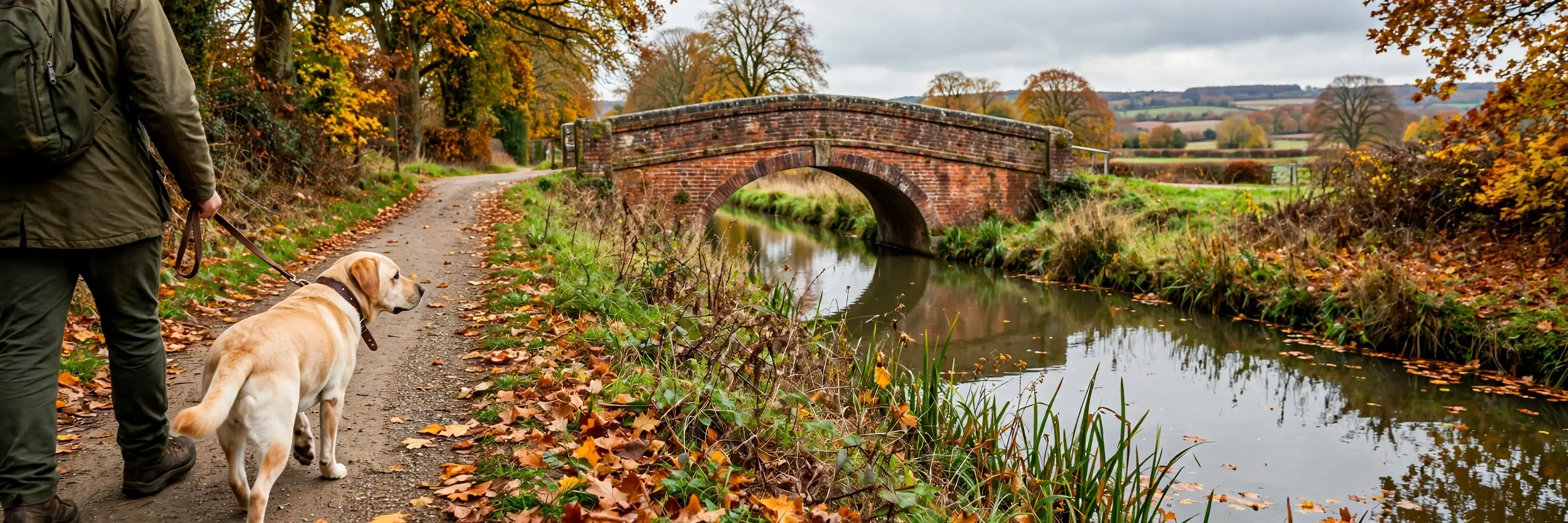
Bridgwater rewards visitors who arrive by water, or at least begin the day beside it. The Bridgwater and Taunton Canal runs for about fourteen miles between the two towns, and its towpath is the most reliable dog walk in the area: flat, mostly surfaced, and free of traffic for long stretches. From the Bridgwater end, the path leaves the docks behind quickly and settles into the rhythm that makes canal walking so good for dogs — a straight, predictable line, hedgerows on one side, water on the other, and very little to surprise a nervous animal.
Begin at the canal basin near the docks rather than in the shopping streets. The basin area gives you space to let the dog settle, sniff and get the excitement of arrival out of the way before you commit to a narrow towpath. The first mile out of town is the busiest section, shared with commuter cyclists and the occasional angler, so keep the lead short and the dog on the side away from the water. After the first bridge or two the crowds thin, and the path becomes the kind of walk where a long line works well — provided you can reel the dog in quickly at bridges, where sightlines vanish and cyclists appear suddenly.
The canal’s character changes with the seasons in ways that matter for planning. In spring the hedgerows fill with birdsong and the towpath dries quickly after rain; in high summer the tree-shaded stretches are welcome, but the open sections can be hot and there is little shade for a dark-coated dog. Autumn is arguably the best season here, when the leaves turn along the water and the path is quiet on weekdays. Winter brings the canal’s least forgiving side: the towpath can stay muddy for days after rain, and the water level sits high against the banks. Pack a towel and a drying coat in the colder months, and accept that a winter canal walk will end with a muddy dog.
Distance is easy to control on a canal because the route is linear. A gentle out-and-back of two miles suits older dogs and puppies, while a fit dog can manage five or six miles to the next village and back without ever meeting a road. The locks are the natural turning points — each one gives the dog a new set of smells, a place to pause, and a reason to turn around without the walk feeling cut short. Watch for the canal’s working details too: lock gates, moored narrowboats and the occasional boat moving through a lock are all things a dog should meet on a lead, not loose, because a startled dog and deep water are a bad combination.
The River Parrett and the docks
The River Parrett is a different animal from the canal, and it sets the tone for the whole town. It is tidal as far as Bridgwater, and at times it carries a bore — a wall of water that runs upriver on the highest tides — which means the river can look calm one hour and dramatically full the next. For dog owners the practical rule is simple: the Parrett is always a lead-only river. The banks are not fenced, the mud at low tide is deep and sticky, and a dog that plunges in after a bird may struggle to climb out on a steep, slippery bank.
The docks are where the river’s history is most visible. Bridgwater was once a busy port, and the dock basin, the old warehouses and the tidal lock tell that story without needing a museum ticket. A lead walk around the dock basin works well as a short, flat circuit, and the open quayside gives dogs room to move without the pinch points of the towpath. Look for the brickwork, the moored boats and the way the town’s streets run down towards the water — the whole centre was shaped by a river that brought trade in and carried it out again.
Downstream of the town, the Parrett runs through flat reclaimed land towards the Bristol Channel, and the riverside paths become wilder and less formal. This is good walking country for a confident dog on a lead, but it is not a place for off-lead running: the river is wide, the tide is fast, and the paths can be narrow with livestock on the far side of the fence. Check the official guidance before you travel if you are planning a longer riverside route, because access along tidal rivers changes with maintenance work, flood defence repairs and seasonal closures.
One detail worth knowing is the river’s mud. Parrett mud is famously clinging, and a dog that gets into it at low tide will need more than a quick wipe. If your dog is a swimmer, keep them well away from the riverbank at low tide and choose the canal or a Levels rhyne instead. The docks area also has the usual hazards of a working waterfront: mooring rings, chains, uneven quayside surfaces and the occasional fishing line. None of this makes the river off-limits — it makes it a place to walk attentively, with the dog close and the lead short.
Out onto the Somerset Levels
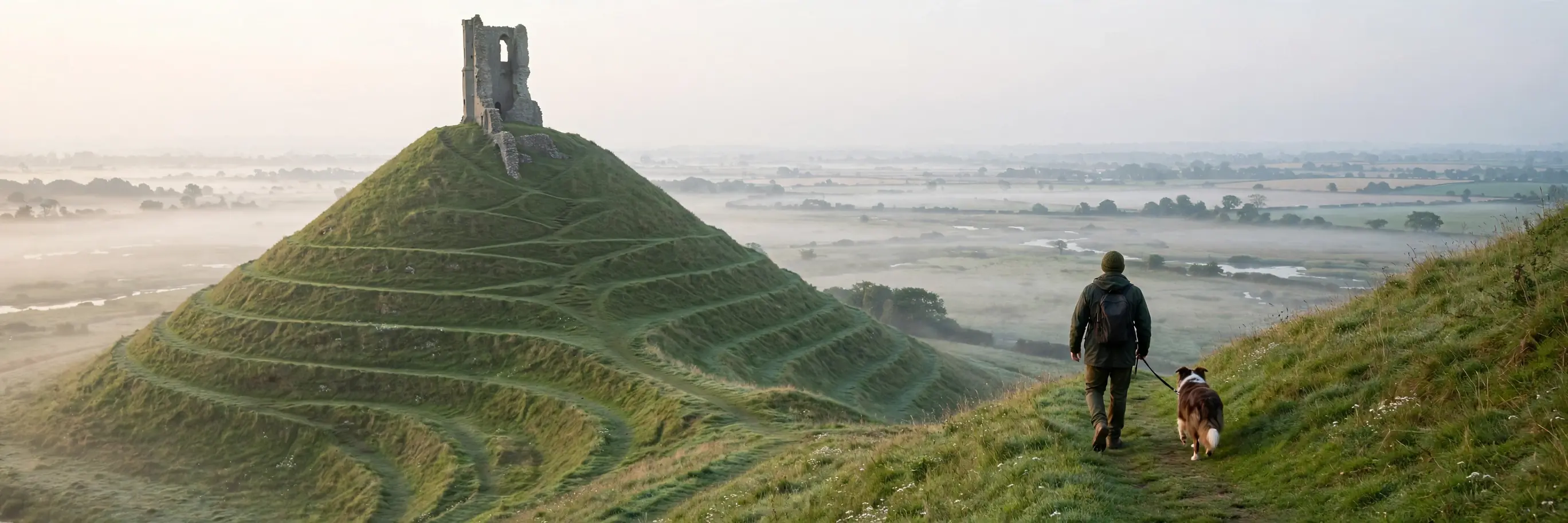
East and south of Bridgwater, the Somerset Levels spread out in a flat, watery landscape that feels nothing like the town. Rhynes — the straight drainage ditches that criss-cross the Levels — divide the fields into long rectangles, and the paths that follow them are among the flattest walks in England. For a dog, the Levels are a sensory feast: wading birds, water voles, the smell of wet grass and, in winter, huge flocks of ducks and waders on the flooded moors.
The best-known Levels walks near Bridgwater sit around the nature reserves to the south-east, where raised paths and hides overlook reedbeds and open water. Dogs are welcome on leads on many of the outer paths, but the reserve interiors often restrict dogs to protect ground-nesting birds, so check the official guidance before you travel and plan your route around the dog-friendly perimeter rather than through the heart of a reserve. The distinction matters: a lead walk along a drove with skylarks overhead is a fine morning, while a confrontation with a warden at a hide is not.
Livestock is the Levels’ other constant. Cattle and sheep graze the moors for much of the year, and the droves that cross them are working farm tracks, not park paths. Keep the dog on a lead whenever stock is in sight, and be ready to turn back if a field is full of cattle with calves. The flat ground makes it easy to see a long way ahead, which is an advantage — you can spot stock early and choose another drove. The same flatness means there is almost no shade, so on a hot day carry water for the dog and plan the walk for early morning or late evening.
Winter transforms the Levels. When the moors flood, the landscape becomes a vast shallow lake, and the birdlife is extraordinary — but the paths can be impassable and the water is cold. A winter Levels walk is a short, careful affair: stick to the raised droves, keep the dog out of the flood water, and have a warm, dry car to return to. In dry summers the opposite problem appears, when the rhynes shrink and the ground hardens; the walking is easier but the water is lower and the birds thinner. Either way, the Levels reward the dog owner who checks conditions before setting out rather than assuming the walk will be the same as last time.
Carnival week changes the rules
Bridgwater Carnival, held in early November, is one of the biggest illuminated carnivals in Europe, and it changes the town completely for a week. The procession itself is a spectacle of lit-up floats, marching bands and huge crowds, and it draws visitors from across the West Country. For dogs, carnival week is the one time of year when Bridgwater’s normally calm streets become genuinely difficult.
The honest advice is that most dogs should not attend the carnival procession. The combination of dense crowds, loud music, fireworks, flashing lights and late-night finishes is stressful for all but the most bombproof animals, and the streets are so packed that a dog on a lead becomes a trip hazard for everyone. If you are staying in Bridgwater during carnival week, plan the dog’s day around the daytime: a long canal or Levels walk in the morning, a quiet afternoon, and then leave the dog somewhere calm and familiar while you watch the procession.
That said, carnival week is not a reason to avoid Bridgwater altogether. The week before and the week after the carnival are often the best times to visit: the town is buzzing, the pubs are lively, and the canal and Levels are quiet because everyone is focused on the town centre. Accommodation books up early for carnival itself, so if you do want to be there, book months ahead and confirm the dog policy in writing, because some places change their rules for the carnival weekend.
Fireworks are the other carnival-week consideration. Displays happen around the town in the days surrounding the procession, and a noise-sensitive dog will hear them from any accommodation in the centre. If your dog is firework-phobic, choose a stay on the edge of town or out on the Levels, where the sound is muffled, and keep the dog’s routine as normal as possible. A familiar bed, a radio left on low, and a long walk earlier in the day do more than any calming product.
A town-centre loop that works with a dog
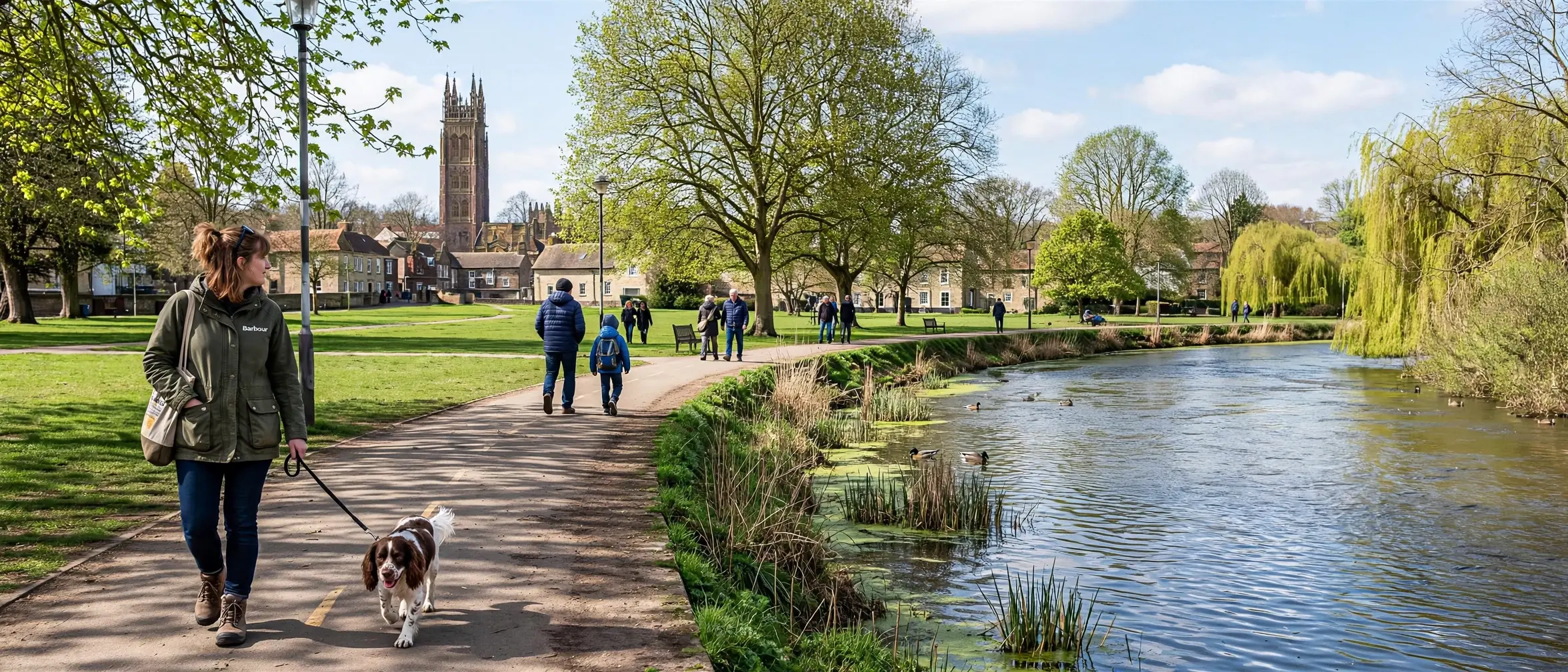
Bridgwater’s town centre is compact enough to walk in an hour, and a well-planned loop avoids the busiest roads while taking in the best of the town. Start at the docks, follow the canal towpath a short way out, then cut back through the quieter streets towards Cornhill, the town’s historic market square. Cornhill is the natural pause point: it is open, relatively calm, and a good place to sit with a dog while you work out the next leg.
From Cornhill, the streets towards the Blake Museum and the town’s older buildings are worth a slow wander. The museum celebrates Robert Blake, Bridgwater’s famous admiral, and the streets around it hold some of the town’s oldest houses. The museum building itself does not admit dogs except assistance dogs, so this is a split-visit stop: one person goes in while the other walks the dog around the docks or the nearby streets. The building is small, so a split visit rarely takes more than half an hour.
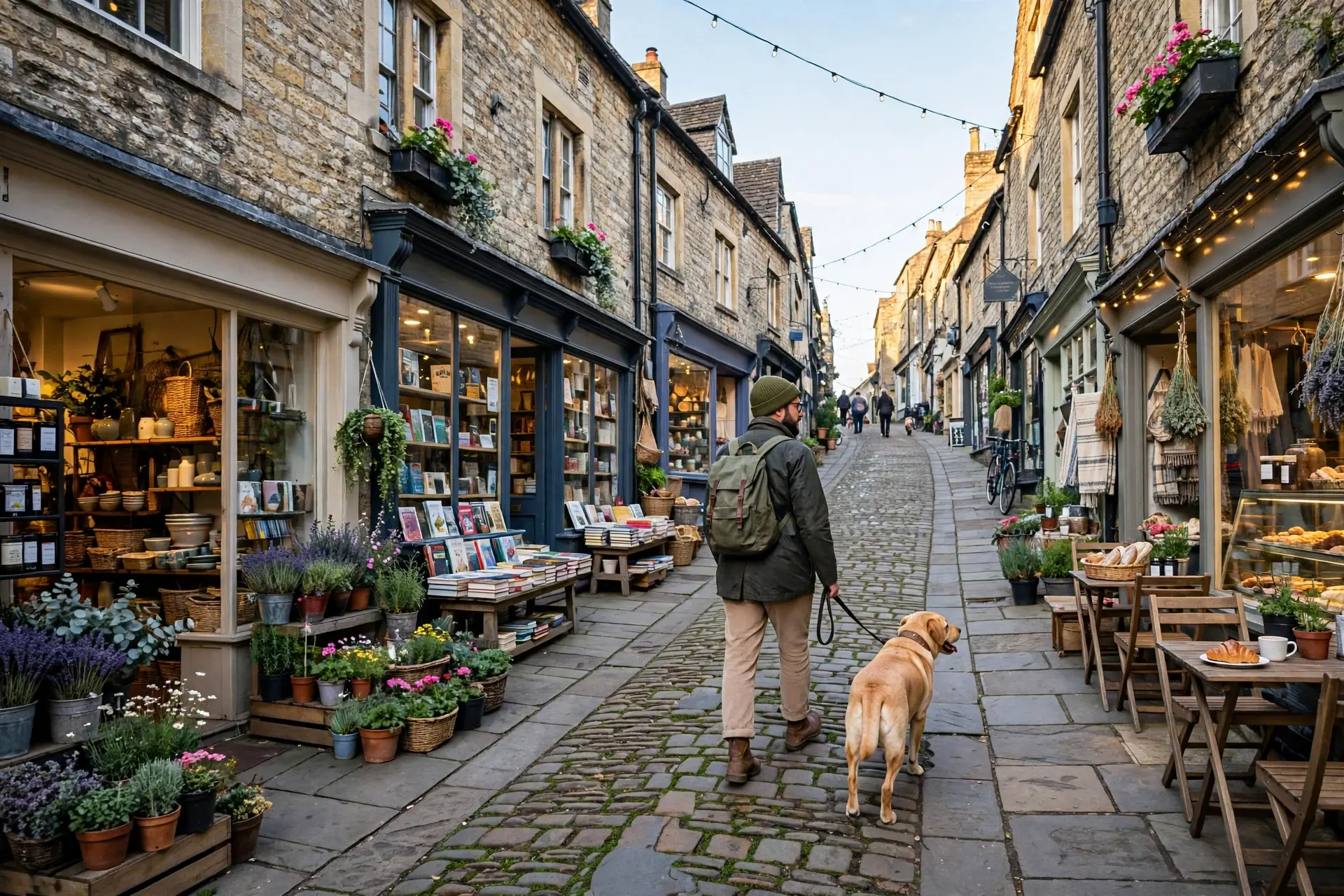
The shopping streets — Fore Street and the High Street — are functional rather than pretty, and they are best walked briskly with a dog rather than lingered in. The pavements are narrow in places and the traffic is steady, so keep the dog on the inside, away from the road, and avoid the Saturday market crowds if your dog is reactive. The market itself, when it is running, is worth a look from the edges: the stalls sell local produce and the atmosphere is friendly, but the aisles are tight and the smells are intense for a dog.
Finish the loop by returning to the river. The walk back along the Parrett towards the docks is quieter than the shopping streets and gives the dog a final stretch of open ground. If the tide is in, the river looks its best at this point, wide and calm, with the town reflected in the water. The whole loop is about three miles if you take the canal out and the river back, and it is flat throughout, which makes it a good option for older dogs and for visitors who want to see the town without committing to a long walk.
Eating out: breakfast, a docks lunch and a quiet evening
Breakfast is the easiest meal of the day in Bridgwater with a dog. The cafes near the docks and around Cornhill open early, the rooms are calm before the lunch crowd, and a dog that lies quietly under a table at nine in the morning is a dog that has earned its breakfast crumbs. Choose a table with space beside it rather than one squeezed between other diners, and bring the dog’s mat so it has somewhere to settle that is not the middle of the walkway. A cafe breakfast also sets up the day: the dog eats, you eat, and you both leave fed and ready for the towpath.
Lunch belongs to the docks. The pubs around the basin and along the canal serve food through the middle of the day, and their gardens and flagstone floors are built for muddy boots and wet dogs. Order at the bar, find a table near the door, and let the dog drink from the bowl that most of these pubs keep by the entrance. The gardens are the best seats in good weather, but they fill quickly on a sunny Saturday, so an early lunch — twelve rather than one — buys you a quiet table and a dog that can settle before the room fills.
Evenings are quieter and need a different approach. The town-centre pubs are livelier after six, and a dog that coped happily at lunchtime may find the evening crowd harder, so look for the pubs on the quieter streets away from the High Street, where the rooms are smaller and the atmosphere is calmer. If the evening does not work out, takeaway is a genuine option rather than a fallback: Bridgwater has plenty of takeaway food, and a meal eaten on a bench by the docks, with the dog at your feet and the canal in front of you, is often the best dinner of the trip.
A few habits make eating out easier anywhere in town. Phone ahead if a pub’s dog policy matters to you, because policies change when the management does and no guide stays current for long. Bring water for the dog even when the pub provides a bowl, because the bowl may be empty or in use. And ask your accommodation host where they eat with their own dog — hosts hear about policy changes weeks before any guide does, and their recommendations are usually the most reliable in town.
Sleeping in Bridgwater: town rooms, Levels cottages and the carnival question
Where you sleep in Bridgwater changes the shape of the whole trip, and the choice is really about water. A room near the docks puts the canal and the river on your doorstep, which means every walk starts the moment you leave the building — but it also means street noise, a lead walk for every toilet trip, and a dog that has to cope with the town’s sounds at night. A cottage out on the Levels is the opposite: quiet, dark, usually with a garden, and a drive into town for every meal. Neither is wrong; they suit different dogs.
The garden is the first thing to ask about, and the question is not whether there is one but whether it holds a dog. How high is the fence, and is it solid all the way round? A low hedge, a gap at the gate, or a fence that ends at a rhyne is not a fence for a determined terrier. Then ask about the night-time toilet walk: where does it go, is it lit, and how far is it from the door? A torch-lit walk across a dark garden at midnight is a different proposition from a lit path to a small yard, and an older dog will feel the difference.
Charges and rules come next, and they are worth pinning down before you pay. Is there a charge per dog or per stay, and is there a limit on the number of dogs? Can the dog be left alone in the room, and if so for how long? Are dogs allowed in the breakfast room, or only in the bedroom? Ask for the answers by email and keep the reply with your booking confirmation — a written answer is worth far more than a cheerful assurance on the phone when you arrive tired at six in the evening.
Cottages on the Levels deserve a particular note, because many of them sit beside rhynes — the drainage ditches that divide the fields. A rhyne is attractive to a dog and dangerous in equal measure, so ask whether the garden is fenced on the water side before you book. A walled garden is worth paying more for if your dog swims or wanders. Bridgwater also makes a good base for the wider area: Taunton is a short drive up the canal, Glastonbury is an easy day trip across the Levels, and the Quantock Hills are close enough for a morning’s walking.
Arriving: the M5, the station and the one-way system
Most visitors drive to Bridgwater, and the M5 makes it straightforward: the town sits just off the motorway between Bristol and Exeter, and the junctions for the town are well signed. The drive itself is easy, but the last few miles need patience — the junction is busy at peak times, and Friday afternoons and bank holiday weekends can add half an hour to the journey. Once you are off the motorway, follow the signs to the town centre rather than trusting a satnav to find a particular street, because the one-way system around the centre confuses first-time visitors and rewards the patient.
The railway is the other way in, and it suits a dog that travels well. Bridgwater station is on the main line between Bristol and Exeter, and the walk from the station to the docks and the canal basin takes about fifteen minutes on flat ground. That makes a car-free visit genuinely possible, provided you are happy to walk everywhere once you arrive — which, in a flat town built around water, is a pleasure rather than a chore. The best walks start outside the town centre, so a car-free visitor should plan on buses or taxis for the Levels.
Parking is straightforward outside carnival week. The long-stay car parks around the docks and the town centre are a short walk from the canal, and the charges are modest by southern standards. Market days fill the town-centre car parks early, so arrive before ten or use the car parks on the edge of town and walk in along the canal. Once you are parked, leave the car where it is: the town is walkable, the canal is the route, and driving between stops only means fighting the one-way system twice.
Summer and winter ask different things of a parked car. In summer the car parks have almost no shade, so get the dog out straight away and walk to the canal or the river, where the water and the trees keep the air cooler — a parked car heats dangerously fast, and even a few minutes is too long. In winter the car parks are exposed and windy, so have a warm coat ready for the dog’s first walk out of the car, and a towel in the boot for the muddy return.
A one-day plan that follows the water
Start at the canal basin just after breakfast, when the towpath is quiet and the light is low over the water. Walk out along the canal for an hour, turn at a lock, and come back the same way — the return leg always looks different, because the light has changed and the boats have moved. By ten o’clock you will be back at the docks, and the dog will have had its proper exercise before the day has really begun.
Late morning is for the town. Walk from the docks to Cornhill, look at the market if it is running, and wander the older streets around the Blake Museum — a split visit if you want to go inside, with one person staying out with the dog. Keep this leg to about an hour: the town is worth seeing, but the best of Bridgwater is outside the centre, and the dog will tell you when it has had enough of pavements.
After lunch at a docks pub, drive ten minutes out to the Levels. Choose a drove or a reserve perimeter path, walk for an hour and a half, and let the dog work through the open landscape at its own pace. The flat ground makes this an easy walk even after a morning on the canal, and the birds give you something to watch while the dog sniffs along the rhyne. Drive back slowly through the villages, and stop if a farm shop catches your eye.
The evening is for the river. The pubs around the docks fill gently, the Parrett catches the last light, and a short final loop along the quayside gives the dog its last sniff of the day. A dog that has walked the canal, the town and the Levels in a single day has had a full Somerset education, and it will sleep soundly. If you have a second day, spend it further afield: our guides to Frome and the dog-friendly beaches of the UK cover the market-town lanes and the coastal rules that pair well with a Bridgwater base.
Practical questions
Before you go
Can dogs walk the Bridgwater and Taunton Canal towpath?
Yes, the towpath is a public route and suits dogs on a lead, but it is narrow in places, shared with cyclists, and passes close to the water with few fences. Keep the lead short near bridges and locks, and pick the quieter stretches beyond the town centre if your dog is reactive.
Is the River Parrett riverside path in Bridgwater dog-friendly?
There are riverside stretches you can walk with a dog on a lead, including around the docks and along the tidal Parrett, but the banks are not fenced and the river has a strong tidal bore at times. Treat the Parrett as a lead-only river and check the official guidance before you travel if you plan a longer riverside route.
What is the best time of year to visit Bridgwater with a dog?
Spring and autumn are usually the easiest: the towpaths and Levels are quieter, the ground is firmer than in deep winter, and the heat is kinder than in July. Carnival week in early November brings huge crowds and fireworks, so it suits confident dogs only, and many visitors prefer to come the week before or after.
Are dogs allowed on the Somerset Levels walks near Bridgwater?
Many Levels paths, droves and nature reserve trails welcome dogs on leads, but grazing livestock, ground-nesting birds and wet rhynes mean off-lead freedom is limited. Keep dogs on a lead near cattle and sheep, and check the official guidance before you travel for any seasonal access rules at the reserves.
Where can I park in Bridgwater with a dog?
The town has several long-stay car parks within a short walk of the canal and the river, including around the docks and the town centre, plus on-street parking on the quieter roads. Arrive early on market days and carnival week, and walk the dog from the car park rather than driving between stops, as the one-way system is slow.
Can dogs go into the Blake Museum in Bridgwater?
The museum building itself does not admit dogs except assistance dogs, so plan a split visit with one person staying outside with the dog. The museum garden and the surrounding docks area are good for a lead walk while you take turns, and the building is small enough that a split visit works well.