This article was written independently; no business paid to appear in it. Every cocker is an individual, the health material is general rather than personal advice, and your vet is the right person for questions about your dog. Rules also change, so check the latest official position before travelling.
A cocker spaniel holiday in the UK succeeds when scent does the entertaining: give the dog structured sniffing and retrieving games, keep it on a lead or long line anywhere birds, deer or livestock could burst from cover, dry and check those long ears after every wet walk, and keep up a light grooming routine so the coat never becomes a holiday-long project. Energy spent through the nose tires this breed more honestly than miles alone.
The nose rules the itinerary
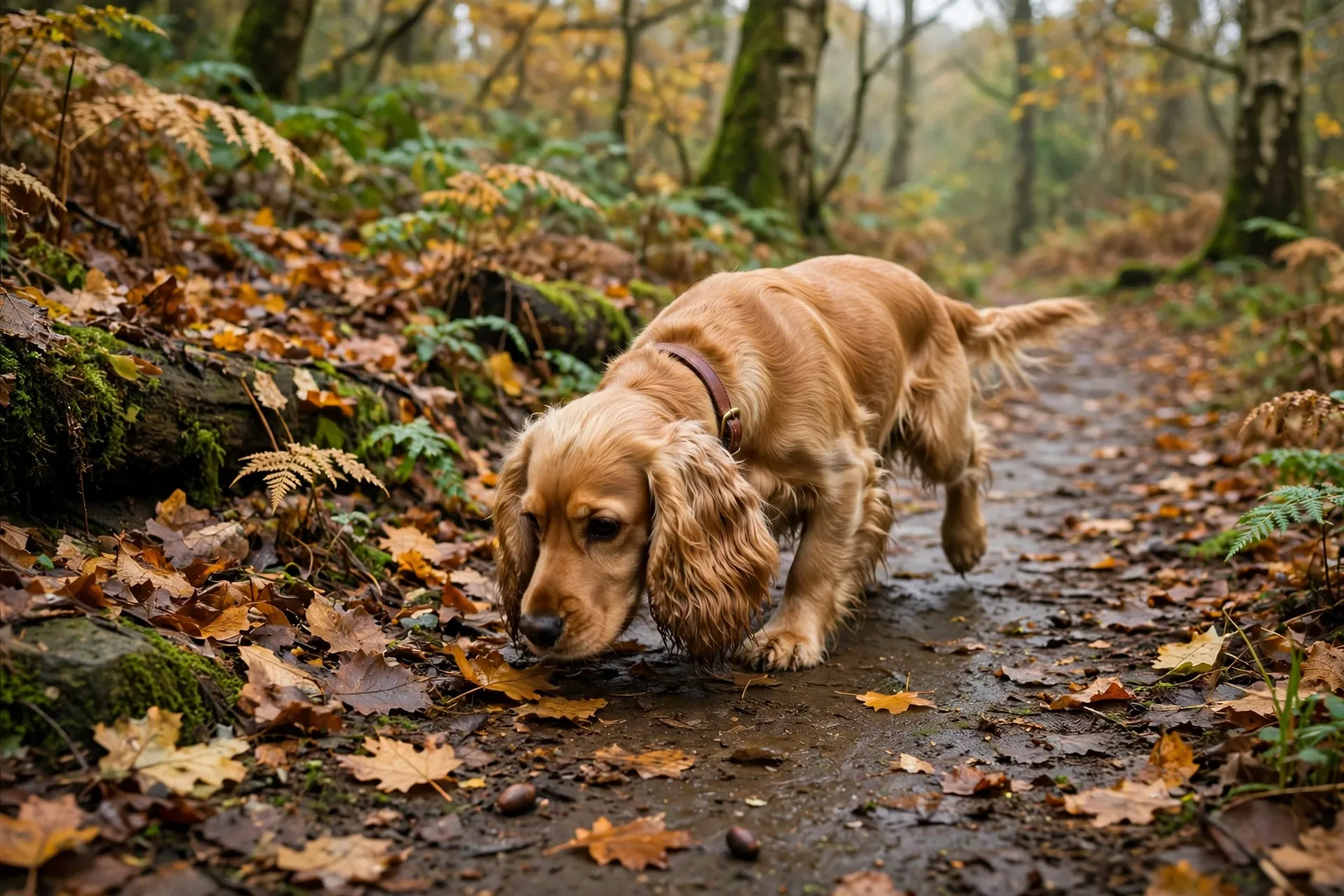
Begin with the organ in charge. A cocker spaniel does not stroll through a new valley admiring it; the dog reads it, at speed, in scent, quartering back and forth across every interesting smell the way the breed was developed to work through cover. That is why a cocker can return from a modest woodland walk happily exhausted while a longer pavement march leaves it still fizzing: the first walk fed the nose, the second merely moved the legs. Build a cocker holiday around that fact from the first morning. Choose routes with texture — woodland rides, hedgerows, bracken edges where rules allow, beaches with seaweed lines to investigate, meadows in season — and deliberately include slow sections where the dog is allowed to sniff a patch of ground for as long as it wants, within reason, instead of being hurried along at human sightseeing pace.
Give the nose legal jobs. Scatter a handful of treats or part of a meal in short grass and let the dog hunt them out. Hide a favourite toy a few metres into light cover on a walk and send the dog to find it. Play short, cheerful retrieving games on open ground where the dog is allowed off lead, keeping throws few and distances modest so excitement does not outrun obedience. These games are not extras for a cocker; they are the difference between a dog that settles under the pub table and a dog that patrols the cottage all evening re-checking every smell it met that day. Ten focused minutes of scent work can settle a spaniel more deeply than another hour of lead walking, and on a wet day when routes are limited, indoor hide-and-seek with toys is a genuine substitute, not a consolation prize.
Expect the nose to overrule good intentions in exciting places, and plan routes accordingly. A rabbit-scented bramble patch beside a road, a pheasant cover crop next to a shoot, or a deer park lawn at dawn all ask more of a young cocker's recall than most dogs can honestly give. There is no shame in the long line here; there is considerable shame in the alternative. Pick tomorrow's walk by asking what the dog will smell there, not only what you will see, and the whole holiday changes character — slower, funnier, and far less likely to feature an owner sprinting across a field in walking boots shouting a name the wind has taken.
Energy: busy is not the same as tired
Cocker spaniels — show type and working type alike, though often to different degrees — carry a reputation for boundless energy that needs one correction before it ruins a holiday itinerary. What most cockers need is not endless exercise; it is varied, engaging exercise finished off with enforced rest. A dog marched further every day because it still seems bright will often become more wound up, not less, arriving home over-tired, over-stimulated and harder to settle than the dog that had a moderate day and a proper afternoon sleep. Watch the individual in front of you: frantic greeting behaviour, inability to lie down, shadow-chasing excitement in the cottage and snatching at treats it normally takes gently are signs the tank of stimulation is overflowing, even if the legs could clearly go further.
Structure the cocker day in three blocks. A morning walk that includes sniffing and, where safe and allowed, some free running and retrieving. A middle of the day that is genuinely quiet — cottage rest, a sleep in a cool room, humans reading rather than staging entertainment. Then a shorter evening outing, more sniff than march, finishing with a calm chew and the normal bedtime routine from home. Puppies and older cockers need that pattern scaled down considerably, and any dog with a known health condition needs its own plan agreed with a vet, not a breed average borrowed from the internet. If you are travelling with a very young spaniel, our guide to a puppy's first holiday in the UK covers the rest-heavy rhythm young dogs need, and its principles apply in miniature to excitable adults too.
Heat deserves its own warning for this breed. A dark-coated, endlessly willing cocker will keep working long after it should have stopped, especially if water, birds or a ball are involved. In warm weather, walk early and late, carry water and offer it often, choose shaded woodland and streams over exposed hilltops, and treat heavy panting, a wide tongue, unsteady movement or sudden disinterest as stop-now signals. Never leave the dog in a parked car in warm conditions. A cocker's enthusiasm is not a fitness certificate, and the owner, not the dog, is in charge of calling the rest.
Flushing birds, deer and livestock: the moment that matters
The defining cocker risk on a British holiday is a half-second long. Something moves in cover — a pheasant, a rabbit, a muntjac slipping out of a wood, sheep shifting in the next field — and a dog bred for generations to find and flush game is suddenly doing its ancestral job at full speed. Good holidays are designed so that half-second happens with the dog already on a lead or long line. Use them by default anywhere you cannot see the whole field and what is in it: farmland, moorland in ground-nesting bird season, deer parks, woods in autumn when shoots may be operating nearby, and any path crossing grazing. Check signage at gates, respect seasonal restrictions and closures, and check official latest guidance for protected sites before you travel, because nesting-bird and livestock rules change by place and date.
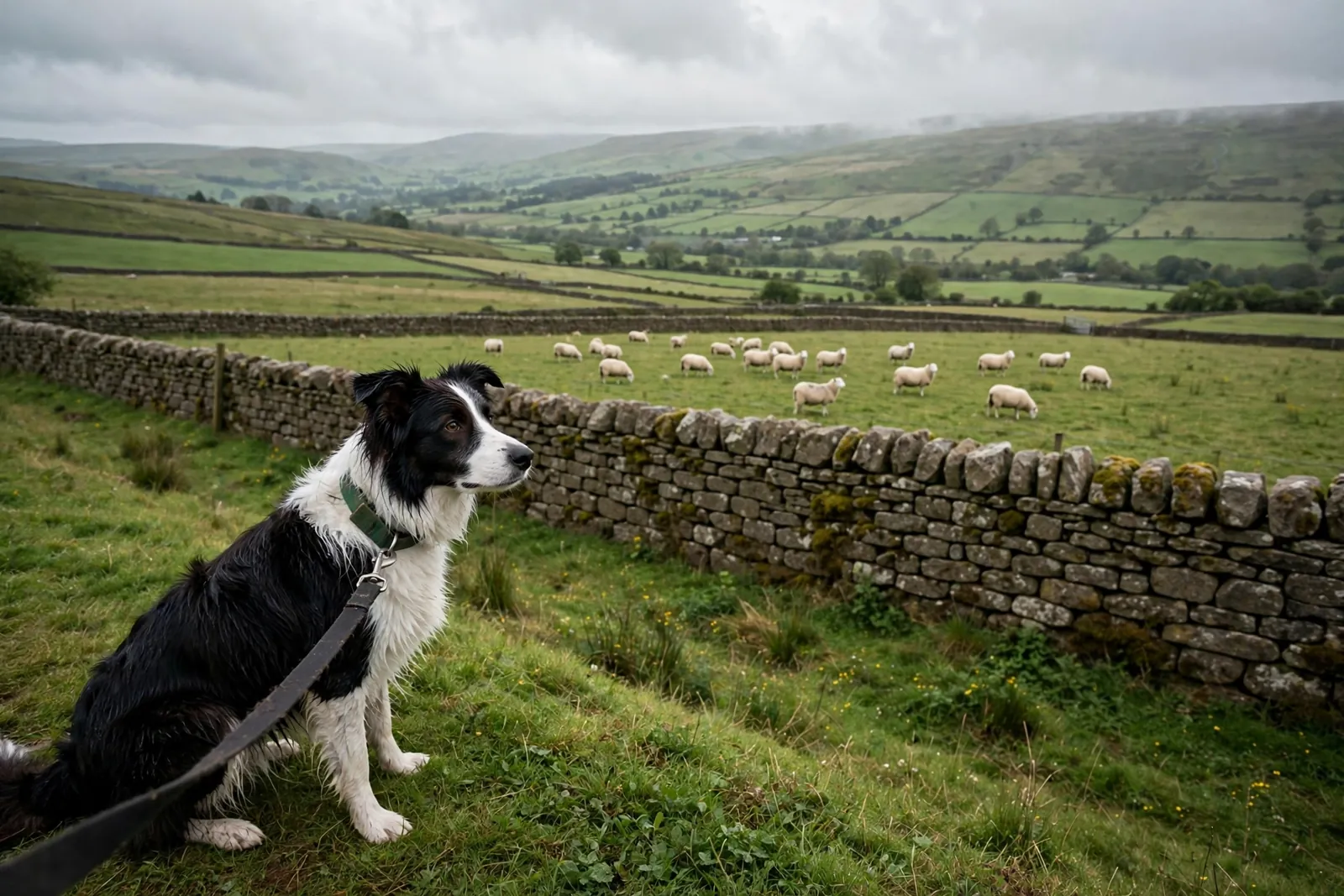
Around livestock there is no spaniel exception and no benefit of the doubt. Keep the dog on a short lead near sheep, cattle and horses, walk wide and calm around them, and leave the field by the nearest sensible exit if cattle show interest in you. The law on dogs worrying livestock is strict, farmers are entitled to protect their animals, and a small, fast, low dog quartering through a flock is precisely the picture the law exists to prevent; our guide to dog worrying livestock law in the UK explains what counts as worrying and why even a chase without contact can be an offence. Train for the moment at home as well: a reliable recall rewarded with something genuinely exciting, a practised stop or down at distance if your dog has one, and — most useful of all for cockers — a default habit of checking in with you at every gate, stile and woodland edge, rewarded every single time on holiday so the habit strengthens exactly where it matters.
If a flush-and-chase does happen, do not chase the dog yourself, which usually extends the game and adds a second panicked animal to the field. Call in your happiest, most practised recall voice, make yourself interesting at ground level if that has worked in training, and recover the dog calmly without scolding on return — a dog punished for coming back learns to come back slower next time. Then be honest about what the incident tells you: that ground, at that season, is long-line ground for the rest of the holiday, and quite possibly for good. The best cocker owners are recognisable not by dogs that never want to chase, but by dogs that are never given the geography to try.
Ear care after wet and muddy walks: the nightly ten minutes
Those long, low-hanging ears are the cocker's glory and its maintenance department. The ear flaps limit air circulation to the ear canal, and a holiday adds exactly what ears dislike: rain, stream water, sea swimming, mud, grass seeds and long damp evenings in a warm cottage. The routine that prevents trouble is boring and brief, and it happens after every wet walk, not when the dog starts shaking its head. Towel the ears inside and out, lift each flap and check the opening of the canal for mud, seeds and debris, and sniff without embarrassment — a healthy ear smells like not much, while a strong, sweet or yeasty odour, redness, dark discharge, repeated head-shaking or pawing at an ear are all reasons to contact a vet rather than to experiment with leftover drops from home.
Only use an ear cleaner your vet has recommended for your dog, and only as directed; never poke cotton buds or tools down the canal, never pour water or home remedies into an ear that might be sore, and do not pluck or trim inside the ear on holiday unless your vet or groomer has specifically shown you how for this dog. Dogs with a history of ear problems need a pre-holiday conversation with their vet about what to carry and what threshold means seeking a local practice while away — and that conversation is worth having before any trip, because ear discomfort escalates quickly and a dog in pain in a strange cottage at midnight is a holiday problem nobody needs. This guide can only give general breed care information; it cannot diagnose your dog, and ear disease has many causes that look similar from the doorway.
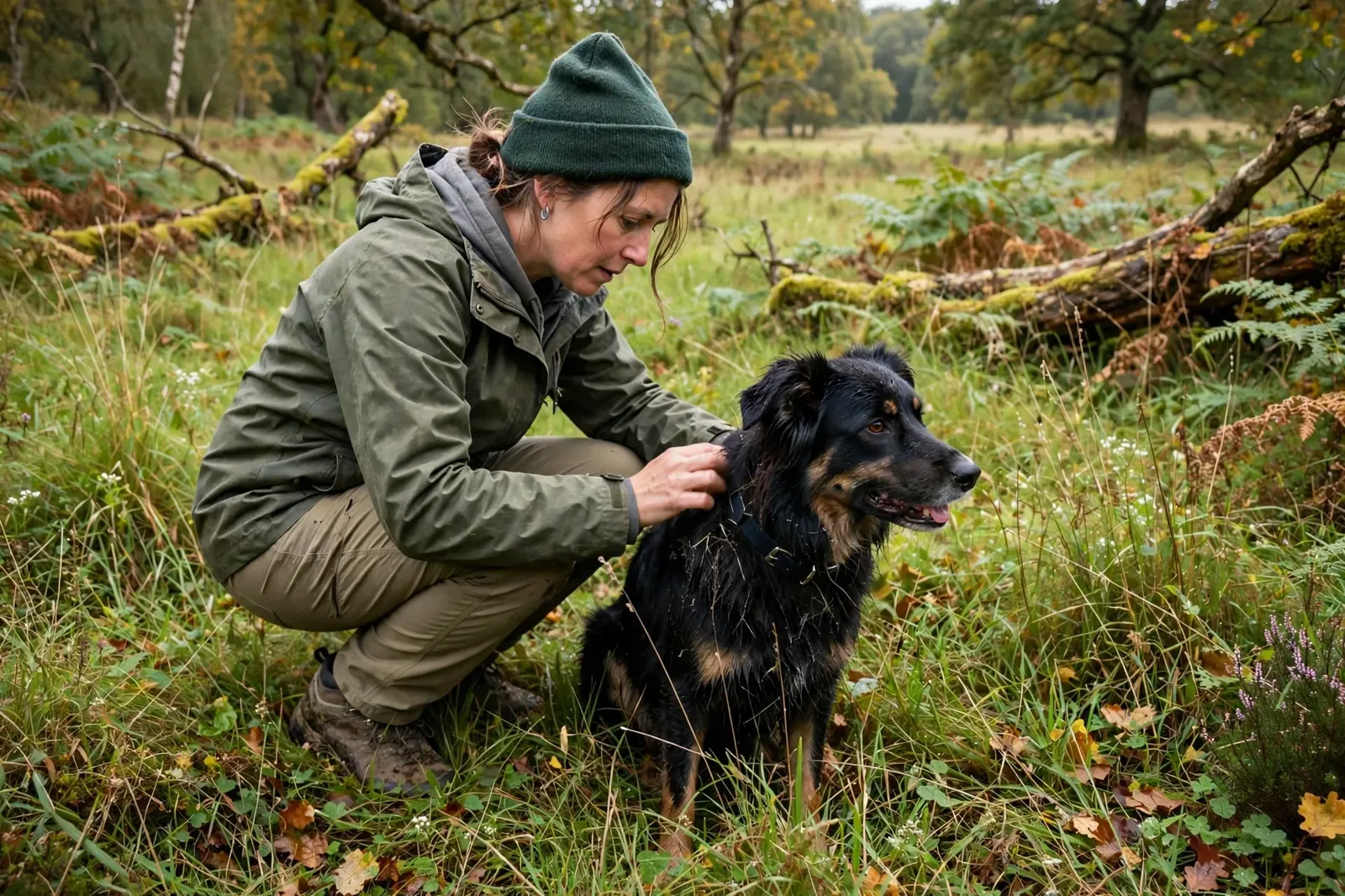
Drying is prevention you control. After swimming or a rain walk, dry the head and ears as thoroughly as the body, keep the dog out of further water until the ears are dry, and consider a light snood or ear cover for walks through seed-heavy grass in late summer if your dog tolerates one happily — introduced at home first, never forced on a stressed dog mid-holiday. While you are doing the nightly check, run the same inspection over feet, belly and tail feathering for grass seeds and ticks, especially after woodland and long grass; our guide to ticks on dogs in the UK shows where ticks hide and how to remove one safely with a tick tool. Ten minutes with a towel and a head torch is the cheapest insurance a cocker owner can buy.
Grooming on holiday without a salon: little and often
A cocker coat on a British holiday collects the landscape professionally: burrs in the ear feathering, mud set like plaster in the leg furnishings, sand in the belly coat and at least one unidentifiable seed head behind an elbow. The mistake is to save it all up for a heroic grooming session on the last night, by which point small tangles have become mats, the dog has learned to dread the brush, and the cottage bathroom looks like a hedge exploded. Instead, groom little and often — five calm minutes each evening with the dog settled and rewarded, working through ears, armpits, belly, legs and tail with fingers first, then a slicker brush and comb, teasing out debris before it felts. Wet mud is easier removed after it dries and crumbles, which is a useful excuse to let the dog rest first and groom later in the evening rather than wrestling at the door.
Pack a proper small kit, because human hairbrushes and hotel towels are not a system: slicker brush, steel comb, small scissors for careful work away from skin if you are confident using them — or leave scissor work to a groomer — a microfibre towel reserved for the dog, dog shampoo you have used before in case a full wash becomes unavoidable, and a spare collar, since the holiday collar will spend the week damp and grubby. Rinse mud and salt water off with plain water where you can rather than shampooing repeatedly, which strips the coat and multiplies drying time; save shampoo for the genuinely foul roll in something unspeakable, and dry thoroughly afterwards, ears included, before the dog sleeps in a cool cottage room.
Choose stays with grooming reality in mind. An outside tap or hose, hard floors near the door, a utility or porch where a wet spaniel can dry, and an enclosed garden for post-walk toileting all matter more to a cocker owner than a fancy sofa the dog is not allowed on anyway. Tell hosts honestly that you are bringing a spaniel, ask where dogs should be dried and whether there is a local groomer for emergencies, and leave the bathroom and floors as you found them — the next spaniel owner's welcome is built by the last one's housekeeping. A dog that arrives home with a combed, seed-free coat and un-sore ears has had a better holiday than one that merely went to more places.
Choosing walks: cover, water and open ground in balance
The ideal cocker walk mixes three terrains across a week rather than repeating one perfect route. Woodland gives scent, shade and quartering games, but in autumn and winter add awareness of shoots nearby, mud that tests ears and feathering, and deer at dawn and dusk — leads on near roads and car parks, and off the path edges where signage asks. Open farmland and downland give running room and views, but bring livestock, ground-nesting birds in season and rabbit temptation at every hedge; treat them as lead-and-long-line country unless you can genuinely see the whole space and its occupants. Water — a shallow stream entry, a lakeshore, a dog beach outside restriction dates — gives the classic spaniel joy of splashing and retrieving, provided you apply normal water judgement: safe entry and exit, no strong current, no algae warnings, and a thorough ear-and-coat dry afterwards. Check beach restrictions and site rules for your exact dates before you travel, and check official latest guidance where a reserve or protected landscape is involved.
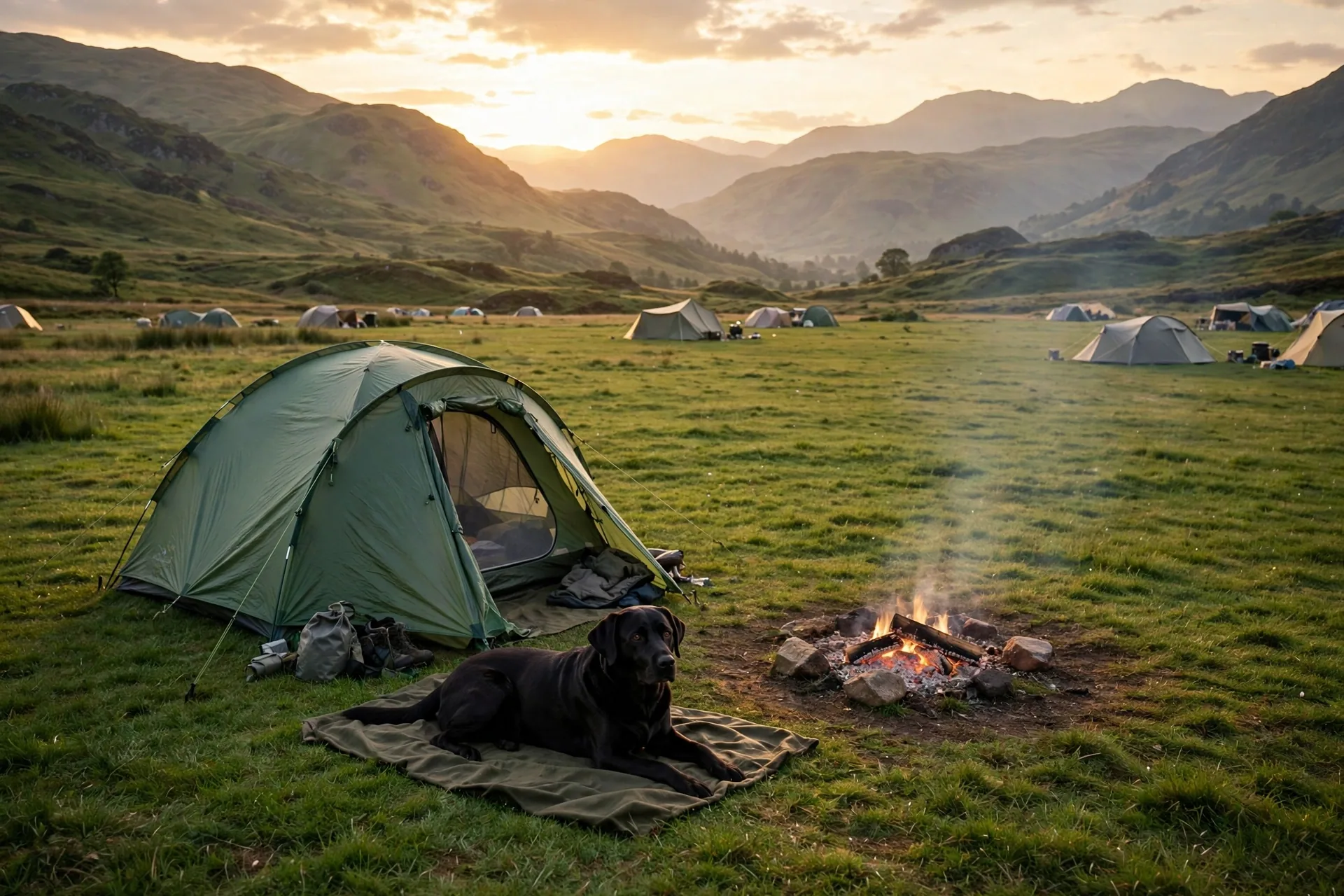
Camping and cocker spaniels combine well if the scent problem is managed at the pitch: a dog that can smell every barbecue on the site needs a solid tie-out or enclosed setup as allowed by the site, a bed placed away from the cooking side, and evening scent games to spend the nose before bedtime. Our guide to camping with a dog in the UK covers site choice, lead rules and sleeping arrangements in detail. For cottage weeks, a garden the dog can patrol and sniff thoroughly on arrival is a settling tool, not a luxury — ten supervised minutes reading the garden usually buys a calmer first evening indoors than any amount of telling the dog to relax in an unexamined new territory.
Whatever the terrain, carry the spaniel basics on every walk, not just the long ones: water and a bowl, because a busy dog drinks more than owners expect; treats valuable enough to compete with a pheasant-scented hedge; poo bags, including spares for the day the roll runs out at the furthest point; a spare lead, because wet webbing plus a lunging spaniel finds every weak clip; and a tick tool in season. Build the route around a pub or cafe stop only after checking the dog is genuinely welcome inside, not merely tolerated in a rainy garden, and plan the return leg before the dog is tired — a cocker that has spent its concentration will pull, zigzag and investigate every smell at double intensity on the way home if the walk outruns its brain.
Settling a whirring spaniel indoors: teach the off-switch
More cocker holidays are spoiled indoors than outdoors. The dog has walked, swum and sniffed all day, yet in the cottage it paces, whines at the window, brings toys to anyone sitting down and greets every passing dog outside as urgent news. This is rarely naughtiness; it is a busy brain in a novel, smell-rich box, with no learned routine for switching off away from home. Bring the off-switch with you. Pack the dog's own bed or blanket with its home smell, set it up in the same relative position as at home if you can — beside where people sit, not in the exciting hallway — and run the home evening sequence in the home order: last walk, dinner, chew, bed. Dogs read sequences better than instructions, and a spaniel that recognises the sequence borrows the calm attached to it.
Help physically as well as ritually. A long-lasting chew or a lick mat after the evening walk gives the jaw and brain a slow task that reliably lowers arousal. Curtains closed against the street parade, a radio or television at home-like volume to mask cottage noises, and a house rule that nobody revs the dog up with wrestling games after dinner all protect the settle. If the dog cannot settle, add calm, not exercise: a five-minute sniff game in the garden, a few easy rewarded training repetitions it knows well, then back to the bed routine. Resist the midnight extra walk unless the dog genuinely needs the toilet; a spaniel taken out for a bonus adventure at ten will request the sequel nightly.
Be realistic about accommodation type. A highly strung young cocker may do better in a quiet rural cottage with a garden than in a busy hotel with corridor noises, dog smells in every doorway and a breakfast room to negotiate; a confident older dog may love the hotel fuss. Match the stay to the dog you have this year, not the dog you hope to have in three years, and tell hosts the truth about energy and barking so they can give you the right room or cottage — ground floor, away from the bar, near the dog exit. Honesty at booking is a settling strategy too, because a dog placed in the wrong environment cannot be trained out of reacting to it in a week.
The cocker packing list: ears, coat and control
Finish with the bag itself, spaniel-edition. Food measured out for the trip plus a spare day, treats in two values — ordinary for easy recalls, exceptional for competing with game scents — and any regular medication, with your vet's details and the location of a practice near your stay saved in your phone before you leave. Collar with a legible ID tag as the law requires for dogs in public places, harness if you use one, a standard lead, a long line for controlled freedom in chase country, and a spare of each that matters, because wet kit and lost clips choose holiday weekends to fail. Add the grooming kit from the earlier section, the ear kit your vet has approved, towels in numbers that assume rain, and a drying solution for the car boot that keeps a wet spaniel off your luggage.
Control equipment deserves one honest paragraph. Nothing in the bag fixes training that does not exist yet, so the weeks before the holiday are part of the packing: recall practise in gradually smellier places, leave and drop games, loose-lead walking past temptations, and calm settling on a bed while exciting things happen nearby. Reward-based practise in short, cheerful sessions suits this breed's temperament and builds exactly the habits a holiday tests. If recall is currently a rumour, plan the holiday as a long-line holiday and enjoy it on those terms — a cocker quartering happily at the end of a line in a Welsh wood is having an excellent day, and so is its owner, which is rather the point.
Last, pack for the human end of the lead: waterproofs that let you stand in a field while a spaniel investigates a hedge for geological timescales, boots that survive bracken and stream banks, a head torch for the nightly ear-and-seed inspection, and a notebook or phone list of the cottage rules, vet numbers and beach restriction times you checked before travelling. A cocker spaniel holiday rewards the prepared owner disproportionately, because the breed supplies the enthusiasm for free. Your job is only to supply the ears routine, the long line and the off-switch — and then to follow that joyful, muddy, indefatigable nose somewhere worth remembering.
Practical questions
Before you go
How much exercise does a cocker spaniel need on holiday?
Most healthy adult cocker spaniels do best with a substantial morning outing that includes sniffing and, where safe, free running or retrieving, followed by real rest and a shorter evening walk. More miles is not always better: watch for over-stimulation, and scale plans down for puppies, older dogs and any dog with a health condition, asking your vet for individual advice before a big increase.
How do I look after my cocker spaniel's ears on holiday?
After every wet or muddy walk, towel the ears inside and out, lift each flap and check for mud, seeds, redness or discharge, and note any strong odour, head-shaking or pawing at an ear. Use only an ear cleaner your vet has recommended, never probe the canal, and contact a vet promptly if you see redness, discharge, pain or persistent shaking rather than trying home remedies.
Can I let my cocker spaniel off the lead in the countryside?
Only where you can see the whole area, there is no livestock, game or deer risk, local rules allow it, and your dog's recall has genuinely been proved in similar scent-rich places. Around farmland, moorland in nesting season, deer parks and shooting country, keep the dog on a lead or long line — a spaniel's flushing instinct can trigger a chase in half a second.
How do I stop my cocker spaniel's coat matting on holiday?
Groom little and often: five calm minutes each evening working through ears, armpits, belly, legs and tail with fingers, then a slicker brush and comb. Remove debris before it felts, let wet mud dry before brushing it out, rinse with plain water rather than repeated shampooing, and dry the dog thoroughly, including the ears, afterwards.
Are cocker spaniels good dogs for a cottage holiday?
Yes, provided the cottage and the routine suit a busy, scent-driven dog: an enclosed garden to investigate on arrival, hard floors near the door, space to dry and groom, and a structured day with a quiet middle. Bring the dog's own bed, keep the home evening sequence, and choose a quieter rural stay for a young or anxious dog rather than a busy hotel.