This guide is independent and contains no paid placement. Boat timetables, dog charges and visitor rules change, so check the latest operator and venue information before you travel.
Coniston suits dogs best at lake level: a shore walk, a short boat hop, a long lunch in the village, and a fell only if weather, fitness and daylight all line up. Treat the Old Man as a mountain day, Brantwood as a gardens-first visit, and swimming as a decision you make on the day after checking for algae warnings.
Start at the jetty: watching the Gondola come in
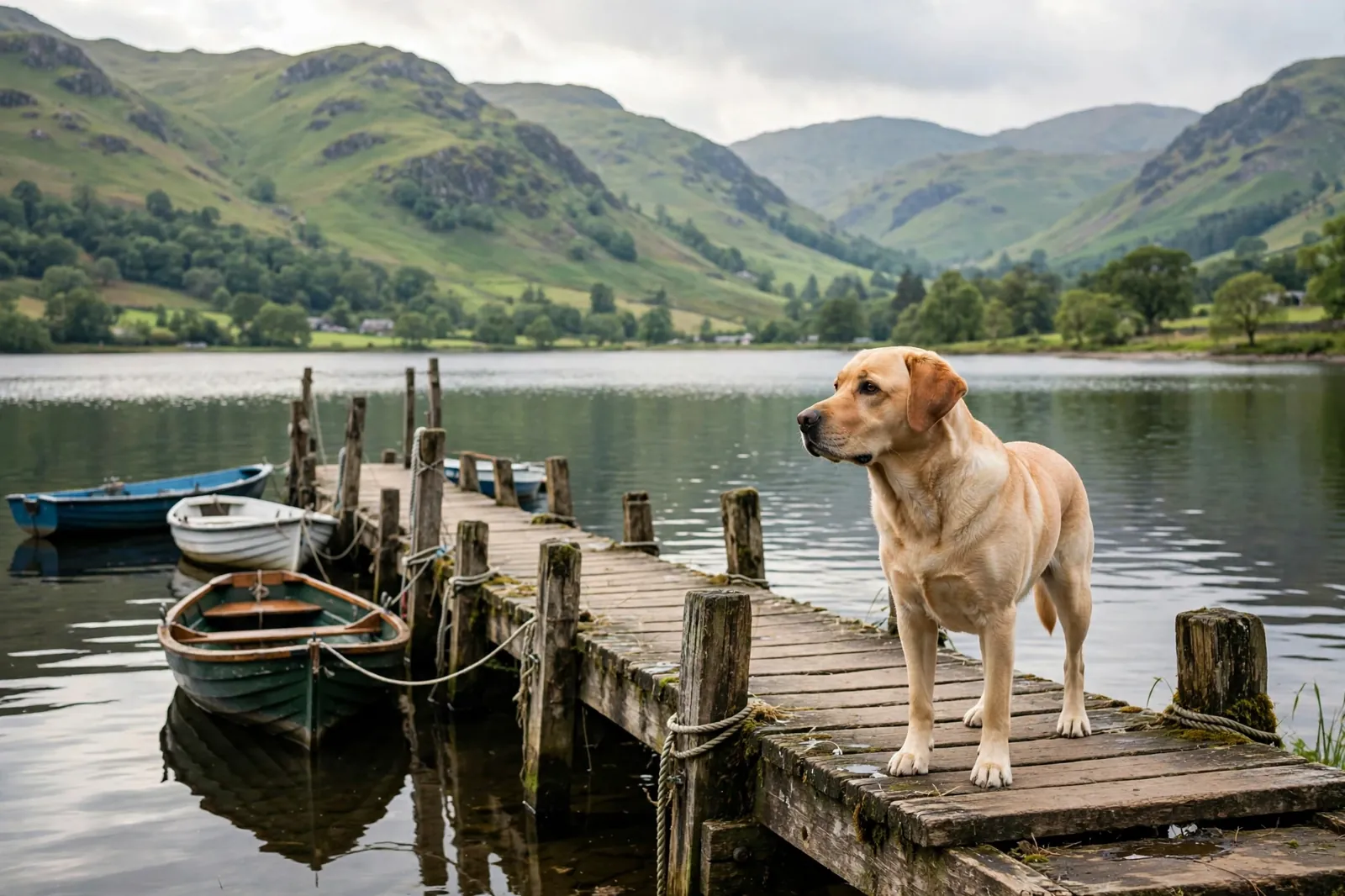
Begin at the jetty, not on the fell. Stand back from the boarding queue, let your dog watch the Steam Yacht Gondola ease towards the pier, hear the water slap against the wood, smell the lake air and settle into the place before anyone asks them to do anything clever. That unhurried ten minutes explains Coniston better than any itinerary. This is a working lake as well as a beautiful one: launches shuttle walkers between shores, rowing boats drift close to the bank, paddleboarders wobble past, and the Old Man fills the sky behind it all, looking inviting and serious at exactly the same time.
That first pause also sets a sensible hierarchy for the whole trip. The lake itself is the main event and it is accessible to almost every dog, including older dogs, nervous dogs and dogs that cannot manage a summit. The fells are an optional extra for a smaller number of dogs on the right day. The village, the gardens at Brantwood and the boat trips sit happily in between. Owners who reverse that order, marching straight up the highest hill on arrival day and saving the lake for when everyone is tired, usually enjoy Coniston less than owners who build upwards gradually.
Use the jetty area to make practical checks while your dog acclimatises. Look at how busy the boarding pontoons are, whether your dog is comfortable with the movement underfoot and the close passing of strangers, and how they react to other dogs in a queue. A dog that is relaxed here will probably cope well with a short boat trip later. A dog that is pulling, panting or fixating at the jetty is telling you to choose a shore walk instead, and believing them early makes the rest of the day calmer. Keep the lead short, keep clear of crew working areas and mooring lines, and never let a dog jump between jetty and boat without the crew signalling that it is safe to board.
Coniston Water is about five miles long, framed by woodland, low fells and open shore, with the village tucked just inland from the northern end. It feels quieter than Windermere and less enclosed than some smaller waters, which is part of its appeal for dogs that need space. If you are comparing bases, our Windermere with a dog guide covers the busier neighbour lake, while this guide stays focused on making one lake, one village and one famous fell work well together rather than racing around the whole Lake District in a weekend.
Lakeshore walks: the best of Coniston without a summit
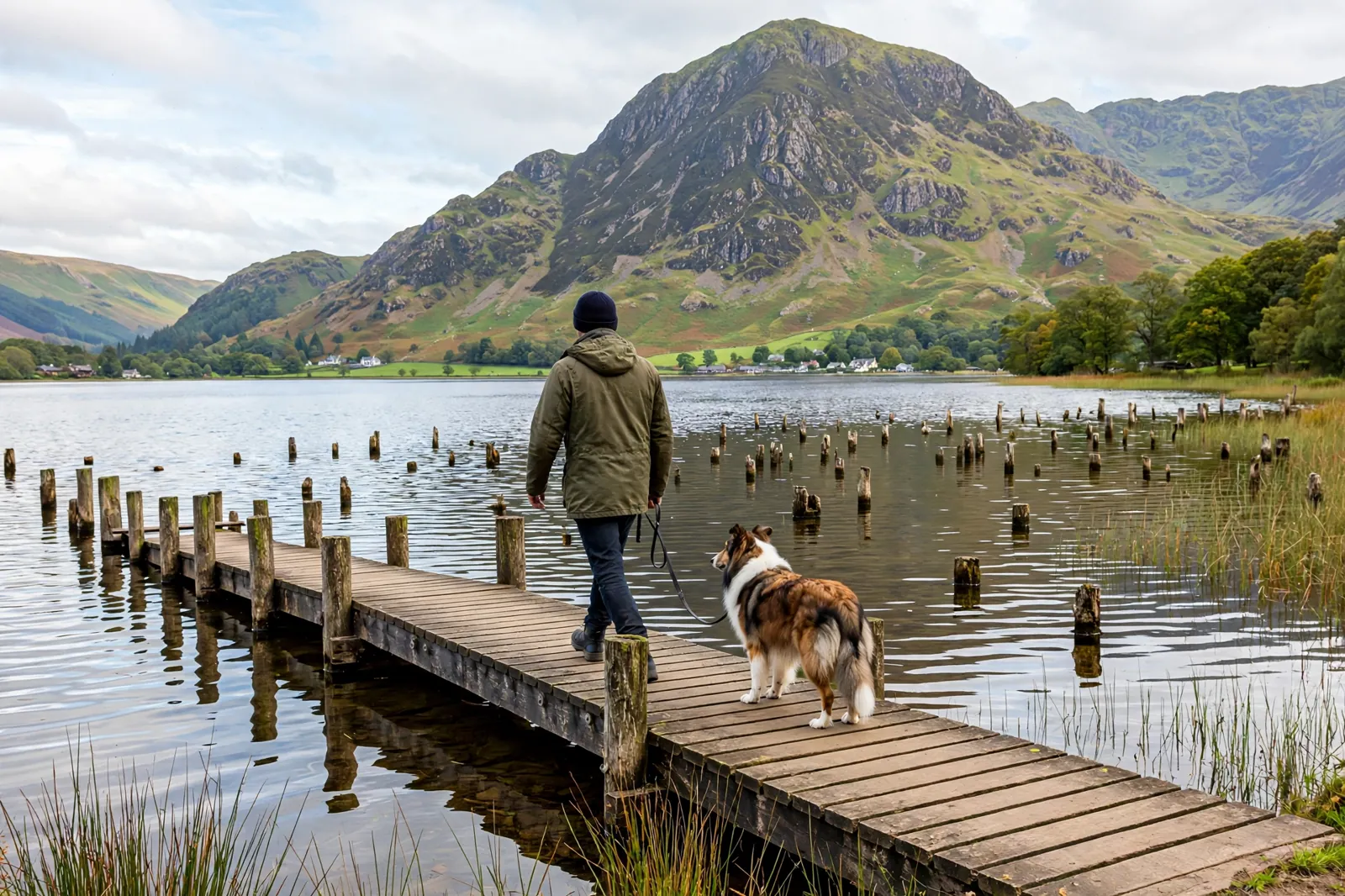
The lakeshore is where most dogs have their best Coniston day. The western shore offers long, relatively gentle stretches where woodland paths, open bays and small shingle beaches alternate, giving a dog new smells every few minutes without demanding constant climbing. The eastern shore feels different again, with quieter lanes, tree cover and the approach to Brantwood, better suited to a slower walk with plenty of stops. Neither shore should be treated as one continuous, guaranteed off-lead playground. Sections pass roads, farmland, car parks, jetties and private landings, so read local signs as you go and put the lead on well before each hazard rather than at the last moment.
For an easy half-day, combine a village start with a shore section, a paddle stop where the bank shelves gently and the water is clear, and a return by a different lane or, if timetables allow, a boat hop back. That structure gives a dog variety without exhaustion and gives owners a bail-out option if rain arrives. For dogs that pull towards water, choose bays away from boat lanes and keep a long line on if recall near swimmers, anglers or launching boats is unreliable. Wet shingle and algae-slick stones can be slippery for people as well as dogs, so approach the waterline in boots with grip and let the dog choose whether to enter rather than throwing a ball repeatedly into deep water.
Woodland sections around the lake deserve time in their own right, especially on windy days when the open shore is exposed. Tree cover softens the weather, fallen leaves and damp earth provide the kind of sniff-heavy walking that tires many dogs more effectively than distance, and the paths often suit older joints better than rocky fell ground. After heavy rain, however, low paths can flood and becks can run fast and noisy, which unsettles some dogs and makes crossings unsafe. Turn a flooded section into a reason to retrace your steps to a cafe rather than a problem to push through.
Plan toilet, water and rest stops deliberately. Carry drinking water for your dog even though you are walking beside a lake, because lake water is not automatically safe to drink, especially where algae, boat fuel or livestock contamination is possible. Offer small drinks often, schedule a proper rest on a mat away from the main path every hour or so, and watch for the quiet signs of a dog that has had enough: lagging, repeated grass eating, seeking shade, or sudden lead pulling towards the car park. A shore walk that ends with a dog still keen is a success. A longer walk that ends with sore pads on hot stone or grit helps nobody.
Boats with dogs: Coniston Launch and the Steam Yacht Gondola
Two very different boat experiences share Coniston Water, and dogs experience them differently too. Coniston Launch runs practical lake services linking jetties around the lake, which makes it useful for one-way walks as well as sightseeing. The Steam Yacht Gondola, operated by the National Trust, is a rebuilt Victorian steam yacht offering a more sedate, heritage-style cruise, with the pleasure lying in the vessel itself as much as the route. Both can be a highlight with the right dog, and both are a poor idea with a dog that hates confined decks, engine noise, close strangers or unsteady movement.
Dog policies need handling in general terms because they change. Dogs are generally welcomed on Coniston boat services, but the details differ by vessel and sailing. Coniston Launch has traditionally carried well-behaved dogs on a lead, sometimes for a small charge, while the Gondola works to its own boarding, seating and capacity rules. Some sailings are busier, some landings are weather dependent, and special events can alter what is possible. Always check the operator's latest dog policy, fares and sailing times before you travel, and arrive assuming the crew's instructions on the day override anything you read in advance, including this guide.
Prepare your dog for boarding as a skill, not an afterthought. Practise settling on a mat at home and in cafes first, because a boat adds movement, vibration and water sounds to the same basic task. Board with a short, fixed lead, never a flexi lead, keep your dog close to your legs and away from ropes, gangways and other passengers' feet, and choose the position the crew suggests rather than the prettiest seat. Bring water, a familiar chew or lick mat for longer cruises if the operator allows it, and bags for any accident. If your dog whines, scrambles or tries to climb, speak to the crew early about getting off at the next landing rather than enduring a full round trip that teaches the dog boats are frightening.
Think about what the boat is for. A short hop that shortens a walk, lands you at Brantwood or returns tired legs to the village is often better value for a dog than the longest available cruise. On hot days, decks offer little shade and lake glare is strong, so sail earlier or later and keep the shore walk for the cooler hours. On wet days, a boat can save a holiday afternoon, but wet decks are slippery for paws and claws, so towel your dog before boarding and move slowly. If you plan a boat-based day on a larger lake as well, compare the approach in our Keswick with a dog guide, where launches on Derwentwater play a similar role in shortening shore walks.
The Old Man of Coniston, honestly: grade, weather and older dogs
The Old Man of Coniston dominates every view and tempts every fit walker, which is exactly why it needs honest treatment in a dog guide. At around 803 metres it is a proper mountain, not a large hill with a cafe on top. Routes from the village and from the Walna Scar side involve sustained climbing, loose slate and scree, old quarry workings, exposed ridges and sections where hands may be needed and a dog must wait patiently while people pick a line. There is no single easy path that removes those features, whatever a social media caption suggests. Allow a full day, carry a map and compass or a downloaded route you can actually navigate from, and treat the summit as conditional until you are most of the way up in good visibility.
Weather decides more than fitness does. The Old Man makes its own conditions: cloud can drop in minutes, wind funnels across exposed ground, rain turns slate treacherous, and summer heat reflects off dark rock with little shade or reliable water high up. Check a mountain-specific forecast before setting out, not just a village forecast, and set a turn-back time and a turn-back weather limit before you leave. Dogs cannot tell you they are getting cold, overheated or frightened until the problem is advanced, so build in margin that a group of adult walkers alone might not need. If low cloud hides the route, if wind makes standing conversation difficult, or if your dog starts scrambling anxiously rather than walking steadily, the lakeshore is not a consolation prize. It is the correct walk for that day.
Age and experience matter as much as breed. A fit adult dog used to long hill days, steady on rock and calm around other walkers, sheep and sudden drops may enjoy a carefully chosen ascent in settled weather, with boots or paw checks for abrasive slate and plenty of carried water. Puppies whose joints are still developing, older dogs with arthritis or heart conditions, brachycephalic dogs, small dogs that would need carrying over boulder steps, and any dog recovering from injury should not be talked into a summit by an optimistic itinerary. For those dogs, walk towards the fell rather than up it: explore the lower tracks, coppermines valley approaches and reservoirs at a level your dog chooses, then return to the lake with energy left for the evening.
Quarry history brings specific hazards. Old mine workings, spoil heaps, unfenced drops, rusted metal and deep, cold water in flooded quarries all appear in the wider Coniston fell area. Keep dogs on a lead where the ground is broken, never throw sticks or balls near quarry edges or tarns of unknown depth, and keep clear of any fenced or signed workings. Tarn swimming high on the fell is not a reward for a hot dog if the entry is steep, the water is very cold or the exit is over sharp rock. Cool a hot dog with shade, rest, ventilation and small drinks, and descend rather than seeking a dramatic dip.
Brantwood: gardens first, house second, honesty throughout
Brantwood, on the east shore, was the home of John Ruskin, the writer, artist and social thinker, and it is now visited for its house, gardens, views and cafe as much as for Ruskin himself. With a dog, the honest way to plan Brantwood is as a gardens and grounds visit with a possible house element for the humans, not as a fully dog-friendly house tour. The estate's woodland gardens run up the hillside above the lake, with paths, viewpoints and planting that reward slow exploration, and a dog on a lead can share that part of the day properly rather than waiting in a car.
Access rules are narrower indoors. House entry for dogs is much more restricted than garden access, and cafe and terrace arrangements can vary by season and by how busy a day is. Check the latest visitor information before you go, especially if Brantwood is the main purpose of your trip, and travel as a pair if you can so one person can explore inside while the other walks the gardens with the dog, swapping over later. Solo visitors with a dog should assume they may see the grounds and exterior fully and the interior not at all, and decide in advance whether that still makes the ticket worthwhile. That expectation prevents the disappointment that colours many otherwise good dog days out.
Garden etiquette matters here more than on an open fell. Keep to a short lead on narrow paths and near borders, do not let a dog enter planted beds, water features or other visitors' picnic space, and be ready to step aside on steps and viewpoints where passing room is tight. The hillside layout means some garden routes are steeper and more slippery after rain than a typical country house garden, so wear proper shoes and reconsider the highest paths with a frail dog. A lower circuit with lake views, a cafe stop where dogs are currently allowed, and a gentle return by shore or boat is a complete visit without forcing every trail.
Brantwood combines beautifully with other east shore plans. Arriving by boat adds occasion and avoids a narrow drive, walking a shore section in one direction adds exercise before a garden lunch, and pairing it with a quiet village evening keeps the day balanced. What does not work is stacking Brantwood, a full Old Man ascent and a long boat cruise into one itinerary and expecting a dog to remain settled through all three. Choose Brantwood on the day you want culture, shade and views at a human pace, and let the fell have its own day if it earns one at all.
Village stays, pubs and cafes: basing yourself in Coniston
Coniston village is compact, practical and well suited to a dog base. Staying in the village usually means walks from the door, a choice of pubs and cafes for wet weather, small shops for forgotten supplies, and no need to drive after an evening meal. Staying further out, in a lakeside lodge, cottage, campsite or farm stay, usually buys space, quiet and sometimes a garden, at the cost of a drive or a longer walk for every pint of milk. Neither is automatically better. Match the base to your dog: an anxious dog may prefer a quiet cottage away from village foot traffic, while a sociable dog that settles in pubs may thrive in the middle of things.
When booking, replace the phrase dog-friendly with specific questions. Confirm the charge per dog per night or per stay, the maximum number and any size condition, whether the garden is genuinely enclosed and to what height, whether dogs may be left alone and under what conditions, and whether dogs are allowed where you will eat breakfast or dinner. Ask about steps, slippery floors and the distance from parking to the door if your dog is older, and request a ground-floor room where stairs would be a daily problem. A clear written answer before you pay is worth more than a paw print icon on a listing.
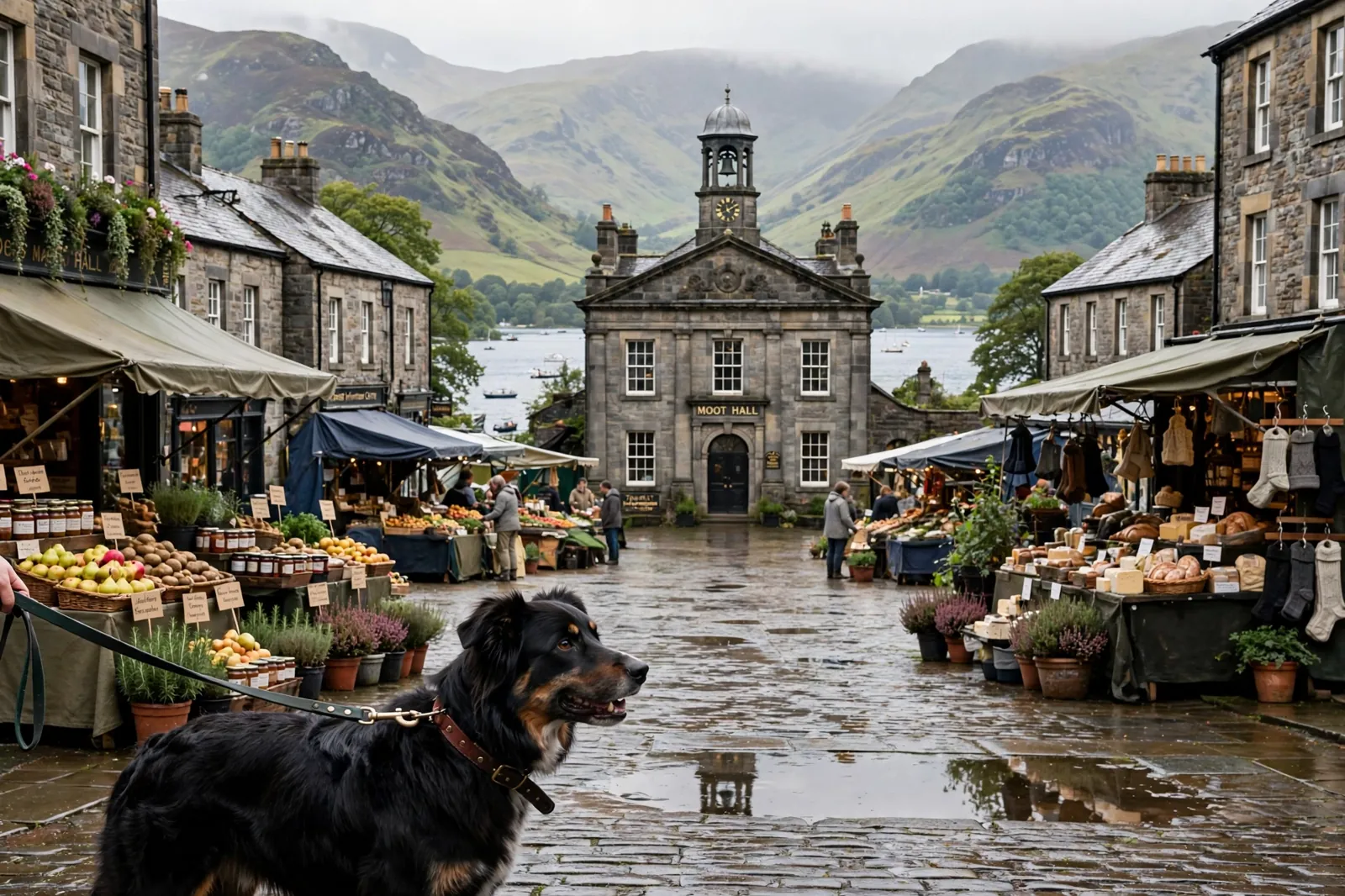
Pubs and cafes in walking and lake villages generally understand muddy boots and wet dogs, but understanding is not unlimited access. Dogs are commonly welcome in bar areas and gardens rather than formal dining rooms, may need to stay on the floor and on a lead, and will be expected to settle without begging from neighbouring tables. Arrive with a towel and a mat, dry the worst of the lake off outside, position your dog away from serving routes and door swings, and order water for the dog as you sit down rather than after they have started panting at other tables. At busy times, one drink in a quieter corner beats a full meal with a restless dog in a packed bar, and staff will remember the consideration kindly.
Evenings need a plan for the last walk. Village streets are lit in places and dark in others, lanes out of the village can be unlit, and shore paths are not a sensible night route without a torch and local knowledge. Scout a short, safe toilet walk in daylight, keep to it after dark, carry a torch and reflective gear for both of you, and keep the lead on near roads even if your dog is usually steady. A calm last outing, a familiar bed from home and a consistent feeding time will do more for a good night in new accommodation than any amount of extra exercise squeezed in at dusk.
Water safety and algae: the checks that come before any swim
Coniston Water looks clean, cold and inviting, and on many days a paddle from a quiet bay is one of the simplest pleasures of the trip. It is still a large, deep, working lake, and the decision to let a dog swim should be made fresh each time, not carried over from yesterday or from another lake. Start with the bank itself: is the entry shallow and firm, can your dog get out easily without scrambling up rock or a jetty ladder, and are you clear of launching boats, moored craft, fishing lines and swimming areas? If the exit looks difficult, the swim is a no, however keen the dog appears.
Blue-green algae deserves specific attention because it can be fatal to dogs and it is not always obvious. Blooms and scums can look like green paint, pea soup, foam or mats on the surface, often gathering in sheltered bays and along downwind shores, and toxins can persist even when the water looks clearer. Check for local warning signs and Environment Agency or lake authority updates before you travel and again at the shore, and read our dedicated blue-green algae and dogs guide before the trip so the visual signs are familiar. If you suspect algae, keep your dog out of the water entirely, do not let them drink from the lake, and choose a shore walk instead. There is no paddle worth that risk.
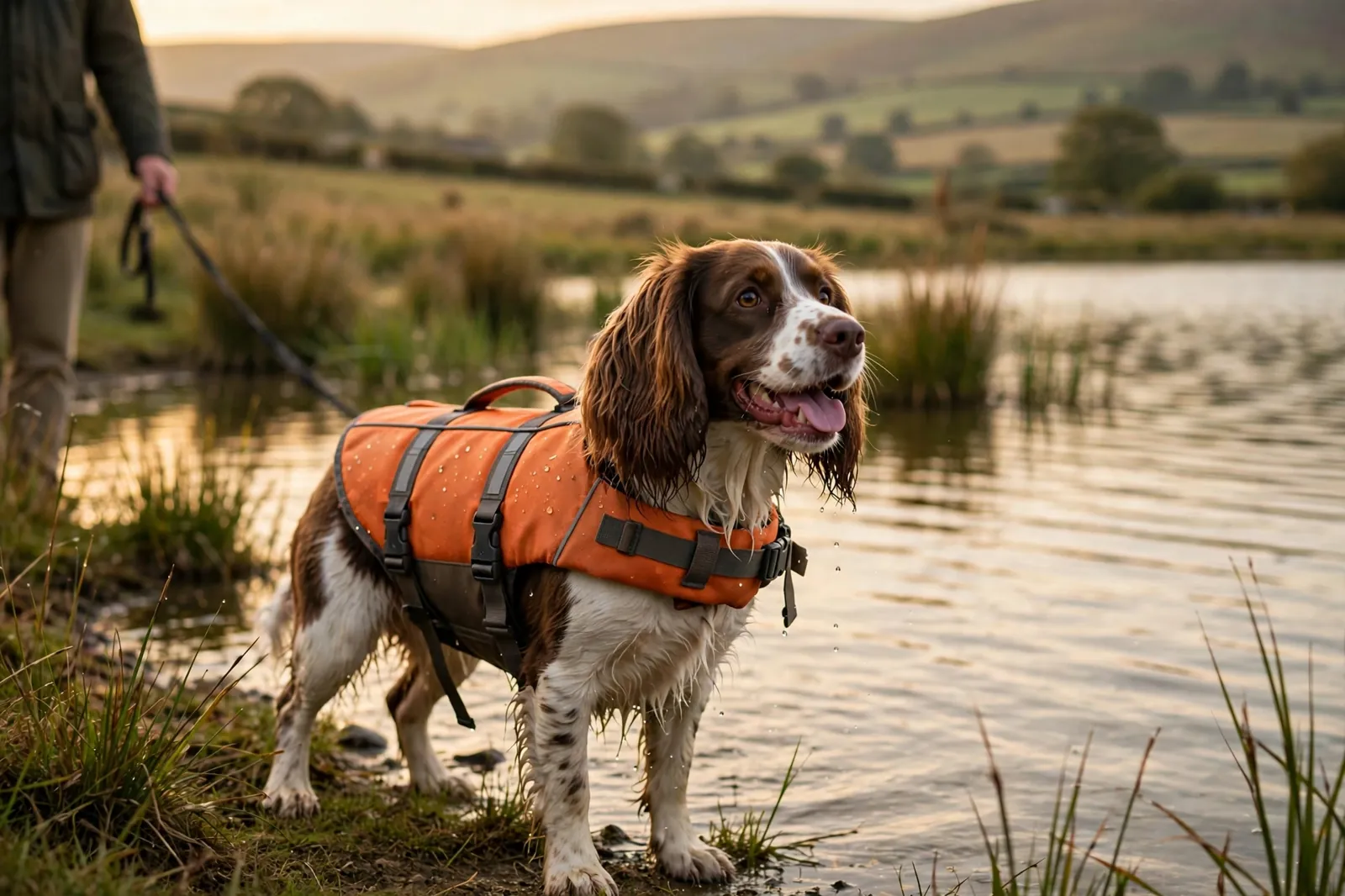
Cold and depth are the quieter hazards. Lake water stays cold well into summer, sudden drop-offs occur off shingle shelves and around jetties, and a dog chasing a ball can swim further out than intended in seconds. Use a well-fitting canine life jacket for boat-based swimming, weaker swimmers and any dog that fixates on retrieves, keep swimming sessions short, and call your dog back while they still have energy to return. Our wider dog water safety guide covers life jackets, cold water shock and emergency steps in detail and is worth reading alongside this guide before a lake holiday.
After any swim or paddle, rinse your dog with clean water where you can, dry ears and skin folds, check paws for cuts from shingle, shells or hidden metal near old landings, and watch behaviour for the rest of the day. Vomiting, diarrhoea, drooling, wobbling, collapse or rapid deterioration after being in or near water is an emergency: contact a vet immediately, say that algae exposure is possible, and do not wait to see if symptoms pass. Save the number of a local vet before you need it, because phone signal around the lake is patchy and searching under pressure wastes minutes that matter.
A realistic one-day plan in Coniston with a dog
A good single day in Coniston has one main event, one good meal and plenty of slack. Start with a village breakfast or a packed early walk while the lake is quiet, letting your dog toilet, sniff and settle before any crowds build. Walk a shore section in the cool of the morning, choosing distance by your dog rather than by a map target, and build in a paddle decision point at a shallow, clear bay where you can properly assess the water. If the morning walk has gone well and the forecast is settled, this is the moment for a short boat hop, not the longest cruise, landing you somewhere new for the return leg or back in the village in time for lunch.
Give the middle of the day to rest, especially in summer. Dogs do not need a lunchtime summit added to a morning shore walk. Eat where your dog can lie on a mat in shade, refill water bottles, check paws, and let the dog sleep properly rather than parading them around shops. Use this pause to make an honest afternoon decision. Brantwood by boat or by shore path suits a dog that is rested and a group that wants gardens and views. A lower fell track or coppermines valley exploration suits a dog that is still fresh and weather that remains kind. A second, shorter shore walk and an early pub supper suits almost everyone else, and choosing it is good judgement, not a wasted day.
If you are here specifically to attempt the Old Man, give it the whole day instead. Start early, carry food, water and weather protection for the dog as well as the people, leave the boat trip and Brantwood for another day, and keep the evening free for food and sleep. Trying to celebrate a summit with a cruise, a garden visit and a late village meal is how tired dogs become snappy, sore and unsettled overnight. A fell day done properly ends quietly.
Finish every version of the day the same way: a daylight check of tomorrow's forecast and options, a short familiar toilet walk after dark, and equipment rinsed and dried so the next morning is easy. Charge torches and phones where signal and power allow, lay out the lead, towel, bags and water bottle by the door, and note what worked. Coniston rewards visitors who return to a favourite shore at a different hour almost as much as visitors who collect new sights, and dogs, who thrive on a little repetition, usually agree.
Parking, leads, livestock and other practical details
Parking shapes a Coniston day more than most visitors expect. Village and lakeside car parks fill early on fine weekends and school holidays, some lanes have very limited safe stopping, and a hot car is never an option for a waiting dog in any season. Arrive earlier than feels necessary, pay for longer than your shortest plan so a boat delay or a slow lunch does not force a rushed return, and keep a shaded, ventilated alternative in mind if your first car park is full. Never improvise parking on a verge that blocks a farm gate, a passing place or a launch access. Local goodwill towards visiting dogs depends partly on visiting drivers behaving well.
Lead discipline around Coniston is situational rather than one simple rule. Keep dogs on a lead on roads, lanes without pavements, jetties, boats, car parks, in pub gardens until settled, and anywhere signs require it. Around sheep and cattle, which graze widely in the Lake District including low ground and open fell, a lead is essential and close control is a legal as well as a moral duty. Even a dog that has never chased can react to a lamb, a running ewe or a protective cow with a calf, and farmers are entitled to protect their livestock. Give herds a wide detour, especially in lambing season and whenever young animals are present, and never let a dog swim or drink where livestock are congregated at the shore if you can choose another bay.
Pack for a lake and fell village, not for a city break. Bring two leads in case one gets soaked, a long line only for safe open spaces away from roads and livestock, a drying coat or large towel, spare bags, a portable water bottle, paw balm or boots if your dog is prone to soreness, and a basic first aid kit for cuts and ticks. Add a torch, a paper backup for key directions where signal fails, and a tag with a mobile number you will actually answer on holiday. If your dog takes medication, carry it in hand luggage on travel days and keep the vet's dosing instructions photographed on your phone.
Finally, leave the lake as you found it. Take all litter and filled bags to a bin rather than leaving them on a shore path for later, keep dogs out of reed beds and nesting areas in spring and summer, rinse boots and paws before visiting another water body if local guidance asks you to help limit the spread of invasive species, and keep noise down at early and late hours in the village. A dog friendly Coniston Lake District depends on thousands of small, considerate decisions by visitors. Making those decisions visibly and cheerfully is the best argument for dogs remaining welcome on boats, in gardens and in pubs for the next visitor.
Practical questions
Before you go
Can dogs travel on Coniston Launch and the Steam Yacht Gondola?
Dogs are generally welcomed on Coniston boat services, but the details differ by vessel and sailing. Coniston Launch has traditionally carried well-behaved dogs on a lead, sometimes for a small charge, while the National Trust Steam Yacht Gondola operates to its own boarding and capacity rules. Always check the operator's latest dog policy, fares and sailing times before you travel, keep your dog on a short lead on jetties and decks, and be ready to sit in the area the crew directs you to.
Is the Old Man of Coniston suitable for older or small dogs?
Not automatically. The Old Man is a serious mountain walk of around 803 metres with steep, rocky and exposed sections, changeable weather and a long day out for most walkers. Fit, experienced hill dogs may manage a carefully chosen route in good conditions, but older dogs, puppies, small dogs, dogs recovering from injury and any dog unused to scrambling will often be better with a lakeshore or lower-level walk instead. Turn back early if wind, rain or heat builds.
Can dogs visit Brantwood?
Plan on a split visit. Brantwood, the former home of John Ruskin on the east shore, is best approached as gardens and grounds with a dog on a lead, with house entry for dogs much more restricted. Rules for the house, cafe and terrace can change, so check the latest visitor information before you go, keep dogs on a short lead in planted areas, and arrange for one person to stay outside with the dog if you want to see inside the house.
Can my dog swim in Coniston Water?
Many dogs paddle from quiet shorelines, but swimming is never risk-free. Check for blue-green algae warnings and visible scums before allowing any swimming or drinking from the lake, avoid busy boat lanes and jetties, watch for cold water and sudden drop-offs, and rinse and dry your dog afterwards. If algae is suspected or your dog becomes unwell after swimming, contact a vet urgently and say where the dog has been in the water.
Where should we stay in Coniston with a dog?
Coniston village gives the easiest car-free base, with pubs, cafes, shops and walks from the door, while lakeside lodges, campsites and self-catering cottages suit dogs that need more space and a secure garden. Wherever you book, confirm the exact dog charge, number limit, garden security and whether dogs may go in dining areas, and ask for a ground-floor or low-step option if your dog struggles with stairs.