This guide is independent and contains no paid placement. If affiliate links are added later, they will be clearly marked and will not change our editorial checks.
Dogs are a normal part of Windermere life: the big lake cruises generally carry them, many hire boats accept them, and the west shore and Wray Castle grounds give the best traffic-free walks. Keep dogs leashed on jetties and boats, think hard about swimming and algae, climb Orrest Head for the view, and check each operator's current rules before you go.
On the water first: lake cruises with a dog
Windermere is ten and a half miles of water, and the steamer-style cruise boats that run between Bowness, Ambleside at the head of the lake and Lakeside at the foot are its public transport, its sightseeing tour and, for many dogs, an entirely new experience that they take to surprisingly well. The main cruise operator generally welcomes dogs on its vessels, with dogs kept on leads, off the seats and usually carried at a small fare or free depending on the current policy — confirm the latest position on the official site before you go, because fares, routes and seasonal timetables all change. Travel on the open decks where the dog has space and air, choose quieter sailings outside the midday peak, and let a first-time boat dog watch the jetty activity from a settled spot before boarding.
The routes reward planning. Bowness to Ambleside is the classic leg, pairing a boat ride with the walks and cafes of Waterhead and Ambleside at the far end; the full-lake run to Lakeside adds the aquarium, the steam railway and the southern lake's quieter, wooded shores. Island and bay cruises give shorter tasters for dogs — and owners — unsure about a long crossing. Jetties are the controlled part of the operation: keep leads short on the pontoons, which move underfoot and gap at the edges, board when called rather than crowding the gate, and never let a dog jump the gap between jetty and boat. A dog that slips between a hull and a pontoon is the one genuinely serious accident in an otherwise gentle system.
Match the boat to the dog. Confident, settled dogs usually enjoy the whole thing and become part of the deck scenery. Nervous dogs, dogs reactive to strangers at close quarters and dogs unhappy with engine vibration and moving decks may find a full, busy sailing stressful; try a short hop first, sit away from the busiest deck areas, and have an exit plan — the beauty of the lake's route network is that buses and taxis can rescue a one-way plan. Assistance dogs travel under their own access rights, which differ from pet policy; our guide to assistance dog access rights in the UK explains the distinction.
Build boat days loosely. Sailings are weather-dependent at the margins — high winds can suspend services — and the popular legs queue in high season. Buy tickets for the sailing you actually need rather than the one you might, arrive early for the jetty routine, and keep the walking plan for the far end flexible. A cruise is transport with scenery, not an appointment, and the dog will prefer the version of the day that includes a proper walk at one end of it.
Hiring your own boat: motor boats, rowing boats and rules
Beyond the cruises, Bowness, Waterhead and other centres hire small motor boats, rowing boats and other craft by the hour, and many operators accept a dog aboard — again, per operator, so ask at booking, not at the jetty. The standard conditions are sensible and worth treating as your own checklist: the dog stays inside the boat, on a lead or at least under settled control, off the seats where asked, and nobody — dog included — swims from a hire boat in the main navigation areas. Keep well clear of the steamer routes, the sailing fleets and the car ferry crossing between Ferry Nab and Ferry House, and observe the lake's speed limits and byelaws, which the hirer will brief you on; check the official guidance before you go if you plan anything beyond a standard hire.
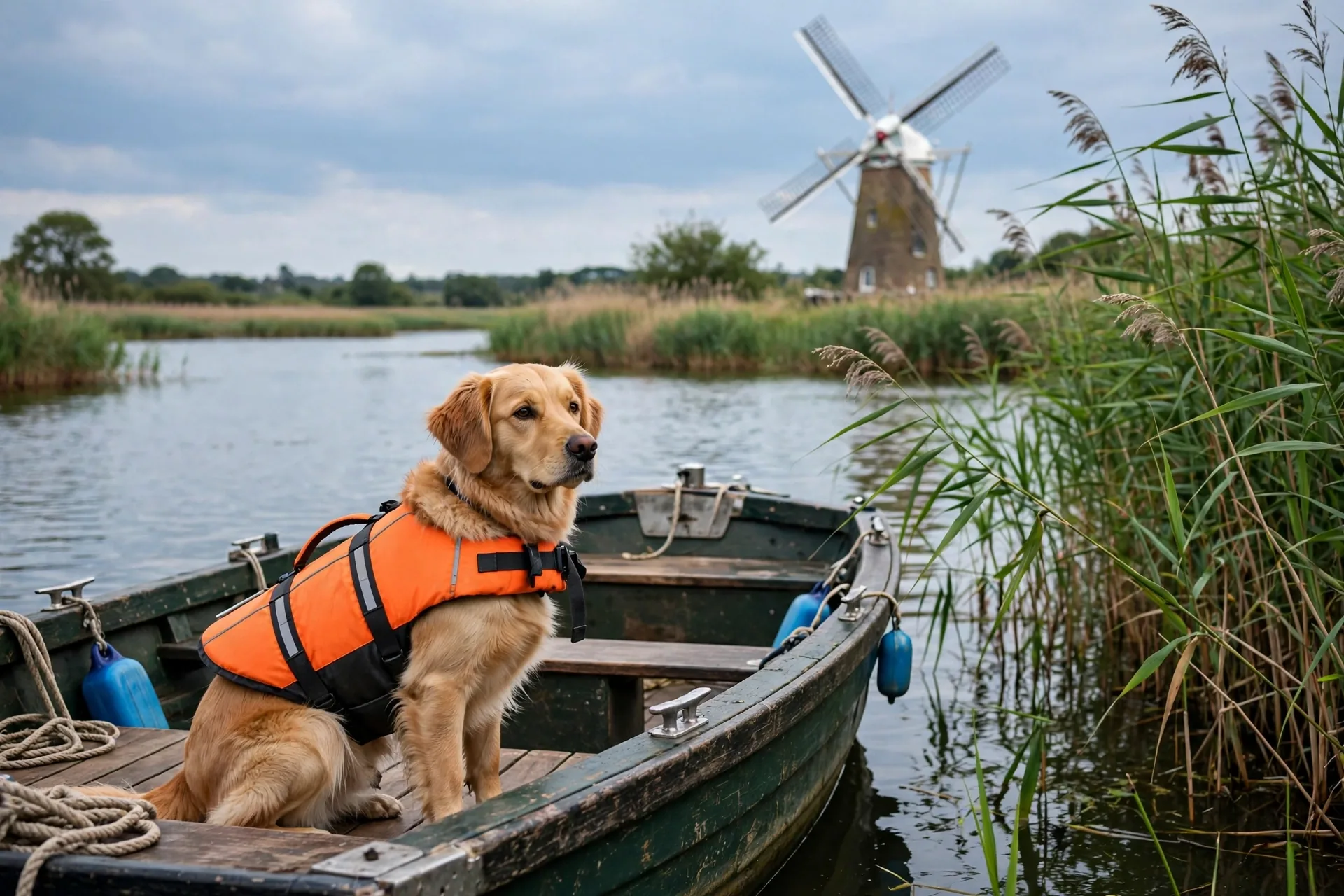
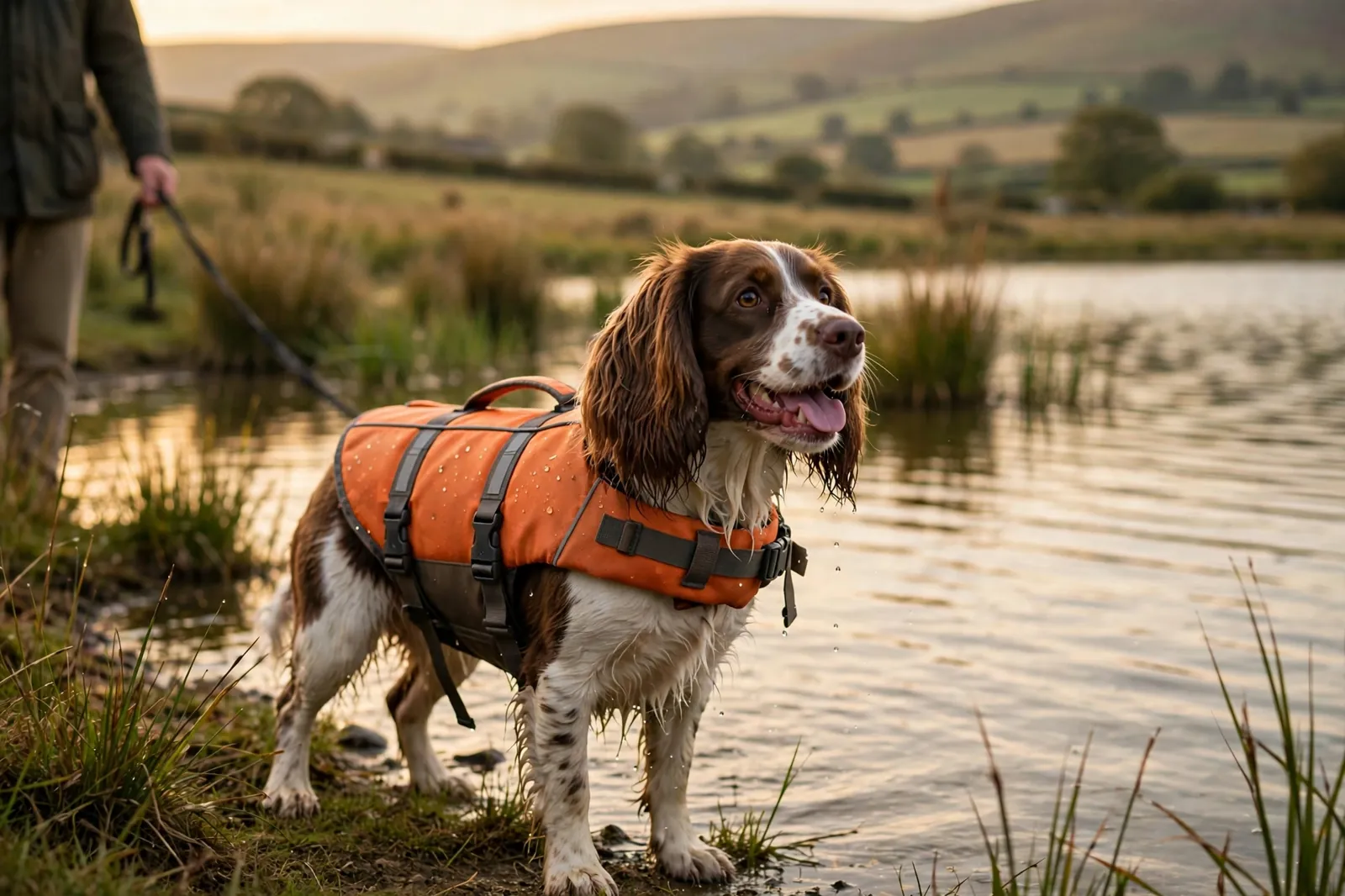
Life jackets deserve a straight answer. Buoyancy aids are provided for people as part of hire arrangements; a canine life jacket is your own responsibility, and for a dog that might leap after a duck, a dog that swims poorly, or any dog on a small boat in choppy water, it is money well spent. Our guide to dog water safety in the UK covers fit, handles and when a jacket matters most. Practise the jacket on shore first — a dog wrestling a new jacket on a rocking boat helps nobody — and give the dog a nonslip spot low in the boat where it can settle out of the tiller and throttle zone.
Choose your conditions like a local. Early mornings give glassy water and empty jetties; afternoons in high season bring wash from every direction, queues at the hire desks and dogs that have been waiting in the sun. An hour is plenty for a first hire with a dog; the lake will still be there tomorrow. Take water and a bowl for the dog, keep a towel in the boat for the inevitable shake, and plan the landing as carefully as the launch: a tired dog hopping onto a wet jetty needs a short lead and a steady hand.
If hiring feels like too much machinery, the lake offers simpler water: the rowing boats and small craft at quieter centres, the scheduled ferries and launches, and the simple pleasure of a dog paddling — where it is sensible — from a shore you have read properly. The next sections cover the shore.
Lakeside walks: the west shore, Wray Castle and the quiet side
Windermere's eastern shore carries the road, the towns and most of the visitors. Its western shore is the dog walker's side: a largely traffic-free shoreline of woods, meadows and pebble bays running from the Ferry House landing down toward Wray Castle and beyond, reachable by the car ferry — which carries foot passengers and their dogs — or by boat and bus combinations. The shore path here gives the lake at its best: larch and oak woods, red squirrel country, quiet bays for a shore-side pause and long, level miles that suit dogs of almost any age. Check the car ferry's current operating position before you rely on it, as the service has had interruptions in recent years, and check the official site before you go.
Wray Castle, the Victorian mock-Gothic castle on the west shore, is the natural target. The castle and its grounds are National Trust; dogs are welcome in the grounds on leads, while the house itself — when open — follows the usual assistance-dogs-only pattern for interiors, so check the Trust's current guidance before you travel. The grounds give woodland walks, lakeshore lawns and a jetty served by seasonal boat services from Ambleside and Bowness, which makes a superb dog day: boat one way, shore walk the other, castle grounds in the middle. Our guide to dog-friendly National Trust visits explains the Trust's paw-rating system and how to plan around it.
On the eastern side, the walks are shorter and more sociable. Bowness's promenade and the shore paths around Cockshott Point and the marinas suit a gentle lead walk and an ice cream; the wooded heights of Brant Fell behind Bowness give a quick, view-rich climb away from the crowds; and the shoreline south toward Fell Foot Park, at the lake's foot near Newby Bridge, offers a proper country park with lawns running down to swimmable — for dogs, paddlable — shores, a cafe and boat hire. Fell Foot is often the easiest full dog day on the lake for families: parking, facilities, space and water in one place.
Wherever you walk the shore, respect its working parts. Jetties, boathouses and moorings are private or operational; sailing clubs and outdoor centres run sessions that dogs should be walked around, not through; and the shoreline fields carry sheep in many places, with leads required near livestock as always. The lake rewards the unhurried: pick one shore section per day, walk it properly, and let the dog learn the water's edge at its own pace.
Bowness, Windermere town and the Orrest Head view
Two settlements share the famous name. Windermere town, up the hill, is the working centre with the railway station, supermarkets, vets and the better-value accommodation; Bowness-on-Windermere, down on the shore, is the holiday front of promenades, jetties, gift shops and crowds. Dogs experience them differently: Bowness at summer lunchtime is a genuine crowd test, while Windermere town's streets are broader and calmer. Base your dog's town time early and late, do the shopping in short passes, and treat the Bowness lakefront at noon as a place to transit, not to linger.
Orrest Head, the modest wooded hill above Windermere town, is the essential walk. It was the climb that first opened the young Alfred Wainwright's eyes to the Lakes, and the path — including a gentler, accessibility-improved route through Elleray Wood — delivers a panorama of the whole lake and the high fells for very moderate effort. Most dogs manage it happily; it suits a first-evening or last-morning slot, and the woods below give shade on hot days. The viewpoint is popular, so keep leads on at the summit rocks and let nervous dogs enjoy the woodland circuit instead of the busy top.
For bigger fell appetites from this base, the honest advice is to drive or take the bus a short way rather than forcing road walks: the Troutbeck valley and its fells above the eastern shore, the walks around Ambleside and Rydal to the north, and the quieter western fells beyond Hawkshead all open up with one short hop. From Keswick, the comparable town base covered in our northern Lakes planning, the fell choice is wider still — the two towns pair naturally in a longer Lakes week, one for the lake, one for the high hills.
Evenings in Bowness, once the day boats finish, are the town's gift to dog owners: the promenade empties, the lake flattens, the pubs fill with walkers and their dogs, and a slow jetty-side stroll closes the day the way the morning opened it. Plan dinner early in season — the dog-welcoming tables go first — and keep a torch for unlit shore paths if you are walking back after dark.
Swimming, paddling and lake safety for dogs
Most dogs that visit Windermere will want to be in Windermere, and in the right places a paddle or a swim is one of the joys of the trip. Choose the place like you mean it: gently shelving pebble or grassy shores away from jetties, moorings, sailing areas and the steamer channel; calm conditions; clear water you can see into; and an exit your dog can actually climb. Fell Foot, quiet west-shore bays and the shallows at Waterhead's edges are the kinds of places locals use. Busy marina water, the car ferry lane, the steamer berths and any shore posted with warnings are not.
Two hazards need naming plainly. Blue-green algae blooms occur on Windermere in warm weather, as on many lakes; the blooms can be toxic to dogs, they are not always visible as the classic bright green scum, and official warnings are issued when monitoring finds a problem. Check the latest local and official guidance before you go, obey any posted warnings absolutely, and keep dogs out of discoloured, scummy or paint-like water anywhere on the lake. Our explainer on blue-green algae and dogs covers identification and what to do if a dog has swum in suspect water — speed matters, so read it before the holiday, not during it.
The second hazard is cold and depth. Windermere is deep and cold below the surface layer even in summer, and a dog that swims out after a stick can get into trouble further from shore than an owner expects. Keep retrieves short and parallel to shore, use a life jacket for strong-swimming adventurers as well as weak swimmers, and never throw balls or sticks toward open water, boats or the steamer channel. After any swim, rinse the dog in clean water where facilities allow, dry ears thoroughly and watch for the wobbles, vomiting or distress that mean a vet, quickly.
Not every dog should swim, and the lake does not mind. Shoreline paddling, a soaking in the shallows and a good shake over the owner's trousers deliver most of the pleasure with a fraction of the risk, and for older dogs, puppies and dogs with ear or skin problems, the shore is the right depth. Judge the dog in front of you, not the one in the photographs.
Where to stay with a dog around Windermere
The lake's accommodation divides by shore and by style. Bowness and Windermere town hold the hotels, inns and guest houses, including a good number that genuinely welcome dogs in selected rooms and bars. Ambleside, at the head of the lake, is the walkers' town, with outdoor shops, cinemas for wet evenings and a strong dog-welcoming pub scene. The quieter bases — Troutbeck, Hawkshead, the villages toward the lake's foot and the farms in between — offer cottages and B&Bs where the morning walk starts at a gate rather than a car park. Self-catering is plentiful at every level.
Ask the questions that decide a Lakes stay before you book: which rooms take dogs and on which floor; the fee, per dog per night or per stay; whether the dog can join you in the bar and at breakfast — the difference between a relaxing stay and a logistical one; whether the garden or grounds are enclosed, which on Lakeland stone walls usually means asking about gates and gaps; and whether a dog may be left alone in the room. Our guide to dog-friendly hotels in the UK has the full checklist, and the Windermere additions are a drying room or at least a towel policy for wet fell dogs, and parking, which is at a premium in Bowness in season.
Book the peak honestly. Summer, bank holidays, the Christmas and New Year period and big Ambleside and Bowness event weekends fill the dog-accepting rooms early, and prices follow demand. Shoulder seasons — April to early June and September into October — give the lake at its walking best with room to breathe, and winter, for hardy dogs and their owners, offers empty shores, fireside pubs and the lake under snow on the tops, with short days and boat timetables reduced accordingly.
Bring wet-weather systems, not just wet-weather gear: a dog towel that lives by the door, a spare for the car, a familiar bed, and a plan for muddy paws on cottage carpets. Lakeland weather will test the system daily, and the stays that work are the ones where the routine — walk, rinse, towel, feed, settle — runs itself by the second evening.
Eating with a dog: pubs, cafes and lakeside lunches
The Windermere area feeds walkers and their dogs as a matter of course. Pubs in Bowness, Windermere town, Troutbeck and Ambleside generally welcome dogs in bar areas, many with water bowls, dog treats at the bar and a fire that collects wet spaniels from October onward. Cafes around the jetties and in the towns vary — outdoor terraces almost always work, indoor policies differ — so verify each venue, and apply the usual etiquette from our UK dog-friendly cafes guide: walked and toileted first, settled under the table, short lead, off the furniture.
Lakeside lunches are the signature move. A picnic on the west shore, at Fell Foot or in the Wray Castle grounds, bought from the delis and bakeries of Bowness or Ambleside, beats a crowded terrace for most dogs — with the standard conditions: no feeding the ducks and swans, however theatrical their begging; every scrap carried out; and leads on around other picnics, livestock and the shore's nesting birds in season. In summer, eat the cafe meal early or late and take the picnic at noon; in winter, reverse it and claim the fireside corner.
Ambleside deserves a specific mention for dog owners: its combination of outdoor shops that often welcome dogs, cafes used to muddy boots and pubs that treat dogs as regulars makes it the easiest wet-weather town on the lake. If rain closes the fells for a day, an Ambleside wander, a long pub lunch and an early boat or bus back is a perfectly good Lakes day, and the dog will not mark it down as a failure.
Carry the standard kit — portable bowl, water, a chew for waits, bags — and one addition for boat days: a small towel in the day bag, because a dog that has shaken lake water over a cafe floor once is a dog whose welcome cools. The owners who keep the Lakes' dog welcome warm are the ones who arrive prepared for the weather the lake actually delivers.
Getting there, parking and seasons on the lake
Windermere is one of the easiest Lakes bases to reach without a car. The branch line from Oxenholme Lake District station, on the West Coast Main Line, terminates at Windermere town station, a downhill walk from Bowness; dogs travel free on trains under the standard National Rail conditions — lead on, off seats, two dogs maximum per passenger — detailed in our guide to taking a dog on UK trains. Buses link the station, Bowness, Ambleside and the central Lakes, and generally carry dogs at the driver's discretion; the open-top services are a fine way to move a dog that enjoys the breeze, outside the busiest hours.
Drivers should expect the A591 corridor to slow in season and Bowness parking to fill by late morning on fine days. Use the main car parks, arrive early or late, and consider basing the car at the accommodation and using boats and buses as the lake's own transport system — which is, after all, what the jetties are for. Never leave a dog in a parked car anywhere on the lake, whatever the sky is doing when you park it.
Season by season: spring brings lambs in the shore fields — leads near livestock, always — daffodils at Wray and the boats returning to full timetable. Summer is the lake in full sail: swim-safe checks, algae awareness, crowded jetties and glorious evenings. Autumn colours the west shore woods and empties the decks; it is many locals' favourite walking season. Winter reduces boat services and daylight but offers the lake in its moodiest, emptiest beauty for dogs that do not mind weather — check sailing status on the day, every day.
Before you travel, note the nearest vet to your base and the out-of-hours arrangement, carry your own vet and insurance details, and check your dog for ticks after woodland and fell walks in season. Save the operators' official pages for cruises, the car ferry and Wray Castle and check them in the week of the trip; on a lake run by timetables, tides of visitors and weather, the latest official word is the one that counts.
Practical questions
Before you go
Are dogs allowed on Windermere lake cruises?
Dogs are generally welcome on the main Windermere lake cruise services, travelling on a lead, off the seats and usually on the open decks, sometimes for a small fare. Policies, fares and timetables change by season and operator, so check the official site before you go, choose quieter sailings for a first trip, and keep leads short on jetties and while boarding.
Can I hire a boat on Windermere with a dog?
Many hire operators around Bowness, Waterhead and the lake accept a dog on their motor and rowing boats, but it is each operator's decision, so ask when you book rather than at the jetty. Keep the dog settled inside the boat, consider a canine life jacket, stay clear of the steamer routes and car ferry lane, and observe the lake byelaws and speed limits you are briefed on at hire.
Can dogs swim in Windermere?
Dogs can paddle and swim at suitable quiet shores such as Fell Foot and calm west-shore bays, away from jetties, moorings and boat channels. Keep dogs out of the water during blue-green algae warnings, which occur in warm weather, and out of discoloured or scummy water at any time. Check the latest official and local guidance before you go, keep retrieves short and close to shore, and rinse your dog afterwards.
Where can dogs go off lead around Windermere?
The best off-lead opportunities are on the quieter west shore sections away from livestock, in Fell Foot Park's open areas and on fell paths where your dog is under close control and no sheep are nearby. Keep leads on at jetties, in towns, in Wray Castle grounds, on boats and anywhere livestock is present, and always follow local signage.
When is the best time to visit Windermere with a dog?
Late spring and September to October usually offer the best balance of boat services, walking weather and manageable crowds. Summer is the fullest and busiest season, with the widest choice of sailings but the fullest jetties. Winter is quiet and atmospheric, with reduced boat timetables and short days, suiting hardy dogs and owners who plan around the weather.