This guide is independent and contains no paid placement. It offers general information only and is not a substitute for veterinary advice.
Calm travel is built before the journey, not improvised on the motorway. Learn your dog's early warning signals, practise short, positive car sessions in the weeks beforehand, keep the same blanket, scent and routine on every trip, and treat severe or persistent anxiety as a reason to speak to your vet.
Read the pacing at the car door
Anxiety rarely starts with a dramatic scene. More often it starts quietly, at the car door, with a dog that paces in a small circle, plants its feet, turns its head away, or trots back towards the house. That moment is worth more attention than anything that happens later on the motorway, because it is the earliest point at which you can change the outcome. A dog that is already tense before the engine starts is travelling uphill from the first mile. A dog that steps in willingly, sniffs its blanket and lies down has a far better chance of staying settled, even if traffic, rain or a long stretch of road follows.
Start by learning your own dog's vocabulary, rather than relying on a generic list. Panting is a classic sign, but it is also normal after exercise or in a warm car, so it only means something in context. The useful picture is a cluster of signals that appear together and repeat in the same situations. Watch for lip licking when no food is present, yawning out of tiredness, a low or tucked tail, ears pinned back, a furrowed brow, a whale eye where the whites show, trembling, drooling, repeated yawning, restless shifting from one position to another, whining, barking, scratching at the door, and attempts to climb into the front footwell or onto a passenger's lap. Some dogs go quiet instead: they freeze, stare, refuse treats they normally love, or lie rigidly still. Stillness is not the same as calm, and a dog that will not eat a favourite treat is telling you something important.
Timing turns observations into a plan. Note when each signal appears, what triggered it, and how long it lasts. Does the pacing begin at the sight of a suitcase, at the sound of keys, at the car door, at the engine, at the first roundabout, or only when speed rises on a dual carriageway? Does the dog settle after ten minutes and then relapse at a service station, or does it stay tense for the whole journey? A simple log, even a few lines on a phone after each trip, will reveal patterns that memory smooths over. One owner may discover that the real trigger is not the car at all, but the boot, the ramp, a particular harness, or the moment the dog is lifted in. Another may find that short local trips are fine and only journeys over an hour unravel, which points to a different plan involving breaks, toileting and rest.
It also helps to separate anxiety from excitement, travel sickness and pain, because each needs a different response. Excitement is usually loud, bouncy and forward-looking: the dog pulls towards the car, spins, barks at the prospect of a walk, and settles once the journey is under way. Anxiety is more often avoidant, restless or withdrawn, and it persists rather than burning off. Travel sickness tends to produce drooling, lip smacking, vomiting and a reluctance that builds with motion, and it often improves as puppies mature or with veterinary advice about feeding times and medication. Pain can look like reluctance to jump, stiffness after a journey, yelping when lifted, or a sudden change in a dog that previously travelled happily. If a previously calm traveller suddenly becomes anxious, or if anxiety appears alongside limping, appetite change, vomiting or lethargy, arrange a veterinary check before assuming the problem is purely behavioural. Severe or persistent symptoms should always prompt a conversation with your vet, and you should not try to push through them with longer journeys.
Finally, watch what happens after you arrive. A dog that races out, toilets, drinks, shakes off and then explores with a loose body has recovered well. A dog that hides, refuses food, paces the new room, pants for hours, or remains clingy and watchful into the evening has carried the stress with it, and the first night needs extra care. Recovery time is itself a useful measure: if it shortens over successive trips, your plan is working, even if the journey itself is not yet perfect. If recovery lengthens, the plan needs to change, not simply be repeated louder.
Desensitisation before departure: small steps, repeated calmly
Desensitisation is a plain idea with a demanding discipline: introduce each part of travelling at a level the dog can cope with, pair it with something good, and only move on when the dog is genuinely relaxed. It is not flooding, where a frightened dog is forced to endure the full experience in the hope that it will get used to it. Flooding often makes fear worse, because the dog learns that its early signals were ignored and that the scary thing will happen anyway. The slower route feels tedious in week one and pays off in month two, when a dog that once froze at the car door walks in on its own.
Begin at home, away from the car. Put the travel blanket, harness or crate in a familiar room and let the dog investigate at its own pace. Scatter treats on the blanket, feed meals near it, and let the dog choose to lie on it. The goal is a settled association: this blanket means rest, not departure. Next, move the same blanket into the car while the car is parked, switched off, and ideally on the drive rather than in a busy street. Open the door, let the dog sniff, reward calm investigation, and let the dog get out again. Short sessions of two to five minutes, repeated most days, beat one long weekend session that ends in distress. End every session while the dog is still coping, not after it has tipped over.
Build the sequence one variable at a time. Once the dog settles in the parked car, sit in the car together with the doors closed for a minute, then switch on the engine without moving, then reverse a few metres and stop, then drive around the block, then take a five-minute trip to somewhere pleasant, such as a quiet field or a friend's garden. Keep the destination rewarding in the early stages: a car that only ever goes to the vet or to a kennel will acquire a reputation that no amount of treats inside it can fully undo. If the dog struggles at a new step, drop back to the previous step for several sessions. That is not failure; it is the method working as intended. Progress is measured in relaxed body language, willingness to enter, and the ability to take treats and settle, not in miles covered.
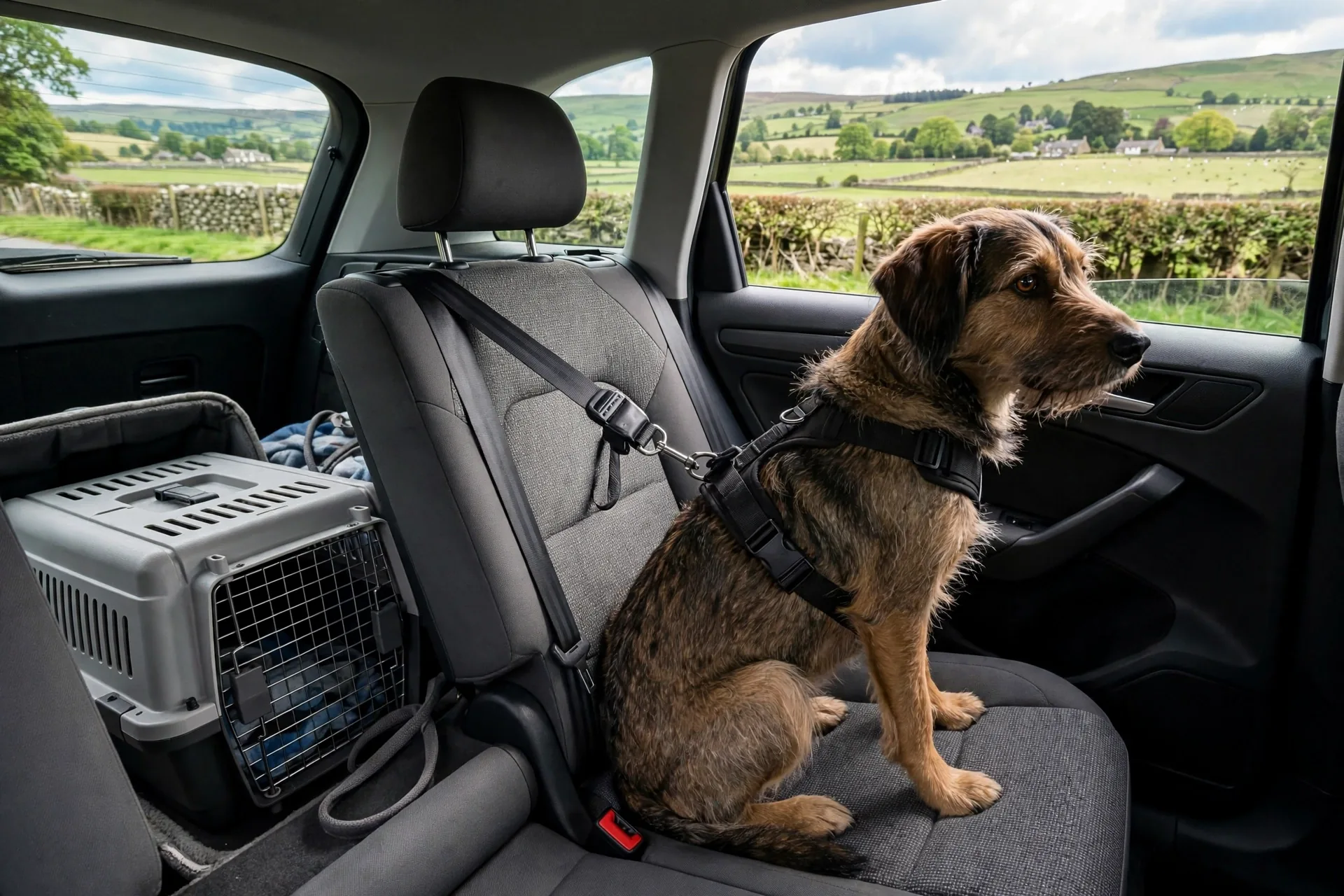
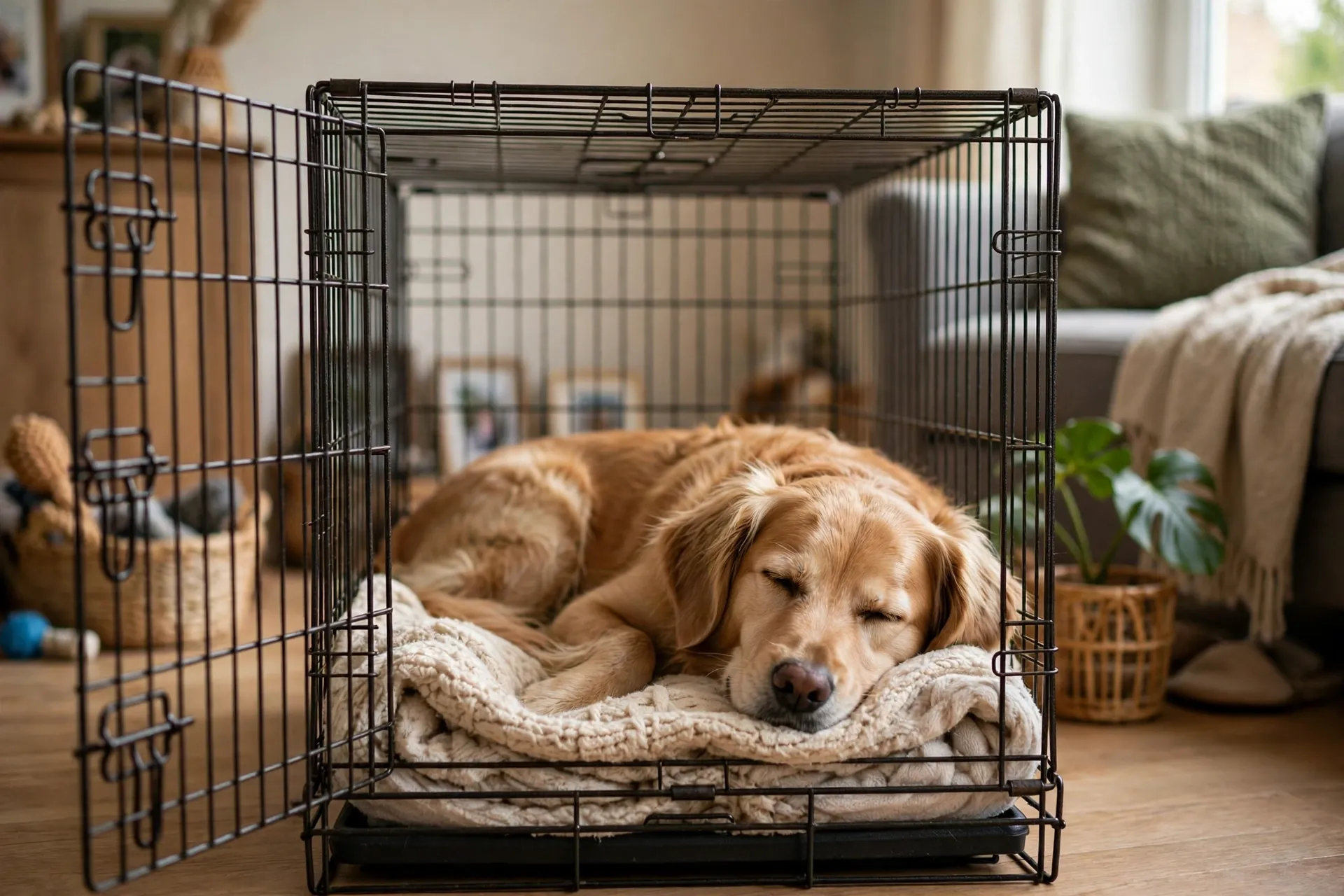
A good travel bed helps here, because it carries a familiar scent and a familiar shape from the living room into the car and then into holiday accommodation. Wash it sparingly in the run-up to a trip, so it still smells like home, and keep a spare cover for accidents. For dogs that travel in a crate, the same logic applies: the crate should be a restful den at home long before it becomes a car fixture, and our guide to crate training for travel sets out a four-week plan that pairs well with the steps above. If your dog travels on the back seat, a well-fitted restraint matters for safety as well as calm, and the choice between harness and crate is covered in our dog car safety guide. In the UK, the Highway Code expects dogs to be suitably restrained so they cannot distract the driver or injure themselves or others in a sudden stop, so check the official guidance before you travel if any detail of restraint or insurance is unclear.
Think about timing and frequency honestly. Two to four weeks of short daily practice is a realistic starting point for mild anxiety, but a dog with a long history of car fear, a rescue dog with unknown early experiences, or a dog that panics at engine noise may need several months. Puppies need gentler sessions still, with extra attention to toileting, hunger and tiredness, and older dogs may need a ramp, a lower step or help getting in, so that physical effort does not add to mental stress. Keep a brief record of each session: the step attempted, the dog's response, and what you will repeat tomorrow. That record stops you from rushing on a good day and from despairing on a bad one, and it gives a vet or behaviourist something concrete to work from if you ask for help.
A calming routine for the car: the same steps, every time
Dogs find safety in predictability. A journey that follows the same sequence every time gives an anxious dog fewer surprises to process, and each calm repetition strengthens the association between the car and settling down. Build a routine that you can actually repeat on a wet Tuesday as well as on holiday morning, and keep it short enough that you will not abandon it when you are in a hurry.
Start twenty minutes before departure, not two. Give the dog a toilet break and a short, sniffy walk, rather than high-energy play that leaves it over-aroused. Offer water, but avoid a large meal immediately before a long drive, especially for dogs prone to travel sickness; a small, familiar snack is usually a better choice, and your vet can advise if sickness is a recurring problem. Lay out the blanket, harness or crate, water bowl, a chew or lick mat for use only when parked, waste bags, towels and any medication the vet has already prescribed, so you are not hunting for kit while the dog waits in a running car.
Loading should be unhurried and rewarded. Let the dog approach, sniff and step in, rather than lifting or pushing it unless mobility makes help necessary. Once inside, give it a moment to turn, sniff its blanket and lie down before you close the door. A brief settle cue that the dog already knows at home, such as lying on its bed, transfers better than a new command invented at the car door. Keep your own voice low and your movements slow. Dogs read human tension quickly: rushing, raised voices, repeated apologies and frantic fussing all signal that something unusual is happening, which is exactly what an anxious dog does not need.
Inside the car, the environment matters as much as the routine. Keep the temperature cool and steady, direct air vents away from the dog's face if that bothers it, and avoid strong air fresheners, which can overwhelm a sensitive nose in a confined space. Some dogs settle better with quiet talk radio or soft music at low volume, because it masks sudden traffic noise; others prefer near-silence. Test both at home in short drives and keep whichever produces a looser body and slower breathing. A window cracked for fresh air can help, but never let a dog travel with its head fully out of a moving window, where wind, debris and sudden stops create risk. Sun shades on rear windows help on bright days, and a non-slip mat under the blanket stops the bed sliding on corners, which is a common cause of low-level, all-journey tension.
Plan breaks before you need them. As a working guide, stop every two hours at most, and more often for puppies, older dogs, dogs that are still learning, or journeys in hot weather. Choose quieter stops where possible: a layby beside fast traffic is worse than a five-minute detour to a village green or a quiet car park. At each stop, let the dog toilet, drink, sniff and stretch, and give it a few minutes to reset before reloading with the same calm sequence. Do not use breaks for a long, exciting walk that leaves the dog too wound up to settle again; save the big walk for the destination. If the dog is travelling in a crate, open it calmly, keep the lead attached before the door fully opens, and avoid letting the dog burst out into an unfamiliar car park.
For the passenger's role, agree it in advance. One person driving and another constantly turning around, reaching back, filming or offering a running commentary can raise arousal rather than lower it. A calm passenger who speaks softly, offers a steady hand if the dog seeks contact, and watches for early signals is far more useful. If you are driving alone, do not try to soothe the dog while driving; pull over safely if the dog is in distress. Safety comes first, and a dog that is climbing, scratching or trying to reach the driver needs the car stopped, not a one-handed cuddle at speed.
Pheromones, wraps, music and calming products: what helps, what does not
Calming products are best understood as support for a training plan, not as a replacement for it. A pheromone spray used once, on holiday morning, on a dog that has never been in the car calmly, is unlikely to transform the journey. The same product used consistently, introduced at home, and paired with short positive practice sessions has a better chance of helping, because the dog already associates the scent or the routine with settling.
Pheromone products are widely sold in the UK as sprays, diffusers and collars. They aim to mimic chemical signals that dogs produce naturally, and some owners report a modest reduction in restlessness. Evidence varies by product and by dog, so treat claims with healthy scepticism, follow the label exactly, and spray bedding well before the dog lies on it so the alcohol carrier can dry. A diffuser designed for a room will not work well in a moving car, so choose a format suited to the setting, and test it at home first to check for sneezing, avoidance or any adverse reaction. If a product seems to make things worse, stop using it; no calming aid should be persisted with simply because it was expensive.
Calming supplements, treats and foods are another large category. Ingredients vary widely, and quality and dosing instructions differ between brands, so read labels carefully, buy from reputable UK retailers, and introduce one new product at a time so you can tell what is actually helping. Never give human medication, herbal remedies or another dog's prescription to your dog, and never combine calming products without veterinary advice, because interactions and over-sedation are real risks. This guide deliberately gives no drug doses: if anxiety is severe enough that you are considering medication, that is a veterinary conversation, not a shopping decision. Your vet can weigh the dog, review its health history, and advise on options, timing and what to trial before the holiday rather than for the first time on departure day.
Pressure wraps, calming shirts and snug-fitting garments help some dogs, particularly those sensitive to noise or touch, by providing gentle, even pressure. Fit matters more than brand: a wrap that is too tight, too hot or put on only when the dog is already panicking can add discomfort. Introduce it at home during calm evenings, pair it with rest and treats, and check that the dog can move, pant and toilet comfortably. Similarly, a lick mat smeared with a familiar food can help a dog settle, but only when the car is parked; loose food, bones and chew toys in a moving car are choking and distraction risks, so keep them for stops and for the destination.
Music and sound deserve a brief note because they are cheap and easy to test. Playlists marketed for dogs usually mean slow tempos, soft instrumentation and minimal sudden changes. That is a reasonable starting point, but your own dog's response is the test: does breathing slow, does the body loosen, does the dog lie down? If not, silence or quiet speech may suit it better. Avoid sudden volume changes, phone calls on speaker, and arguments over directions, all of which spike arousal for no benefit. Above all, keep expectations modest. A product that takes the edge off a mildly anxious dog is still useful, but a dog that shakes, drools, vomits or panics on most journeys needs a plan that goes beyond a spray and a playlist, including professional advice.
Settling the first night away: make the strange room familiar
The first night is where many trips are won or lost. The car journey may have gone reasonably well, yet the dog unravels in a new cottage, lodge or hotel room because every smell, sound and surface is unfamiliar. The remedy is the same principle as in the car: bring home with you, keep the routine, and make the first hour deliberately boring.
Before you unpack your own bags, set up the dog's corner. Put its travel bed or blanket in a quiet spot away from the front door, with water nearby and a familiar toy or chew for parked, supervised use. If the dog uses a crate, assemble it exactly as at home, with the same bedding and the same door position if possible. Lay the same blanket that travelled in the car, unwashed if you can manage it, so the scent trail runs from home to car to room without a break. Check the room for hazards before letting the dog explore freely: cleaning products under sinks, chocolate or snacks left by previous guests, trailing cables, open windows, balconies, and gaps under furniture where a small dog could wedge itself. A quick sweep now prevents a panicked search later.
Then take a calm, sniffy walk around the immediate area. Let the dog map the toilet spot, the route to it, and a few reassuring smells, without demanding a long exploration of the whole neighbourhood. Dogs settle faster when they know where to toilet and where to return to, and a short loop repeated twice beats one long, stimulating march. Back inside, feed at the usual time, in the usual bowl, on a mat that stops the bowl sliding on an unfamiliar floor. Keep the evening close to home: same last-outing pattern, same bedtime, same low light and quiet voices. If the dog normally sleeps in your room, do not suddenly banish it to a hallway on holiday; if it normally sleeps in a crate, keep that arrangement rather than inviting it onto a strange bed for one night and then changing the rule.
Noise is the hidden challenge of the first night. Holiday parks, hotels and cottages all carry sounds a home dog is not used to: neighbours arriving late, plumbing, heating clicks, wind against a lodge, sheep or farm sounds, and, in season, fireworks. Ask in advance whether nearby venues host displays, and check the official guidance before you travel if local firework rules or dates are unclear. A familiar blanket over a crate, a low, steady background sound, and a toilet break just before bed all help, but do not leave an anxious dog alone in a new room for a long evening out on the first night. Plan to stay in, or to take it in turns, until you know how it settles. Many accommodation providers have rules about leaving dogs unattended, and breaching them can end a stay; our guide to dog-friendly holiday parks explains the questions worth asking before booking, including the written rule on unattended dogs.
If the dog wakes, paces or whines in the night, respond calmly and briefly. A quiet toilet trip, a drink, a gentle settling word and a return to bed is usually enough. Avoid turning the night into play, feeding a full meal at 2am, or moving the dog to a new sleeping spot in the dark, all of which teach the dog that night waking brings excitement. If restlessness persists for several nights, if the dog stops eating or drinking, or if it becomes distressed when left for even a few minutes, that is a pattern worth discussing with your vet or a behaviourist, not something to simply endure until you go home. Note what helped and what did not, because the second trip will be easier if you arrive with a record rather than a vague memory of a bad night.
When a trip goes wrong: reset, do not push through
Even a careful plan meets bad days: a motorway closure doubles the journey, a thunderstorm arrives over the hills, a firework goes off beside a service station, or the dog simply has a worse day than expected. The skill is not preventing every setback, but responding in a way that does not turn one bad trip into a lasting setback.
First, stop the escalation. If the dog is panting heavily, drooling, trembling, trying to escape its restraint or vomiting, pull over safely at the next suitable place and let it recover. Offer water, a toilet break, and a quiet few minutes out of the car. Do not scold, and do not immediately reload and drive on as if nothing happened, because the dog will associate the next loading with the panic it has just experienced. A ten-minute reset in a quiet car park is cheaper than months of retraining. If the dog cannot settle at all, consider whether the journey must continue that day, or whether a shorter day, an earlier stop, or a change of plan is the kinder and safer choice.
Second, review without blame. After the trip, write down what happened in order: the trigger, the early signals you may have missed, the point at which the dog tipped over, and what helped it recover. Common, fixable causes include a journey that was too long for the dog's current level, a skipped break, a new harness or crate introduced on the day, a hot car, a loud passenger, or a destination that was too stimulating immediately after a long drive. Fix one variable at a time on the next practice session, rather than changing the car, the restraint, the product and the route all at once, which makes it impossible to learn what worked.
Third, rebuild confidence with easy wins. After a bad trip, return to short, pleasant car sessions for a few days: parked car, treats, a five-minute drive to a favourite field, home again. This is not going backwards; it is repairing the association before it hardens. Dogs, like people, can develop a lasting aversion after a single frightening experience if the next experience is equally frightening, but they can also recover quickly if the next few experiences are calm and predictable. Patience here is not indulgence; it is the fastest route back to normal travel.
Finally, know when a setback is a signal to seek help. A single bad journey after many good ones may need only a brief reset. A pattern of worsening journeys, panic that does not respond to gradual practice, self-harm, or anxiety that spreads into everyday life at home, such as fear of the front door, the car keys or the sound of engines, points beyond do-it-yourself training. A vet can rule out pain or illness, and a qualified behaviourist can design a programme tailored to your dog, including whether medication should be considered alongside training. That is a sign of taking the problem seriously, not of having failed.
When to ask a vet: severe, persistent or sudden anxiety
Most mild travel anxiety responds to the steps in this guide: early recognition, gradual practice, a consistent routine, and a calm first night. Some cases need professional input, and recognising that boundary early saves the dog months of distress and saves you from buying product after product in search of a fix.
Seek veterinary advice promptly if anxiety is severe, if it happens on most journeys despite weeks of careful practice, if it lasts well beyond the journey, or if it affects eating, drinking, toileting or sleep. Also seek advice if the dog harms itself, for example by chewing paws raw, breaking nails trying to escape, or injuring itself against a crate, or if it vomits or has diarrhoea on most trips. Sudden anxiety in a dog that previously travelled well deserves a check too, because pain, ear or eye problems, nausea, cognitive change in older dogs, and other medical issues can all present as reluctance or distress. Take your log of triggers, timing and recovery to the appointment, along with a list of any products you have tried. That record helps the vet distinguish travel sickness, pain, fear and generalised anxiety, which need different approaches.
What a vet may do is broader than prescribing. A good appointment will check health first, review feeding and journey timing for sickness, discuss whether a trial of a calming product or a prescription option is appropriate, and, where needed, refer you to a qualified behaviourist for a structured desensitisation programme. Ask what to trial before the holiday, what signs mean the trial is working, and what to do if it is not. If medication is prescribed, follow the instructions exactly, trial it at home before travelling, and never adjust the amount or share it with another dog. This guide gives no doses for a reason: the right option depends on the individual dog, its weight, its health and its history, and only the vet who has examined it can judge that. If you are unsure about any rule, requirement or product claim, check the official guidance before you travel and ask your vet or the manufacturer directly.
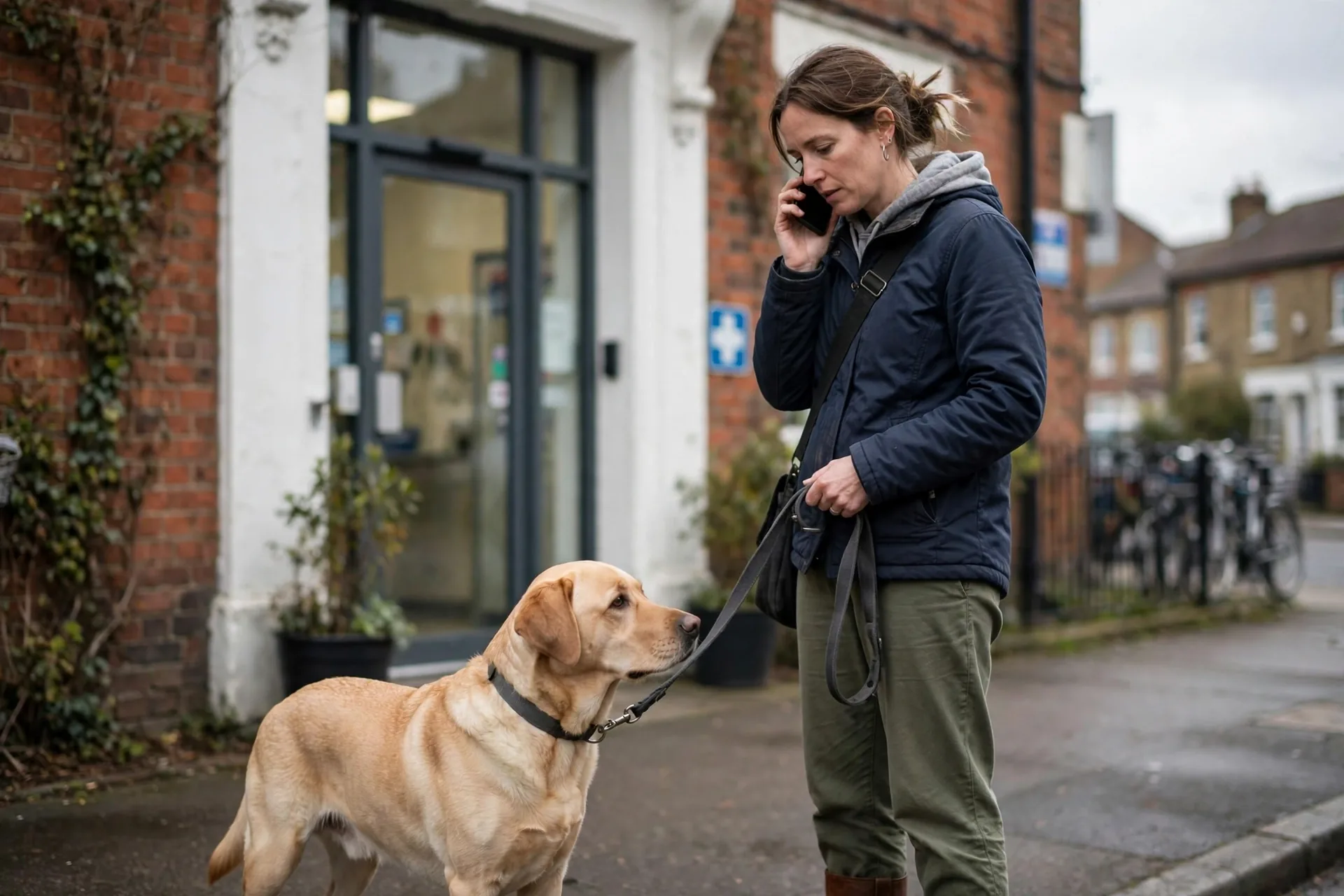
Planning the conversation also helps with practicalities. Before a holiday, save the number of a vet near your destination, along with an out-of-hours service, in case anxiety turns into illness on the trip. Our guide to finding an emergency vet on holiday covers how to call ahead, what information to have ready, and how to follow up at home. Keep your own vet's number in your phone too, and carry a brief summary of your dog's health history, current medication and insurance details in the car. In an emergency, that preparation matters far more than any calming product in the glovebox.
To close, remember the simplest test of a calming plan: does the dog recover faster, enter more willingly, and settle sooner than it did last time? If the answer is yes, even by a little, you are on the right track, and the next trip is an opportunity to repeat what worked. If the answer is no, after honest, gradual practice, that is not a reason to travel more loudly or more often; it is a reason to ask for professional help. Calm travel is not about a dog that never notices a journey, but about a dog that can cope with it, recover from it, and enjoy the destination at the other end.
Practical questions
Before you go
How can I tell if my dog is anxious in the car rather than just excited?
Look for a cluster of signals rather than one behaviour: pacing or refusing to settle, panting when it is not hot, lip licking, yawning, drooling, trembling, whining, barking, drooping ears and tail, or repeated attempts to climb into the front. Excitement usually settles once the journey starts, while anxiety tends to persist, build at predictable triggers such as engine noise or motorway speed, and return on the next trip. Keep a short note of when each signal appears so you can see the pattern.
How long should desensitisation take before a holiday?
There is no fixed timetable, because it depends on how anxious the dog already is and how often you can practise. Many owners see progress over two to four weeks of short, regular sessions, while a dog with a long history of car fear may need several months. Progress is measured by calmer behaviour at each step, not by the calendar. If the dog is getting worse, or is not improving at all, pause and ask a vet or qualified behaviourist for advice rather than pushing on.
Do pheromone sprays and calming supplements really help anxious dogs?
They can help some dogs as part of a wider plan, but they are not a cure on their own and results vary. Pheromone products aim to mimic calming chemical signals, while supplements and calming foods may support relaxation. Introduce any new product at home first, follow the label exactly, and never combine products or use human medication without veterinary advice. If anxiety is severe or persistent, speak to your vet, who can advise on whether a prescription option is appropriate.
Should I comfort my dog when it panics, or will that reward the fear?
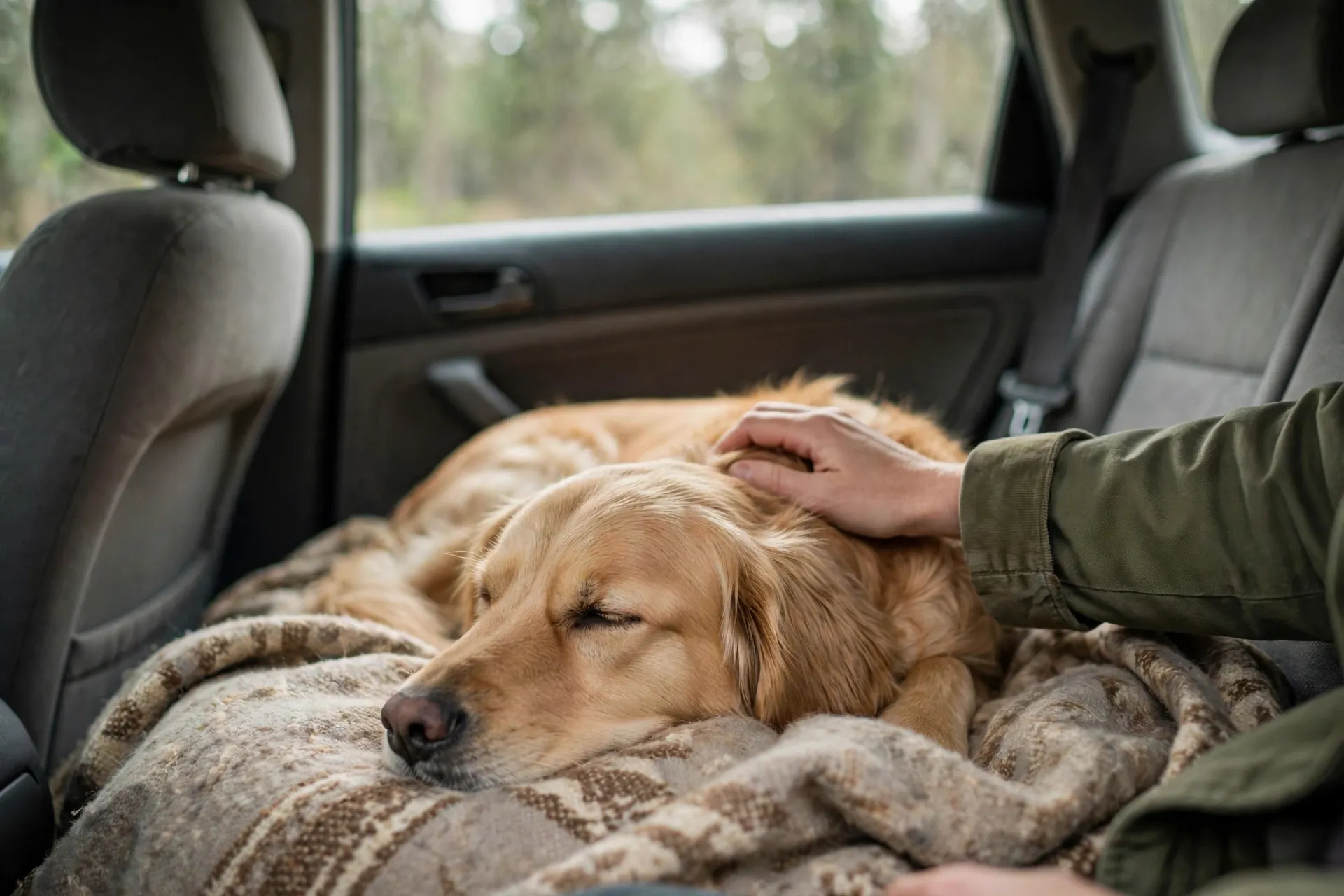
Calm, steady reassurance does not reward fear, because fear is an emotion rather than a behaviour the dog is choosing. Speak softly, move slowly, and offer a familiar blanket or a gentle touch if your dog seeks it. What does not help is frantic fussing, punishment, or forcing the dog closer to whatever frightens it. The goal is to lower arousal and help the dog feel safer, then gradually build positive associations at a pace the dog can cope with.
When should I ask a vet about my dog's travel anxiety?
Ask promptly if anxiety is severe, lasts well beyond the journey, causes self-harm such as chewing paws raw, leads to vomiting or diarrhoea on most trips, or stops the dog eating, drinking or toileting normally. Also seek advice if the dog suddenly becomes anxious after previously travelling happily, since pain, illness or hearing or vision changes can be involved. Take your notes on triggers and timing to the appointment, and check the official guidance before you travel if any rule or requirement is unclear.