This guide is independent and contains no paid placement. If affiliate links are added later, they will be clearly marked and will not change our editorial checks.
Sussex is mostly pebble, with two great sandy exceptions: West Wittering in the west and Camber Sands in the east. Brighton is the city beach, Worthing and Eastbourne are the easy level promenades, and Hastings is the working fishing beach. Seasonal restrictions apply to defined sections in front of the towns, so read the signs at each access point and check the official guidance before you travel.
Pebble or sand: the first decision
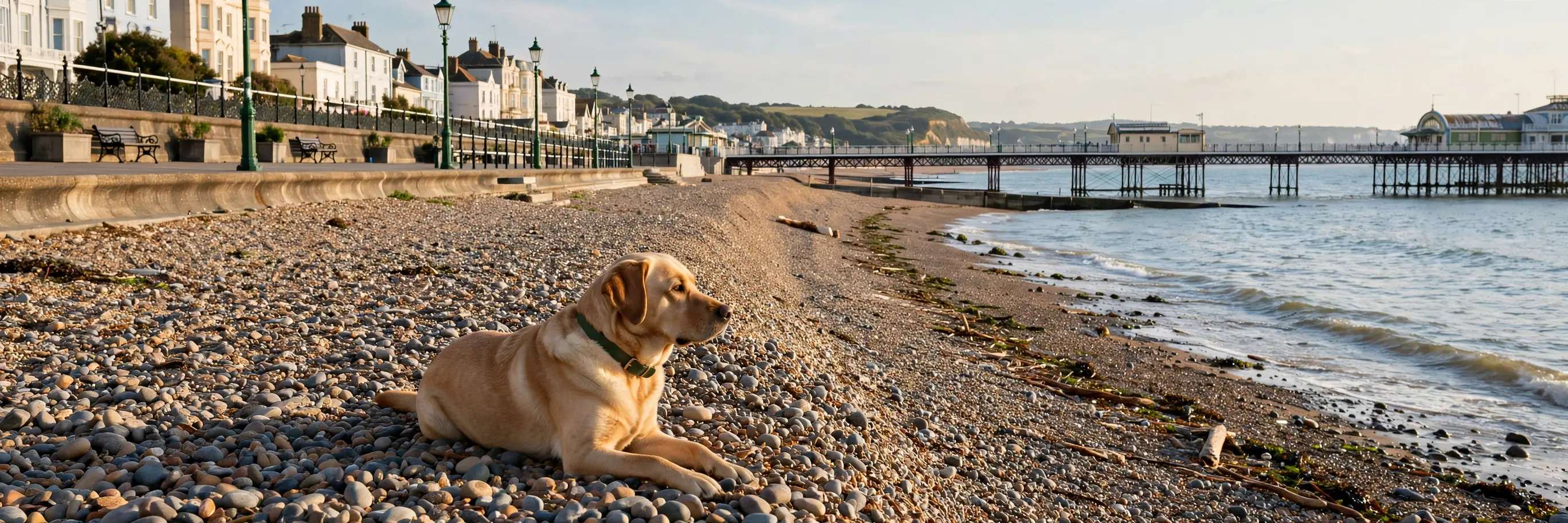
Every Sussex beach day starts with the same question, and it is not about the weather. Is this a pebble beach or a sand beach? Most of the county is pebble: a long, grey-brown bank of flint that runs from the Hampshire border to the Kent border, broken only by the two great sandy exceptions at West Wittering and Camber. Pebble has its own pleasures — the sound of the sea dragging the stones, the clean air, the long promenades that run beside it — but it is hard work for a dog. The stones shift underfoot, they hold the heat in summer, and they can sore a dog's pads on a long walk. Sand, when you find it, is a different world: firm at low tide, easy on paws, and the place where a dog can really run.
The decision matters because the two kinds of beach are in different places and need different planning. A pebble beach is usually reached from a promenade, with cafes, toilets and parking close by, and the walk is as much about the town as about the sea. A sand beach is usually reached through dunes or across a harbour, with fewer facilities and a longer walk from the car, but with far more room once you get there. A dog that needs a long run wants sand, and is worth the drive to West Wittering or Camber. A dog that is happy with a short stroll and a pub lunch wants pebble, and will be perfectly content at Worthing or Eastbourne. This guide describes both, beach by beach, so you can match the surface to the dog you actually have.
Sussex's summer rules are drawn up beach by beach by the district and borough councils, so the picture shifts every few miles along the coast. The long pebble beyond the town centres stays open to dogs through the summer, the sandy beaches at West Wittering and Camber carry marked zones rather than whole-beach bans, and the restrictions sit on the short fronts at Brighton, Worthing, Bognor Regis and Hastings. Each zone is spelled out on the boards at the slipways and car parks, and the board in front of you is the one to follow, because the councils revise the boundaries now and then. How these orders are made, and what a breach can cost, is covered in our guide to the UK beach dog rules.
Brighton and Hove: the city beach
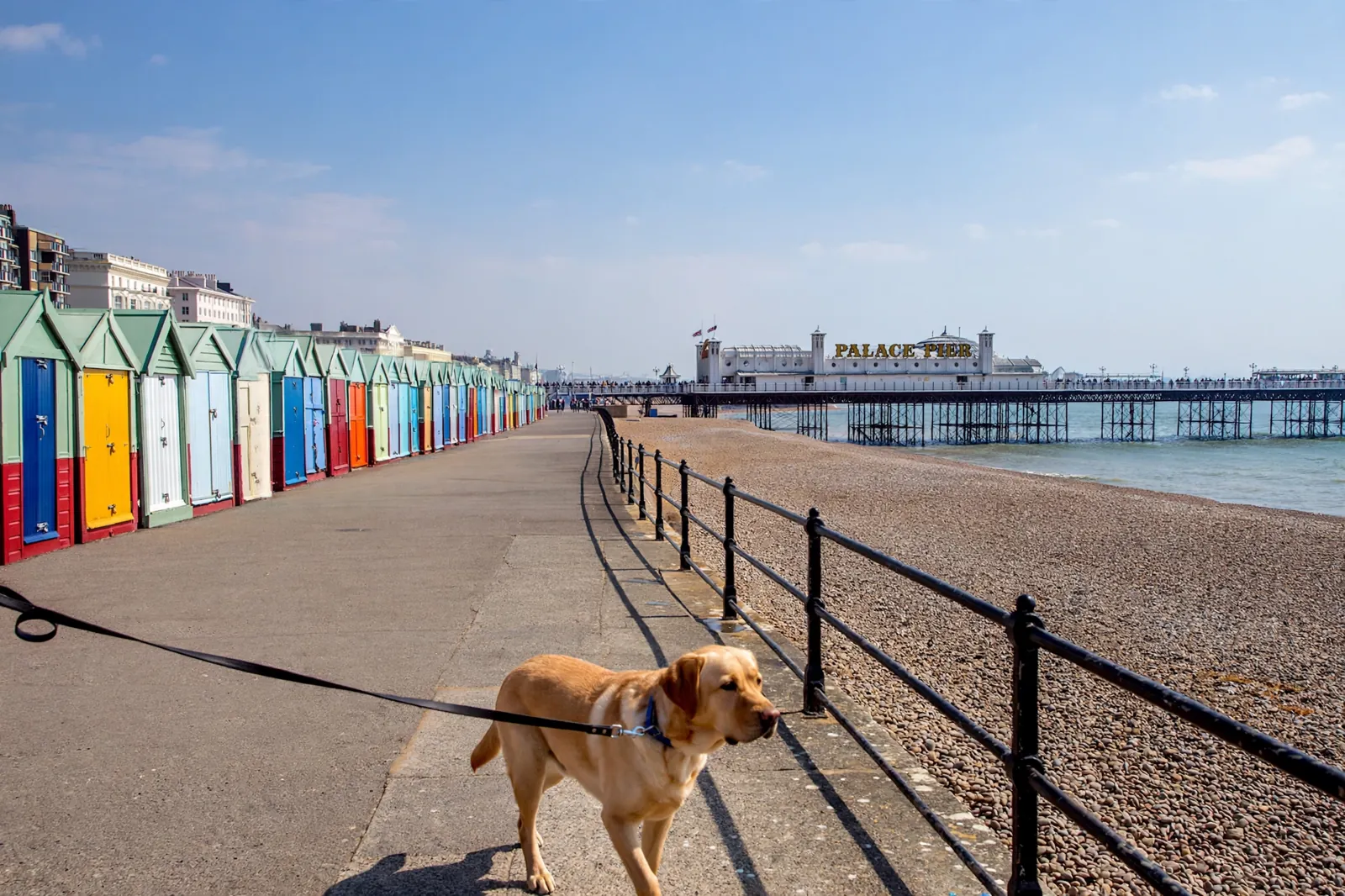
Brighton is the most famous beach in Sussex, and it is also the most complicated for a dog owner. The beach is pebble, the promenade is long and level, and the town behind it is one of the most dog-friendly cities in England, with cafes, pubs and shops that welcome dogs as a matter of course. The seasonal rules are the important detail: a defined section of the beach in front of the town is restricted to dogs in summer, while the stretches to the east and west of the town centre, and the beach at Hove, are more open. Read the signs at each access point before you let the dog off the lead, because the restricted zone is clearly marked and the open sand beyond it is usually only a few minutes further on. Our guide to Brighton with a dog covers the seasonal bans, the promenade and the pier rules in detail.
The promenade itself is the real asset for a dog owner. It runs for miles in both directions, level and paved, with benches, cafes and views across the Channel, and it is a good walk for a dog of any age, including an older dog that could not manage a pebble beach. The pier is not suitable for dogs, but the beach below it is, and the fishing boats and the volleyball courts give the seafront a lively feel that some dogs love and others find overwhelming. If your dog is nervous around crowds, visit early in the morning or late in the afternoon, when the promenade is quieter, and use the beach at Hove, which is noticeably calmer than the town centre. The marina at the eastern end of the town has a promenade, cafes and a beach that is open to dogs, and it is a good option for a quieter visit.
Brighton also makes a practical base for the county, with the South Downs behind it and the coast in both directions. The city has a good range of dog-friendly accommodation, from hotels to flats, and the railway station connects to London in under an hour, which is useful if you arrive by train. If you are staying for several days, use Brighton for the busy city day and save the quiet beaches for the rest of the week, when you will appreciate the contrast. The beach at Rottingdean, just east of the city, is another good option: a small village with a pebble beach, a pub and a quieter feel, and a clifftop walk that runs towards the marina.
West Wittering and the harbour sands
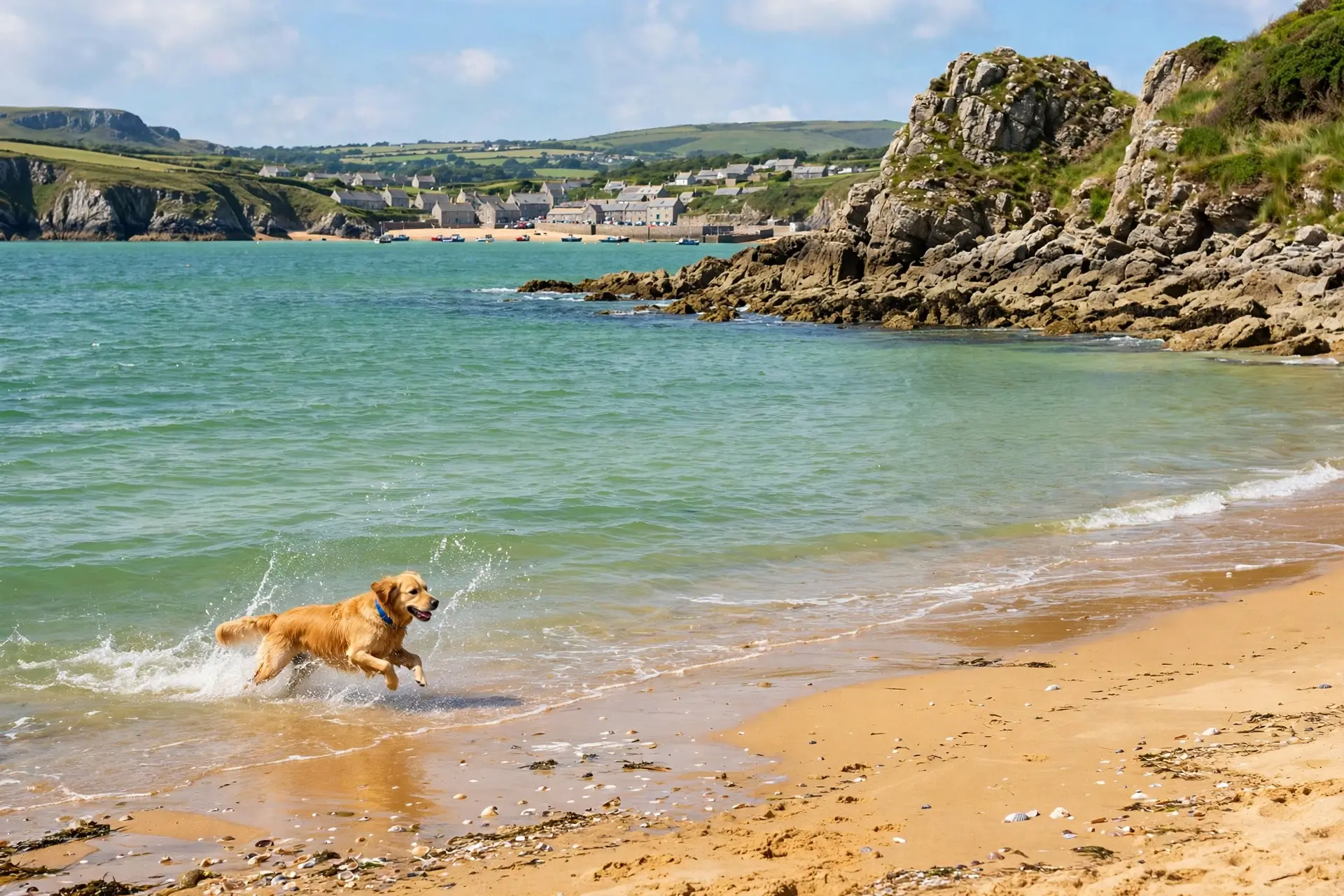
West Wittering is the sandy exception in the west of the county, and it is one of the best dog beaches in southern England. The beach is a huge expanse of firm sand at low tide, backed by dunes and a nature reserve, with views across Chichester Harbour to the Isle of Wight. Dogs are welcome on the beach all year, though seasonal restrictions apply to a defined section near the car park in summer, so read the signs and walk a little further along the beach if the dog needs to be off the lead. The walk from the car park to the beach is level and easy, and the sand is firm enough at low tide for a dog that struggles on soft ground. The dunes behind the beach hold nesting birds in spring and summer, so keep the dog on the paths and out of the fenced areas.
The harbour itself is the other half of the visit. Chichester Harbour is a large, shallow estuary with mudflats, salt marsh and a network of creeks, and the villages around it — Bosham, Itchenor and West Itchenor — are some of the prettiest on the south coast. Dogs are welcome on the harbour paths, but they must stay on a lead near the water, where the mud is deep and the birds feed at low tide. The harbour is also a working place, with sailing boats, fishing gear and a ferry in summer, so keep the dog on a lead on the quaysides and let it run only on the open beach. The walk from West Wittering around the harbour to East Head, the spit at the mouth of the estuary, is a good hour along the sand at low tide, with wide views and a sense of space that is hard to find elsewhere in the county.
West Wittering is popular, and the car park fills early in summer, so arrive before mid-morning or visit on a weekday if you can. The beach has a cafe and toilets near the car park, and the village has a pub that welcomes dogs. If the car park is full, the neighbouring beach at East Wittering is a smaller and quieter alternative, with a pebble and sand mix and a village high street with cafes and shops. Both beaches are good choices for a dog that needs a long run on sand, and they are the best in the county for a first visit if your dog struggles on pebble.
Worthing, Littlehampton and Bognor
The middle of the Sussex coast is the quiet, level stretch that many dog owners end up loving most. Worthing is the biggest town here, with a long promenade, a pier and a beach of pebble that gives way to sand at low water. Much of the beach stays open to dogs, though a marked summer zone covers the stretch in front of the town, and the flat, paved promenade suits older dogs and wet days alike. Cafes and pubs that welcome dogs line the seafront, and the beach is at its loveliest early in the morning, before the promenade fills and the town wakes up. The walk west from Worthing towards Ferring and Goring runs along the promenade and the beach, and it is a good half-hour stroll with wide views.
Littlehampton, a few miles west, is a smaller and quieter town with a harbour, a river and a beach that is a mix of sand and shingle. Dogs can use much of the beach, and the river walk from the town to the harbour is a level, easy stroll that suits dogs of any age. The town has a good fish and chip shop, a couple of dog-friendly pubs, and a promenade that runs east towards Rustington. Bognor Regis, further west, is a classic seaside town with a pier, a promenade and a beach that is mostly pebble with sand at low tide. The beach carries a seasonal restriction on a defined section in summer, but the stretches to the east and west of the town are open to dogs, and the promenade is level and easy. The town has several dog-friendly cafes and a good range of accommodation, and it makes a practical base for the west of the county.
Worthing, Littlehampton and Bognor are the county's answer to a grey day: a cafe, a dry car and a level promenade within a few steps of each other. They are also the best beaches in Sussex for a dog that likes a promenade walk, because the promenades are long, flat and well kept. A marked summer zone is likeliest on the town fronts, so read the board at the promenade entrance before the dog runs free.
Eastbourne and the Downs edge
Eastbourne is the resort at the eastern end of the county's pebble coast, with a long promenade, a pier, a bandstand and a shingle beach with sand showing at low water. Dogs can use much of the beach, though a marked summer zone covers the stretch in front of the town, and the flat, paved promenade suits older dogs well. The town has no shortage of dog-friendly cafes and pubs, and the beach is at its best early in the morning, when the promenade is quiet and the light on the Downs is soft. The walk east from Eastbourne towards Beachy Head runs along the promenade and then up onto the clifftops, and it ranks among the finest walks on the coast, though the cliffs are high and the path is narrow in places.
Beachy Head and the Seven Sisters are the dramatic end of the Sussex coast, a series of white chalk cliffs that rise sheer from the sea, with a clifftop path that runs for miles along the edge. Dogs are welcome on the paths, but they must stay on a lead beside the cliff edge and around livestock, and the edge has no fence in places, so keep the dog close and well back from the drop. The paths are level enough for most dogs, though the wind can be strong and there is no shade or fresh water on the downs in summer. The beaches below the cliffs are hard to reach on foot, so treat Beachy Head as a clifftop walk rather than a beach day, and carry water for the dog, because there is none on the path itself.
Eastbourne also makes a good base for the east of the county, with the Downs behind it and the coast in both directions. The town has a good range of dog-friendly accommodation, from hotels to cottages, and the railway station connects to London and Brighton. If you are staying for several days, use Eastbourne for the resort day and save the quiet beaches at Camber and Rye for the rest of the week, when you will appreciate the contrast. The beach at Pevensey Bay, just east of the town, is another good option: a long sweep of shingle that is open to dogs all year and noticeably quieter than the town beaches.
Hastings and the fishing beach
Hastings is the working fishing beach of the county, and it has a character unlike any other town on the coast. The beach below the old town is a mix of shingle and sand, with fishing boats hauled up on the shore, net shops, and a fleet that still lands its catch on the beach. Dogs are welcome on much of the beach, with seasonal restrictions on a defined section in front of the town in summer, and the promenade is level and paved. The old town behind the beach is a maze of narrow streets, with antique shops, cafes and pubs that welcome dogs, and the funicular railway up to the castle is a popular sight, though dogs should be kept on a lead on the platforms. The castle itself has its own visiting rules, so check before you assume the dog can follow you inside.
St Leonards, just west of Hastings, is a quieter version of the same idea, with a long promenade, a beach of shingle and sand, and a more residential feel. The beach is open to dogs on much of its length, and the seafront walk between Hastings and St Leonards is flat and straightforward, and it suits dogs of any age. The town has several dog-friendly cafes and pubs, and the beach is at its best early in the morning, when the fishing boats are landing their catch and the town is still quiet. The cliffs at the eastern end of Hastings, towards Fairlight, hold a nature reserve and a coast path that runs to the neighbouring village, and the walk is a good option for a dog that prefers grass underfoot to shingle.
Hastings is a good choice for a dog that likes to watch the world go by, because the fishing beach is always busy with boats, gulls and people, and there is always something to look at. It is less good for a nervous dog, which may find the crowds and the noise overwhelming, and the shingle is hard underfoot, so keep walks brief and use the promenade for the longer stretches. If your dog needs sand, drive east to Camber, and use Hastings for the slower part of the day: a pub lunch, a wander through the old town, and a quiet hour watching the boats.
Camber Sands: the outlier
Camber Sands is the beach that does not belong in Sussex, and that is exactly why dog owners love it. At the far eastern end of the county, near Rye, the coast turns into a vast expanse of golden sand backed by dunes, with a beach that stretches for miles and a sense of space that is more Norfolk than Sussex. Dogs are welcome on the beach all year, and the sand is hard and level at low water, which makes it one of the best beaches in the county for a long run. The dunes behind the beach hold nesting birds in spring and summer, so keep the dog on the paths and out of the fenced areas, and the car park fills early in summer, so arrive before mid-morning or visit on a weekday if you can.
The walk from the car park through the dunes to the beach takes about ten minutes on a sandy path, and it can be hard work for a very small or very old dog in hot weather. Once you reach the sand, the walking is easy underfoot near the waterline, and the shallow pools left by the tide suit a dog that likes to paddle without swimming. The beach is also a popular spot for kite surfing, so keep the dog on a lead near the water when the kites are up, and watch for the strong winds that can pick up quickly on this exposed coast. The village of Camber has a pub, a small shop and a couple of cafes that welcome dogs, and the town of Rye, a few miles inland, is one of the prettiest in England, with medieval streets, a castle and several dog-friendly pubs.
Camber is the beach to save for the best day of your trip, when the weather is good and you have time to enjoy it properly. Arrive early, walk for an hour along the sand, and then drive to Rye for lunch, where the town's lanes and pubs are a perfect contrast to the open beach. The combination of a long sandy beach and a medieval town in a single day is one of the best in southern England, and it is the reason Camber has become the most popular dog beach in Sussex. If you only visit one beach in the county, make it this one, but go early and go on a weekday if you can.
Harbours and tidal creeks
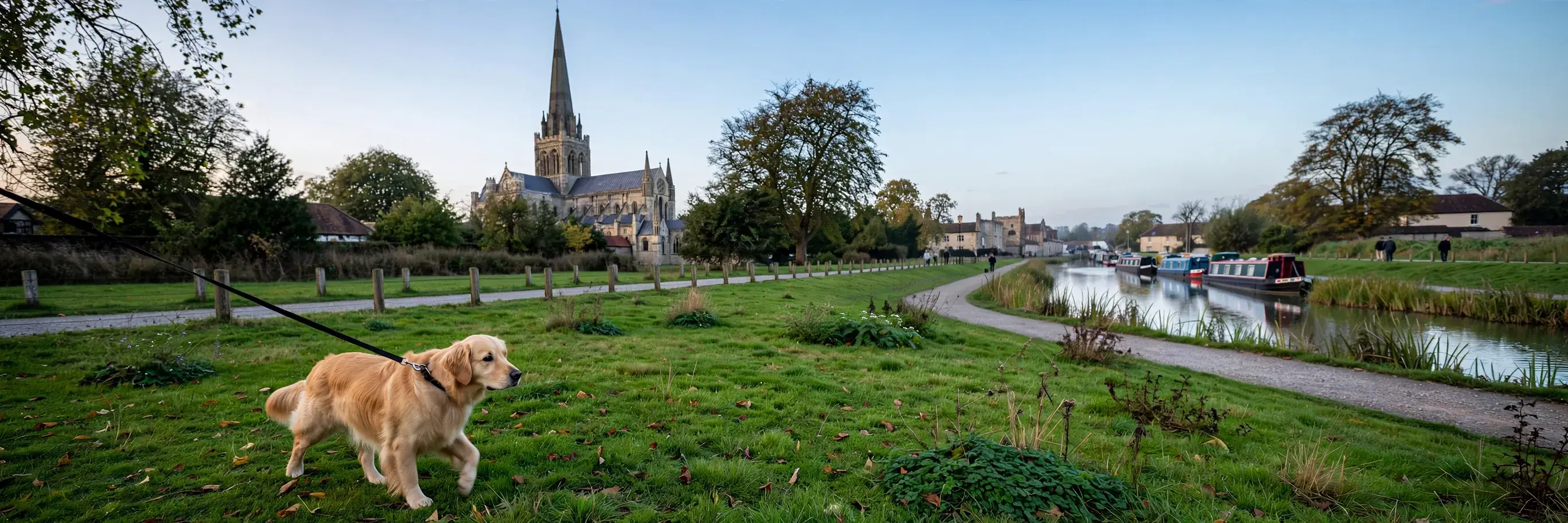
Sussex has two great harbours that are worth a visit with a dog, and both need a different approach from the open beaches. Chichester Harbour, in the west, is a large, shallow estuary with mudflats, salt marsh and a network of creeks, and the villages around it — Bosham, Itchenor and West Itchenor — are some of the prettiest on the south coast. Dogs are welcome on the harbour paths, but they must stay on a lead near the water, where the mud is deep and the birds feed at low tide. The harbour is also a working place, with sailing boats, fishing gear and a ferry in summer, so keep the dog on a lead on the quaysides and let it run only on the open beach at West Wittering. Our guide to Chichester with a dog covers the cathedral green, the canal towpath and the harbour in more detail.
Pagham Harbour, further east, is a nature reserve rather than a working harbour, and it suits a walk better than a beach day. The reserve has a visitor centre, a network of paths through the reed beds and lagoons, and a beach at the end of the path that is a quiet sweep of shingle and sand. Dogs are welcome on the beach and on some of the paths, but the hides and the main reserve trails are off limits, so look at the signs at the visitor centre before you set out. The beach here is a good place to watch for wading birds, and the dunes behind it hold nesting birds in spring, so keep the dog on a lead near the signed areas and out of the fenced sections. The harbour at Rye, in the east, is a smaller and quieter version of the same idea, with a river, a nature reserve and a beach at Rye Harbour that is open to dogs all year.
Both harbours ask for a slow, careful approach. The estuary is lovely to look at, but it is also a working world of mud, creeks and tides, and a dog running loose in it can get into trouble fast. Take water and a towel, time your walk by the tide table rather than the clock, and turn back early if the tide is rising. The beach will still be there tomorrow, and a creek that is dangerous now will be no safer in an hour.
Comparing the coast
Use the table to narrow the choice, then confirm it at the beach. The councils publish the summer zones, but the board at the access point shows the zone in force today, and the board wins when the two disagree. Zones shift from year to year, so a beach that was open last summer may carry a marked section this year.
| Beach | Surface | Crowds | Best for |
|---|---|---|---|
| Brighton | Pebble | Very busy in summer | City day and promenade walks |
| Hove | Pebble | Quieter than Brighton | Calm promenade and beach |
| West Wittering | Firm sand | Busy, car park fills early | Long runs and paddling |
| Worthing | Pebble, sand at low tide | Moderate | Easy level promenade |
| Littlehampton | Sand and shingle | Quiet | Harbour walks and level beach |
| Bognor Regis | Pebble, sand at low tide | Moderate | Classic seaside day |
| Eastbourne | Shingle, sand at low tide | Busy in summer | Resort day and Downs walks |
| Hastings | Shingle and sand | Busy around the fishing boats | Watching the working beach |
| Camber Sands | Firm golden sand | Busy, go early | The best sandy run in Sussex |
| Pevensey Bay | Shingle | Quiet | Space and quiet |
The summer zones are only half the story. The rest is everyday behaviour: a dog that comes back on the first call, a lead on before the promenade crowds or the cliff edge rather than after, and the mess taken home, because the bins stand by the car parks and never out on the pebbles. Wardens work the busy town beaches in summer, and both fouling and a breach of a marked zone carry fines. The full background on how these orders work is in our guide to the UK beach dog rules.
A three-day pebble-to-sand plan
Three days is enough to walk the Sussex coast properly if you pick one area per day and let the dog set the pace. Day one is the west: West Wittering in the morning, with the huge sandy beach at low tide, then Chichester Harbour in the afternoon, with the harbour paths and a pub supper in Bosham. Day two is the middle: Brighton in the morning, with the promenade and the city beach, then Worthing in the afternoon, with the level promenade and a quieter beach. Day three is the east: Camber Sands in the morning, with the long sandy run, then Rye in the afternoon, with the medieval lanes and a pub lunch. The drive between the three areas is short, and the contrast between the sandy west, the pebble middle and the sandy east will show you more of the county than any list of beach names.
Leave room in the plan on purpose. Two hours on sand wears a dog out far more than two hours on pavement, so follow a big beach morning with a slow afternoon in a village or a pub garden, and keep one afternoon free altogether. Carry a bottle and a bowl on every beach walk: the open beaches offer no fresh water, and the car parks are often a long walk behind you. Keep a towel and a drying coat in the boot for the drive back. If the weather turns, the Downs villages behind the coast have dog-friendly cafes and bookshops, and the promenades stay usable when the beach itself is being blown sideways. Take Sussex one place at a time: a whole day on one beach beats a morning spent hopping between three of them.
Sleeping here is easy. Hotels, cottages and campsites line the coast, and nearly all of them take dogs as a matter of course. Brighton and Camber book up first in July and August, so reserve early and ask outright whether the garden is fenced and whether the dog can stay alone indoors for an hour. Chichester puts you in the west with short drives either way, while Eastbourne suits a short break that never leaves the east. When you arrive, walk the garden yourself before the dog is let out, and keep the first evening quiet, with the dog's own bed in the corner, so the new place feels safe from the start.
Practical questions
Before you go
Which Sussex beaches allow dogs in summer?
The pebble beyond the town centres, including much of the coast at Shoreham, Lancing and Eastbourne, stays open to dogs through the year. Brighton, Worthing, Bognor Regis and Hastings all have marked summer zones on the town fronts, so check the board where you arrive and keep walking past the town front if the dog needs to run free.
Is Camber Sands good for dogs?
Yes, Camber is the best sandy beach in Sussex for dogs: a huge expanse of firm sand backed by dunes, with room for a long run even on a busy day. The dunes hold nesting birds in spring and summer, so keep the dog on the paths and out of the fenced areas. The car park fills early in summer, so arrive before mid-morning or visit on a weekday.
Are pebble beaches bad for dogs?
They can be tiring and hard on paws, especially in hot weather when the stones hold the heat. Keep a pebble walk brief, stick to the firm sand at low water wherever you can find it, and check your dog's paws back at the car. If pebbles clearly bother your dog, West Wittering or Camber Sands are the better choice, with the promenades for the longer stretches.
Can dogs walk the South Downs Way near the coast?
Yes, the South Downs Way and the coastal paths around Beachy Head and the Seven Sisters are open to dogs, and they offer some of the best views in southern England. Keep your dog on a lead near cliff edges and livestock, and carry water, because there is no shade or fresh water on the downs in summer. The cliff edges have no fence in places, so keep the dog close.
Where is the easiest Sussex beach for an older dog?
Worthing and Eastbourne suit an older dog best: level promenades, flat beaches and parking right by the sea, with no steps anywhere. West Wittering is level and easy too once you reach the sand, though the walk from the car park is longer. Skip the steep steps down to the Hastings coves and the Beachy Head clifftop paths if stairs are hard for your dog.