This guide is independent and contains no paid placement. If affiliate links are added later, they will be clearly marked and will not change our editorial checks.
Yorkshire mixes dramatic cliff coves with long flat resort sands, so the right beach depends on your dog's legs and nerves. Robin Hood's Bay and Runswick Bay are the quiet coves, Filey and Bridlington South Beach are the easy flat sands, and Scarborough and Whitby need a careful read of the seasonal signs. Check the tide times every morning, keep well back from the cliff base, and check the official guidance before you travel.
The Yorkshire coast in one walk
Walk the Yorkshire coast from north to south and the ground changes under your feet every few miles. It starts with the high, dark cliffs of the North York Moors, where the Cleveland Way runs along the clifftops and the beaches below appear and disappear with the tide. Then come the fishing coves, tucked between headlands, where a dog can run on sand that is cut off from the world for a few hours each day. Further south the cliffs soften into the wide bays of Scarborough and Filey, and finally the coast flattens out into the long, low sands of Bridlington and the Holderness plain, where the sea is eating the land faster than anywhere else in Europe. No other English county packs so many different beaches into so short a distance, and that variety is both the joy and the challenge of a Yorkshire dog holiday.
The practical consequence is that no single rule covers the county. A cove that is perfect at low water can be cut off at high water, a resort front that bans dogs in summer can have a mile of open sand a short walk away, and a beach that is empty on a Tuesday can be crowded on a bank holiday. The sections below take each stretch on its own terms, with its access, its tide behaviour and its seasonal rules, so you can choose a day that fits your dog instead of hoping the first beach you reach will do. The councils set the summer zones, the boards at the access points show where they fall, and those boards are the authority on the day, because the zones shift from one year to the next. For the background on how these orders are made and what a breach can cost, see our guide to beach bans and fines in the UK.
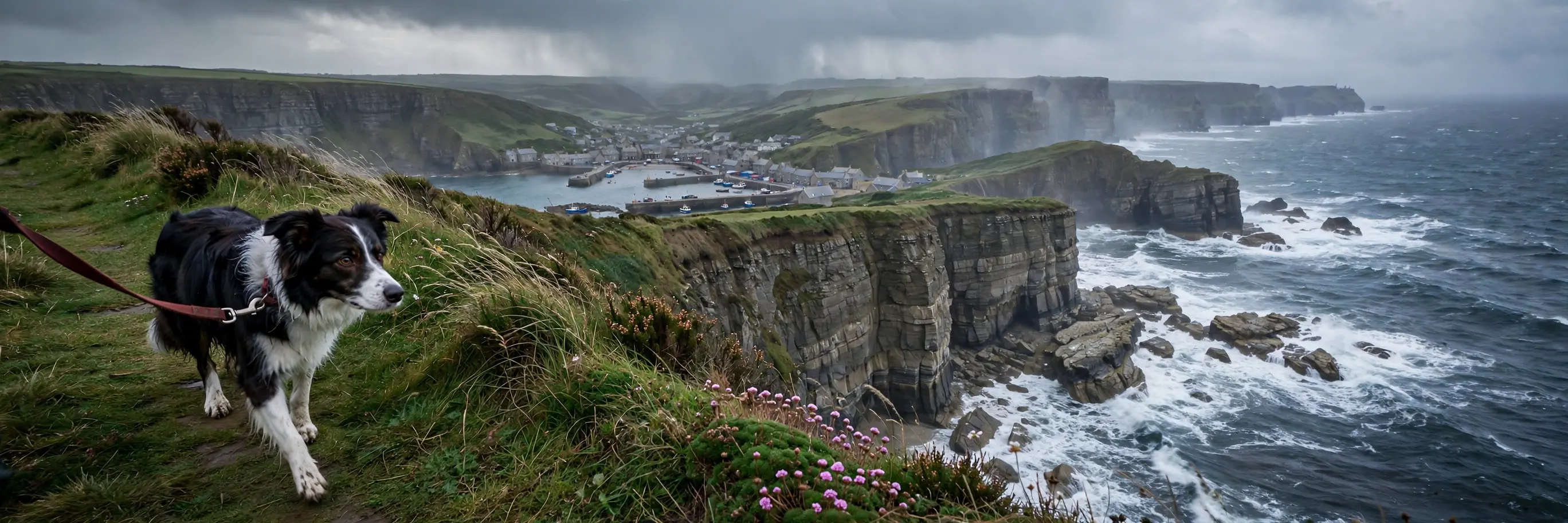
One thing the whole county shares is the cliff. The Yorkshire coast is one of the fastest-eroding coastlines in Europe, and the cliffs shed rock constantly, especially after heavy rain or a hard frost. That is a safety fact, not a scare story: keep the dog away from the cliff base, never let it investigate a fresh fall, and stay off the narrow beaches at high tide, when the water reaches the cliffs and leaves nowhere to go. The coast path on the clifftops is the safe route between the beaches, and it is a superb dog walk in its own right, with wide views and a well-surfaced path for most of its length.
Whitby to Robin Hood's Bay
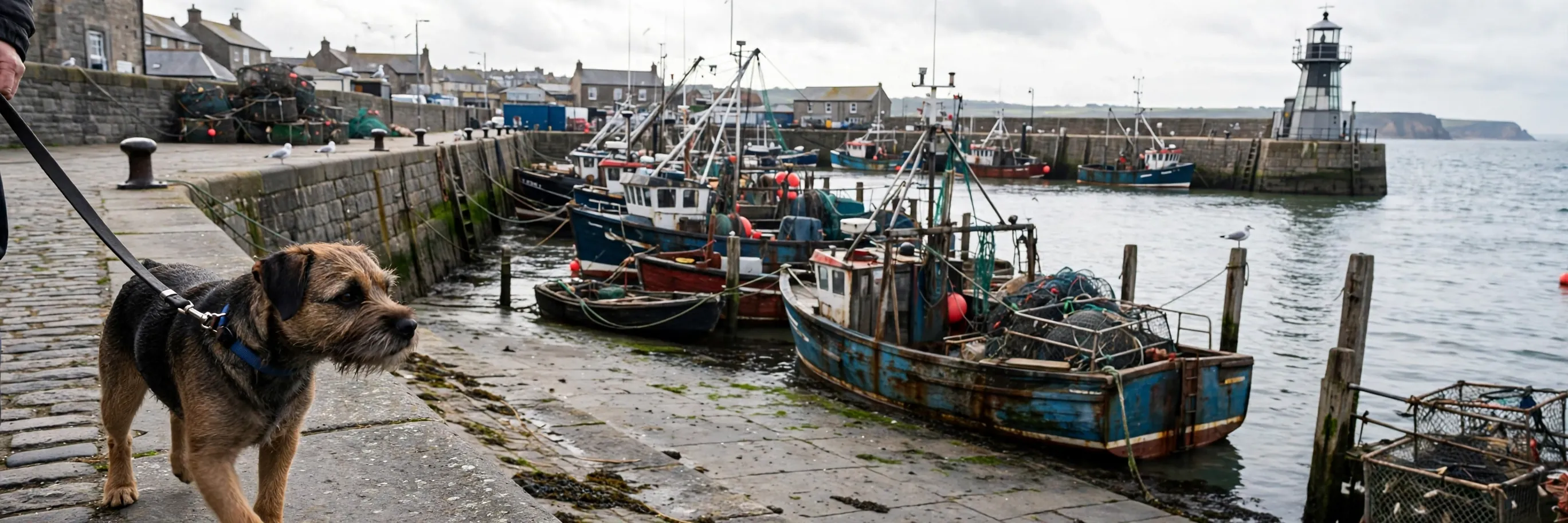
Whitby is the most famous town on the Yorkshire coast, and its beach is really two beaches divided by the harbour. The West Cliff beach is the resort front, with a promenade, cafes and a seasonal dog restriction on a defined section in summer. The East Cliff beach, below the abbey, is quieter and rockier, with rock pools at low tide and a steep climb back up the 199 steps to the town. Dogs are welcome on much of the beach outside the restricted section, but the steps are the real consideration: a fit dog will manage them happily, while an older dog or a small breed may find the climb hard. The harbour itself is busy with boats and fishing gear, so keep the dog on a lead on the quayside and let it run once you are out on the sand.
Robin Hood's Bay, a few miles south, is the cove that most dog owners remember longest. The village tumbles down a steep hill to a beach of sand and rock, with old cottages, a small museum and a couple of pubs that welcome dogs. The beach is open to dogs all year, and at low tide it stretches for miles in both directions, with firm sand and rock pools that keep a curious dog busy for hours. The walk from the village down to the beach is steep, and the climb back up is steeper, so this is not a beach for a dog that struggles with hills. The coast path north from the bay runs to Whitby along the clifftops, a walk of about two hours that is one of the finest on the coast, but it has narrow sections and steep drops, so keep the dog on a short lead and watch for nesting birds in spring.
Between the two towns, the coast path passes through a landscape of old alum works, ruined chapels and seabird colonies, and the beaches below are mostly inaccessible except at low tide. That is part of their charm, but it also means you should never try to walk along the beach between Whitby and Robin Hood's Bay at high tide: the water reaches the cliffs and there is no way out. Plan the walk on the clifftops, drop down to the beach at low water, and carry water, because there are no facilities on the path between the two towns. The views from the clifftops are worth the effort, with the abbey on the headland behind you and the bay opening out ahead.
Sandsend and Runswick: the quiet coves
Sandsend sits just north of Whitby, a small village with a long, curving beach that is one of the best-kept secrets on the coast. The beach is mostly sand, with rock pools at the northern end and a stream that runs across the sand at low tide, and dogs are welcome all year. Access is from a small car park at the southern end of the village, with a level walk onto the sand, and the beach is at its best in the morning, when the light is soft and the village is still quiet. The cafe at the southern end welcomes dogs outside, and the coast path north from here runs towards Kettleness and Runswick Bay, with wide views and a well-surfaced path. Sandsend is a good choice for a dog that needs space without a long walk from the car, and it is noticeably quieter than Whitby itself.
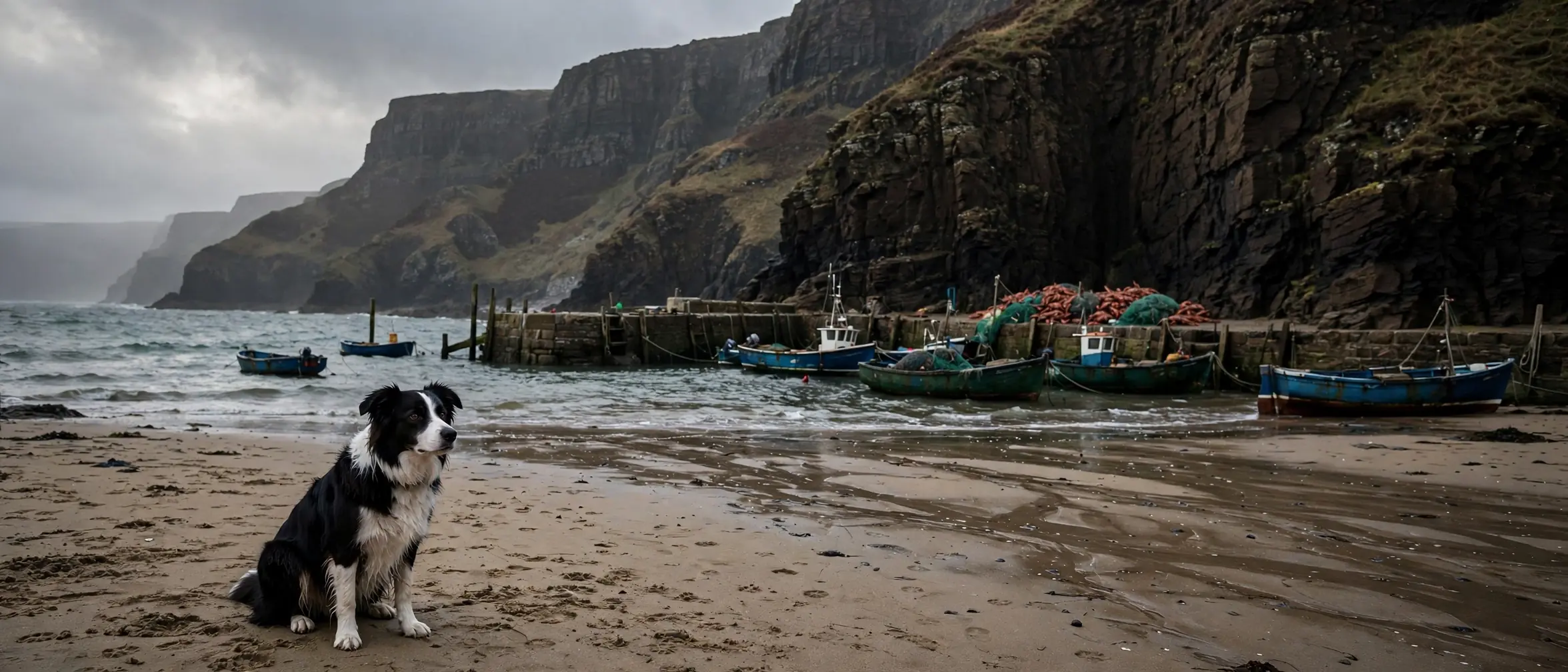
Runswick Bay, a few miles further south, is smaller and prettier, a curve of sand and rock below a village of red-roofed cottages. The beach is open to dogs all year, and at low tide it is a lovely place for a slow wander, with rock pools, a small stream and a view across to the headland at Kettleness. Access is down a steep lane from the village car park, so it is not ideal for an older dog, but the beach itself is flat and sheltered, and the village has a pub that welcomes dogs. The coast path south from Runswick runs to Staithes, a fishing village with a harbour and a beach that is also open to dogs, and the walk between the two is one of the quieter stretches of the whole coast. Keep the dog on a lead on the clifftop sections, where the path is narrow, and watch for the fishing boats at Staithes, where the harbour is a working place with ropes and gear on the ground.
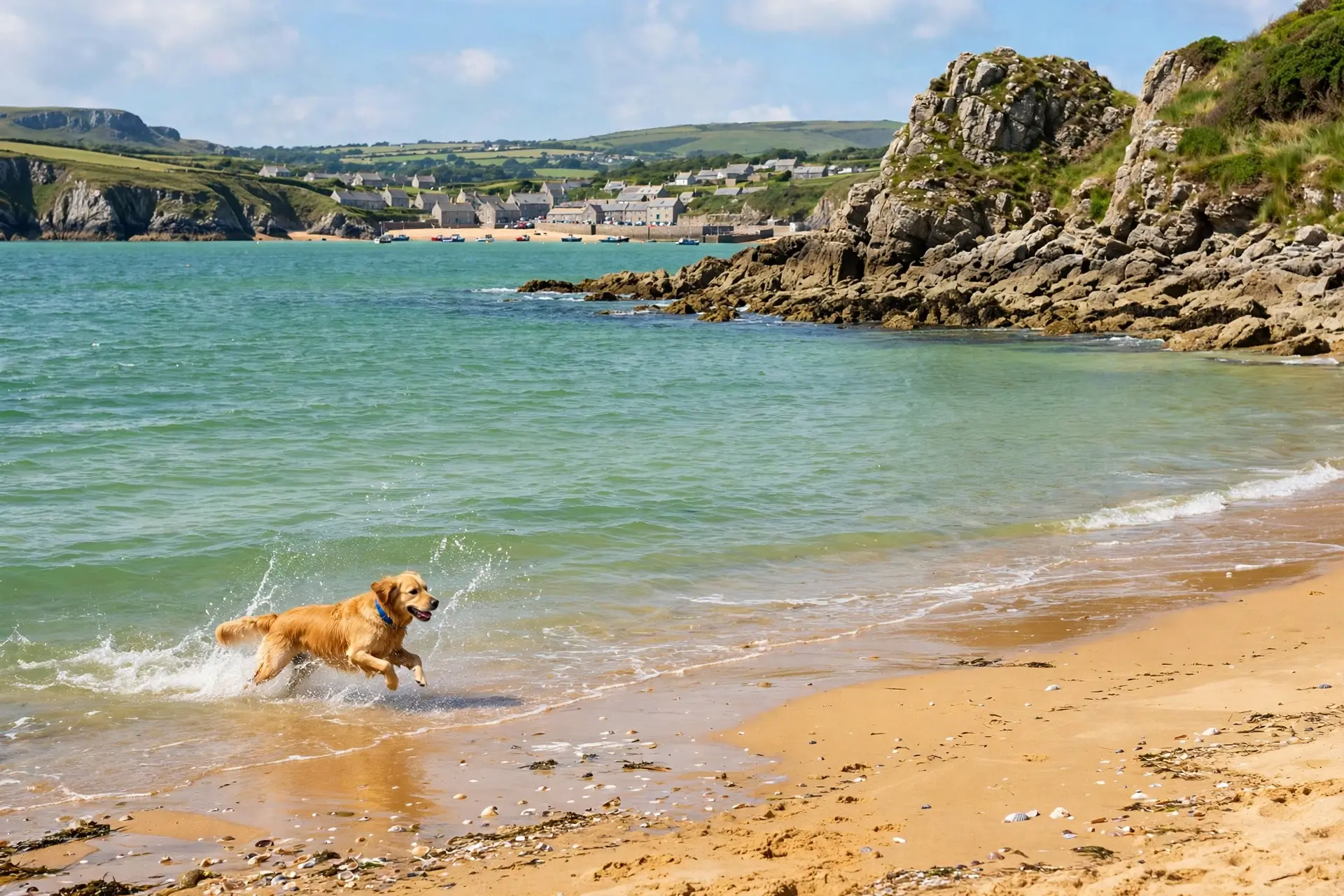
Both coves share the same tide behaviour: the beach is wide and generous at low water and narrows quickly as the tide comes in, with the cliffs at the back leaving little room at high water. Check the tide times before you set out, walk on a falling tide, and leave at least two hours of margin. The rock pools are the main attraction for dogs, but they also hold crabs and small fish that some dogs try to eat, so keep an eye on a dog that snaps at everything it finds, and rinse paws afterwards if your dog has been digging in the sand.
Scarborough: two bays, two moods
Scarborough is the biggest resort on the Yorkshire coast, and its two bays could hardly be more different. The South Bay is the classic seaside front, with a promenade, arcades, cafes and a beach that is busy in summer, and seasonal restrictions apply to a defined section in front of the town. The North Bay is quieter and more open, with a longer stretch of sand, a promenade that runs to the castle headland, and a more relaxed feel. Dogs are welcome on much of the North Bay all year, and the walk from the town centre around the castle headland to the North Bay is a good half-hour stroll with wide views. The castle itself has its own visiting rules, so check before you assume the dog can follow you inside.
For a dog owner, the trick with Scarborough is to use the town's facilities and then walk away from the crowds. The South Bay is best early in the morning, before the arcades open and the beach fills, while the North Bay stays quieter for longer and has more room for a dog to run. The promenade in both bays is level and paved, which makes it a good option for older dogs and for wet days, and the town has cafes and pubs that welcome dogs on every street. Parking is in several large car parks, so arrive before mid-morning in summer if you want a space near the beach. The harbour, with its fishing boats and fish shacks, is worth a slow wander, but keep the dog on a lead around the quayside, where the ground is uneven and the boats are close.
Scarborough also makes a practical base for the county, with the moors to the west and the coast in both directions. The town has a good range of dog-friendly accommodation, from hotels to cottages, and the railway station connects to York and Hull, which is useful if you arrive by train. If you are staying for several days, use Scarborough for the busy resort day and save the quiet coves for the rest of the week, when you will appreciate the contrast. The beach at Cayton Bay, just south of the town, is another good option: a long sweep of sand that is open to dogs all year and noticeably quieter than the town beaches.
Filey and Bridlington: the long resort sands
Filey is the gentle end of the Yorkshire coast, a town with a long, flat beach that runs for miles in both directions and a promenade that is level and easy for dogs of any age. The beach is open to dogs all year on most of its length, with seasonal restrictions on a defined section in front of the town in summer, so read the signs and walk a little further north or south if the dog needs to be off the lead. The sand is firm and flat at low tide, which makes it one of the best beaches in the county for older dogs and for puppies in training, and the rock pools at the northern end are full of small crabs and fish. Filey Brigg, the rocky headland at the north end of the beach, is a nature reserve and a good place to watch for seabirds, but keep the dog on a lead there and out of the rock pools at low tide, where the birds feed.
Bridlington, further south, has two beaches divided by the harbour, and the contrast between them is the key to using the town well. The North Beach is the quieter, longer stretch, running north towards Flamborough Head, with firm sand and a promenade that is level and easy. The South Beach is the resort front, with a funfair, cafes and a seasonal restriction on a defined section in summer, but it is also the easiest beach in the county to reach, with a large car park and level access from the promenade. Dogs are welcome on much of both beaches outside the restricted sections, and the harbour walk between them is a good half-hour stroll with fishing boats and a lighthouse. Our guide to Bridlington with a dog covers the harbour, the two beaches and the old town in detail.
Filey and Bridlington suit a first Yorkshire trip, because the essentials are all within a short walk: parking, cafes, shops, a promenade and a beach. They are also the best beaches in the county for a dog that needs a long, flat run, because the sand is firm and the walking is level. Visit early in the morning or late in the afternoon in summer, when the beaches are quieter and the light is better, and use the promenades for the wet days, when the beach itself is too rough. The coast path north from Bridlington runs to Flamborough Head, a dramatic chalk headland with a lighthouse and a nature reserve, and the walk is one of the best on the coast, though the cliffs there are high and the path is narrow in places.
Hornsea and the Holderness edge
Hornsea is the quiet, flat end of the Yorkshire coast, a small seaside town on the Holderness plain with a long beach of sand and shingle and a lake, Hornsea Mere, just inland. The beach is open to dogs all year, and it is at its best at low tide, when the sand firms up and the walking is level and easy. The town has a promenade, a few cafes and a small museum, and the beach is noticeably quieter than the resort towns further north. Hornsea Mere, the largest natural lake in Yorkshire, has a waterside path that welcomes dogs on leads, and the combination of a beach walk in the morning and a lake walk in the afternoon makes a good day out for a dog that likes variety.
The Holderness coast south of Hornsea is a different world: low, flat and eroding fast, with villages that have lost houses to the sea and a coastline that changes every winter. The beaches here are long and empty, with sand and shingle and very few facilities, and they suit a dog that needs space and an owner who is happy to carry everything. Access is from small car parks and farm tracks, and the walking is level but the ground can be soft after rain. Keep the dog away from the cliff edge, where the ground can be undercut and unstable, and never let a dog climb on the sea defences, where the concrete is slippery and the drops are sharp. The Holderness coast is not a resort destination, but it is a fascinating place to walk, with a sense of a landscape that is still being made and unmade by the sea.
For a longer stay, the Holderness coast pairs well with Hull, which has dog-friendly cafes and a waterfront, and with the Wolds to the west, where the chalk hills hold quiet villages and long, empty lanes. Nobody comes to Yorkshire for these beaches alone, but as part of a week they earn their place: flat, easy to reach and open to dogs on most stretches through the year. A marked summer zone is most likely on the town fronts, so check the board at the car park before the dog goes off the lead.
Tide and cliff safety
Start every Yorkshire beach day with the tide table. The range is big, the sand below the cliffs is narrow, and the water can cross a flat shore faster than a person can walk it. Look up the times before you leave the house, walk while the tide is going out, and turn back with two hours still in hand. At high water the sea reaches the cliff base and leaves no way out, so never walk along the foot of the cliffs when the tide is rising, and keep the dog out of harbour mouths and river outlets, where the current runs hard even on a calm-looking surface. If a dog gets into difficulty, stay ashore and dial 999 for the coastguard.
The cliffs deserve the same respect. They are built of soft rock that sheds fragments constantly, and falls happen without warning, most often after heavy rain, a hard frost, or a dry summer followed by a wet autumn. Stay well clear of the cliff foot, never picnic or sit directly beneath one, and keep the dog on a lead along the clifftop, where the edge can be undercut and crumbly. Fresh rock on the sand or a new crack above you are both signals to move away and tell the coast path team. The same care applies at Flamborough and Bempton, where the cliffs are high and the drops are sheer. Enjoy this coast from the marked path, not from underneath the rock.
Yorkshire weather turns quickly. A bright morning can become a cold, wet afternoon with little warning, and the wind on the sand is usually stronger than the wind a mile inland. Pack a windproof for yourself and watch the dog as you walk: shivering, a tucked tail or a dog that keeps stopping to look back are all signals to head for the car. Summer flips the risk, because the sand can be hot underfoot, there is almost no shade on the open beaches, and a hard-running dog can overheat in under an hour, so walk at dawn or dusk and rest in the shade at midday. Adders live on the moorland edge and in the dunes, so keep the dog out of thick bracken and long grass in warm weather; a sudden yelp, a swollen muzzle and a dog that goes quiet afterwards all mean a vet, straight away.
Comparing the beaches
Treat the table as a shortcut for choosing between beaches, not as the rule itself. The councils set the summer zones and publish them online, but the board at the car park shows the zone that applies today, and that board is the one that counts if the two disagree. Boundaries move from year to year, so check the sign where you park before letting the dog off the lead.
| Beach | Access | Tide risk | Character |
|---|---|---|---|
| Whitby West Cliff | Level from promenade | Low, wide beach | Busy resort front |
| Whitby East Cliff | 199 steps up and down | Moderate, rocky at high tide | Quiet, abbey views |
| Robin Hood's Bay | Steep hill from village | High, cut off at high tide | Classic fishing cove |
| Sandsend | Level from car park | Low, firm sand | Quiet family beach |
| Runswick Bay | Steep lane down | Moderate, narrows fast | Pretty sheltered cove |
| Scarborough North Bay | Level from promenade | Low, wide sand | Open resort beach |
| Scarborough South Bay | Level from promenade | Low, busy in summer | Classic seaside front |
| Filey | Level, flat promenade | Low, very long sands | Easy, gentle, spacious |
| Bridlington South Beach | Level from promenade | Low, firm sand | Easy first visit |
| Hornsea | Level from promenade | Low, flat sands | Quiet, low-key town |
Beyond the seasonal orders, two habits keep you out of trouble on this coast. A dog under proper control means a recall that works on the first call, and a lead wherever the recall is in doubt, especially near the cliff edges and the nesting colonies. And the mess goes home with you: bins stand by the car parks and the path entrances, never out on the sand, so carry the bag back to the car. Wardens patrol the busy beaches in summer, and fouling and breaching a marked restriction both carry fines. The full picture of how these orders work is in our guide to beach bans and fines in the UK, and the Cleveland Way with a dog guide covers the clifftop route that links many of these beaches.
A two-day plan
Two days is enough to taste the Yorkshire coast properly if you pick one area per day and resist the urge to drive everywhere. Day one is the north: Whitby in the morning, with the harbour walk and the West Cliff beach at low tide, then the coast path to Robin Hood's Bay in the afternoon, with the cove beach as the reward at the end of the walk. Stay overnight in Whitby or Robin Hood's Bay, and eat in a pub that welcomes dogs, of which both towns have several. Day two is the south: Filey in the morning, with the long flat sands and the rock pools at the northern end, then Bridlington in the afternoon, with the harbour walk and the South Beach at low tide. The drive between the two is short, and the contrast between the quiet coves of the north and the open sands of the south will tell you more about the county than any number of beach names.
Leave slack in the plan on purpose. A dog that climbs the Whitby steps, walks the clifftop path and then runs on the sand at Robin Hood's Bay will be far tireder than after any pavement walk, so keep day two gentle and the driving short. Bring a bottle and a bowl each time you set out, because the coves have no fresh water of their own. Keep a towel and a drying coat in the boot for the trip home. If the weather turns, the moorland villages behind the coast have dog-friendly cafes and bookshops, and the wooded stretches of the coast path stay walkable when the open sand is being blown sideways. Take Yorkshire one place at a time: a whole day in one cove is worth more than a morning spent driving between three beaches.
Sleeping here is straightforward. Cottages, hotels and campsites line the coast, and nearly all of them take dogs without fuss. Whitby and Robin Hood's Bay book up first in July and August, so reserve early and ask the owner whether the garden is secure and whether the dog can be left alone in the room for an hour. Filey or Bridlington puts you in the south with short drives either way, while Whitby suits a short break that never leaves the north. On arrival, walk the garden boundary yourself before letting the dog off the lead, and give the dog a slow first evening, with its own bed and a familiar routine, so the new house feels like home by bedtime.
Practical questions
Before you go
Which Yorkshire beaches allow dogs in summer?
Robin Hood's Bay, Sandsend, Runswick Bay and most of Filey and Bridlington stay open to dogs through the year. Scarborough, Whitby and Bridlington town fronts carry marked summer zones instead, so read the board where you park and walk on past the town front if the dog needs to run free.
Is it safe to walk a dog under the Yorkshire cliffs?
The cliffs shed rock constantly, and falls happen without warning, most often after rain or frost. Stay well clear of the cliff foot, keep the dog away from any fresh fall, and avoid the narrow beaches at high tide, when the sea reaches the rock. The marked clifftop path is the safe way between the beaches.
Can dogs walk the Cleveland Way coast section?
Yes, the coast section of the Cleveland Way is open to dogs and links Whitby, Robin Hood's Bay, Scarborough and Filey into one long clifftop route. Keep your dog on a lead near cliff edges, livestock and nesting birds, and use a short lead on the narrow sections. Some stretches are steep, so plan shorter days if your dog is older or unfit.
Where is the best Yorkshire beach for a first visit with a dog?
Bridlington South Beach suits a first visit best: level access from the promenade, firm sand at low tide, and open space a short walk from the town centre. Filey runs it close for its long flat sands. Skip the steep steps at Whitby and Robin Hood's Bay if stairs are a problem for your dog.
Do Yorkshire beaches have lifeguards and facilities for dogs?
The main resort beaches at Scarborough, Bridlington and Filey have lifeguards in summer, along with cafes, toilets and bins near the promenades. The quieter coves have almost no facilities, so bring water, poo bags and a towel. Dogs are not usually allowed in the lifeguarded swimming zones, so keep to the dog-friendly sections marked on the signs.