This guide is independent and contains no paid placement. If affiliate links are added later, they will be clearly marked and will not change our editorial checks.
Pet dogs that are not flying are not normally allowed inside Heathrow terminals — only recognised assistance dogs and dogs travelling under an airline booking have a route in. If you are meeting someone, plan an outdoor hello. If your dog is flying, expect cargo, paperwork and the Animal Reception Centre, not the cabin. Always check Heathrow's latest guidance for your terminal before you set off.
The answer, split by reason for going
Most confusion about dogs at Heathrow comes from treating the airport as one place with one rule. It is not. A terminal is a secure building, an airline flight is a separate contract, and the border process for an arriving animal happens in a different building altogether. The same dog can be welcome in one part of that system and firmly turned away from another, on the same day, without anyone being inconsistent. So start by naming your real reason for going, because that reason — not how calm, small or well behaved your dog is — decides what happens at the door.
There are four common reasons. First, you want to bring your dog along while you drop off or collect a person, because leaving the dog at home is inconvenient. Second, you yourself are flying and your dog is flying with you, either leaving the UK or returning. Third, you are travelling with a recognised assistance dog that works for you. Fourth, someone is sending a dog to you, or you are collecting a dog that has arrived on a flight. Only the second and third reasons involve a dog going airside or onto an aircraft at all, and even then the dog rarely follows the passenger route you picture from films. The first reason — the casual companion in the arrivals hall — is the one that most often ends in disappointment.
Keep that split in mind as you read. Each section below takes one reason at a time, explains what normally happens, and flags where you must verify the detail yourself. Airport rules, airline policies and government entry requirements all change, sometimes at short notice, so any point that affects a booking should be confirmed with the airline, the pet shipper or the airport directly. Where this guide is uncertain it says so plainly and tells you to check Heathrow's latest guidance — that is not a hedge, it is the correct step, because a member of staff on the day will apply the current rule, not a guide written earlier.
If your dog is not travelling: the terminal door rule
For a pet dog that has no flight booked and is not a recognised assistance dog, the working assumption should be simple: do not plan on taking the dog inside a Heathrow terminal building. That covers landside areas as well as airside — the check-in halls, arrivals meeting areas, shops and cafes inside the building are not a general dog-welcoming space in the way a pub garden or a railway station concourse might be. Staff can ask you to leave with the dog, and being told your dog is small, in a carrier, or will only be inside for ten minutes does not reliably change the answer. Check Heathrow's latest guidance before you travel if your plan depends on any exception. Airport hours often mean a cafe stop — dog friendly cafes in the UK covers indoor rules, etiquette and assistance dog rights.
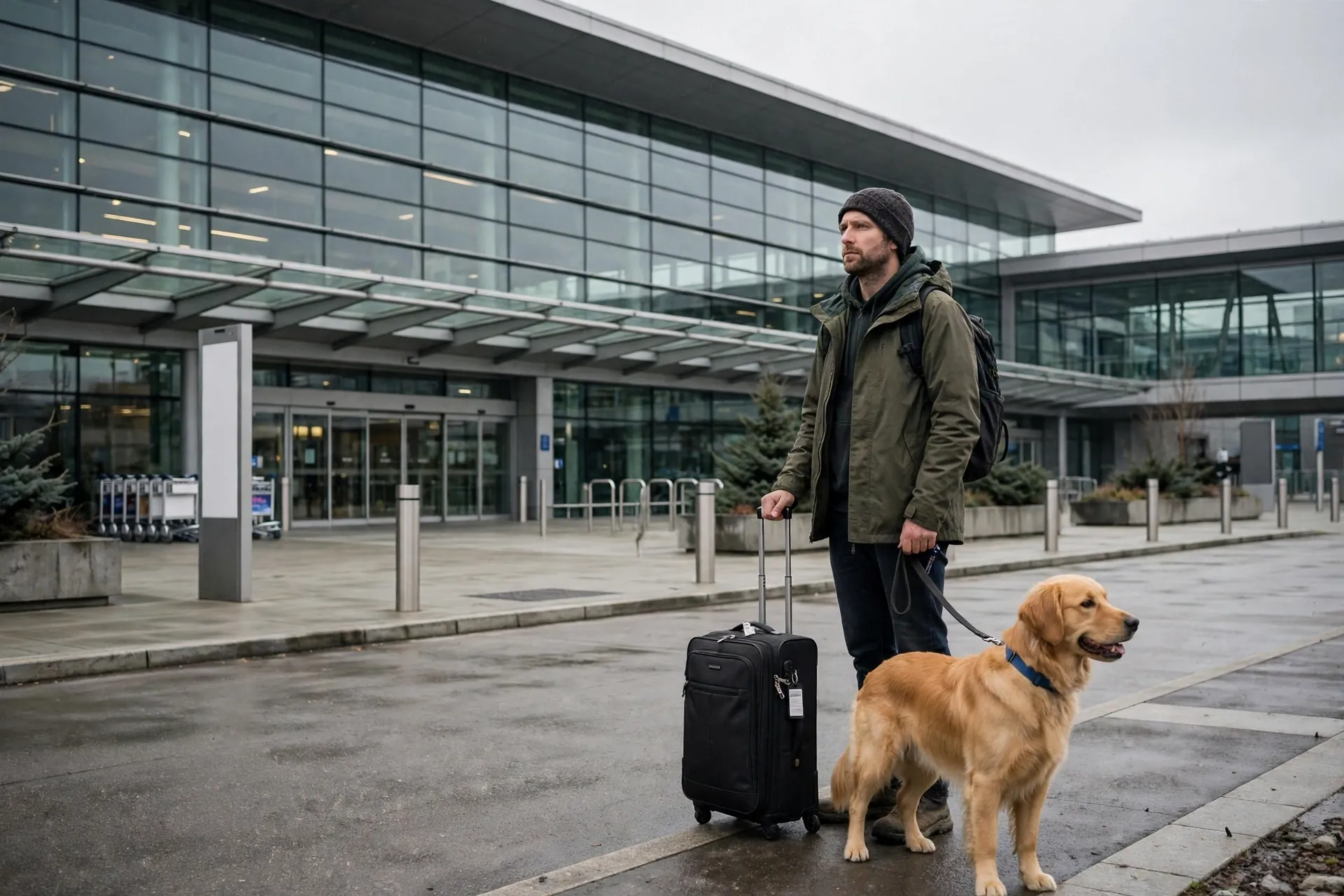
Outside the building is a different matter, within reason. Forecourts, drop-off areas and the pavements outside terminal entrances are busy, noisy working spaces with moving vehicles, trolleys and crowds, so a dog waiting briefly outside with a responsible adult, on a short lead and well clear of doors and traffic, is a much more realistic plan than a dog waiting inside. Even then, be honest about whether the environment suits your dog at all. Heathrow forecourts carry jet noise, diesel fumes, reversing alarms and a constant flow of strangers with wheeled luggage heading straight at a dog's eye level. A confident adult dog may take ten minutes of that in its stride; a puppy, a nervous rescue or a dog that lunges at suitcases will find it genuinely hard, and no reunion photograph is worth a frightened dog pulling into a road.
Two practical consequences follow. First, never travel to Heathrow alone with a dog you expect to bring inside, because if you are refused entry you have no one to hold the dog while you go in. Travel with a second adult, or leave the dog at home. Second, never leave a dog unattended in a parked car at the airport while you go into the terminal. Airport stays almost always run longer than planned — flights are delayed, baggage is slow, a passenger needs help — and a car park at an airport offers no shade guarantee, no one watching, and a real risk to the dog in warm weather. If the dog cannot come in and cannot wait safely and legally outside with someone, the dog should not make the trip at all.
Assistance dogs are a different category entirely
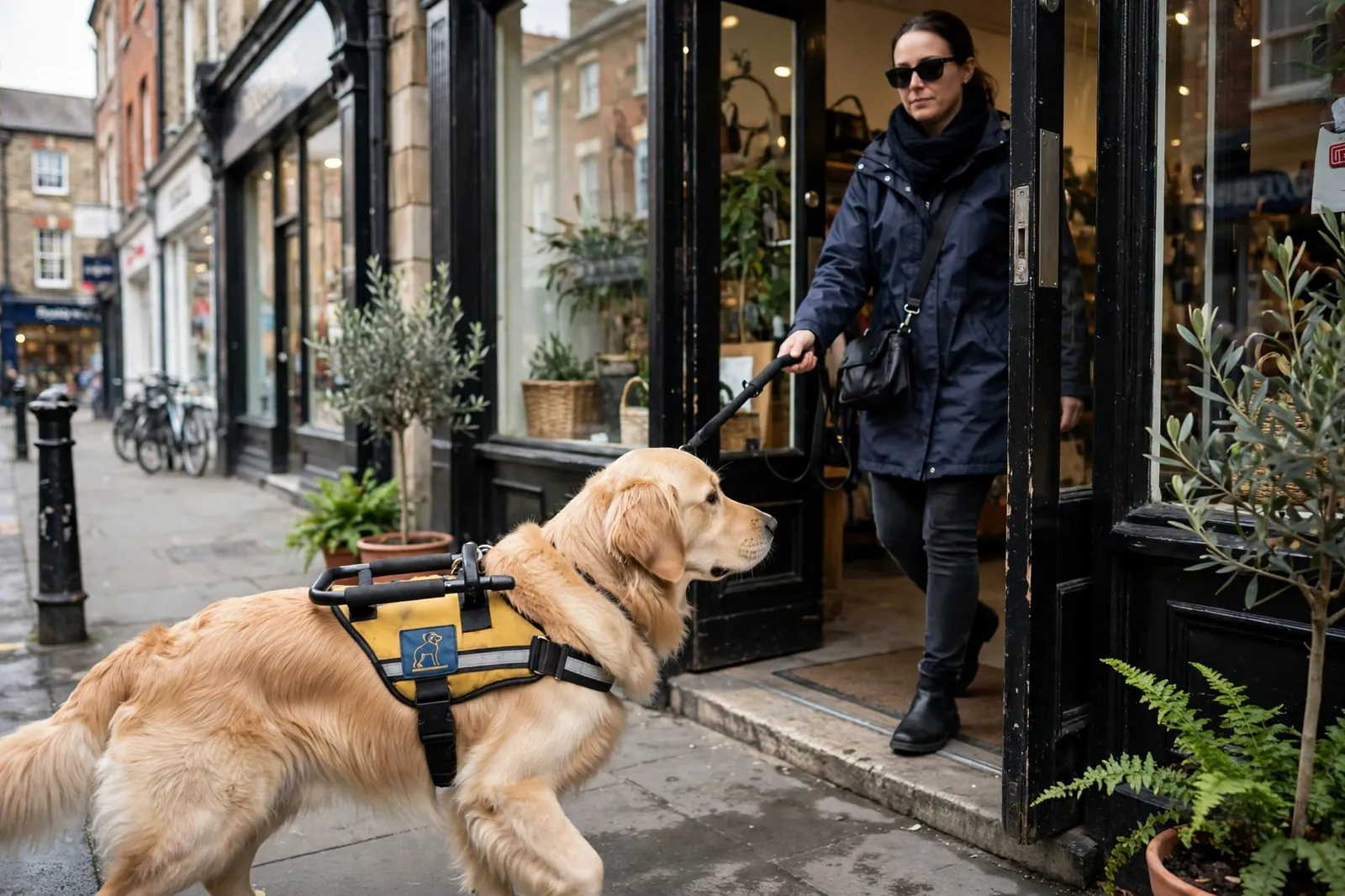
Recognised assistance dogs sit outside the pet rules above. A dog trained to assist a disabled person — for example a guide dog, hearing dog or other recognised assistance dog — is welcome in the terminals and can accompany its handler through the airport, subject to the practical arrangements for the flight itself. That distinction matters legally and practically, and it is why you may see a dog calmly working inside Heathrow even though pet dogs are not admitted. It does not create a loophole for pets in a jacket bought online, and staff and airlines are entitled to be satisfied that a dog is a genuine assistance dog. If you travel with one, read our guide to what the law says about assistance dog access alongside this page, because the airport is only one part of the journey.
For a flight, the key step is telling the airline in advance — ideally at booking, and always within the notice period the airline sets for special assistance. Airlines need to record the dog, allocate suitable seating space, and brief the crew, and turning up unannounced can cause delays or, on some routes, refusal. Carry whatever documentation your airline asks you to bring, keep the dog's harness or identification as the airline and your assistance dog organisation advise, and allow noticeably more time than you would for a solo trip: check-in conversations, security screening with a dog, and finding the assistance dog relief area all add minutes that compound when a flight is busy.
Heathrow also operates assistance services for passengers who need help moving through the terminal, and those services work alongside your dog rather than instead of it. Book help through your airline, say clearly that you travel with an assistance dog so the team expects the dog, and confirm where you will meet the assistance team on arrival at the terminal. International routes add another layer: some destination countries treat assistance dogs under their own entry rules, with health paperwork that differs from pet rules, so start that research as early as the ticket booking. As ever, check Heathrow's latest guidance and your airline's current assistance policy before you fly, because terminal facilities and notification windows do change.
Flying out of Heathrow with a dog
If your dog is leaving the UK with you from Heathrow, reset your expectations about how the dog travels. On most airlines operating from Heathrow, pet dogs do not travel in the passenger cabin on services to and from the UK, except for recognised assistance dogs. The normal route for a pet is travel in the aircraft hold as manifest cargo, booked through the airline's cargo arm or, more commonly, through a specialist pet shipper who handles the airline booking, the crate requirements and the airport handover. That is a professional, regulated system designed for animal welfare — temperature-controlled hold areas, trained handlers, water checks — but it is not the same as buying your dog a seat, and it cannot be arranged at the check-in desk on the day.
Planning therefore starts weeks, not days, ahead. You will need an airline-approved travel crate your dog can stand, turn and lie in comfortably, sized and ventilated to the carrier's specification, and most dogs benefit from crate training at home long before travel day so the box feels familiar rather than frightening. You will need the destination country's import paperwork exactly right: microchip details, rabies vaccination records, health certificates signed within a set window before travel, and any blood tests or parasite treatments the destination requires. A pet shipper earns their fee precisely here, because a certificate dated a day outside its window can mean the dog does not fly. Costs vary widely with route, dog size and shipper, so get written quotes that separate the flight, the crate, the paperwork and any boarding.
Flat-faced breeds, very young or old dogs, and dogs with health conditions need an extra conversation. Some airlines restrict which breeds they will carry in the hold, restrict travel in hot weather, or require additional veterinary clearance, and those restrictions are the airline's to set. Our guide to travelling with a flat-faced dog explains why those limits exist. On departure day itself, expect to hand the dog over at a cargo or pet reception point rather than at the passenger terminal, at a set time hours before the flight, and expect the goodbye to feel brisk and businesslike. Feed lightly, give a good walk and toilet opportunity before handover, attach water as instructed, and then leave promptly — lingering makes it harder for the dog and for the handlers. Confirm the exact handover location, time and contact number in writing the day before, because cargo facilities are not where a first-time visitor guesses they are.
Arriving into the UK: the Animal Reception Centre
An arriving dog does not walk through the green channel with you. Dogs entering the UK as cargo are taken from the aircraft to the Heathrow Animal Reception Centre, the facility where arriving animals receive their document, identity and health checks before release. Trained staff check the microchip against the paperwork, review vaccination and health records, and confirm the entry requirements for the route travelled have been met. Only after clearance is the dog released, either to you or to the agent or shipper named on the paperwork. If you have flown on the same aircraft as a passenger, you will usually collect your dog from the reception centre after landing, not from the baggage hall and not from the arrivals meeting area — so do not promise children or family a reunion at the terminal doors.
Timing catches people out more than any form does. Clearance can take several hours, and longer when flights arrive together, paperwork needs queries, or the centre is busy. Build that wait into your onward plan: do not book a tight train connection, do not leave another dog waiting in a car, and keep your phone on and charged because the centre or your agent may call with a question only you can answer. Fees can apply for the reception and checking process, and commercial imports or dogs arriving from higher-risk countries can face additional requirements, including quarantine in some circumstances where rules have not been met. The government rules on bringing a pet into Great Britain — approved routes, approved carriers, tapeworm treatment timing for dogs, and the paperwork for the country you are travelling from — are detailed and they change, so treat our overview of relocating to Britain with a pet as a starting map and verify every deadline against the official guidance for your specific route.
One more distinction helps. Dogs arriving from within certain routes with the correct pet passport or health certificate paperwork follow the standard checking process, while rescue dogs, commercial movements and dogs with incomplete records can follow a different and slower path. If you are adopting a dog from abroad and a charity or transporter is arranging the flight, ask them in writing who meets the dog at the reception centre, who pays which fees, what happens if clearance is delayed overnight, and exactly when and where you take over. A clear answer to those four questions is the sign of a well-run transport; vagueness at that stage is a warning worth heeding before money changes hands, not after the dog has landed.
Meeting arrivals with a dog: how to do the hello well
Suppose the dog is not flying at all and you simply want it there when a partner, parent or friend walks out of arrivals — perhaps the dog is theirs and the reunion is the whole point. The wish is understandable, and with the terminal door rule in mind it can still be done well, just outside rather than inside. The reliable pattern is a two-adult job. One adult goes into the terminal without the dog, meets the passenger, deals with trolleys and baggage, and guides them out. The other adult waits outside with the dog, in a spot away from the main door flow, and the reunion happens on the pavement or in a quieter corner of the forecourt area where the dog is not being stepped around.
Choose the waiting spot with a dog's eyes. You want to be out of the direct line between the doors and the taxi, bus and car routes, because that stream never pauses. You want solid ground, a bit of space behind you to step back into, and no temptation for the dog to greet every passer-by. Keep the lead short but loose, bring water and a familiar chew or toy for the waiting part, and expect the passenger to be later than the flight's landing time suggests — immigration and baggage at Heathrow regularly turn a landed flight into another forty minutes or more before anyone appears. If the weather is wet or cold, the outside wait gets miserable fast, and shortening it matters: track the flight, stay in a warmer or drier place with the dog until the passenger has actually cleared baggage, and use messages to time the final move to the doors.
If you are the arriving passenger and the dog waiting outside is yours, brief the greeters honestly beforehand. An overexcited dog launching at a tired traveller with two cases, in a crowd, beside a road, is a scene that goes wrong easily. Ask for a calm first greeting at a slight distance from the doors, keep the dog on the ground rather than lifted up, and save the proper reunion for home. Also think about the onward leg before the emotion of the moment decides it for you: is the dog travelling home in the car, on the train, or in a taxi, and is that vehicle ready and legal for the dog? The next section and our guide to dogs on Britain's rail network will help you plan that leg while you are still thinking clearly.
Toilets, water and a proper walk near the airport
Heathrow's relief provision is designed primarily around assistance dogs, with assistance dog relief areas provided in some terminals for dogs travelling with their handlers. That is not the same as a general pet toilet inside the terminal for visiting dogs, and you should not arrive counting on finding one for a non-travelling pet. Check Heathrow's latest guidance for the current assistance dog facilities in your terminal if you are a handler, and if you are travelling with a pet, work on the simpler assumption that the dog's toilet opportunities happen before you reach the airport and after you leave it. Carry waste bags regardless — the areas around terminals are working environments and leaving a mess there is both unpleasant and a fast way to make staff less welcoming to the next dog.
The practical fix is to build a real walk into the journey rather than hoping for a patch of grass at the terminal. Dogs cope with travel days far better after twenty or thirty unhurried minutes of sniffing somewhere calm than after a hurried two-minute stop on a verge beside a dual carriageway. If you are driving, plan a stop at a park, common or dog-friendly walking spot on your route in — the towns and villages around Heathrow, such as those in the Colne Valley and around Staines and Harmondsworth, have green spaces that locals use daily, but parking rules and dog restrictions vary, so pick and check your stop in advance rather than improvising from the car. Allow time for water, a toilet break and a settle in the car afterwards, and arrive at the airport with a dog that has already done everything it needs to do.
Water deserves its own sentence because airport days are dehydrating for everyone. Offer water at the walk, again on arrival if you are waiting outside, and keep a spill-proof bowl in the car for the journey home. In summer, remember that the forecourt and car parks offer little shade and a lot of reflected heat from concrete and vehicles, so waiting time outside should be kept short, and in winter the wind across open airport ground makes a still wait feel far colder than the forecast suggested. None of this is complicated, but all of it has to be decided before you are standing outside a terminal with a thirsty dog and a delayed flight on the board.
Getting there, parking and leaving with a dog
How you reach Heathrow shapes the dog plan as much as the terminal rules do. By car, you have the most control: the dog travels in familiar conditions, you can stop for a walk on the way, and an outside meeting works with one adult staying with the dog. Know which car park or drop-off arrangement you are using before you leave home, because terminal drop-off charges, time limits and walking distances between car parks and terminals all affect how long a dog waits and who waits with it. Short-stay parking close to the terminal suits a collection far better than a distant long-stay bus transfer, which adds a shuttle journey a dog may not be able or allowed to make. Check the current drop-off and parking rules for your terminal on Heathrow's latest guidance, as charges and zones change.
By public transport, the picture is mixed and route-specific. Dogs are generally carried on many UK rail and London transport services under conditions about leads, escalators and peak crowding, and Heathrow is served by rail and Underground routes as well as coaches and buses, each with its own conditions of carriage. A dog that has happily ridden a quiet local train may still find a packed airport service, with luggage in every vestibule and a long escalator or lift journey at the end, a very different test. Read the operator's current dog policy for the exact service you plan to use, travel off-peak if you can, and have a fallback — a licensed taxi or a lift from a friend — if the dog is overwhelmed on the day. Never assume a coach or airport bus accepts dogs; many do not, apart from assistance dogs, and discovering that at the stop strands you.
Taxis and private hire need a pre-booking conversation too. A driver may be obliged to carry an assistance dog, while a pet dog is a matter of the firm's and driver's policy, so state clearly when booking that a dog will travel, how big it is, and that it will be clean, on a lead and on a blanket you provide. Agree the fare basis and the meeting point at the terminal in the same conversation. Coming home matters as much as going: an arriving passenger plus luggage plus a dog rarely fits a vague plan, so decide the vehicle, the driver and the dog's place in it before anyone lands.
Calmer alternatives when the dog should skip the airport
For many dogs, the kindest answer is not a better airport plan but no airport plan at all. Heathrow is loud, chemically smelly, crowded and unpredictable, and the dog gains nothing from it — the emotional value sits entirely with the humans. Leaving the dog at home with a familiar sitter, a trusted neighbour popping in, or a professional pet sitter or boarder you already use removes every problem in this guide at a stroke, and the reunion at the front door an hour later is usually happier than the one attempted on a forecourt. If the passenger arriving is the dog's favourite person, stage the reunion properly at home: dog settled, lead off indoors, no luggage mountains, and time for it to be as joyful as everyone hoped.
If the dog must be near the airport — for example you are handing the dog over to the arriving passenger, or collecting a passenger and dog together — consider meeting slightly away from the terminals instead. A nearby hotel car park by agreement, a station meeting point on the onward route, or simply the passenger's home or your home an hour later can all serve the same purpose with a fraction of the stress. Some airport-area hotels accept dogs in rooms, which gives an arriving traveller with a dog a place to rest, walk and regroup before the onward journey; if you book one, confirm the dog policy, any fee and the ground-floor or lift arrangements directly with the hotel, because airport hotels vary as much as any others.
There is also a middle option for the drop-off run. If you are delivering a passenger to Heathrow and the dog adores car rides, the dog can enjoy the drive, stay in the car with the second adult during a brief kerbside goodbye, and be home again without ever facing the terminal crowd. That works only when the goodbye really is brief, the weather is safe, and the dog is settled in cars — and it fails completely if you end up parking and going inside to help with check-in. Decide which version of the trip you are actually making before you load the dog, and if there is any chance the errand expands, leave the dog at home and let the car ride be a pleasure another day.
Decision checklist before you set off
Run through these questions the day before, not in the car park. First, which of the four reasons is this trip — companion, flying pet, assistance dog, or collection of an arriving animal — and does your plan match the rules for that reason rather than another one? Second, if the dog is not travelling, who exactly stays outside with the dog at all times, and what is the plan if the flight or the baggage takes an extra hour? Third, has the dog had a proper walk, water and a toilet break planned into the route, with bags and a bowl in the car? Fourth, is the onward journey — car space, train service, or pre-booked dog-accepting taxi — confirmed for a dog of this size, with a fallback if the first option falls through?
Fifth, if any animal is actually flying, is every piece of paperwork, crate specification, handover or collection location and contact number confirmed in writing with the airline, shipper or reception centre process, and have you checked the official entry or exit rules for the exact countries involved within the last few days? Sixth, have you checked Heathrow's latest guidance for your specific terminal today, covering assistance facilities, drop-off arrangements and any temporary changes? Seventh, honestly, would the dog be happier at home — and if the answer is yes, have you given yourself permission to choose that simpler plan? Airports reward travellers who decide early. A dog plan made calmly at the kitchen table, with the right building, the right adult and the right vehicle in it, turns a potentially miserable outing into a brief, manageable errand — and that, for most dogs at Heathrow, is the best outcome available.
Practical questions
Before you go
Can I take my pet dog inside a Heathrow terminal just to wait?
In general, no. Pet dogs that are not travelling and are not recognised assistance dogs are not normally allowed inside Heathrow terminal buildings. Plan to wait outside, stay with your car, or meet your passenger outside the terminal entrance instead. Rules can change, so check Heathrow's latest guidance before you travel.
Are assistance dogs allowed inside Heathrow terminals?
Yes. Recognised assistance dogs are welcome in Heathrow terminals and can travel with their handler, subject to the airline's notification rules for flights. Tell your airline in advance, carry any documentation your airline asks for, and allow extra time at check-in and security. Check Heathrow's latest guidance and your airline's assistance policy before you fly.
Can my dog fly in the cabin from Heathrow?
For most airlines at Heathrow, pet dogs do not travel in the passenger cabin on flights to or from the UK, apart from recognised assistance dogs. Most pet dogs travel in the hold as cargo through an approved pet shipper. A small number of routes and carriers differ, so always confirm directly with your airline well before booking.
Where do dogs arriving at Heathrow go first?
Dogs arriving as cargo are taken to the Heathrow Animal Reception Centre for document, microchip and health checks before they are released to their owner or agent. You do not collect an arriving cargo dog from the passenger arrivals hall. Allow several hours for clearance and check the centre's latest opening and collection instructions before you travel.
Is there a dog toilet or pet relief area at Heathrow?
Heathrow provides assistance dog relief areas in some terminals, but there is no general public pet relief area inside the terminals for non-travelling dogs. Give your dog a proper walk and toilet break well away from the terminal before you arrive, carry water and waste bags, and check Heathrow's latest guidance for the current assistance dog facilities in your terminal.