This guide is independent and contains no paid placement. Easter dates, bank holidays, event policies and local dog rules change — please check official and property information for your exact dates before you travel.
Easter is one of the best-value long weekends for a dog break in Britain, provided you book the dog-friendly unit early, treat every livestock field as lead-only throughout lambing season, keep all chocolate — including foil-wrapped mini eggs — completely out of reach, and pack for sunshine, showers and mud in the same day.
Plan the four days, not just the stay
In England, Wales and Northern Ireland the Easter weekend usually runs from Good Friday to Easter Monday, giving four days without using annual leave; arrangements in Scotland differ, so check the bank holiday calendar for your destination and your employer before assuming the same pattern. Easter falls in spring, in March or April depending on the year, and the exact dates move — confirm them for the year you are travelling rather than copying last year's plan. That moving date matters for dogs: an early Easter can still feel like late winter in the hills, while a late April Easter can bring warm afternoons, busy beaches and the first seasonal dog restrictions coming into force on some coasts. Easter is one of the three half-term breaks covered in our half term holidays with a dog guide, with booking lead times and beach rules for each break.
A four-day break has a natural rhythm that suits dogs better than a rushed two-night stay. Travel on Good Friday morning if you can, or on Thursday evening for popular routes, because Friday afternoon roads to the coast and national parks are reliably congested. Use Saturday for your longest walk, when you have a full day and no checkout deadline. Keep Sunday deliberately slower — Easter Sunday trading rules mean many larger shops in England and Wales are closed, attractions run special events and car parks fill early, so a local walk, a long lunch where dogs are welcome and an afternoon rest is a realistic plan rather than a compromise. Easter Monday then becomes a gentle finish: a short morning walk, a tidy-up and a drive home before the worst of the return traffic.
Build the plan around your dog's limits, not around a list of attractions. Two substantial walks across the weekend, with easier days between them, will leave most dogs content; back-to-back long days on unfamiliar ground can produce a tired, sore and unsettled dog by Sunday. If you are planning a longer route, our guide to weekend breaks with dogs in the UK shows how to stretch a short break without over-scheduling it — the same pacing works, with one extra day to enjoy.
Book early — dog-friendly sells first
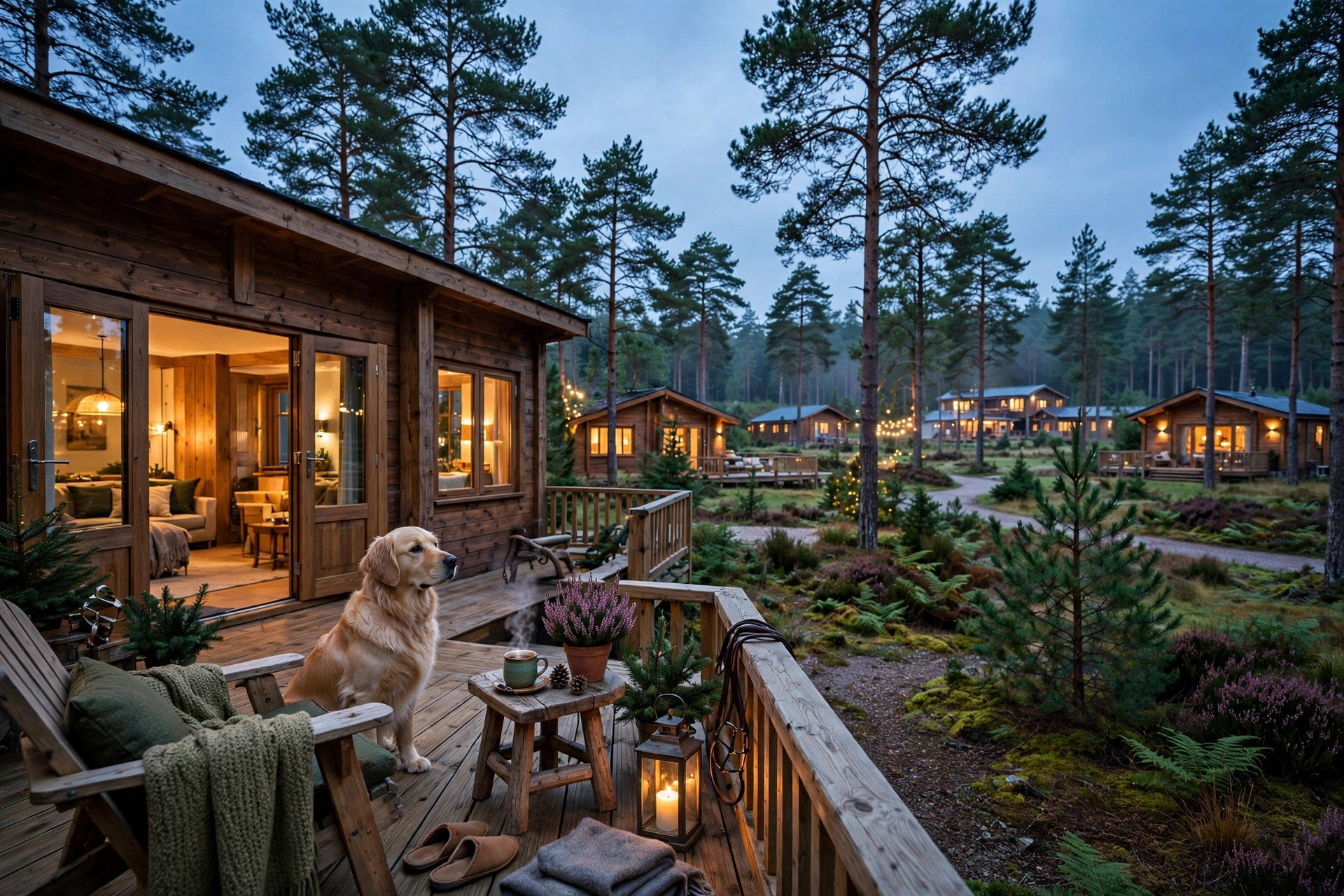
Easter is the first peak weekend of the year for many cottages, lodges, holiday parks and hotels, and dog-friendly supply is always the smaller slice of it. Properties that accept dogs often have only a handful of designated units, and those tend to be booked months ahead by returning guests. If you want the features that actually make a spring break easy — an enclosed garden for muddy early-morning toilet trips, a hard floor rather than pale carpet, and a location away from the main event field or play area — early booking is how you get a choice rather than leftovers.
When you enquire, confirm the details that listings blur. Ask how many dogs are accepted and whether there is a per-dog fee, whether the garden is enclosed on all sides and how high the fence or wall is, and whether dogs may be left alone in the property at all. Ask what is happening on site over Easter itself: an organised egg hunt, a family fun day or live music in a shared courtyard can be lovely for people and overwhelming for a noise-sensitive dog, and you would rather know before you pay the deposit. Get the answers in writing and keep them with your confirmation.
Price the whole break, not the headline rate. Add pet fees, parking, any charge for logs or heating in a still-chilly spring cottage, and the cost of eating out if self-catering shops nearby will be closed on Easter Sunday. Check cancellation terms with particular care at Easter: peak weekends often carry stricter conditions, and a dog falling ill in the week before travel is a common reason plans change. If the property offers a date-move rather than a refund, note the deadline for requesting it.
Lambing season: the lead rules that matter
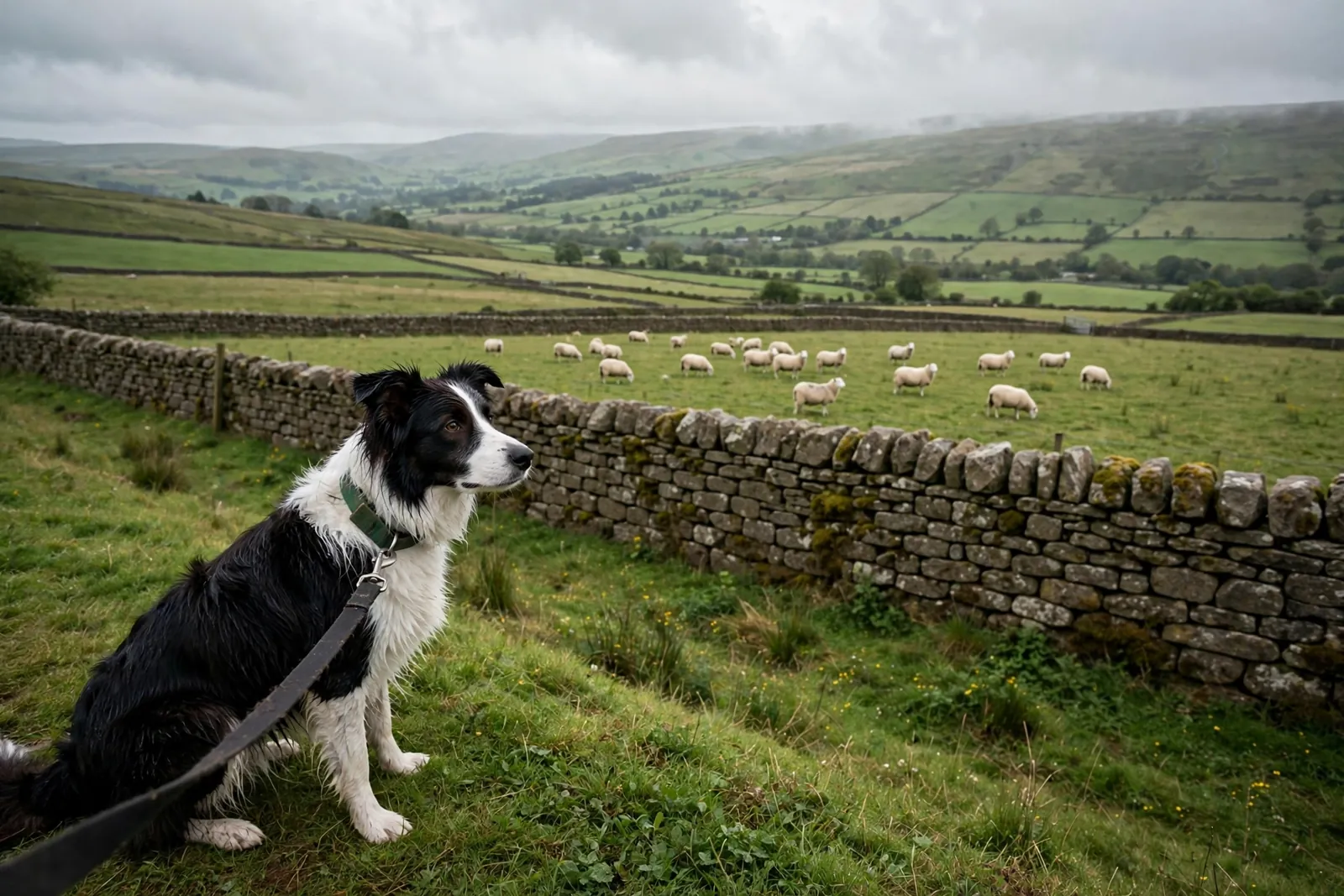
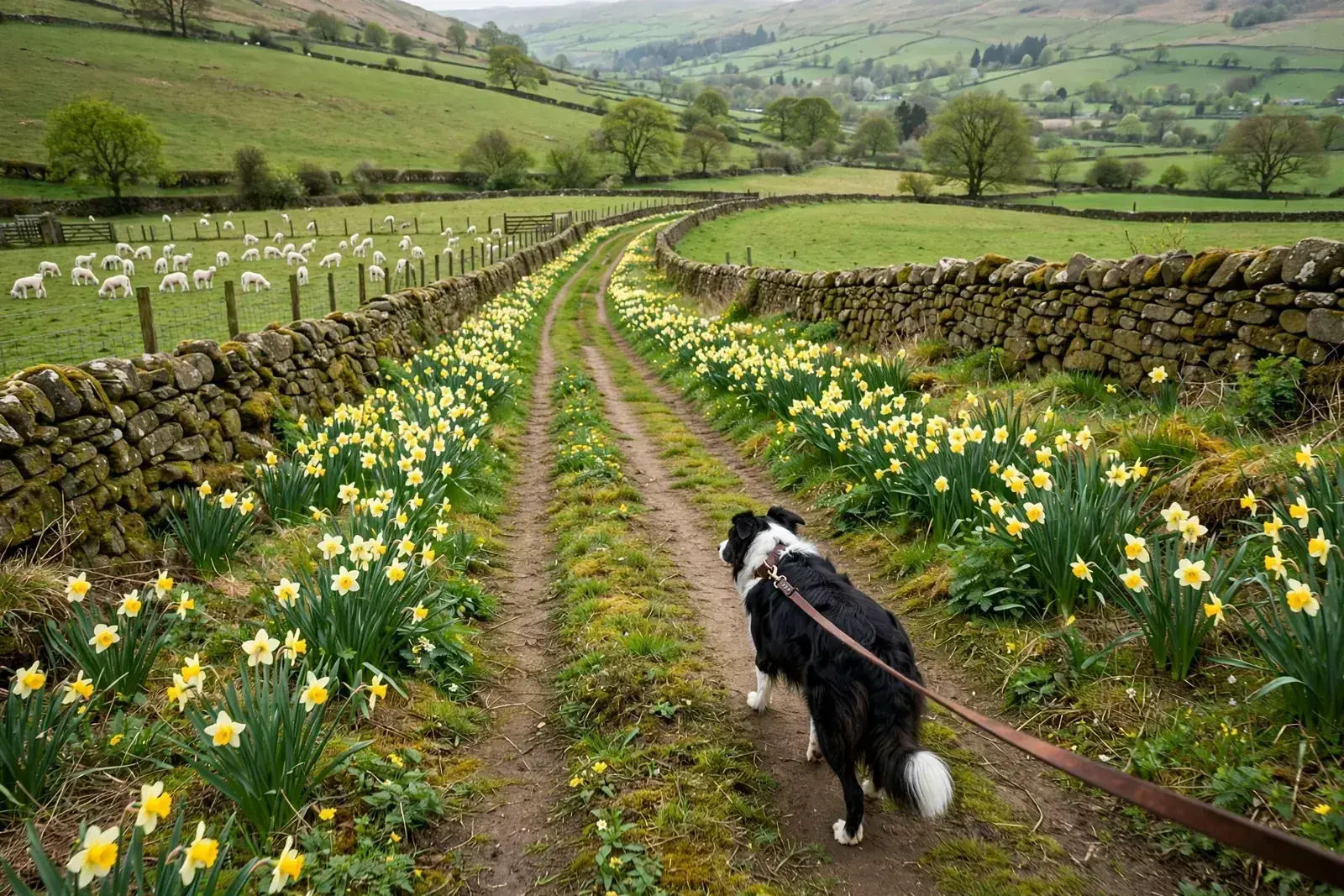
Easter almost always falls within lambing season in Britain. Fields that were empty on your winter walks may now hold ewes that are heavily pregnant, newborn lambs and protective mothers. Dogs must be kept under close control around livestock at all times, and the practical standard on a spring break is simple: a short lead on in any field with sheep or lambs, a wide berth around the flock, and no entering a field of lambing ewes if a reasonable alternative route exists. Even a friendly dog bounding up in play can cause a ewe to panic, separate from her lamb or injure herself — the consequences are serious for the animals and can be serious in law for the owner.
Read our guide to the livestock worrying law and what it means for dog owners before you go; it explains why farmers and landowners are entitled to act to protect their animals and why “my dog would never chase” is not a defence once a chase has happened. On the ground, watch ahead at gates and stiles, because livestock is often visible only once you are already in the field. If sheep move towards you or bunch nervously, turn back calmly rather than pushing through. Keep to paths, close gates behind you, and never let a dog investigate a lamb that appears to be alone — its mother is almost certainly nearby and watching.
The same caution applies to other spring livestock. Cattle with calves at foot can be defensive, ground-nesting birds are settling in many upland and coastal areas from spring onwards, and some estates and nature reserves introduce seasonal lead requirements or dog-free zones for exactly this period. Local signs at the gate are the rule for that field on that day; where signs, the Countryside Code for the nation you are visiting and this guide differ, follow the strictest instruction and check official guidance before you travel if you are unsure.
Chocolate: the Easter hazard in every room
Chocolate is toxic to dogs, and Easter concentrates more of it, in more tempting places, than any other weekend of the year. Eggs sit on low shelves, mini eggs scatter through egg hunts in gardens and parks, foil wrappers carry the smell long after the chocolate is gone, and well-meaning relatives hand over treats without thinking. Hot cross buns add a second, less obvious hazard: raisins and other dried vine fruits are also toxic to dogs, so buns, simnel cake and fruit loaves belong out of reach too.
Run a chocolate sweep the moment you arrive anywhere — your accommodation, a relative's house, a holiday cottage kitchen. Move eggs, bunnies and gift boxes into a closed cupboard or a high shelf, not a coffee table or an open shopping bag. Brief children early and kindly: the rule is that the dog never gets chocolate, not even a tiny piece, and that dropped pieces get picked up and reported rather than left. During egg hunts, keep the dog out of the hunt area entirely, ideally indoors or on a lead with an adult who is not supervising the hunt, and walk the garden yourself before letting the dog back out — missed mini eggs at dog nose height are the classic accident.
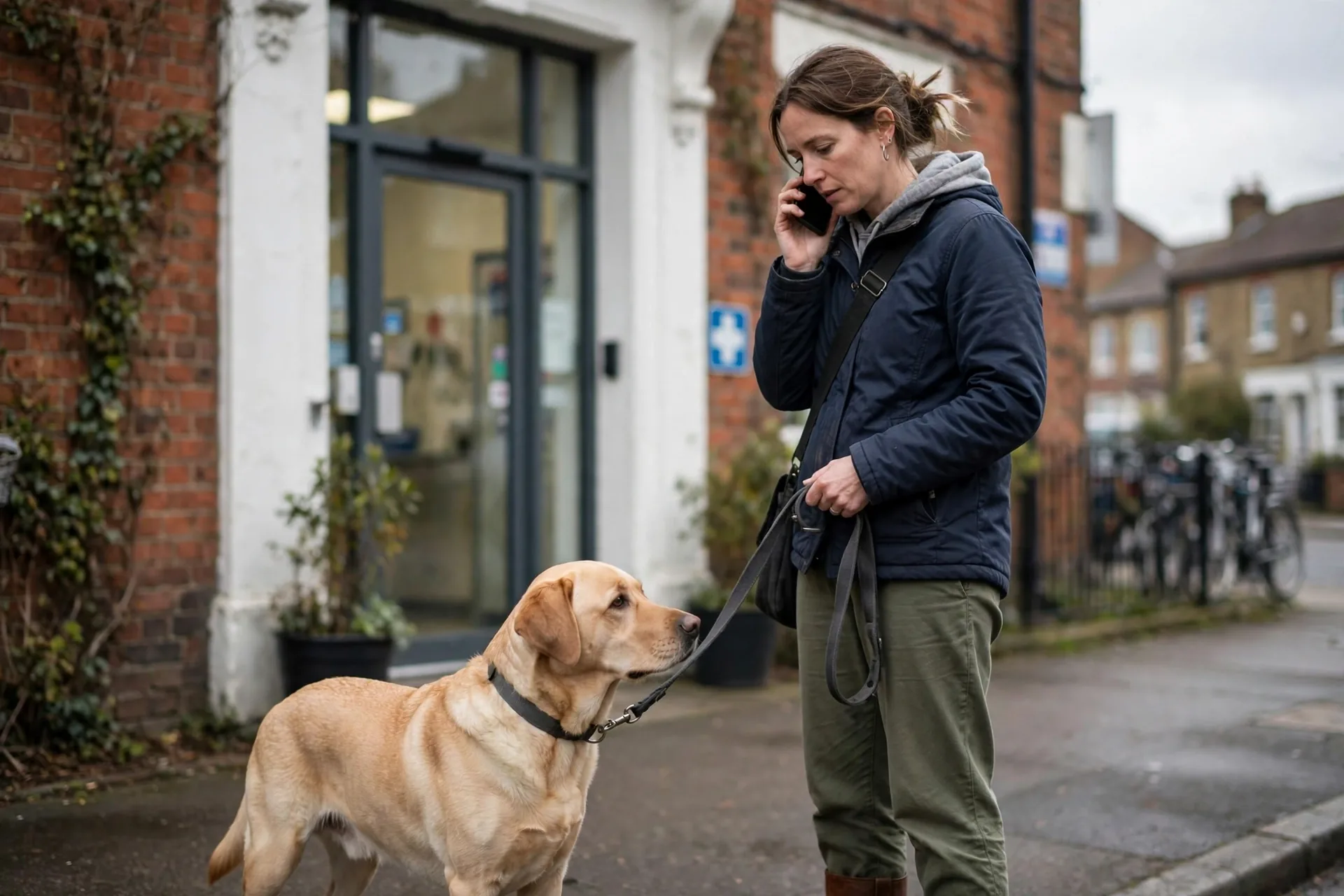
If your dog does eat chocolate, act immediately rather than waiting to see. Note the type of chocolate — dark chocolate and cocoa products are generally more dangerous, weight for weight, than milk chocolate, and white chocolate is lowest risk but still worth a call — estimate how much was eaten, keep the packaging, and phone a vet straight away. Our guide to finding an emergency vet while you are on holiday explains how to locate out-of-hours cover away from home; save the number for the nearest practice to your accommodation before Easter weekend begins, because out-of-hours provision over a bank holiday is exactly when you do not want to be searching. Do not try to make your dog sick unless a vet specifically instructs you to.
Spring weather: pack for four seasons
British spring weather is the defining practical challenge of an Easter break. A single weekend can deliver frost at breakfast, warm sun by midday, hail on the afternoon walk and mud everywhere throughout. For the dog, that means a light waterproof coat for a thin-coated or older dog, a towel and a drying robe or mat in the car, and a plan for washing and drying muddy paws that does not depend on the cottage having a hose. For you, it means layers, waterproof footwear that can handle saturated fields, and a change of clothes kept dry in the car for the journey home.
Adjust walk plans to conditions rather than the calendar. After heavy rain, lowland paths and riverbanks may be flooded or dangerously slippery, stiles and boardwalks get treacherous, and fast-flowing water that a dog would paddle in during summer can be genuinely hazardous in spring spate. On the first warm day of the year, the opposite trap appears: dogs that have been idle through winter overheat and over-exert surprisingly quickly, especially in a car that has been sitting in spring sunshine. Never leave a dog in a parked car on a mild sunny day, build in water and shade breaks on longer walks, and shorten the first big walk of the season rather than assuming last autumn's fitness has survived the winter.
Check the forecast for your destination — not your home town — the day before you travel and again each morning, and keep a wet-weather alternative in your pocket for each day: a dog-friendly museum, gallery, garden centre café or covered market, checked in advance for its actual dog policy. A planned rainy-day option turns a washed-out Saturday from a disappointment into a slower, still enjoyable day.
Egg hunts, events and eating out
Easter fills the calendar with egg hunts, spring fairs, lambing-live open days on farms, garden openings and heritage events. Some welcome dogs on leads across most of the site; many exclude dogs from the hunt area, indoor spaces or farm buildings; a few are dog-free altogether. There is no standard pattern, so check the event's own dog policy before you set off and plan who holds the lead during the hunt itself. Farm open days deserve extra thought: they are fascinating, but they concentrate livestock smells, crowds, tractors and excitable children in one place, and a dog that finds normal walks stimulating may find a lambing shed overwhelming. Leaving the dog resting at the accommodation — only if the property rules allow it and the dog genuinely settles alone — or splitting the group can be the kinder option.
Eating out needs the same advance check. Pubs and cafés are at their busiest over Easter, dog-friendly tables are limited, and many kitchens run set Easter Sunday menus with booking essential. Reserve ahead, state clearly that a dog is coming, and ask where dog tables are — a spot beside the bar queue or the kitchen door is a harder ask for a dog than a quiet corner. Carry water and a chew or settle mat so your dog has a job to do while food is on the table, and keep Easter treats for the dog limited to their normal food or proper dog treats: a sudden richness of scraps, fatty leftovers and well-meant gravy is a reliable route to an upset stomach on a bank holiday weekend.
Shops and services run on bank holiday hours, so stock up before you travel. Bring enough of your dog's usual food for the whole break plus a spare day, any medication with a margin, and poo bags in every coat and car pocket — rural bins overflow quickly on peak weekends. Running out of the usual food and improvising with whatever a small village shop stocks is another classic cause of a holiday tummy upset.
Arrival routine and a calm Easter Monday
Arrive in daylight if you possibly can. Walk the boundary of the garden before the dog explores it, check gates, fences and any gaps under decking, and do the chocolate and cleaning-products sweep indoors before bags are unpacked at dog height. Then keep the first hour deliberately boring: water, a familiar bed in a quiet corner, a short lead walk somewhere close so the dog learns the immediate surroundings, and feeding at the usual time. Novelty stacked on novelty — a tour of the pub, visitors, an egg hunt and a long walk all on day one — is how settled dogs become sleepless dogs.
Save the number of the nearest vet and the out-of-hours service in your phone, note where you would park for an emergency visit, and photograph the accommodation as you found it, as you would on any stay. Keep routines — bedtime, last walk, morning start — as close to home patterns as the weekend allows; dogs read consistency as safety, and it pays off most on the final night.
On Easter Monday, resist squeezing in one last big adventure. A short morning walk, a proper check of every room and cupboard for forgotten chocolate, medications and chargers, and a timely departure will get you home ahead of the worst traffic with a dog that travels calmly. Back home, ease back into normal exercise and feeding over a day or two, and keep an eye on appetite and stools after a weekend of new smells, rich air and different water — most holiday upsets settle quickly, but persistent vomiting, lethargy or any suspicion of chocolate or raisin ingestion always warrants a prompt call to your own vet.
Practical questions
Before you go
Is Easter a good time for a holiday with a dog in the UK?
Yes, if you plan for crowds, changeable weather and lambing season. The four-day weekend gives enough time to travel without rushing, daylight is lengthening and most attractions are open again. Book dog-friendly units early, keep your dog on a lead around livestock and pack for both sunshine and rain.
Does my dog need to be on a lead around lambs and sheep?
Yes. Keep your dog on a short lead in fields with sheep, lambs or other livestock, and give animals a wide berth even if they look calm. Away from livestock, follow local signs and the Countryside Code for the nation you are visiting. Check current rules before you travel, as local restrictions vary.
What should I do if my dog eats chocolate at Easter?
Contact a vet or an emergency vet service immediately and do not wait for symptoms. Note what type of chocolate was eaten, roughly how much, your dog's weight and when it happened, and keep the packaging. Dark chocolate and cocoa are generally more dangerous than milk chocolate, but any amount warrants prompt veterinary advice.
How far ahead should I book an Easter break with a dog?
As early as you can. Dog-friendly units are a limited subset at most properties and Easter is one of the first peak weekends of the year, so popular cottages, lodges and parks often sell their pet-friendly stock months ahead. Booking early also gives a wider choice of enclosed gardens and quieter locations.
Are dogs allowed at Easter egg hunts and spring events?
Sometimes, but never assume. Many organised egg hunts exclude dogs from the hunt area because chocolate and small foil-wrapped items are scattered on the ground, while allowing them on leads elsewhere on the site. Check the event's dog policy in advance and keep your dog away from any area where chocolate has been hidden.