No business paid for coverage in this independent guide. Shepherds differ in size, confidence and health, and nothing here diagnoses or treats your dog — that is your vet's role. Stay policies and rules change, so confirm details from official sources before you book or travel.
German shepherd travel succeeds on specifics checked in advance: weight and size limits at stays, any breed-related policy wording (always ask, never assume), enough car space to lie and turn, exercise that satisfies without wrecking hips on long driving days, and calm management of strangers who may cross the road — or cross-examine you. Measure everything, book ground-floor space, and keep routines steady.
The look you get before you say a word
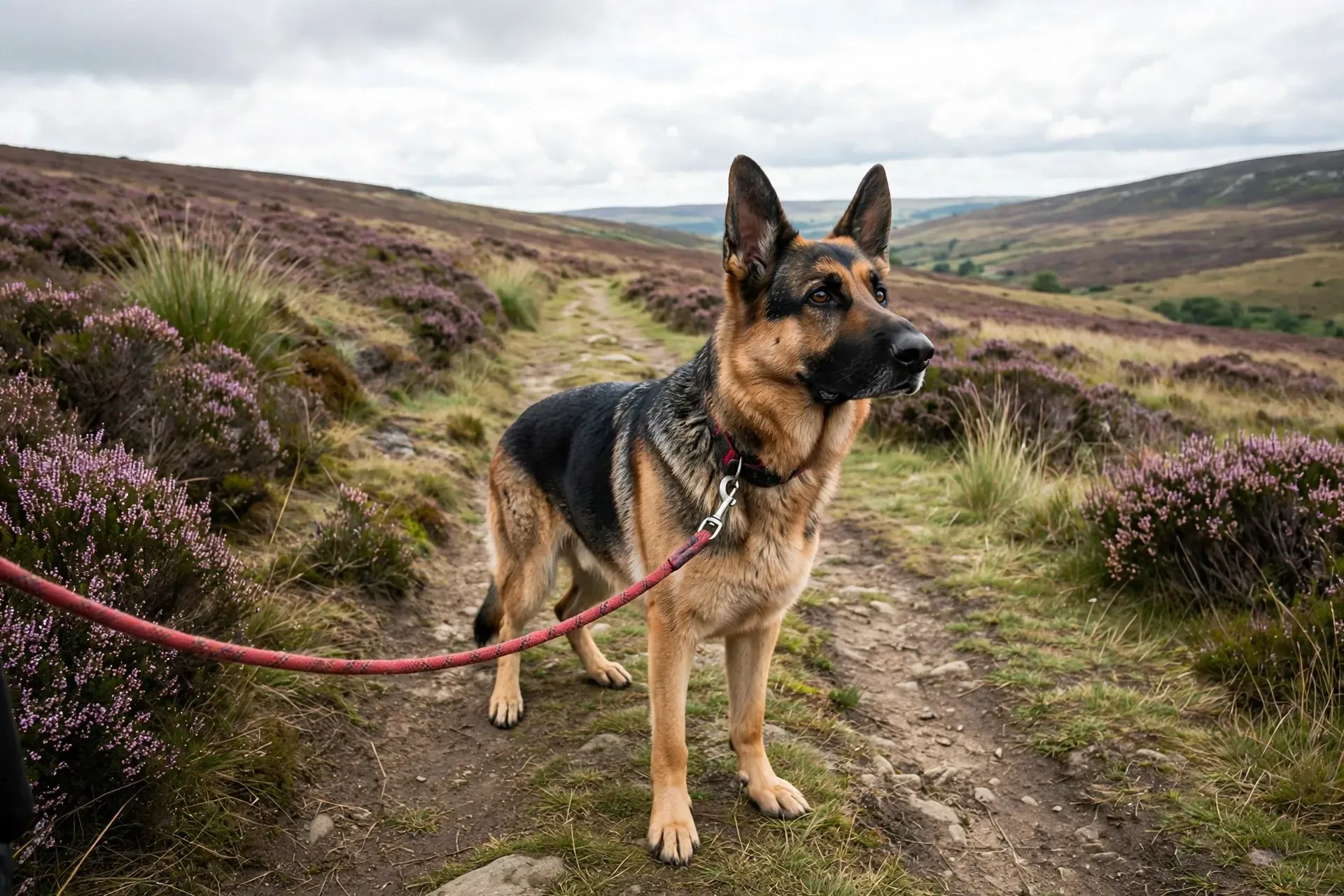
Travel with a German shepherd and you will notice, within the first day, that your dog is being read before it is met. Some people brighten — shepherds have devoted admirers, service histories and a reputation for intelligence that opens doors. Others tighten a lead, lift a small dog, or move their children, because the silhouette reads to them as guard dog regardless of the individual animal trotting calmly beside you. Neither reaction is about your actual dog, but both shape your holiday, and planning for them beats being surprised or offended by them daily.
Your job is to make the public version of your dog boringly reassuring: lead on in busy places, dog positioned away from doorways and counters, a clear sit or settle at cafe tables, and no lunging greetings however friendly the intent. Shepherds are strong; a joyful pull towards another dog that would be a nuisance from a spaniel becomes a story people retell when it comes from a forty-kilo shepherd. Good equipment, handled calmly — a well-fitted harness or collar your dog is used to, a lead you can actually hold — is part of courtesy as well as safety.
Give people room and most encounters soften. Step aside on narrow paths, ask before allowing greetings, and accept cheerfully when someone declines — their caution may come from an experience you know nothing about. Children in particular should always approach only with their adult's and your agreement, at the dog's shoulder rather than face-on, and briefly. A shepherd that learns holidays mean calm observation rather than constant social duty will relax into the routine, and so will everyone sharing the footpath.
Size limits, breed wording and policies: ask, in writing
The practical barrier for shepherds is rarely welcome in principle and often welcome with limits in practice. Stays, sites and some transport or attraction policies set weight caps — twenty-five or thirty kilos appear often — maximum dog numbers, or room-category restrictions that quietly exclude a dog of shepherd size even when dogs are advertised as welcome. Others carry insurance-driven wording about particular breeds or types. A German shepherd is not a banned breed in the UK, but individual businesses can set their own conditions, and those conditions change, so treat every policy as a check-the-current-wording question rather than a settled fact.
Ask specifically, and keep the answer. State your dog's breed, weight, height and age when you enquire, and ask whether any size, breed or policy condition affects the booking, which rooms or pitches you may use, where the dog may go on site, and what happens on arrival if staff judge the dog differently. If the answer matters to the trip, get it by email. Arriving after a three-hour drive to discover a weight limit in small print is an avoidable failure, and it is never the dog's fault. Where a stay says no, accept it and book elsewhere — Britain has ground-floor cottages, farm stays and hotels that welcome genuinely large dogs well.
Read insurance documents with the same care, both yours and theirs. Check your own policy for breed declarations, third-party liability cover and any conditions about leads, muzzling or unattended dogs, and see our guide to dog travel insurance in the UK for the questions that matter. If a venue asks for evidence of insurance or vaccination, carry it digitally and on paper. Being the owner who produces documents calmly and promptly does more for shepherd reputations than any argument about fairness.
Measure the break: cars, doors, rooms and turning circles
Large-dog travel is a branch of geometry. Before booking or loading, measure the things your shepherd must fit through, into and around: the usable boot or travel area with luggage in it, door widths and tight cottage corridors, the floor space beside the bed where the dog will actually sleep, and the turning circle in a small bathroom-adjacent hallway at three in the morning. Our guide to travelling with a large dog in the UK sets out a full tape-measure test, and a shepherd is exactly the dog it was written for.
Ground floor is worth paying for. Stairs in unfamiliar cottages are often steep, narrow, carpet-slippery or gated, and a big, tired or older shepherd managing them four times a day is a fall risk for dog and owner alike. Ask where the dog sleeps, where it can be washed or dried, and how muddy walks re-enter the building — a utility-room entrance transforms a wet shepherd week, while a white-carpeted front hall transforms it differently. Drying space, spare towels and a dog bed that genuinely fits the dog are stay features, not luxuries, at this size.
At cafes, pubs and attractions, think in floor plans. A shepherd needs a settle spot out of the walking route, big enough to lie fully on its side without blocking a fire exit, a pram or another guest's chair. Choose edge tables, book where booking is possible, and be ready to skip a charming but cramped venue for a larger, duller one where the dog can actually rest. A dog that can settle properly will be welcome back; a dog overflowing into the aisle teaches a venue to lower its weight limit.
Long drives, hips and joints: comfort is a schedule
Many shepherds live with some degree of hip or joint sensitivity, and many more will as they age, so long drives deserve a comfort plan rather than a endure-it plan. This is general information, not advice about your dog's condition — if your shepherd has a diagnosed joint problem, is on medication, or struggles with car travel, discuss journey length and breaks with your vet before booking a distant destination. As a pattern, shorter driving days with real movement breaks suit big joints better than one heroic motorway marathon.
At each stop, give more than a two-minute leg-stretch on tarmac: a proper walk on grass, a chance to toilet, water, and time to sniff and loosen up before reloading. In the car, the dog needs a non-slip surface it can brace on, room to change position, and help with entry and exit where jumping down onto hard ground would jar the front end — a ramp or steps only help if the dog has learned to use them calmly at home, so train the equipment weeks before the trip, not at the first service station.
Watch the day after a long drive, not just the drive itself. Stiffness on rising, reluctance on stairs, a shortened stride or unusual quietness are information to act on: shorten the next day's walk, swap a hill route for a flat one, add rest rather than painkillers-and-push-on, and contact a vet if you are worried or if anything seems acutely wrong. Our dog car safety guide covers restraint and temperature for every dog; layer the joint-comfort schedule above onto it for a shepherd.
Exercise that satisfies a working brain
A German shepherd on holiday usually needs more than mileage: the breed was shaped for sustained work with a handler, and a dog whose body is walked but whose brain is idle will invent employment — guarding the cottage gate, reorganising other dogs at the beach, or shadowing you from room to room without ever settling. Plan days that combine a substantial, suitable walk with structured calm activity: tracking-style find-it games on a long line, scatter searching in grass, practising familiar cues in new places for generous rewards, and chewing or licking activities back at the stay.
Balance is breed-critical. Young shepherds should not be marched into the ground to make them quiet — over-exercise on growing joints is a real concern, and tiredness is not the same as contentment — while fit adults can enjoy serious hill days if built up honestly and if the terrain suits them. Steep descents, slippery stiles, ladder stiles and cattle grids are large-dog obstacles in the literal sense: check route furniture before committing, plan lifts or carries only where a dog of this size can realistically be helped — often it cannot — and treat a stile you cannot solve as a turn-back point, not a lifting challenge.
Build the exercise plan around the stay's rules and the local livestock. Shepherds must be on a lead around sheep and other animals, whatever their training, both for the animals' safety and because the law and farmers take worrying livestock extremely seriously. A dog with a strong chase or guarding response needs extra distance and early lead decisions in farmland. The reward for that discipline is access: well-managed shepherds on leads are a normal, welcome sight on Britain's paths, and most route problems are solved by timing, distance and honesty about your own dog.
Stays that genuinely fit a shepherd
The stays that work best share a profile: ground-floor access, hard floors or washable rugs, a garden or yard the dog can toilet in without a full production, an entrance that does not pass reception at its busiest, and hosts who ask sensible questions rather than performing either fear or recklessness. Farm cottages, annexes and larger lodges often beat boutique hotels for this breed, not because hotels are unwelcoming but because corridors, lifts and breakfast logistics compress a big dog's world into other people's personal space several times a day.
Compare options with our overview of dog-friendly hotels in the UK, then apply the shepherd filter: maximum weight honestly stated, room size honestly pictured, dog fee understood, and the left-alone rule clear. Some hotels forbid leaving any dog unattended in a room — a policy that changes dinner plans entirely for a solo traveller — while some cottages welcome a settled dog left briefly but expect a crate or a utility-room arrangement. Neither is wrong; both must be known before you pay.
Arrive and set up like a professional: bed placed where the dog can see you without guarding the door, water in a spill-resistant spot, food stored out of reach, chews for the first unsettled hour, and a short orientation walk so the dog can map smells, sounds and toilet places before dark. Keep the first evening's guarding triggers low — curtains over a busy street window, no visitors crowding the doorway — and let the dog learn that this territory requires no defending. Shepherds settle fastest when the routine is clear and the boundaries are boring.
Older shepherds and the slower, better trip
An older German shepherd can still be a wonderful travelling companion, on a trip redesigned around comfort rather than coverage. Shorter drives with more stops, ground-floor everything, flat walks with excellent smells, a supportive bed carried from home, and days built around one good outing rather than three — these adjustments preserve what the dog actually enjoys, which is usually being with you somewhere interesting at a pace it can manage. Our guide to senior dog travel covers medication, veterinary planning and pacing in depth and pairs naturally with this breed guide.
Talk to your vet before travelling with a shepherd that has stiffness, a heart or digestive history — the breed has known predispositions, and general breed information is no substitute for an individual check — worsening mobility, or any new symptom. Ask specifically about journey length, pain management you already use, what to do if appetite drops or the dog seems unwell away from home, and where the nearest practices are to your destination. Carry medication in hand luggage equivalents — the bag that never leaves you — with the prescription details photographed.
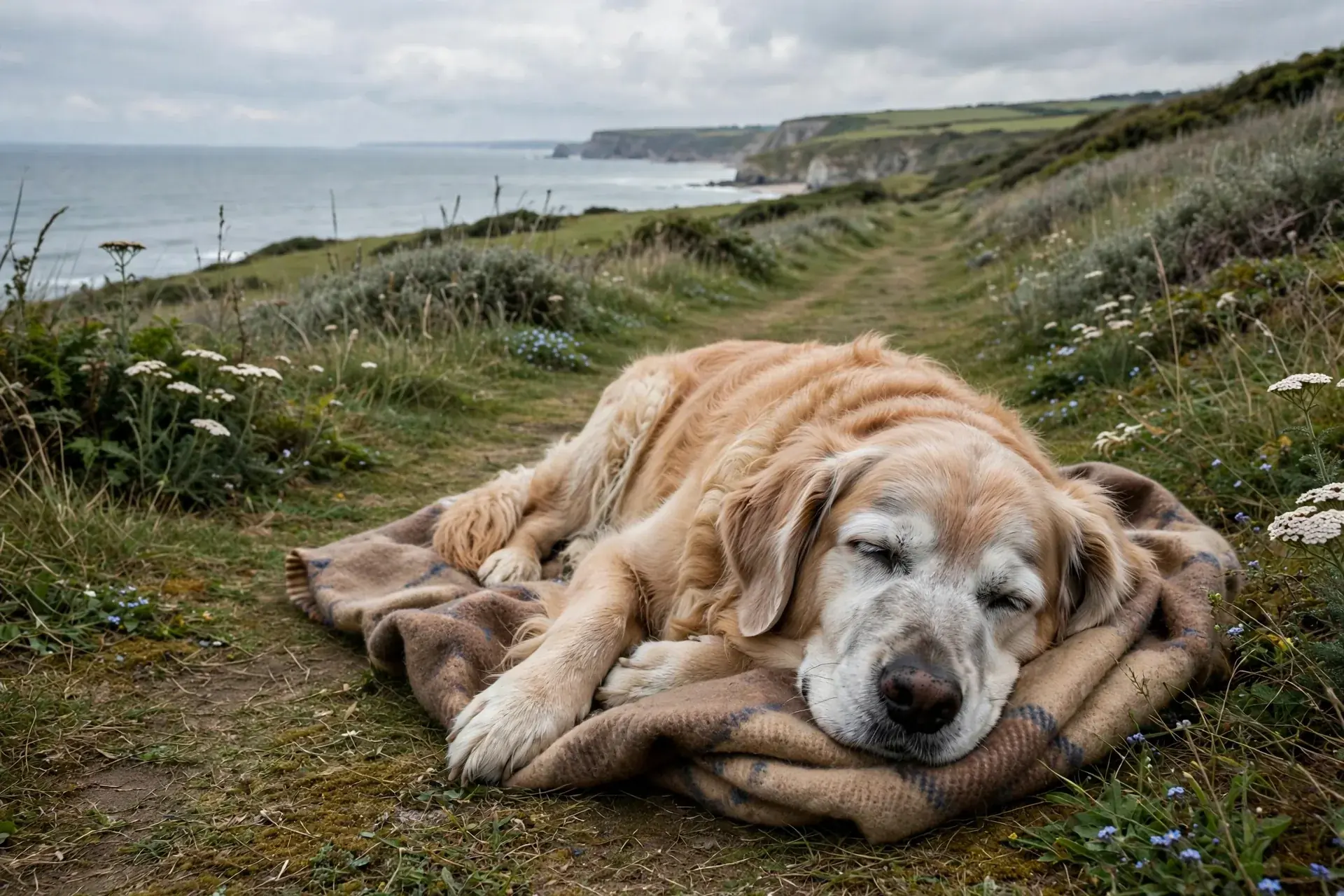
End the trip as deliberately as you began it. Drive home in the cool, unhurried pattern, give a rest day on return before normal long walks resume, and note honestly what worked: the ramp, the ground-floor annexe, the quiet moor route at nine in the morning. German shepherd holidays reward owners who plan like quartermasters and observe like trainers. Do that, and the big dog asleep across most of the cottage floor, tired in the good way, is exactly the holiday photograph worth having.
Practical questions
Before you go
Are German shepherds allowed at dog-friendly stays in the UK?
Many stays welcome German shepherds, but conditions vary: weight limits, room types, dog numbers and occasionally breed-related policy wording can all affect a booking, and policies change. A German shepherd is not a banned breed in the UK, yet individual businesses may set their own rules. State breed and weight when enquiring, ask about any conditions, and keep the confirmation in writing.
How much car space does a German shepherd need on a long drive?
Enough to stand, turn and lie fully on its side on a non-slip surface, with room to change position on a long journey — measured with your luggage loaded, not in an empty boot. If the dog only fits curled tightly around suitcases, the arrangement is too small. Plan regular movement breaks, help with entry and exit where jumping would jar joints, and practise any ramp at home first.
How should I handle strangers who are nervous of my shepherd?
Make your dog's public behaviour easy to read: lead on, positioned away from doorways, calm sit or settle, and space given freely on narrow paths. Ask before greetings, accept refusals cheerfully, and keep meetings brief and side-on, especially with children. Most nervousness fades when people see a large dog being managed attentively — and your calm response matters as much as the dog's.
How much exercise does a German shepherd need on holiday?
It depends on age, fitness and health. Fit adults usually need a substantial daily walk plus mental activity such as scent games and familiar training, while puppies and young dogs need far less forced exercise to protect growing joints, and older dogs need shorter, flatter outings. Build up to any big hill day, alternate harder and easier days, and ask your vet what suits your own dog.
What should I check about hips and joints before a long shepherd road trip?
If your dog has any diagnosed joint condition, medication, stiffness or reduced mobility, discuss journey length, break frequency and the walking you plan with your vet before booking — general breed guidance cannot judge an individual dog. Plan shorter driving days, proper movement stops on grass, non-slip car footing and step-free stays, and ease off immediately if stiffness or reluctance increases during the trip.

Other dogs, livestock and the shepherd reputation
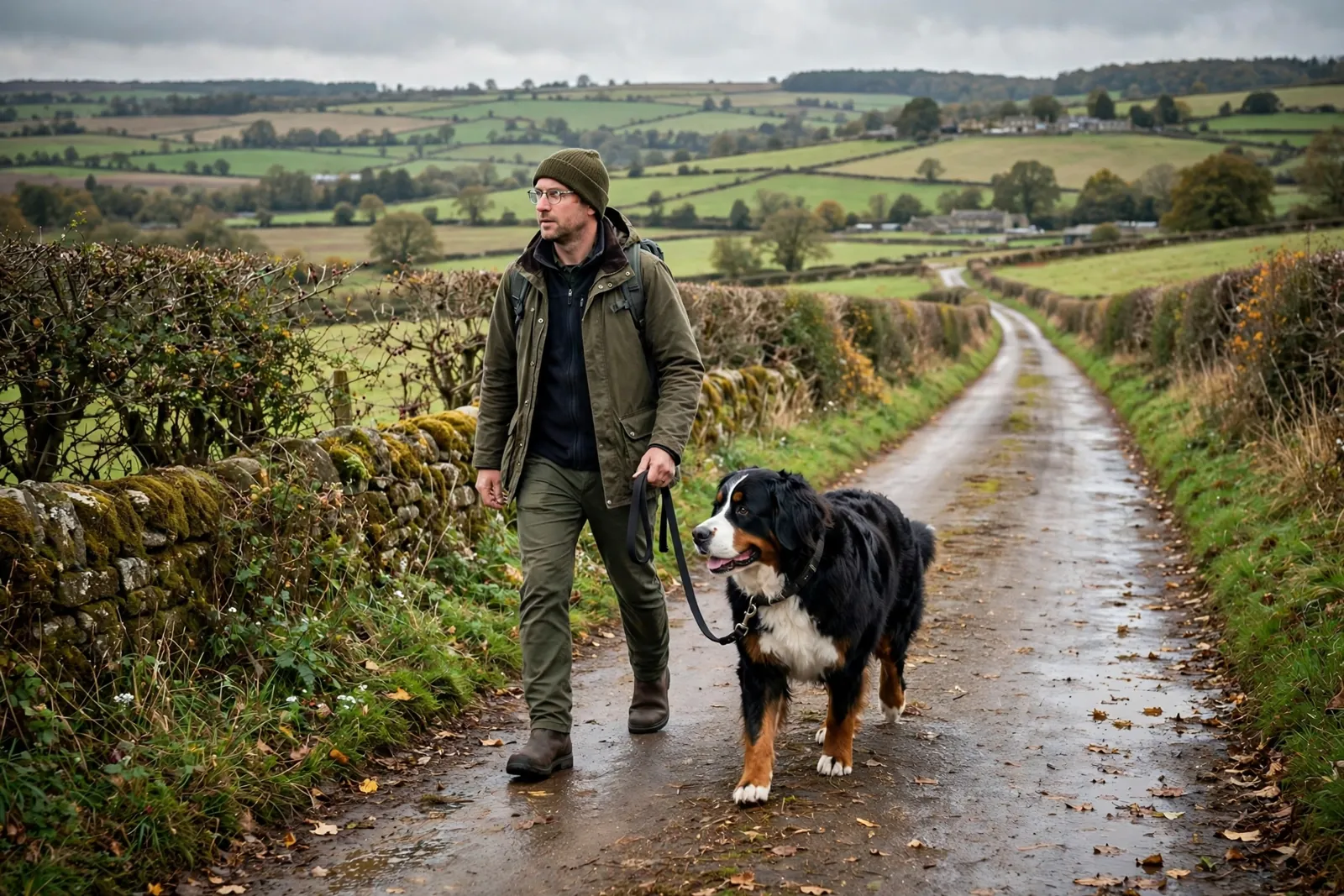
Shepherds often have a direct social style — upright, staring, approaching head-on — that other dogs can read as confrontation even when no confrontation is intended, and adolescence can add reactivity that travel stress amplifies. Manage greetings actively on holiday: prefer parallel walking at distance over face-to-face meetings on narrow paths, keep greetings to three seconds and move on, and do not allow your dog to fixate, herd or practise staring at other dogs from cafe tables. Distance is a training tool, not an admission of failure.
If your shepherd is reactive — barking, lunging or struggling around dogs, people, bikes or vehicles — a holiday can still work, but it must be designed as the calm, low-encounter trip set out in our guide to reactive dog holidays: quiet areas, off-peak walks, accommodation with its own entrance and garden, and honest expectations. What a reactive shepherd cannot use is a surprise-heavy itinerary of busy beaches, pub gardens and dog-welcoming festivals, chosen in hope. Hope is not a behaviour plan, and at this size and strength the stakes of getting it wrong are higher for everyone.
Know the legal basics without turning the holiday into a law exam. Your dog must be under control in public, microchipped with details up to date, and wearing identification as required; around livestock the rules tighten further. If an incident ever happens — a snap, a chase, a frightened member of the public — exchange details, check for injuries, and report appropriately rather than arguing on the path. Owners of large, conspicuous breeds protect their future access by being visibly responsible when things go wrong, not only when things go well.