This guide is independent and contains no paid placement. If affiliate links are added later, they will be clearly marked and will not change our editorial checks.
A Great Dane holiday works when the car is big enough, the room is on the ground floor, meals are split and followed by rest, and walks are steady rather than extreme. The breed's calm nature is a huge asset, but its height, weight and deep chest demand respect.
Height changes everything
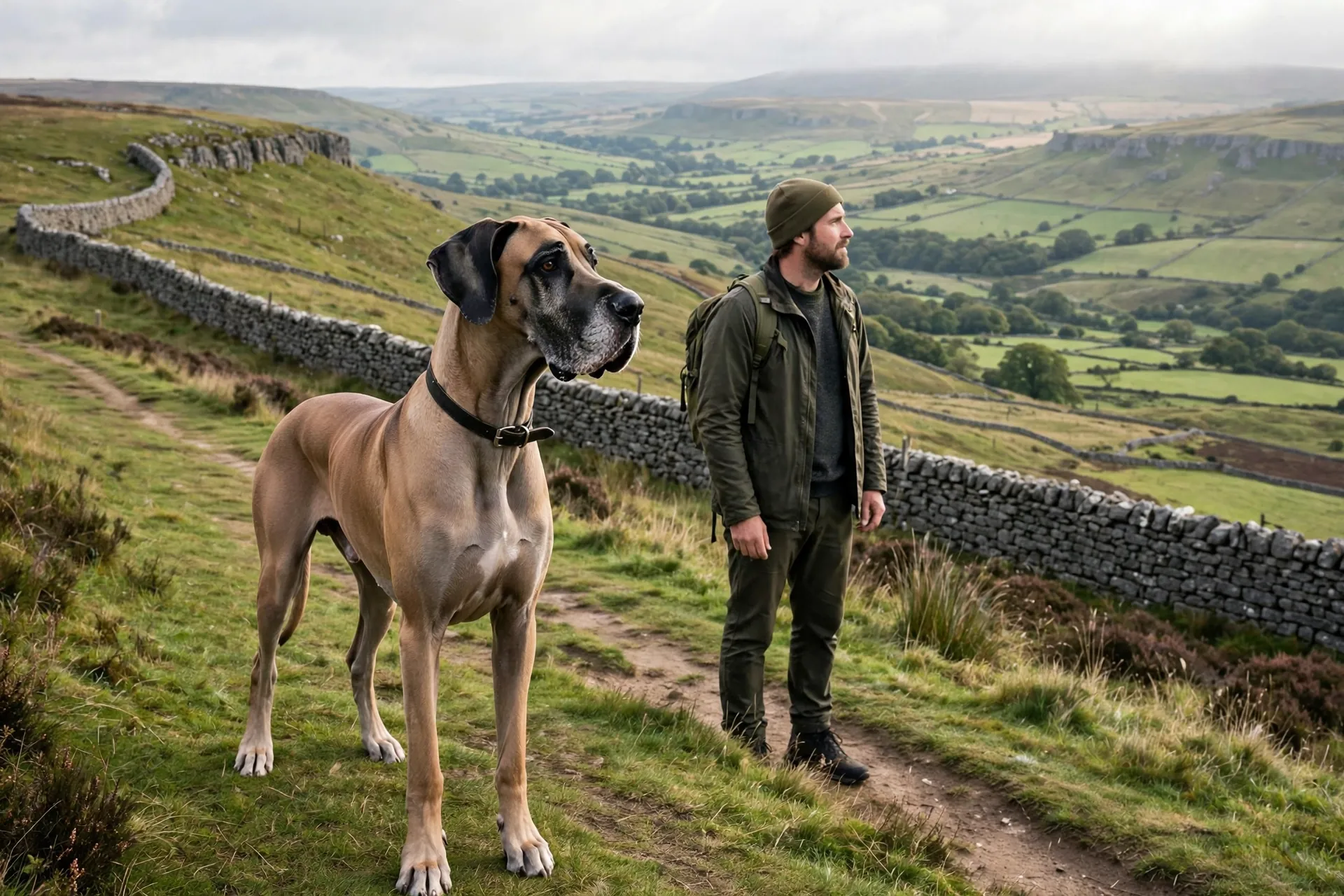
Great Danes are the tallest of all dog breeds. Males commonly stand 76 to 86 centimetres at the shoulder, females 71 to 81 centimetres, and adults typically weigh 45 to 70 kilograms, with males at the heavier end. Height is the dimension that surprises people most: a Dane standing on its hind legs to greet someone can look a person in the eye, and a Dane standing in a car boot may have its head pressed against the roof. Every space a holiday involves, from the boot to the hotel bed to the pub table, was designed for something smaller, so the Dane owner's first job is to think in centimetres rather than in general impressions.
Start with three figures: shoulder height, length lying down from nose to tail base, and current weight from a vet scale. These decide crate size, boot fit, ramp ratings, bed length and accommodation weight limits. A bed that suits a Labrador will leave a Dane's legs dangling, and a crate that looks enormous in a shop may still be too short for a male Dane to stretch out. Puppies grow at an astonishing rate, gaining several kilograms a month, so a crate or harness bought in spring may be outgrown by autumn; re-measure before each major trip during the first two years and check the official guidance before you travel if you are unsure about any restraint or transport rule.
Height also affects how the world treats your dog. Strangers may be nervous of a dog this large, children may run up to it, and other dog owners may assume a Dane is aggressive simply because of its size. The breed's reputation is in fact gentle and friendly, but reputation does not control a stranger's reaction. A Dane that walks calmly on a loose lead, sits for greetings and settles on a mat transforms those encounters, while a Dane that pulls, jumps up or mouths hands confirms every fear. Training, therefore, is the single most valuable holiday preparation for this breed, ahead of any equipment purchase.
Cars, crates and ramps
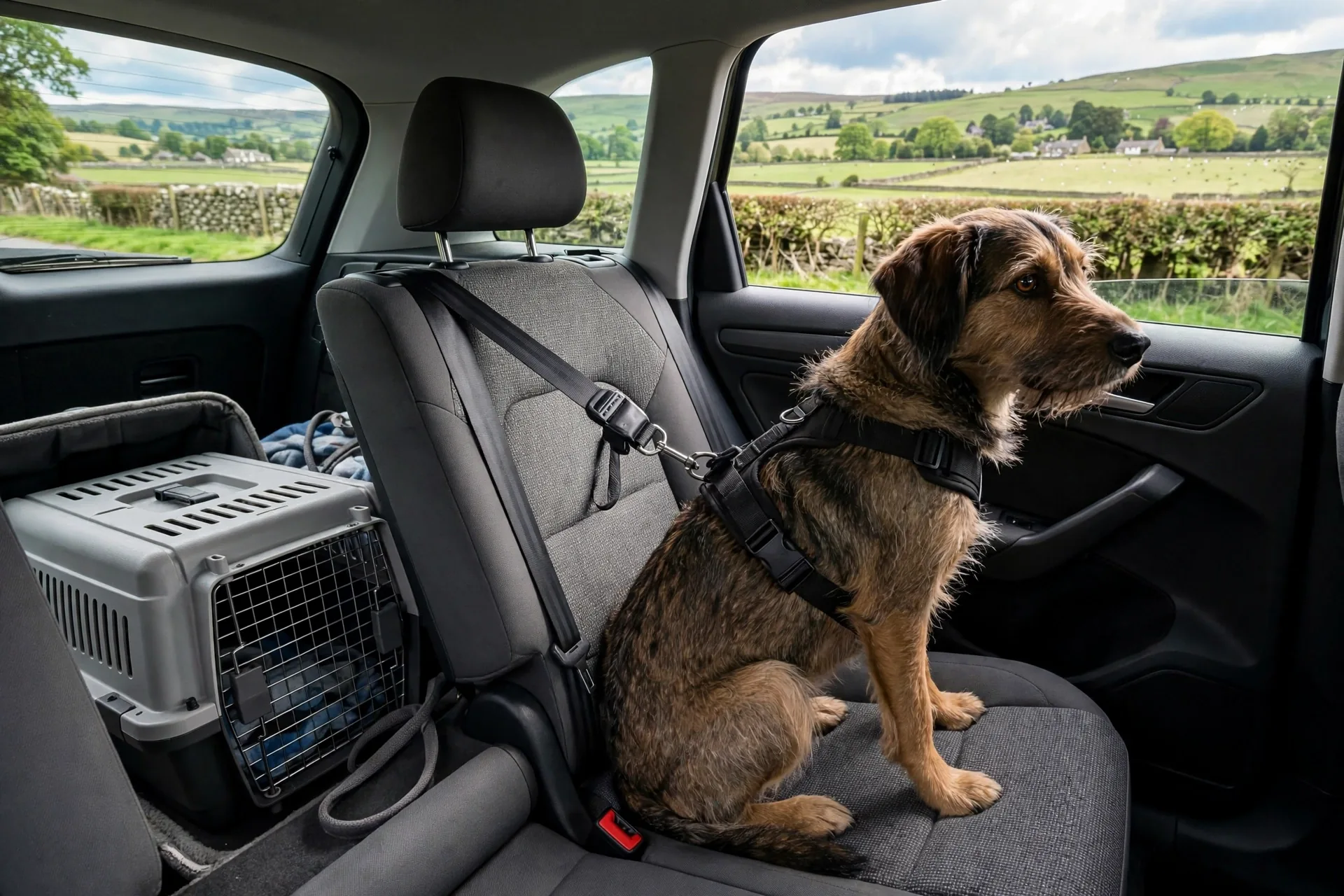
The car is where most Dane holidays are won or lost. The Highway Code requires a dog to be suitably restrained, and a 60-kilogram dog loose in a car is a danger to everyone inside in a crash. A crash-tested crate is the gold standard, but giant crates are very large: a crate tall enough for a Dane to stand in may measure over a metre in length and 80 centimetres in height, and many boots simply cannot take one through the tailgate aperture even if the floor area seems sufficient. Measure the aperture, not just the floor, and test the crate in the car before buying if the retailer allows it. Our comparison of dog car harness vs crate options sets out the trade-offs, and for Danes the harness route often becomes the practical fallback in smaller large cars, provided the harness is crash-tested and rated for the dog's weight.
Loading is a second challenge. A healthy adult Dane can jump into a high boot, but repeated jumping strains joints, and older or unwell Danes may be unable to jump at all. A ramp rated well above the dog's weight, with a non-slip tread and a shallow angle, is worth its cost many times over. Train ramp use at home with treats and patience before the trip, because a nervous Dane balking on a ramp at a motorway service area is a miserable experience for everyone. Inside the car, a non-slip liner, a familiar blanket and good ventilation matter, and on warm days the air conditioning should be checked before departure, since a large dog generates a lot of heat in an enclosed boot.
Plan stops every two hours, choosing places with grass away from traffic. Danes drink generously, so carry plenty of water and a large bowl, and avoid feeding a full meal immediately before a long drive. If the trip involves a ferry, check pet arrangements early: onboard kennels are often sized for medium dogs and may not fit a Dane, while vehicle-stay crossings require the dog to remain in a parked car for the duration, which is only acceptable in cool conditions and for shorter crossings. Confirm the details with the operator in writing rather than assuming.
Feeding and bloat awareness
No topic matters more for Dane owners than bloat, properly called gastric dilatation-volvulus. Danes, with their deep chests, are among the breeds at highest risk. The stomach fills with gas and may twist, cutting off blood flow, and without emergency veterinary treatment the condition is fatal. Warning signs include a visibly swollen or tight abdomen, unproductive retching, restlessness, pacing, drooling and signs of pain or collapse. If you suspect bloat, go to the nearest vet immediately and call ahead if possible; this is not a wait-and-see situation, and knowing the location of the nearest emergency practice before you travel is essential. Our guide to finding an emergency vet on holiday explains how to prepare.
Prevention on holiday rests on routine. Feed two or three smaller meals a day rather than one large meal, avoid vigorous exercise for at least an hour before and after eating, and keep water available but discourage gulping huge volumes at once after exercise. Raised feeders were once widely recommended for bloat prevention, but the evidence is mixed, so follow your own vet's advice for your dog rather than internet consensus. Avoid fermentable extras, rich treats and sudden diet changes on holiday, and weigh food in advance so the ration stays consistent even when the routine is disrupted by travel days.
Some vets discuss prophylactic gastropexy, an operation that tacks the stomach to reduce twisting risk, usually at neutering. It does not prevent bloat itself but reduces the chance of torsion, and it is a decision to make with your vet well before any holiday, not a holiday preparation. Whatever your dog's history, brief everyone travelling with you on the warning signs and the plan: who drives, where the vet is, and what to say on the phone. A calm, rehearsed response saves precious minutes in an emergency.
Joints and sensible exercise
Great Danes grow fast and live relatively briefly, typically seven to ten years, and their joints bear the cost. Hip dysplasia, elbow problems, cruciate injuries and osteosarcoma, a bone cancer that is sadly more common in giant breeds, all appear in the breed's health picture. Holiday exercise should therefore protect joints: steady, moderate, low-impact movement on forgiving surfaces, rather than long mountain days, repetitive jumping or high-speed chasing on hard ground. Most healthy adults thrive on 45 to 60 minutes of walking a day, split into two outings, plus free running in a secure field where they can choose their own pace and stop when tired.
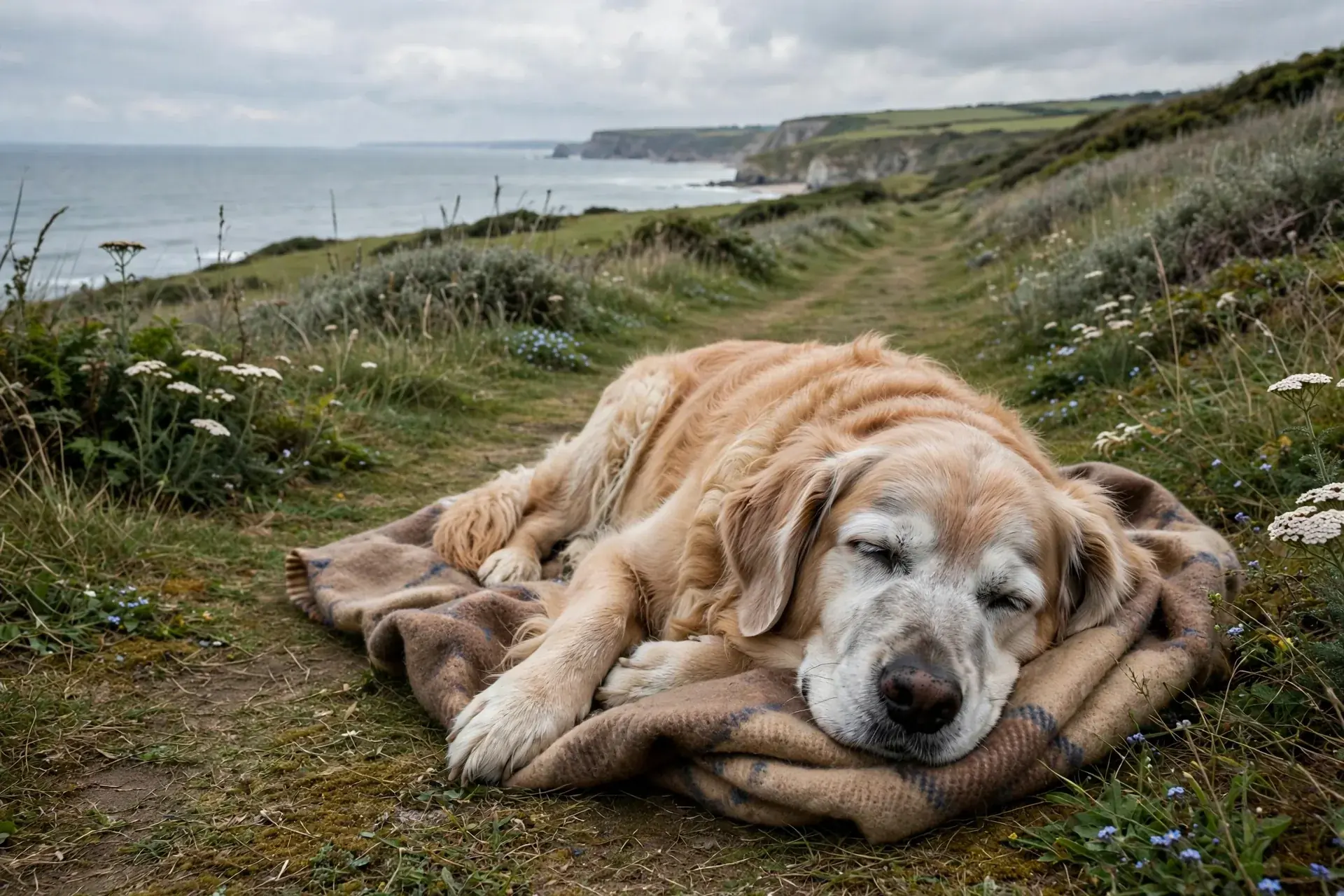
Puppies need special restraint. Forced exercise should be limited while growth plates are open, roughly for the first 18 to 24 months, and stairs, jumping and long hikes should be minimised. Free play on grass, short lead walks and mental enrichment suit a Dane puppy far better than a forced march, and the old five-minutes-per-month-of-age guideline is a starting point to discuss with your vet, not a rule to follow blindly. Older Danes often develop arthritis, so watch for stiffness after rest, reluctance on stairs, lagging on walks or difficulty rising; a ramp, a non-slip mat, a supportive bed and vet-prescribed pain relief transform an older Dane's holiday.
Weight is the other lever. A Dane carrying extra weight loads every joint with each step, and holiday treats add up quickly. Weigh meals, set a daily treat allowance and politely decline extra food from well-meaning strangers. If your dog takes joint supplements or medication, pack a spare supply separately, keep it labelled and note the dose on your phone. After walks, check paws and legs for cuts, swelling or heat, and rest the dog properly between outings rather than filling every hour with activity.
Short coats and British weather
Unlike the thick-coated giants, a Great Dane has a short, smooth coat that offers little insulation. In cold, wet or windy weather a Dane chills quickly, especially when standing still, and a wet Dane in a draughty cottage is a miserable dog. Pack a well-fitted waterproof coat for rain, a fleece for cold evenings and a drying coat for after walks. Dry the dog thoroughly after rain or swimming, and make sure the bed is in a warm, draught-free spot away from external doors. On winter holidays, a heated or well-insulated room matters more than a scenic view.
Summer brings the opposite problem. Danes cope with heat better than thick-coated breeds but still overheat, and their size means they generate and retain a lot of warmth. Walk early and late on hot days, choose shade and water, carry plenty of water and watch for heavy panting that does not settle, drooling or wobbliness. Never leave a Dane in a parked car in warm weather, even for a few minutes, and remember that a short-coated dog sunburns on pale or pink skin, particularly on the ears and belly, so shade matters on bright days too. Grass seeds, ticks and biting flies are seasonal hazards for any dog, so check paws and ears after meadow walks and use vet-recommended parasite prevention.
Grooming, by contrast, is refreshingly simple. A weekly brush with a rubber mitt or soft bristle brush removes loose hair, and a bath only when genuinely dirty keeps the coat in good condition. Shedding is moderate but the hairs are short and stiff, so they work into car upholstery and clothing; a rubber grooming glove and a lint roller are worth packing. Nail care deserves attention, because a tall dog's weight makes overgrown nails uncomfortable and affects gait, so check nails before the trip and trim as needed or ask a groomer.
Booking for a giant
Booking accommodation for a Dane starts with honesty about weight. Many hotels and cottages set limits of 25 or 30 kilograms, and a Dane exceeds them by a wide margin, so the first message should state the breed and weight plainly and ask whether a dog of that size is accepted. If the answer is no, accept it gracefully and move on; concealing the size risks eviction, a lost deposit and a difficult conversation with a host who discovers a horse-sized dog in a room booked for a terrier. Hosts who accept giants often become favourites for life, so keep their details for future trips.
Once size is accepted, the practical questions follow: ground-floor room or lift access, number of steps, doorway widths, garden fencing height and condition, floor type and any extra cleaning charge. A Dane's tail is a wrecking ball at coffee-table height, so ask about fragile ornaments in low rooms and keep the dog's bed in a space where the tail has room to wag safely. Hard floors suit a Dane better than thick carpet for cleaning and for grip if a non-slip mat is added, and a room with a door straight to the garden is worth more than a larger room up two flights of stairs. Check the garden gate latch yourself on arrival, since a Dane leaning on a weak gate can open it, and walk the boundary before off-lead time.
Costs and rules need the same clarity. Pet fees vary from free to £25 or more per night, and a week's stay can add hundreds of pounds, so ask for the all-in total in writing. Check whether dogs may be left briefly unattended, since most places prohibit it, and plan dining around dog-friendly venues or takeaway. Cancellation terms matter for a breed whose health can change quickly, so a flexible booking is worth a small premium. If you travel with a second dog, confirm the total number allowed, since limits are usually per booking rather than per dog.
Calm manners in busy places
A Dane's temperament is its greatest holiday asset. The breed is typically friendly, patient, people-oriented and good with children, and a well-socialised Dane is a delight in pubs, cafés and parks. That reputation, however, depends on training. A Dane that pulls on the lead can drag an adult across a road, a Dane that jumps up can knock a child over, and a Dane that counter-surfs can clear a pub table in one motion. Teach a reliable loose lead walk, a solid sit for greetings, a settle on a mat and a leave-it cue before the holiday, and practise them in increasingly busy places at home first.
In pubs and restaurants, choose a corner table with space for the dog to lie flat, bring a mat and water bowl, and settle the dog before ordering. Order water for the dog with your own drinks, and keep the lead short but slack so the dog can rest without tripping staff. Most staff love a calm Dane, and a dog that lies quietly under a table is often offered treats and fuss, which reinforces the behaviour you want. If the dog cannot settle, take a short walk and try again rather than persisting with a restless giant in a crowded room.
Around other dogs, Danes are usually sociable, but size differences create risks: a playful Dane can accidentally injure a small dog, and a fearful small dog may react aggressively to a Dane's approach. Keep greetings controlled, on lead and brief, and watch body language closely. If your Dane is nervous around other dogs, choose quieter walks and wider paths, and do not use a holiday as the moment to fix reactivity. For broader planning, our guide to travelling with a large dog in the UK covers space checks and rules that apply across giant breeds.
Walks for a tall dog
The best Dane walks are flat or gently rolling, with firm surfaces, shade and room to move. Canal towpaths, disused railway lines, forest tracks, riverside paths and quiet beaches all suit the breed, while steep rocky scrambles, long flights of steps and cliff paths with sheer drops do not. Danes enjoy galloping in a secure field, where they can stretch their long legs safely, so look for enclosed dog fields near your destination and book a session on arrival days when the dog has travel energy to burn. A secure field also solves recall worries in a new area.
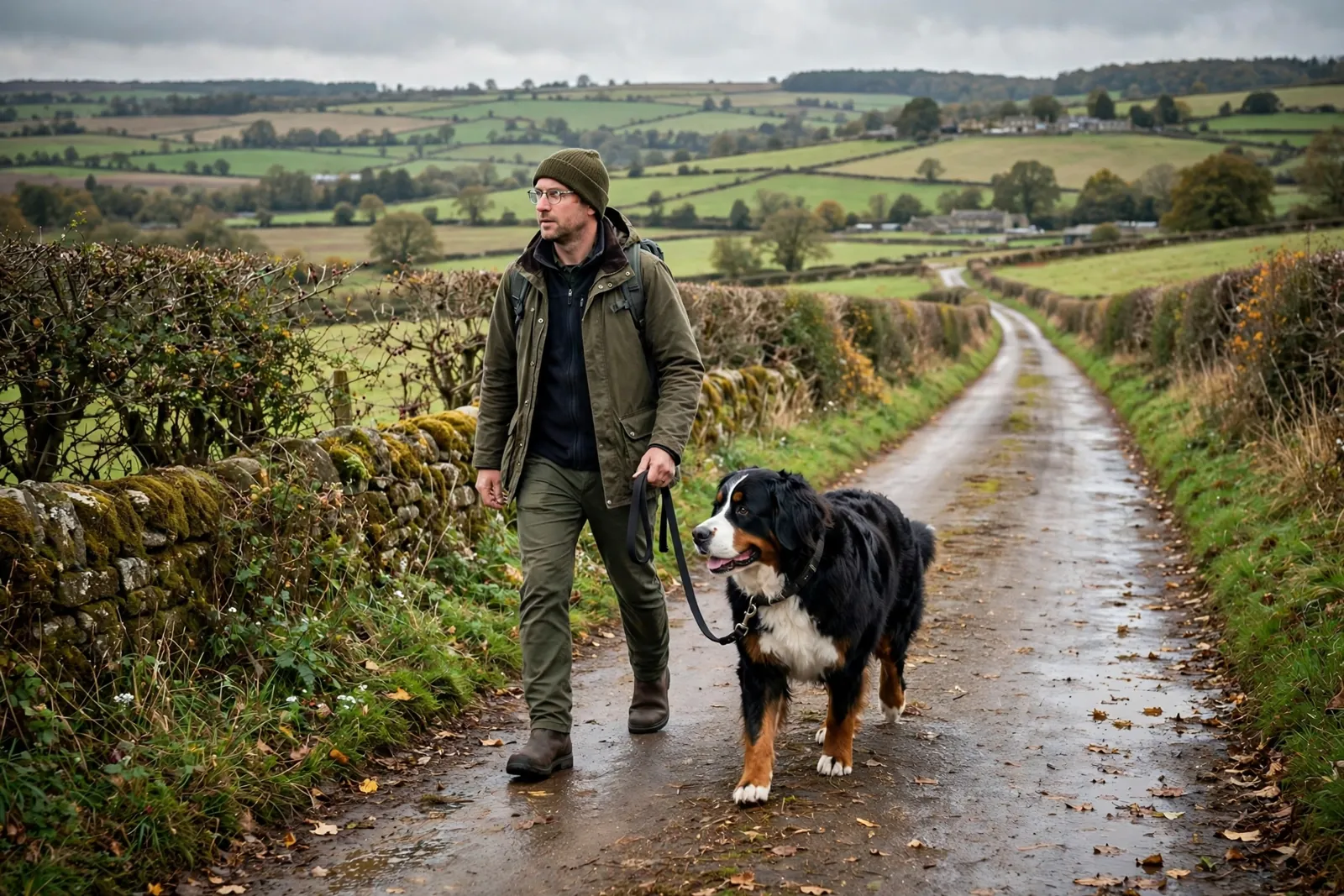
Livestock rules are non-negotiable: keep the dog on a lead around sheep, cattle and horses, without exception. A Dane chasing livestock is dangerous and may be shot legally in some circumstances, so this is not a training exercise but a safety rule. On beaches, check seasonal restrictions before travelling, and on shared paths keep the dog close on a short lead around cyclists, runners and children. A harness with a front clip helps with pulling, and a long line gives freedom on open ground while keeping control. Avoid exercising immediately after meals, and carry water on every walk, since a large dog dehydrates faster than the owner expects.
Build the day around the dog's rhythm: morning walk, rest, short outing, evening walk. A Dane that has walked and rested will settle happily in a pub or cottage, while one dragged through a full day of sightseeing will be restless. On hot, wet or stormy days, swap the big walk for a short sniffy loop and an indoor training game; the dog will not keep score, and the holiday stays pleasant for everyone.
Trains, ferries and taxis
Danes travel on most British trains, usually free on a lead, but a giant dog needs floor space that a busy commuter train does not offer. Travel off-peak, choose quieter carriages and keep the dog on a lead in the vestibule or under a table where space allows. Bring a mat so the dog has a defined place to lie, and avoid peak-hour routes entirely if possible. Other passengers are generally kind to a calm Dane, but a dog sprawled across an aisle in a crowded train is a trip hazard, so manage the space actively.
Buses vary by operator and by driver discretion, so check the official guidance before you travel rather than assuming a Dane will be accepted. Taxis and private hire cars also vary, so book a large vehicle in advance, warn the company about the dog's size and bring a blanket to protect the seats. For ferries, confirm whether the dog stays in the vehicle, uses an onboard kennel or may stay with you, and check kennel dimensions against your dog's measurements before booking. A giant dog in a standard kennel is a welfare problem, so get the answer in writing.
Attractions often mean split visits with a Dane, since many historic houses and museums admit dogs only in grounds. Plan who stays with the dog, where the dog waits comfortably and how long the visit lasts. A car is never a waiting room in warm weather, so the split must involve a genuine alternative: one person visits while the other walks the dog, then swap. Gardens that welcome dogs on leads are usually the best compromise, giving the dog a walk and the humans a visit in the same outing, and checking each attraction's current policy before travelling avoids wasted journeys.
Packing for a Dane
Packing for a Dane is about size and spares: a giant crate or harness, a ramp, a large bed, a waterproof coat, a fleece, a drying coat, a large water bowl and several litres of water for travel days. Food should be weighed into daily portions in advance, with a spare day's supply in a separate bag, because a Dane's ration is large and local shops may not stock the usual brand. Medication, including any joint support, goes in its original packaging with a spare supply, and the vet's number and the destination practice's details go on your phone before departure.
For the room, pack a non-slip mat for feeding, a washable throw for any sofa the dog may use, a long line and a standard lead, a harness and a collar with an ID tag showing your name, address and phone number, and a familiar toy or chew for settling. Poo bags in a large size, a sealed container for used bags on long walks and a lint roller complete the kit. With the car, the room, the feeding routine and the vet plan sorted, a Dane holiday becomes what the breed does best: calm, companionable and quietly joyful. The dog that rests its huge head on your knee after a gentle walk is the reason so many owners happily rearrange their holidays around a giant, and the planning is a small price for that companionship.
Practical questions
Before you go
How much space does a Great Dane need in a car?
A great deal more than most cars offer. Measure your dog standing and lying down, then measure the boot opening, floor and height. Large estates and big SUVs are the usual minimum, and a giant crate may only fit in the largest boots. A crash-tested crate or harness rated for the dog's weight is essential, and a ramp helps a tall, heavy dog load safely.
What is bloat, and why does it matter on holiday?
Bloat, or gastric dilatation-volvulus, is a life-threatening emergency in deep-chested dogs in which the stomach fills with gas and may twist. Warning signs include a swollen abdomen, retching without vomiting, restlessness and drooling. Feed smaller meals, rest after eating, and go to a vet immediately if you suspect it.
Can Great Danes manage stairs and cottages?
Many struggle, especially puppies, older dogs and dogs with joint problems. Steep, open-tread or slippery stairs are a real hazard for a tall, heavy dog. Book ground-floor rooms, ask about step counts and doorway widths, and bring a ramp for the car and any raised decking.
How far should a Great Dane walk on holiday?
Most healthy adults do well on 45 to 60 minutes a day in two sessions, with free running in a secure field counting for a lot. Puppies need far less forced exercise while their joints develop. Build distance gradually, avoid repetitive jumping, and rest on hot days.
Do Great Danes cope with cold and wet British weather?
Less well than thick-coated giants. Their short coat offers little insulation, so they chill quickly when wet or standing in wind. Pack a waterproof coat, dry them after rain, and give them a warm, draught-free bed indoors.
Will accommodation accept a Great Dane?
Many places will, but weight limits are common, so declare the dog's weight honestly at booking. Ask about ground-floor access, garden fencing, floor type and extra charges. A calm, well-mannered Dane on a mat is welcomed far more readily than a boisterous one on a loose lead.