Independent, unsponsored advice. Terriers are individuals despite the shared reputation: energy, prey drive and sociability vary, and the health notes are general background. Ask your vet about your own dog, and verify current rules in official guidance before a trip.
A Jack Russell holiday is energy management: give the dog real work for its body and brain every day, assume prey drive will override recall near rabbits, rodents and birds, choose stays with dig-proof, climb-proof boundaries, supervise gardens, and protect everyone's peace with chewing, digging outlets and honest alone-time limits. Tire the terrier by design, not by accident.
Small dog, big engine: reset your expectations
The most common Jack Russell holiday mistake is planning for the dog's size instead of its engine. A Jack Russell terrier was bred to go to ground after quarry, to bolt foxes, to work all day alongside horses and huntsmen — a compact, fearless, tireless worker that happens to fit under a pub table. Owners who schedule a gentle stroll and a long cafe lunch because the dog is small will meet, by mid-afternoon, a terrier vibrating with unused purpose, redecorating the cottage garden and conducting surveillance on every bird in the county.
Plan the day around discharge first and sightseeing second. A substantial morning walk with sniffing, exploring and some structured play, a midday rest that is genuinely restful because the dog is actually tired, and a second active outing later usually produce the settled evening terrier of holiday photographs. One long weekend hike does not balance five idle days, and an under-exercised Jack Russell does not become calm with practice — it becomes inventive, which in a rented property means digging, chewing, barking and escape artistry.
Mental work counts double for this breed. Ten minutes of find-it games, a cardboard-box treasure hunt, learning a simple trick in the cottage kitchen, or practising settle-on-a-mat with real rewards can take the edge off a rainy day in a way another lead lap of the car park cannot. Pack a small activity kit — treats, a favourite tug toy, a lick mat, a couple of safe chews — and treat it as essential luggage, because for a terrier, occupation is behaviour management.
Prey drive: the rabbit does not care about your training
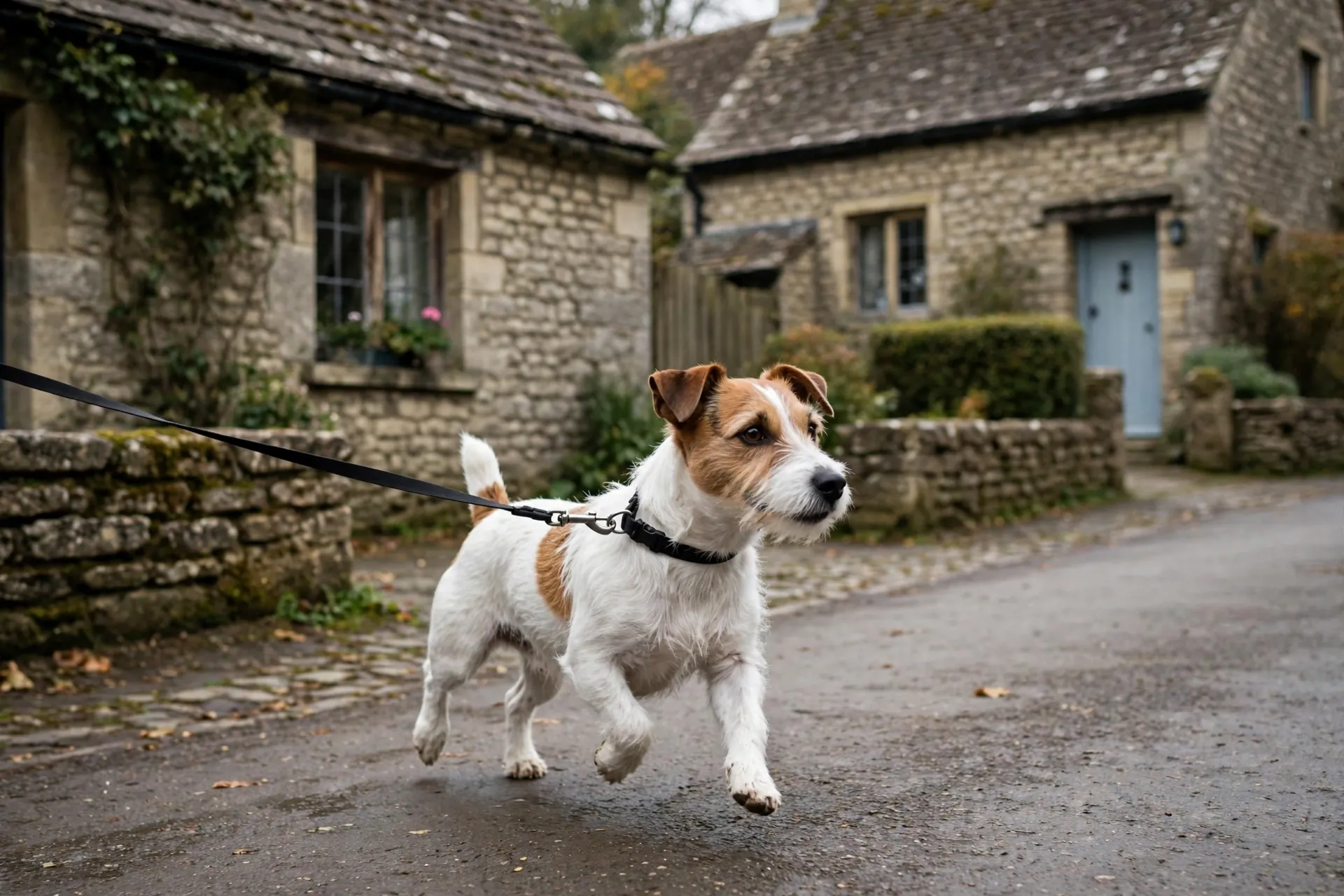
Jack Russells were shaped to chase, grab and go underground, and modern pet terriers retain the software even when they have never worked. Rabbits on a common, squirrels in a park, rodents in a dry-stone wall, birds flushing from a hedge — any of these can switch a biddable little dog into single-minded pursuit in a stride, deaf to name, treats and traffic sense alike. The safety rule follows directly: in any place where quarry, livestock or roads are in play, the dog is on a lead or a carefully managed long line on a harness, and recall is treated as a bonus rather than a barrier.
Going to ground is the breed-specific hazard owners forget. A Jack Russell that disappears down a rabbit hole, badger sett or drain is not a comic anecdote in progress; it can be a genuine emergency involving digging, fire-service advice and a dog underground for hours. Keep terriers on a lead around visible burrow systems, cliff-edge warrens and old mining or quarry ground, supervise digging-obsessed dogs closely in gardens backed by fields, and if a dog ever does go to ground and not return, contact local help and the landowner promptly rather than digging dangerously yourself — badger setts in particular are legally protected.
For prevention you can actually use on holiday, read our guide to lost dog on holiday in the UK before you go, keep ID tags and microchip details current, and consider a tracker if your dog has a history of bolting — a tracker is a recovery aid, not permission to unclip. Choose off-lead freedom only in genuinely secure fields and gardens, of which Britain now has many for hire, and let the terrier sprint, hunt scents and course around safely inside a boundary that does the work a whistle cannot.
Digging, climbing and the great cottage escape
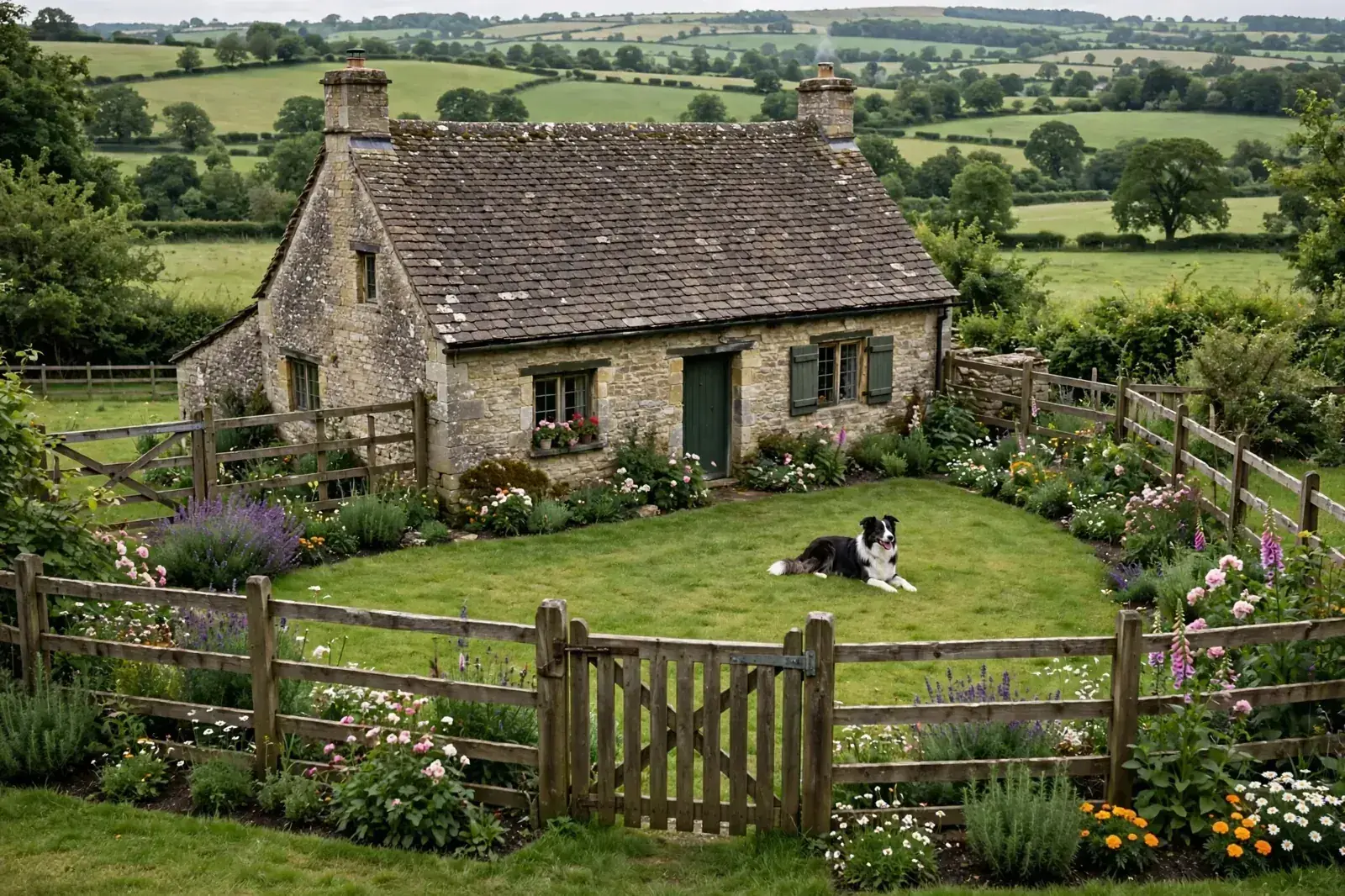
Given an under-exercised hour and a garden fence with a promising base, a Jack Russell will attempt excavation with professional commitment. Others climb, jump, squeeze through cat-sized gaps, or learn a gate latch in an afternoon. When you arrive at any stay, inspect the boundary the way this breed will: at ground level, at corners, beside gates, under sheds and decking, and along any hedge that is a visual barrier rather than a physical one. A fence that contains a labrador may be a colander to a terrier, and listings written for average dogs should be verified with terrier eyes.
Supervision is the second fence. Even a garden you have passed deserves watched sessions at first, and a dog with a digging history should not be left alone in any new garden while you shower, shop or nap. Provide a legitimate digging outlet where the property allows — a designated corner, a sand-filled box, or buried-toy games in an area the owner approves — because forbidding digging entirely to a terrier is less effective than giving the behaviour an address. If a stay forbids all garden digging and offers no outlet, factor in extra walks and indoor games to fill that gap.
Our guide to self-catering stays with a secure garden sets out the full arrival checklist; add the terrier amendments above and one more: check inside, too. Gaps behind kitchen units, loose boards, open chimneys in old cottages and doors that latch only if lifted are all terrier-scale opportunities, and a dog that can vanish inside a building can worry a whole evening away. A quick room-by-room scout on arrival, with vulnerable doors kept closed, is five minutes well spent.
Walks a terrier rates highly
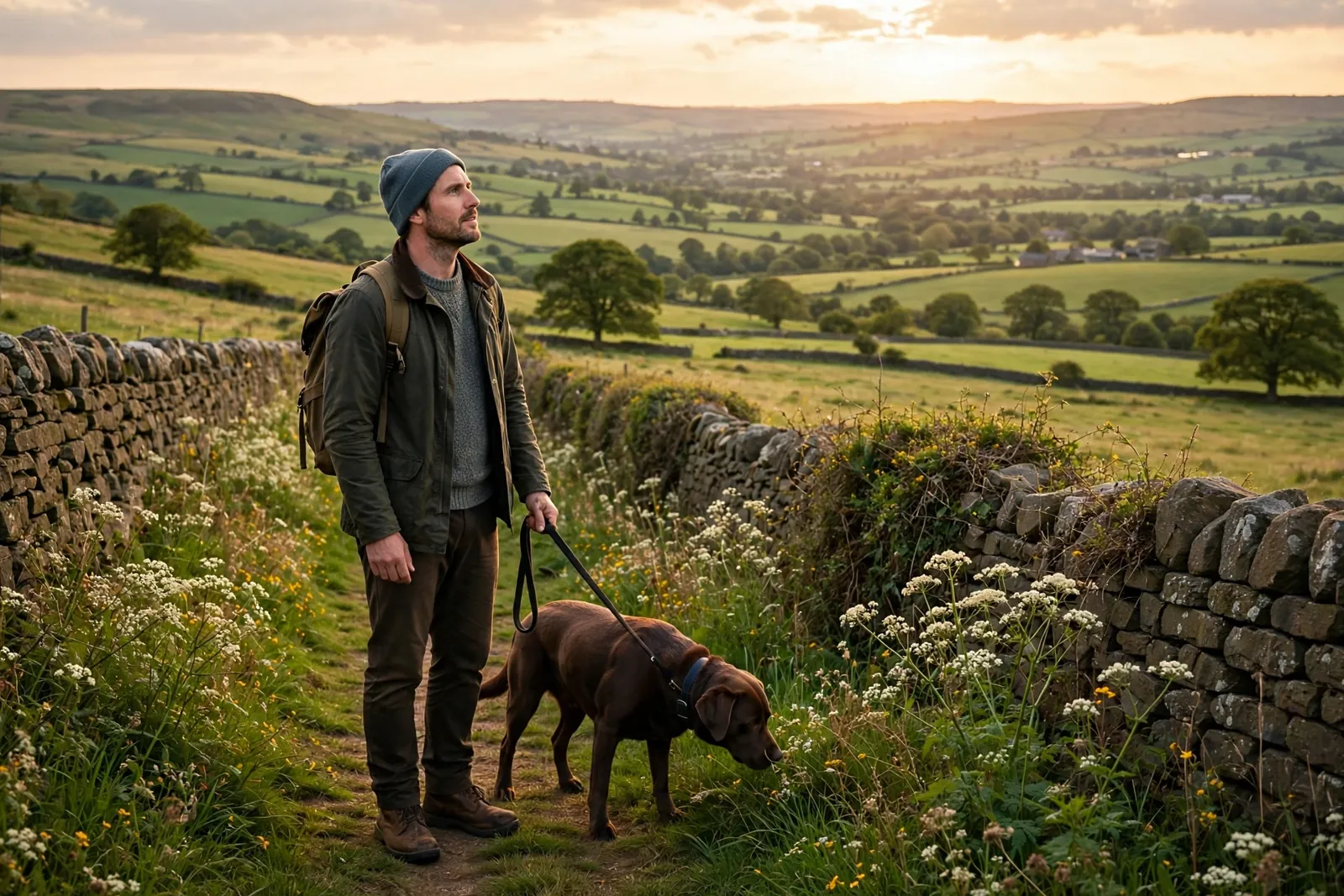
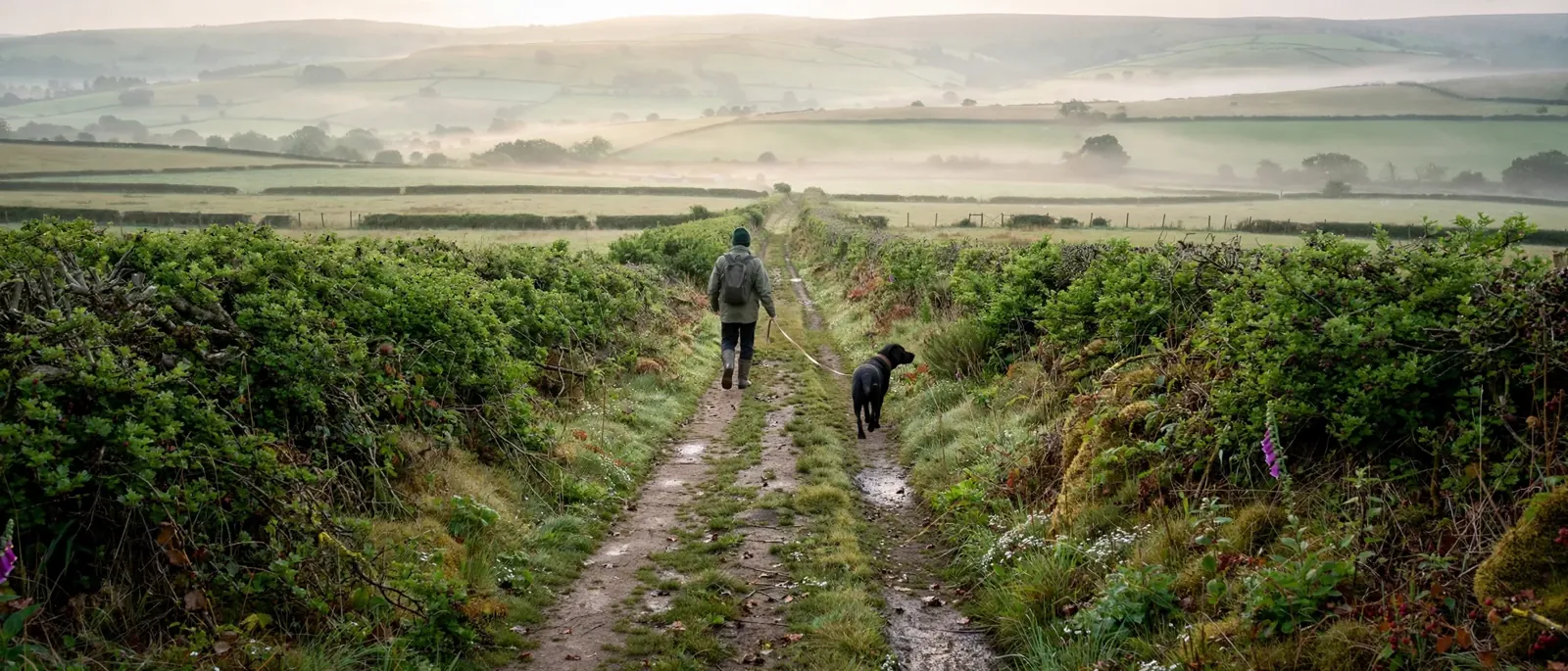
The walks Jack Russells rate are varied, sniff-rich and punctuated with action: woodland with fallen logs and banks to investigate on a lead, field-edge footpaths, beach mornings before the picnic crowds when there is space to move, and moorland tracks where a long line can give real range. Variety matters because a terrier's brain is part of its exercise requirement — the same lane marched twice daily for a week will bore a Jack Russell into inventing its own entertainment, usually involving the local wildlife.
Distance is a flexible friend. A fit adult Jack Russell can cover surprising mileage and enjoy a proper hill day, but holiday fitness should be built honestly, paws checked on stony or hot ground, and younger, older or unfit dogs scaled back without apology. Watch for the terrier that will not quit: this breed's tenacity masks tiredness, so the owner must be the one who calls the turn-back, offers water and enforces shade stops. Quarry scent near the end of a long walk can also produce a second wind that is pure adrenaline — keep the lead discipline for the walk back to the car, not only the walk out.
Structure on the walk helps everything. Alternate loose-lead sniffing stretches with short bursts of play, a few rewarded check-ins, and calm lead walking past other dogs and people, rather than letting the whole outing be a ninety-minute pull towards the next smell. Keep greetings with other dogs brief and on the move where possible; terriers can be feisty in face-to-face standoffs, and a holiday is a poor time to test sociability at close quarters on a narrow path. If your dog is genuinely dog-reactive, the design principles in our guide to reactive dog holidays will build you a calmer trip.
Stays that can survive a terrier — happily
The right Jack Russell stay is robust, enclosed and tolerant in the right places: hard floors, a garden boundary you have verified, no precious cream furnishings at terrier height that will collect muddy testimony, and hosts who understand that a small dog is not automatically a low-impact dog. Small cottages, annexes and farm stays often suit better than ornate boutique rooms, and a utility space for wet-dog drying earns its keep in British weather by day two.
Ask the terrier questions before booking. Is the garden enclosed at ground level, with no gaps under gates? May the dog dig anywhere, or nowhere — and if nowhere, what exercise options are within a few minutes? Are there neighbouring dogs, poultry or cats whose presence across a fence will soundtrack your evenings? What is the alone-in-property rule, and what damage deposit terms apply? Hosts who laugh knowingly at the digging question and answer it precisely are your people; they have hosted terriers and priced accordingly.
Hotels can work for a settled Jack Russell that is used to indoor etiquette, provided corridor noise, lift encounters and breakfast arrangements are planned. Our overview of dog-friendly hotels in the UK covers the booking questions; add a mat-trained settle, a chew for under-table duty, and an exit plan for the moment the terrier decides the dining room needs reorganising. Never leave a Jack Russell loose and alone in a hotel room unless the hotel explicitly allows left dogs and your dog is genuinely reliable — a determined terrier can damage a door in less time than dinner takes.
Alone time, barking and the neighbours' evening
Jack Russells bond hard and protest audibly, and an unfamiliar stay multiplies both tendencies. Barking at corridor footsteps, garden wildlife, the cottage's own plumbing and the existential fact of a postman is normal terrier commentary — and, in a terraced let or caravan, a fast route to complaints. Choose accommodation with some separation if your dog is vocal, keep curtains closed over high-traffic views, use background sound, and time your noisiest activities — play, arrivals, departures — considerately.
Alone time should be shorter on holiday than at home, built gradually in the new place, and abandoned as a plan if the dog is distressed. A terrier left beyond its coping will not usually suffer in silence; it will bark, dig at doors, or chew, and may injure teeth or claws doing so. Split the party for attractions the dog cannot join, use trusted sitters where available, or choose the dog-inclusive itinerary — and count that as a breed cost, like the secure garden, rather than a failure of training to be solved by leaving the dog longer tomorrow.
Evenings are won in the daytime. A Jack Russell that has walked well, played, trained briefly and eaten on schedule will usually produce the fireside photograph every owner wants. Add a final garden toilet trip, a chew or lick activity while humans eat, and a bed in the room where people actually are — terriers generally settle where the pack is, not in lonely splendour down a corridor — and protect the arrangement by not winding the dog up again with a midnight wrestling match it will expect nightly thereafter.
Car travel for a dog that hates missing out
In the car, a Jack Russell needs restraint that is genuinely secure — a crash-tested harness arrangement or a secured crate the dog already likes — because a small, agile, motivated terrier loose in a vehicle will find the driver's footwell, the handbrake and the open window gap with scientific thoroughness. See our dog car safety guide for restraint choices, and set up the terrier's spot with a familiar blanket, a chew for stationary traffic only if safe and supervised, and shade from window sun.
Travel excitement is the usual Jack Russell car problem: whining, barking at passing dogs and livestock, and arriving more wound up than the journey warrants. Curtains or a crate cover can lower visual triggers for some dogs, a pre-journey walk and toilet stop lower the rest, and calm, boring departures — no big farewell performance — help the dog file car rides under routine rather than adventure. If travel sickness or true anxiety is part of the picture, talk to your vet well before the trip rather than experimenting on the motorway.
Breaks should include a real sniff and stretch, not just a verge stop with lorries thundering past. Choose services or junctions with a grass area away from traffic, keep the lead short near vehicles and long only where safe, and never let the dog out of the car unrestrained even for a second — a terrier startled by a tail-lift alarm is across a car park before an owner can lunge. The same discipline at the destination car park, where rabbits famously graze at dawn, prevents the holiday beginning with a recovery operation.
The terrier packing list and return-home test
Pack for containment, occupation and cleanup. Harness, ordinary lead and a long line; a secure travel restraint; measured food plus high-value treats; a mat the dog already settles on at home; tug toy, ball for secure spaces only, lick mat and safe chews; a digging-game plan that needs no equipment beyond buried toys where permitted; towels and paw-cleaning kit for a dog that finds mud professionally; and ID, microchip confirmation, vaccination record and insurance details in one phone folder.
Insurance deserves a terrier sentence of its own. Third-party incidents, escape-related damage and swallowed-object veterinary bills are the classic Jack Russell claim shapes, so check cover, excesses and any conditions before travelling using our guide to dog travel insurance in the UK, and save a nearby vet's number at the destination in advance. Puppies and older terriers need the usual extra checks with your own vet, and any dog on medication travels with doses counted, spares split across bags, and timings written down.
Judge the holiday, at the end, by terrier evidence: a dog that slept, ate, played and returned home without an escape, a hole in a host's garden or a new feud with next door's cat has had the right trip. Note what contained the energy — the morning route, the secure field, the digging corner, the mat game — and save the stay if the boundary passed the terrier test, because a verified Jack Russell-proof garden is a rare asset. Book it again before someone with a spaniel discovers the listing describes it as merely nice.
Practical questions
Before you go
How much exercise does a Jack Russell need on holiday?
More than its size suggests — most fit adults need a substantial active outing daily plus play, training or scent games, split across the day, with the exact amount depending on age, health and fitness. Puppies and older dogs need much less forced exercise. An under-exercised Jack Russell usually becomes destructive or vocal rather than calm, so plan occupation as carefully as mileage and ask your vet if unsure.
Can I trust a Jack Russell's recall around rabbits and squirrels?
Do not stake safety on it. Prey drive in this breed can override recall instantly near rabbits, rodents or flushing birds, however good the dog is in low-distraction places. Use a lead or a long line on a harness anywhere quarry, livestock or roads are possible, and reserve off-lead freedom for genuinely secure fields and gardens you have checked yourself.
How do I stop a Jack Russell digging up a holiday cottage garden?
Supervise garden time, check and if possible block gaps and loose fence bases on arrival, and give digging a legal outlet — a designated corner or buried-toy games where the owner allows it. Exercise and occupy the dog well so excavation is not its only project, and never leave a known digger alone in a new garden. If the property forbids digging entirely, plan extra walks and indoor games instead.
Are Jack Russells good dogs for hotels and pubs?
A settled, mat-trained Jack Russell can be excellent company in both, and a bored or reactive one can be very hard work in a small, busy room. Choose spacious, edge seating, bring a mat and a chew, keep greetings with other dogs brief, and have an exit plan. Check the hotel's rules on leaving dogs in rooms — many forbid it — and never assume small means permitted everywhere.
What if my Jack Russell goes down a hole and does not come back?
Do not dig into burrows yourself, especially badger setts, which are legally protected, and do not let anyone enter drains or unstable ground. Keep someone at the hole, keep the area quiet, and contact the landowner, local vets and dog warden, and emergency help if advised — dogs underground are a known emergency scenario. Prevention is far better: leads near warrens, burrow fields and old quarry ground, always.