An unsponsored, independent article. Doodles differ enormously — size, coat and shedding are never guaranteed — and health notes here are general only, not advice about your dog. Your vet and the official latest guidance are the two checks to make before travelling.
Labradoodle travel in the UK is mostly a logistics exercise: the cross varies enormously in size and coat, so measure stays, cars, crates and beds against your individual dog rather than the breed name. Expect real exercise needs from both parent breeds, a coat that may shed or may mat — often some of both — and a serious drying and cleaning routine after wet British walks. Book properties that accept large dogs explicitly, confirm weight and size limits in writing, and give a big, friendly dog room to settle.
The size surprise: one name, several different dogs
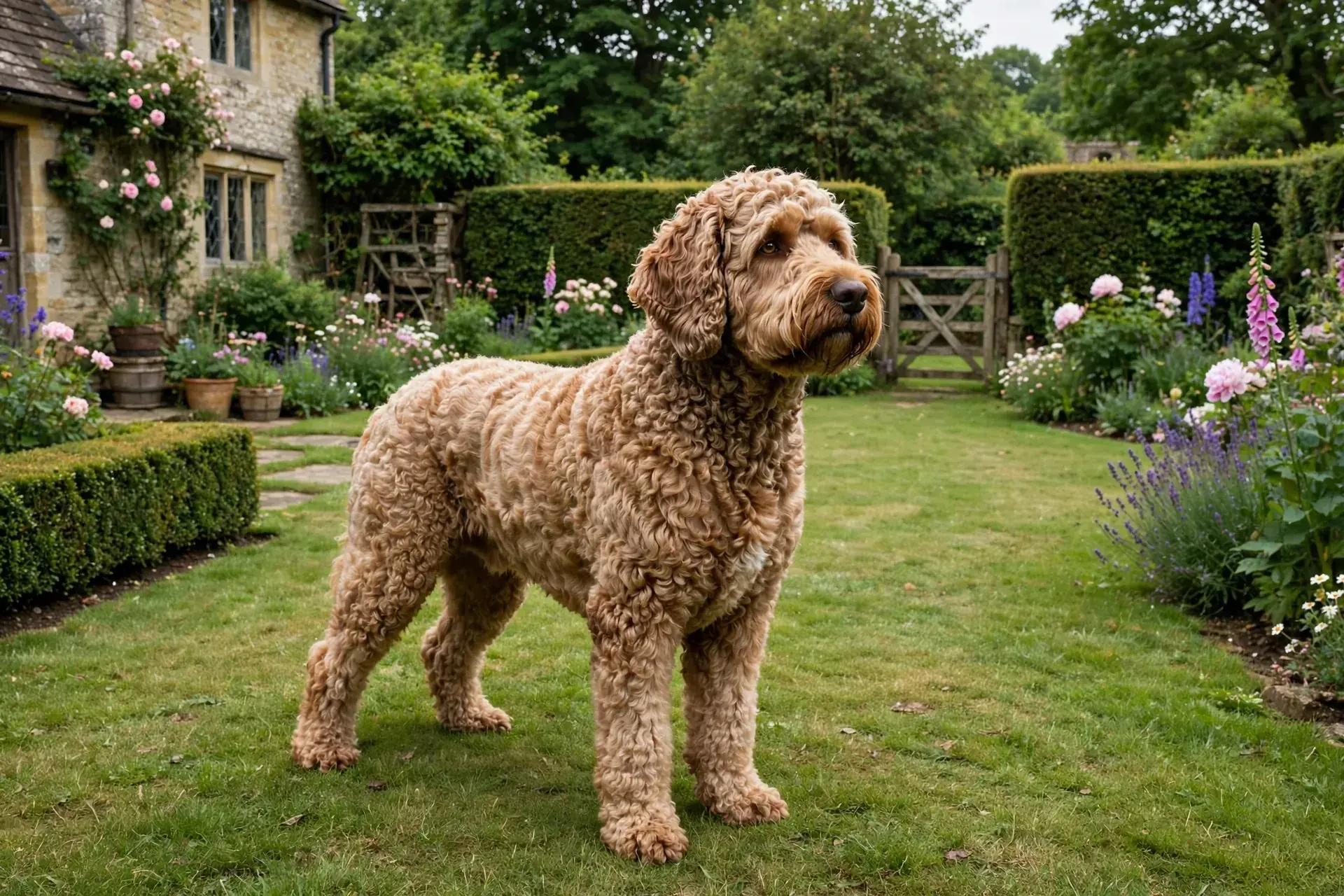
Every Labradoodle conversation eventually reaches the same story: somebody who researched a medium, knee-high dog and now shares a sofa with an animal the size of a small donkey. The cross between a Labrador Retriever and a Poodle has never been standardised in the way pedigree breeds are, and size depends on the parents used — a Labradoodle bred from a miniature poodle may stand under forty-five centimetres, while one from standard poodle and Labrador parents can exceed sixty centimetres and thirty kilograms. Coat, energy and temperament vary almost as widely. None of this makes the dogs anything other than much-loved; it makes generic breed advice unusually unreliable, which is why this guide keeps returning to one instruction: plan for your dog's measurements, not the label.
Before booking anything, collect the four numbers that decide a holiday: your dog's weight, height at the shoulder, length from chest to tail base, and the footprint of the bed she actually sleeps on rather than the one the shop recommended. Weigh her at the vet or a pet-shop scale rather than guessing — owners routinely underestimate a big doodle by five kilograms, and five kilograms is exactly the margin by which dogs fail accommodation weight limits. Photograph her standing beside a known object, too; a picture next to a standard doorway communicates her scale to a cottage owner faster than any description.
Then apply those numbers ruthlessly to every part of the trip. Property listings that say large dogs welcome should still be confirmed by message with her weight and height. A car that swallowed a puppy at eight weeks may now need a different arrangement entirely. Even dog-friendly attractions can have practical limits — narrow turnstiles, small lifts, crowded tea rooms — that matter at thirty kilograms and not at ten. Owners of smaller Labradoodles can skim this section with gratitude; owners of the full-sized edition should treat it as the foundation of the whole holiday.
Stays and size limits: getting a large dog accepted, in writing
The phrase dogs welcome conceals a spectrum, and at the large-doodle end you will meet its edges: properties that accept one dog under ten kilograms, cottages whose insurance excludes dogs above a stated weight, hotels with a single ground-floor dog room that a big dog and two adults fill completely, and gardens described as enclosed whose fence a determined large dog could treat as a suggestion. None of these hosts are villains — but all of them must be identified before you pay, not at the door with a dog whose head is level with the reception desk. Ask directly, in writing: is there a weight or size limit, how many dogs are allowed, which rooms can she enter, and what does enclosed mean in fence height and material?
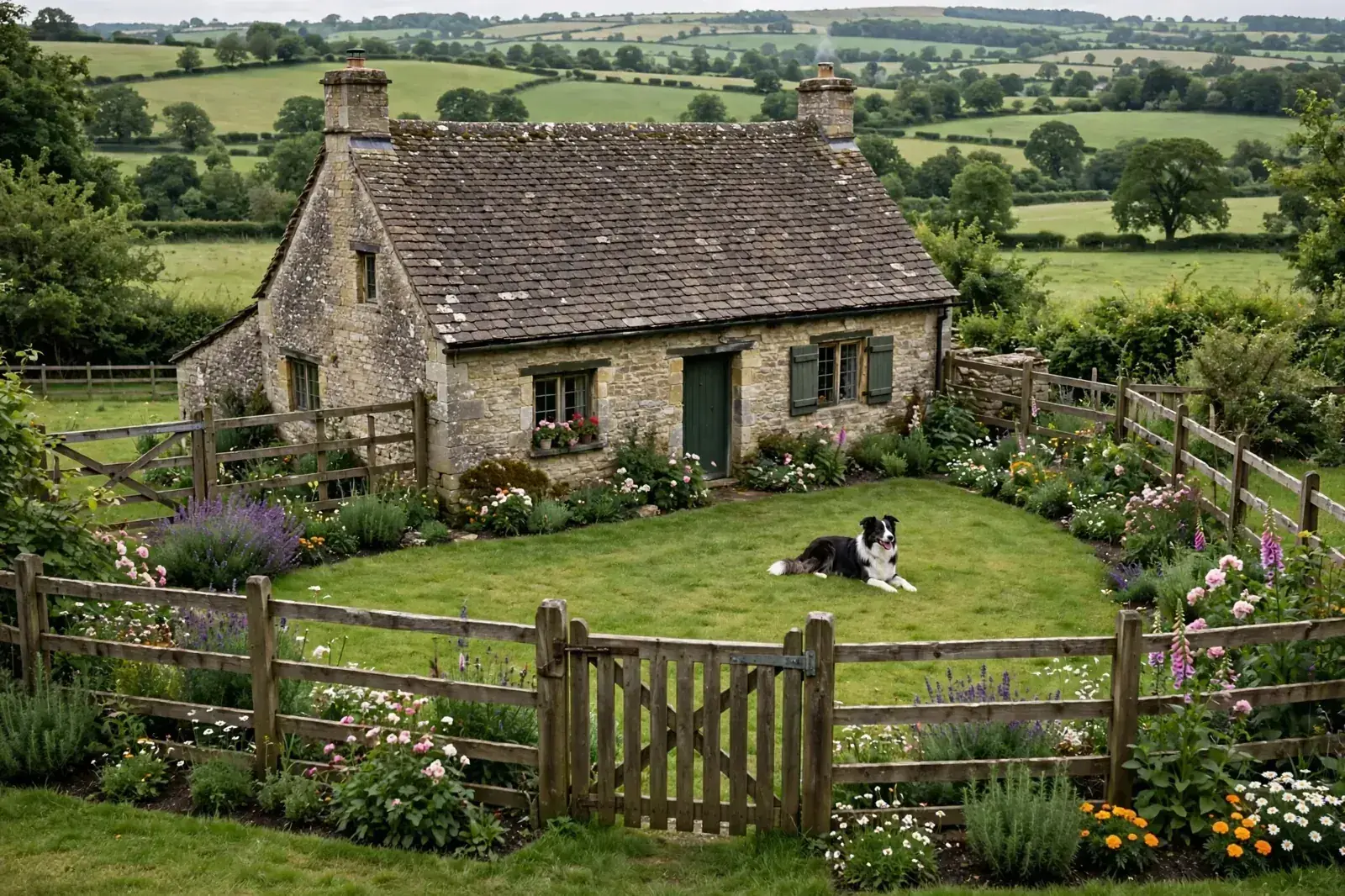
Prefer properties that host large dogs as a specialism rather than a concession: farm stays, barn conversions with proper utility rooms, and cottages marketed to owners of multiple or giant breeds tend to have the hard floors, outdoor taps, dog showers and genuinely tall fencing that make a big wet dog a pleasure rather than a negotiation. Our guide to self-catering stays with secure gardens sets out the fence and layout questions in detail, and they matter more, not less, as dog size rises — a large doodle hits a gate with more force, reaches a latch more easily, and covers a garden in fewer strides.
Inside the property, think about turning circles and sleeping space. A big dog needs a bed area where she can stretch fully without blocking a doorway or lying against a radiator, and a route from door to garden that does not pass the white sofa. Take throws, set up her station on arrival, and keep food and water bowls on a washable mat in a utility or kitchen corner — a large dog drinking enthusiastically redistributes a surprising amount of water. A short, friendly message to the host after booking, confirming your dog's size and your drying and cleaning routine, prevents most arrival-day friction and frequently prompts useful local advice in return.
Transport: cars, crates and the physics of a big crossbreed
Moving a large Labradoodle around Britain is an exercise in applied physics. In the car she needs a secured arrangement that fits her real dimensions — a crash-tested harness on a seat with enough room to lie down, or a crate she can stand, turn and stretch in, which in a standard estate car may mean folding seats and rethinking the luggage entirely. Measure the crate against the dog, not the other way round, and do a trial loading before the holiday: some big dogs who travelled happily as puppies have quietly outgrown a boot arrangement that now leaves them cramped, and a four-hour drive is the wrong place to discover it. Our guide to dog car safety works through restraint options and legal duties for dogs of every size.
Public transport rewards research. Trains in Britain generally carry dogs without charge, but a large dog occupies real floor space in a vestibule or beside your seat, must be kept on a lead, and cannot take a seat however empty the carriage looks — travel off-peak, choose the end of a carriage with the widest floor area, and bring a mat so she has a defined place to settle. Buses are at the driver's discretion more often than owners expect, and a very large dog may be refused at busy times; have a walking or taxi backup. Ferries and attractions each set their own rules, so check the specific operator before building a day around them, and always carry a muzzle only if a particular service requires one and your dog has been gradually trained to wear it comfortably at home first.
Build the journey around the dog's comfort breaks, not the driver's bladder. A large dog needs a proper stop every couple of hours — water, a short walk, a chance to stretch and relieve herself — and those stops should be at services with grass or dedicated dog areas rather than the edge of a lorry park. In warm weather the usual rule applies with extra force for a big, heavily coated dog: she is never left in the car while you eat. Split the party, use outdoor seating, or eat at stops where she can be out of the car with you.
Coat types and the shedding reality, honestly stated
Few topics in dog ownership generate more mythology than the doodle coat, so let us be plain. Labradoodles broadly grow three coat types: a hair coat resembling a Labrador's, which sheds; a fleece coat of soft, loose waves, which sheds less but tangles; and a wool coat of tighter curls, closest to a Poodle's, which sheds least and mats most readily. Many dogs sit between categories, and a single dog can shed moderately and mat enthusiastically — the two properties are not opposites on one dial. If you bought a Labradoodle on a promise of no shedding and no grooming, a British walking holiday is where that promise meets the weather, so plan for the coat your dog demonstrably has, using your own floors and brushes as the evidence.
On holiday, each coat type needs a slightly different routine. Hair coats need a brush-out after dry walks to evict burrs, seeds and loose coat before they distribute themselves through the cottage, plus a check of ears and paws. Fleece and wool coats need the full anti-matting rhythm: a thorough brush and comb before the trip, then short sessions every day or two during it, concentrating on friction zones — collar and harness lines, armpits, ears, beard and the backs of the legs — with particular care after the coat has been wet, because damp curls tighten as they dry. Whichever type, a dog who swims daily will need rinsing, drying and combing daily too, or a professional groomer will be performing a salvage operation when you get home.
Be honest with hosts about shedding, whatever your dog's coat. Take throws for any furniture she is allowed on, lint rollers for your own clothes and the car, and a lightweight vacuum pass before departure if the property provides one — or simply choose properties whose listings welcome large, hairy reality rather than pristine minimalism. The Labradoodle's popularity means many hosts have seen every coat type; what they remember, and review, is whether the owners managed it considerately.
Exercise: a Labrador heart in a holiday itinerary
Underneath the variable exterior sits a fairly consistent engine: both parent breeds were developed for active work, Labradors for retrieving all day in cold water and Poodles — a fact their haircuts conceal — as water retrievers too. Most adult Labradoodles therefore need substantial daily exercise, typically well over an hour of walking plus play, swimming where safe, or other activity, and they carry a working dog's enthusiasm for having a job. A holiday that provides it produces the famous doodle flop by evening; a holiday of short lead walks between attractions produces a large, under-exercised dog redecorating a cottage with her energy.
Choose destinations that deliver big dog exercise from the door: farm stays with private fields, coastal bases with long beach walks (checking seasonal dog restrictions and choosing permitted stretches), forest holidays with waymarked trails, and canal or river paths where a steady ten kilometres passes interestingly. Vary the week — a long walk day, a swimming and pottering day, a market town day with a proper morning walk banked first — and protect rest afterwards, because large growing dogs and older dogs alike need recovery. Puppies and adolescents need notably less formal exercise than adults relative to their size, and their joints should not be subjected to adult distances; if your doodle is under eighteen months, ask your vet what a sensible holiday workload looks like for her.
Water deserves a dedicated warning, because most Labradoodles will enter any water they can see, including water they should not. Check for blue-green algae warnings at lakes in warm weather, avoid steep-banked canals she cannot climb out of, rinse her after sea swims, and dry those heavy ears carefully. Swimming is superb exercise and the highlight of many doodle holidays, but it doubles your drying workload and halves the time her coat stays tidy — accept both trades with good humour, and keep the cottage routine in the drying section below non-negotiable.
Drying and cleaning: the wet-walk decontamination routine
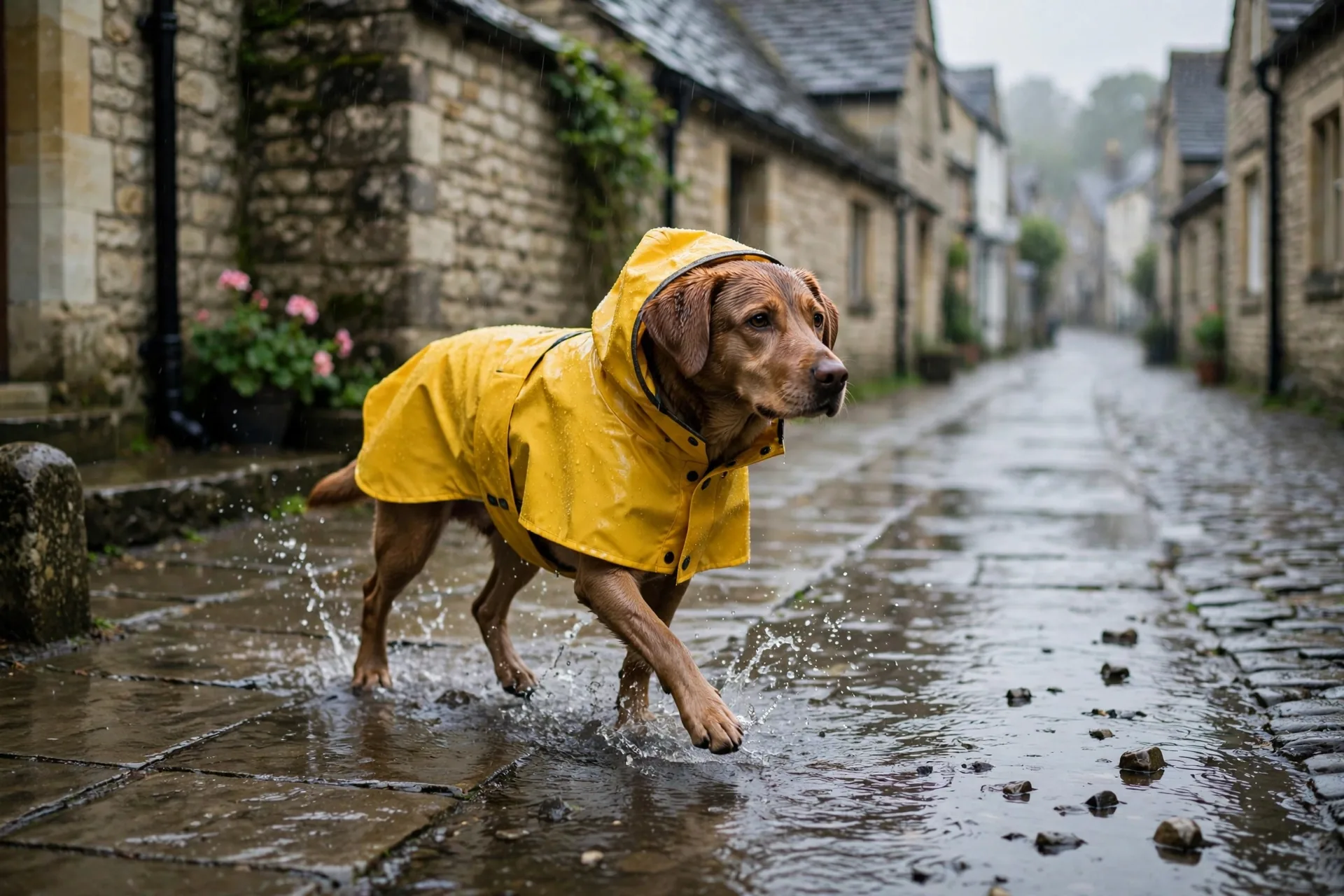
Ask experienced Labradoodle owners what a British holiday actually consists of and many will say: drying the dog. A large, absorbent coat, feathered legs and a beard that functions as a mobile water feature can carry a remarkable volume of mud and water into a property, and the only workable approach is a fixed routine at a fixed station. Set it up on arrival, by the door you will actually use: towels down, a paw-washer or bucket, a drying coat, treats for cooperation, and a mat where she stands until released. Every wet walk ends there, in the same order — paws, legs, belly, beard, ears — until the sequence becomes so automatic that the dog presents herself for it.
Scale your kit to the dog. Two ordinary towels will not dry a large wool-coated doodle; take several large microfibre towels, which absorb more and dry overnight, plus a towelling drying coat in her true size — measure her chest and back length, because a coat that fits a medium doodle will not close on a standard one. Properties with a dog shower, hose or utility sink are worth a genuine premium for this breed, and a portable shower that runs from a bottle or car outlet transforms lay-by stops on walking holidays. Our rainy-day gear checklist compares the drying and waterproof kit that earns its space in a car already full of large-dog equipment.
Cleaning the property as you go is part of the same routine, not a departure-day panic. Shake and air bedding outdoors where allowed, keep wet kit in the utility area rather than the living room, wipe floors after wet evenings, and do a midweek reset of towels and throws if the property provides spares. Owners sometimes worry that this sounds like work; in practice it takes minutes at a time and buys the thing the holiday is for — relaxation without a background worry about the deposit. A big doodle will get muddy. A well-run trip simply decides in advance where the mud is allowed to stop.
Temperament in public: big, friendly and occasionally overwhelming
The typical Labradoodle temperament — exuberant, affectionate, convinced that every human is a friend she has not yet greeted — is a delight at home and a management task in a crowded market town. Size changes the equation: a ten-kilogram dog bouncing towards a toddler is a nuisance, while a thirty-kilogram dog doing the same thing can knock a child over and frighten people who have no way of knowing her intentions are golden. On holiday, keep her on a lead in busy places, teach and reward a calm settle on a mat for cafes and pubs, and practise walking past people and dogs without greeting as a default, with greetings by invitation — including yours — rather than by launch.
Recall deserves honest assessment before any off-lead freedom. Many doodles have a strong retrieving instinct and a stronger social one, and a beach full of dogs or a field edge with rabbits can outbid a pocket of treats. Use enclosed dog fields, which can be hired by the half hour in much of Britain, for safe off-lead running early in the trip while you gauge her responsiveness in a new place, and keep a long line as the intermediate step on quiet walks. If she does slip away or a gate is left open, our guide to what to do if a dog is lost on holiday sets out the first steps; the preventive basics — a collar tag with your mobile number and current microchip details — should be sorted before you leave home.
Finally, give a sociable large dog structured downtime away from stimulation. Constant novelty — new people, dogs, smells and places every day — is tiring even for an extrovert, and overtired big dogs get mouthy, jumpy and deaf to cues they know perfectly well at home. A quiet afternoon in the cottage garden, a familiar chew, and an early night restore the dog everyone loves. Holidays are measured by dogs in naps as much as in miles, and a Labradoodle asleep upside down in a cottage doorway, thoroughly exercised and thoroughly dry, is the surest sign the planning worked.
The big-doodle checklist before you book and before you leave
Before booking, run the size audit: confirm weight and size limits in writing, verify fence height and garden security for a large dog, check for a utility area, hose or dog shower, choose ground-floor living where possible, and locate the nearest veterinary practice. Before paying for any attraction or transport, check its dog rules against her actual size rather than the word doodle, and book dog fields near your base for guaranteed off-lead exercise. If any answer is vague — dogs welcome, garden mostly enclosed, plenty of room — ask the follow-up question now, while the answer can still change your plans.
Packing scales up accordingly: food in a sealed container (a large dog's week of food is a significant object), a bed that genuinely fits her, at least three large towels and a correctly sized drying coat, brush and steel comb matched to her coat type, throws, a settle mat, a spare lead and collar, water and a big bottle for walks, and any medication with a margin. Add a long line, poo bags in bulk, and a photograph of her on your phone alongside her microchip details. Check the car arrangement with a trial load — dog, luggage and humans together — because the configuration that works on paper often fails in the driveway.
In the last few days, do a full grooming session or a professional groom, confirm the host has your arrival time and dog details, and plan the first evening to be short and simple: garden, station routine, supper, bed set up in its chosen corner. Big-dog holidays fail at the seams — the booking that assumed, the car that did not fit, the coat nobody brushed — and succeed in exactly the same places. Get the seams right, and a Labradoodle is one of the great British holiday dogs: tireless on the walk, ridiculous in the sea, and asleep across three quarters of the sofa by nine.
Practical questions
Before you go
How big do Labradoodles get? I am not sure what size mine will travel as.
Labradoodles vary more than almost any popular cross: depending on the parents, adults range from under ten kilograms to over thirty, and from miniature-poodle height to full Labrador or standard poodle height. For travel, ignore predictions and measure your actual dog — weight, shoulder height and bed size — then check those figures against property, crate, car and transport limits before you book.
Do Labradoodles shed on holiday?
Some do, considerably. Hair-coated Labradoodles shed much like Labradors; fleece and wool coats shed less loose hair but mat more readily and still leave hair around. Assume you will need throws, regular brushing and a tidy-up routine whatever coat your dog has, tell hosts honestly what to expect, and choose properties comfortable with large, hairy dogs rather than relying on a non-shedding promise.
Will a cottage that says 'dogs welcome' accept a large Labradoodle?
Not always — some properties apply weight or size limits, restrict dogs to certain rooms, or have gardens enclosed only to a standard suitable for small dogs. Always confirm your dog's weight and height with the host in writing before paying, ask what the fencing is, and check whether there is a utility area or outdoor tap for drying a large, muddy dog.
How much exercise does a Labradoodle need on holiday?
Most adults need well over an hour of real exercise daily — walks, play and often swimming — reflecting both parent breeds' working origins, though puppies and adolescents need gentler workloads to protect growing joints, so ask your vet about your dog. Plan destinations with long walks from the door, vary hard and easy days, and protect proper rest afterwards.
How do I dry a large Labradoodle after wet walks?
Set up a fixed station by the door with large microfibre towels, a paw-washer or bucket, and a drying coat in your dog's true size, and run the same paws-legs-belly-beard-ears routine after every wet walk. Properties with a dog shower or utility sink are worth paying extra for with this breed, and fleece or wool coats also need a brush and comb through once dry to stop damp curls tightening into mats.