No business in Looe paid for a mention here, and nobody in the town previewed these pages. Where a rule, a timetable or a seasonal date could shift, the wording points you toward the notice on the spot or the council page that governs it, rather than asking you to trust a date printed months ago.
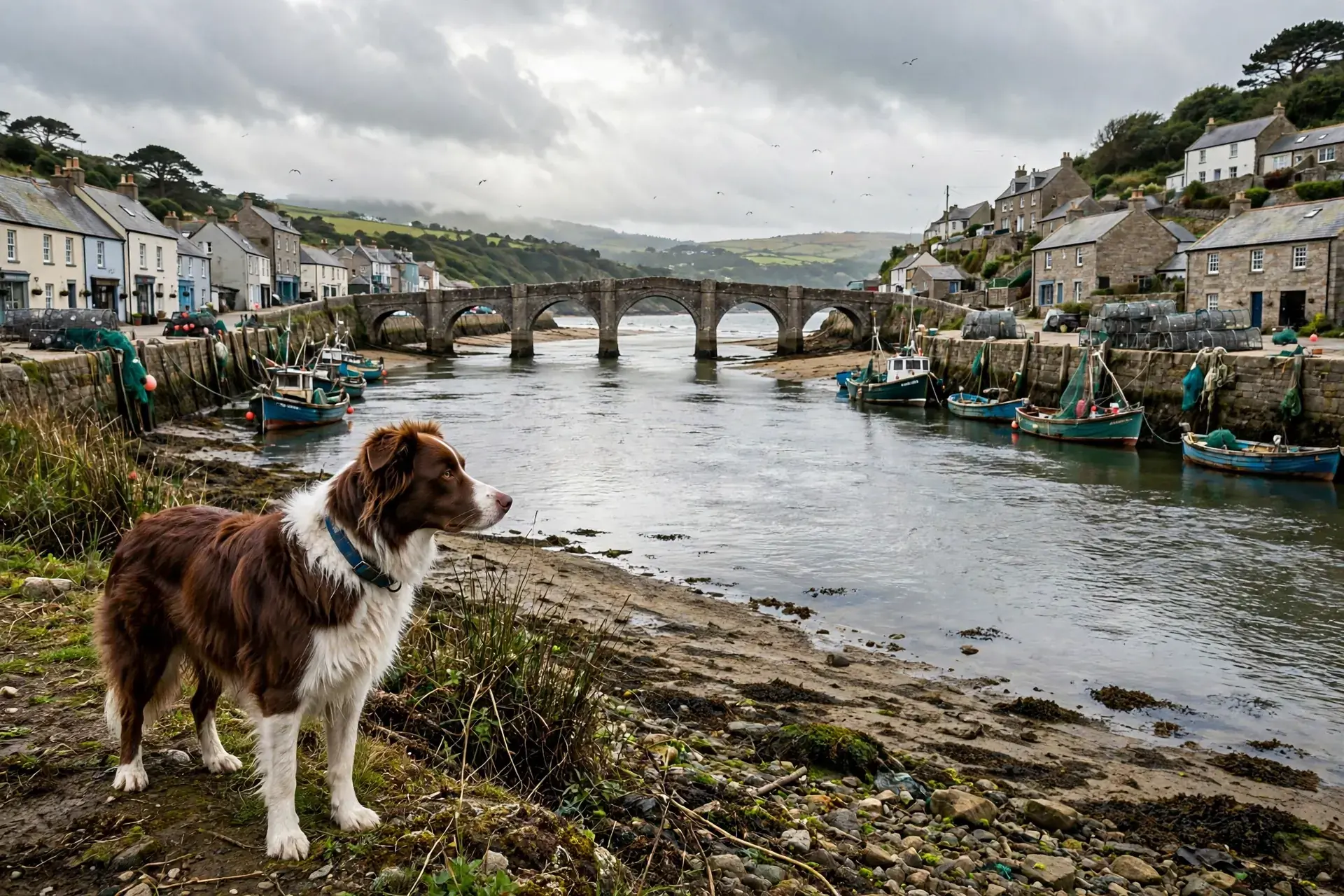
Picture two small fishing settlements staring at one another over a tidal river, stitched together by a seven-arched bridge. The eastern bank holds the harbour, the town beach and most of the footfall; the western bank holds a working quay, steep residential lanes and the long view back across the water. A dog gets a compact, scent-rich circuit in the morning, the South West Coast Path toward Talland Bay and Polperro in the afternoon, and the sand at Millendreath a short drive east when East Looe beach itself is under its summer daytime restriction. Tide times, summer crowds and that beach rule shape the day more than anything else.
Two towns, one river
Calling Looe a single town misses how the place actually works. East Looe and West Looe grew up as separate settlements on opposite banks of the River Looe, each with its own quay, its own cluster of fishermen's cottages and its own habits, and the split still shows in the way people move about. The eastern side carries the main harbour, the beach, the bulk of the shops and the summer throng; the western side stays residential, slower and quieter, with washing lines, garden walls and a quay where work still happens without an audience. Standing mid-bridge you can read both halves at once, which is why most first walks in Looe end up pausing there longer than planned.
That divided geography turns into a surprisingly generous dog walk. One bank offers harbour smells, fish crates, rope coils and café doorways; the other offers lane corners, garden hedges and the wide river view, and the bridge crossing between them gives a dog a change of air, sound and underfoot texture in under two minutes. A morning circuit can start among the boats on the east quay, cross the river, loop the west quay, and return by a different lane, so the route never simply retraces itself. Because the whole built-up area is small, an unhurried wander from one end to the other takes well under an hour, yet the density of doorways, steps, slipways and side alleys keeps a curious nose occupied far longer than the distance suggests.
Everything here follows the river. The Looe rises on the high ground of Bodmin Moor, threads a wooded valley past hamlets and old mills, then widens into a tidal estuary as it reaches the town. Twice a day the water remakes the scene: near high water, boats ride level with the quays and the river looks broad and still; near low water, the same stretch narrows to a winding channel between glistening mud and sand, with wading birds picking across it. Tide tables therefore belong in the same pocket as the lead and the water bottle, because they decide whether the beach below the town is sand or shingle, whether the fishing boats are afloat or sitting on the mud, and how much room there is to stroll beside the water at all.
Look at the buildings and the fishing past is still legible. Pilchards once drove the local economy, and the tall warehouses, former fish cellars, narrow yards and the old customs house on the east bank all date from an era when the harbour exported far more than it does now. The fleet has shrunk and specialised since then, landing crab, lobster and day-boat fish rather than filling the harbour with pilchard boats, yet the quay remains a workplace rather than a stage set. The other arrival route is the Looe Valley line, a single-track branch that drops down the wooded valley from Liskeard to a terminus a short stroll from the harbour. Liskeard with a dog covers the market town at the far end of that line, its moor-edge paths and its market-day bustle, and the two guides sit naturally side by side for anyone riding the train one way and walking back, or splitting a stay between valley and coast.
Timing matters more than distance in Looe. On a summer Saturday the streets between the harbour and the beach fill early, pavements narrow to single file in places, and a nervous or reactive dog will find the press of people, pushchairs, ice-cream queues and gulls hard work. The same streets at seven in the morning, or after the day visitors have driven away, feel like a different town: shutters half up, fishermen hosing the quay, a handful of locals walking dogs before work. Build the day around that shift. Walk the coast path or the river while the town is still quiet, eat when the lunch crowd peaks, then cross the bridge again in the evening when the light drops over the estuary and the gulls settle on the rooftops.
The bridge and the river
Seven stone arches carry the road across the Looe, and the crossing doubles as the town's viewing platform. From the middle you look upstream toward the tree-lined valley, downstream past the moored boats toward the harbour mouth and the open sea, and sideways into the cottage rows climbing both banks. The roadway is narrow and the footways narrower still, so crossing with a dog calls for a shortened lead, a steady pace and an eye on passing vans, particularly when summer traffic queues back from the bridge in both directions. Pause on the wider stretch if there is room, let the dog take in the river smell, then move on rather than lingering where pedestrians bunch up behind you.
Upstream from the bridge, the riverbank walk offers the gentlest outing in town. The path stays level, stays sheltered by trees and walls, and gives older dogs, puppies and anyone nursing a stiff joint a proper stretch without a climb. At high water the river slides close beside the path; at low water the exposed mud draws herons, egrets and curlews, and the walk becomes as much about watching as walking. The water itself is not a swimming spot: it runs deep in places, the current strengthens as the tide turns, and the mud at the margins can hold a paw or a boot. A dog that lunges toward ducks or waders needs a firm hold here, and river water is not drinking water, above all after heavy rain has washed the valley down.
Where the river meets the sea, the harbour splits into an inner basin crowded with fishing boats and an outer stretch that opens toward the bay. A slow lap of the quays, with stops on the benches, fills the best part of an hour and usually supplies its own entertainment: a crew unloading crates, a skipper coiling rope, a gull contesting a scrap, a boat easing out on the tide. The stone underfoot turns slick after rain or a wash-down, the edge drops straight to the water in places, and mooring ropes, chains, bollards and lobster pots sit exactly at nose height, so a loose lead is a poor idea here. Keep clear of fish boxes and bait tubs, steer around puddles on the quay, and never let a dog leap from the quay wall, however inviting the water looks on a hot afternoon.
Wildlife is the river's quiet reward, and it rewards patience rather than speed. Little egrets stalk the shallows on white legs, grey herons stand motionless at the mud's edge, oystercatchers pipe from the sandbanks, and shelducks paddle the channel at slack water. The best approach is to stop, sit on a bench or lean on the bridge parapet, and let the birds come to you. A dog that bolts across the mud after waders risks a soaking, a cut from hidden debris and a great deal of disturbance to protected birds, so hold the lead and let the watching happen from the path. Fishermen mending nets or sorting a catch are working, not performing, and their gear deserves the same wide berth you would give any workplace equipment.
Estuary weather has its own habits, and it can differ sharply from the forecast for inland Cornwall. A still morning in the valley can turn blustery on the headlands west of town, and sea mist sometimes drifts up the river on a summer afternoon, dropping the temperature and the visibility within minutes. Short-coated dogs feel that change quickly, so a dog coat tucked in the day bag earns its place, and a walk cut short is better than a long one endured. The bridge is always a short retreat away, the river walk stays sheltered when the coast path does not, and a dry café doorway beats a windswept cliff top on a day when the mist refuses to lift. Tide times and the day's forecast are worth a glance the night before, and any closure notice posted at the coast path entrance takes precedence over a plan made at home.
East Looe: harbour, beach and streets
Most visitors meet East Looe first, and the first impression is a squeeze of colour and noise: fishermen's cottages in pastel rows, shopfronts at pavement level, galleries, a bakery smell drifting across the street, and the harbour always a few steps away. The lanes climb in short, steep flights from the quay, so a sensible route goes up once and comes down by a different stair rather than repeating the sharpest slope. Cars squeeze through slowly where they can pass at all, and delivery vans thread the same gaps, which means a dog belongs on the building side of the pavement and well away from blind corners. An hour of unhurried wandering covers the centre, but the harbour, the beach steps and the side yards reward a slower pace.
The working harbour on this bank is where the town earns its living, and it repays a slow look. Day boats tie up along the quay, the morning landing happens while most visitors are still parking, and the smell of fish, diesel and salt hangs in the air long after the crates have gone. From the quay you can also see the Banjo Pier, the curved breakwater whose shape gives it its nickname, reaching out toward the sea and sheltering the harbour mouth. Boat trips board from here, the coast path leaves in both directions from near the harbour, and the small harbour beach sits just beside the quay. That little beach is handy for a paddle and a photograph, yet it is not the place to settle for a whole beach afternoon: it is small, it sits beside working boats, and its summer dog rule is the one to read on the sign before unclipping a lead.
East Looe beach itself, the sandy stretch at the foot of the town, is the beach people ask about before they arrive, and the honest answer depends on the calendar. Through the summer months the main sand is closed to dogs during the daytime, while outside that season the same beach opens up for long, empty walks with room to run. Winter and late autumn change the character entirely: the crowds vanish, the sand stretches further at low tide, and a dog can properly stretch its legs with the town quiet behind it. Summer visits still work if you time them for first light or for the evening, when the sand empties and the light turns warm, but the notice board at the beach steps is the authority on the day, and the council page for East Looe beach is the place to confirm which dates and which stretch of sand the restriction covers this year.
Shopping here is a browse rather than an expedition. The east bank holds food shops, a bakery, a fishmonger, gift shops and galleries within a few minutes of each other, and attitudes to dogs vary from one doorway to the next: some welcome a well-behaved dog inside, others ask you to wait at the threshold. Two people make browsing easy, one holding the lead while the other looks; alone, keep it brief, keep the dog where you can see it, and never leave it tied outside a shop for long in heat or in a crowd. The main street can feel congested when the day boats and the beach crowd overlap, so slip into a side lane when the pavement fills, and watch the junctions where vans turn in without much warning.
East Looe also holds most of the town's eating and drinking, which the later section covers in detail, and that concentration is a genuine convenience for dog owners. A proper lunch, a coffee and an evening drink are all possible here without returning to the car or leaving a dog behind, which is not a given in every Cornish resort. The town's mood shifts through the day in a predictable arc: fishermen and dog walkers own the early hours, day visitors fill the middle of the day, and the late afternoon brings the light that photographers wait for, with the crowds thinning and the harbour settling back into local hands. Shape your hours to that arc and the busy half of Looe feels far easier than its reputation suggests.
West Looe: quay, lanes and views
Cross the bridge and the tempo drops. West Looe is residential first and a visitor destination second, with a working quay, steep lanes of cottages, garden walls heavy with fuchsia in summer, and the long view back across the river to the east bank. Dogs often settle better here: there is less footfall, fewer queues, more corners to sniff, and the quay walk is flat enough for a slow, unhurried circuit. The same lap that takes half an hour at a march stretches to an hour once you stop for the view, the boats and the cats on the walls, and that slower rhythm is rather the point of this bank.
The west quay is the flat heart of this half of town, and it suits dogs that struggle with steps. Fishing boats moor along it, crates and nets appear and disappear with the tide, and the stone walkway runs level from the bridge toward the harbour mouth. It is also where the coast path westward begins in earnest: from the quay you can join the cliff path toward Talland Bay and on to Polperro, which our guide to Polperro with a dog covers in full, including the climbs, the viewpoints and the places to stop for water. Slick stone, a sheer drop to the water and ropes at dog height all argue for a close lead along the quay, and the same care applies at the slipways, where the surface stays wet long after the tide has gone out.
Above the quay, the lanes climb in steps and sudden turns, and exploring them is a pleasure best taken slowly. Cottages press close to the pavement, gardens spill over low walls, and every corner opens a different glimpse: a roofline, a chimney, a slice of river, the masts in the harbour below. The lanes are narrow enough that a long lead is a nuisance to everyone, and blind corners call for a short hold and a pause before turning. The reward for the climb sits at the top, where the view opens across the whole estuary, down to the harbour mouth and along the coast in both directions, and it is worth reaching even if you take the ascent in stages, with a rest on a wall and a drink of water for the dog.
Food and drink on the west bank are fewer in number and calmer in temper than on the east. Pubs and cafés with terraces above the river take dogs outside as a matter of course, and a dog that can settle under a table will find the slower pace here far easier than the bustle across the bridge. Inside, the position varies by room and by season, so a quick look at the venue's own page, or a phone call before setting out, avoids a wasted climb in the rain. The quay also remains a practical place to buy fresh fish when the boats have landed, and that small transaction, a chat with a fisherman and a bag of the day's catch, is as much a part of West Looe as any view.
What really separates the two banks is atmosphere rather than distance. East Looe is bright, crowded and full of holiday energy; West Looe is hushed, domestic and local, and the contrast is the reason to spend time on both rather than treating one as an afterthought. A dog that finds the east bank overwhelming will often relax within minutes of crossing the bridge, and a dog that has spent a busy morning among the boats will enjoy a dozy afternoon on the west quay. The best use of a day here is to split it: the east bank while the town wakes, the west bank while the crowds peak, and the bridge at dusk, watching the lights come on in the cottage windows on both sides of the river.
Beaches: East Looe, Millendreath and Talland
Three very different sands serve a stay in Looe, and choosing between them is mostly a matter of season, tide and how far you want to walk. East Looe beach is the town sand, handy and popular and subject to the summer daytime dog restriction already described. Millendreath, a short drive east past the headland, is a sheltered sandy cove with a stream, a car park and a family feel, and it draws dog walkers through much of the year. Talland Bay, reached on foot westward along the coast path from the West Looe quay, is a broader bay with a café and a car park, and it gives a dog the long run and the swim that the town beach cannot always offer. One town beach, one drive-to cove and one walk-to bay make a useful rotation across a week.
Seasonal rules on this coast are set locally, and they are the detail most worth getting right before a summer visit. Cornwall Council uses public space protection orders to restrict dogs on the main beaches of the busiest resorts during the daytime summer months, while leaving quieter coves and the ends of some beaches open. Dates, hours and the precise stretch of sand covered differ from beach to beach and can be revised, so last year's arrangement is not a safe guide to this year's. Our guide to dog-friendly beaches in the UK explains how those orders work, what a fine can involve, and how assistance dogs are treated, and it is worth reading before any summer beach trip. On the day itself, the notice board at the beach entrance and the council page for that beach are the two sources that matter.
East of Looe, the coast opens out into longer sands. Seaton and Downderry, a short drive along the coast road, are long, fairly level beaches where dog walkers are a familiar sight for much of the year, with car parks behind the shore and cafés within reach. Whitsand Bay, further east toward Plymouth, is a vast sweep of sand at the foot of steep cliffs, exposed to the wind and impressive at low tide, though the climb back to the car park is a serious one and the beach demands respect on a rough day. The pattern repeats along this coast: the larger and busier the resort beach, the more likely a summer restriction; the smaller and quieter the cove, the more likely dogs are welcome through the year. Plan a stay with that pattern in mind, and keep the coast path or the harbour in reserve for any day when the beach you wanted is closed to dogs.
Safety on these beaches deserves a deliberate pause, because the risks here are different from a flat resort sand. Give the foot of the cliffs a wide berth, since stone can fall without warning, and stay well back from the edge where the path runs above the beach. Currents around headlands and river mouths can be strong even when the water looks calm, and a ball thrown into deep water can pull a keen swimmer further out than intended. Scan the sand for fish hooks, broken glass and the fish remains that dogs love to find and eat, and watch for the signs of too much swallowed seawater: repeated vomiting, loose bowels and unusual tiredness after a swim mean a prompt call to a vet. Fresh water over the coat, a look inside the ears and between the toes for sand and small nicks, and a thorough towel-down before the drive home turn a beach afternoon into a comfortable evening rather than an itchy one.
Tide is the other half of beach planning around Looe, because the sands here are modest and the tidal range is large. At low water East Looe beach becomes a proper expanse and Talland Bay opens into a wide sweep; at high water both shrink to a narrow strip, and the sea can cross flat sand faster than a walker expects. Arrive a couple of hours before low water for the best of it, keep a ball game on the dry sand rather than at the water's edge as the tide turns, and never let a dog chase anything across a rising tide or into a deepening channel. A tide table checked the evening before, a glance at the beach notice, and a willingness to swap beaches if the timing is wrong will make the sands around Looe some of the easiest in Cornwall to enjoy with a dog.
Boats, the island and the river
From late spring into early autumn, small boats work out of Looe harbour on a mix of short river cruises, bay trips, fishing excursions and the crossing to Looe Island, and the dog rules differ by boat, by trip and by operator. The gentle river and bay cruises, which stay close to shore and last well under an hour, are the ones most likely to take a dog, while the longer fishing trips out into the bay generally do not. Nothing here is fixed across the season, so the only reliable step is to ring the operator and ask about that specific sailing, keeping a harbour-side alternative in mind if the answer is no. A dog left waiting does well with a bench, a view of the boats and a person to sit with, and the harbour supplies all three.
Looe Island, the low green island sitting just offshore from the town, is a nature reserve and a place apart. It is managed for seabirds, grey seals and wildflowers, and it opens to visitors only on certain days in the season, with a short boat crossing from the harbour and a limited number of places. Dogs are not taken onto the island, because ground-nesting birds and seal haul-outs are easily disturbed, so an island visit becomes a split day: one person crosses while the other walks the dog along the coast path toward Talland Bay, and the pair meet again for lunch in town. Crossing days, sailing times and booking arrangements change with the season and the trips can fill, so confirm the current position on the island's own pages before making plans around it, and do not build a whole day on a sailing that has not been booked.
Fishing trips are a different proposition from the gentle cruises, and they suit a different kind of day. They run for several hours, head well out into the bay, and involve rods, bait, tackle and a working deck, which is no place for a dog and no place for a dog's day to be planned around. Keen anglers will find several operators working from the harbour, and the practical route is to enquire at the quay, settle the sailing time in advance during the busy weeks, and sort out who stays ashore with the dog before the morning starts. For everyone else, the short cruises give the view that matters, the town and the coast from the water, without the long commitment or the working deck.
The railway offers the river valley from a different angle. The Looe Valley line runs from Liskeard down through the wooded valley to a terminus a short stroll from the harbour, and the journey itself, past river bends, fields and small halts, is one of the prettiest branch-line rides in the south west. Dogs travel on the trains under the operator's conditions, which are worth confirming when you buy the ticket, and the train makes a practical car-free arrival as well as a wet-weather outing. Step off at Looe station and the car parks, the town centre and the harbour are all within a few minutes on foot, so a train ride and a town walk combine without any further transport at all.
Weather and sea state decide whether any boat sails, and a trip can be called off at short notice when the wind picks up or the swell builds. Ask the operator on the morning of the sailing rather than relying on a booking made days earlier, and keep a land-based fallback in mind: the coast path, the river walk, the harbour benches and the town's cafés all make a genuine day on their own. If a cruise does take your dog, bring fresh water and a bowl, a familiar blanket for the dog to lie on, and a life jacket if the operator advises one. Hold the lead on deck, keep the dog away from the gunwale, and watch for seasickness, which affects dogs as readily as people and is kinder dealt with on shore than mid-bay.
Eating and drinking on both banks
Fish is the obvious starting point in a town where the boats land in the morning and the kitchens cook the same day. Fish and chip shops, cafés, pubs and small restaurants line both banks, and a good number of them welcome dogs, above all in gardens, on terraces and in bar areas overlooking the harbour or the river. The practical result is that a dog owner can eat properly here, morning, noon and evening, without returning to the car or leaving a dog tied outside. That sounds unremarkable until you have tried it in a resort where every doorway says no, and it is one of the quiet reasons Looe works so well as a base.
Fish and chips eaten out of doors is the classic Looe meal with a dog. Buy a takeaway, find a bench on the quay or by the harbour beach, and eat with the boats in front of you and the dog settled beside your feet. Keep the food well out of reach, because hot fat and fish bones are both hazards, and keep the lead short while you eat, because gulls patrol the harbour with professional patience and will snatch anything left unwatched. Take every scrap of litter with you when you leave: the harbour is a workplace, the gulls need no encouragement, and a tidy bench is what keeps the next dog owner welcome there too. Eating indoors is possible in some places and not in others, so ask first, and a takeaway on a bench is often the easier and more enjoyable choice in any case.
Pubs are the other half of eating in Looe, and the town's traditional pubs on both banks are a natural stop after a coast walk. A garden or a terrace is the easiest place to settle with a larger dog, and a bar area is usually the fallback when the weather turns, though the line between bar and restaurant varies from one pub to another and can shift between lunch and dinner. A dog that settles quietly under a table on a blanket from home tends to get welcomed back, so bring that blanket, order without rushing, and keep hold of the lead even where the room feels relaxed. Dog policies change with the season and with the management, so a glance at the pub's own page or a quick call before setting out saves a climb in the rain to a door that has changed its mind.
Cafés deserve the same attention as pubs, because the difference between a café that tolerates dogs and one that genuinely welcomes them shows in small details: a water bowl by the door, a biscuit on the counter, staff who greet the dog first, a table where a dog can settle without blocking the way through. Outdoor seating is the simplest option in summer, and the harbour and river terraces give a dog a view to watch while you eat. Inside, choose a table near the door or in a corner, settle the dog on a mat brought from home, and order promptly so the wait has a purpose. A dog that has just walked the coast path will usually sleep through lunch; a dog that has sat in the car all morning will not, so walk first and eat second, every time.
A longer stay turns the food question into a reason to base yourself here rather than pass through. Food shops, a bakery and a fishmonger on the east bank, plus a supermarket a short walk from the centre, make a self-catering week straightforward: cook with local ingredients some nights, eat out on others, and drive inland for a change of scene when the coast needs a rest. Bodmin with a dog covers the historic market town inland, its moor walks, its jail and its steam railway, and it pairs well with this guide for a week split between coast and moor. A few habits make eating out easier anywhere: feed the dog before you go, carry water and a collapsible bowl, bring a mat that marks the dog's place, and if the dog is having a difficult day, take the food away or eat outside rather than forcing a long sit. A takeaway on a harbour bench is no failure of a holiday, and the dog will prefer it to a tense hour indoors.
Staying over and parking
Looe earns its keep as a base for reasons that have little to do with scenery and everything to do with practicality. Food shops, a supermarket, a pharmacy, cash machines, places to eat, a station and a harbour to walk around all sit within a few minutes of each other, so a self-catering stay here runs without the long drives that a smaller coastal village demands. Arrive, park the car, walk to the shops, cook dinner, cross the bridge with the dog in the evening, and repeat the pattern the next day with a different walk. For dog owners, that ease of daily life is worth as much as any view, and it is what makes a week here feel restful rather than logistically tiring.
Places to stay in and around Looe span hotels and bed and breakfasts in the town, self-catering cottages and flats, holiday parks in the surrounding countryside and farm stays a short drive away, and dog-friendly choices exist in every category. The details are what matter, and they are worth pinning down before money changes hands. Ask whether dogs are welcome in the exact room or cottage being booked, rather than in the property in general, and how many dogs that covers. Ask whether there is a charge, whether it is per dog or per stay, and whether any size or breed conditions apply. Ask about the garden: is it enclosed, how high is the fence, is there a gate a determined dog could push open? Ask whether a dog may be left alone in the room, and for how long, because the answer decides whether dinner out is possible. And ask about the floors: hard floors forgive a muddy walk far better than pale carpet, and a ground-floor room suits an older dog far better than a staircase. Our guide to dog-friendly holiday parks in Cornwall works through the park option in detail, including layout, beach rules and August driving times.
Self-catering often suits a dog stay in Looe best, because it gives a kitchen, a garden or terrace, and the freedom to follow the dog's routine rather than a hotel timetable. Look for a cottage with a genuinely enclosed garden, a washing machine for muddy towels and bedding, and a location within walking distance of the harbour, since a town cottage with a direct path to the quay is worth more than a prettier one that needs a drive to every walk. Holiday parks and campsites around the town can work well for families, but the same questions apply: dog numbers, charges, enclosed space, and the rules on leaving dogs unattended. In a caravan or a lodge, check the steps and the decking as well, because a dog that struggles with steps will struggle every time it needs to go out in the night.
Parking in Looe needs a plan rather than optimism. The town centre offers very little parking, the streets are narrow, and larger vehicles find the turns and the passing places hard work. The practical answer is the car park at Millpool, a large site on the edge of town, together with the car parks near the station, which put the harbour and the town centre a short walk away. Charges and maximum stays apply and they change, so confirm the current prices and limits on the council's pages before setting off. Arrive early in summer, on bank holidays and at weekends, when the sites nearest the harbour fill by mid-morning. Anyone staying in town should ask the accommodation about parking before booking, because some cottages come with a space and some do not, and that difference matters more in Looe than in most Cornish towns. On a warm day a parked car can turn dangerously hot within minutes, so the dog stays with you rather than waiting in the vehicle, even with a window cracked open.
A handful of practical points are worth settling on arrival. There is a veterinary practice in Looe, so save its number in your phone when you arrive, and save the number of the nearest out-of-hours emergency vet as well, rather than searching for either in a hurry. Pet supplies and dog food are available from shops in town and from the supermarket, so running out is an inconvenience rather than a crisis. Mobile signal is generally good in the town and patchy on the remoter stretches of the coast path, so download an offline map before setting out. In winter, check that the cafés, pubs and attractions you want are open, because some reduce their hours outside the summer season, and the coast path can be quiet and muddy after heavy rain. A sensible packing list runs to a short lead and a longer one, a harness that fits, water and a collapsible bowl, a towel, a drying coat and a blanket for the car, poo bags, a coat for a short-coated dog, and the dog's usual food and medication.
A sample weekend shows how the pieces fit together. Arrive on Friday afternoon, park at Millpool, and take a short evening stroll across the bridge so the dog learns the smells of both halves of town before dark. On Saturday morning, start early and walk the coast path west to Talland Bay, eat lunch there, and return in the afternoon when the path has quietened. On Sunday, drive to Millendreath for a low-tide beach morning, stop in Looe for a fish supper, and finish with a slow circuit of both harbours before the drive home. That pattern gives a cliff walk, a beach morning and a harbour day, with a different kind of scenery each day and never more than a few miles of driving. If the weather turns, swap the days around: the cafés and shops are a genuine fallback, the Looe Valley line makes a lovely wet-weather outing, and the river walk is the best sheltered route in the area. Basing yourself in Looe means nothing is far away and nothing depends on a single plan working perfectly, which is exactly the flexibility a trip with a dog needs.
Practical questions
Before you go
Is Looe a good place to visit with a dog?
Yes, and it suits dogs better than many Cornish resorts because the town is compact, the harbour and river walks are short and level, and the coast path runs both ways from the quays. Expect narrow, busy streets in summer, so hold a short lead through the centre and favour early mornings and evenings for the quietest wandering, when the day visitors have gone and the town belongs to its residents again.
Are dogs allowed on East Looe beach?
The town beach is under a summer daytime dog restriction, so dogs are kept off the main sand during the day in the summer months, while outside that season they have far more freedom there. Read the notice board at the beach steps on the day, and look up the council's current page for that beach before you set off, since the dates and the stretch covered can be revised from one year to the next.
Can I walk the coast path from Looe with a dog?
Yes. The South West Coast Path leaves Looe in both directions: west over the cliffs to Talland Bay and on to Polperro, and east toward Seaton and Downderry. Both directions involve steep ground, steps and exposed edges, so keep the lead short where the path runs near a drop or past grazing animals, take drinking water for the dog, and read the notices posted at the path entrance for any closure or diversion in force.
Can I take my dog on a boat trip from Looe?
It depends on the boat. Short river and bay cruises are the trips most likely to take a dog, while fishing trips generally do not, and the crossing to Looe Island is a no-dogs trip because the island is a nature reserve. Ring the operator before you book, and if the dog cannot sail, work out which of you stays ashore with it while the other goes out.
Where should I park in Looe with a dog?
Use the large car park at Millpool or the car parks near the station, on the edge of town, and walk in from there, because central streets are narrow and central parking is very limited. Look up current charges and maximum stays on the council's pages before you travel, get there early on summer weekends, and keep the dog with you rather than waiting in a parked car once the sun is out.