This guide is independent and contains no paid placement. Shop and market arrangements can change, so check signs and staff advice on the day.
Malton works best with a dog when market day is treated as a short, structured outing, not an all-day browse. Arrive before the main crowds, walk the wider edges of the market on a short lead, keep the dog away from food stalls, and finish with a quiet lane walk where the dog can sniff, toilet and settle without constant stimulation.
Read the market-day rhythm first
Malton is widely described as a food town, and that reputation shapes the whole visit. On a busy market day the centre fills in waves: stallholders setting up, early shoppers moving with purpose, then a slower, denser crowd as the morning goes on. For a dog, those waves matter more than any single shop or stall. A dog that copes well with a quiet street at nine in the morning may find the same street difficult at eleven, when trolleys, pushchairs, dogs, children and food smells all arrive at once. Planning around the rhythm, rather than fighting it, is the single most useful skill for a Malton visit.
Start by deciding what the outing is for. If the aim is a short market visit, keep it short. If the aim is a longer day, split it into distinct parts: a calm arrival walk, a brief market loop, a cafe or bench stop, and then a countryside lane or quiet street walk. Dogs settle better when stimulation rises and falls in that pattern, rather than staying high for hours. It also helps to agree a retreat plan before you arrive. Know where the car is, which quiet street leads away from the centre, and at what point you will leave the market even if shopping is unfinished. A clear exit removes the pressure to keep going when the dog is clearly tired.
Market days also vary with weather and season. Rain thins the crowd but creates wet pavements, muddy paws and umbrellas at dog head height. Sunshine brings more visitors, more outdoor seating and more dropped food. Cold, bright Saturdays can be deceptively busy because everyone has the same idea. None of these conditions makes Malton unsuitable for dogs, but each changes the tactics: shorter loops in rain, earlier starts in sunshine, and extra care around umbrellas, bags and trailing leads when pavements are crowded.
A calm route through the market
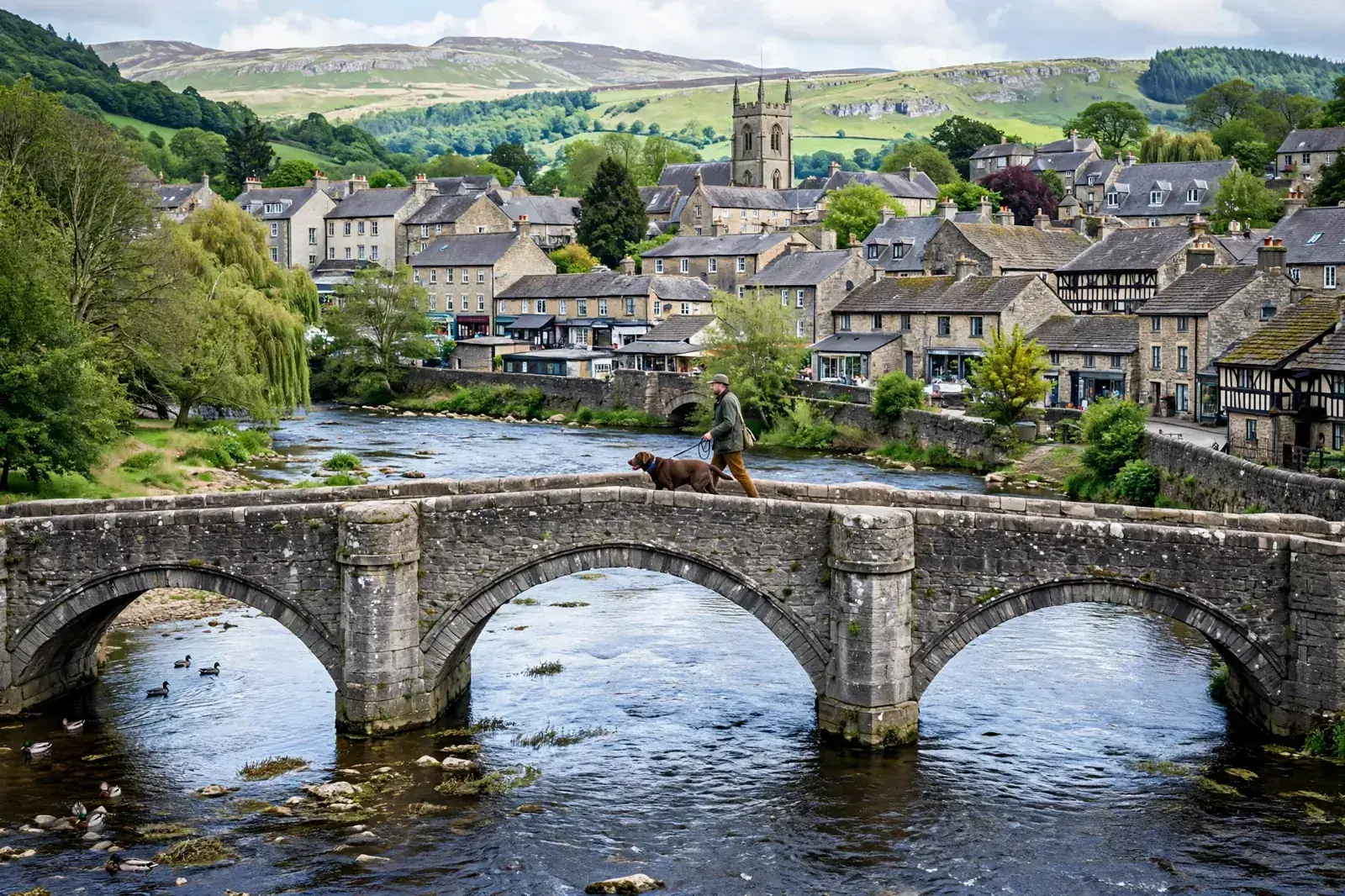
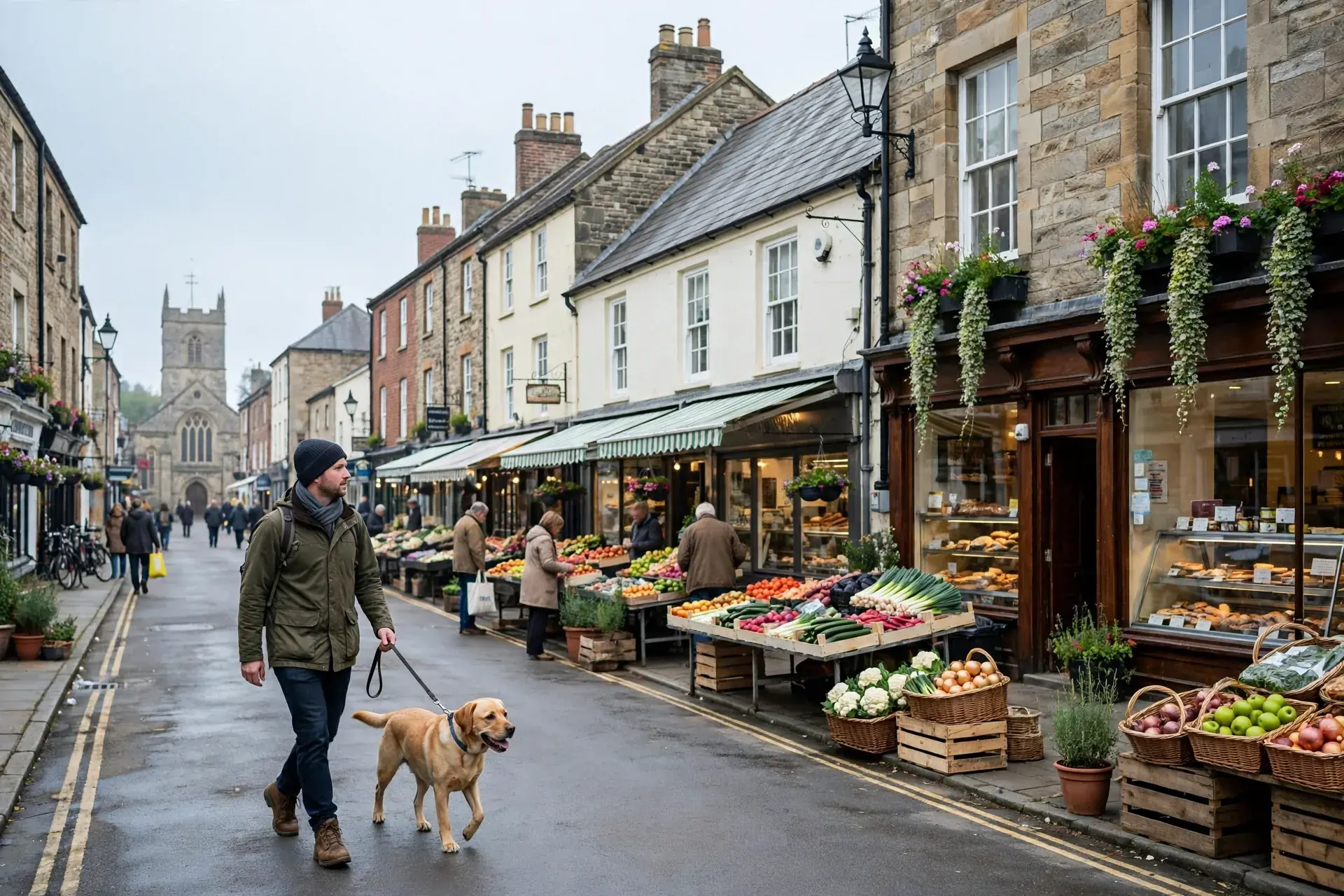
Walk the town in a loop that starts away from the densest stalls. Begin on a quieter side street where the dog can toilet, sniff and adjust to the sounds of the town without immediately facing a crowd. Then approach the market from its edge, rather than diving into the middle. Edge routes usually offer more space to step aside, a clearer view of what is coming, and an easier escape if a larger group, another dog or a delivery vehicle blocks the way. Keep the lead short through the market itself, with the dog on the side away from stalls where possible, and avoid letting the lead trail across the pavement where shoppers can trip over it.
Move at a steady pace and pause only where there is room to stand aside. Stopping in the middle of a narrow aisle to read a price list, chat to a stallholder or take a photograph creates a bottleneck and puts the dog in the path of everyone trying to pass. Instead, step to the side, tuck the dog close, and keep pauses brief. If the dog starts pulling, panting heavily, yawning repeatedly or scanning constantly, treat that as information, not disobedience. It usually means the environment has become too intense, and the right response is a quiet side street, a drink of water and a few minutes of sniffing, not more training in the middle of the crowd.
Think about other dogs as part of the route, not just a chance encounter. Market towns attract many dogs, and narrow pavements force close passes that some dogs find stressful. Cross to the wider side of the street when another dog approaches, increase distance before the dogs meet, and do not allow nose-to-nose greetings in a crowded aisle. A dog that is calm on a wide lane may still react when cornered between a stall and a crowd, so distance and space are more useful than any command. For more on lead rules and close passes, see our guide to dog on lead law in the UK, and for market visits generally, our dog friendly markets guide covers crowd tactics in more detail.
Food smells, begging and dropped food
Food is the main reason Malton is both attractive and demanding for dogs. Cooked meat, cheese, bread, cakes and street food create a dense wall of scent that is far stronger at dog nose height than at human height. A dog that normally walks politely past a single cafe may pull hard towards a row of food stalls, not because training has failed but because the scent load is many times higher. Expect that difference, and plan for it, rather than being surprised by it. Carry high-value treats of your own so you can reward the dog for turning away from a stall, and use them before the dog fixates, not after it is already lunging.
Dropped food is a separate hazard. Market pavements collect crumbs, bones, wrappers, fruit stones and food that has fallen from bags. Cooked bones, onions, grapes, chocolate and heavily spiced food can all be harmful, and even harmless food eaten quickly can upset a stomach or trigger guarding behaviour in a crowded place. Teach a reliable leave cue at home, keep the dog's nose off the ground in the busiest stretches, and scan ahead for spills near food stalls. If the dog does eat something unknown, note what it was, how much, and when, and seek veterinary advice promptly if the food could be toxic or the dog shows vomiting, diarrhoea or distress.
Begging is best managed by routine, not by scolding in the moment. Dogs beg at markets because it often works: someone offers a scrap, a stallholder is friendly, or a child shares food. Decide in advance that market food is not dog food, and make that rule consistent for everyone in the group. Reward the dog for lying calmly beside a bench or cafe table instead, and keep the dog's own treats in an easily reached pocket so calm behaviour can be reinforced immediately. If a stranger offers food, a polite refusal protects the dog and avoids an awkward moment, and most people understand when the reason is explained briefly.
Beyond the stalls: quiet lanes
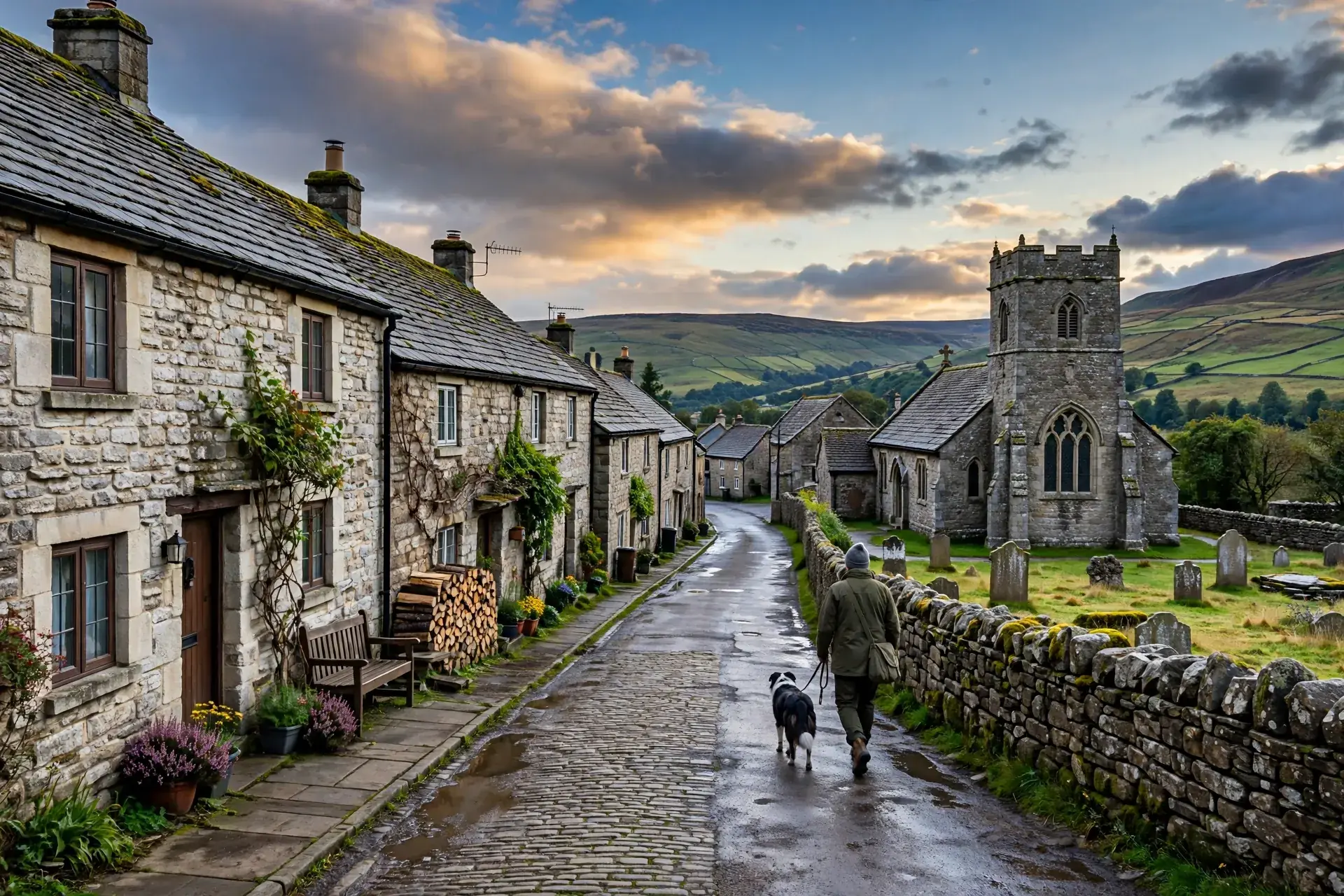
The most valuable part of a Malton day for many dogs is the walk after the market. Once the stalls are behind you, quieter streets and lanes beyond the centre give the dog space to sniff, toilet and decompress without constant decision-making. Sniffing is not wasted time: for many dogs, a slow sniffing walk is more tiring and calming than a brisk march, because it lets them process the many scents encountered in town. Allow the dog to stop, investigate verges and hedges, and choose a comfortable pace on these quieter stretches, provided the route is safe and the dog remains under control.
Choose lanes with care. Country lanes around market towns often have no pavement, occasional farm traffic and field entrances where livestock may be present. Keep the dog on a lead near roads and livestock, step onto the verge for passing vehicles, and check the official guidance before you travel if a route crosses farmland or a field with animals. Walk on the side facing oncoming traffic where there is no pavement, wear visible clothing in poor light, and avoid narrow bends where a driver cannot see you early. A short, safe lane loop is worth far more than a long, stressful road walk, especially after a busy market morning.
Time the transition thoughtfully. Dogs that go straight from a crowded market into a car often carry that arousal home, while dogs given twenty or thirty minutes of quiet walking usually settle much faster. Use the lane walk to offer water, allow a toilet stop, and let the dog's breathing and body language return to normal before the next activity. If you plan a second town stop later in the day, that decompression walk becomes even more important, because it resets the dog between two stimulating episodes rather than stacking them together.
Cafes, shops and settling down
Cafe stops in Malton need the same planning as the market walk. Outdoor seating is often easier for dogs than a busy indoor room, because there is more space, fresher air and an easier exit. Indoors, ask staff where dogs are welcome, choose a table near a wall or corner rather than a main walkway, and settle the dog on a mat or blanket from home. A familiar mat gives the dog a clear place to lie and a scent cue that means rest, which is far more effective than expecting a dog to lie on a bare floor in a new, food-filled room. For general cafe etiquette, our guide to dog friendly cafes explains how to check policies before you go.
Food shops deserve a separate check. Some independent food shops welcome dogs, others restrict access because of food hygiene rules, and policies can differ between a shop's entrance, its seating area and its counter. Look for a sign at the door, ask politely, and do not assume that a dog welcome in one shop will be welcome in the next. Where a dog cannot enter, plan who stays outside with the dog, and never tie a dog unattended outside a busy shop. A dog left alone in a market town is at risk from theft, stress, other dogs and food offered by strangers, and the worry will spoil the shopping anyway.
Settling down is a skill that improves with practice, and market towns are a good place to practise it in small doses. Start with a short cafe stop of ten or fifteen minutes, reward calm lying, and leave while the dog is still succeeding rather than waiting until it becomes restless. Over repeated visits, the dog learns that cafes mean a mat, water and quiet time, not constant excitement. If the dog cannot settle, shorten the stop, take a quiet walk, and try again later. Forcing a long, restless cafe visit teaches the dog that cafes are stressful, while a short successful visit builds the habit you actually want.
Parking, water and practical stops
Parking shapes the Malton visit more than most visitors expect. On market days, central car parks fill early, and a long walk from a distant car park with a dog that needs the toilet is a poor start. Arrive early if possible, note the exact location of the car, and plan the first toilet stop before entering the market. Public toilets, water points and bins are worth locating early, because a dog that has already toileted and drunk will cope far better with a busy street than a dog that is still bursting. Carry water and a portable bowl even in cool weather, because market walking, excitement and warm coats can dehydrate a dog quickly.
Think about the car itself on warm days. A car parked in sunshine heats rapidly, and dogs must never be left in a hot car, even with a window open. If the visit includes shops where the dog cannot enter, plan for one person to stay with the dog, or choose a different day, rather than leaving the dog in the vehicle. In winter, the reverse problem applies: a dog waiting in a cold car after a wet walk can chill quickly, especially smaller, older or short-coated breeds. A drying towel, a coat for the dog if it normally wears one, and a prompt return to a warm place all matter.
Poo bags, spare bags and a small towel belong in a pocket, not in the car. Market pavements, cafe floors and quiet lanes all need prompt clean-up, and carrying bags visibly also signals to other visitors that dog owners are taking responsibility. If a bin is full or absent, bag the waste and carry it to the next bin rather than leaving it beside a stall or on a verge. Small courtesies like this keep market towns welcoming for dogs, because traders and other shoppers notice them.
Seasons and weather in Malton
Spring and early summer bring longer days, more outdoor seating and busier markets, which is good for a relaxed visit provided you arrive early. Summer heat needs extra care: pavements can become hot underfoot, dogs need shade and water, and brachycephalic breeds, older dogs and overweight dogs overheat faster than their owners expect. Walk in the cooler morning, choose shaded streets, test pavement temperature with your hand, and cut the market loop short if the dog is panting heavily. Autumn markets often feel calmer, with harvest produce, cooler air and fewer crowds, although wet leaves on pavements can be slippery for older dogs and for owners carrying bags.
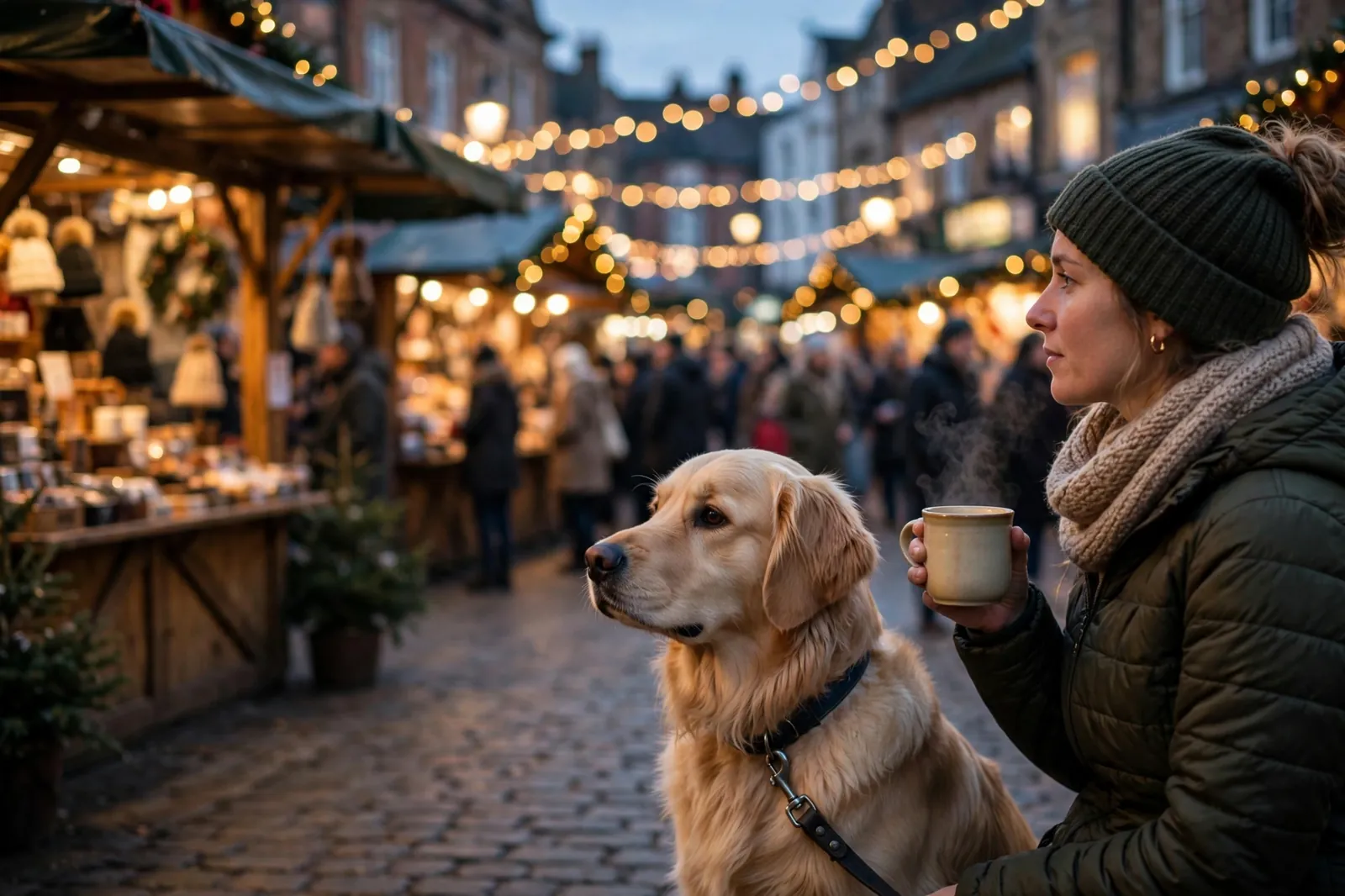
Winter market visits can be surprisingly pleasant for dogs that enjoy cool air and quieter streets, but they bring wet paws, salted pavements and darker afternoons. Rinse paws after walking on gritted or salted surfaces, dry the dog thoroughly before a cafe stop, and consider a coat for short-coated dogs that shiver in wind. Christmas and festive markets, where they occur, are a different experience again: denser crowds, louder music, more food stalls and more children, all of which raise the stimulation level sharply. A festive market is best treated as a very short visit, or avoided altogether for dogs that find crowds difficult.
Rain deserves its own plan rather than a cancellation. A waterproof coat for the owner, a towel for the dog, and a route that avoids the most exposed, wind-blown streets will make a wet market visit manageable. Umbrellas at dog height, wet bags trailing on pavements and puddles full of unknown debris are the main hazards, and all are easier to manage on a short lead with the dog on the inside of the pavement. After rain, check paws for grit, cuts and irritation, and dry the dog before putting it back in the car, where wet fur and heating can create a stuffy, uncomfortable journey home.
Which dogs find Malton easiest
Confident, social dogs that enjoy people, tolerate close passes and can settle on a mat usually find Malton straightforward, provided the visit is kept to a reasonable length. Young, excitable dogs can also enjoy the town, but they need shorter market loops, more frequent quiet breaks and clearer management around food, because their impulse control is still developing. Puppies in particular should have very short market exposure, with plenty of rest, because a long, overstimulating morning can affect sleep and behaviour for the rest of the day.
Reactive, anxious or noise-sensitive dogs need a different plan, and Malton can still work if the plan is honest. Visit on a quieter weekday if possible, keep the market loop to a few minutes, use wide streets and quiet lanes for most of the walk, and avoid peak hours entirely. A dog that reacts to other dogs will cope better with distance, early starts and a route that avoids narrow aisles than with any amount of on-the-spot training in a crowd. If the dog's stress signs escalate despite those measures, leaving early is a success, not a failure, because it protects the dog's future confidence.
Older dogs, dogs with arthritis and dogs recovering from illness benefit from level routes, frequent rests and short distances between stops. Market pavements are generally level, which helps, but standing for long periods while owners browse can be tiring, and cold or wet pavements stiffen older joints. Bring a mat for cafe stops, plan bench breaks, keep the total walking distance modest, and watch for slowing, lagging or reluctance to continue, which are all signals to shorten the day. A shorter, calmer Malton visit that ends with a settled dog is a better outcome than a long visit that ends with a limping, exhausted companion.
Finally, remember that Malton is a starting point, not a test. If the market feels too busy on the day, the quiet lanes, a bench with a view, or a short drive to a calmer village can still make a good day out. The best market town visits are the ones where the dog's needs set the pace, the shopping fits around the dog, and everyone goes home calm. That approach keeps Malton welcoming for future visits, for your dog and for the many other dogs that will follow the same streets.
Practical questions
Before you go
Is Malton market day a good time to visit with a dog?
It can be, if you plan around the crowds. Visit early, keep the dog on a short lead, use the wider edges of the market rather than the busiest central aisles, and build in a quiet walk afterwards so the dog can decompress.
How do I stop my dog begging at food stalls in Malton?
Keep the dog on the side away from stalls, carry treats of your own, reward calm behaviour before the dog fixates, and move on promptly rather than lingering beside cooked food. Never feed market food to a dog without checking ingredients and portion size.
Where can a dog walk quietly near Malton town centre?
Look for quieter residential streets and lanes on the edge of the centre, then a short countryside lane beyond the town. Check local signs for livestock and lead rules, and check the official guidance before you travel if a route crosses farmland.
Are dogs welcome inside Malton food shops and cafes?
Policies vary from shop to shop and can change, so check the door sign or ask staff before entering. Many food businesses welcome dogs in outdoor seating areas, while indoor food preparation areas may have stricter rules.
What should I pack for a market town walk in Malton?
Pack a short lead, water and a portable bowl, poo bags, a towel for wet paws, treats for calm behaviour, and a mat if your dog will settle at a cafe table. A longer walk after the market also needs a lead suitable for lanes and open ground.