This guide is independent and contains no paid placement. Hire prices, site fees and rules change often, so treat every figure as a planning estimate and confirm the current terms before you book.
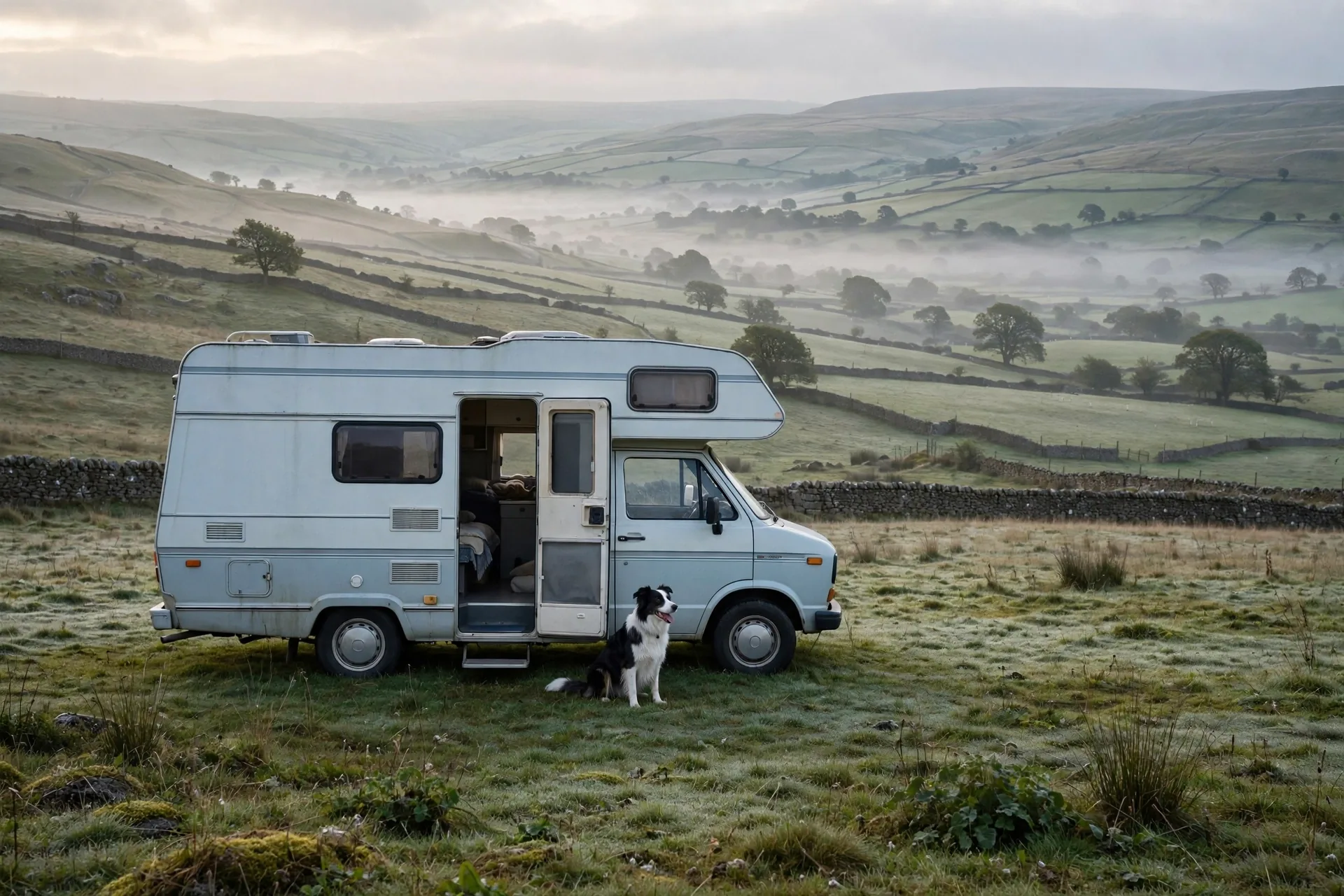
A motorhome suits dogs because the living space stays constant while the view changes: same bed, same smells, same routine. Success depends on three things — a layout with a safe, restrained travel spot for the dog, sites booked ahead in peak season, and a daily rhythm of proper walks rather than motorway-service sniffs.
Why motorhomes suit dogs
What problem are you actually solving when you take a dog in a motorhome? Mostly, it is the problem of novelty. Hotels change the room every night, cottages change the smells every stay, and every change asks your dog to settle all over again. A motorhome removes that tax. The dog sleeps in the same corner, eats from the same bowl in the same spot, and hears the same door sounds whether you are parked in the Cotswolds or on the Northumberland coast. For nervous travellers, that consistency is worth more than any single destination on the itinerary.
There is a second, quieter benefit: control over the day. Nobody knocks with a breakfast tray, no housekeeping schedule dictates when you vacate the room, and if the dog needs a 6am walk because the seagulls are shouting, you simply open the door and go. Meals happen when the dog has been exercised, not when a dining room dictates. Owners of reactive dogs rate this highest of all, because the gap between your door and your vehicle is measured in steps rather than hotel corridors full of strangers and luggage trolleys.
None of this means a motorhome is automatically easy. Space is tight, storage is finite, and a wet dog in a six-metre van is a very different proposition from a wet dog in a cottage hallway. The sections below work through the decisions in the order they actually arise: choosing the vehicle, travelling legally and safely, booking the right pitches, and building a routine that keeps both the dog and the van pleasant to live in.
Layout and hire choices
Start with the floor plan, not the brochure photographs. The question that matters is where the dog travels, where the dog sleeps, and whether those two places can be the same spot. Fixed-bed layouts give the dog a permanent den underneath or beside the bed, which settles many dogs quickly. Dinette layouts convert for sleeping, which means the dog's bed gets packed away every morning — workable for a calm adult, wearing for a puppy that needs a constant base. Look for a clear stretch of floor at least as long as your dog stretched out, away from the kitchen units and the cab pedals.
Hiring before buying is the sensible route for almost everyone, and hire fleets are used to dogs — but policies vary sharply. Some hire companies welcome dogs with a modest cleaning charge, others cap the dog's size, and a few prohibit pets entirely in their newest vehicles. Ask specifically about the insurance excess and whether pet damage is treated differently from ordinary wear. A chewed seat belt or a scratched door panel can be charged at full replacement cost, so photograph the interior at collection with the dog's likely contact points in frame.
Size deserves honest thought. A compact two-berth van conversion is nimble on narrow lanes in Devon or the Lake District and cheaper to run, but offers nowhere for a large dog to be out of the way while you cook. A coachbuilt motorhome over six metres gives separate zones — cab, living, sleeping — at the cost of trickier parking and higher site fees on some pitches. If your dog is over 25 kilograms, measure the door width and the step height as carefully as the bed sizes; an older dog that cannot manage a high step will need a ramp, and ramps need storage space too.
Road rules and safe travel
The legal starting point is restraint. The Highway Code advises that dogs in vehicles should be suitably restrained so they cannot distract the driver or injure anyone in a sudden stop, and travelling with an unrestrained dog can also jeopardise your insurance and, in some circumstances, be treated as careless driving. Our detailed explainer on driving with a dog and UK law covers the rules in full. In a motorhome the practical options are a crash-tested harness clipped to a seat belt in the dinette, a secured crate fixed so it cannot slide, or a purpose-built travel compartment behind a bulkhead — never loose on a bed, where a braking van turns a sleeping dog into a projectile.
Never let a dog travel in the cab footwell, and never leave the dog free to move between the living area and the cab while you are driving. Fit a barrier or close the cab curtains so the boundary is physical, not a matter of training. Temperature is the other safety constant: a motorhome heats up exactly like a car in sun, and roof vents do not make a parked van safe for a dog in warm weather. Plan shopping and sightseeing around the dog, use the van's shade side when you park, and treat any stop where the dog stays aboard as a short, cool, supervised one.
Breaks need planning on a different rhythm from car travel. Aim to stop every two hours at most, and choose stops with a real walk — a fenced field, a canal towpath near a junction, a country park — rather than relying on motorway service areas, where the dog exercise areas are small, noisy and heavily used. Carry water in the cab as well as the living area, because a dog that has just woken up thirsty should not wait until you have found a pitch and levelled the van. Finally, secure the interior before moving off: cupboard catches shut, the fridge door latched, and anything chewable or breakable stowed, because the first hard roundabout will redistribute whatever you forgot.
Sites, pitches and hook-ups
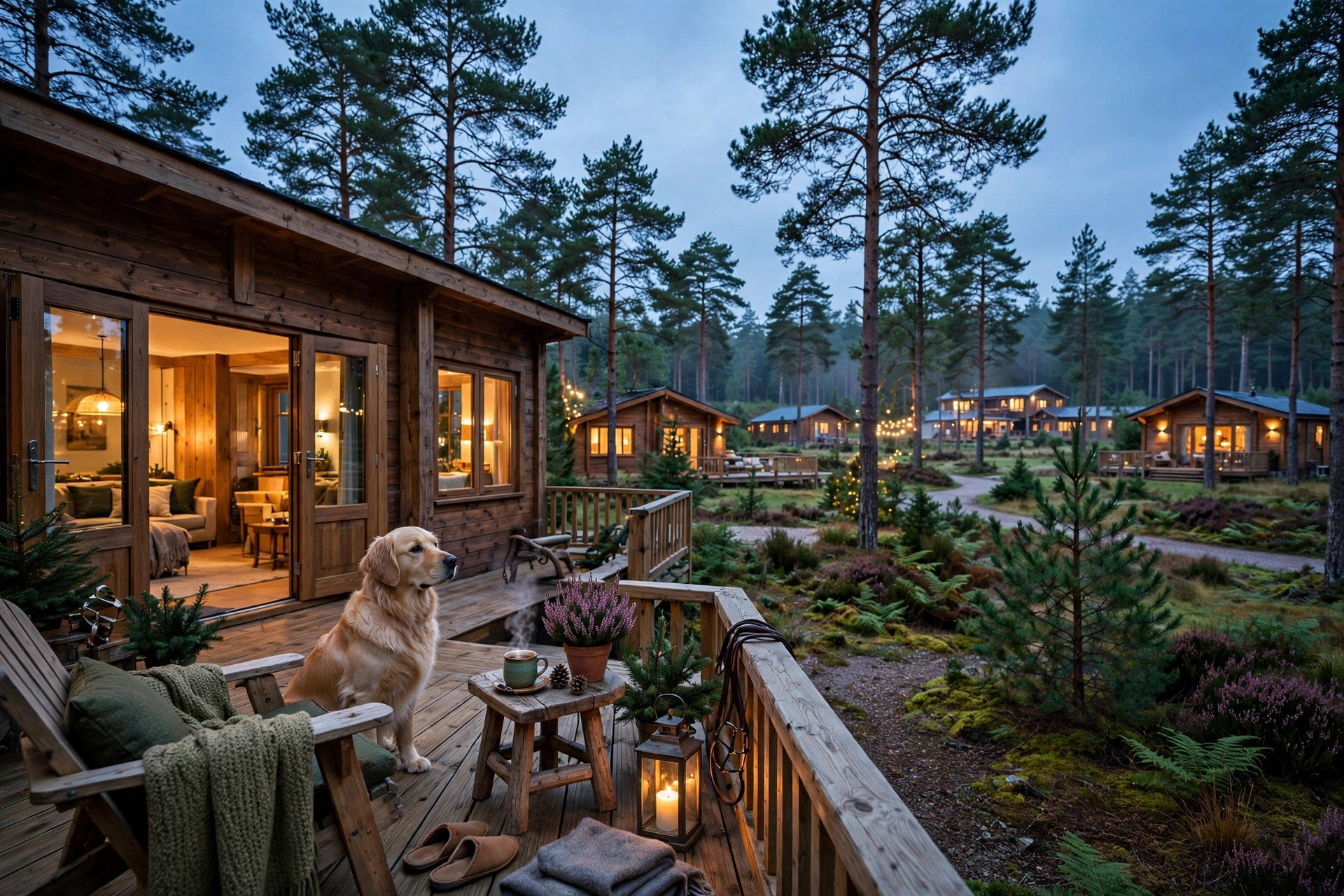
Britain's site network is broadly dog-welcoming, but the details differ enough to matter. The two big membership clubs and most independent sites accept dogs, usually with a maximum of two per pitch and a rule that dogs stay on a lead on site at all times. A growing number of sites provide genuinely useful extras: fenced dog fields where off-lead running is allowed, dog showers with warm water near the entrance, and waymarked walking routes straight from the gate. Those extras should drive your booking choices more than the clubhouse or the shop, because they are what you will use twice a day, every day.
Pitch type changes the dog experience. A hardstanding pitch keeps paws cleaner in wet weather and gives a firm base for a tethering stake, while a grass pitch is softer for older joints but turns muddy fast — and mud in a motorhome has nowhere to go. Ask about pitch size if you plan to use an awning, because the dog's dry outdoor space usually lives under it, and check whether the site permits windbreaks or portable fencing to create a small enclosed run beside the van. Some sites prohibit ground stakes for tethering where underground services run, so carry a heavy water container or a wheel clamp anchor as a backup tether point.
Booking rhythm matters in season. Popular coastal and national park sites fill their best pitches weeks ahead between May and September, and the pitches nearest the dog field go first. Book the first and last nights of any tour firmly and leave the middle flexible if you enjoy improvising — but never arrive in a new area at dusk hoping for a vacancy with a tired dog on board. Also confirm the arrival window: many sites stop accepting arrivals after 8pm, and levelling a van and settling a dog by torchlight is nobody's idea of a holiday start. Always check the site's own latest rules before you travel, because dog policies and maximum numbers do change between seasons.
The daily dog routine
A motorhome day runs on water, waste and walks, in that order. Fresh water for the dog should come from your onboard tank refilled at site taps, and most dogs drink noticeably more in a van because the air is drier and the days are more stimulating — refill the bowl at every stop rather than waiting for it to empty. Waste disposal is straightforward on site, with chemical points and bins provided, but wild or informal overnight stops demand a stricter standard: bag everything, carry it to a proper bin, and never use the site's grey-water drains for anything except grey water.
Build the walking day around two proper walks and several short leg-stretches. The morning walk does the heavy lifting — an hour of sniffing and exploring before you drive anywhere means a dog that sleeps through the journey instead of watching the world go past. Route planning helps: our guide to weekend breaks with dogs in the UK shows how to structure short tours so driving days and walking days alternate, which suits motorhome touring perfectly. On arrival at a new site, walk the perimeter with the dog before you unhook anything; a dog that has mapped the boundary, the dog field and the route to the bins settles faster and pulls less on the evening walk.
Evenings are where motorhome life wins people over. The dog is asleep in its usual place, the awning lights are on, and there is no bar closing time or hotel corridor to negotiate for the last toilet trip. Keep that last walk short, lit and familiar — the same route as the evening before if you are staying more than one night. In the van, wipe paws at the door every single time, keep a dedicated dog towel and a washable mat by the entrance, and feed at the same times you feed at home. Routine is the whole point of bringing your house with you; the more boring the pattern, the happier most dogs are.
What the trip really costs
Budget in layers, because the headline hire rate is rarely half the story. Motorhome hire in the UK commonly runs from around £80 a day for a compact van in low season to £200 or more a day for a large coachbuilt in school holidays, usually with a minimum hire of three to seven nights and a refundable security deposit that can exceed £1,000. Add campsite fees of roughly £20–£45 a night depending on season, region and electric hook-up, then fuel: a diesel motorhome typically returns 25–35 miles per gallon, so a 600-mile tour is a significant line in the budget, not an afterthought.
Dogs add smaller, predictable costs. Some hire companies charge a pet cleaning fee of £30–£60 per hire; some sites charge £1–£3 per dog per night, though many include dogs free. The costs people forget are the consumables of van life with a dog: extra laundry for bedding and towels, a replacement chew or lead bought at a village shop at village prices, and the occasional professional valet at the end of a muddy fortnight if the hire terms require the van back in showroom condition. Our breakdown of dog travel costs in the UK helps you build the full per-trip figure rather than guessing.
Set against that, a motorhome tour removes costs that other holidays hide. You cook most meals, so the dog-friendly restaurant premium disappears. There are no kennel fees and no per-night pet charges stacking up in a hotel folio. Owners who tour six or more weeks a year often find the sums genuinely competitive; occasional hirers should compare honestly against a cottage week, and remember that the motorhome's real product is freedom of movement, not cheapness. Whichever way the numbers fall, get every dog-related charge confirmed in writing before the deposit is paid.
Packing for a dog on wheels
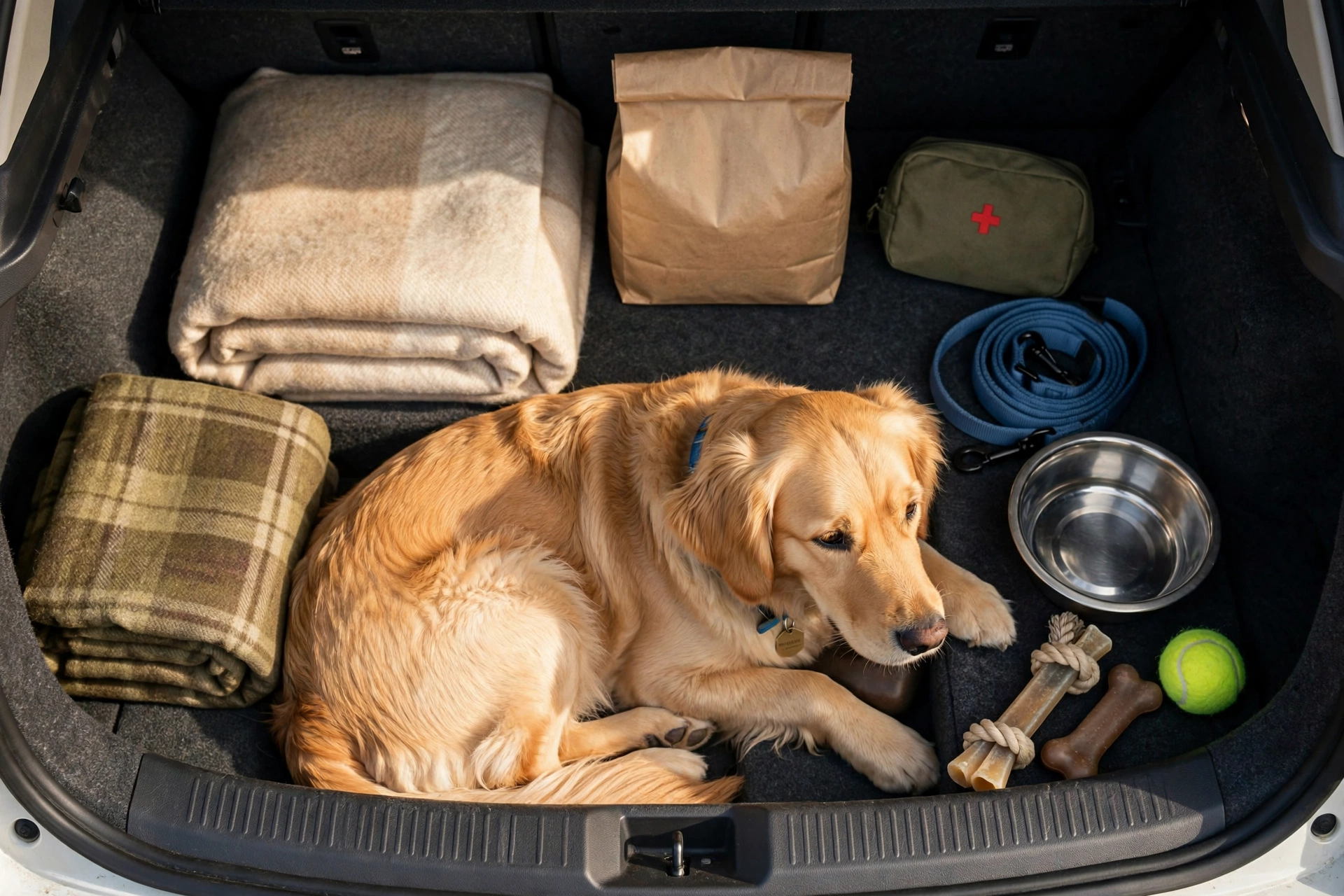
Van storage rewards a ruthless packing list. For the dog, the essentials are a bed that fits the designated floor spot exactly, two bowls that nest together, enough food for the whole trip plus two spare days (changing food mid-tour in a confined van is an experience nobody repeats), familiar bedding that smells of home, and a drying coat or towel dedicated to the doorway. Measure the storage locker before you buy anything: the under-bed garage in many vans swallows a crate and a ramp easily, while overhead lockers are useless for anything heavier than a fleece blanket.
Safety and admin items earn their space. Pack the dog's vaccination record, microchip number and vet contact details, a photograph of the dog on your phone in case of separation, and a basic first-aid kit with tick removers — our guides to ticks and to finding an emergency vet on holiday are worth reading before a rural tour. A spare lead and a long line live in the cab, not buried in a locker, because the moment you need them is the moment a clip breaks at a service area. A head torch transforms night walks on unlit sites, and a portable water bottle with a drinking trough lid means the dog is never waiting for you to find a bowl.
Finally, pack for the van itself. Levelling ramps, a hook-up cable, fresh-water hose and a grey-water container are standard, but dog owners should add a stiff brush and dustpan stored by the door, an enzymatic cleaner for accidents on upholstery, and washable throws for every seat the dog is allowed near. The throws are not decoration — they are what stands between a wet spaniel and a hire company's cleaning invoice. With those in place, the van stays a home rather than becoming a kennel you are paying by the day.
Routes, seasons and Scotland
The classic first tour is a loop, not a line: three or four bases, two nights each, never more than two hours of driving between them. The Cotswolds and the Forest of Dean pair well, as do the Yorkshire coast and the North York Moors, and the Pembrokeshire coast rewards a slow week of short hops between beaches — check seasonal beach dog restrictions before you plan a swimming day, because many beaches limit dogs on the main sections between May and September. Ferries to the Scottish islands and the Isle of Wight carry motorhomes and dogs happily, but book the vehicle space early in summer and read our guide to dogs on UK ferries for the deck and kennel rules that vary by operator.
Scotland deserves a specific note. The North Coast 500 is heavily marketed to motorhomers, but narrow single-track sections, limited formal sites and real local sensitivity about informal parking mean a dog tour there needs more planning, not less. Use booked sites, keep the dog on a lead around livestock without exception — the law on livestock worrying is strict and farmers' concerns are legitimate — and consider the quieter south and east coasts, where sites are plentiful and the welcome is warm. The same applies in lambing season everywhere in Britain: between February and May, assume every field of sheep is a lead-only, wide-berth situation.
Season shapes everything else. Spring and autumn are the motorhome sweet spots: sites are open, lanes are quiet, and temperatures suit dogs in a metal box. High summer demands shade planning and early starts. Winter touring is entirely possible in a well-heated van and many dogs love it, but daylight is short, some sites close, and water points can freeze — travel with the tank filled and a full gas bottle. Whenever you go, the pattern that works is the same: drive less than you planned, walk more than you planned, and let the dog's routine, not the map, set the pace.
Practical questions
Motorhome dog questions, answered
Can a dog travel loose in the back of a motorhome?
No — and it is not safe or advisable. The Highway Code advises that dogs in vehicles are suitably restrained so they cannot distract the driver or be injured in a sudden stop, and an unrestrained dog may also affect an insurance claim. Use a crash-tested harness secured to a seat belt, a fixed crate, or a proper travel compartment, and never allow the dog access to the cab while you are driving.
How much does it cost to hire a motorhome that accepts dogs?
Hire commonly ranges from about £80 a day for a small van out of season to £200 or more a day for a large motorhome in school holidays, plus a substantial refundable deposit. Dog-friendly hire firms may add a pet cleaning fee of roughly £30–£60 per hire, and some cap dog size or numbers. Confirm every pet condition and charge in writing before paying, as policies differ widely between companies.
Do UK campsites charge extra for dogs on a motorhome pitch?
Many do not, but some charge around £1–£3 per dog per night and most limit you to two dogs per pitch. Dogs are normally required to stay on a lead on site, with off-lead exercise only in designated dog fields where provided. Site rules change between seasons, so check the specific site's current dog policy before you book rather than relying on a previous visit.
Can I leave my dog in the motorhome while I go out?
Only with great caution, and many sites discourage or prohibit it. A motorhome heats up like a car in sunshine, so never leave a dog in a parked van in warm weather. In cool conditions, for a very short period, with ventilation, water and a settled dog, some owners do — but barking complaints and the risk of a temperature spike mean the safer default is that the dog comes with you.
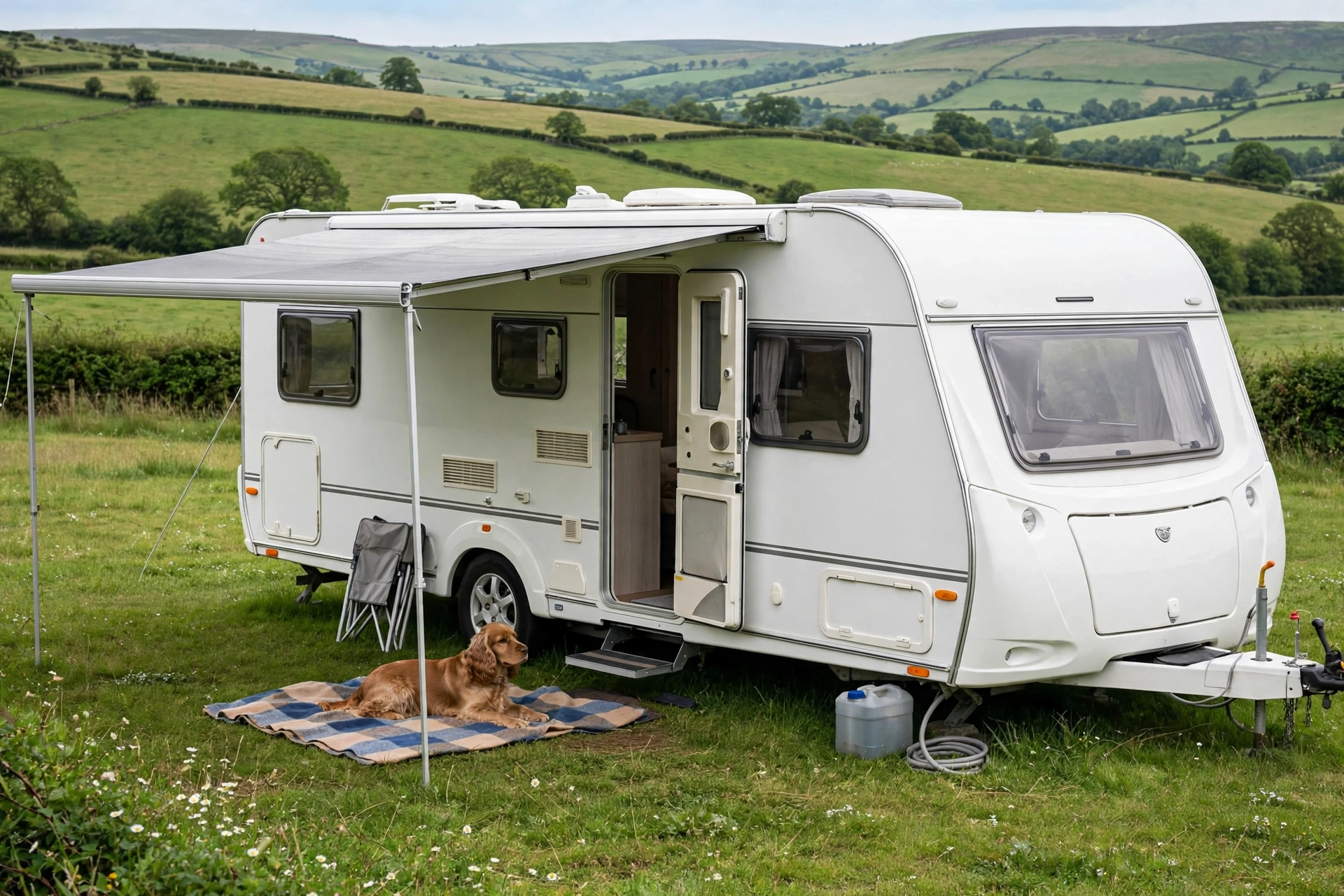
Is a motorhome better than a caravan for travelling with a dog?
It depends on your touring style. A motorhome keeps everything in one vehicle and makes one-night stops simple, which suits moving tours. A caravan gives you a car for local trips once pitched and often more living space per pound spent. Many dog owners prefer the motorhome because the dog's living space never changes. Our caravan guide linked in this article covers the alternative in detail if you are still deciding.