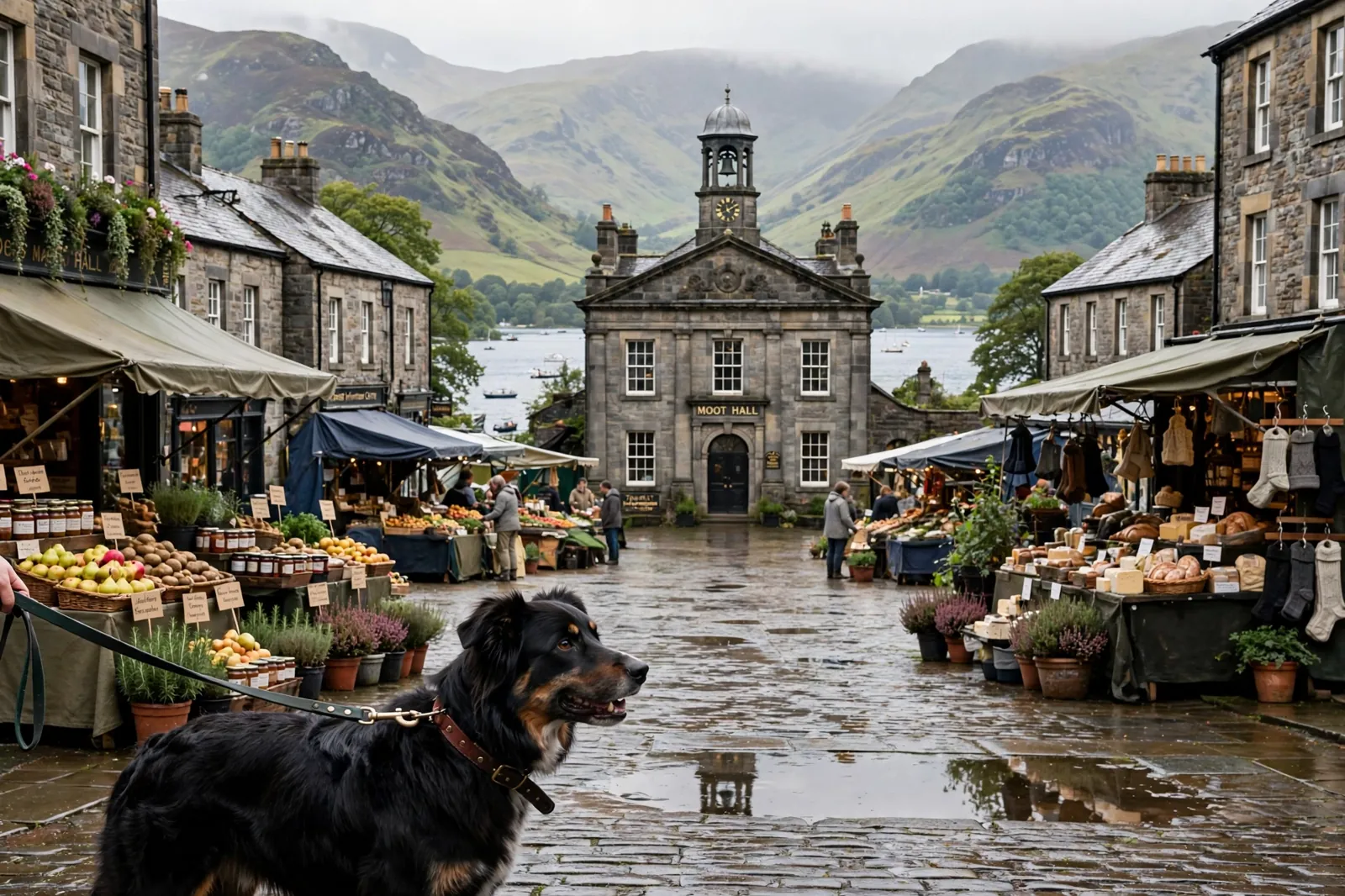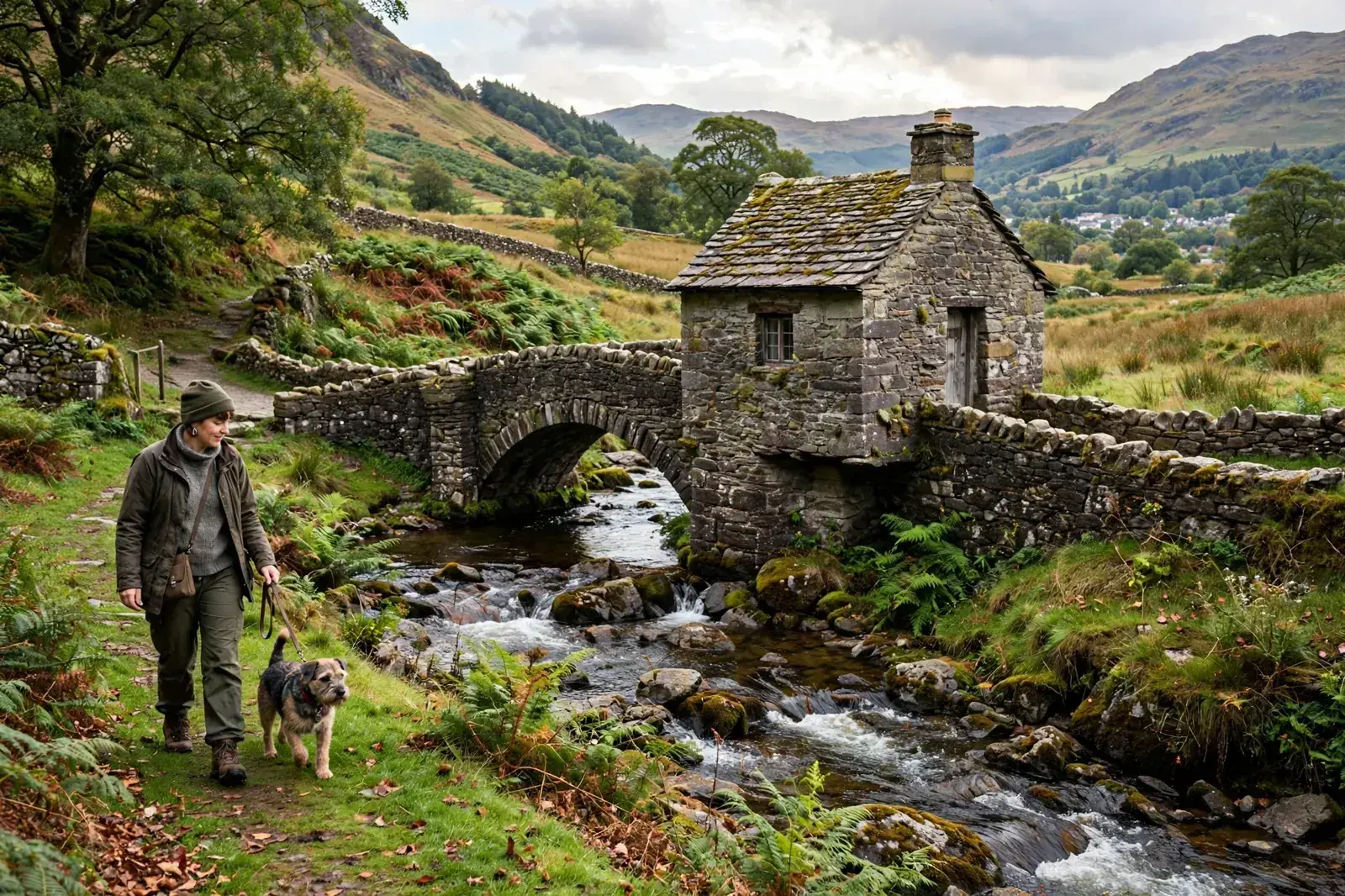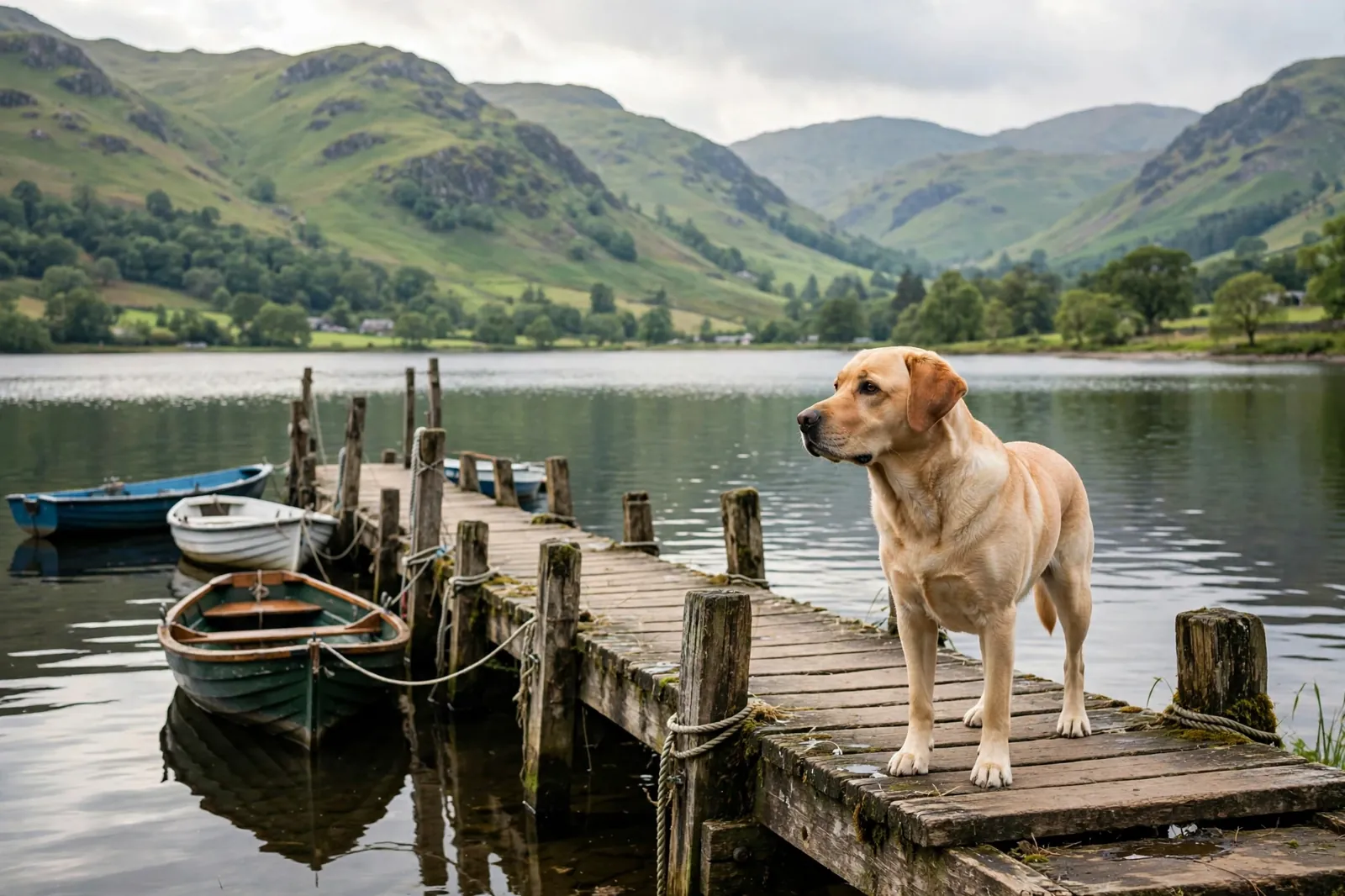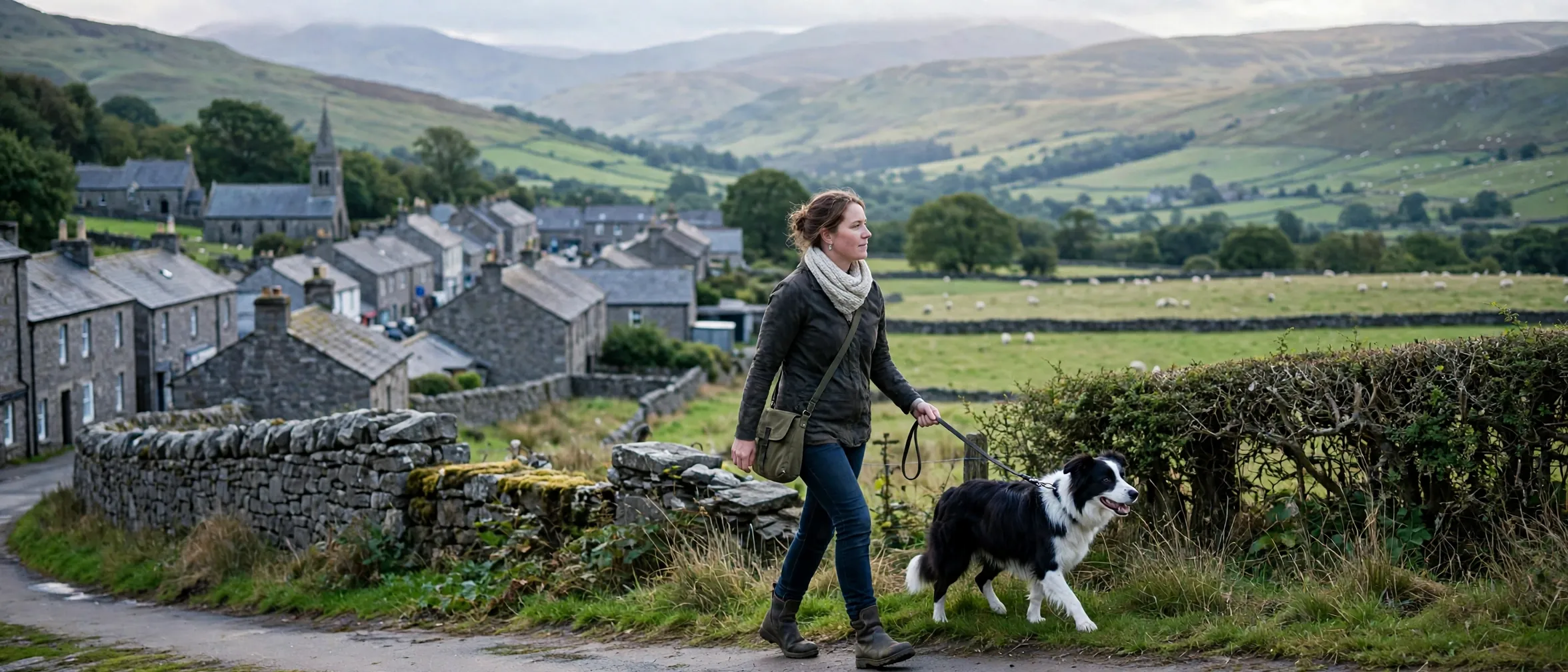
This guide is independent and contains no paid placement. If affiliate links are added later, they will be clearly marked and will not change our editorial checks.
Penrith is a gateway, not a single-attraction town. Arrive by train or from the M6, use the town for supplies and a short first walk, then spend your walking days in two directions: west to Ullswater and the edge of the Lake District, or east into the open, quieter Eden Valley.
Why Penrith works as a dog base
Penrith sits in a useful in-between place. It is a real Cumbrian market town, not a purpose-built resort, and that is exactly why it works so well for a trip with a dog. You get a main-line railway station, a motorway junction, supermarkets, independent shops, cafes, a choice of accommodation and a veterinary practice, all within a compact town centre. From that centre, two very different kinds of walking open up within a short drive. Turn west and you are quickly at Ullswater, the eastern edge of the Lake District, with shore paths, woodland waterfalls and boat piers. Turn east and you are in the Eden Valley, where the River Eden, the River Lowther and a network of quiet lanes and field paths make for calmer, less crowded days. A base that offers both directions gives you a genuine choice each morning, which matters more with a dog than any single famous viewpoint.
The town itself is worth understanding before you plan the walking. Penrith grew up around its castle and its market, and the centre still works as a market town: a main shopping street, side streets with cafes and independent retailers, a castle park with open grass, and residential streets that lead quickly out to fields. That layout is helpful for dog owners because the practical things are close together. You can buy food, pick up a forgotten lead or a bag of treats, find a cash machine, visit a pharmacy and be back at your accommodation within one short outing, rather than driving to a larger town for every small errand. For a multi-day stay, that convenience adds up, especially if you are travelling without a car or if one person stays with the dog while the other shops.
Penrith also suits a particular kind of dog trip: the flexible one. If you stay in a single lakeside village, every walk tends to start from the same car park and follow the same shore. That can be lovely, but it can also feel repetitive by day three, and a wet day can leave you with few alternatives. From Penrith, a rainy morning can become an Eden Valley lane walk, a visit to a covered attraction that welcomes dogs, or a short town walk followed by a long cafe stop, while a clear day can be spent at Ullswater or further into the Lakes. Dogs that get bored easily, dogs that need a quieter route after a busy day, and households with mixed fitness levels all benefit from having two directions to choose from. Older dogs benefit too: the town and valley walks include flat, short options, while fitter dogs can take on longer fell-side routes on a different day.
There is one honest limitation to name. Penrith is not itself a lakeside resort, and it does not have the immediate, step-out-of-the-door shore path that a village like Pooley Bridge or Glenridding offers. If your ideal trip is to wake up, open the door and be on a lake shore in two minutes, a lakeside base will suit you better, and our guides to Windermere with a dog and Ambleside with a dog cover that kind of stay. Penrith trades that instant access for a wider choice, lower pressure on parking, and a town that keeps working normally outside the holiday season. For a first trip to the area, or for a trip where the dog is still learning to travel, that trade is usually worth making.
Arriving by train or by car
By train, Penrith station sits on the West Coast Main Line, served by services running between London, the North West, Glasgow and Edinburgh, with connections at Carlisle and Preston for other parts of the country. That main-line position is the single biggest reason Penrith works as a car-free base. Dogs can normally travel free on trains in Britain, with up to two dogs per passenger, but the exact conditions are set by the train operator, so check the official guidance before you travel. In practice, a dog travelling to Penrith needs a lead, a settled spot at your feet or in the vestibule area, and an owner who has planned around the busiest services. Long-distance trains can be crowded at peak times, and a dog that is fine on a quiet local service may struggle on a packed Friday evening train, so a mid-morning or early-afternoon service is usually kinder.
Plan the station arrival step by step. Before you board, give your dog a proper toilet walk and a drink, and pack water, a collapsible bowl, poo bags, a spare lead and something familiar-smelling for the dog to lie on. At the station, keep the dog on a short lead and well behind the yellow line, because platforms are narrow, trolleys move fast and other passengers may not expect a dog at ankle height. Our guide to dogs on UK train platforms covers platform safety in detail, including lifts, escalators and unstaffed stations. Once you arrive at Penrith, the town centre is a short walk from the station, which means the dog does not need a taxi or a bus immediately after a long journey. Walk slowly, let the dog sniff the new pavements, find a quiet corner for a toilet stop, and only then head to your accommodation or the shops.
By car, Penrith is reached from junction 40 of the M6, which puts it within easy reach of the North West, Scotland and the rest of northern England. The A66 runs west from Penrith towards Keswick and the northern Lakes, while the A592 runs south-west to Ullswater at Pooley Bridge, and the A6 runs south towards Shap and Kendal. That road layout is the driving equivalent of the two-directions idea: one road west to the Lakes, one road south-west to the lake shore, and a network of smaller roads east into the Eden Valley. Before a driving trip, check the dog's car routine as carefully as the route. A dog that travels well for an hour may still need a break on a three-hour motorway journey, so plan a stop at a service area or a quiet lay-by where the dog can stretch, drink and toilet safely on a lead, away from fast traffic.
Car safety deserves the same attention as route planning. Use a crate, a guard or a harness that is rated for car travel, and keep the dog out of the driver's footwell and off the parcel shelf. In warm weather, never leave a dog alone in a parked car, even for a short stop, because temperatures inside a car rise far faster than most people expect. In cold weather, remember that a wet dog in a cold car cools quickly after a walk, so keep a drying coat and a towel in the boot. If you are hiring a car for the trip, confirm the hire company's pet policy in writing before you collect it, because some companies charge cleaning fees or restrict animals altogether, and that is a costly surprise to discover at the rental desk.
Whichever way you arrive, the first hour in Penrith should be deliberately boring. Do not head straight for a long fell walk or a busy attraction. Instead, walk the dog around the block near your accommodation, find the nearest green space for a toilet break, fill the water bowl, and let the dog settle. Dogs that arrive calm tend to stay calm for the rest of the day, while dogs that are rushed from a train or a car straight into a crowded beauty spot often spend the afternoon over-aroused. A short arrival walk around Castle Park or the quieter streets near the station is a better investment than an extra hour on a famous path.
Town centre: supplies, vets and first walks
Start your town planning with supplies, because a well-stocked base removes most small emergencies. Penrith has supermarkets for dog food, fresh food and household basics, plus independent shops along the main streets for treats, outdoor kit and anything you forgot at home. If your dog eats a specific brand or needs a prescription diet, buy it before you leave home or confirm stock with a local shop in advance, because a small town supermarket may not carry every specialist brand. Pack the dog's usual food for at least the first two days even if you plan to shop locally, since a sudden change of diet on a travelling day is a reliable way to cause an upset stomach.
Next, locate the practical services before you need them. Save the address and phone number of a local veterinary practice in your phone on arrival day, and note its opening hours and the nearest out-of-hours emergency service, because rural practices can be some distance away and may close early at weekends. If your dog takes regular medication, carry a spare supply in a separate bag from the main luggage, along with the prescription details, so a lost suitcase does not become a missed dose. Also note a local pharmacy, a petrol station and a cash machine, and keep a paper copy of your accommodation address and check-in instructions, since phone signal can be patchy in the surrounding valleys even when it is strong in town.
For first walks, the town offers three kinds of short outing. The first is the castle park area, where open grass and paths give a dog room to stretch without leaving town. Keep the dog on a lead here if other dogs, children or picnics are nearby, and treat it as a sniffing walk rather than a run, because town parks are shared spaces and not every visitor expects a loose dog. The second kind is the riverside and field-path direction towards Eamont Bridge, where the River Eamont and the River Lowther meet, and where lanes and riverside paths give a gentler, greener feel within a short walk of the centre. The third is the Beacon, the wooded hill above the town, which offers a short climb and views over Penrith and the Eden Valley. The Beacon walk is steeper than the park or riverside options, so it suits a fit dog on a dry day, and it is best avoided in high wind or after heavy rain, when paths can be slippery.
Town walking also means town manners. Keep the dog on a lead on pavements, at road crossings and outside shops, and always carry poo bags, because a market town with narrow pavements leaves no room for error. If your dog is reactive to other dogs, choose the quieter side streets and the early-morning or late-evening slots for town walks, when foot traffic is lighter. If your dog is friendly to a fault, remember that not every passer-by wants to be greeted, and that a jumping dog on a busy shopping street is a nuisance rather than a charm. A short lead, a calm pace and a habit of stepping aside to let pushchairs and wheelchairs pass will make the town far more welcoming for your next visit.
Finally, use the town as a weather barometer. Penrith sits in a valley, and the weather on the fells above Ullswater can be very different from the weather in town. Check a mountain forecast as well as a town forecast before choosing a direction, and if the town is in low cloud or driving rain, expect the higher paths to be worse. That check takes two minutes and can save a wasted drive to a car park where the dog ends up walking in cloud and wind for no view at all. On such days, the Eden Valley lanes, which stay lower and more sheltered, are usually the better choice.
West: the Lakes edge and Ullswater
The western direction is the one most visitors picture when they think of Penrith, and it starts with Ullswater, the long, quiet lake that runs south-west from Pooley Bridge. From Penrith, the A592 takes you to Pooley Bridge in roughly fifteen to twenty minutes by car, depending on traffic, and from there the lake shore opens up in both directions. Pooley Bridge itself is a small village at the northern end of the lake, with a bridge over the River Eamont, a pier for lake steamers, cafes and a car park that fills quickly on fine weekends. Arrive early on a sunny day, or choose a weekday, and the whole outing feels calmer for the dog, because the difference between a quiet shore path and a crowded one is often just an hour of timing.
For a first Ullswater walk, the shore paths near Pooley Bridge are the simplest choice. They are relatively flat, easy to shorten, and close to parking, toilets and refreshments, which means you can turn back at any point without committing to a long route. Keep the dog on a lead where the path runs close to the road or the water's edge, and watch for swans, ducks and other dogs, all of which can tempt a dog into the water or into a chase. If your dog likes to swim, choose a quiet, gently shelving entry point away from boats and anglers, rinse the dog afterwards, and watch for blue-green algae warnings in warm weather, because algae can be dangerous to dogs and conditions change through the summer. When in doubt about water safety, check the official guidance before you travel, and keep the dog out of the water.
Aira Force, further down the lake, is the best-known waterfall walk in the area, and it deserves a careful approach with a dog. The National Trust paths through the wooded gorge are well maintained, but they include steps, narrow sections, bridges and steep drops beside fast water, so a lead is essential throughout, and the walk suits dogs that are comfortable with steps and with other visitors in close quarters. Go early if you can, because the gorge paths are narrow and a busy afternoon can mean constant passing on bridges. After the waterfall, the woodland paths above the gorge offer a quieter extension, but they add distance and climbing, so treat them as an optional extra rather than a fixed plan, and turn back while the dog is still enjoying the walk.
Beyond Ullswater, the western direction also opens up the wider northern Lakes. Keswick, reached by the A66, is the natural next step for a longer day, with Derwentwater shore paths, a market town centre and fell walks of every length, and our guide to Keswick with a dog covers its shore walks, parking and dog-friendly pubs in detail. Glenridding, at the southern end of Ullswater, offers a different flavour again, with a village base, a steamer pier and access to the higher fells for experienced walkers. For most dogs, though, a single Ullswater shore walk plus a cafe stop is a full and satisfying day, and there is no need to stack a waterfall, a boat trip and a fell climb into one outing. Dogs enjoy a walk they can finish happily far more than a route that leaves them exhausted.
Boat trips need separate planning. Ullswater steamers have carried dogs for many years, but the rules, charges and deck arrangements can change, so check the official guidance before you travel rather than assuming a previous visit still applies. On any boat, keep the dog on a lead, settled at your feet, and away from gangways and other passengers' food. If your dog is nervous around engines, crowds or water movement, skip the boat and enjoy the shore path instead, because a stressed dog on a boat is unhappy for the whole crossing and hard to calm once you are under way. The same logic applies to any lake cruise in the wider area: the shore walk is always the fallback, and it is often the better walk anyway.
East: the Eden Valley on foot
The eastern direction is quieter, more rural and less obviously signposted, which is precisely its appeal. The Eden Valley follows the River Eden south-east from Penrith towards Appleby, Kirkby Stephen and beyond, and it is a landscape of red sandstone villages, church towers, farm lanes, riverside meadows and open views towards the Pennines. Walking here feels different from walking in the Lakes: the paths are less crowded, the climbs are gentler, and the dog is more likely to meet sheep, cattle, horses and farm traffic than a queue of walkers. That rural character means the lead rules matter even more. Keep the dog on a lead near livestock at all times, even if the dog has never chased sheep before, because a single incident can cause serious harm and legal trouble, and farmers are entitled to protect their stock.
A good Eden Valley day starts with a village, not a car park in the middle of nowhere. Choose a village with parking, a church or a green, and a circular route that you can shorten if the dog tires. The lanes between villages are often narrow, with grass verges rather than pavements, so walk facing oncoming traffic where there is no pavement, keep the dog on the verge side, and wear something bright if the lane is shaded or the light is poor. Field paths need a different skill: reading gates, stiles and waymarks, closing every gate behind you, and turning back if a field holds cattle with calves or a bull, rather than pressing on and hoping the dog stays calm. A route that looks simple on a map can become complicated by a muddy field, a broken stile or a herd standing across the path, so always have a lane-based alternative in mind.
The rivers are the highlight of the valley, and they need respect. The Eden and its tributaries can run fast and deep after rain, and banks can be slippery or undercut, so keep the dog out of fast water and away from weirs, and do not let a ball or a stick take the dog into a current. In summer, the slower stretches and gravel banks offer safe paddling spots, but check for fishing activity first, because anglers have a right to fish undisturbed and a loose dog splashing through a swim will not be welcome. If your dog swims, carry a towel and a drying coat, and check the dog's paws and coat afterwards for cuts, ticks and river debris. Ticks are a genuine valley hazard from spring to autumn, so check the dog after every rural walk, remove any tick correctly, and ask your vet about tick prevention before the trip if you do not already use it.
Historic sites add a second layer to an Eden Valley day. Brougham Castle, a short drive from Penrith, is a ruined castle with open grounds that can make a good short outing, but the rules for dogs at historic sites change from time to time and can differ between the castle interior, the grounds and any exhibition spaces, so check the official guidance before you travel. Lowther Castle and its gardens, also nearby, offer woodland and garden walks that many dog owners enjoy, with the same advice: confirm the current dog policy, keep the dog on a lead in gardens and near other visitors, and plan around any areas where dogs are not allowed rather than discovering the restriction at the gate. The Rheged Centre, close to Penrith on the A66, is a useful wet-weather or lunch stop, but again, confirm its current dog policy before assuming the dog can go inside.
The Eden Valley also rewards a slower pace. Instead of driving from village to village and ticking off viewpoints, pick one village, walk one circular route, and finish with a long stop at a cafe or a pub garden. Dogs settle better when the day has a rhythm: a morning walk, a rest, a short afternoon outing, and an evening toilet walk, rather than a day of constant movement. If you are staying for several days, alternate a Lakes day with a valley day, because the contrast keeps the dog interested and gives tired legs a gentler day in between. And if the weather turns, the valley lanes are often still walkable when the high fells are in cloud, which is another reason Penrith's two-direction position is so practical.
Eating out and staying over with a dog
Eating out with a dog in Penrith is straightforward if you plan around the dog's temperament rather than the menu. Many cafes and pubs in a market town welcome dogs in at least part of their premises, often a bar area, a garden or a terrace, while keeping a restaurant area dog-free. The split matters, because a dog that is welcome in a garden on a summer day may not be welcome in the same pub's dining room on a wet winter evening. Always ask before you sit down, confirm where the dog can go, and choose a table near the door or at the edge of the room, where the dog can settle without blocking a walkway. Bring a mat or a blanket for the dog to lie on, a water bowl if the venue does not provide one, and a chew or a long-lasting treat to keep the dog occupied while food arrives.
Good pub and cafe manners make the next visit easier for everyone. Keep the dog on a lead and under the table, not wandering between tables, and do not let the dog beg from other diners or sniff other people's bags. If the dog barks at other dogs, choose a quieter table, visit at a quieter time, or use a takeaway and eat outside instead, because a barking dog in a small cafe quickly becomes the room's main event. If the dog needs the toilet, take it out before you sit down and again if the meal runs long, rather than waiting for restlessness to turn into an accident. And always clean up after your dog, inside or outside, without being asked.
Staying over needs the same careful questions as eating out, plus a few more. When you book accommodation in Penrith, confirm in writing that dogs are accepted, how many dogs are allowed, whether there is a pet charge, and whether the dog can be left alone in the room or must come with you everywhere. Self-catering cottages, bed and breakfasts, hotels and campsites all have different rules, and a property that welcomes dogs in a cottage may not welcome them in every room type. Ask about stairs, because a town-centre property may have steep or narrow stairs that an older dog cannot manage, and ask about a garden or a nearby toilet area for last thing at night. If the property has a garden, check whether it is enclosed and how high the fence is, because a garden that looks secure in photographs may have a gap under a gate that a small dog can slip through.
Pack for the accommodation as well as for the walks. Bring the dog's own bed or blanket, so the dog has a familiar smell in a strange room, plus food, bowls, medication, a spare lead, towels and a drying coat. A familiar bed also protects the host's furniture, which matters if the property charges for damage. On arrival, walk the dog around the accommodation, check gates and doors, move any cleaning products or food out of reach, and settle the dog before you unpack everything else. If the dog cannot be left alone, plan your days around that fact rather than hoping the dog will suddenly tolerate solitude in a new place. A dog that is left alone and barks may disturb neighbours, breach the booking terms and end the stay early, so a realistic plan is kinder than an optimistic one.
For longer stays, think about laundry and drying. A wet dog after an Ullswater shore walk or a muddy Eden Valley lane needs a drying routine, and a small hotel room without a drying space can quickly become damp and smelly. Choose accommodation with a boot room, a utility area or at least a hard floor near the door if you can, and pack a spare set of bedding so a wet bed does not mean a sleepless night. If you are camping or using a touring pitch, check the site's dog rules in advance, including lead requirements, exercise areas and any breed or number limits, because campsites vary widely and a rule discovered on arrival is hard to argue with.
Practical details: parking, seasons and safety
Parking is the practical detail that most often shapes a Penrith day, especially on a fine weekend. In town, use a recognised car park rather than circling residential streets, and leave time to walk from the car park to your starting point, because the dog will need a toilet stop after the drive anyway. At Ullswater, the Pooley Bridge and Aira Force car parks fill early on sunny days and bank holidays, so an early start is not just a preference but a parking strategy. If the car park is full, do not park on verges, in passing places or across field gates, because that blocks farm access and emergency vehicles and can earn a fine or a tow. Instead, change direction for the day: if Ullswater is full, the Eden Valley lanes are usually quiet, and a valley walk is better than a stressful search for a parking space.
Seasons change both directions in different ways. Spring brings lambing, which means strict lead rules and some paths temporarily closed or diverted, so check local notices and keep the dog on a lead near sheep even on paths where off-lead walking is normally fine. Summer brings the busiest car parks, the warmest water and the highest risk of blue-green algae, heat and busy paths, so walk early, carry extra water, and watch for overheating, especially in flat-faced breeds, older dogs and dogs with thick coats. Autumn is often the best season for Penrith: quieter paths, cooler walking, colourful woodland at Aira Force and the Eden Valley, and fewer crowds, although paths can be muddy and daylight shortens quickly, so carry a torch and a reflective lead or harness for late-afternoon walks. Winter brings short days, icy lanes and possible snow on the higher ground, so choose low-level valley and shore walks, check forecasts, and tell someone your route if you are heading somewhere remote.
Safety on rural paths deserves a short checklist of its own. First, livestock: keep the dog on a lead near sheep, cattle and horses, and if cattle approach, let the dog off the lead only if that is the safest way to escape, as the official countryside guidance advises in that specific situation, because a dog on a lead can drag its owner into danger. Second, roads: many Eden Valley lanes have no pavement, so walk on the verge side, keep the dog close, and avoid walking a narrow lane at dusk without reflective gear. Third, water: never let the dog swim in fast, deep or algae-affected water, and always rinse and dry the dog afterwards. Fourth, ticks and adder bites: check the dog after rural walks, know the signs of a tick or a bite, and seek veterinary advice promptly if you find a tick you cannot remove or if the dog shows swelling, pain or sudden illness after a walk.
Weather safety on the higher ground needs one more note. The fells above Ullswater and the northern Lakes can be cold, wet and windy even when Penrith town is mild, and conditions can change within an hour. If you plan a fell-side walk from a Lakes base, carry a map, a compass or a charged phone with an offline map, extra water, food, a warm layer for the dog if it is small, elderly or short-coated, and a first-aid kit that includes a tick remover and a spare lead. Tell someone your route and expected return time, and turn back early if the weather closes in, because a dog that is cold and wet on a fell is harder to keep warm than a dog that is cold and wet on a valley lane near a car. When in doubt, choose the lower route: the valley and shore paths are still beautiful, and they leave the dog happy rather than exhausted.
Finally, pack a Penrith-specific kit list and keep it in the car or the hallway, so every day starts without a search. The list should include water and a bowl, poo bags, a short lead and a long line, a towel and a drying coat, a tick remover, a basic first-aid kit, the dog's medication, a spare lead, a reflective item for low light, and a phone charger. Add seasonal items as needed: a cooling mat or extra water in summer, a warm coat in winter, and a torch from autumn onwards. A kit that lives by the door removes the most common reason for a delayed start, and a prompt start is often the difference between a quiet car park and a full one.
Two ready-made day plans
Day one is the Ullswater day, designed for arrival energy and a first taste of the Lakes edge. Start with a short town walk in Penrith, a toilet stop and a drink for the dog, then drive to Pooley Bridge and arrive early enough to park without stress. Walk a shore path for as long as the dog enjoys it, turning back while the dog is still keen, and finish with a cafe stop where the dog can rest under the table. If the dog is still full of energy after lunch, add a short woodland walk or a second, shorter shore stretch, but do not feel obliged to fill the whole day. Drive back to Penrith in good time, give the dog a final town walk, and let the evening be quiet. A dog that sleeps well after day one is a dog that will enjoy day two.
Day two is the Eden Valley day, designed to be quieter and more rural. Choose one village, park carefully, and walk a circular lane and field route that you have checked on a map beforehand, with a shorter alternative in mind if the path is muddy or blocked by livestock. Keep the dog on a lead near farm animals, close every gate, and stop for a long lunch at a pub garden or a cafe where the dog can settle. In the afternoon, either return to Penrith for a castle park walk or add a short historic stop, such as Brougham Castle grounds, after checking the current dog policy. Finish with a riverside or town walk in the evening, and use the drive home or the train journey to let the dog rest. Two days, two directions, and no single day overloaded: that is the Penrith pattern at its best.
If you have a third day, use it to repeat the direction the dog preferred, rather than forcing a new attraction. Dogs do not collect viewpoints, and a second Ullswater shore walk on a different stretch of path, or a second valley village with a different lane route, will often be more enjoyable than a long drive to a famous fell that the dog finds tiring. Alternatively, use the third day for a longer Lakes outing, such as Keswick and Derwentwater, with Penrith as the return base, and our Keswick guide is a useful companion for that day. Whatever you choose, keep the same rhythm: an early start, a walk the dog can finish happily, a rest, and a quiet evening. That rhythm is what turns a good base into a good trip.
A final note on flexibility: the best Penrith plan is the one you are willing to change. If the car park is full, change direction. If the weather closes in, choose the valley. If the dog is tired, shorten the walk. If the dog is full of energy, add a second short outing rather than extending the first one into exhaustion. Dogs reward flexible owners with calmer evenings and happier mornings, and Penrith, with two directions to choose from, makes flexibility easy. Use the town, use both directions, and let the dog's energy, not the guidebook, set the pace.
Practical questions
Before you go
Is Penrith a good base for a dog-friendly Lake District trip?
Yes, for travellers who want a proper town base rather than a single resort village. Penrith has a main-line station, supermarkets, vets and a choice of places to stay, and it sits within easy reach of both Ullswater and the Eden Valley. It suits dogs that travel well and owners who like to pick a different walk each day, rather than walking the same shore path every morning.
Can dogs travel on the train to Penrith?
Dogs can normally travel free on trains in Britain, with up to two dogs per passenger, but the exact conditions are set by the train operator, so check the official guidance before you travel. Keep your dog on a lead, keep it off seats unless the operator allows it, and choose a quieter service where possible so a nervous dog is not pressed into a crowded vestibule.
Where can I walk my dog straight from Penrith town centre?
The most practical town-centre options are the paths around Penrith Castle Park and the Beacon, the riverside and field paths towards Eamont Bridge, and the quieter lanes that lead out of town towards the River Lowther. These are short, flexible outings rather than full-day hikes, and they work well as an arrival walk, a last walk before checkout, or a wet-weather fallback.
Which direction should we head for an easy first walk: Ullswater or the Eden Valley?
For a first walk, Ullswater is usually the simpler choice, because the shore paths near Pooley Bridge and the lower walks around Aira Force are easy to find, easy to shorten, and close to parking and refreshments. The Eden Valley is quieter and more rural, which suits a settled dog, but its paths are more spread out and need a little more planning, so save it for day two when you know how your dog travels.
Do dogs need to stay on a lead around Penrith and the Eden Valley?
Often, yes, and always where livestock, roads or other walkers make it necessary. Use a lead in town, on narrow lanes, near sheep and cattle, and on any path where the rules are posted. Off-lead time is best saved for enclosed or clearly open spaces where your dog has reliable recall, and the lead should go straight back on whenever you meet livestock, horses, cyclists or a blind bend.