This guide is independent and contains no paid placement. Pugs vary, breathing and heat tolerance are individual, and the health material here is general information, never a diagnosis. Talk to your vet about your own pug, and check official guidance before you travel.
Travel with a pug only on a heat-first plan: choose cool seasons and shaded, short walks, keep car journeys cool and broken up, pick ground-floor stays with hard floors and no steep stairs, watch weight and breathing closely, and be willing to cancel an outing — or the whole trip — on a warm day. If your pug struggles to breathe at rest, snores heavily or has fainted, get veterinary advice before booking anything.
Start with heat, not with the destination
Most holiday planning starts with a map. Pug planning should start with a thermometer. Pugs are a brachycephalic — flat-faced — breed, and that shortened airway makes it harder for them to move air and to cool themselves by panting. A temperature that feels pleasantly warm to a person in a t-shirt can already be hard work for a pug, especially with humidity, excitement or a hill added. That single fact should decide your season, your region, your daily timetable and, on some forecast days, whether you travel at all.
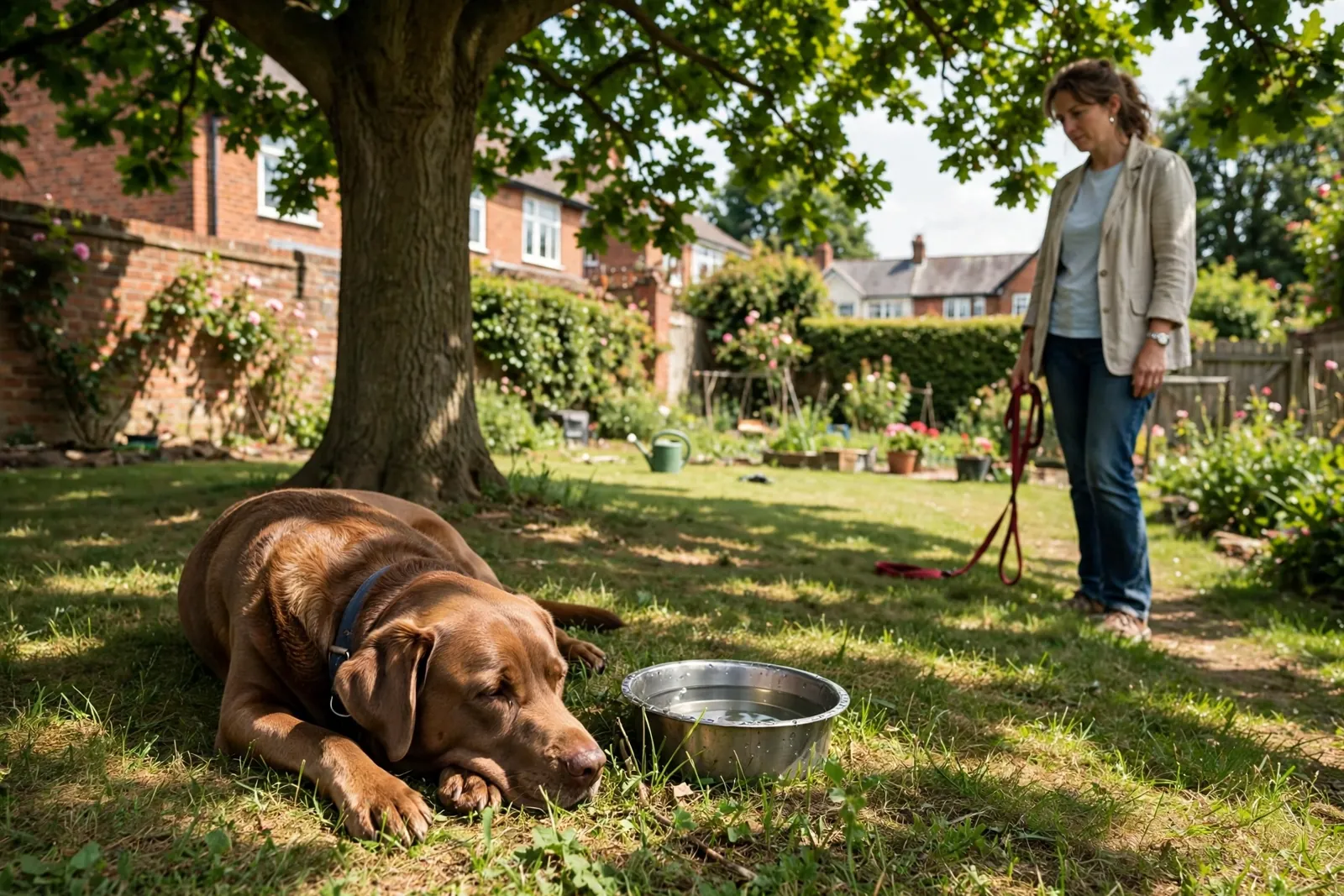
As a working approach, plan full outings for the coolest parts of the day, keep midday for resting indoors, and treat any hot spell as a reason to shrink the plan rather than push through it. Coastal and upland Britain is not automatically cool — a still, sunny day on a Cornish beach can be hotter for a dog than a breezy city morning — so judge the actual forecast where you are staying, not the reputation of the county. Our wider guide to travelling with a dog in hot weather covers temperatures and warning signs for all breeds, and it is worth reading alongside this pug-specific routine.
Know when not to travel at all. A pug that is already breathing noisily at rest, that cannot settle in a warm room at home, that has had a collapse or a veterinary warning about its airway, or that is recovering from illness or surgery is not a dog to load into a car for a change of scenery. A holiday is optional; breathing is not. Talk to your vet before booking, be specific about journey length and the kind of walks you have in mind, and accept a no. There will be cooler months and shorter trips that suit the dog in front of you far better.
Breathing, snoring and the honest baseline
Before any trip, learn what normal looks and sounds like for your own pug at home: breathing at rest, breathing after a gentle walk, the usual level of snoring, and how quickly recovery happens after excitement. Travel changes every input — new smells, visitors, stairs, car rides — so you need that home baseline to spot when holiday breathing is different, louder, faster or more effortful. General information only helps so far here; only a vet who examines your dog can judge an individual airway, and this guide does not attempt to diagnose anything.
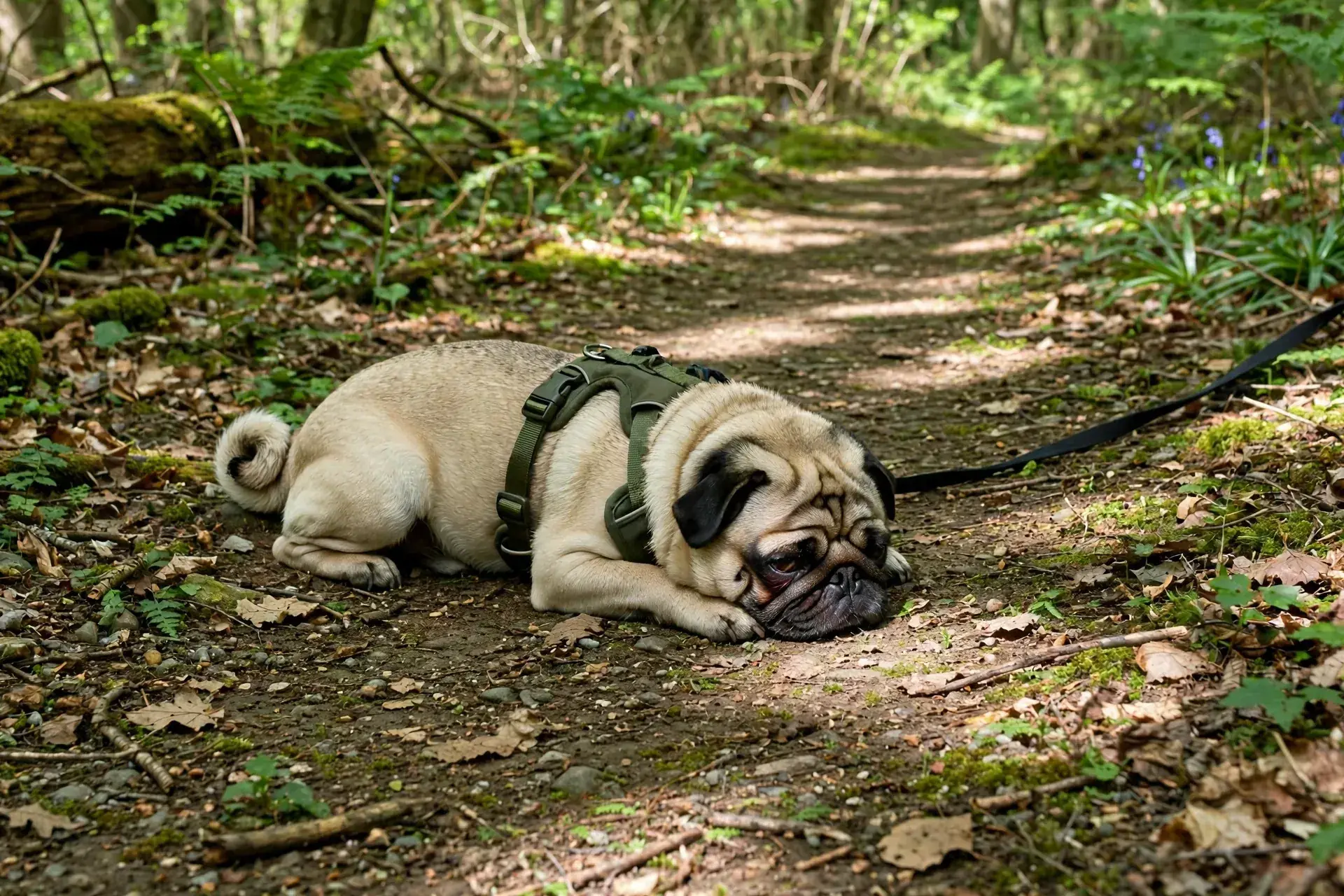
On holiday, check in quietly and often. A pug that is pulling to keep going may still be overheating, because enthusiasm is not a safety gauge. Build in enforced pauses in shade, offer water without forcing drinking, and end walks while the dog still looks comfortable rather than after it looks tired. Noisy breathing that escalates, drooling, glazed eyes, wobbling, vomiting or collapse are emergency signs in any dog — stop, cool sensibly, and contact a vet urgently rather than waiting to see. Save the number of a veterinary practice near your stay in your phone before you arrive.
Weight sits at the centre of this section, because extra kilos make airway work harder and heat harder still. Holiday feeding quietly expands: pub chips, cafe titbits, chews to keep the dog settled, and a second breakfast because someone else offered. Keep portions measured, count treats inside the daily ration, and resist the table-scraps economy of a shared cottage. If your vet has set a weight target, a holiday is a poor week to abandon it — a leaner pug will cope with travel, stairs and warm rooms noticeably better than a heavier one.
Short walks, chosen like appointments
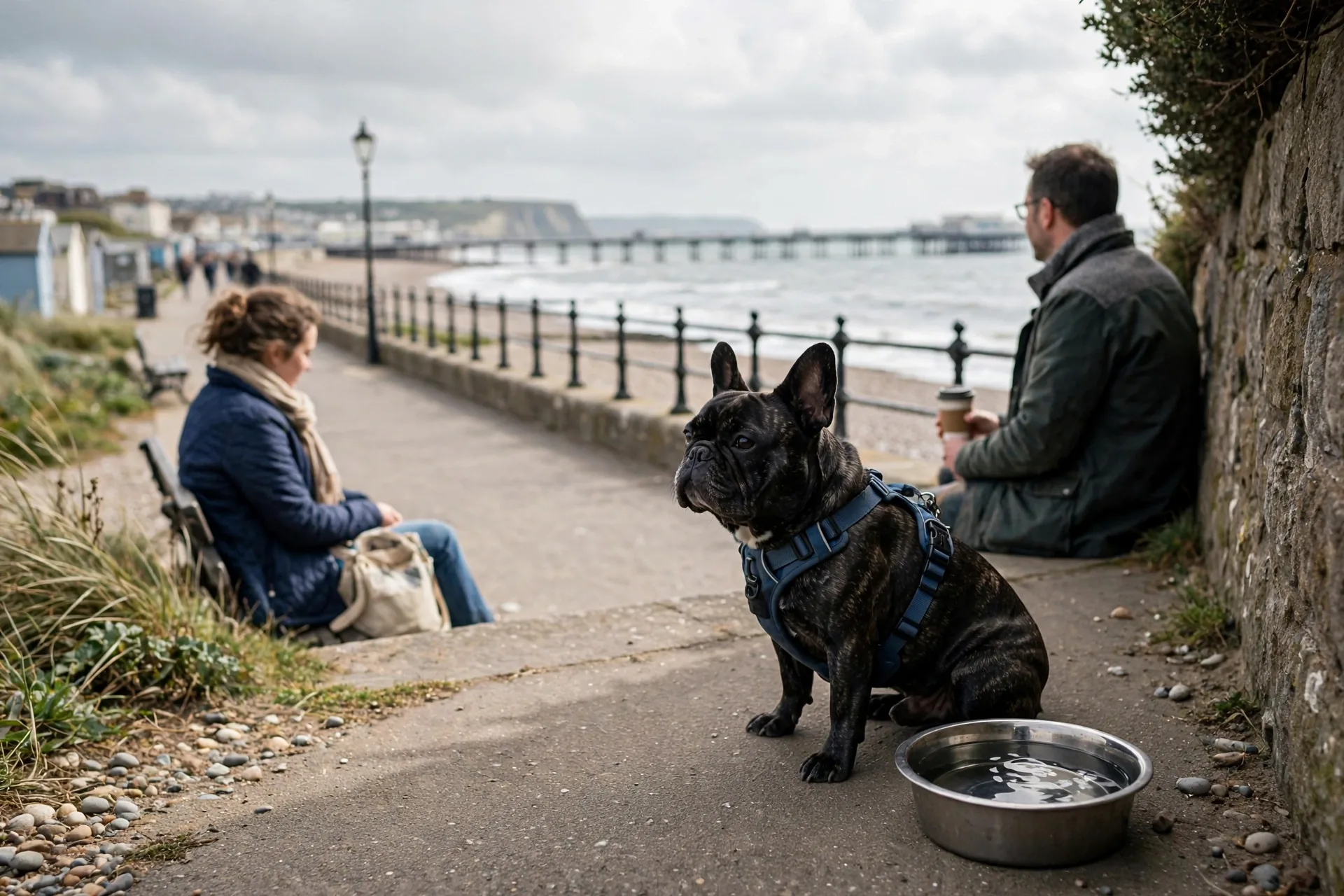
A pug walk on holiday should be short, flat, shaded and easy to cut in half. Think woodland loops with benches, riverside paths with bail-out points back to the car, town promenades early in the morning, and garden-centre or village circuits where a cafe stop is part of the route rather than a reward after it. Measure walks by your pug's comfortable home distance, then do less, not more — new places add sniffing, excitement and stopping-and-starting that tire a flat-faced dog faster than the mileage suggests.
Hills deserve particular respect. A gradient that barely registers for a longer-legged breed multiplies breathing effort for a pug, and coming down steep, slippery paths adds joint and confidence problems. Check route profiles before you go, avoid cliff climbs and long staircases, and never carry a hot, panting pug up a hill as a solution — being carried raises stress and can restrict the chest. If the headline walk of your destination is a summit, plan a separate human outing and let the pug rest at the stay with a responsible adult, rather than reshaping the day around a dog that should not be there.
Pacing tricks help more than gadgets. Walk out slowly, pause before the dog asks, turn back earlier than feels necessary, and finish with shade and water rather than a hot car park. Two or three short outings usually suit a pug better than one flagship march, and a sniffy twenty minutes on grass can be more satisfying for the dog than an hour of determined striding. Let the nose set the pace — within the limits of heat and breathing — and let the schedule bend.
Cool car routines for a flat-faced passenger
The car is where pug holidays most often go wrong, because a dog can overheat in a vehicle faster than on a walk and with fewer chances to stop. Cool the car before loading, travel in the coolest hours for long drives, keep air moving to the dog's area throughout, and plan fuel, toilet and water stops on a timetable rather than when someone feels like it. Never leave a pug alone in a parked car on a mild let alone warm day, even briefly, even in shade, even with windows cracked — for this breed the margin is simply too thin.
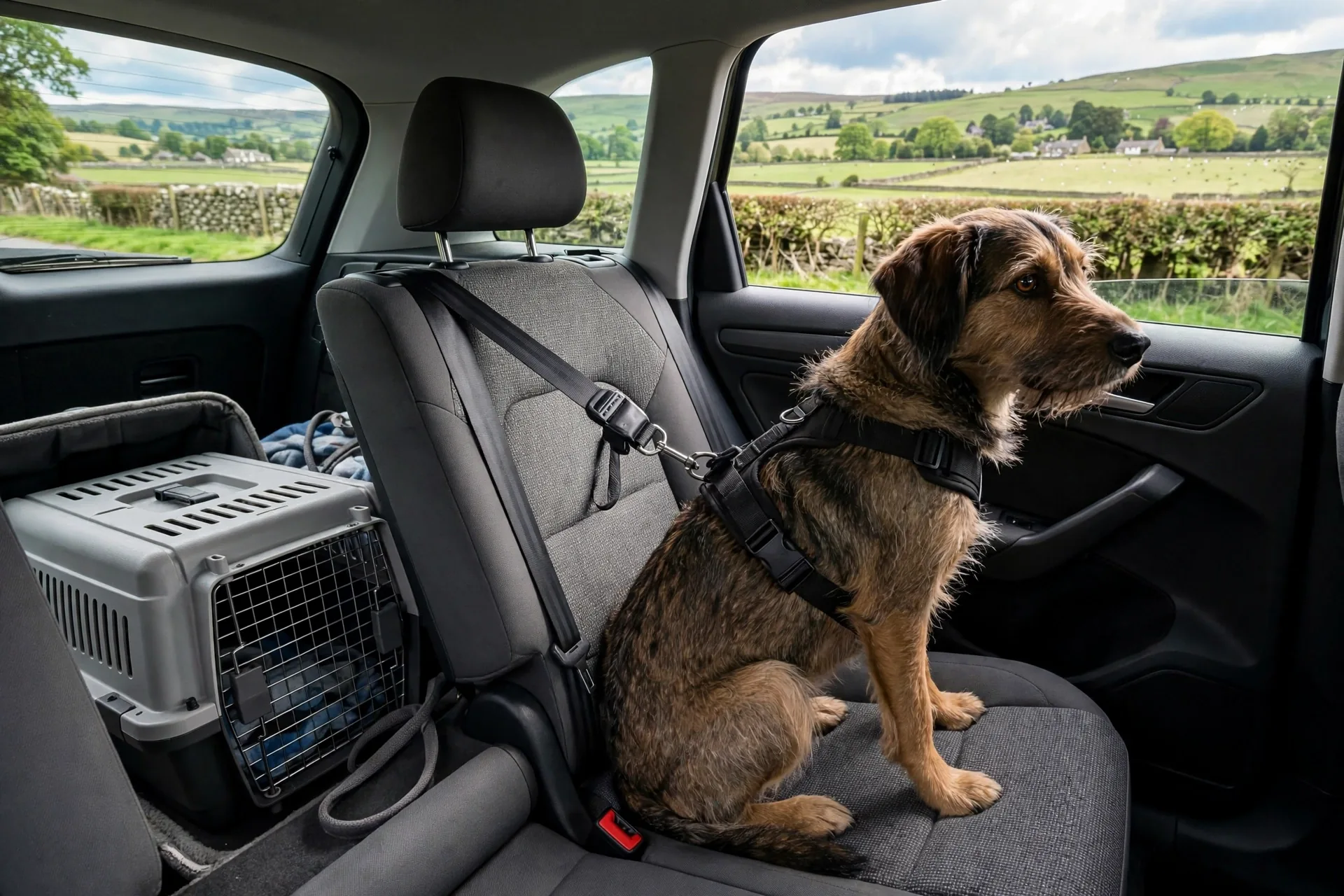
Restraint and position matter. Use a properly fitted harness or a secured crate arrangement that lets the pug sit and lie in a natural position without its airway being compressed, and test short journeys first if the set-up is new. Our guide to dog car safety explains restraint choices and temperatures in detail. Keep the dog out of direct sun through the window, watch for restlessness or louder breathing at every stop, and build the arrival routine around cooling and toileting before any unpacking excitement.
If your pug is a stressed traveller — panting, drooling or unsettled for reasons beyond heat — talk to your vet well before the trip about travel anxiety and about whether the journey itself is advisable. Do not experiment with sedatives or new calming products on departure day. Some pugs travel better after a quiet, familiar routine: same blanket, same seat position, a toilet stop just before loading, and no big meal immediately before the drive. Small consistencies lower excitement, and lower excitement means easier breathing.
Choosing a stay a pug can actually rest in
The best pug stay is boring in exactly the right ways: ground floor or a genuine lift, hard or easily cleaned floors for warm-day sprawling, a cool room away from a sun-trap conservatory, few or no stairs, and a small, shaded outdoor space for toilet trips without a full walk. Ask direct questions before booking — which floor, how many stairs, does the room heat up in afternoon sun, is there a fan or opening windows that can be used safely — and treat vague answers about a cosy attic room as a warning, not charm.
Hotels and cottages suit pugs differently. A cottage gives control over temperature, feeding and rest, but may hide steep cottage stairs and low doorways that encourage jumping. A hotel gives staff, lifts and hard-floored corridors, but adds lobby excitement, long warm corridors and other dogs at close quarters. Either works if the specifics work. For the broader flat-faced picture, including flying and insurer questions, read our guide to brachycephalic dog travel — this pug guide deliberately focuses instead on daily routines, gear and stay choice.
On arrival, set up the cool spot first: water down, a familiar blanket on the coolest floor, curtains closed against afternoon sun if the room is warm, and a toilet trip before exploring. Keep the first evening deliberately dull. A pug that has travelled, sniffed a new building and met new people has already had a full day, and a quiet night predicts a better morning than a celebratory pub visit with the dog under a warm table.
Pug-specific gear worth packing — and what to skip
Pack for cooling, carrying water and resting, in that order. A well-fitted walking harness that does not press on the neck or restrict shoulder movement is the centrepiece — many owners prefer a harness over a collar for a brachycephalic dog on walks, and your vet or a qualified fitter can advise on fit for your dog. Add a portable water bowl, a spare lead, poo bags, familiar food measured into daily portions, any prescribed medication, and a light blanket that smells of home. A cooling mat can help some dogs rest more comfortably indoors, provided the dog can move off it freely.
Be sceptical about gear that promises to make heat safe. Cooling coats, bandanas and fans may add comfort at the margins for some dogs, but none of them converts a hot walk into a safe walk, and a wet coat that warms up or restricts panting can do the opposite of its label. Test anything at home first, watch how your pug responds, and never let equipment talk you into a longer outing. The same caution applies to pet strollers and carriers: useful for a genuinely tired or older pug on flat ground for a short stretch, unhelpful — even risky — if the dog inside is hot, enclosed and unable to move or pant freely.
Food gear matters more than it looks. Bring the usual food to avoid a stomach upset layered onto travel stress, a measured scoop so holiday portions do not creep, and low-calorie training treats if you need rewards for settling in pubs or cafes. Puzzle feeders and lick mats can occupy a pug during human meals without a long walk being needed, but supervise them, count the calories, and choose fillings your dog already tolerates at home.
Pubs, cafes and the social pug problem
Pugs are sociable, people-facing dogs, and that charm creates its own holiday risk: strangers feed them, children crowd them, and every cafe stop becomes a performance. Decide your rules before the first outing. It is entirely reasonable to ask admirers not to feed your dog, to give the dog space while it rests, and to keep greetings brief when the dog is warm or has just walked. A short, friendly script — he is lovely, thank you, but he is on a strict diet for his breathing — ends most conversations kindly and quickly.
Choose venues by shade, space and exit routes rather than by menu alone. A garden table in full afternoon sun, a packed indoor bar, or a queue at a counter with the dog at ankle height among trolleys and toddlers are all poor pug environments however dog-friendly the sign claims to be. Go early, sit at the edge, place the dog on its blanket out of walking routes, order water promptly, and leave before the dog is fed up rather than after. A settled pug under a shaded table for forty minutes is a success; do not spend it all.
Insurance and veterinary planning belong in this practical section too, because a sociable dog in busy places has more chances to eat something it should not. Check that your policy covers the dog away from home and read any breed or pre-existing condition wording carefully — our guide to dog travel insurance in the UK explains the questions to ask. Keep the stay address, your vet's number and an emergency practice number together, and tell anyone dog-sitting for an evening exactly what the pug may and may not be fed.
A realistic pug holiday day, hour by hour
A workable pug day in Britain might look like this. Early morning: the main walk, while paths are cool and quiet, followed by water, breakfast and a long rest. Late morning: a short toilet and sniff outing close to the stay, then indoor rest through the warmest hours while humans visit the attraction that never suited the dog anyway. Late afternoon, only if temperatures allow: a second gentle walk in shade. Evening: a brief garden or street stroll, supper measured as usual, and an early, cool night. Notice what is absent — no midday march, no full-day trail, no dog left baking while humans explore.
Build one deliberately empty day into a longer break. Travel, new routines and constant novelty tire a small dog in ways owners underestimate, and a rest day at the stay often restores the whole trip. Use it for laundry, reading and garden time rather than filling it with a bonus attraction. If your pug is older, has known health issues, or is travelling for the first time, that slower rhythm is the trip — see also the principles in our guide to senior dog travel, many of which apply to any pug that conserves energy poorly.
Finally, keep the right to shrink the plan without treating it as failure. Forecasts change, rooms run warm, a dog sleeps badly, and the bravest decision on some mornings is a garden, a fan and a book. Pugs have been companions for centuries precisely because being near their people is the point — a pug does not need a summit photograph. Give yours cool air, short adventures and long rests, and the holiday will have been designed around the dog you actually have.
Practical questions
Before you go
How far can a pug walk on holiday in the UK?
It depends entirely on the individual dog, its fitness, weight, age, health and the weather, so there is no safe universal distance. As a general approach, do less than your pug's comfortable home walk, choose flat shaded routes, stop often, and turn back while the dog still looks comfortable. Ask your vet for guidance for your own dog, especially before attempting any longer or hillier route.
What temperature is too hot for a pug to travel or walk?
There is no single safe number that applies to every pug, because humidity, sun, excitement, weight and individual airways all change the risk. Pugs generally struggle in heat sooner than longer-faced breeds, so plan outings for the coolest hours, avoid midday exercise in warm weather, and cancel rather than push on if your dog shows heavier or noisier breathing. Follow current veterinary guidance and get advice for your own dog.
Should a pug wear a collar or a harness on holiday walks?
Many owners choose a well-fitted harness for walking a brachycephalic dog because it avoids pressure on the neck, but fit and the individual dog matter and some harnesses can restrict movement if poorly chosen. Get fitting help, check that your pug can breathe, sit and move freely in it at home first, and ask your vet if you are unsure which arrangement suits your dog.
Can a pug do stairs at a holiday cottage or hotel?
Occasional shallow steps may be manageable for some pugs, but steep, narrow or repeated stairs add breathing effort, fall risk and joint strain, and carrying a dog on stairs risks both of you. Prefer ground-floor stays or a genuine lift, ask about stairs before booking rather than on arrival, and never assume a cute cottage staircase will suit your dog until you have seen it described honestly.
Can I leave my pug in the car for a few minutes on a cool day?
Do not plan to. Cars can warm quickly even when the day feels mild, shade moves, and errands overrun — and a flat-faced dog has less margin than most if the temperature climbs. Take the pug with you where it is welcome, leave it safely at the stay within its normal limits, or travel with another adult who stays with the dog outside the car.