This article carries no paid placement and was written independently. Coat, breathing and confidence differ between shih tzus, and health points here are general information only. Your vet is the authority on your dog; official sources are the authority on rules — check both before travelling.
Shih Tzu travel works at companion pace: short, flat walks with plenty of being-carried-or-resting choice used wisely, a daily coat routine and a small grooming kit, cool rooms and cars because the breed is also flat-faced, stays with lifts or ground floors, and extra gentleness for older dogs. Keep the dog close, keep the coat dry and combed, and keep the itinerary kind.
A dog bred to stay close: plan around companionship
Every breed guide starts somewhere different, and the Shih Tzu's starts on a cushion. This is a companion breed in the purest sense — developed to live closely with people indoors, to be near, warm, watched and included — and most Shih Tzus still regard physical proximity to their person as the main event of any day. A holiday that honours that design looks different from a hiking itinerary: the dog travels where you travel, rests where you rest, and measures the trip in togetherness rather than terrain covered.
That closeness is a planning asset. A Shih Tzu usually needs no vast garden, no secure field booking and no dawn expedition to be content; a new room with its person, its own blanket and a short interesting stroll can constitute a successful day. It also creates the breed's main holiday risk — separation. A dog accustomed to constant company may find being left alone in a strange room far harder than the same dog at home, so build alone time honestly, keep it short, practise in the new place in tiny steps, and prefer itineraries where the dog simply comes along.
Inclusion has limits worth respecting in the other direction too. Constant company should not mean constant carrying, constant laps in hot rooms, or being passed around admirers until the dog is tired and overheated. Watch for the Shih Tzu that turns its head away, licks its lips, yawns or tries to move off, and give it the quiet corner and the choice to rest. Companions also need off-duty hours, and a dog that can settle on its own blanket beside you — rather than only on you — will cope with cafes, trains and visiting relatives far better.
Coat care on holiday: the daily ten minutes
Whether your Shih Tzu wears a full coat or a practical shorter clip, holiday life is hard on it: sea wind, drizzle, sand, grass seeds, mud and hotel carpets all conspire to turn a tidy dog tangled within days. The routine that saves the coat is unglamorous — a thorough brush and comb through to the skin once a day, every day of the trip, with extra attention behind the ears, under the collar or harness, in the armpits, around the beard and anywhere friction creates mats. Ten unhurried minutes daily prevents the two-hour dematting session, or the emergency clip, that ruins the last day of so many long-coated holidays.
Work gently and stop before it becomes a wrestling match. Use a slicker or pin brush followed by a metal comb — the comb is the truth-teller, because a brush can skate over the top of a forming mat while the comb finds it — and ease tangles apart with fingers and a little detangling spray rather than pulling. Check feet daily too: trim or clear the hair between pads if that is part of your normal routine, rinse salt and grit after beaches, and dry the dog properly after rain, because a damp coat left in a warm room mats faster and smells sooner.
Eyes, beard and topknot need their own micro-routine. Wipe eyes gently with a clean, damp cloth if discharge collects, keep hair out of the eyes with the tie or clip you use at home, and rinse and dry the beard after meals and muddy walks — a wet, food-carrying beard is both a smell and a matting engine. If your dog has any eye, skin or ear issue, or grooming causes pain or distress, involve your vet or a professional groomer rather than persisting; this guide offers general care information, not treatment for any individual dog.
The grooming kit: small bag, whole system
Pack grooming as a kit, not as scattered afterthoughts: the usual brush and a steel comb, detangling spray, small blunt-ended scissors for emergencies only if you are trained and confident using them, spare hair ties or clips, a gentle dog shampoo in a leak-proof bottle for the inevitable full wash, two absorbent towels reserved for the dog, paw balm if you already use it, and the wipes you normally use for eyes and beard. Add a lightweight drying coat or fleece if your dog knows one — after a wet walk it speeds drying and keeps cottage sofas safer.
Book the pre-holiday groom deliberately. A professional groom or a careful home session a week before departure — nails, pads, sanitary areas, coat combed completely through — sets the trip up, because no coat recovers ground on holiday; it only defends its starting position. If your dog wears a shorter pet clip, a fresh clip before a summer trip also helps with heat and sand. Tell your groomer the travel dates; many will happily adjust a cut for a beach week if asked, and a mat-free dog at check-in is the groomer's favourite kind of postcard.
Plan one laundry-and-grooming pause into a longer trip. A mid-stay evening for washing the dog blanket, drying towels properly and doing a longer coat session keeps small problems small, and most launderettes and many stays can accommodate the dog-washing part if you ask. What does not work is the hopeful alternative — ignoring the coat for a fortnight because you are on holiday — since the dog pays for that holiday with a shave-down in the week after you get home.
Heat and the flat face: the quiet second breed fact
Alongside the coat sits a second fact owners must plan around: the Shih Tzu is also a brachycephalic, flat-faced breed, with the breathing and heat sensitivities that can accompany a shortened muzzle. Individual dogs vary widely, and only your vet can advise on your dog's airway and fitness, but as a general pattern this breed should be walked in cool hours, rested at midday in warm weather, and never expected to keep pace on a hot, humid route. Our guide to brachycephalic dog travel covers the wider flat-faced picture, and the summer routines in travelling with a dog in hot weather apply here in full.
The coat and the face interact. A heavy, full coat in summer adds insulation a flat-faced dog does not need, while a sensible summer clip — discussed with your groomer — can make warm days easier and beach trips cleaner, though a clipped coat still needs sun awareness for exposed skin and should never be shaved to the skin on a whim. Whatever the length, provide shade, water and rest as a system, and learn your own dog's early signs of struggling: louder or faster breathing, reluctance to continue, seeking cold floors, or unusual restlessness.
Cars concentrate every risk in this section. Cool the vehicle before loading, keep air flowing to the dog, travel in cooler hours for distance, and never leave a Shih Tzu alone in a parked car on a mild or warm day — small dogs in enclosed, warming spaces have no spare margin, and a companion breed's distress at being left compounds the danger. The full restraint and temperature guidance in our dog car safety guide should be read as part of this breed's preparation, not as an optional extra.
Short walks, and the carried-versus-walking question
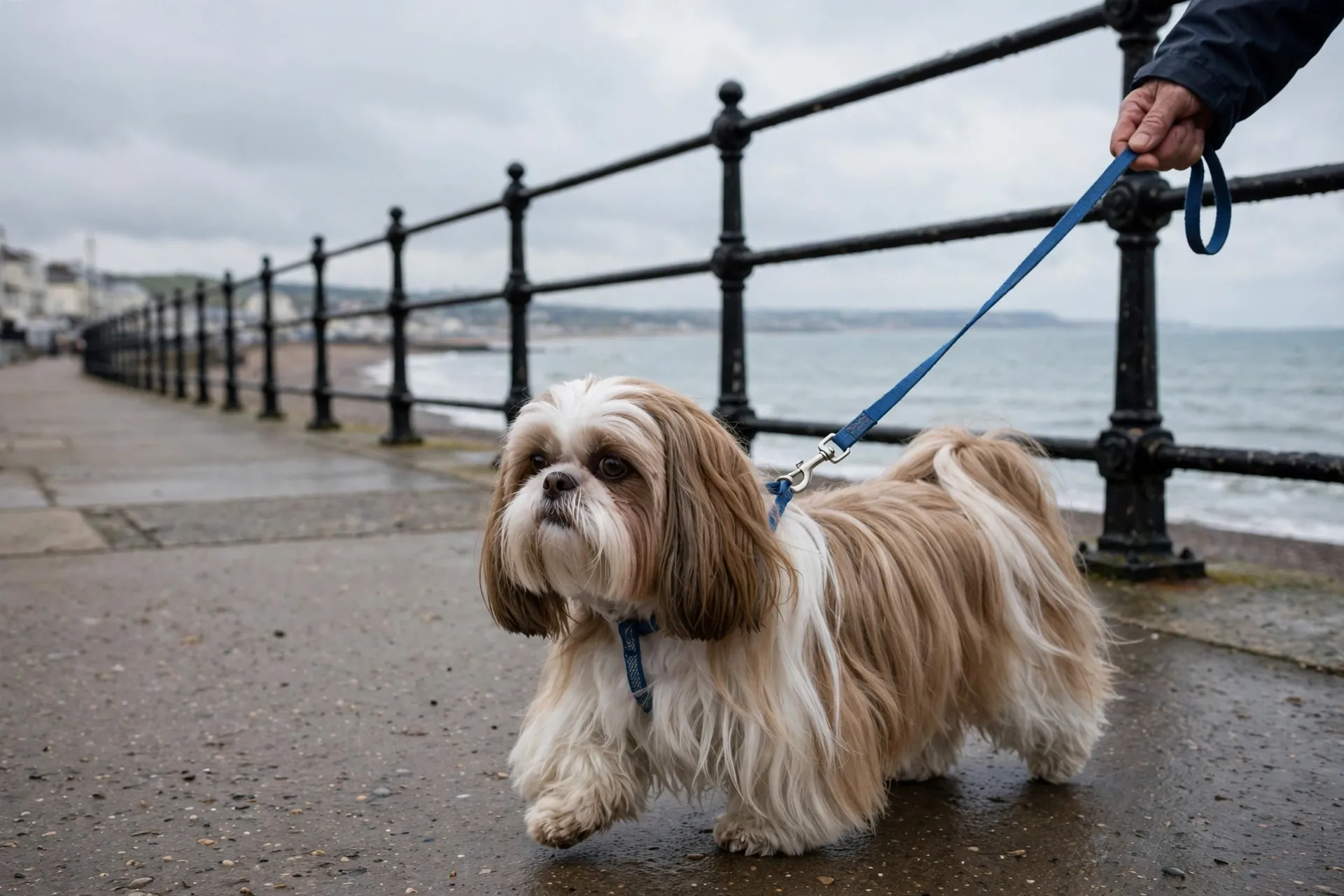
A typical Shih Tzu walk is a promenade in the original sense: flat, unhurried, rich in smells and social interest, and measured in hundreds of metres done happily rather than miles done dutifully. Seaside promenades, town and village streets, park circuits, canal towpaths and garden visits all suit the breed beautifully, especially in the cool of morning and evening. Build the day as two or three short outings with long, comfortable rests between, and let the dog's enthusiasm set the distance — a Shih Tzu that has stopped to watch the world from a bench beside you is not failing the walk; it is completing it.
Carrying deserves an honest paragraph, because every Shih Tzu owner does it and few guides discuss it well. Carrying is a sensible tool for short, specific stretches: a busy station concourse, a muddy gateway, a crowd, a staircase the dog should not attempt, or the last tired hundred metres of an older dog's outing. It is a poor substitute for walking altogether, because dogs need ground-level sniffing, toilet opportunities, muscle use and the simple agency of moving themselves. A dog carried everywhere arrives under-exercised, over-dependent and often frustrated, however soft the arms.
Technique matters when you do carry: support the chest and hindquarters so the dog is level and secure, keep trips short, watch breathing — a dog held tightly against a warm body on a warm day heats up — and put the dog down in a safe place before it struggles. Slings and carriers can help some owners and dogs for brief stretches if the dog is accustomed to them at home and can breathe and change position comfortably, but never use one to smuggle a dog through a long, hot itinerary it should not be on. The legs are there to be used, gently and often.
Stays for a dog that wants your room, not a resort
Shih Tzu-friendly, in practice, means ground floor or a reliable lift, a room that stays cool, floors that forgive a wet beard and muddy paws, and hosts relaxed about a small dog being genuinely present — trotting between rooms, sleeping beside the bed, appearing at breakfast where dogs are allowed. Grand facilities matter less than these basics. A cottage or annexe gives the best control of routine and temperature; a hotel gives company and convenience if its dog rules — which rooms, which public areas, whether dogs may be left — match how you actually travel.
Stairs are the hidden filter. A Shih Tzu's short legs and long back make steep, open or slippery stairs a poor daily proposition, and carrying a dog on unfamiliar stairs several times a day risks a fall for both of you. Ask before booking, prefer few or no stairs, and use ramps or carrying only for the odd step rather than a staircase lifestyle. Our overview of dog-friendly hotels in the UK will help compare options before you apply this breed filter.
Set up the room for the coat and the closeness together: blanket and bed beside yours, water in a corner where a beard will drip harmlessly, grooming kit in the bathroom, a towel by the door for the post-walk dry-off ritual, and a rule — kept kindly — about sofas and beds that matches the stay's own rules rather than your home habits. A Shih Tzu that knows where its spot is in the new room will use it, and a host who finds the coat brushed, the floor towel used and the dog content is a host who welcomes the breed again.
Older Shih Tzus: the gentlest version of the trip
Older Shih Tzus often make superb travellers — the breed's love of company and routine deepens with age — provided the trip slows to their speed. Shorter drives with more stops, one short outing done well instead of three, step-free stays, a familiar bed carried from home, and medication and feeding kept to the home clock all matter more than destination. Our guide to senior dog travel covers veterinary checks, pacing and comfort planning in depth, and it should be read alongside this section for any dog in its later years.
See your vet before travelling with an older dog, or any dog whose eyesight, breathing, mobility or general health has changed recently. Ask about journey length, pain or other medication timing across a travel day, what signs should prompt you to find a vet while away, and whether the specific plans you have — a ferry, a long drive, a stay with unavoidable steps — suit this dog now. Carry medication in the bag that stays with you, photograph prescriptions, and save a veterinary practice number near the stay before you need it at midnight.
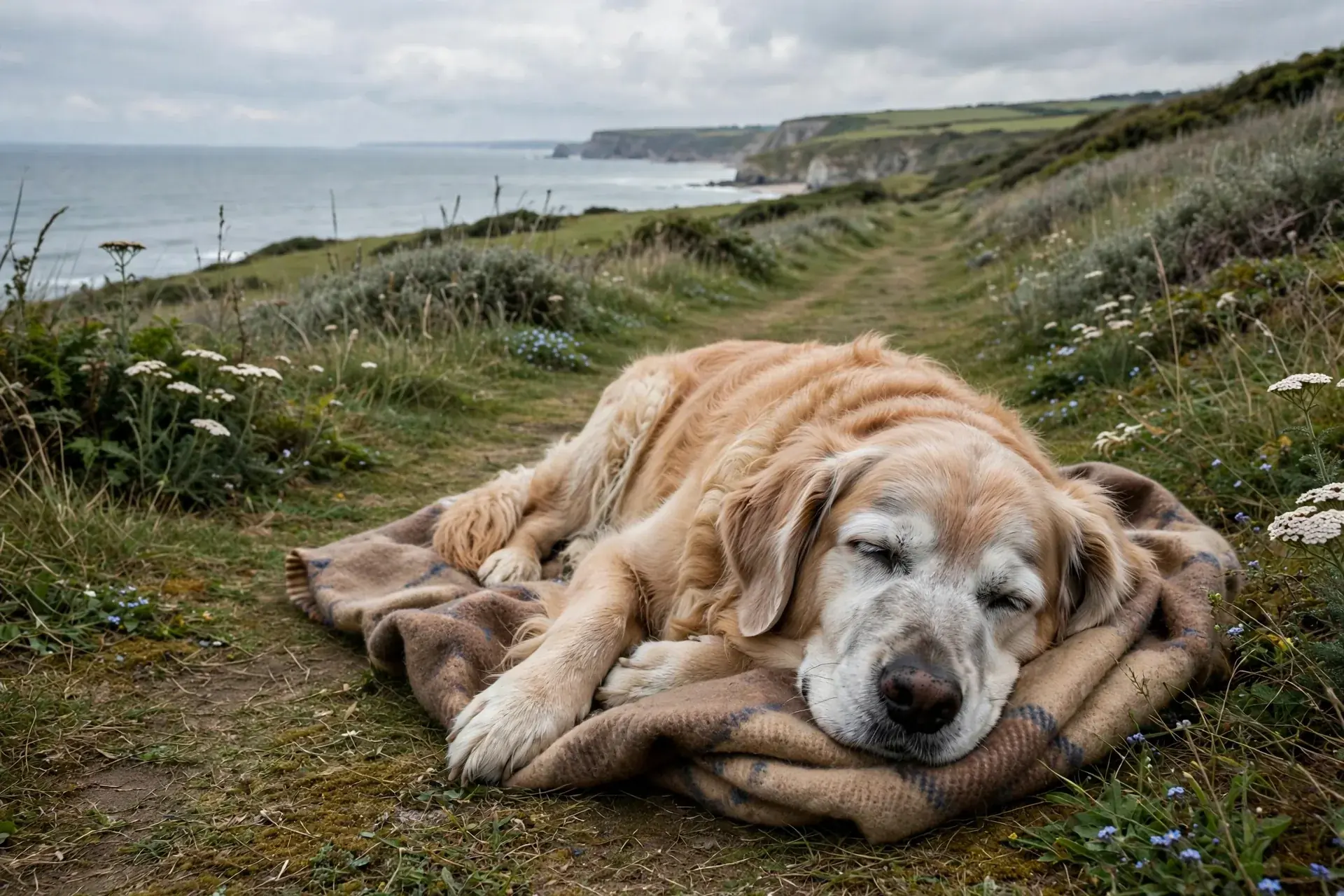
Eyes and footing need daily attention in the old dog. Dim hotel corridors, glossy floors, wet promenade stones and unfamiliar steps can all defeat ageing eyes and legs; a small night-light, a non-slip mat by the bed, unhurried toilet trips on the lead, and carrying on genuinely risky stairs keep confidence intact. Let the dog set out each morning as the editor of the day's plan. An old Shih Tzu asleep in a patch of cool shade beside your cafe table, having done exactly as much as it wanted, is not a diminished holiday — it is the breed's whole philosophy, perfected.
A Shih Tzu day, and the journey home
A good day assembles itself simply. Morning: a cool, flat stroll — promenade, park or village loop — then breakfast, a beard rinse and the day's first rest. Midday: shade, company and quiet while humans do the dogless attraction or the long lunch, with the dog settled nearby where allowed or resting at the stay within its proven alone limits. Late afternoon: the second short walk and the daily groom, done unhurriedly before supper rather than as a bedtime chore. Evening: a final garden or street toilet trip, and the blanket, in whichever room the people are.
Rest days are built into this breed's rhythm without needing justification. A day of cottage garden, short potters and long naps suits most Shih Tzus better than a daily attraction circuit, and it is the day the coat gets its longer session and the dog gets its confidence back if travel has been busy. Puppies need the same shape in miniature — far shorter walks, far more sleep, and socialisation in tiny, positive doses rather than a grand tour — and their owners should scale every distance in this guide down and ask their vet what is appropriate.
Travel home on the familiar pattern: cool car, usual seat, usual blanket, water stops with proper little walks rather than verge sniffs, and the groom repeated the day after you return, before mats set like concrete. Note the stays that kept a cool ground-floor room, the promenade that suited, the groomer near the destination if you found one. A Shih Tzu's Britain is a small, kind map of such places — and for a dog whose ambition was only ever to be beside you, that map is more than enough.
Practical questions
Before you go
How often should I brush my Shih Tzu while on holiday?
Daily, as a rule — a thorough brush followed by a comb through to the skin, paying attention behind the ears, under the harness, in the armpits and around the beard. Seaside wind, sand, drizzle and grass tangle this coat quickly, and ten minutes a day prevents mats that would otherwise need hours of work or clipping out. Dry the dog properly after wet walks before brushing.
How far can a Shih Tzu walk on a UK holiday?
Most Shih Tzus suit short, flat, unhurried walks rather than mileage — two or three gentle outings of a length your own dog already enjoys at home, with rests, is a better pattern than one long route. Age, weight, fitness and breathing vary widely between dogs, puppies and older dogs need much less, and warm weather shortens everything. Ask your vet what suits your dog if you plan anything more ambitious.
Is it okay to carry my Shih Tzu instead of walking on holiday?
Carrying is useful for short, specific stretches — crowds, concourses, muddy gateways, risky stairs or a tired final stretch — but it should not replace walking altogether. Dogs need ground-level sniffing, exercise, toilet chances and the independence of moving themselves. Support chest and hindquarters when you carry, keep it brief, watch breathing and warmth, and put the dog down somewhere safe before it struggles.
Does a Shih Tzu need a shorter coat for a summer holiday?
Many owners find a sensible, groomer-advised shorter clip easier for summer travel — cooler, quicker to dry and less prone to trapping sand — but the right length depends on your dog and its coat, and skin should never be shaved bare without professional advice. Whatever the length, walk in cool hours, provide shade and water, and remember this is also a flat-faced breed that can struggle in heat.
Can an older Shih Tzu still enjoy a holiday?
Very often, yes — on a gentler trip. Choose step-free, ground-floor stays, shorter drives with more stops, one short outing done well, and keep medication and routines to the home clock. See your vet before travelling if health, eyesight, breathing or mobility has changed, carry prescriptions and a local vet's number, and let the dog's morning enthusiasm set each day's ambition.