This guide is independent and contains no paid placement. If affiliate links are added later, they will be clearly marked and will not change our editorial checks.
There is no winning season, only a winning match. Summer gives long days and warm evenings but brings beach bans, heat risk and peak prices. Winter gives open beaches, quiet paths and lower rates but brings short days, mud, ice and closed facilities. Pick by your dog first: heat-sensitive dogs usually do better outside peak summer, while stiff or anxious seniors need warmth, grip and short walks more than they need an empty beach.
How to use this calendar
Most season guides ask you to compare summer and winter as two fixed packages. That fails because a British year is not two seasons. February in the Scottish Highlands is not February in Cornwall, and a hot spell in late May can be harder on a dog than a mild week in October. Use this guide as a calendar instead: find the months you can actually travel, read what those months usually bring, then test the plan against the dog in front of you.
Start with three facts about your dog. First, heat tolerance: does your dog pant heavily on a warm spring walk, seek shade indoors, or need to stop and rest on summer pavements? Second, cold and joint tolerance: does your dog stiffen after lying on a cold floor, hesitate on wet steps, or need a coat below a certain temperature? Third, noise and crowd tolerance: does your dog relax around beach crowds, children and other off-lead dogs, or does a busy promenade undo a whole day? Those three answers narrow the calendar faster than any price comparison.
Then add three facts about the trip. How far are you willing to drive, and does your dog travel well in a car? Do you need a beach, or would a forest, a lake path or a quiet village do just as well? And how much bad weather can your holiday absorb before it stops feeling like a holiday? A cottage with a drying room, a wood burner and a short hard-surfaced loop nearby survives a wet February week. A tent, a long cliff walk and a dog that hates rain does not.
A note on the facts in this guide: beach restriction dates, opening hours and local rules change, and they are set beach by beach rather than nationally. Where a date or rule is given as typical, treat it as a planning prompt and check the official guidance before you travel. The same caution applies to health advice here: it is general information for planning, not a substitute for your vet, especially for dogs with heart, breathing or joint conditions.
The calendar below walks through the year in four blocks. Each block covers daylight, temperature in general terms, beach access, crowds, accommodation quirks and the dogs who tend to enjoy it most. After the calendar, two reverse-choice sections flip the question: if your dog hates heat, or if your dog hates cold, what should you actually book?
January to March: cold, quiet, muddy
January is the quietest month on most British coasts. Holiday parks that stay open run with skeleton facilities, cafes may open only at weekends, and many attractions close for winter maintenance. That sounds bleak, and for a first holiday it can be. But for the right dog it is the easiest month of all: beaches are largely open to dogs, car parks are empty, and a long off-lead run does not require negotiating crowds, picnics and other dogs every fifty metres.
Daylight is the main constraint. In early January, much of Britain has under eight hours of daylight, and in northern Scotland it is closer to six or seven. That compresses the walking day. Plan one good morning walk, a short afternoon loop and an early last outing, and choose accommodation where the last outing does not mean a dark lane or an unlit cliff path. A cottage with a garden, a lit village green nearby or a short surfaced loop matters more in January than a sea view does.
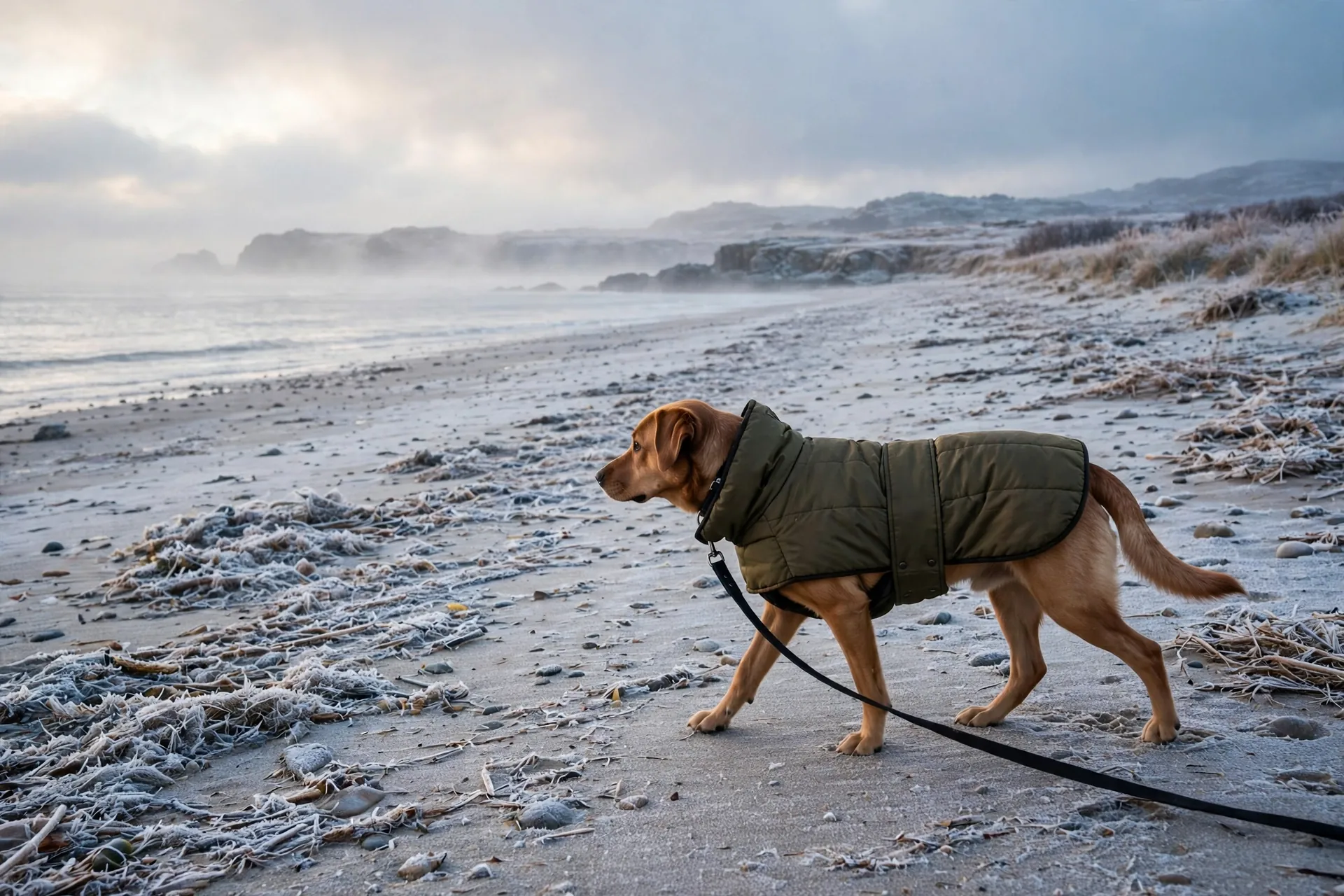
Cold is the second constraint, and it bites unevenly. A fit adult collie in a waterproof coat may love a frosty beach, while a small, lean or elderly dog loses heat quickly when wet and still. Wind chill on an exposed coast can be far colder than the forecast temperature suggests, so check the wind as well as the degrees. After a walk, drying matters as much as the walk itself: a wet dog in a cold cottage takes a long time to warm up, and damp bedding left overnight stays damp. Pack a drying coat, two towels at minimum, and a familiar blanket that can be washed and dried quickly.
February is similar, with two changes worth noting. Daylight grows noticeably, especially after the middle of the month, and half-term week brings a short burst of families to popular coasts and national parks. Prices often stay low outside that week, which makes February a good value month if you can avoid the half-term dates. Ground conditions, however, are often at their worst: saturated fields, flooded riverside paths and deep mud on unmade tracks. Dogs that love mud will love February. Dogs with sore paws, recent surgery or a hatred of baths will not, and owners should check paw pads after gritty or icy walks.
March is the hinge month. Days lengthen fast, early spring flowers appear in the south-west, and many seasonal businesses reopen around Easter, which falls in late March or April depending on the year. Some beach restrictions also begin around Easter, so March can be the last fully open month on beaches that ban dogs in summer. That makes a March trip attractive for beach lovers, but check the specific beach: an Easter start date is common, not universal. March weather is famously changeable, with a warm sunny morning and a hail shower by lunch, so pack for both and keep a wet-weather walk in reserve rather than planning every day around one exposed route.
Who enjoys January to March most? Calm adult dogs that cope with cold, dogs that prefer space to socialising, and owners who want a cheap, quiet break and do not mind short days. Who should be cautious? Puppies in the middle of toilet training in a house with a muddy garden, dogs recovering from orthopaedic surgery, and any dog that becomes distressed by storms, fireworks left over from New Year, or dark, noisy evenings.
April to June: light returns, bans begin
April brings the biggest practical improvement of the year: daylight jumps, temperatures usually rise into double figures in much of England and Wales, and woodland and riverside walks dry out. Easter holidays make the first half of April busy in honeypot villages and coastal towns, but the weeks either side are often calm. This is also when planning gets more detailed, because beach rules split. Some beaches welcome dogs all year, some introduce partial zones with dogs allowed on one stretch but not another, and some ban dogs entirely for the summer season. The start date matters: a beach that was open on Good Friday may be restricted the following Monday, so a trip straddling Easter needs a beach-by-beach check, not a general assumption.
May is, for many dogs, the sweet spot. Daylight reaches fourteen to sixteen hours in much of Britain, temperatures are usually comfortable for walking, and the summer crowds have not yet arrived. Bluebells, lambs and nesting birds change the countryside too: keep dogs on leads near livestock and ground-nesting birds, and remember that many nature reserves tighten lead rules in spring. Ticks also become more active from spring onwards, so a tick check after grassy or woodland walks becomes part of the routine, and owners should ask their vet about prevention before the trip if they do not already use it. For a fuller explanation of seasonal hazards and the checks that matter, see our guide to UK beach rules, bans and fines, which explains how local restrictions work and how to verify a beach before you set off.
June divides into two halves. Early June often feels like May with warmer evenings, while late June can bring the first genuine heat, especially in the south and east. Dogs that struggled in previous summers will show it in June before the school holidays begin, which is useful information: if a late-June walk already needs shade stops and water breaks, a July or August trip to the same place will be harder, not easier. June also brings longer grass, more insects and, in parts of Scotland, the start of midge season, which troubles some dogs and many owners. A midge-proof evening walk, or an inland forest walk instead of a still lochside evening, can make the difference between a pleasant night and a miserable one.
Accommodation in April to June rewards early booking for Easter and May bank holidays, but midweek breaks outside those weekends often offer good value. Gardens become usable again, which matters for dogs that need a secure toilet area first thing and last thing. Ask whether the garden is fully enclosed, how high the fence is, and whether the gate self-closes: a spring garden that looks enclosed in a photograph may have a gap at the hedge line that a small dog finds in seconds.
Who enjoys April to June most? Most dogs, honestly, which is why these months are popular. Young, fit dogs enjoy the longer walks, social dogs enjoy the returning buzz, and owners who want daylight without peak prices find May especially good. Who should be cautious? Dogs with pollen or grass allergies, dogs that chase livestock or nesting birds, and heat-sensitive dogs heading into late June in the south.
July to September: heat, crowds, bans peak
July and August are the months when a summer dog holiday is most tested. The benefits are real: the longest days, warm evenings, outdoor eating, and the fullest range of attractions, boat trips and events. The costs are equally real: peak accommodation prices, booked-out dog-friendly units, busy roads, crowded beaches and the strictest beach restrictions of the year. A dog that loves people, tolerates heat and can settle on a terrace will have a wonderful time. A dog that pants in a warm house, barks at crowds or needs a quiet beach will spend much of the trip being managed rather than enjoying itself.
Heat is the safety issue that overrides everything else. Dogs cool themselves mainly by panting, and they cannot sweat like people. On a hot day, a walk at midday on tarmac can burn paws and overheat a dog quickly, and a car parked in sun becomes dangerous within minutes, even with a window cracked open. The safe pattern in summer is early morning and late evening walks, shade and water at all times, and rest during the middle of the day. Flat-faced breeds, overweight dogs, elderly dogs and dogs with heart or breathing conditions are at higher risk, and owners should discuss summer exercise limits with their vet before a peak-summer trip. Never leave a dog alone in a parked car in warm weather, and carry water on every walk, not just long ones.
Beach access in July and August needs a plan, not a hope. Many popular beaches ban dogs from part or all of the beach during the summer season, often from around 1 May or Easter to 30 September, with fines for breaches under local public space protection orders. That does not mean a summer coastal holiday is impossible with a dog. It means the beach choice, the time of day and the zone matter. Some beaches allow dogs before 9am or after 6pm even in summer, some have a year-round dog zone at one end, and some nearby beaches have no restriction at all. The mistake is to book a cottage next to a banned beach and discover the nearest dog beach is a twenty-minute drive away. Check the beach, the zone and the hours before booking, and save a second beach option for days when the first is too crowded or too hot.
Water adds a second summer hazard. Dogs love to swim, but rivers, lakes and the sea carry risks that change with the season: strong currents, cold water shock after a hot walk, and blue-green algae in still, warm water, which can be fatal to dogs. Owners should learn to recognise algae, keep dogs out of suspicious water, and rinse dogs after swimming in the sea to remove salt and sand. Life jackets help dogs that swim in deep or tidal water, and a long line gives control on a busy beach without removing all freedom. Our water safety guide covers algae, tides and cold-water risks in more detail for anyone planning regular swimming days.
September changes the picture quickly, and it is the month many experienced dog owners prefer. Schools return in early September, crowds thin, and many beach bans lift at the end of the month, although some lift earlier and some run into October. Temperatures usually soften, evenings stay light enough for a post-supper walk, and accommodation prices drop from peak rates. Late September can still be warm in the south, so heat-sensitive dogs still need morning walks, but the combination of space, light and lower prices makes September arguably the best summer-adjacent month. If you can only take one summer holiday with a dog and you have a choice of dates, late September deserves serious consideration.
Who enjoys July to September most? Social, heat-tolerant dogs, families who need school-holiday dates, and owners who want the fullest range of things to do. Who should be cautious? Flat-faced and overweight dogs, dogs with breathing or heart conditions, reactive dogs that struggle with crowds, and any dog that cannot settle in a busy holiday park or on a crowded terrace.
October to December: bans lift, storms arrive
October is a second hinge month, and often a better one than April. Beach bans lift on many beaches at the end of September or during October, autumn colours transform woodland walks, and half-term week aside, places quieten. Daylight shortens noticeably through the month, from around eleven hours at the start to under ten by the end in much of Britain, so morning walks become the main event and evenings move indoors. Dogs that love leaf piles, puddles and long woodland walks thrive in October, while dogs that hate getting wet will need a drying routine and a short, hard-surfaced alternative for rainy days.
November brings the trade-offs that define winter dog holidays. Storms, high winds and flooding become more likely, especially on western coasts, and coastal paths may close or become unsafe after heavy rain. Fireworks season around early November is a serious issue for noise-sensitive dogs: displays happen on multiple nights, not just one, and a rural cottage near a village green can be noisier than a town flat. If your dog is noise-sensitive, ask about local displays, choose accommodation with good sound insulation and an interior room away from the road, and plan calming routines well before the first bangs. Owners should also check that fences and gates survive high winds, because a storm-damaged boundary is a common escape route.
December splits into two trips. Early December is quiet, often cold and dark, with Christmas markets and lights in towns but reduced rural opening hours. The Christmas and New Year week is the opposite: premium prices, minimum stays, booked-out cottages and a festive atmosphere that some dogs love and others find overwhelming. Christmas hazards deserve a specific check: chocolate, mince pies, rich food, decorations, candles and visitors coming and going all create risks that a normal week does not. A dog that settles in a quiet corner with a familiar bed will cope well; a dog that counter-surfs, steals food or panics at doorbells needs a management plan, not just good intentions. For festive planning, our Boxing Day dog guide covers the traditional walk, what is open, and the food hazards to keep out of reach.
Accommodation in October to December rewards different questions. Ask about heating: is it included, is there a surcharge, and does the property stay warm overnight or cool down sharply? Ask about drying: is there a boot room, an outdoor tap, or a place to hang a wet coat without soaking the carpet? Ask about light: is the last-outing route lit, surfaced and short? A beautiful remote cottage with a half-mile unlit track to the nearest toilet spot is a poor winter choice for an elderly dog, however pretty it looks in photographs.
Who enjoys October to December most? Dogs that love woodland and beach space, dogs that settle indoors in the evening, and owners who want a quiet, atmospheric break and can manage storms and short days. Who should be cautious? Noise-sensitive dogs in early November, dogs with arthritis that stiffens in cold and damp, and puppies or rescue dogs still learning to settle in a new place during the busiest festive week.
The heat-sensitive dog: choose backwards
If your dog struggles in heat, choose the season backwards. Instead of asking when you want to go, ask when your dog can walk comfortably, then fit your holiday into those months. For many heat-sensitive dogs, that means May, late September or October, with winter as a second option if cold is not also a problem. It usually does not mean July or August in the south, however convenient the dates are.
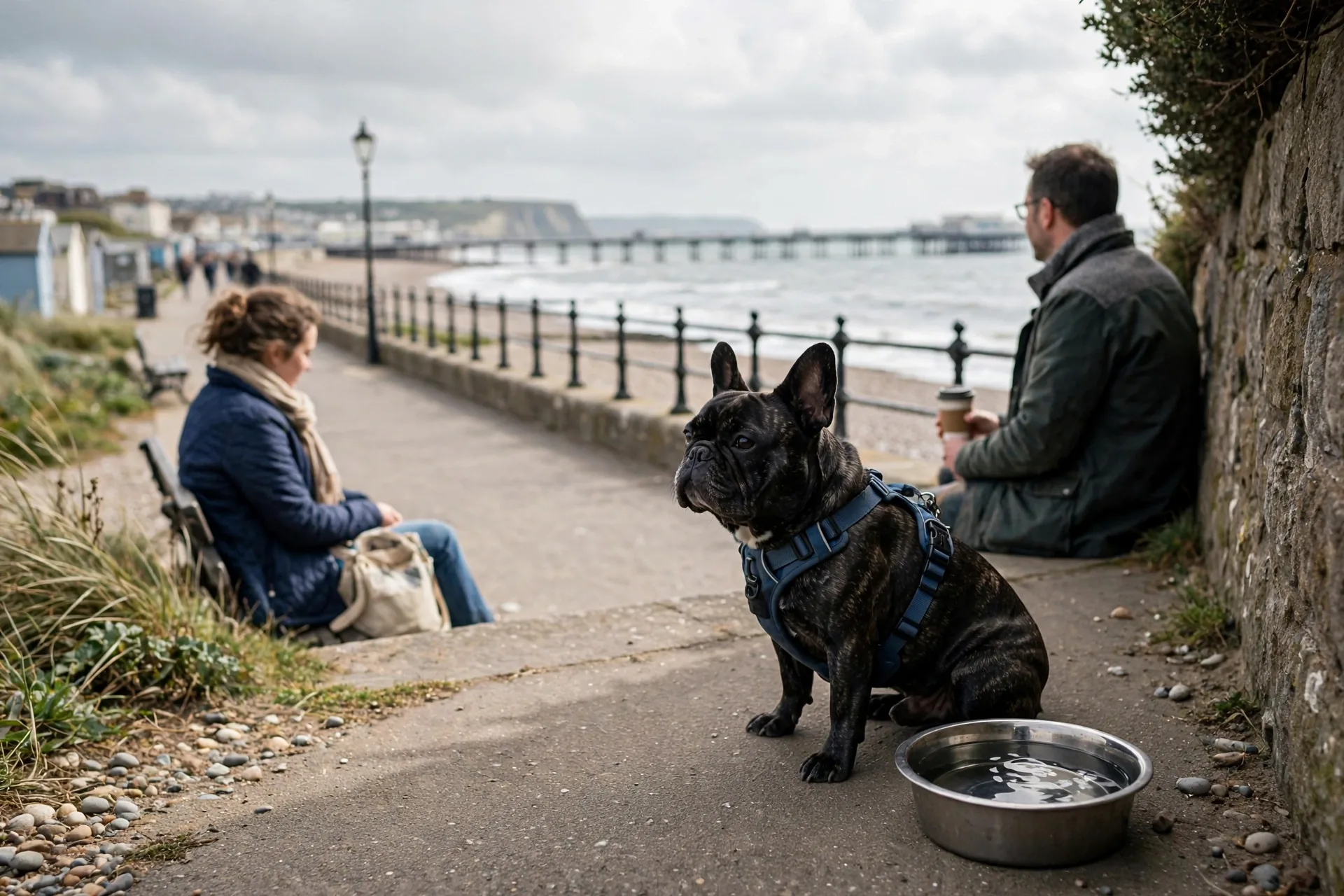
Heat sensitivity has many causes, and they change the advice. Flat-faced breeds such as French bulldogs, pugs and bulldogs have shortened airways that make panting less efficient, so they overheat faster and recover more slowly. Overweight dogs carry extra insulation and work harder on every walk. Elderly dogs and dogs with heart disease have less reserve. Dark-coated dogs absorb more sun, and dogs with thick double coats need shade and grooming care in summer. If you are unsure whether your dog counts as heat-sensitive, look at last summer: did your dog refuse walks, pant for a long time after a short walk, seek cold floors, or need to lie in water to recover? If so, plan as if the answer is yes and check the official guidance before you travel if you are planning exercise in hot weather.
For these dogs, the booking checklist flips. The ideal property has shade in the garden, a cool tiled or stone floor indoors, a fridge for cold water and cooling mats, and a short, shaded morning walk that does not require a car journey in a hot vehicle. The ideal location has a woodland walk, a river path with shade, or a beach that allows dogs early in the morning, rather than an exposed south-facing beach with no shade. The ideal day starts before 8am in peak summer, rests through midday, and resumes in the evening. Owners should also plan the car: pre-cool it, never leave the dog in it, and carry water, a bowl and a cooling towel on every journey. Our breed-specific guide to travelling with a flat-faced dog covers breathing warning signs, car routines and vet checks that apply well beyond one breed.
A worked example helps. A French bulldog owner choosing between a July week in Cornwall and a late-September week in the same cottage should usually choose September: beach bans have mostly lifted, temperatures are lower, crowds are thinner, and the dog can walk at normal times rather than only at dawn and dusk. The saving on accommodation is a bonus, not the reason. The reason is that the dog gets a holiday rather than a week of heat management. If July is the only possible date, the same owner should choose a cooler, northern or coastal location with shade, book a property with a cool interior, and accept that the holiday will be built around morning and evening walks with long indoor rests.
Cooling gear helps, but it does not turn a hot month into a safe one. Cooling coats, mats and bandanas work by evaporation and need airflow and re-wetting to keep working. They help a comfortable dog stay comfortable; they do not rescue an overheating dog. The warning signs to act on immediately are excessive panting that does not settle, drooling, bright red gums, wobbliness, vomiting or collapse. Move the dog to shade, cool gradually with lukewarm water rather than ice-cold water, offer small amounts of water to drink, and contact a vet urgently. Save the nearest emergency vet number before the trip, because a heat emergency does not wait for a web search.
The cold-sensitive senior: choose differently
The cold-sensitive senior is the mirror image, and the advice reverses in a way that surprises many owners. A senior dog that stiffens in winter does not automatically need a summer holiday. Summer heat, crowds and long walks can be just as hard on an old dog as winter cold. What a senior usually needs is a mild month, a warm house, short walks and grip underfoot, and that combination is often found in May, September or October rather than in either extreme.
Start with the body, not the calendar. Arthritis stiffens in cold and damp, so a senior that takes twenty minutes to loosen up on a winter morning will struggle with a frosty beach walk followed by a cold cottage. Muscle loss makes stairs harder, and reduced vision or hearing makes busy, unfamiliar places more stressful. Kidney disease, common in older dogs, increases thirst and toilet needs, so a long walk far from a toilet spot becomes a problem. Cognitive change can make a new house confusing at night, so a familiar bed, a night light and a short, predictable last outing help more than a larger garden does.
The winter senior checklist therefore looks different from the summer one. Choose step-free or low-step access, a ground-floor bedroom if possible, and a property where the dog sleeps in a warm, draught-free corner rather than a cold hallway. Pack a well-fitting coat that covers the belly, a drying coat for wet days, and non-slip mats for smooth floors. Plan short, frequent walks rather than one long expedition: three twenty-minute walks suit most seniors better than one hour-long march, and they keep joints moving without exhausting the dog. Check the surface too: icy pavements, frosty decking and wet grass are slip hazards, and a dog that falls loses confidence as well as balance.
A worked example helps here too. An elderly Labrador with arthritis choosing between a January cottage in the Highlands and a May cottage in the Cotswolds should usually choose May: daylight is longer, ground is drier, the cottage is warmer, and the dog can manage several short village and riverside walks without a long, cold expedition. If winter is the only option, the same owner should choose a southern, low-lying location, a modern, well-heated property with step-free access, and a daily plan built around short loops from the door. The goal is not to avoid winter entirely; it is to avoid the combination of cold, damp, distance and steps that makes a senior miserable.
Travel also matters more for seniors. Long car journeys stiffen joints, so plan breaks every two hours, a comfortable bed or ramp for getting in and out of the car, and water at every stop. Book a vet check before a long trip if the dog has a new symptom, a medication change or a recent fall, and carry medication in hand luggage rather than in a suitcase that might be left in a cold car. Owners should also check that the property allows a dog on furniture or provides a dog bed near the owner's bed, because a senior that sleeps on a cold floor after years on a sofa will not settle well.
Both reverse-choice profiles share one rule: the best season is the one where the dog needs the least management. If you spend the whole trip watching the thermometer, cutting walks short, drying the dog for an hour or coaxing it out into a storm, the season is wrong for that dog, however good the deal was. Change the month, change the location, or change the property type until the daily plan looks easy on paper. An easy plan on paper usually becomes an easy week in practice.
Beach bans without the guesswork
Beach bans cause more ruined dog holidays than any other seasonal rule, because owners assume a national rule that does not exist. In England, Wales, Scotland and Northern Ireland, beach dog rules are set locally, usually by the council, and they vary by beach, by zone and by date. One beach may ban dogs from 1 May to 30 September, the next beach along the coast may allow dogs all year, and a third may allow dogs on the northern half but not the southern half. Signs at the beach entrance are the final authority on the day, and they override anything in a guide, a booking listing or a social media post.
The practical method is short. First, list the beaches within a realistic distance of your accommodation, not just the nearest one. Second, check each beach on the council website or the beach information page, noting the exact dates, the zone, the hours and any assistance-dog exception. Third, save a screenshot or a note with the beach name and the date you checked it, because a rule that changes between booking and travel is easier to query with a dated note. Fourth, plan a backup beach for days when the first choice is crowded, closed for safety or too hot. Fifth, on arrival, read the signs again before letting the dog off the lead, because temporary closures for wildlife, water quality or events can override the seasonal rule.
Seasonal bans also interact with tides and safety. A beach that allows dogs all year may still be unsafe at high tide, when the sand disappears and the only exit is a cliff path, or after a storm, when debris and strong currents make swimming dangerous. Check tide times for coastal walks, especially on beaches with cliffs at both ends, and keep dogs on a lead near cliff edges, harbour walls and areas with fishing gear. Dog fouling rules apply all year: bag it, bin it, and carry spare bags, because a beach with no bins still requires you to take waste away.
Finally, remember that a beach ban is not a ban on the coast. Coastal paths, promenades, harbour villages, nature reserves and inland lakes often welcome dogs even when the sand does not. A summer trip built around a coastal path walk, a dog-friendly cafe and an evening on a dog beach after restrictions lift for the day can be better than a trip built around a single banned beach. The owners who enjoy summer coasts most are usually the ones who checked three beaches, not one.
What each season really costs
Headline nightly rates mislead in both directions. Summer looks expensive and is expensive, but winter looks cheap and is not always cheap once heating, shorter stays and closed facilities are counted. Compare the all-in total for the same property type across seasons: accommodation, pet fees, heating or electricity surcharges, parking, linen, and any entertainment or facility passes. Then add travel costs, because a winter trip that requires a longer drive to find open attractions costs more in fuel and time than a summer trip to a nearby coast.
Summer peak weeks, especially school-holiday weeks in July and August, often cost two to three times the low-season rate for the same cottage, and dog-friendly units sell out first. Pet fees add to that: a common range is £25 to £75 per dog per week, with some properties charging per night or per stay instead. Shoulder months such as May, September and October usually offer the best balance of price and experience, with lower rates, more availability and most facilities open. Winter weeks outside Christmas and New Year are usually the cheapest, with discounts for longer stays and last-minute deals, but check what is included: a cheap week in a cold, poorly heated property that requires extra electricity payments is not a bargain for a dog that needs warmth.
Value also depends on what you can actually do. A summer week where every beach is banned, every walk needs a car journey and every cafe terrace is full may deliver less value than a cheaper winter week where the dog can run on an open beach, walk from the door and eat with you in a quiet pub. Conversely, a winter week where attractions are closed, the weather keeps you indoors and the dog is bored may deliver less value than a dearer May week with open gardens, woodland walks and dog-friendly cafes. Judge value by dog-days enjoyed, not by nights booked. For detailed saving tactics that work across seasons, see our guide to cheap dog-friendly holidays, which covers off-season timing, weekday breaks and self-catering savings.
Booking timing matters too. For peak summer and Christmas, book six to nine months ahead for a specific property. For shoulder and winter breaks, two to three months is often enough, and last-minute discounts appear more often, although the best enclosed gardens and step-free units still go early. Cancellation terms also vary by season: peak bookings often require larger deposits and have stricter cancellation schedules, so read the terms before paying, and consider travel insurance for expensive weeks. Keep every confirmation email until you are home, including any written confirmation of pet fees and dog rules.
Two packing lists, not one
Packing for a summer dog holiday and packing for a winter one are different jobs, and using one list for both causes most seasonal packing failures. The summer list is built around heat, water and sun: a portable water bottle and bowl, a cooling mat, a shade cloth or pop-up shade for the garden, a light harness rather than a heavy coat, paw protection for hot pavements, and a first-aid kit that includes tick removal tools. Add a long line for busy beaches, a life jacket if the dog swims in deep water, and spare bags for sandy, wet gear.
The winter list is built around cold, wet and dark: a warm, waterproof coat that fits over a harness, a drying coat, at least two towels plus a microfibre towel for the car, a familiar blanket and bed, a torch or a light-up collar for dark walks, and paw balm for grit and ice. Add non-slip mats for smooth floors, a portable ramp if steps are an issue, and medication in its original packaging with a note of doses and vet contact details. For dogs that hate baths, a drying routine matters more than a bath routine: a quick towel and drying coat after every wet walk keeps the house clean and the dog warm without a daily wash.
Both lists share a core that never changes: food for the trip plus two extra days, measured in advance, fresh water, a familiar bowl, a lead and a spare lead, poo bags, a dog bed or blanket that smells of home, medication, vaccination records if the property asks for them, and the phone numbers of the nearest vet and emergency vet. Puppies and rescue dogs in their first months at home need extra care in any season: a crate or pen that matches home, familiar toys, and a routine that mirrors home feeding and toilet times as closely as possible. A new place is already a big change; keeping feeding, sleeping and walking times steady makes it manageable.
Finally, pack for the car in both seasons. In summer, pre-cool the car, use a sunshade, and never leave the dog unattended. In winter, keep a blanket in the car, clear ice from paws after a walk, and avoid leaving a wet dog in a cold car for long. A car boot liner, a water bowl that does not spill, and a seat cover that can be washed after a muddy winter walk will save the return journey. The car is part of the holiday, not just transport to it, and a dog that arrives stressed, overheated or soaked starts the week at a disadvantage.
A booking checklist for any season
Use this checklist after you have chosen a month and before you pay. It works in January and in August, because it tests the property against the dog rather than against the season. First, confirm the dog rules in writing: number of dogs allowed, size or breed conditions, pet fee total, and whether dogs are allowed in every room or only in certain areas. Second, confirm the outdoor space: is the garden enclosed, how high is the fence, does the gate close securely, and is there a lit, surfaced toilet area for night-time use?
Third, confirm the walk from the door. Is there a walk that needs no car, how long is it, is it surfaced, and does it stay usable in rain or heat? Fourth, confirm the indoor setup: heating and whether it is included, flooring and grip, stairs and whether a ramp is possible, and where the dog will sleep. Fifth, confirm eating together: are dogs allowed in the pub, cafe or restaurant you plan to use, or only on the terrace, and does that change in bad weather? Sixth, confirm the local backup: the nearest vet, the nearest dog beach or park, and a wet-weather or hot-weather alternative walk.
Seventh, confirm the seasonal specifics for your month: beach bans and zones, opening hours, heating costs, fireworks or events, and any temporary closures. Eighth, confirm the money: total price including pet fees, deposit, balance due date, cancellation terms and who holds the money if you book through a platform. Ninth, save everything: booking confirmation, pet fee breakdown, dog rules and beach notes in one place, with the property phone number saved in your phone. A holiday that is easy to check is a holiday that is easy to enjoy, and a dog owner who arrives with answers spends less time negotiating and more time walking.
If the checklist reveals a mismatch, change one variable at a time. Change the month before you change the destination, change the property before you change the region, and change the daily plan before you change the dog's routine. Most seasonal problems have a small fix: a different beach, an earlier walk, a warmer property, a shorter loop. The owners who struggle most are usually those who booked the wrong month for their dog and then tried to force the dog to fit the month. This guide exists to prevent that: choose the month that fits the dog, and the rest of the holiday gets easier.
Practical questions
Before you go
Is summer or winter cheaper for a UK dog holiday?
Winter and the shoulder months are usually cheaper than peak summer, with lower nightly rates and more frequent discounts, but heating costs, shorter opening hours and reduced facilities can offset part of the saving. Compare the all-in total, including pet fees and heating, rather than the headline nightly rate.
When do UK beach dog bans usually apply?
Many seasonal beach restrictions run from around Easter or 1 May to 30 September, but exact dates, zones and exemptions vary beach by beach and are set locally. Always check the current signs and the council page for the specific beach before you travel, because a neighbouring beach may follow a different rule.
Can flat-faced dogs holiday safely in summer?
They can, with strict heat management: walk early and late, keep exercise short, provide shade and water, never leave the dog in a parked car, and watch for noisy or laboured breathing. If your dog already struggles in warm weather at home, a cooler month is the safer and more enjoyable choice.
Do older dogs cope better with winter holidays?
Not automatically. Older dogs often enjoy cooler air and quieter places, but cold, damp ground, icy paths and draughty accommodation can stiffen arthritic joints. Choose step-free access, warm bedding, a drying routine and short, frequent walks, and check the official guidance before you travel if your dog has a health condition.
What is the best month for a first dog holiday in the UK?
May and September are strong first choices for many dogs: daylight is generous, temperatures are usually moderate, many beach bans have either not yet started or have just lifted, and places are quieter than in peak summer. The right month still depends on your dog, so use the month-by-month calendar in this guide to match the trip to your dog.
How far ahead should I book a summer dog holiday?
For school-holiday weeks and popular coastal cottages, book six to nine months ahead if you need a specific dog-friendly unit. For winter and shoulder-season breaks, two to three months is often enough, and last-minute discounts are more common, although the best step-free or enclosed-garden units still go early.