This guide is independent and contains no paid placement. If affiliate links are added later, they will be clearly marked and will not change our editorial checks.
Yes, in many stores — but not every one. Most Costa Coffee stores welcome well-behaved pet dogs at the manager's discretion, some allow dogs only in outdoor seating, and a few admit no pet dogs at all. Check that store's window sign, listing or a quick phone call before you plan a stop around it; assistance dogs must be welcomed everywhere. Official source: Costa Coffee — check a store’s amenities in its Store Locator (checked October 2026).
The short answer: no single rule
You are three people from the front of the queue, your dog is sitting beautifully, and only now do you notice the small sign you walked straight past. That moment — not the internet argument about whether “Costa is dog-friendly” — is what this guide is for. The chain contains hundreds of stores run under different arrangements, in high streets, retail parks, stations, hospitals and service areas, and the dog rule follows the individual store far more than it follows the brand.
That is why two owners can both be telling the truth and still disagree completely. One was welcomed inside a quiet market-town branch, given a bowl of water and never given a second glance. Another was politely stopped at the door of a cramped city-centre store and directed to the tables outside. A third, at a station concourse branch with no seating of its own, had nowhere for a dog to settle at all. None of those experiences proves what will happen at the branch on your walk tomorrow.
Treat any blanket claim — including any blanket claim in a headline — with suspicion. The useful question is never “does Costa allow dogs?” but “does this Costa, today, with this layout and this team on shift, allow my dog, and where?” The rest of this page is a system for answering that narrower question quickly, ordering without fuss when the answer is yes, and having a decent backup plan when the answer is no or “outside only”.
One distinction runs through everything that follows. Pet dogs are admitted as a courtesy, and a courtesy can be limited or withdrawn if a store is full, a dog is unsettled or a particular site has its own restrictions. Assistance dogs are not a courtesy at all. If you travel with an assistance dog, skip to the final question in the FAQ and to our guide to assistance dog access rights in the UK, because different law applies to you.
The three kinds of Costa you will meet
Almost every branch you try will fall into one of three groups. Naming them in advance helps, because the phrase “dog-friendly” is used loosely for all three and they feel very different on a wet Tuesday.
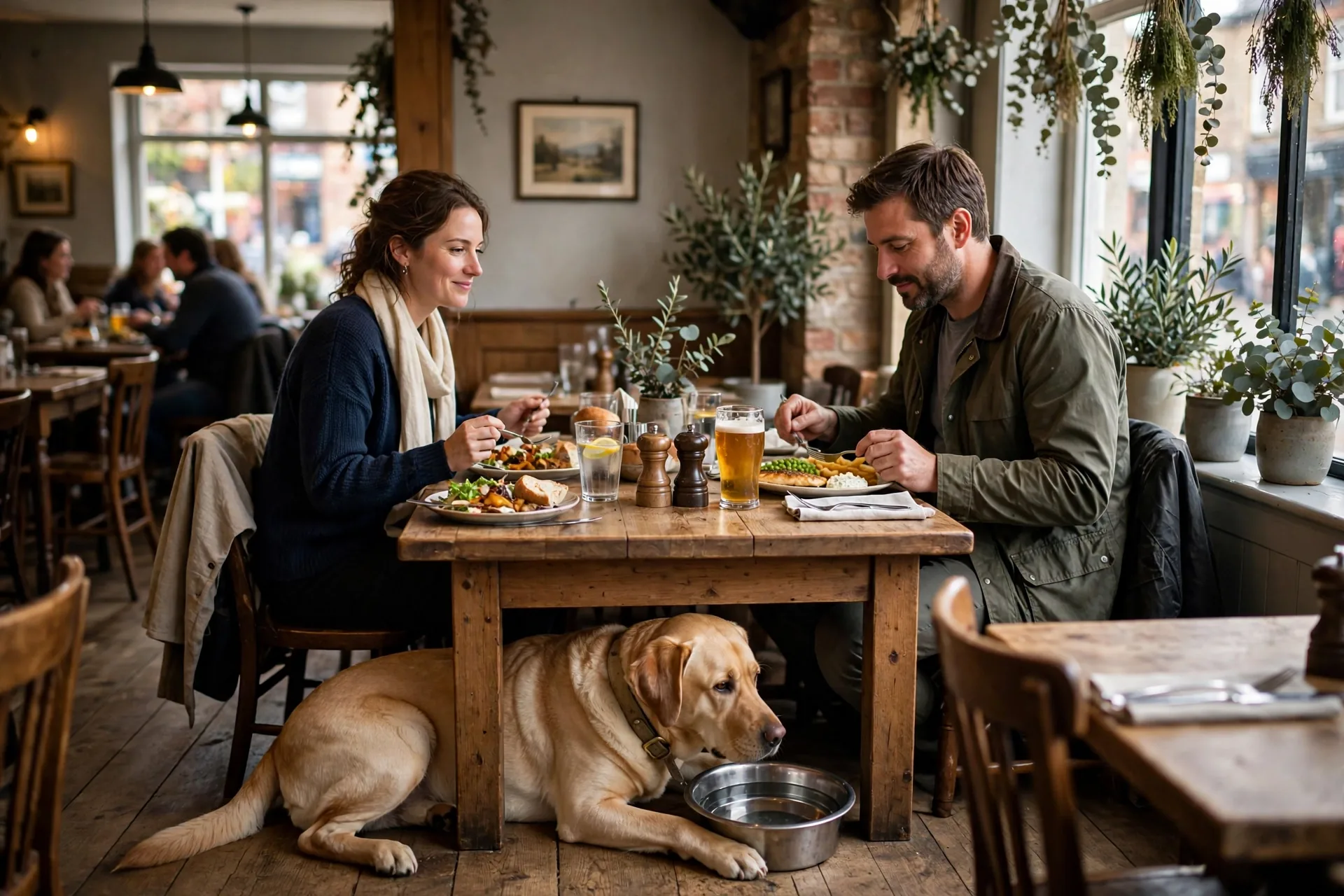
Welcoming inside. Dogs may come in, sit by your table and usually accompany you to the counter. These stores tend to have hard floors, a bit of space between tables and a team used to dogs after walks, school runs or shopping trips. Even here there are house rules in practice: dogs on the floor rather than on chairs, kept on a lead, and kept out of the area behind the counter and away from food preparation. “Inside” does not mean “anywhere, anyhow”.
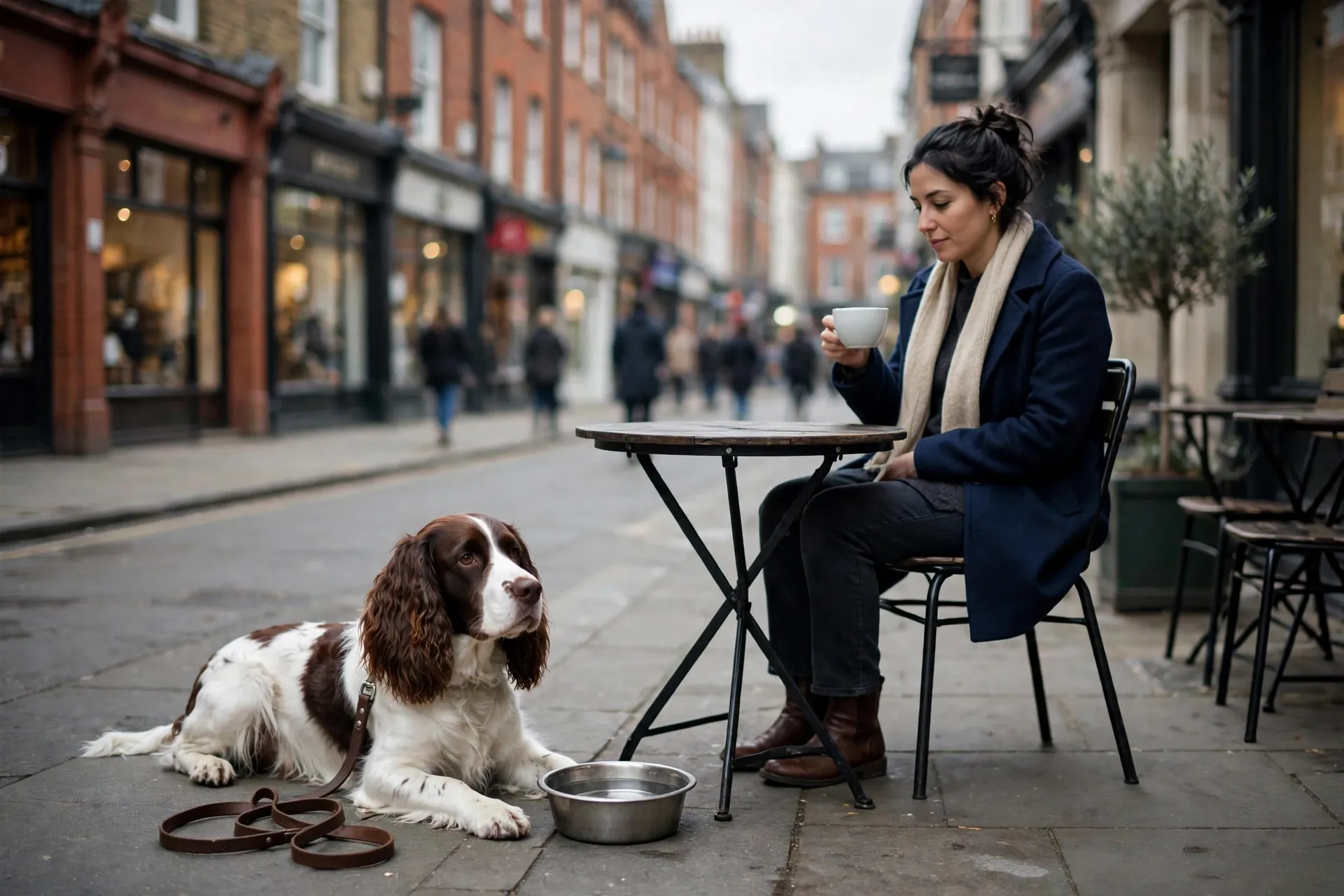
Outdoor seating only. This is the most commonly misunderstood group. The store is happy for your dog to join you at the pavement or terrace tables, but pet dogs do not come inside to order, to wait for a drink or to shelter from rain. That creates a practical puzzle for a solo owner, covered in the counter section below: someone may need to stay with the dog, staff may agree to bring a drink out, an app order for collection may help, or you may simply need a different stop. Outdoor-only is a perfectly good option in dry weather with a settled dog, and a poor one in a downpour with a puppy.
No pet dogs. Some stores do not admit pet dogs inside or have no usable outside space either. Small footprints, sites inside other premises with their own rules, and locations where food hygiene or landlord conditions are tighter can all land in this group. The refusal is about the site, not about your dog personally. A calm, famous-for-being-good dog does not change a site rule, and arguing the point at the till helps nobody.
Stores can also move between groups in effect, if not on paper. A branch that welcomes dogs at 10am on a quiet weekday may ask owners to use the outside tables during a packed Saturday rush, when prams, suitcases and a queue out of the door leave no safe floor space. Build that possibility into your expectations: a yes you received once is a good sign, not a lifetime pass.
How to check a specific store before you go
Checking takes two minutes and saves the particular embarrassment of being turned round in a doorway with a hot drink in one hand. Work through these steps in order and stop when you have a clear answer.
- Look at the door and window first. Welcoming stores often display a dog-friendly sign, a water bowl by the entrance or paw-print notices; stores that restrict dogs often put that on the door too. A bowl outside is a hopeful clue, not proof — it may belong to the outdoor-only group.
- Check the store listing online. Search for the exact branch by street or centre name, not just the town, because larger towns have several stores with different layouts and rules. Listings and reviews sometimes mention dogs, but treat older reviews cautiously: managers, layouts and policies change.
- Phone and ask the precise question. “Are dogs allowed?” invites a vague yes. Ask instead: “Can my dog come inside and sit by a table, is she outdoor seating only, or are pet dogs not allowed?” That three-way question gets you the answer you actually need, including whether you can come in to order.
- Ask at the door if you are passing without the dog. The ideal reconnaissance is on a solo errand the day before a planned stop. Staff can also tell you the quietest times, which matters more than almost anything else for a nervous dog.
- Have a backup within five minutes’ walk. An independent cafe from our wider guide to dog friendly cafes in the UK, a pub garden or a bench with a takeaway all work. A backup turns a “no” from a ruined outing into a minor detour.
If you are planning around a dog who finds new places difficult — a rescue in their first months, a puppy mid-socialisation or a reactive dog — do not make a chain coffee shop the very first indoor test. Choose a store you have already checked, at its quietest hour, with an easy exit and a short first visit. Success in a calm branch at 9am on a weekday tells you far more than a stressful Saturday attempt, and it protects the welcome for the next dog too. If your dog settles well in a cafe, the next step up is a dog friendly afternoon tea — book a venue that seats dogs in the main room.
Where any detail in this guide conflicts with what a specific store tells you, the store wins. Policies can change without a web page catching up, so if a fact matters to your plans, check the individual store shortly before you go, exactly as you would check opening hours on a bank holiday.
Ordering at the counter with a dog
The counter is where dog-friendly visits most often go wrong, not because dogs misbehave dramatically but because the space is engineered for a fast-moving queue of people carrying hot liquid. A few habits make you the customer staff are glad walked in.
Come in with the lead already short. Not tight and not hauling the dog backwards — just short enough that your dog is beside your leg rather than investigating the cake cabinet, the toddler at knee height or the handbag of the person in front. If your dog knows a “wait” or will sit on a mat, use it; if not, position yourself at the edge of the queue rather than in its centre, so you have an escape route and your dog is not surrounded by ankles on three sides.
Keep your dog out of the collection point crush. The end of the counter, where drinks are called out, is the busiest square metre in the building. Stand back with your dog until your drink is ready, then step in, collect and step out. If you are carrying a tray, a dog lead and a pushchair, ask staff whether they can bring the drink to your table — many will, and asking calmly in advance beats a spill across the floor.
Solo owners at outdoor-only stores face the awkward version of this problem: you cannot leave a dog tied up outside while you order, which is unsafe, unfair on the dog and likely to breach the store’s own expectations. Your realistic options are to order ahead for collection if that branch offers it and staff agree to hand the drink to you at the door, to visit with a second person who stays with the dog, to ask whether staff can take your order at the outside table, or to choose a different stop. Do not tie your dog to a chair and hope — dogs get stolen, get tangled and get frightened by strangers approaching, and no coffee is worth that risk.
Pay attention to timing as well as space. A dog who copes happily with a two-minute queue may unravel in a twelve-minute one. If the line is out of the door, that is information: come back later, use the outside tables if the rules allow, or use your backup. Reading the room is the core skill of taking dogs into shared indoor spaces, and our guide to dog friendly restaurants in the UK covers the same judgement calls in a slower, seated setting.
Where to sit once you are in
Table choice decides whether a visit feels easy or faintly tense throughout. Aim for a corner or wall-side table with your dog tucked under it or lying beside your chair, out of the main walking route between counter, toilets and door. A dog stretched across that route will be stepped around, stared at and occasionally tripped over, and even the friendliest dog eventually objects to being woken by a shoe.
Dogs stay on the floor. That rule is near-universal in food premises, and it applies to small dogs in particular: a tiny dog on a chair or in a lap at table height reads very differently to other customers and to anyone inspecting food hygiene than the same dog asleep in a carrier by your feet. If your small dog will not settle on a cafe floor yet, bring a familiar mat or blanket so the floor smells like home, practise at quieter times, and keep early visits short.
Think about neighbours before you sit down. Leave a buffer table between your dog and a stranger’s if the store is quiet enough to allow it, especially if the other party includes a child eating a sausage roll at exactly dog-nose height. If your dog is a greeter — convinced every human arrived to meet them — ask to be seated away from the door so the stream of arrivals does not rehearse the greeting twenty times.
Finally, plan the loo trip. You cannot take a pet dog into the toilets in any normal arrangement, and leaving a dog alone at a table unsettles staff and nearby customers. Go before you sit down, swap dog-holding duties if you are with someone, or accept a shorter visit if you are alone. It is a small detail, but it is the one solo owners most often forget until it is urgent.
Water, treats and the puppuccino question
Many welcoming stores will happily provide a bowl of water if you ask at the counter, and some keep a filled bowl by the door or out on the terrace as a standing invitation. That said, water is a kindness rather than a published entitlement at every branch, and a busy team mid-rush may simply not be able to step away. Carry a collapsible bowl and a small bottle of water on any walk that includes a possible coffee stop, and your dog drinks regardless of which kind of store you find.
Offer water outside the main doorway rather than in the middle of the floor if you are using your own bowl indoors, and mop up splashes with a tissue — floors around a shared water bowl become slippery quickly, and staff remember the owner who dealt with the puddle. If a communal bowl is provided, check it looks fresh; in summer especially, empty, rinse if a tap is available, or simply use your own.
What about treats and the whipped-cream cups widely nicknamed puppuccinos? Availability varies, they are not a standard menu promise at every store, and whether your dog should have one is a separate question from whether the store will sell you one. Whipped toppings and sweetened extras are calorie-dense and can upset a sensitive stomach; for many dogs a few of their normal treats, fed quietly under the table for settling behaviour, are a better reward and do not teach them that the counter itself dispenses cream. Never feed your dog from the table, from a plate intended for people, or with food bought for someone else’s child who offered — politely decline, however kind the offer.
If your dog has allergies or is on a strict diet, say so early if staff offer anything. Teams who love dogs often produce a biscuit with genuine warmth, and it is easier to explain before the biscuit is halfway into your dog than after.
Stations, airports and other busy branches
Location changes everything, and nowhere more than in transport settings. A Costa inside a railway station, an airport, a hospital or a motorway service area operates in someone else’s building, under that building’s own pressures and sometimes its own animal rules — so always check the individual store in these settings rather than assuming the pattern of your local high-street branch.
Station branches tend to be small, queue-heavy and short on seating, with passengers wheeling cases through the very space a dog would lie in. Even where a dog is technically welcome, peak commuter hours are a bad idea: hot drinks, rushing crowds and a dog at ankle level are a poor combination for everyone. If you need a coffee during a journey, aim for the edges of the day, use outside or concourse seating if the store and station allow it, and keep the stop brief. Our transport guides may help for the journey itself, but for the coffee stop the store’s own answer is the one that counts.
Airport branches split by location within the terminal. A landside cafe, before security, is closer to a normal high-street store, though still busy and full of luggage. Airside, after security, pet dogs are in most cases simply not present unless they are travelling under an airline’s own arrangements, and no cafe rule changes that. Do not plan an airside coffee with a pet dog; check both the airport and the airline position well before travel, and expect the answer to be no.
Hospital and healthcare-site branches can have stricter site rules for infection-control reasons, and motorway service stores sit inside buildings where dogs may be restricted to particular areas or to outside seating, with designated relief areas elsewhere on site. In every one of these cases the pattern is identical: the building sets the frame, the store works within it, and the only reliable answer comes from checking that individual store — its listing, its signage or its team — shortly before you visit.
Etiquette that keeps doors open
Every dog in a coffee shop is, unfairly but truly, an ambassador for the next one. Managers who restrict dogs usually do so after a run of small incidents rather than one dramatic one, so the unglamorous basics are what protect access for everyone.
- Arrive toileted and reasonably exercised. A dog who has had a chance to relieve themselves and sniff properly settles faster, and accidents indoors are the fastest route to a policy change.
- Lead on, lead short, dog on the floor. No extending lead stretched across the walkway, no dog on chairs or banquettes, no nose on table tops.
- Feed nothing at the table and beg from nobody. Your dog’s treats come from you, quietly, under the table, for calm behaviour — not for staring at the next table’s lunch.
- Read your dog and leave early if needed. Panting, pacing, whining, fixating on the door or repeated attempts to greet strangers are signals. Finishing half a coffee and leaving calmly is a successful training visit, not a failed one.
- Clean up completely. Shake wet coats outside, wipe muddy paws if you carry a cloth, take dropped treats with you and tell staff about any accident immediately and apologetically, offering to help clean.
- Respect a no without negotiating. If a member of staff says dogs are outside only today, that is the answer today, even if last month differed. Politeness costs nothing and is remembered.
Children deserve a specific mention. Many children adore dogs and will arrive at your table at speed. Your job is to be the calm barrier: ask the child’s adult if they would like to say hello, keep greetings brief and seated, and end them before your dog’s enthusiasm peaks. If your dog is not comfortable with children, say so cheerfully and early — “she’s shy, she needs space today” — and choose a table away from the family corner in the first place.
Other dogs are the other variable you cannot control. If a second dog arrives and either animal starts hard-staring, growling softly or pulling towards the other, increase distance immediately, even if that means moving tables or stepping outside briefly. Two sensible owners moving apart early prevents the incident that gets quoted in every later discussion about whether dogs belong in the store at all.
If you are turned away
It happens to careful owners, and it is worth deciding in advance how you will handle it, because the doorway of a busy shop is a bad place to improvise. Smile, step back out of the queue’s way, and ask one clarifying question if it is genuinely unclear: is it outside only, or no dogs at all? Then act on the answer. If outside seating exists and the weather and your dog suit it, you may still get your coffee. If not, thank the staff and go to your backup.
Do not cite other branches, other chains or other customers’ dogs as evidence. Staff at the counter rarely set site policy, cannot reverse a landlord or hygiene rule for one customer, and will simply remember the exchange next time a dog owner asks for a favour. If you believe a rule was applied inconsistently — for instance, another pet dog sits inside while you were refused — you can raise it politely with the store manager afterwards or through the company’s customer contact route from home, with the date and time, rather than in a lunchtime queue.
There is one exception, and it matters. If you are refused entry with an assistance dog, that is not a house-rule disappointment, it is a legal issue. Stay calm, state that your dog is an assistance dog, and if refusal continues, note the time, the store and what was said, and seek advice afterwards. Our assistance dog rights guide sets out the position and the practical steps in full.
For pet owners, the mature summary is this: a refusal is information about one store, not a verdict on your dog or on the chain. Note it in your phone — “station branch, no dogs; high street branch, inside fine, quiet before 11” — and within a month you will have a personal map of your own area that is more accurate than any national list, because it is built from the individual stores you actually use.
The same check-first habit helps with other everyday errands: Our guide to dogs in UK supermarkets compares every major chain, from Tesco and Sainsbury’s to Aldi and Lidl. Our guide to dogs in the Post Office explains branch-by-branch rules before you queue with a parcel.
Practical questions
Before you go
Are dogs allowed in all Costa Coffee stores in the UK?
No. There is no single rule that guarantees pet dogs entry to every Costa. Many stores welcome well-behaved dogs at the manager's discretion, some allow dogs only in outdoor seating, and some do not admit pet dogs at all. Check the individual store before you rely on it, especially in stations, airports and other busy or restricted locations.
How can I check if my local Costa allows dogs?
Look for a sign in the window or by the door, check the store details online, and if it is still unclear, phone the store or ask a member of staff before you go in with your dog. Ask specifically whether dogs are allowed inside, outside only, or not at all, because a general 'dog-friendly' answer can hide an outdoor-only rule.
Can I take my dog to the counter while I order?
In a store that welcomes dogs inside, usually yes, provided your dog stays on a short lead, close to you and away from the food and drink preparation area. Queue calmly, keep the lead short at the till, and move to your table or the collection point without letting your dog approach other customers' food. If staff ask you to wait outside or at a table, follow that instruction.
Will Costa give my dog water?
Many welcoming stores will provide a bowl of water if you ask politely, and some keep a bowl near the door or on the terrace, but it is not guaranteed at every branch. Carry your own collapsible bowl and a small bottle of water so your dog can drink even at outdoor-only or busy stores where staff have no time to help.
Are assistance dogs allowed in Costa Coffee?
Yes. Assistance dogs are not pet dogs and must be welcomed in Costa stores and in cafes and restaurants generally, including areas where pet dogs are not allowed. Refusing entry to an assistance dog is unlawful discrimination in most situations. Handlers should not be asked to sit outside or to leave because of their dog.
Can I take my dog to a Costa drive-thru or a Costa Express kiosk?
A drive-thru visit keeps your dog in the car, so the in-store question does not arise. At a Costa Express kiosk there is no seating area: you order and move on, and any seating nearby follows that site’s own rules. If you want to sit inside, check that store first — Costa says well-behaved dogs are welcome in many stores, and assistance dogs are welcome in all of them. Find your store and check its amenities on Costa’s official site: Costa Coffee (checked October 2026).
Should I phone ahead even if a Costa listing says it is dog-friendly?
Yes. A general dog-friendly listing can hide an outdoor-only rule, and admission is at the manager's discretion for each store, so a listing alone is not a guarantee. Before you set off, phone the store and ask the three-way question: can your dog come inside and sit by a table, is it outdoor seating only, or are pet dogs not allowed? Also check the window sign and the store details online, and have a backup within a short walk if the answer is no. For a pub-garden backup, see our guide to dogs in Wetherspoons.