This guide is independent and contains no paid placement. If affiliate links are added later, they will be clearly marked and will not change our editorial checks.
Yes, in many stores. Most The Range stores welcome well-behaved dogs on a lead, but there is no published national guarantee and rules vary by branch and department. Check with your branch first, keep your dog close in garden and seasonal areas, and avoid paint, chemicals and loose soil.
Start with scale: a superstore, not a shop
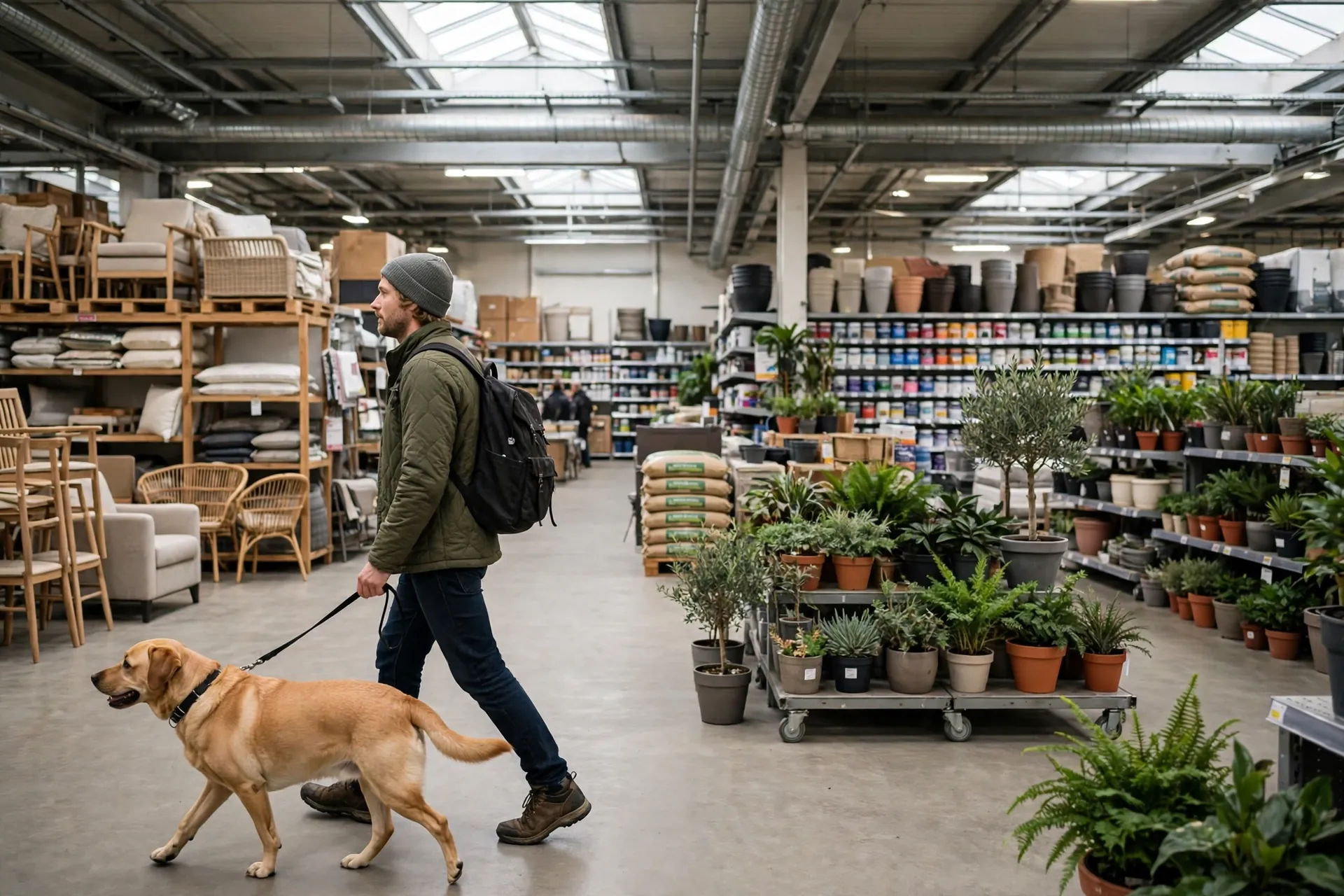
The first thing to understand about The Range is its size. These are large, often out-of-town superstores with wide aisles, high shelving and departments that run from furniture and homeware through DIY, arts and crafts, and a substantial garden section. That scale is good news for a dog in one way: the aisles are wider than a high street shop, there is room to step aside when another dog passes, and a large dog is not squeezed between rails. It is bad news in another way: a visit takes longer, the dog is exposed to more noise, smells and people, and the sheer size of the place can tire a dog that is not used to it.
Plan the visit around that scale. Decide in advance which departments you actually need, and do not treat the store as a browse: a focused trip of thirty to forty minutes is far kinder to a dog than a two-hour wander through every department. If you are buying furniture or bulky goods, the visit will involve a flatbed trolley, a loading area and possibly a wait, all of which need a dog plan. If you are only buying a few small items, the visit can be quick and easy, provided you go in with a list and stick to it.
Scale also affects the car park, which is often large and busy, with cars reversing out of spaces and trolleys moving in all directions. Keep your dog on a lead from the car to the door and back, and do not let them run loose in the car park to burn off energy before the shop. The car park is the most dangerous part of a superstore visit for a dog, and it deserves the same care as a road.
The branch rule: check before you travel
As with many large retailers, The Range does not publish a single national dog policy that applies identically in every store, and shoppers report different experiences in different branches. Many stores are welcoming, with staff happy to see a well-behaved dog; others are stricter, and the rules for a particular department can differ from the rules for the shop floor as a whole. The practical answer is to check with the specific branch before you travel, ideally by phone, and to ask the exact question: "Do you allow well-behaved dogs on a lead in store today, and is there any department we should avoid?"
The reason to ask about departments, not just the store, is that The Range is several shops under one roof. A branch can be happy with a dog among the furniture while asking you to skip the cafe, or fine in homeware while preferring dogs to stay clear of the plant benches. Getting those details before you start means you can plan a route that avoids the awkward mid-shop conversation, and it tells staff you understand their store rather than treating it as a single open floor.
If you cannot reach the branch, check the official guidance before you travel and plan as if the answer might be no: bring another adult who can wait with the dog, or be ready to shop another day. And when you arrive, confirm at the door. A policy that was true last month may have changed, and the staff on duty today are the people whose answer counts.
The garden department: plants, soil and tools
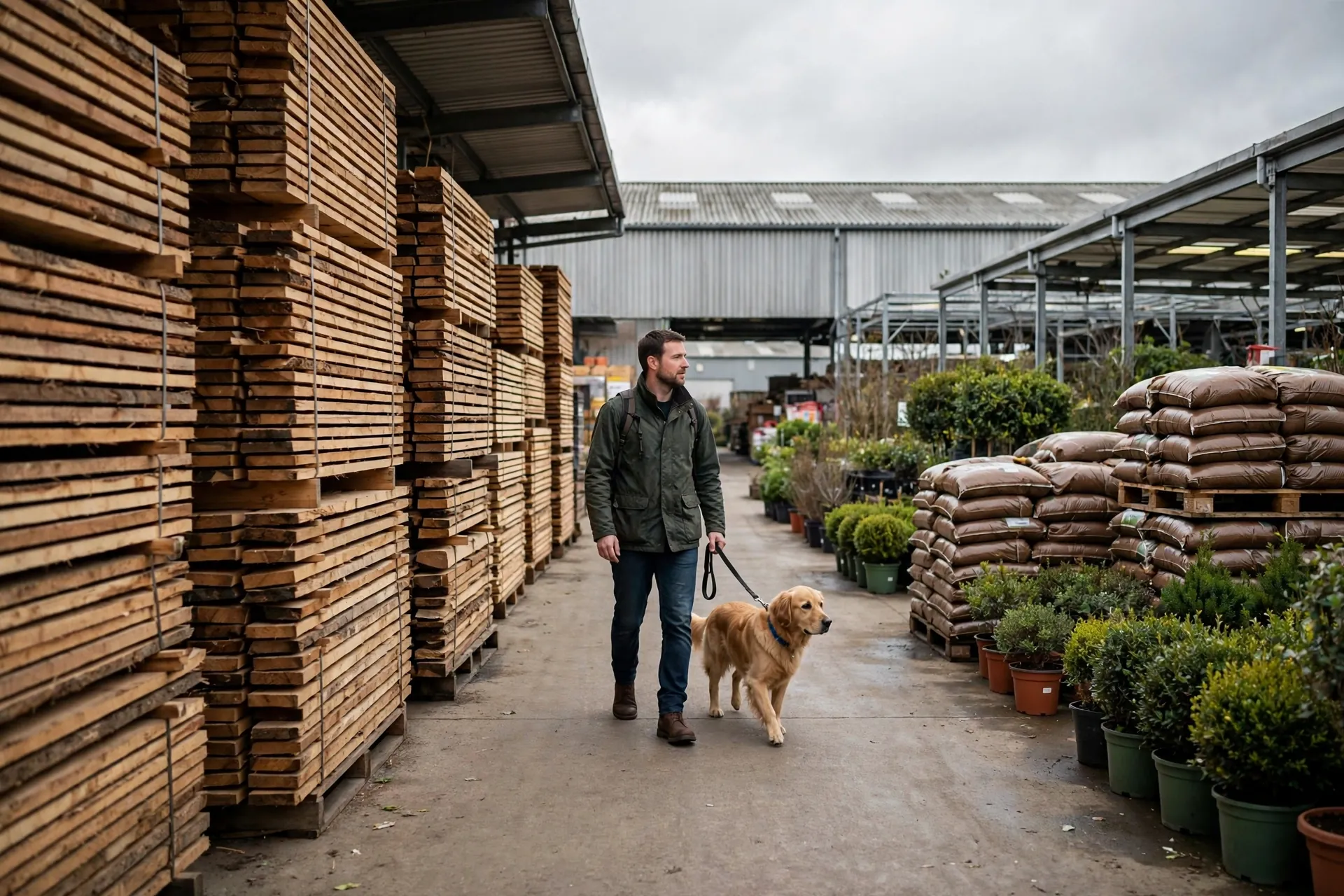
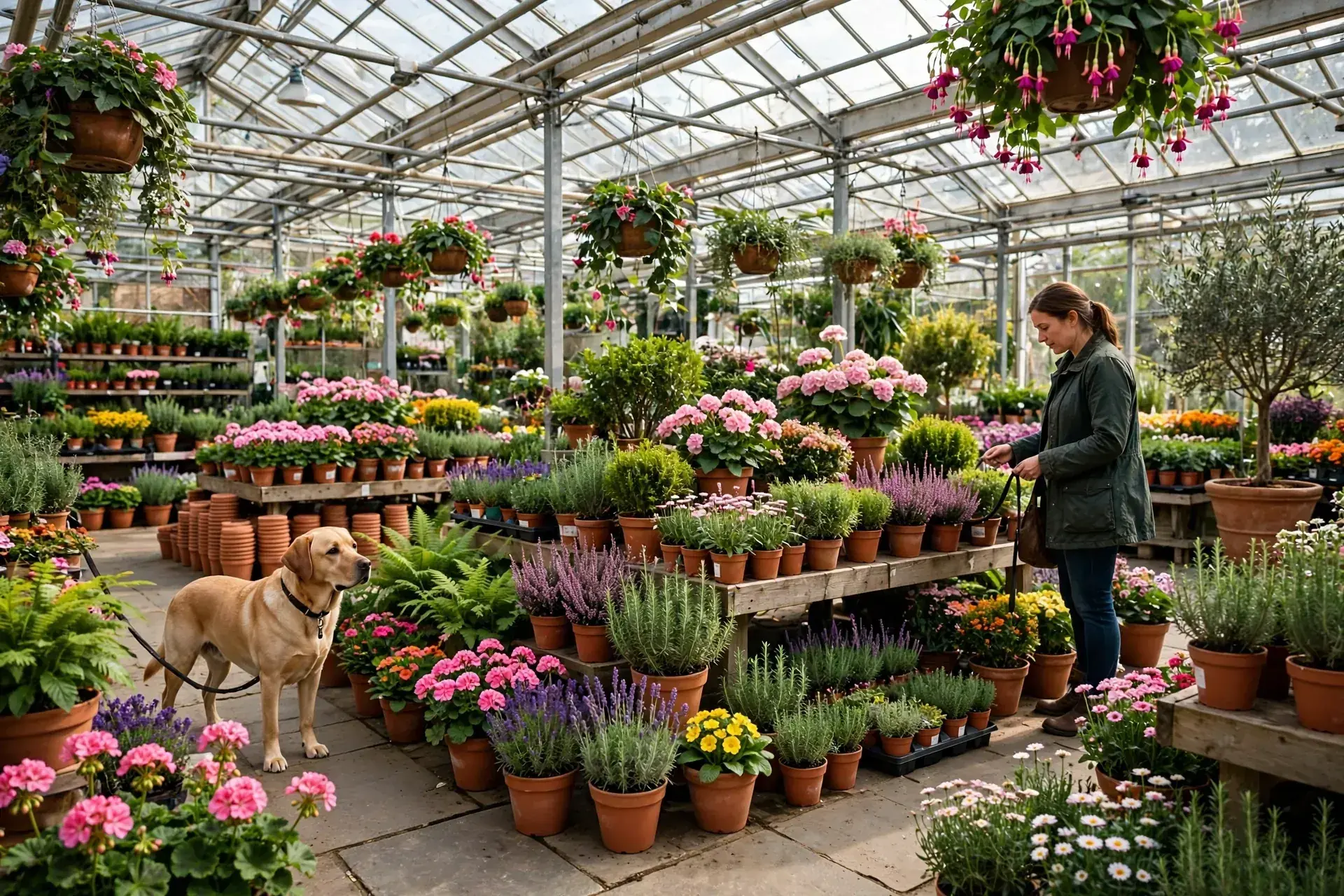
The garden department is the part of The Range that needs the most care with a dog, and it is also the part that many dog owners most want to visit. It combines several hazards in one place: plants that are toxic to dogs if chewed, bags of soil and fertiliser that can leak or be torn open, sharp tools, watering cans and pots at tail height, and a strong smell of soil, fertiliser and plant food that excites many dogs. The department is often partly outdoors or in a covered outdoor area, which adds weather, wet floors and other dogs to the mix.
The rules for the garden department are simple. Keep your dog on a short lead at all times, keep them on your far side from the plant displays, and do not let them chew leaves, dig in soil or mouth plant ties, canes or packaging. If your dog is a keen chewer or a scavenger, consider skipping the garden department altogether, or shopping for plants without the dog and returning for a homeware browse with them another day. Some plants that are common in garden centres are genuinely dangerous to dogs, and a few minutes of unsupervised sniffing can be enough for a dog to ingest something harmful.
Soil and fertiliser deserve a specific warning. Dogs are attracted to the smell of blood, fish and bone fertilisers, and some fertilisers are toxic if eaten in quantity. Keep your dog away from open or damaged bags, and do not let them lick soil from the floor. If your dog does eat soil, fertiliser or a plant, note what it was, keep the packaging if you can, and call a vet promptly rather than waiting for symptoms. Prevention is straightforward: a short lead, a watchful eye, and a willingness to skip the department if your dog cannot resist it.
For a broader comparison of garden shopping with a dog, our guide to dogs in UK garden centres covers the specialist garden centre chains and independents, where the plant risks and the cafe rules are similar but the layout is different.
Seasonal departments: Christmas, Halloween and events
The Range is famous for its seasonal departments, and they change the dog calculation several times a year. At Christmas, the store fills with trees, lights, baubles and decorations, many of them at dog height, fragile, or interesting to a dog that likes to chew. At Halloween, there are costumes, pumpkins and decorations that can startle a nervous dog, including items that move or make noise. At Easter and during summer events, there are displays of outdoor furniture, barbecues and garden toys that tempt a dog to investigate.
Seasonal departments are also the busiest parts of the store, because they attract shoppers who are not buying anything else. That means more people, more children, more trolleys and more noise in a concentrated area. If your dog is nervous, excitable or large, steer clear of the seasonal department, or visit it at a quiet time when you can move through slowly. If your dog is calm and you want to look at seasonal stock, keep the dog close, keep them away from low displays, and be ready to leave if the crowd builds up.
One seasonal risk is easy to miss: small decorations, tinsel, ribbon and packaging that fall on the floor. Dogs that scavenge can swallow these quickly, and some can cause blockages. Keep your dog's nose off the floor in seasonal departments, and tell staff immediately if you see loose decorations on the ground. The same applies to the Christmas tree area, where fallen needles, water from tree stands and electrical cables all need to be kept away from a dog.
Bulky goods, flatbed trolleys and wide aisles
Buying bulky goods at The Range — furniture, a barbecue, a large planter, a flat-pack wardrobe — changes the visit completely. It involves a flatbed trolley, which is harder to steer than a basket trolley, a loading area, and often a wait while staff fetch stock. A dog on a lead and a flatbed trolley do not mix well: the trolley needs both hands, the dog needs attention, and the combination is an accident waiting to happen in a busy aisle.
If you are buying bulky goods, the best plan is to shop with another adult: one person manages the trolley and the loading, the other manages the dog. If you are alone, consider ordering bulky items for delivery instead, and visiting the store with the dog only for smaller items. If you must move a flatbed trolley with a dog, keep the dog on a very short lead, move slowly, and ask staff for help rather than struggling alone. Staff are used to helping with bulky goods, and they would rather help than deal with an accident.
The wide aisles of The Range are a genuine advantage for dogs, but they are not empty. Forklifts and stock trolleys move through the store, especially in the morning, and other shoppers with flatbed trolleys need room to turn. Keep your dog close to you and out of the centre of the aisle, and step aside into a department entrance when a large trolley or a staff vehicle approaches. A dog that walks beside you rather than ahead of you is safer in a superstore, because you can see what is coming and the dog cannot dart into its path.
The pet aisle: a useful test of your dog
The Range sells pet supplies, and the pet aisle is an interesting test of a dog's behaviour in store. It is full of smells that excite dogs — treats, food, toys — and it often attracts other dogs and their owners. A dog that can walk calmly past the treat shelves without lunging, barking or pulling is a dog that is ready for the rest of the store. A dog that cannot is telling you something useful: the store is too stimulating for them today, and a shorter visit or a quieter shop would be kinder.
Use the pet aisle deliberately. Walk through it early in the visit, when your dog is fresh, and see how they cope. If they cope well, continue with the rest of the shopping. If they struggle, shorten the visit, skip the garden department, and leave on a good note rather than pushing through a long shop with an over-aroused dog. The pet aisle is also a good place to buy a treat or a toy as a reward for calm behaviour, which reinforces the idea that shops are places where calm behaviour pays.
One caution: do not let your dog eat treats from open or damaged packaging in the pet aisle, and do not let them play with toys that are still on the shelf. Other shoppers and staff will notice, and a dog that is allowed to help itself in the pet aisle is a dog that will try the same thing in every other department. Keep the dog's nose off the shelves, and buy the treat before you offer it.
Cafes and food areas in larger stores
Some larger The Range stores have a cafe or restaurant area, and the rules there can differ from the shop floor. A cafe is a food area, and food areas often have stricter rules about dogs, for hygiene reasons and for the comfort of other diners. If your store has a cafe, ask staff before you sit down whether dogs are welcome there, and if so, where. The answer may be that dogs are welcome on the terrace or in a specific section but not in the main dining area.
If you do eat in store with a dog, pack for it: a mat, a water bowl, a chew for a longer wait, and a lead short enough to keep the dog under the table. Choose a corner table away from the door and the main flow of people, and keep the visit as calm as the shopping: a dog that has been patient through a superstore shop may need a few minutes to settle before they can lie quietly. If the dog cannot settle, take food away or cut the stop short rather than pushing through a long meal.
If the cafe does not allow dogs, the options are the same as for the shop floor: take turns with another adult, eat elsewhere, or skip the cafe. Do not leave a dog tied up outside the store or in the car while you eat. A superstore car park is a busy, impersonal place, and a dog left alone there is at risk however short the meal feels.
Weekends, families and the car park
The Range is a family destination at weekends, and that shapes the dog visit. Children, pushchairs, trolleys and groups of shoppers fill the aisles, and the store can be noisy and chaotic. Children are often at dog height and may run up to a dog without asking, which is a problem for a nervous dog and a temptation for a friendly one. If your dog is nervous around children, avoid weekend visits, or visit early on a weekday when the store is quieter and the families are fewer.
Weekend car parks add another layer. Cars reverse out of spaces without seeing a dog at bumper height, trolleys roll across the car park, and families load bulky goods while managing children. Keep your dog on a lead from the car to the door, walk on the pedestrian routes where they exist, and do not let a dog run loose in the car park. The same applies on the way out, when you are carrying shopping and your attention is divided: put the shopping in the car first, then bring the dog, or keep the dog on a short lead while you load.
For comparison with other large stores, our guide to dogs in B&Q covers a similar out-of-town superstore with its own garden and building departments, and the dogs in IKEA guide explains why that particular large store is much stricter. The pattern across all of them is the same: check the branch, ask about departments, and have a backup plan.
If the store says no
A refusal at The Range usually has a practical fix, because most of what the store sells can reach you another way. Start with delivery: bulky furniture, garden furniture and large planters are often easier delivered to your door than carried through a shop with a dog, and delivery removes the trolley, the loading bay and the car park from the equation entirely. For smaller items, check whether a different branch in the area takes a different view, since the decision is local and a neighbouring store may welcome dogs even when this one does not.
Timing is the second lever. A branch that turns dogs away on a packed Saturday may be perfectly happy on a quiet weekday morning, when the aisles are empty and staff have time to help. If your shopping is not urgent, a return visit on a weekday is often all it takes. And if you are shopping as a household, split the job: one person handles the store while the other walks the dog around the retail park, then meet at the car. The dog still gets an outing, the shopping still gets done, and nobody has to argue with staff or leave an animal unattended.
What does not work is improvising at the door. Tying a dog to a railing outside a superstore, leaving them in a car while you "just pop in", or asking a stranger to hold the lead are all poor options, and the first two carry real risks: cars become dangerously hot in sun and cold in winter within minutes, and a dog left alone outside a busy retail park is vulnerable to theft and distress. If none of the alternatives above fits, postpone the trip. The Range will still be there tomorrow, and a postponed visit beats a risky one every time.
The same applies to the weekly shop and the post run: Our guide to dogs in UK supermarkets compares every major chain, from Tesco and Sainsbury’s to Aldi and Lidl. Our guide to dogs in the Post Office explains branch-by-branch rules before you queue with a parcel.
The one rule that does not change
Among all the branch-by-branch variation at The Range, one rule is fixed: assistance dogs must be admitted. The Equality Act 2010 gives assistance dog handlers the right to enter shops and services with their dog, and that right is not something a branch manager can waive on a busy day. It covers guide dogs, hearing dogs and other trained assistance dogs, and it applies in every department, including the garden area and any cafe, because the dog is working, not visiting.
In practice, this means an assistance dog handler does not need to ring ahead or negotiate at the door in the way a pet owner does. It still helps to let staff know you are there, because they can open a wider checkout lane, help with a flatbed trolley, or carry a heavy item to your car — all things that make a superstore visit easier with a working dog. Staff in large stores are generally well briefed on this, and if you ever meet a staff member who is not, a calm explanation and the offer to show the dog's identification usually resolves it on the spot.
The distinction matters for pet owners too, because it explains why the rules feel inconsistent. A pet dog is a guest, admitted at the store's discretion; an assistance dog is a working animal with a legal right of access. Treating those two categories as if they were the same is what causes confusion at the door, and it is why pet owners should never claim assistance status for a pet. Keep the categories separate, respect the discretion that applies to pets, and the welcome for both groups stays intact.
Two bags: one for the dog, one for the shopping
Think of a The Range visit as a two-bag job. The dog bag is small and stays on you: a short lead, a harness, poo bags, a portable water bowl, a chew for waiting times, and a towel if the garden department is wet. The shopping bag is whatever you take home, and it should never be so large that you cannot also hold a lead safely. If the shopping will need both hands — a flatbed trolley, a large planter, a barbecue box — then the dog needs another person, or the shopping needs delivery. That decision, made before you enter, is what prevents the awkward moment in the aisle when you have a trolley in one hand, a box in the other, and a dog somewhere behind you.
Before entering, give the dog a toilet walk around the retail park and a few minutes to settle, so they cross the threshold calm rather than bursting. After the visit, repeat the routine: a toilet walk, a drink, a check of paws for grit from the car park or soil from the garden department, and a brush if the dog has been near plant displays. A superstore trip is a focused errand, not a day out, and keeping it under an hour suits most dogs far better than a long browse. The item you find is a bonus; the dog that walks out as calmly as they walked in is the real result.
Practical questions
Before you go
Are dogs allowed in every The Range store in the UK?
Many The Range stores welcome well-behaved dogs, but there is no single published national guarantee, and individual stores can set their own rules. Always check with the specific branch before you travel, and follow the instructions of staff on the day, because local conditions can change.
Can my dog go into the garden centre area at The Range?
Often yes, but the garden area needs extra care: some plants are toxic to dogs, soil and fertiliser bags can leak, and watering cans and pots are easy to knock over. Keep your dog on a short lead, keep them away from plant displays, and do not let them chew leaves, soil or plant ties.
Can dogs go into the cafe at The Range?
It depends on the store. Some larger The Range stores have a cafe or restaurant area, and the rules for dogs there can differ from the rules for the shop floor. Ask staff before you sit down, keep your dog on a lead under the table, and bring a mat and water bowl.
Are large dogs welcome in The Range, or only small dogs?
Large dogs are welcome in many branches, and the wide aisles of a superstore suit them better than a small high street shop. The practical test is behaviour, not size: a calm large dog on a short lead is easier in store than a small dog that barks and lunges. Keep the lead short and the dog close in every department.
What should I avoid in The Range with a dog?
Avoid paint and chemical aisles, loose soil and fertiliser, sharp garden tools, and seasonal displays with small decorations at dog height. Keep your dog away from anything they could chew, knock over or eat, and tell staff immediately if your dog damages stock or has an accident.
Are assistance dogs allowed in The Range?
Yes. Assistance dogs are protected by law and must be allowed into shops, including The Range, under the Equality Act 2010. This applies even in branches that do not normally admit pet dogs, and it is separate from the discretionary welcome given to pets.