This guide is independent and contains no paid placement. If affiliate links are added later, they will be clearly marked and will not change our editorial checks.
Most heritage railways welcome dogs on ordinary services, usually for a small dog fare, but dining cars, first-class carriages and some special events are commonly dog-free. Check that specific railway's dog page, toilet your dog before boarding, sit near a door, and plan an exit at an intermediate station.
Why heritage lines are not ordinary trains
A heritage railway is a preserved, volunteer-run or charity-run line that recreates an earlier era of rail travel, and that history shapes every dog rule on board. Carriages may be decades old, with slam doors, narrow corridors, bench seating, open windows and no air conditioning. Platforms may be lower, shorter or uneven, station buildings may be listed, and the timetable may be seasonal, with steam on some days and diesel on others. None of this makes a heritage line unsuitable for dogs, but it does mean that the rules you know from modern mainline trains do not transfer automatically, and a little preparation pays off far more here than on a commuter service.
The first difference is that each railway sets its own policy. There is no single national heritage railway dog rule, and two lines in the same county can take opposite approaches to the same question. One may allow dogs in every ordinary carriage and charge nothing, while another charges per dog per day and restricts dogs to designated carriages only. Special events complicate the picture further: gala weekends, Santa specials, murder mystery evenings and dining trains often have stricter rules than an ordinary summer Saturday, because carriages are fuller, food is served, costumes and props are involved, and staff are managing crowds rather than individual passengers. Always check the policy for the exact service and date you plan to travel on, not just the railway's general dog page.
The second difference is pace and atmosphere. Heritage journeys are usually slower, shorter and more scenic than mainline trips, which suits many dogs, but they also involve long station waits, crowds gathering for photographs, whistles, steam releases and the smell of coal smoke. A dog that settles happily on a quiet forty-minute mainline ride may still struggle with a busy platform, a crowded carriage and a locomotive running round at the terminus. Conversely, a dog that finds modern trains stressful because of escalators, announcements and rushing crowds may love a quiet weekday heritage service where the main event is watching fields go by. The trick is to match the service to the dog: choose a quieter weekday, a shorter journey and a less crowded carriage for a first visit, and treat a gala day as an advanced outing rather than a starting point.
Understanding who runs the railway also helps you ask better questions. Many heritage lines rely on volunteers, and the person selling tickets may also be the person who knows which carriage has the most floor space, which station has a fenced dog area, and which departure is usually quietest. A short, specific email or phone call before booking often produces far more useful detail than a website filter. Ask about dog fares, carriage restrictions, platform access, toilet facilities at each station, and what happens if you need to alight early. Keep the answer with your booking confirmation, because on the day you may be dealing with a different volunteer team who will appreciate a clear, polite summary of what was agreed.
Dog fares, tickets and booking
Dog fares on heritage railways are usually modest, but they are inconsistent, and that inconsistency is exactly what catches people out. Common patterns include a flat fare of a few pounds per dog per day, a fare per single journey, a reduced child-rate equivalent, or no charge at all. Some railways include the dog in a family or rover ticket, others charge separately for each leg, and a few require the dog ticket to be bought at the station even when human tickets are booked online. If you assume dogs travel free and they do not, you may face an awkward conversation at the ticket office; if you assume a charge and there is none, you have simply budgeted generously, which is the safer error.
Booking method matters as much as price. On many heritage lines, ordinary services are turn-up-and-go, with tickets bought at the station on the day, while dining trains, Santa specials and popular gala services require advance booking and sometimes allocated seating. When seating is allocated, tell the railway at booking that you are travelling with a dog, and ask to be seated in a dog-friendly carriage with floor space rather than a table seat where a large dog will be trapped. If the booking form has no dog field, use the contact form or phone number instead of leaving it to chance, and note the name of the person who confirmed the arrangement. For group bookings, declare every dog, because a limit per party or per carriage may apply even when individual dogs are welcome.
Concessions and passes deserve a separate check. Rover tickets, annual passes and membership schemes sometimes include dogs and sometimes do not, and the distinction is rarely obvious from the headline price. A rover ticket that covers unlimited travel for a human may still require a daily dog supplement, while a family ticket may cover one dog but charge for a second. Assistance dogs are treated differently from pet dogs under equality law and should not be charged a pet fare, but carrying assistance dog documentation can prevent a misunderstanding at a busy ticket office, especially on lines where staff see many pet dogs and few assistance dogs. If you are unsure which category applies, check the official guidance before you travel and raise it politely with the railway in advance rather than debating it at the platform.
Keep the paperwork simple on the day. Put human tickets, dog tickets, membership cards and any written confirmation in one envelope or phone folder, and be ready to show them without rummaging through a bag while holding a lead. If you bought tickets online, check whether they must be printed, shown on a phone, or exchanged at the booking office, because heritage stations vary widely in their scanning and validation arrangements. A calm, prepared start at the ticket office sets the tone for the whole carriage: staff who see an organised owner are more likely to offer the quiet carriage, the end seat and the useful local tip.
Where dogs are allowed to sit
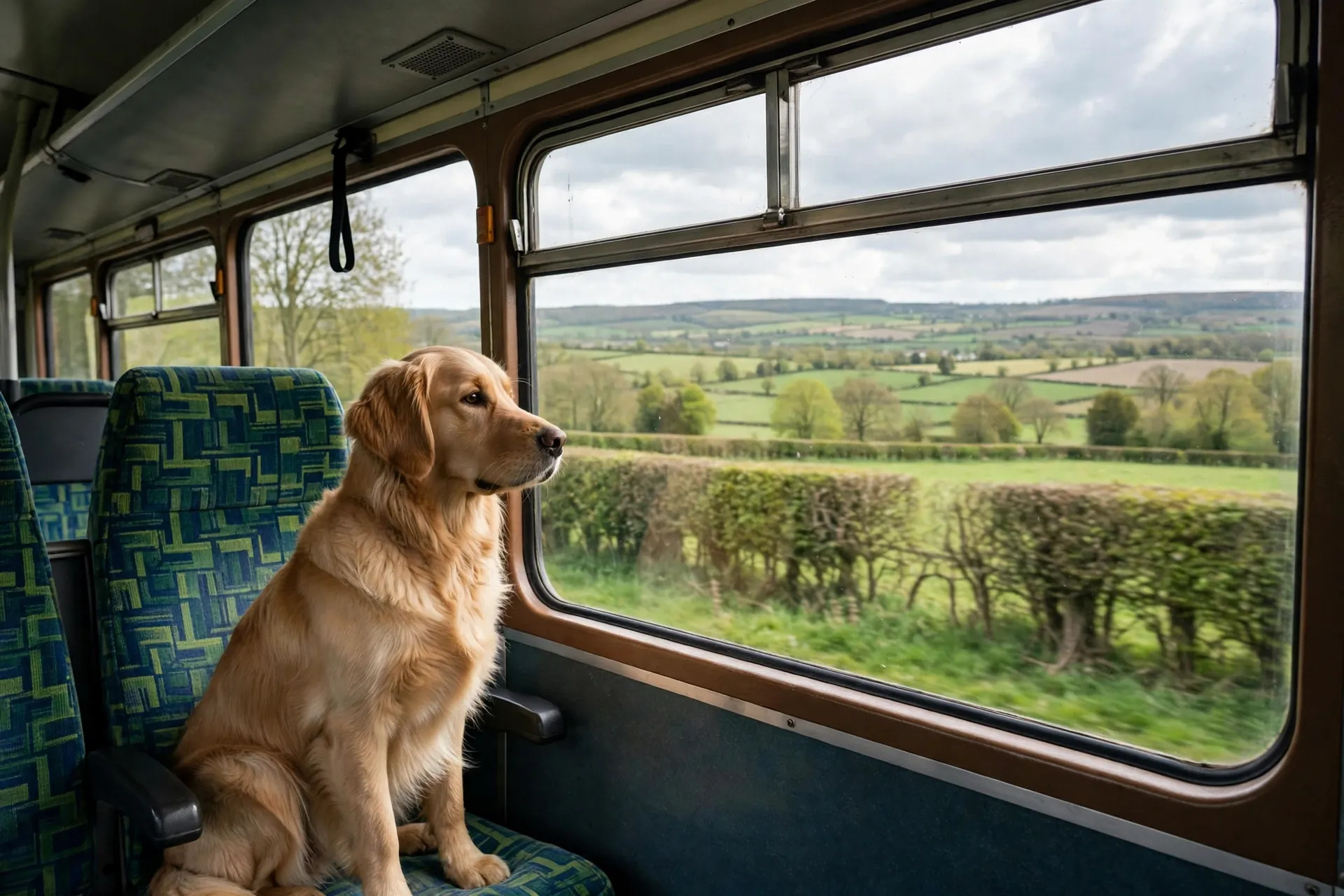
The carriage question is the one most worth resolving before you travel, because it determines comfort for the whole journey. On most heritage lines, dogs are welcome in ordinary open carriages, where they should lie on the floor at your feet, on a mat or blanket, and not on seats, tables or luggage racks. Some lines designate specific dog-friendly carriages, often marked on the platform or in the timetable, and travelling in the wrong carriage can mean a polite but firm request to move while the train is already boarding. First-class compartments, observation cars with panoramic windows, buffet cars and dining cars are the most common exclusions, and the reasons are practical: food service, limited space, upholstery that is expensive to clean, and passengers who have paid a premium for a particular atmosphere.
Within an ordinary carriage, seat choice is a small decision with a large effect. An end seat near a door gives you a quick exit at intermediate stations and keeps your dog out of the main aisle traffic, while a window seat with a table can trap a large dog and invite other passengers to step over them. Aisle seats make it easier for other passengers to pass, but they also put your dog's tail, paws and nose in the path of every passing bag and child. For most dogs, the best compromise is a floor space at the end of a bench, with the dog between your feet and the wall, a non-slip mat underneath, and the lead short enough to prevent wandering but long enough for the dog to lie comfortably. Bring a familiar blanket: it marks the dog's space, protects the carriage floor, and gives the dog a scent anchor in an unfamiliar environment.
Compartment stock adds another layer. Some heritage carriages have separate compartments seating six or eight, which can be wonderful if you have the compartment to yourselves and awkward if you are sharing with strangers who did not expect a dog. If you are allocated a shared compartment, introduce the dog briefly, keep the dog on the floor, and watch for signs that fellow passengers are uncomfortable, such as moving bags defensively or shifting away. A dog that is calm and unobtrusive will usually be welcomed, but a dog that whines, paws at strangers or tries to climb onto seats will change the atmosphere quickly. If compartments worry you, ask at booking for open saloon stock, which is easier to manage and easier to leave.
Rules about dogs on seats are worth taking literally. Even a small dog on a lap may be acceptable on some lines and prohibited on others, and the difference often depends on whether the carriage has wipeable seating or fabric upholstery. Do not assume that a clean, well-behaved dog on a blanket is exempt: the rule exists to protect the stock for the next passenger, and staff enforce it more strictly on lines with historic or restored interiors. The same applies to luggage racks, tables and the corridor: keep the dog on the floor, keep the lead in your hand, and keep treats and chews contained so that crumbs and smells do not spread. Good carriage manners are the reason dogs keep being welcomed, and one thoughtless journey can harden a policy for everyone.
Steam, smoke, whistles and noise
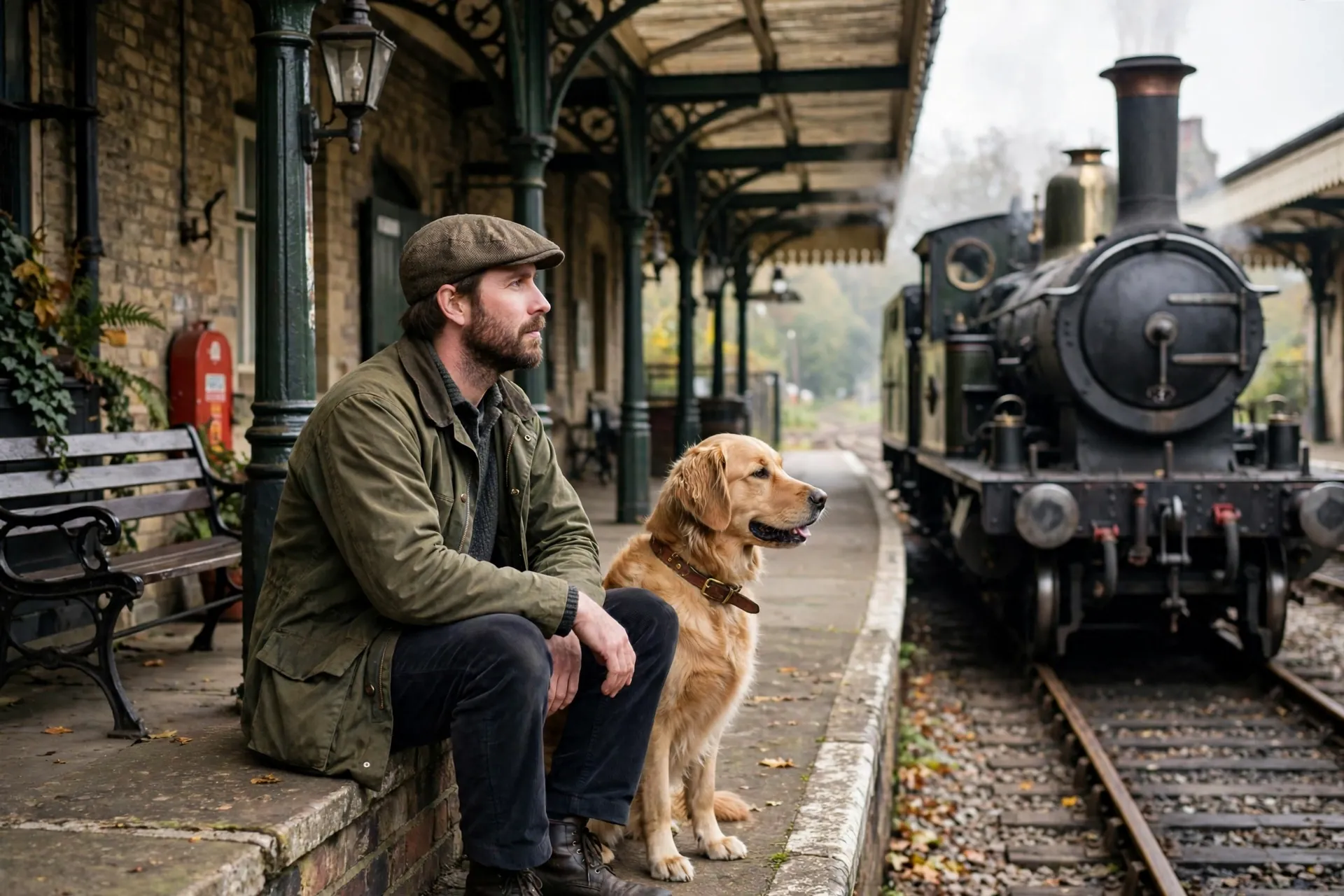
Steam is the attraction and the challenge. A steam locomotive produces noise, vibration, coal smoke, steam releases and the occasional shower of hot cinders near the engine, and a dog's senses are far more acute than a human's. Most dogs cope well when they are inside a closed carriage some distance from the locomotive, but the platform experience is louder and more intense, especially when the locomotive arrives, whistles, releases steam and runs round the train at the terminus. Dogs that are noise-sensitive, very young, very old or recovering from illness deserve extra thought, and owners of brachycephalic breeds or dogs with respiratory conditions should be particularly careful about smoke exposure and heat on a warm day. Check the official guidance before you travel if your dog has a health condition that steam or smoke could worsen.
Practical steps reduce the impact considerably. Choose a carriage further from the locomotive rather than the first carriage behind the engine, keep windows partly closed when the train is near the locomotive or in a tunnel, and avoid standing with your dog immediately beside the locomotive on the platform for photographs. A whistle is loudest at close range, so step back from the platform edge and give your dog a treat or a calm word just before departure, when whistles are most likely. If your dog wears ear protection designed for dogs, introduce it at home first, because a novel item on a noisy day adds stress rather than removing it. Most importantly, watch your dog rather than the timetable: pacing, panting, drooling, yawning, lip licking, tucked tail or attempts to hide are all signals to move, reassure or alight, not to push through.
Diesel-hauled days are a useful alternative for sensitive dogs. Many heritage railways run diesel services on certain days, and these are generally quieter, less smoky and less crowded with photographers, while still offering the same scenery and stations. If the railway's timetable marks steam and diesel days, a diesel day may be the better first outing, with a steam day saved for when you know how your dog responds. The same logic applies to time of day: the first departure is often quieter than a midday service, and a late afternoon return may be calmer than a lunchtime train full of families. Ask the railway which services are usually quietest, and build the day around that answer rather than around the most photogenic departure.
Heat and ventilation interact with steam in ways that matter on summer days. Heritage carriages often have opening windows but no air conditioning, and a carriage that faces the sun can become warm quickly, especially when it is full. Bring water and a collapsible bowl, offer small drinks regularly rather than waiting for panting, and avoid leaving a dog in a stationary carriage in direct sun while you photograph the locomotive. If the carriage becomes too warm, move to a shaded side, open a window on the shaded side, or alight at the next station and wait for a later, quieter train. A dog's comfort is a better guide than a timetable, and heritage railways are unusually forgiving of passengers who choose to break a journey.
Platform safety, gaps and doors
Heritage platforms demand more attention than modern ones, because they were built for a different era and preserved rather than rebuilt. Platform heights vary, surfaces may be uneven or gravelled, edges may lack tactile paving, and the gap between platform and carriage step can be larger than on a mainline station, especially where historic rolling stock is in use. Slam doors are a particular feature: they must be opened and closed by hand, they can swing in wind, and they do not lock automatically, so a dog that pushes against a door or slips a lead can create a genuine hazard. Keep your dog on a short lead at all times on the platform, keep the dog away from the edge, and never let the lead trail where it could catch on a door handle, a bench or another passenger's foot.
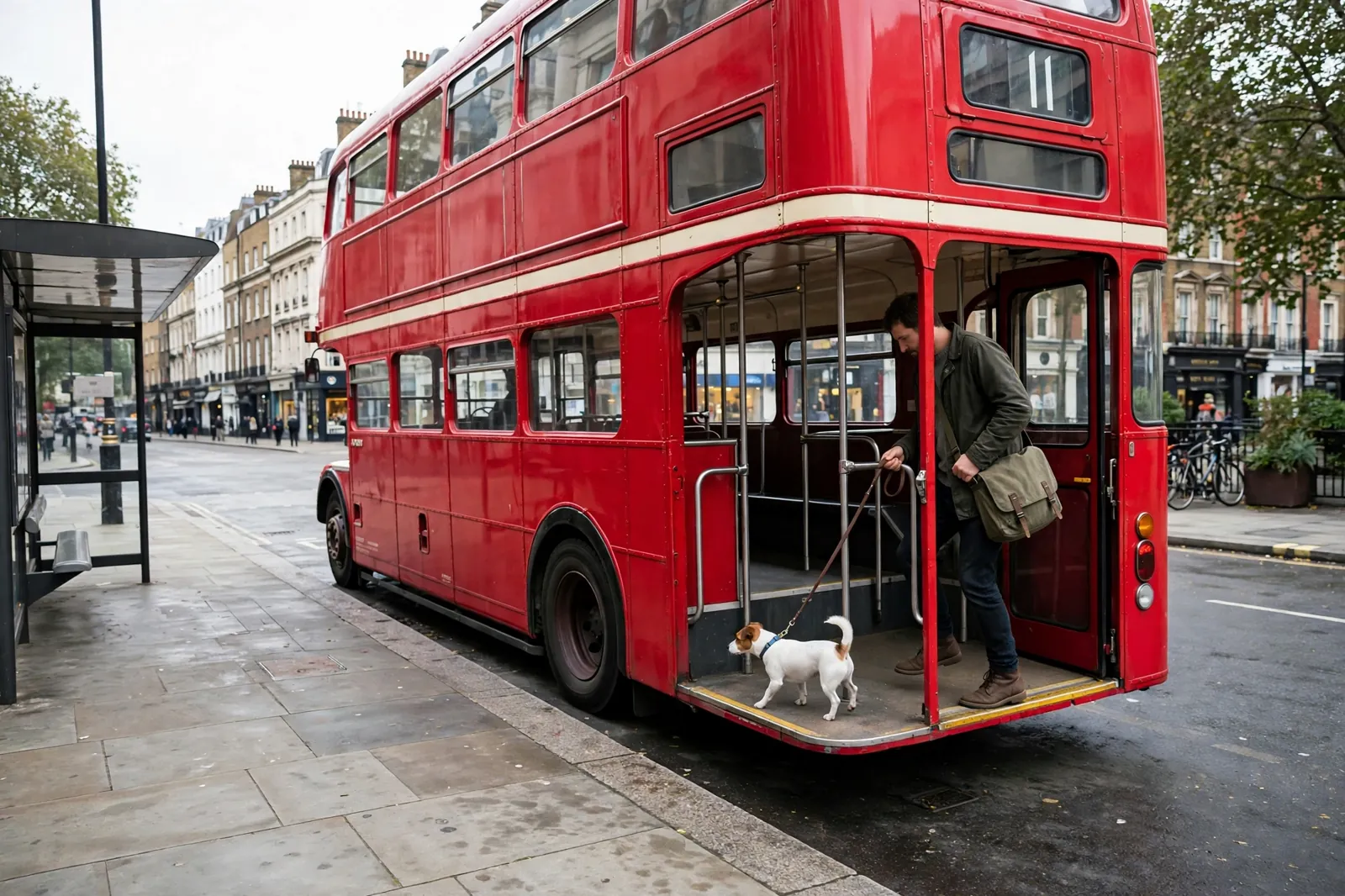
Boarding is the moment to slow down. Let other passengers board first if the platform is crowded, lift a small dog onto the train if the step is high rather than letting them scramble, and guide a larger dog up the step with a steady hand on the harness rather than pulling on the lead. Once on board, move promptly to your seat and settle the dog before the train moves, because a dog standing in the corridor during departure is at risk from the lurch and from passengers still finding seats. At intermediate stations, decide in advance whether you are staying on board or alighting, and if you are staying, keep the dog settled and away from the door, because other passengers' dogs may board and create a sudden greeting through an open doorway.
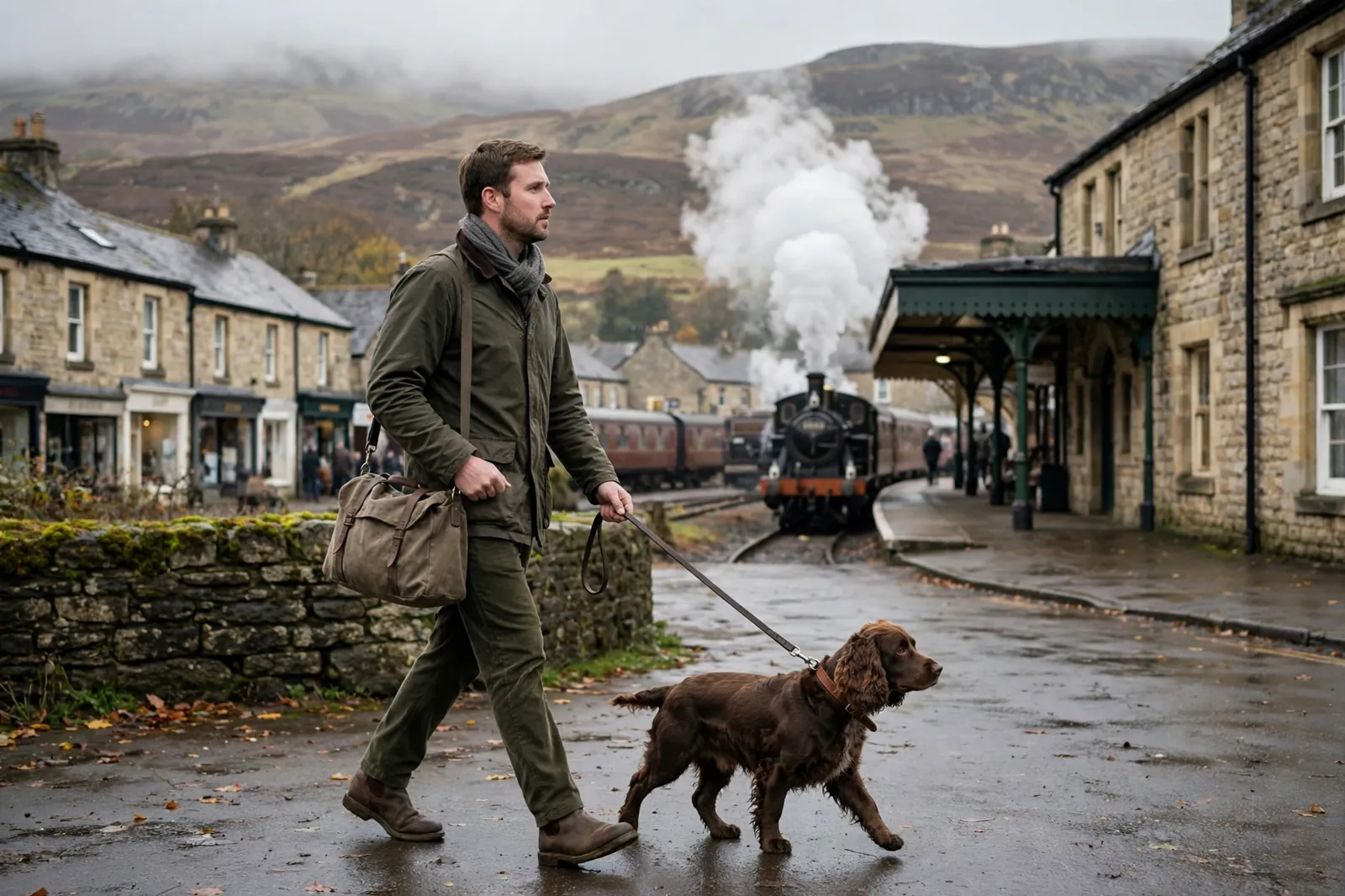
Alighting deserves the same care. Check that the platform is present and that the door you are using opens onto it, because heritage trains can be longer than some platforms, and the guard may announce that only certain doors will open. If you are unsure, ask the guard before your station rather than discovering the problem as the train slows. Keep the lead short as you step down, watch for gaps and uneven surfaces, and move away from the platform edge promptly, because the locomotive may need to run round or another train may arrive. At termini, the locomotive movement is part of the spectacle, but it is also the moment when crowds gather, dogs are at foot level, and leads tangle, so step back, find a quiet spot and let the crowd thin before you walk the length of the platform.
Station facilities vary just as much as platforms. Some heritage stations have a tea room, a shop, a museum and a fenced dog exercise area, while others have a single shelter and a gravel car park. Before you travel, check which stations have toilets, water, shade and a practical dog toilet area, because a two-hour visit to a terminus with no dog facilities is a different proposition from a terminus with a riverside walk and a dog-friendly cafe. Taking a dog on UK trains covers mainline platform habits that transfer well, and dogs on train platforms explains gaps, crowds and boarding in more detail, both of which are worth reading before a heritage first visit.
Toilets, water and journey breaks
There is no dog toilet on a heritage train, so the journey plan is really a toilet plan. Toilet your dog thoroughly before boarding, using a station area, a nearby verge or a short walk if the station allows it, and carry poo bags, a bottle of water and a cloth for cleaning up. Most heritage journeys last between twenty minutes and an hour each way, which most adult dogs manage comfortably, but longer rover journeys, gala timetables with waiting time at termini, and delays can stretch the interval considerably. If your dog is a puppy, an older dog, or a dog with a medical condition that affects toileting, choose a shorter journey, break the trip at an intermediate station, or accept that you may need to alight early and wait for a later train.
Intermediate stations are the heritage railway's secret advantage. Unlike a mainline express, a heritage service usually stops at several stations, many of which have walks, cafes or picnic areas, and a rover or day ticket often allows you to break the journey and rejoin a later train. Plan these breaks deliberately rather than discovering them by accident: identify one station with a good dog walk and a cafe, one station with shade and water on a hot day, and one station where you can comfortably wait if you need to cut the journey short. Check the timetable for the last train back, because missing it at a rural intermediate station can mean a long walk, a taxi or a wait that is no fun for anyone, especially with a tired dog.
Water is a second planning item, not an afterthought. Heritage carriages rarely have a water supply for dogs, and station taps may be in the car park, the tea room or nowhere at all. Carry a bottle and a collapsible bowl, offer water at each station stop, and avoid letting your dog drink from puddles, troughs or streams near the line, which may contain oil, chemicals or livestock contaminants. On a warm day, offer small, frequent drinks and watch for excessive panting, which is a sign to rest in shade rather than to press on to the next station. A cooling mat or a damp towel in your bag is cheap insurance, and a familiar bowl encourages a reluctant dog to drink in an unfamiliar place.
Food and treats need the same discipline. A small, familiar treat can help a dog settle, but a large meal immediately before a train journey can cause discomfort, and a smelly chew in a shared carriage can annoy fellow passengers and distract other dogs. Feed the main meal well before departure or after the journey, use low-odour treats on board, and keep chews for station breaks where the dog can enjoy them without an audience. If your dog is prone to travel sickness, discuss it with your vet before the trip, travel on an emptier stomach as advised, and bring cleaning supplies and a spare blanket without embarrassment: heritage staff have seen it all before, and a prepared owner is far easier to help than a surprised one.
Choosing a line that suits your dog
Britain has dozens of heritage railways, and the right choice depends less on fame than on fit. A short, level, riverside line with frequent services and a cafe at each end suits a first-time dog, an older dog or a nervous dog far better than a long, steep, moorland line with infrequent trains and exposed platforms. A line that runs through woodland and farmland offers shade and scenery but may have fewer facilities, while a seaside line offers beaches and cafes but also crowds, gulls and sand that some dogs find overstimulating. Think about journey length, service frequency, station facilities and the walk at the far end as a single package, because a wonderful railway with a poor far-end walk is a half-day out, not a full day.
Region matters mainly through terrain and weather. Moorland lines in Yorkshire, the Peak District and the Welsh borders can be exposed, windy and cold even in summer, which suits a thick-coated dog but challenges a small or short-coated dog without a coat. Woodland and valley lines in the Midlands, the South West and the South East offer more shelter and more frequent cafes, but also more crowds on summer weekends. Coastal lines offer the added option of a beach walk, but check beach dog restrictions for the season, because a beach that welcomes dogs in winter may ban them in summer, and the railway terminus may be some distance from the dog-friendly section of beach. Narrow-gauge lines in Wales and the Lake District are charming and often dog-friendly, but carriages can be smaller and lower, so a very large dog may find floor space tight: check carriage dimensions or ask the railway directly if your dog is large.
Special interest lines deserve a mention because they attract enthusiasts who may not expect dogs. Lines that focus on industrial heritage, military history or narrow-gauge engineering often have smaller carriages, steeper gradients and more restricted station areas, and their gala events can be busier and louder than a general heritage line. That does not exclude dogs, but it does mean checking the specific event policy and choosing a quieter ordinary service for a first visit. Conversely, lines that market themselves as family days out, with play areas, picnic sites and riverside walks, are often the most dog-ready, because they have already thought about children, pushchairs and picnics, all of which share space needs with dogs.
When you shortlist two or three lines, compare them on dog-specific criteria rather than on scenery alone. Ask how long the longest non-stop stretch is, how often trains run, whether you can break the journey, what the dog fare is, which carriages dogs may use, what happens if you need to alight early, and what the walk at the far end is like. A line that answers all of those questions clearly is likely to be well organised for dogs in general, while a line that answers vaguely may still be wonderful but will require more improvisation on the day. The best heritage dog day out is rarely the most famous line: it is the line where the dog's needs were considered before you arrived.
Nervous, reactive and older dogs
A heritage railway can be a good training ground for a nervous or reactive dog, but only if the exposure is graded. The mistake is to start with a crowded gala train, where the dog is trapped in a carriage with other dogs, children, food smells and loud noises, and then to conclude that railways are unsuitable. A better progression is to start with a station visit without boarding, then a short, quiet, off-peak journey in an empty carriage, then a longer journey, and only then a busier service. Each step should end while the dog is still coping, not after the dog has tipped over, because the last experience of the day is the one the dog remembers most clearly.
For reactive dogs, carriage choice and timing are management tools, not minor details. Sit in the quietest carriage, near a door, at a time when the train is least full, and keep a visual barrier between your dog and the aisle, such as your legs, a bag or a blanket draped over a seat edge, without blocking the gangway. A muzzle, if your dog is trained to wear one comfortably, can reduce your own anxiety and give fellow passengers confidence, but it must be introduced gradually at home, not first tried on a crowded platform. A settle mat, a long-lasting chew and a familiar blanket all help a reactive dog to choose lying down over scanning the carriage, and a short toilet break at an intermediate station can reset a dog that is becoming overstimulated.
Older dogs need a different kind of planning, focused on comfort and access rather than behaviour. Steps, gaps, slippery carriage floors and long platform walks can all challenge an arthritic dog, and a non-slip mat, a ramp for high steps where permitted, and a seat near the door all help. Older dogs may need more frequent toilet breaks and more water, and they may tire quickly in heat, so a short journey with a shaded station break is often more enjoyable than a full-day rover ticket. If your dog has a medical condition, carry medication, a vet contact and a note of the nearest vet to each station, and check the official guidance before you travel about heat, smoke and exertion for that condition.
Puppies and young dogs have their own timetable. A first heritage journey should be short, calm and positive, with plenty of toilet breaks and no pressure to behave perfectly for an hour. Socialisation is valuable, but a crowded carriage is not the place to flood a puppy with new experiences: one new sound, one new surface and one calm greeting are enough for a first visit. If the puppy becomes overwhelmed, alight, play briefly in a quiet station area, and try again another day, rather than pushing through in the hope that the puppy will settle. The goal of a first heritage trip is not to complete the line: it is to create a memory of trains as calm, predictable and safe.
A booking checklist that prevents surprises
A short checklist, used every time, prevents most heritage railway disappointments, because the same questions recur on every line. Work through it before you pay, and keep the answers with your tickets. The list below is deliberately practical: it covers money, space, timing and exits, which are the four areas where heritage policies differ most and where assumptions cause most friction. If a railway cannot answer a question, treat that as information in itself, and either accept the uncertainty or choose a line that can answer clearly.
- Dog fare and ticket type: How much per dog, per journey or per day, and must the dog ticket be bought online or at the station?
- Carriage restrictions: Which carriages may dogs use, and are dining, first-class, buffet and observation cars excluded?
- Dog limits: Is there a maximum number of dogs per party or per carriage, and are there breed or size conditions?
- Service type: Is this an ordinary service or a special event, and does the event have a different dog policy?
- Journey length and breaks: How long is the longest non-stop stretch, and can you break the journey at intermediate stations?
- Station facilities: Which stations have toilets, water, shade, a dog toilet area and a cafe that welcomes dogs?
- Access: What are the platform heights, step heights and gaps, and is there step-free access at the stations you plan to use?
- Early exit: What happens if you need to alight early, and when is the last train back from each station?
- Steam or diesel: Is this a steam or diesel day, and which is better for your dog's noise and smoke sensitivity?
- Refunds and changes: Can tickets be changed or refunded if the weather, your dog's health or a timetable change intervenes?
Once the checklist is complete, pack for the answers rather than for a generic train trip. A line with high steps needs a ramp or a lift plan; a line with no station water needs extra bottles; a line with long non-stop stretches needs a more thorough pre-boarding toilet routine; a line with crowded gala carriages needs a settle mat and a quiet-carriage strategy. Packing is where a checklist becomes a comfortable journey, and the items that matter most are usually the unglamorous ones: poo bags, water, a bowl, a mat, a spare lead, cleaning cloths and a familiar blanket. Everything else is optional.
Finally, confirm the day before travel. Heritage timetables can change for engineering work, locomotive availability, weather or volunteer availability, and a service that was steam-hauled when you booked may run with a diesel substitute, or vice versa. A quick check of the railway's website or social media on the morning of travel, and a note of the railway's phone number, prevents a wasted journey and a disappointed dog. If the timetable has changed in a way that no longer suits your dog, such as a longer journey or a busier special event, do not feel obliged to proceed: a postponed heritage day out is better than a stressful one, and the railway will still be there next week.
When to change plan on the day
Even a well-planned heritage day can go sideways, and knowing in advance when to change plan is part of good dog ownership. Change plan if the platform is dangerously crowded for your dog, if the only available carriage is full of other dogs and your dog is already over threshold, if the weather has made the carriage unbearably hot, or if your dog is showing signs of illness, distress or exhaustion that will not settle with a short break. Alighting at the next station, waiting for a later train, or abandoning the railway for a riverside walk are all legitimate decisions, and none of them reflects badly on you or your dog. The railway is a leisure activity, not a test, and a calm walk is a better day out than a forced journey.
Other passengers are part of the day too, and their comfort matters. If a fellow passenger is frightened of dogs, allergic, or simply uncomfortable, a polite move to another seat or carriage costs little and preserves goodwill for dog owners generally. If another dog is reactive, keep distance, avoid face-to-face greetings in the corridor, and use the door area as a buffer rather than forcing a meeting. If staff ask you to move carriage, comply graciously and ask where the dog-friendly space is, rather than debating the policy on a crowded train. Staff on heritage lines are often volunteers giving their weekend to keep the railway running, and a courteous owner is remembered far longer than a correct argument.
Weather is the most common reason to adapt. Rain makes platforms slippery, gravel car parks muddy and carriage floors wet, so bring towels, a drying coat and a change of mat, and accept that a wet dog in a crowded carriage needs more space, not less. Heat makes carriages stuffy and platforms exposed, so seek shade, offer water, and consider a shorter journey or a diesel service. Wind makes slam doors swing and whistles carry further, so keep a firm hand on doors and leads. Snow and ice can close lines or reduce services, so check before leaving home rather than arriving to find a locked station. In each case, buses and coaches may offer a practical alternative for the onward journey, especially where a heritage line connects with a local bus route at a market town.
End the day as deliberately as you began it. Toilet your dog after alighting, offer water, check paws for gravel, cinders or hot surfaces, and give the dog a quiet settle before the drive home. A heritage day out is stimulating even for a calm dog, and a tired dog that is driven straight home without a wind-down may arrive home restless or unsettled. A short, familiar walk near home, a drink and a quiet evening are the right finish, and they also give you a chance to notice anything unusual, such as a sore paw, a cough after smoke exposure, or a reluctance to settle, which may need a vet check. If anything concerns you, check the official guidance before you travel again, and mention the heritage journey when you speak to your vet, because steam, smoke and exertion are relevant details.
Practical questions
Before you go
Do dogs need a ticket on heritage railways?
Often yes, but the charge varies by railway. Some lines charge a small flat dog fare, some charge per journey or per day, and a few carry dogs free. Check the railway's own fares page before you travel and keep the dog ticket with your own ticket, because conductors do check.
Can dogs travel in every carriage on a heritage railway?
No. Most heritage railways welcome dogs in ordinary carriages but restrict them from dining cars, first-class compartments, buffet cars and sometimes observation cars. Ask at booking which carriage to board, and sit near the doors if your dog may need a quick exit at an intermediate station.
Is steam smoke safe for dogs on heritage railways?
Brief exposure on a platform or in a closed carriage is not the same as prolonged exposure, but steam, coal dust and loud whistles can unsettle sensitive dogs. Keep windows partly closed near the locomotive, keep your dog away from the platform edge, and move to a quieter carriage if your dog coughs, paces or shows distress. Check the official guidance before you travel if your dog has a respiratory condition.
Can I take my dog on a heritage railway dining train?
Usually not. Dining trains, afternoon tea services and Pullman-style experiences commonly exclude dogs from the dining carriage, even on railways that welcome dogs on ordinary services. If the meal is the point of the trip, book the dining experience for a dog-free occasion and choose an ordinary service for the dog day out.
What if my dog barks or needs the toilet during the journey?
Toilet your dog thoroughly before boarding and plan around intermediate stations where you can alight, because there is no toilet break on board. If your dog barks persistently, move to a quieter carriage, offer a chew or a settle mat, and be ready to get off at the next station and wait for a later train rather than letting the whole carriage endure it.