This guide is independent and contains no paid placement. Venue dog policies and parking arrangements change, so check the latest official guidance before you travel and follow signage on the day.
The best free days out are walks with a destination feel: an unrestricted beach, a grand park circuit, a towpath to a lock-side picnic spot, a market town wander or a reserve trail. Keep them free by planning parking, packing water and food basics, and checking dog rules and seasonal restrictions before you set off.
Free is a design brief, not a downgrade
Paid attractions sell structure: a ticket, a route, a café, a gift shop. A dog experiences none of that framing. What the dog registers is ground underfoot, smells per minute, freedom to move and the humans being unhurried — and on every one of those measures, a long beach walk or a new park can beat a ticketed venue outright. Designing a free day well is therefore not about settling for less; it is about spending your effort on the ingredients dogs actually value, and letting the humans enjoy the scenery, history and picnic that wrap around them.
The trick that separates a brilliant free day from “just a walk” is a sense of occasion built from free parts. Choose a destination with a beginning, a middle and a payoff: a start point with a view, a route with variety — woodland, water, open ground — and a finish worth arriving at, whether that is a harbour wall, a summit cairn, a market square or simply the far end of a promenade where the ice-cream kiosk would be, had you not brought your own. Novelty matters more to dogs than expense; a completely new park ten miles away can outrank the beloved daily field, because every smell in it is news.
Use this guide as an idea bank rather than a list of named places. Britain’s free assets repeat in every region — every county has its unrestricted beaches or reservoir walks, its grand municipal park, its canal stretch, its market town, its community woodland — so the categories below are written to be found locally wherever you live or stay. Pair them with our wider guide to cheap dog-friendly holidays if you are stringing several free days into a whole low-cost trip.
Beaches: the free headline act
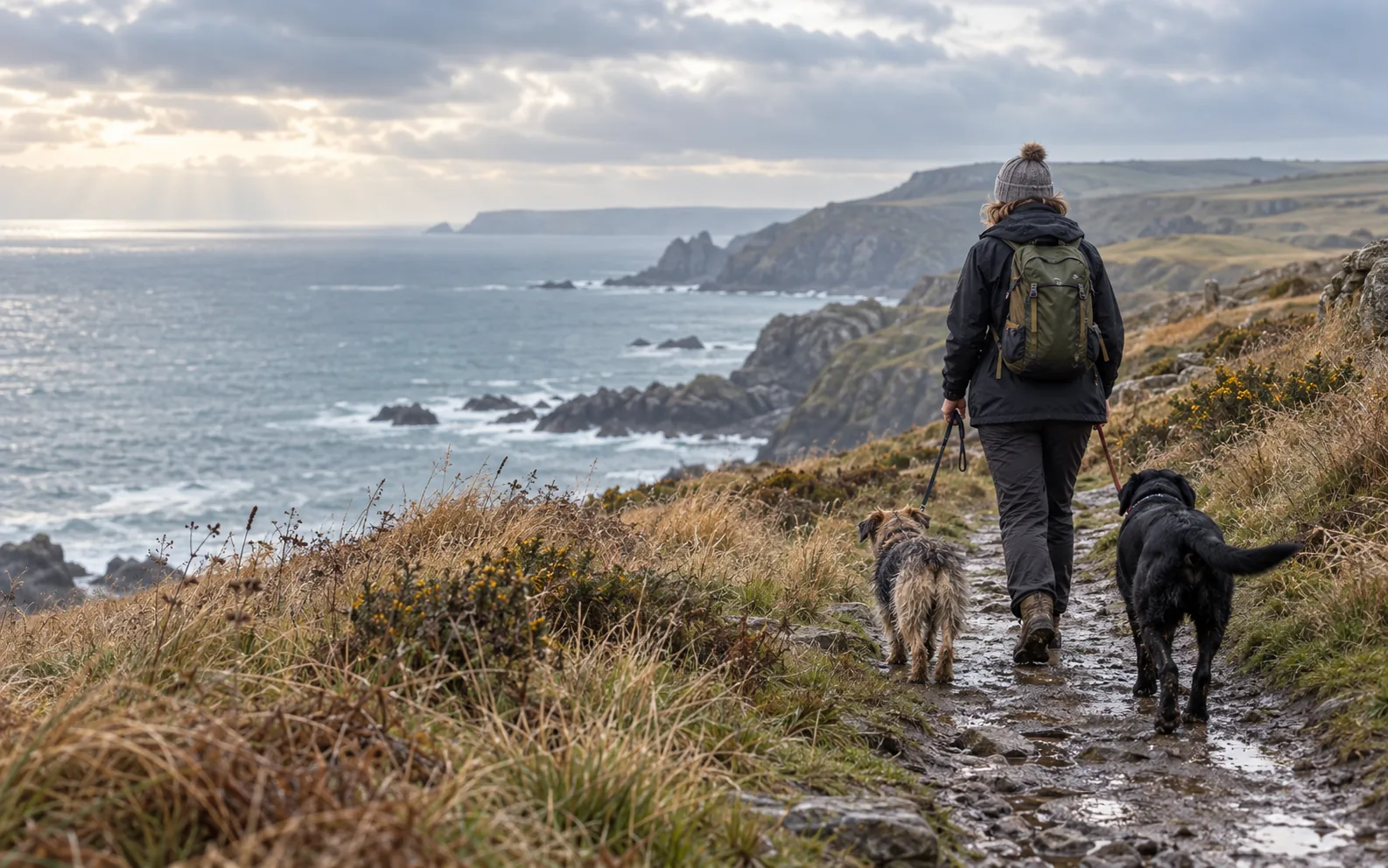
A beach is the single best free venue in the country for most dogs: open space, soft ground, water to paddle in, and an ever-changing supply of seaweed-based entertainment. The free part needs one qualification — seasonal dog restrictions. Many resort beaches restrict or ban dogs on their busiest central stretches roughly from late spring to early autumn, while leaving neighbouring stretches open all year. The unrestricted beach is very often the better beach anyway: quieter, wilder, and a short walk from the crowds. Read our full explainer on UK beach dog rules for how to read the signage and find the open stretch at any resort.
Timing multiplies the value. Early mornings give you empty sand, cool temperatures and the best light of the day; winter gives you whole coasts that summer queues for, with storm-watching drama that dogs find inexplicably thrilling. Low tide is the experienced beachgoer’s tide: it doubles the space, exposes rockpools and firm walking sand, and moves everyone away from the soft, tiring dry sand at the top. Tide tables are free online for every coastal town — checking them takes two minutes and transforms the day, including its safety, since cut-off coves and fast-flooding flats are the real hazards of unfamiliar shores.
Pack for a beach as a self-sufficient expedition and it stays free: fresh water because seawater drinking ends in an upset stomach, a towel because wet dog plus car is a permanent arrangement otherwise, bags because beach bins overflow by noon, and a ball policy — many dogs value a swim and a dig far above retrieving, and lost balls in the sea are both litter and expense. Finish with a rinse if facilities offer one, or accept the traditional outcome: sand in the car until approximately forever.
Big parks and country parks
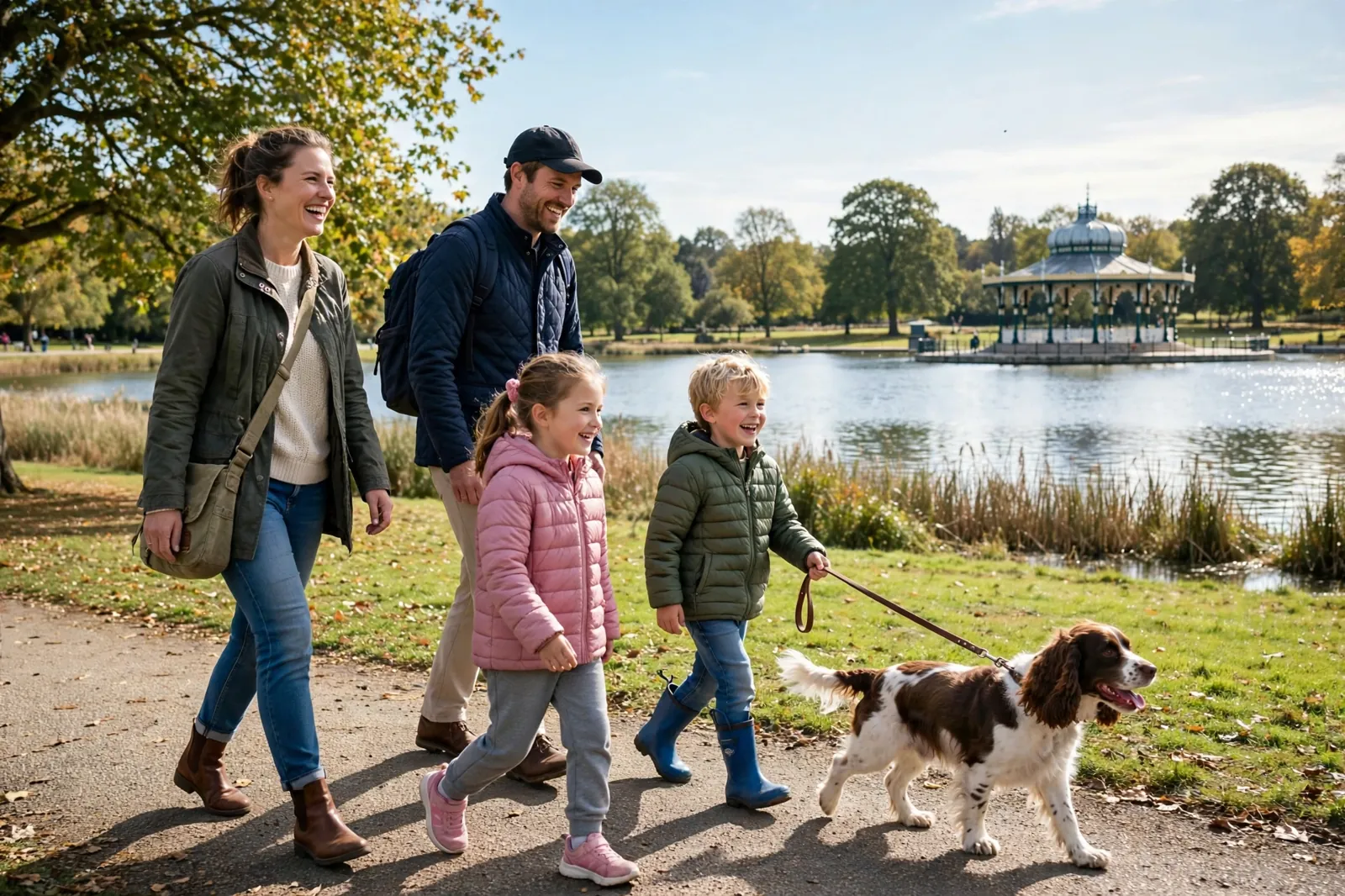
Victorian city parks are Britain’s underrated free estate: designed landscapes with lakes, bandstands, avenues, ornamental gardens and acres of open lawn, built for public pleasure and still delivering it daily. For a dog, a grand park offers what home walks cannot — formal gardens to admire on a lead, vast grass for a long-line game, water features, wildlife to watch and a constant, manageable stream of people and dogs for social practice. Country parks extend the same idea into woodland, heath and reservoir settings, usually with waymarked trails of graded lengths so you can build anything from a gentle hour to a full morning’s expedition.
The free detail to check is parking. Many country parks charge for their main car park while the park itself is free, and the honest options are part of the genre: walk in from a nearby village or station, use a free outlying entrance if one exists, or accept a modest parking charge as the day’s only spend and picnic instead of using the café. City parks usually sidestep the issue entirely with street parking and public transport. What not to do is improvise parking on verges and gateways around popular parks — it is the one behaviour guaranteed to bring restrictions down on the dog walkers who arrive after you.
Make a park day feel like an expedition by using its structure. Walk the perimeter trail rather than drifting, stop at the features the designers planted for stopping — the viewpoint, the fountain, the rose garden in season — and let the dog’s breaks set the rhythm: a sniff-heavy quarter hour in the woodland corner counts as an attraction in dog terms. Many large parks host free events across the year, from band concerts to community festivals and fun dog shows, and a park noticeboard or council events page checked on Friday can turn Saturday’s walk into a small festival for nothing.
Canals, rivers and promenades
Linear routes are the secret weapon of free days out, because they solve the two problems that defeat circular walks: navigation and turning back. A canal towpath offers flat, obvious, stile-free walking for miles, with locks, aqueducts, tunnels and moored boats as a rolling exhibition, herons and kingfishers as honoured guests, and waterside pubs and villages appearing at civilised intervals. Choose a stretch with a destination — a famous lock flight, a junction with its café boats, a viaduct viewpoint — and walk out and back, or use two cars or a train station at each end for a point-to-point day that feels like a journey.
Riverside paths give the same structure with more swimming opportunities and a few more duties. Keep dogs out of the water near anglers and moored boats, on a lead around grazing meadows, and away from steep eroded banks where a slip means a rescue. After heavy rain, flooded towpaths and fast, debris-filled rivers are a genuine hazard rather than an inconvenience; the free day’s discipline includes postponing without regret. Promenades and pier-to-pier seafront walks are the urban version: flat, lit, café-lined and gloriously free, with dog rules usually limited to leads on the prom itself and seasonal rules on the sand below — read the local sign once and stroll with a clear conscience.
Water safety deserves thirty seconds of every planning session. Blue-green algae can appear in still lakes, reservoirs and slow canals in warm weather and is potentially fatal to dogs; our guide to blue-green algae risks for dogs explains how to recognise suspect water. When in doubt, keep the dog out and on a lead at the water’s edge — a free day should never end at an emergency vet, which is also, not incidentally, the most expensive possible ending.
Historic towns and market days
A dog does not need to enter a single building for a town to make a wonderful day out. Historic streets are open-air museums you walk a dog through legitimately: castle walls and cathedral closes, Georgian crescents, medieval lanes, harbours, market crosses and blue plaques, all readable at walking pace with a lead in hand. Build a loose route from free landmarks, pause at the viewpoints locals use, and let the town’s rhythm — bells, buskers, market cries — provide the entertainment. Many dogs adore towns precisely because the sniff density per metre exceeds anything a field can offer.
Market days are the peak format. Outdoor markets welcome leaded dogs in most towns, fill the streets with smells and bustle, and cost exactly what you choose to spend — which can be nothing beyond a coffee, or a deliberate small spend on local produce for the picnic. Arrive early for space and calm, keep the lead short in crowds, watch for dropped food hazards from grapes and onions to cooked bones, and give the dog decompression breaks on a quiet side street between circuits. A dog that can settle under a bench while humans browse a second-hand book stall has acquired a genuinely transferable life skill.
Window-level planning improves town days further. Several national chains and many independent shops welcome dogs inside — look for the paw sticker or ask — while museums and galleries generally do not admit pet dogs, and honesty about that boundary keeps the day smooth: one human browses the free museum while the other takes the harbour wall shift, then swap. Cathedrals and churches vary, with some welcoming dogs in grounds and a growing number inside; check the specific place rather than assuming. The pattern to remember is grounds yes, interiors ask — with assistance dogs, as ever, in a different and protected category.
Reserves, woods and open access land
Nature reserves run by wildlife trusts, councils and community groups are among the finest free walks in Britain: managed paths, hides overlooking wetlands, wildflower meadows and ancient woods, usually free to enter with donation boxes doing the quiet asking. Dogs are welcome at many but not all reserves, sometimes on leads throughout and sometimes excluded from the most sensitive areas or seasons, because ground-nesting birds and grazing conservation herds set the terms. The reserve’s own page or entrance board states the deal precisely; read it as the price of admission and pay it gladly, because these places exist on goodwill.
Community woodlands and Forestry England sites add another free tier: waymarked trails, sculpture paths, Gruffalo-style family trails at some sites, and glorious autumn colour, with charges usually limited to parking at the biggest honeypots. Open access land — the mapped moor, down and common where walkers may roam — offers the most expansive free days of all, balanced by the strictest dog duties: leads near livestock and in the nesting season as our lead-law guidance explains, and constant awareness that “open” describes access, not absence of rules. Check the seasonal position and check the latest official guidance before you travel.
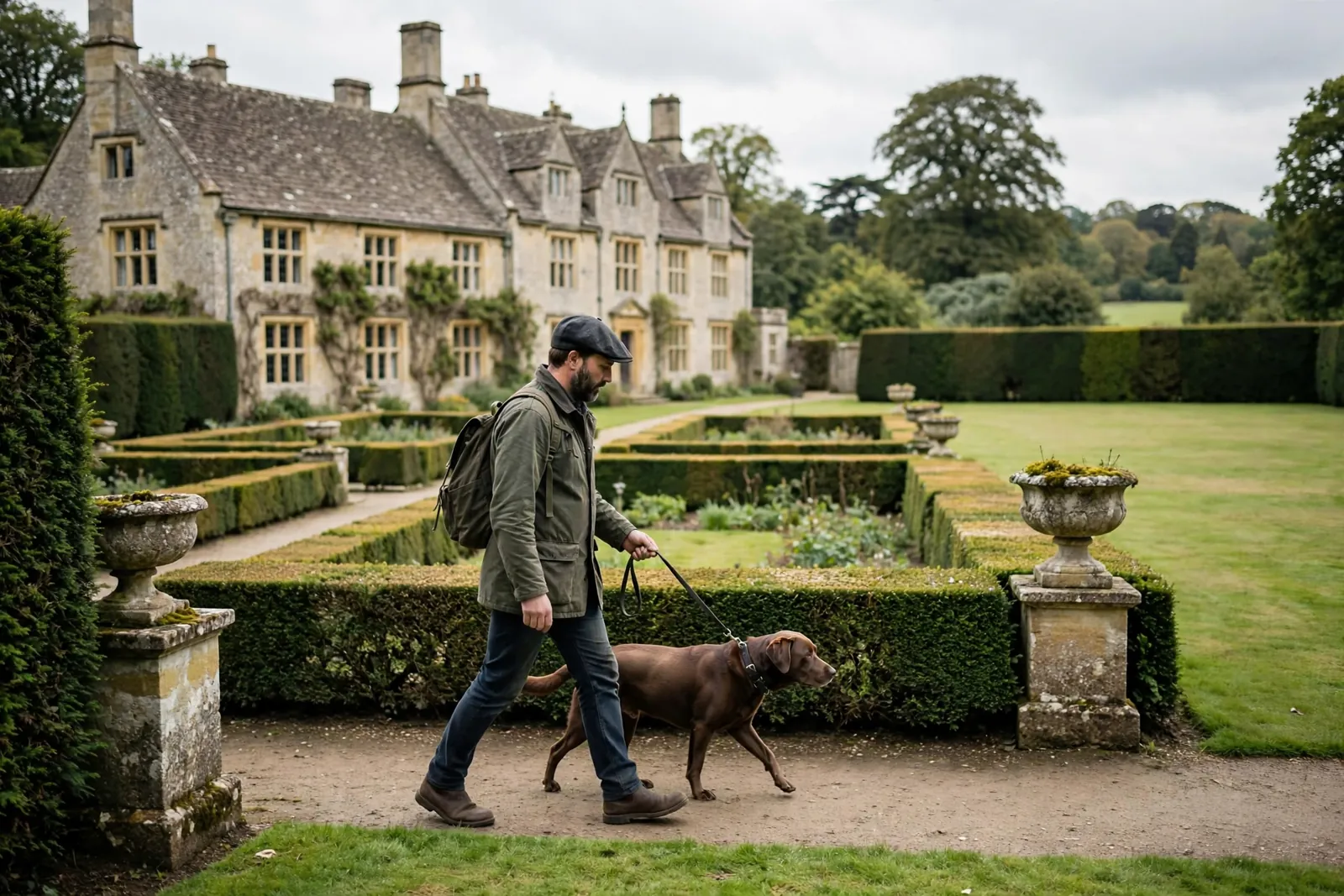
Big-estate organisations sit across this category in a way worth understanding. Membership bodies open hundreds of landscapes, coast paths and parklands where access is free to everyone, while the houses, gardens and car parks carry charges or membership logic. Our guide to visiting National Trust places with dogs explains its pawprint ratings and where dogs fit; used smartly, a holiday near estate countryside gives you free days on the land with one chosen paid property day in the middle — a rhythm many families find beats both extremes.
Build a full day from free parts
A full free day has an architecture: travel, a main event, a middle, a second wind and a gentle close. Take a template and bend it locally. Arrive at an unrestricted beach by half past nine, walk the tide line for an hour while the sand is empty, then move up to the promenade for a bench picnic from your own bag as the town wakes. Spend the middle of the day in the shade of the big park — formal gardens on the lead, a long-line game on the back lawn — then finish with a slow market-street wander and the free entertainment of a harbour at golden hour. Total ticket spend: zero. Total dog satisfaction: measurable from the passenger seat on the way home.
Seasonal versions write themselves once the template exists. Spring: a bluebell wood in the morning — dogs on paths, flowers unpicked, photographs from the trail — and a river meadow in the afternoon. Summer: dawn beach, long siesta at home or in deep shade, evening promenade when the heat breaks. Autumn: a fungi-spotting woodland walk where the dog is kept from eating anything mysterious, followed by a harvest-season market town. Winter: a frost-hard nature reserve trail, a historic town’s lights at dusk, and home before the cold settles. Each costs nothing but fuel or a fare, and each would be the highlight of a paid itinerary.
Involve the household in the collecting habit. Keep a shared list — a notebook, a phone note — of free places discovered, with three fields only: where, what the dog loved, and the catch (parking, seasonal rule, mud level). Add every holiday discovery and every local tip from other dog walkers, who are the finest research network in the country. Within a year the list becomes a personal atlas no guidebook can match, because every entry in it has been tested by the only reviewer whose opinion the dog cares about.
Free rainy-day fallbacks
British planning requires a wet-weather answer that is not “stay in and disappoint everyone”. Many free days improve in light rain: beaches empty, parks turn cathedral-quiet, and a waterproofed dog cares not at all. The honest fallbacks divide by rain quality. For ordinary rain, choose hard surfaces and short grass — promenades, town trails, gravel towpaths, formal parks — where the day survives and the mud does not, and dress the dog in whatever keeps the car survivable afterwards. Our testing notes in the guide to dog rain coats and wet-weather gear will help you kit out once and benefit every wet season.
For serious weather, pivot rather than persist. A training session in a free covered space you are entitled to use — a multi-storey car park staircase for scent games with permission and care, a pet shop’s socialisation wander where stores welcome browsing dogs, a garden centre with a dog-friendly policy — burns the energy a walk owed you. At home, scatter feeding, cardboard-box scent games, trick training and a chew rotation deliver a genuinely tired dog; a rained-off day spent training a new skill has been upgraded, not cancelled, in the dog’s accounting.
What to avoid on principle: driving a long way to “see if it clears” at a famous beauty spot, because it usually does not and the fuel money has already broken the free brief; and any flooded riverside, cliff or quarry in storm conditions, where free becomes foolhardy. The atlas habit from the previous section solves most rainy dilemmas in advance — two or three proven foul-weather routes near home, logged with their mud ratings, are the difference between a shrug and a ruined weekend.
Practical questions
Before you go
Are there really good days out with a dog that cost nothing?
Yes, plenty. Beaches outside seasonal restrictions, country and city parks, canal towpaths, promenades, many nature reserves, historic high streets and most public footpath networks are free to enjoy with a dog. The main costs left are travel and parking, which walking from home or using off-peak public transport can reduce to almost nothing.
Which free attractions allow dogs inside?
It varies, and you should always check before travelling. Many museums do not allow pet dogs inside, while some open-air museums, gardens and heritage sites welcome dogs on leads in grounds and selected buildings. Assistance dogs are a separate legal category and are generally admitted everywhere. Check the venue website for its current dog policy.
How can parking be free if the day out is free?
Popular honeypot car parks charge, but most areas also have free alternatives: street parking a short walk away, supermarket or village hall car parks where permitted, park-and-walk options and arriving by train or bus. Always obey local restrictions and time limits, and never block gateways or verges on rural lanes to save a parking fee.
What should I pack for a free day out so it stays free?
Bring water and a bowl, poo bags, treats, a towel, a basic first aid kit and your own food if you want to avoid café spending. The expensive surprises on free days are usually emergency purchases — a replacement lead, bottled water at attraction prices or an unplanned lunch — so a small packed kit keeps the budget at zero.
Are National Trust and English Heritage sites free with a dog?
Not usually for non-members: entry charges apply to most staffed properties, although members enter free and many surrounding estates, coast paths and countryside sites managed by these bodies are open without charge. Always check what is actually free at the specific place, because tickets, parking and membership are bundled differently at each property.