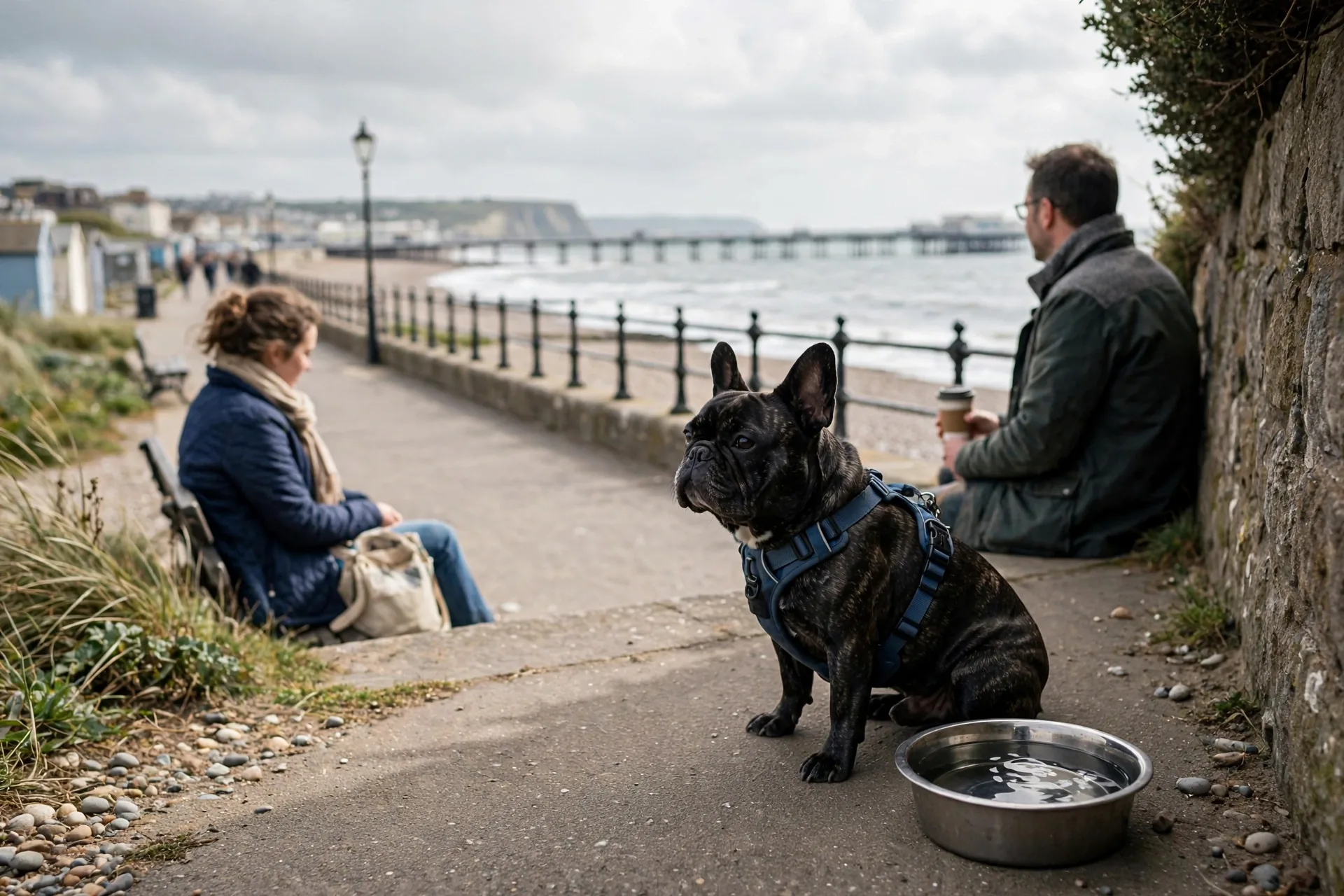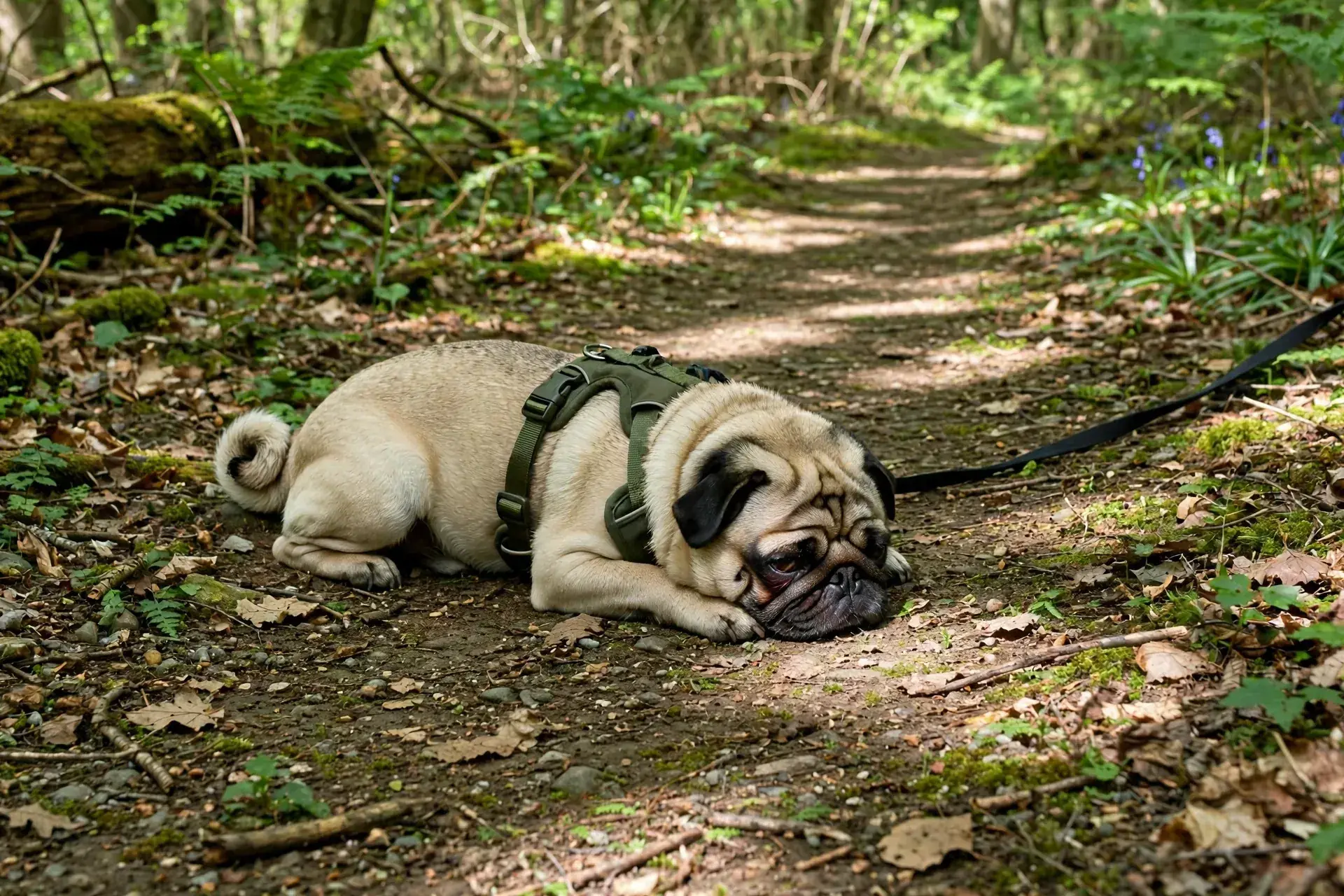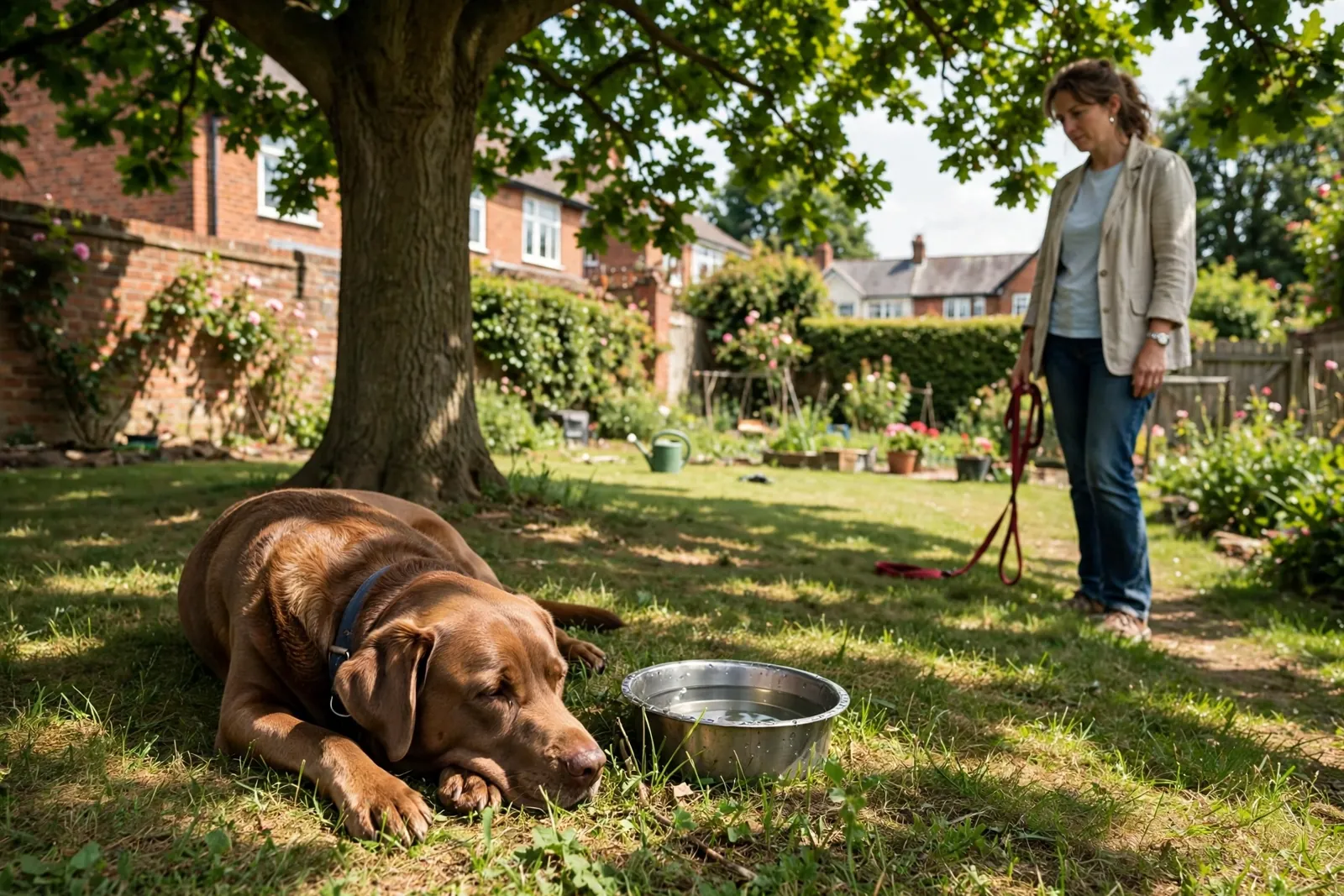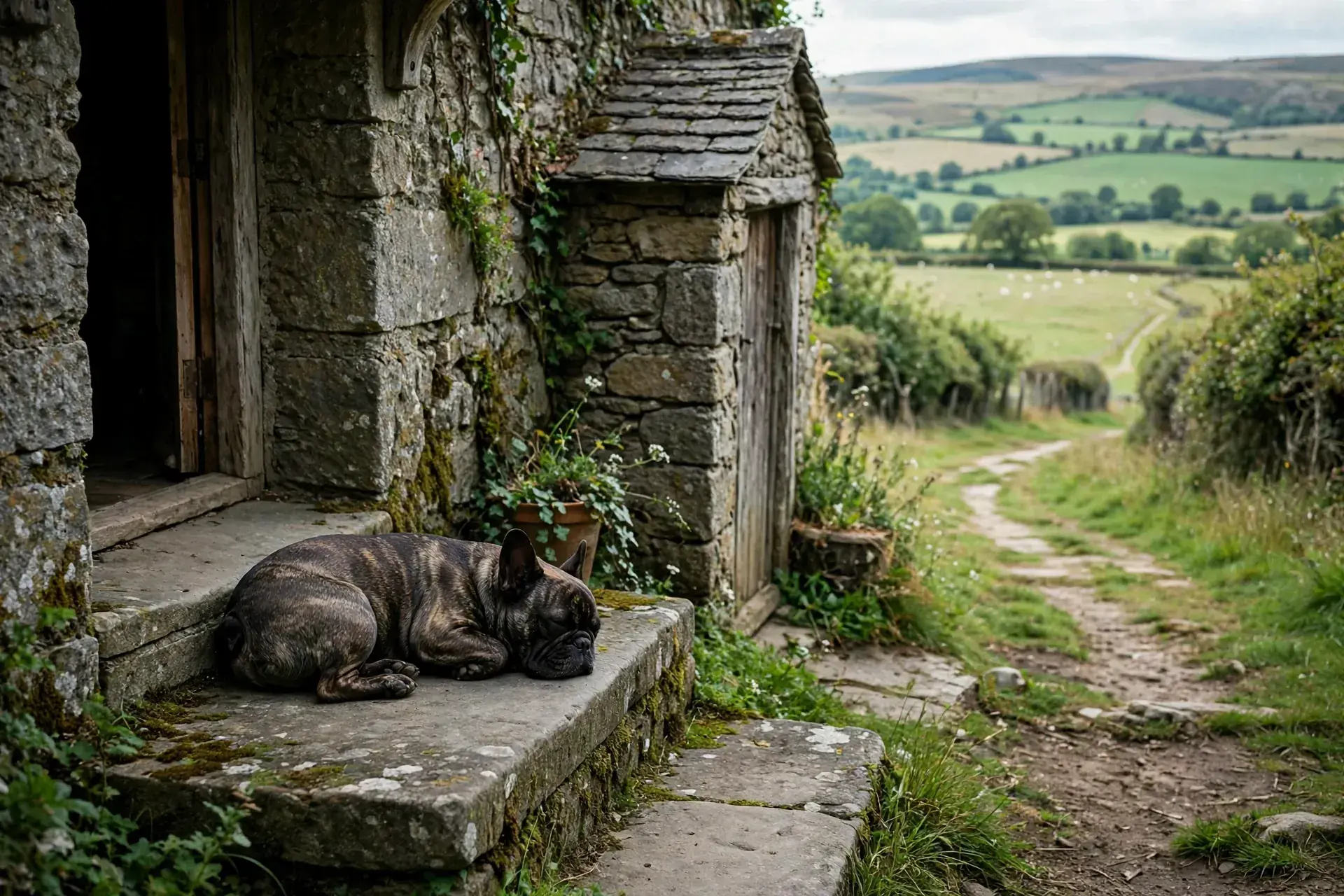
A French bulldog holiday works when you plan around cooling, not distance: travel early and cool, book ground-floor and shaded, walk little and often, and treat anything above about 20°C as a signal to slow right down. The breed's compact, heavy body and narrow airways make heat and overexertion the two risks worth organising the whole trip around.
Why the shape of the dog sets the rules
Every holiday plan for a French bulldog starts with the same piece of anatomy. The Frenchie's charm — the bat ears, the heavy head, the compressed body — comes from a build that breathes less efficiently than a longer-nosed dog. Their airways are narrower, their nostrils often tighter, and panting, which is how dogs dump heat, costs them more effort for less cooling. None of this makes a Frenchie unfit for holidays. It simply means the trip's rhythm has to be theirs: slower, cooler, and broken into small pieces.
The second structural fact is the weight distribution. A French bulldog carries a great deal of mass up front on short legs, which makes them poor swimmers, awkward on steep stairs, and tiring quickly on rough or uphill ground. A walk that a spaniel treats as a warm-up can be a full day's work for a Frenchie. Owners who accept this early have better holidays, because the dog is not being asked to be a different animal and nobody is disappointed when the "big coast walk" becomes a series of short loops.
This is also why generic dog-holiday advice needs translating. "Walk from the door" is still the best rule in the book, but for a Frenchie it means a flat sniffy loop you can cut short, not a ten-mile linear trail. "Take them to the pub" works brilliantly — Frenchies are famously sociable — but the pub garden needs shade at midday. Think of the whole holiday as a series of short, pleasant episodes with rest built in, and the dog will be relaxed instead of pushed.
One more point that shapes every decision below: heat is a bigger enemy than cold for this breed. A French bulldog in a cool drizzle is usually a happy dog. The same dog in still, humid 24°C sunshine is a dog at risk. Britain's unpredictable summers are the main reason a Frenchie itinerary has to stay flexible, with indoor or shaded options on standby for every outdoor plan.
Run the day on the heat clock
The single most useful skill for a Frenchie holiday is reading the day's temperature curve and scheduling everything against it. In most of Britain, the warmest hours run from roughly 11am to 4pm in summer. Everything active — the main walk, the drive, the beach visit — goes in the morning or the evening. The middle of the day belongs to shade, naps, and things humans do while the dog sleeps: a pub lunch in a cool room, a stately home interior, a drive with the air conditioning on.
Treat about 20°C as the point where you change behaviour, not as an emergency threshold. Above this, walks get shorter, shade stops being optional, and you start checking water bowls the way you'd check a phone. Heatstroke risk climbs sharply above the mid-twenties, and humid days are worse than dry ones at the same temperature because panting becomes less effective. The often-quoted official advice on travelling with dogs in summer heat covers the general precautions; for a Frenchie, take every one of those precautions and apply it one step earlier.
Plan the holiday's geography around cooling options. The coast is naturally kinder than inland: sea breezes, shade options on the sand, and paddling at the water's edge give you tools you won't find in a landlocked town. Woodland walks stay cooler than open farmland. And booking accommodation with a shaded garden or a north-facing patio is worth more than any cooling gadget, because shade that is always there beats shade you have to create. Check weather forecasts the night before and be ready to swap the day's plan — flexibility is the whole strategy.
Learn your own dog's early heat signals and teach everyone on the trip to spot them: panting that becomes louder or faster than usual, a reluctance to keep walking, and seeking out shade or water. These are the signals to act on, not the later ones like drooling, stumbling, or glazed eyes. When in doubt, cool the dog down — water on the belly and paws, a cool mat, rest in shade — and abandon the walk without guilt. The walk was never the point; the dog coming home well is.
Car journeys and rest stops
For most UK holidays the car is the way there, and a Frenchie is usually a relaxed passenger — the journey itself needs more thought than the dog's behaviour. The risk is a hot car in traffic, not a difficult traveller. Never leave a French bulldog in a parked car on a warm day, not "just for five minutes" and not with the windows cracked; the temperature inside climbs far faster than most people expect, and for a brachycephalic dog the margin is thinner. If a stop means leaving the car, one person stays with the dog, or you plan fuel and food stops together.
Ventilation and air conditioning are the difference between a comfortable trip and a stressful one. Run the air conditioning or keep steady airflow through the car while you move, and aim the vents so cool air reaches the dog's crate or harness spot rather than only the front seats. Position the dog away from direct sun through the windows — a shaded crate on the back seat is better than a sunny boot area. If your car has a sunroof blind or window shades, use them; dark car interiors in summer sun turn into ovens remarkably quickly.
Build in rest stops roughly every 90 minutes to two hours, more often in warm weather. Each stop should offer three things: water, shade, and a short toilet walk on cool ground. Asphalt and concrete in direct sun can be painfully hot on paws, so walk the grassy edges of service areas rather than the main forecourts, and test the surface with the back of your hand — if it is too hot for your hand, it is too hot for their feet. Keep the walk itself brief; the stop is for cooling and a leg stretch, not exercise.
Secure the dog properly, as with any journey. A crash-tested harness on the back seat or a well-ventilated crate is the standard choice; a car travel setup for dogs with a solid boot guard works for dogs that settle better in the boot, provided the boot has airflow and shade. Feed lightly or not at all for a couple of hours before departure to reduce travel sickness, and bring water from home so the dog drinks the familiar taste. A Frenchie that arrives cool, hydrated and unhurried is a dog that settles into the accommodation in an hour rather than a day.
Think ahead about the return journey too. The last day's checkout is often the hottest part of the trip logistically: rooms are cleaned in the morning sun, the car sits in a sunny car park, and the dog is walked at the warmest hour because "we're leaving anyway." Run the car with the air conditioning for several minutes before loading the dog, and treat the homeward drive with the same stop discipline as the outward one. Tired, warm dogs on a long motorway drive are the classic setup for a bad end to a good holiday.
Book the low, cool, quiet corner
Accommodation choice matters more for a French bulldog than for most breeds, because stairs, heat, and nighttime noise all hit this breed harder. The ideal setup is ground-floor sleeping with direct access to an outdoor toilet area, a bedroom that stays cool, and a garden or patio with reliable shade. When a listing says "dogs welcome," read it as the start of the questions, not the answer.
Stairs deserve their own paragraph because they are the most common surprise. French bulldogs are front-heavy, and steep narrow cottage stairs — especially the open-tread or spiral kind common in converted buildings — can be genuinely difficult or frightening for them. Some will attempt them and tumble; others will simply refuse and then need carrying at midnight. Before booking, ask the host outright: is there a ground-floor bedroom, how many steps lead to the front door, and what is the staircase like? Carry your Frenchie on any staircase that looks risky rather than hoping for the best. A portable ramp can take the edge off caravan steps or a high doorstep, but only where the ground beside it is firm and level.
Temperature control in the room is the second booking question. Ask which way the bedroom faces and whether it has blinds or curtains that actually block sun; a south-facing attic bedroom under a slate roof is a heat trap in July. Older stone cottages often stay naturally cool, which is one reason they suit Frenchies so well. If the listing mentions air conditioning, treat it as a genuine bonus in Britain, where it is still rare. A room that stays below about 20°C overnight means a dog that sleeps instead of panting through the small hours.
Think about noise and boundaries as well. Frenchies are sociable and often vocal when excited, so a terraced cottage with thin walls beside a busy path can mean a week of managing reactions at every passing dog. An end unit or a detached cottage with an enclosed garden reduces that load enormously. Check the garden boundary in photos or ask the host about fence height and gaps; Frenchies are not great jumpers, but a small determined dog can still squeeze through a surprising gap. When choosing between options, pick the quieter, cooler, lower one — the Frenchie will thank you by being calm all week.
Walks measured in minutes, not miles
Reset the walk metric. For a French bulldog, a good holiday walk is 20 to 40 minutes of flat, sniff-heavy wandering, not a distance achievement. Two or three such walks in a day beat one long slog, because the dog's airways and heavy build tire faster than their enthusiasm does. A Frenchie will keep going long after it is wise to stop, so the pacing has to come from you.
Choose routes you can cut short. Circular village loops, riverside paths with multiple exit points, and beach sections where you can turn back at any time all beat linear trails with a long committed return. Flat ground is better than hills; shade on the route is better than exposure. Coastal paths are often ideal because the breeze helps and the sea gives you a cooling option at the end, but avoid long exposed cliff sections in the middle of the day, where there is nowhere to rest in shade.
Time the walks with the heat clock: early morning or late evening in summer, and remember that the famous British "it's not that hot" day is exactly the day Frenchies get caught out — hazy 23°C with no breeze is harder on them than a crisp bright day. Carry water and a portable bowl on every walk, however short, and offer water before the dog looks thirsty. A harness rather than a collar keeps pressure off the windpipe, which matters double for a short-nosed breed; use a well-fitted harness and a short lead on busy paths, and let the dog choose the pace.
Build rest into the walk itself. Frenchies love to sniff, and a slow sniffy walk with pauses is both more tiring and more satisfying than marching. Plan a bench, a shaded gate, or a pub garden halfway; the dog rests, you have tea, and everyone returns happy. If the dog starts panting hard, lies down, or seeks shade, the walk is over — no negotiation. There is always another walk tomorrow morning, and a rested Frenchie tomorrow is worth far more than a heroic walk today.
Airway care on the move
You don't need a veterinary degree to look after a Frenchie's airways on holiday; you need a routine and attention. Keep walks easy, keep the dog cool, keep the harness off the throat, and watch the breathing pattern. Normal for your dog is the baseline — any holiday change in breathing effort, noise, or recovery time after a walk is information worth acting on early rather than late.
A few practical details help. A harness with a Y-shaped front that sits below the throat is better than one that presses across the windpipe; check the fit before the trip, because a harness that was fine last year may be snug now. Avoid tight collars entirely, and resist the temptation to "encourage" a tired Frenchie by tugging the lead forward — pulling against a lead is exactly what narrowed airways handle worst. On warm days, a damp cool coat can help, but watch that it doesn't add weight or restrict movement; the simplest cooling remains water, shade and rest.
Know the signs that a situation has moved from "warm dog" to "dog in trouble": breathing that is loud, laboured, or doesn't settle after a few minutes of rest; drooling more than usual; gums that look bluish or very dark red; wobbliness or reluctance to move. The response is to cool and calm first — move to shade, offer water, wet the belly and paws, keep the dog still — and to seek veterinary help if breathing doesn't improve quickly. If your dog is known to have a narrower airway or has had breathing assessments before, talk to your vet before the trip about what to carry and what thresholds to use for seeking help. Check the latest official guidance on recognising heat-related illness before you travel, since advice is updated periodically.
Night-time breathing deserves a mention because owners notice it first on holiday, in a quiet unfamiliar bedroom. Some Frenchies snore and breathe noisily in sleep — usually normal for the breed — but a dog that suddenly breathes much harder at night, or one that can't settle lying flat, is worth a vet check. Bring the dog's usual bed so the sleeping position is familiar, and keep the bedroom cool and ventilated; warm still air makes night breathing harder for everyone, short nose or not.
The Frenchie packing list
French bulldogs travel light in one sense — they don't need mountain gear — but the heat and airway kit is non-negotiable. Start with cooling: a cooling mat for the accommodation, a refillable water bottle with a bowl spout for walks, and a lightweight shade cover or umbrella for gardens without natural shade. A portable water bowl lives in the day bag permanently, alongside more water than you think you'll need; on a warm day, a Frenchie can go through a litre on a short outing.
The walking kit is a well-fitted harness, a short lead, and a longer lead or line for safe sniffing where space allows. Pack paw balm for hot pavements and rough coastal paths, and a drying coat or two towels for the inevitable wet British afternoon — a cold, damp Frenchie after a rainstorm needs drying quickly, because shivering after a wet walk is miserable for a small, short-coated dog. A familiar blanket or bed keeps the dog settled in an unfamiliar room and gives you a portable "home base" for pubs and gardens.
Food and health items come next. Bring the dog's usual food measured for the whole trip plus two days' spare, so a delayed return or a shop-closed Sunday doesn't force a sudden diet change — Frenchies are not the breed for abrupt food switches. Include any regular medication in its original packaging with the vet's label, plus your vet's phone number and the number of a vet practice near your destination, saved in your phone before you leave. A basic first-aid kit — saline wound wash, bandage material, tweezers for ticks, and any antiseptic your vet has recommended — covers the small incidents that happen on every dog holiday.
Finally, pack for the breed's social nature. Frenchies are companion dogs; the holiday goes best when the dog is included rather than left behind. A treat pouch, a couple of favourite toys, and a chew for quiet evenings in the cottage mean the dog has things to do while you cook or read. The dogs that cope worst on holiday are usually the bored ones, and a Frenchie with a job — sniffing, greeting, supervising dinner — is a contented dog.
Warning signs to act on fast
This is the section to read before the trip, not during an emergency. Heat illness in a French bulldog can move quickly from "panting hard" to a genuine crisis, because their cooling system is less efficient. Memorise the escalation: heavy panting and restlessness mean stop and cool now; drooling, glazed eyes or a wobbly walk mean this is urgent — cool actively and head for a vet; collapse or vomiting means an emergency. Acting at the first stage almost always prevents the later ones, which is why the whole holiday is organised around never reaching stage one.
Cooling technique matters as much as speed. Move the dog into shade or indoors with airflow, offer small amounts of cool — not ice-cold — water, and apply water to the belly, inner thighs and paws, where blood vessels run close to the skin. A fan or breeze over damp fur works better than wrapping the dog in a cold wet towel, which can trap heat. Keep the dog still; a stressed, moving dog generates more heat. If symptoms don't ease within a few minutes of active cooling, or if the dog worsens at any point, get to the nearest emergency vet without delay — and have that number saved before the trip, not looked up in a panic.
Breathing emergencies have their own pattern. A Frenchie that suddenly breathes with much more effort than usual, makes new or much louder respiratory noises, or can't settle into a comfortable position needs veterinary assessment — don't wait to see if it passes. Choking episodes on food or chews are also more consequential in a short-nosed dog, so supervise all chewing and choose chew sizes that can't be gulped. And if your dog has any diagnosed airway condition or has had corrective surgery, discuss the holiday plan with your vet in advance; they may suggest specific medication, activity limits, or a cooler destination than you had in mind.
Water and beach sense
French bulldogs and deep water are a poor combination, and the beach holiday needs planning around that fact. The breed's heavy head and compact, front-loaded body mean most Frenchies cannot keep their noses above water; they tend to tip forward and sink at the front. This is not a training problem — it is physics — so never assume your Frenchie will figure out swimming, however confident they look paddling.
The beach still works beautifully as a Frenchie destination with the right rules. Stay at the water's edge: paddling in the shallows, digging in the sand, and sniffing the strandline are all perfect Frenchie activities. Use a properly fitted canine buoyancy aid for any situation near deeper water — harbour steps, riverbanks, boat trips — and keep the dog on a lead near water you can't wade into. Keep sessions short: wet dogs get cold faster than you'd think, and a tired Frenchie in cold water is a dog in trouble. Dry the dog thoroughly afterwards, especially the skin folds, and rinse off salt water to avoid skin irritation.
Choose the beach visit time with the heat clock in mind: early morning or evening, when the sand isn't scorching and there's shade somewhere to retreat to. Check seasonal dog restrictions before you go — many British beaches limit dogs during summer months, and the rules change from beach to beach. Midday on a busy summer beach, with hot sand, no shade and crowds, is the worst of all worlds for a Frenchie; the same beach at 8am, empty and cool, is close to the best.
Vets, insurance and paperwork
A Frenchie holiday deserves a small piece of administration. Before you leave, save the contact details of at least one veterinary practice near your destination, including an out-of-hours or emergency number — rural practices can be twenty minutes away and close early, and you don't want to be searching in the dark. Carry your own vet's details too, since a holiday vet will often want to call them for history. If your dog takes regular medication, keep it in the original packaging and bring the prescription details.
Insurance is worth a look before any trip, but especially with a breed that vets bills can follow. Check that your pet insurance covers illness and injury while travelling within the UK — most do, but confirm the details — and note whether third-party liability is included, since a sociable Frenchie will meet plenty of strangers. If you don't have pet insurance, at least know where the nearest emergency vet is and have a plan for how you'd pay; holiday emergencies are stressful enough without financial surprises.
Paperwork for UK travel is light: there's no passport or border formality for travelling within Britain, but a collar tag with your mobile number is a legal requirement in the UK and genuinely useful, plus a microchip that is registered with your current details. If your holiday involves a ferry to an island or any crossing, check the operator's dog policy in advance — most are straightforward, but booking the dog on is sometimes a separate step that's easy to forget.
One Frenchie-specific note: because breathing and heat are the breed's known vulnerabilities, some insurers and vets ask about BOAS (brachycephalic obstructive airway syndrome) assessments. If your dog has had one, bring the paperwork; if breathing has ever been a concern, a pre-trip vet chat is cheap reassurance. For the broader picture on flat-faced breeds on the move, see our guide to travelling with brachycephalic dogs.
Practical questions
Before you go
Can a French bulldog manage a long UK countryside walk?
Most French bulldogs do best on short, flat loops of about 20 to 40 minutes rather than long distance walks. Their compact, heavy build and narrowed airways mean distance walks tire them quickly and can trigger noisy or laboured breathing. Plan several short sniffy walks through the day instead of one big outing, and turn back at the first sign of heavy panting.
What temperature is too hot for a French bulldog on holiday?
There is no single official threshold, but many owners treat anything above about 20°C as the point where walks get shorter and shade becomes mandatory, and heatstroke risk rises sharply above 25°C. French bulldogs cool themselves far less efficiently than longer-nosed breeds because panting is their main cooling tool and their airways work harder. On warm days walk early morning or late evening, keep midday strictly for shade and water, and check the latest official heat guidance before you travel.
Can my French bulldog manage stairs in a holiday cottage?
It depends on the dog. French bulldogs are front-heavy and many find steep, narrow cottage stairs awkward or frightening, with a real risk of a tumble. Book ground-floor sleeping where possible, ask the host about the exact staircase before you commit, and carry your Frenchie up and down any stairs that look risky rather than letting them charge them. A portable ramp can help with caravan steps but only on firm, level ground.
Can I fly my French bulldog to a UK holiday destination?
Usually this is not practical. Most airlines that accept dogs at all restrict or refuse flat-faced breeds in the hold because of the higher breathing risk, and routes within Britain are short enough that driving or the ferry is generally simpler. Check the specific airline's current brachycephalic policy before making any plans, because rules change and exceptions are rare.
Can French bulldogs swim at the beach?
Most cannot swim well. The French bulldog's heavy head and compact body mean they tend to sink at the front, and cold or rough water can panic a dog quickly. Treat every beach visit as a paddling trip: stay at the water's edge, use a properly fitted buoyancy aid if you go near deep water, and never assume the dog will float. Keep sessions short so they do not get cold or exhausted.
What should I pack specifically for a French bulldog holiday?
Pack for heat management and airway care: a cooling mat, a water bottle with a bowl spout, shade cover, a well-fitted harness rather than a collar, and any medication your vet has prescribed. Add a portable water bowl, a short lead for busy paths, paw balm for hot pavements, and your dog's usual food measured for the trip length so stomach upsets do not start mid-holiday. Also bring your vet's details and the number of the nearest emergency vet at your destination.