Independent guide, no paid placement. A golden's size, coat and temperament vary more than breed stereotypes suggest, and the health notes here are background only. For advice about your own dog, ask your vet; for rules and policies, rely on the official source, checked close to your trip.
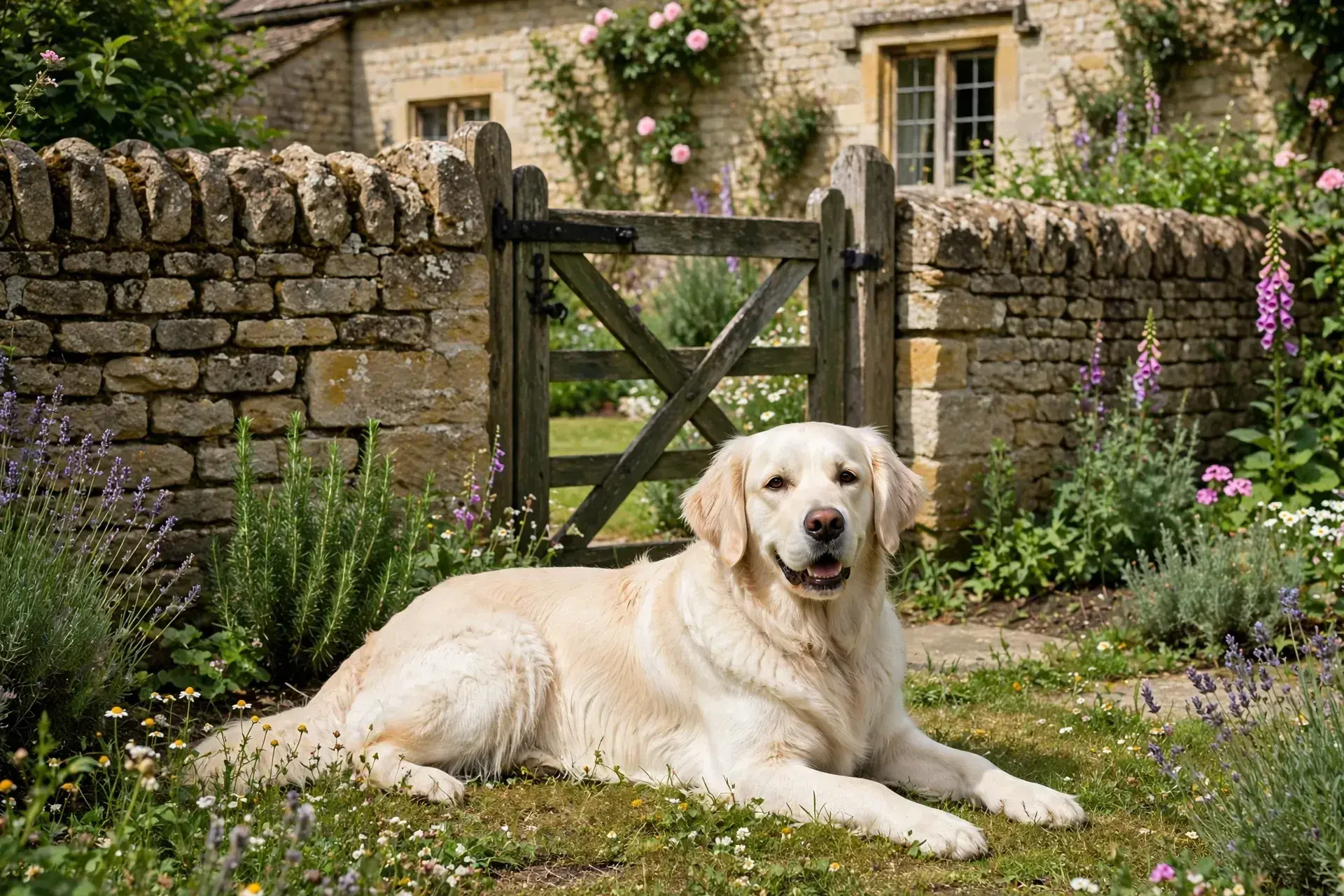
Golden retriever travel in the UK is a space-and-shedding exercise with a wonderful dog in the middle of it. Measure boot, crate and cottage doorways for a genuinely large dog, budget honestly for pet and cleaning fees and bring a hair-management kit, plan sociability so friendliness does not become other people's problem, and keep swims and walks generous but joint-aware. Solve the geometry and the hair, and a golden is among the easiest big dogs to holiday with.
Start with the tape measure, not the brochure
It is time to be blunt about dimensions, because golden retriever holidays fail on centimetres more often than on behaviour. A fully grown golden is a large dog — long in the body, deep in the chest, tall enough to rest a chin on many cottage dining tables and heavy enough that lifting one into a high boot is a two-person, back-testing event. Brochure photographs of smiling dogs in cottage doorways are not measurements. Before booking, measure your dog properly: length from chest to tail base, height at the shoulder, the space the dog actually occupies lying in its favourite sprawled position, and the turning circle it needs to reverse out of a narrow hallway without taking a standard lamp with it. Then compare those numbers, honestly, with the crate, the boot, the cottage floor plan and the garden gate.
Ask accommodation providers for numbers too, and treat vagueness as an answer. What is the maximum dog weight or size, measured how? Which rooms are dogs allowed in, and are the stairs open, gated or too steep and narrow for a big dog to turn on safely? Is the enclosed garden enclosed for a dog that can lean its full cheerful weight on a tired fence panel? A host who answers precisely is a host who has thought about large dogs; a host who says all dogs are welcome without asking anything may simply not have met yours yet. The wider framework in our guide to travelling with a large dog in the UK — weight caps, ramp logic and the tape-measure test — applies to goldens with particular force, because this breed sits right at the size where many supposedly dog-friendly arrangements quietly stop working.
This honesty protects the dog as much as the booking. A golden squeezed into a crate it cannot turn in, a boot it cannot lie flat in, or a cottage corner it cannot stretch out in will not complain loudly; goldens are famously stoic about discomfort arranged by people they adore. The owner has to be the complainer on the dog's behalf, in advance, with a tape measure. Do that work once, at home, and every later decision in this guide — car, cottage, cafe — becomes a simple comparison instead of a hopeful guess made with the dog already in the car.
Shedding and cleaning fees: the honest budget
A golden retriever does not shed seasonally so much as continuously, with enthusiasm, in a pale colour that shows on every dark surface in Britain and clings to every light one. On holiday that hair goes everywhere the dog goes: cottage sofas, car upholstery, pub carpets, your one clean jumper, and the bed if the dog is allowed anywhere near bedding. Owners who budget and pack for this reality have relaxed holidays and intact deposits. Owners who announce that their dog hardly sheds — a claim no golden owner in history has made truthfully — spend the last morning of the holiday picking hair off a cream rug with damp hands and rising resentment.
Budget the fees in writing before you book. Pet charges per night or per stay, cleaning fees and what they cover, damage deposits and the conditions for their return, and any extra charge for a second dog or for dogs above a size threshold. Ask whether throws are provided for furniture or whether you should bring your own — bringing two large, washable throws of your own is the single cheapest deposit-protection move available, because a sofa the dog has lounged on under your throw is a sofa you can restore in thirty seconds by folding the evidence into a wash bag. Our guide to dog holiday costs in the UK breaks down pet fees and cleaning charges across stay types, and the golden line in that budget should be written in full, not rounded down out of optimism.
Pack the hair kit and use it daily rather than heroically at the end. A slicker brush and comb for a five-minute groom outside each day, which removes loose coat before furniture does; a lint roller in the car and another in the cottage; a handheld vacuum if you are driving and the stay permits, or at minimum a rubber brush that gathers hair from upholstery surprisingly well; spare bedding covers if the dog sleeps on its own bed near yours; and dark trousers. That last item is serious advice. A week of golden ownership shows on black clothing like weather. Groom outside, shake throws outside, and ventilate the car boot daily, because a warm car full of damp golden coat develops a smell that no air freshener has yet defeated in fair combat.
Sociability management: everyone's best friend, on your terms
The golden retriever's famous friendliness is a holiday asset with an operating manual. A dog that believes every human in the Lake District woke up hoping to meet it will, unguided, greet the nervous child, the elderly walker with the stick, the couple carrying a wedding cake into a village hall, and the one person in the pub wearing white trousers and a deep dislike of dogs. Your job is not to suppress the joy; it is to put it on a lead, literally and socially. Keep the dog on a lead in cafes, towns, pub gardens and anywhere people are eating, however reliable the dog is at home, because a strange place multiplies both the dog's excitement and other people's unpredictability. Teach and reward a settled lie-down beside your chair as the default public behaviour, with a chew or a filled toy for longer stops, so the dog has a job other than audience development.
Manage dog-to-dog greetings with equal care. Not every holidaying dog wants a large, beaming stranger in its face, and a reactive or elderly dog on a narrow coastal path cannot move away from your golden's enthusiasm. Call the dog back before greetings, ask the other owner, and accept no as a complete sentence. Owners of nervous dogs plan their walks around avoiding exactly this encounter; be the reason their planning works. If your golden is young, bouncy and still learning, choose open spaces for off-lead time where you can see approaches coming, avoid bottlenecks like stiles and gates for play, and consider a long line in busy beauty spots. Our guide to reactive dog holidays in the UK is written for the other side of this encounter, and reading it makes any sociable-dog owner measurably better company on a path.
Channel the people-love somewhere it is wanted. Goldens shine at the dog-friendly attractions, farm shops and cafes that genuinely welcome dogs indoors, where a settled, smiling dog under the table improves everyone's afternoon including the staff's. Ask before entering, settle the dog out of walkways and serving routes, keep it off furniture unless explicitly invited, and leave promptly and cheerfully if the dog cannot settle that day. A golden that is a pleasure in public gets invited back — cottages rebooked, cafes remembered, hosts recommending you to friends. Sociability, managed, is the breed's superpower; unmanaged, it is just a large dog arriving in someone's lunch.
Boot space, ramps and long drives with a dog the size of furniture
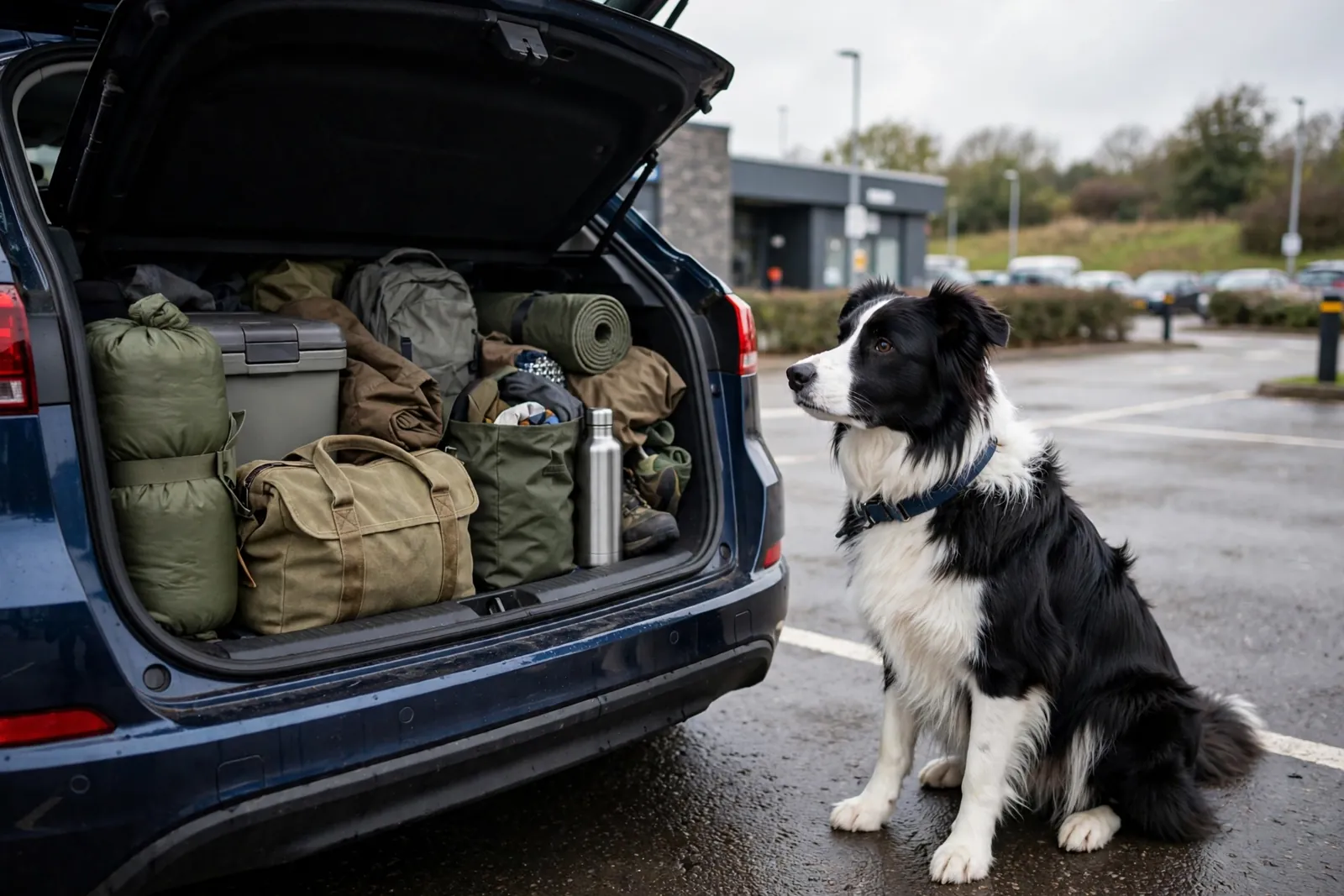
Load the car as if the dog were a passenger, because it is one. A golden needs a travelling space where it can lie flat, shift position and turn, properly restrained — a fitted crate that genuinely fits both dog and car, or a crash-tested harness arrangement — with ventilation that reaches the back of the vehicle on a warm day and bedding that stays dry. Test the full holiday load on the driveway before departure day: luggage, dog kit, food, walking gear and the dog itself, all in, doors closed. If the dog's space shrinks to a sit because the bags needed the room, the correct fixes are a roof box, posting luggage, a bigger car or a smaller packing list — in roughly that order — and never the dog's spine. The restraint and temperature rules in our guide to dog car safety apply at every size, but the margin for error shrinks as dogs grow, because a large unrestrained dog in a sudden stop endangers everyone in the vehicle.
Consider a ramp before you need one. Young goldens should not be repeatedly jumping down from high boots onto tarmac — growing joints do not need the impact — and older goldens, or any dog with hip, elbow or other joint concerns, may be unable or unwilling to jump at all, while being far too heavy to lift safely and repeatedly. A folding ramp that the dog has been trained to use calmly at home, on the flat and then on gentle slopes, turns boot access into a non-event. Introduce it weeks before the holiday, not on a wet services forecourt with an audience. If a ramp will not work for your car or dog, discuss alternatives with your vet, including vehicle choice and step arrangements, rather than improvising lifts that risk the human back and the dog's dignity in equal measure.
Plan long drives around a large dog's needs: a stop every couple of hours for water, toileting and a proper stretch on the lead; a real walk before departure so the dog starts the journey ready to sleep; food given well before travelling rather than at the services; and a hard rule against leaving a big, thick-coated dog in a parked car in warm weather while people eat indoors. Goldens overheat without drama or complaint, and their enthusiasm at the next stop is not evidence the wait was safe. Travel early in heatwaves, ventilate honestly, and let the dog's comfort set the itinerary rather than the booking's optimism.
Small cottages, narrow stairs and tiny gardens: fitting in gracefully
British holiday cottages were built for smaller centuries. Doorways are narrow, stairs turn tightly, kitchens fit one cook and no large, hopeful dog supervising at elbow height, and the charming garden may be a courtyard the size of a parking space. None of this rules out a golden; all of it rewards a plan. On arrival, walk the dog around the property on the lead first, let it sniff the garden thoroughly, and establish the geography before the dog is loose in it: where the dog bed goes in a corner out of the traffic flow, where water lives, which doors stay shut, and where the drying and grooming spot will be by the entrance. A big dog that knows its corner in the first hour stops patrolling the whole cottage by bedtime.
Stairs need a policy. Steep, narrow or slippery cottage stairs are a fall risk for a large dog, especially an excited one descending at breakfast speed or an older dog with stiff joints. If the dog does not need to go upstairs — and in most cottages it does not, whatever the dog believes — keep it downstairs with a gate or closed door and its bed made comfortable there, rather than negotiating the staircase twice a day. If bedrooms are upstairs and the dog normally sleeps with you, decide before booking whether downstairs sleeping will work for this dog, and practise it at home if home allows; discovering at midnight in Cornwall that the dog objects vocally to the arrangement helps nobody within earshot, which in a stone cottage is three villages.
Outside space: check what enclosed actually means when a twenty-five-kilo dog leans on it. Walk the fence, push the gate, look for gaps a determined retriever could widen, and check for hazards — slug pellets, compost, tools, a pond the dog will certainly enter. A small but genuinely secure garden used often beats a large insecure one used on a lead, because the small hours toilet trip with a big dog in the rain is where garden quality is truly measured. For stays where the garden is the main off-lead space, our guide to a dog friendly cottage secure garden sets out the fence, gate and hazard checks worth doing at any size of dog — and at golden size, do them on arrival, not after the first escape recce.
Swimming and walks for a big retriever: generous, not endless
A golden retriever on a British holiday will usually find the water before you finish unpacking, and swimming is excellent, low-impact exercise for a heavy breed — with the usual retriever caveat that the dog's enthusiasm outruns its judgement. Choose swim spots with a shelving entry and an easy exit a tired dog can walk out of, avoid strong currents, weirs, harbour edges and algae warnings, keep sessions moderate in cold water, and rinse and dry the coat thoroughly afterwards, because a golden's dense undercoat holds water, grit and smell for hours and will share all three with the cottage. Our guide to dog swimming safety in the UK covers life jackets, tides and warning signs in full, and it is essential reading for a breed that regards every lake as a personal invitation.
Walks should be generous but joint-aware. Goldens are prone, as a breed, to weight gain and to joint problems, and a holiday that alternates between under-exercise and one heroic mountain day serves neither the waistline nor the elbows. Build steady daily distances, prefer softer ground to long road marches where you can, include sniffing and gentle retrieving games rather than relentless ball-throwing — repetitive high-impact chasing is hard on joints and turns arousal up rather than down — and watch the individual dog for slowing, lagging, stiffness after rest or reluctance on stairs, all of which mean tomorrow gets shorter. Young dogs still growing and older dogs with known conditions need their own scaled plans; ask your vet before the holiday if you plan a significant step up, and treat any limping that does not settle quickly as a reason for veterinary advice, not a reason to complete the route.
Finally, feed the holiday honestly. Cottage weeks inflate rations through pub treats, cafe dog menus and the sausage that somebody always slips the beautiful dog under the table. Measure the dog's actual meals, count treats against the ration, and tell your whole party the rule on day one: the dog is adored, and therefore not fed by committee. A golden that comes home the same weight it left, fitter from steady walking and swimming, has had the best version of the holiday — and will fit the same boot space on the way back, which, as established, was measured precisely and has no slack at all.
Hotels, pubs and cafes with a large dog: being welcome at scale
Large dogs test hospitality systems designed around small ones. The hotel's dog-friendly room may be its smallest, the pub's dog area may be a corner where a golden occupies the entire floor plan, and the cafe's welcome may cool visibly when the large, damp dog shakes beside the cake counter. None of this is a reason to stay home; it is a reason to book and behave at a standard that keeps doors open. Tell every venue the size and breed in advance, ask where exactly the dog will be expected to settle, whether there are rooms or tables to avoid with a big dog, and what the ground-floor or dog-room arrangements are. Surprises help nobody; a host forewarned can give you the end table, the room by the dog exit and the welcome that makes the stay.
Arrive like professionals. The dog should be walked, toileted, towelled if wet and settled on its own mat or blanket, which you have brought, placed out of serving routes and other guests' chair space. Keep the lead short in buildings, the dog off furniture unless invited, and food-seeking under charming but firm control — a golden's head is at table height in most pubs, and the dog knows it even if the diners have not noticed yet. If the dog cannot settle, is barking at every arrival, or is unwell, the correct move is to leave early and kindly, not to endure a miserable hour teaching the venue to dread large dogs. One graceful exit protects every future golden's welcome in that village.
Budget and record-keeping complete the picture. Confirm pet fees, deposits and any cleaning charges in writing, photograph the room or cottage on arrival as you would for any rental, and report accidents or breakages promptly and honestly — hosts forgive a broken mug declared at checkout far more readily than hair discovered in a bed that dogs were not supposed to reach. Leave a review that names what worked for a large dog specifically: the room size, the garden security, the staff's attitude. The next golden owner choosing between two cottages will bless you for those centimetres of detail, because at this size, detail is the whole difference between a holiday and a squeeze.
Leaving the stay as hairless as possible: the golden goodbye
End the holiday the way you would want the next guest's to begin. On the last morning, run the golden protocol in order: dog walked and groomed outside so the maximum hair leaves on the wind rather than the carpet; throws and your own bedding covers stripped and bagged; every surface the dog used brushed down with the rubber brush or vacuumed if equipment allows; floors checked in daylight, because hair invisible at night is unmistakable at ten in the morning; wet towels and dog bedding washed or bagged separately so the cottage does not inherit the smell of lake. Report anything broken or stained before you leave, pay any agreed extra without theatre, and leave the dog's corner cleaner than some human guests leave kitchens.
Do a final boundary and garden check with the dog on the lead: holes investigated, toys retrieved from under shrubs, every deposit bagged including the ones from the first enthusiastic morning, and the gate left exactly as found. Then load the car dog-first in planning terms — the dog's space restored to its measured size before the holiday shopping, the market finds and the case of local cider are arranged around it, not instead of it. It is remarkable how many golden holidays are comfortable outbound and cramped homebound, and the dog's opinion of that difference is available to anyone who looks at its knees.
Get this breed's logistics right and what remains is the reason people do it at all: a dog that swims out and brings the stick back to hand, that makes the cottage feel occupied rather than rented, that collects friends in every village and sleeps under the pub table like a rug with opinions. Golden retriever travel in the UK asks for a tape measure, a brush and a budget line. In exchange it gives you the company of the dog most likely to be voted the holiday's best feature by everyone you meet — including, frequently, the hosts you just paid a cleaning fee to, who will ask when you are all coming back.
Practical questions
Before you go
How much space does a golden retriever need in the car?
Enough to lie flat, turn round and settle in a properly restrained position for the whole journey, with ventilation and regular stops. Measure the dog lying down and test the fully loaded car on the driveway before travelling. If luggage shrinks the dog's space, use a roof box or carry less rather than squeezing the dog into what is left.
How do I deal with golden retriever shedding in a holiday cottage?
Bring your own large washable throws for any furniture the dog is allowed on, groom the dog outside for five minutes daily, keep a lint roller and rubber brush in use through the week rather than only at the end, and confirm cleaning fees and what they cover in writing before you book.
Are golden retrievers allowed in most dog-friendly cottages and hotels?
Many welcome them, but size and weight limits, room allocations and garden rules vary widely, and some dog-friendly stays are really small-dog stays. Always state the breed and size when booking, ask about stairs, gardens and communal areas, and get pet fees and deposits confirmed in writing before you travel.
Can my golden retriever swim on holiday in the UK?
Usually yes at suitable places, and swimming is good low-impact exercise for the breed, but choose spots with an easy walk-out exit, avoid strong currents, weirs, harbours and any algae warnings, keep cold-water sessions moderate, and rinse and dry the dense coat thoroughly afterwards. Check official guidance and beach rules for your dates before you go.
Should I use a ramp for my golden retriever?
A ramp is worth considering for young dogs that should not jump repeatedly from a high boot, older dogs, and any dog with joint concerns, and it protects the owner's back with a heavy breed. Train the dog to use it calmly at home weeks before the holiday, and discuss persistent reluctance or stiffness with your vet rather than forcing the issue.