Independent guide; no business paid to be included. Greyhounds — especially retired racers — differ in confidence, prey drive and cold tolerance, and health notes here are general only. Your vet advises on your dog; official sources carry the rules — check both before you go.
A Greyhound holiday in the UK is one of the easiest breaks in dog travel once you know the breed's few firm requirements: deep, soft bedding everywhere the dog will rest, a warm coat in cool weather for a thin-coated, low-body-fat dog, gentle-to-moderate walks rather than endurance hiking, care on stairs and slippery floors, and a lead always — plus a well-fitted muzzle for walks where your individual dog's prey drive or local rules make it sensible. Retired racers new to home life need extra patience with stairs, glass doors and household routines.
The sprinter who sleeps: understanding the energy pattern
Every Greyhound holiday plan starts with the breed's famous energy curve, because it is the opposite of most dogs'. A Greyhound is the fastest breed on earth over a short distance — and one of the least inclined to do anything at all for the remaining twenty-three and a half hours. Healthy adult Greyhounds typically sleep or doze for a remarkable share of the day, often quoted at eighteen hours or more, punctuated by walks they enjoy at a civilised pace and, if a safe enclosed space offers, a brief, ecstatic gallop. Owners who expect a hiking companion are baffled; owners who plan for a professional sleeper who takes exercise breaks discover one of the most compatible travel dogs in Britain.
Design the itinerary to the curve. A morning walk of forty minutes to an hour, a midday potter, an evening stroll, and long, undisturbed rest in between suits most Greyhounds far better than a full day's marching between attractions, and it leaves the humans a natural structure: sightsee in the dog's sleeping hours by taking turns, or choose the dog-inclusive pleasures — gardens, beaches, pubs with fires — at walking pace. On one or two days of the trip, hire an enclosed dog field or find a genuinely secure space where she can have her gallop off the lead; the spectacle alone is worth the booking fee, and it satisfies a need that lead walking, however pleasant, does not quite reach.
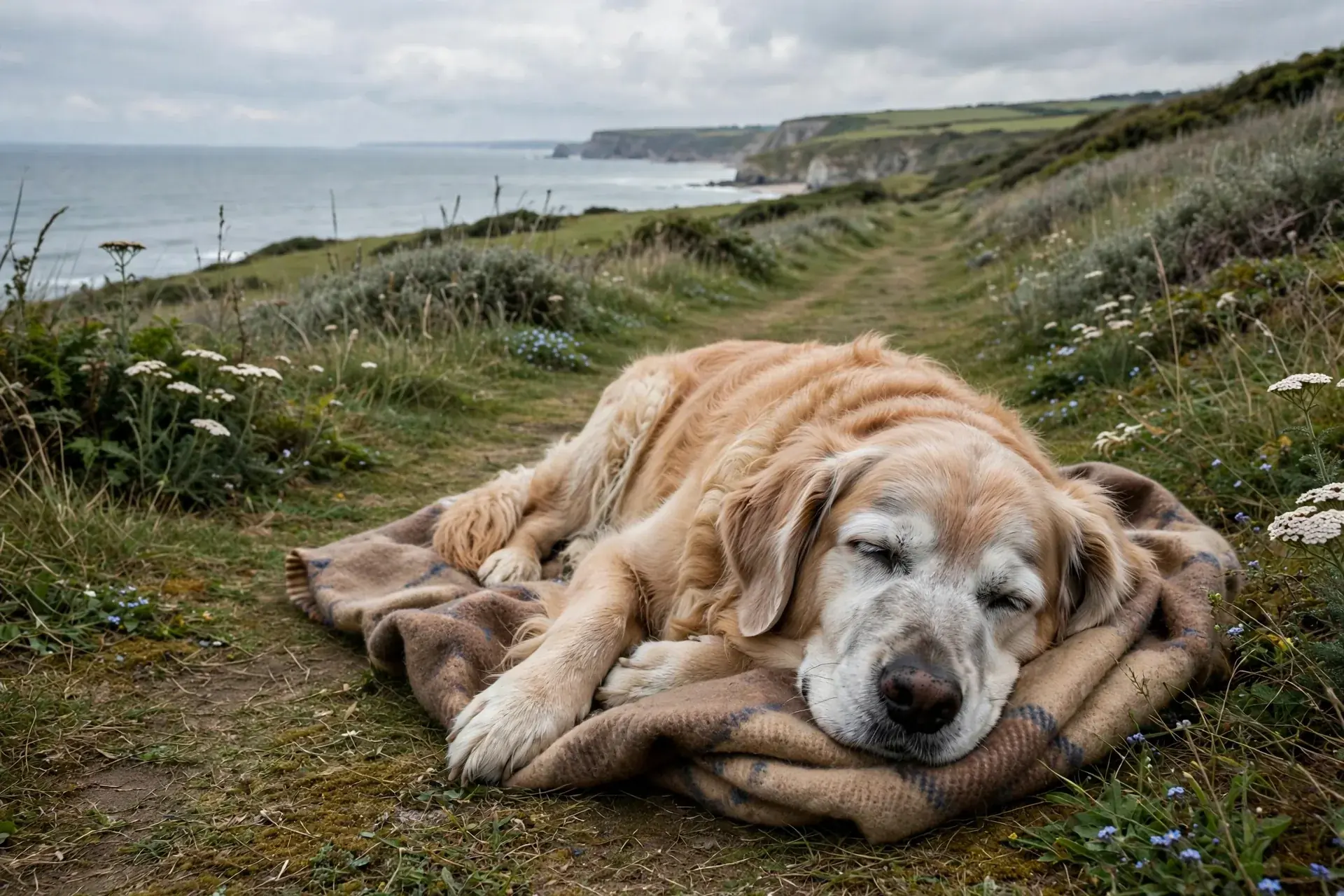
Respect the sleep itself as part of the welfare picture, particularly with retired racers. Many ex-racing dogs sleep deeply and can startle if woken suddenly by a touch — a legacy of kennel life — so the household rule, for adults and especially children, is to call her name and let her wake and come to you rather than grabbing, hugging or leaning over a sleeping dog. Set her bed in a quiet corner where she can sleep unpassed-by, and defend that corner from holiday socialising. A Greyhound who has slept properly is gentle, funny and easy; a repeatedly disturbed one is a dog having a worse holiday than the photos suggest.
Retired racers: holidaying with a dog new to home life
A large share of Britain's pet Greyhounds are retired racers adopted from rehoming charities, and many are experiencing ordinary domestic life — stairs, televisions, vacuum cleaners, glass doors, other breeds, cats, children — as adults, for the first time. A first holiday can therefore arrive quite early in a dog's education, and it deserves extra gentleness. Everything in a holiday property is new input: different stairs, different floor surfaces, different night noises, a garden with hedgehogs in it. Expect the first evening to be unsettled, keep routines — feeding, walking, bedtime — close to home patterns, and let the dog investigate the property on a lead first, room by room, at her speed.
A few specific novelties catch out retired racers repeatedly. Glass doors and large windows may not register as barriers to a dog raised in kennels, so check for them on arrival and, if needed, mark them temporarily at dog height with removable tape or by keeping blinds partly closed until she has learned the layout. Mirrors, steep or open-tread stairs, and polished floors get their own sections below. Other dogs are another novelty: kennel-raised Greyhounds know Greyhounds intimately but may never have met a spaniel, a terrier or a puppy at close quarters, so manage greetings calmly on walks, keep distance where she seems unsure, and do not mistake uncertainty for unfriendliness — most racers become notably more dog-literate with a few months of ordinary walks.
If your dog is very recently retired, consider postponing the big trip and taking a single nearby night away first, in the quietest property you can find. Rehoming organisations generally advise letting a dog settle into home life and routine before adding travel, and your charity's guidance for your individual dog outranks any general guide — this one included. The reward for patience is considerable: a settled ex-racer, a few months in, is often the calmest dog in any holiday cottage in Britain, and owners routinely report that the dog who arrived unable to do stairs is, by her second trip, claiming the sofa with the confidence of a dog who invented it.
Thin coat, low fat: dressing a Greyhound for British weather
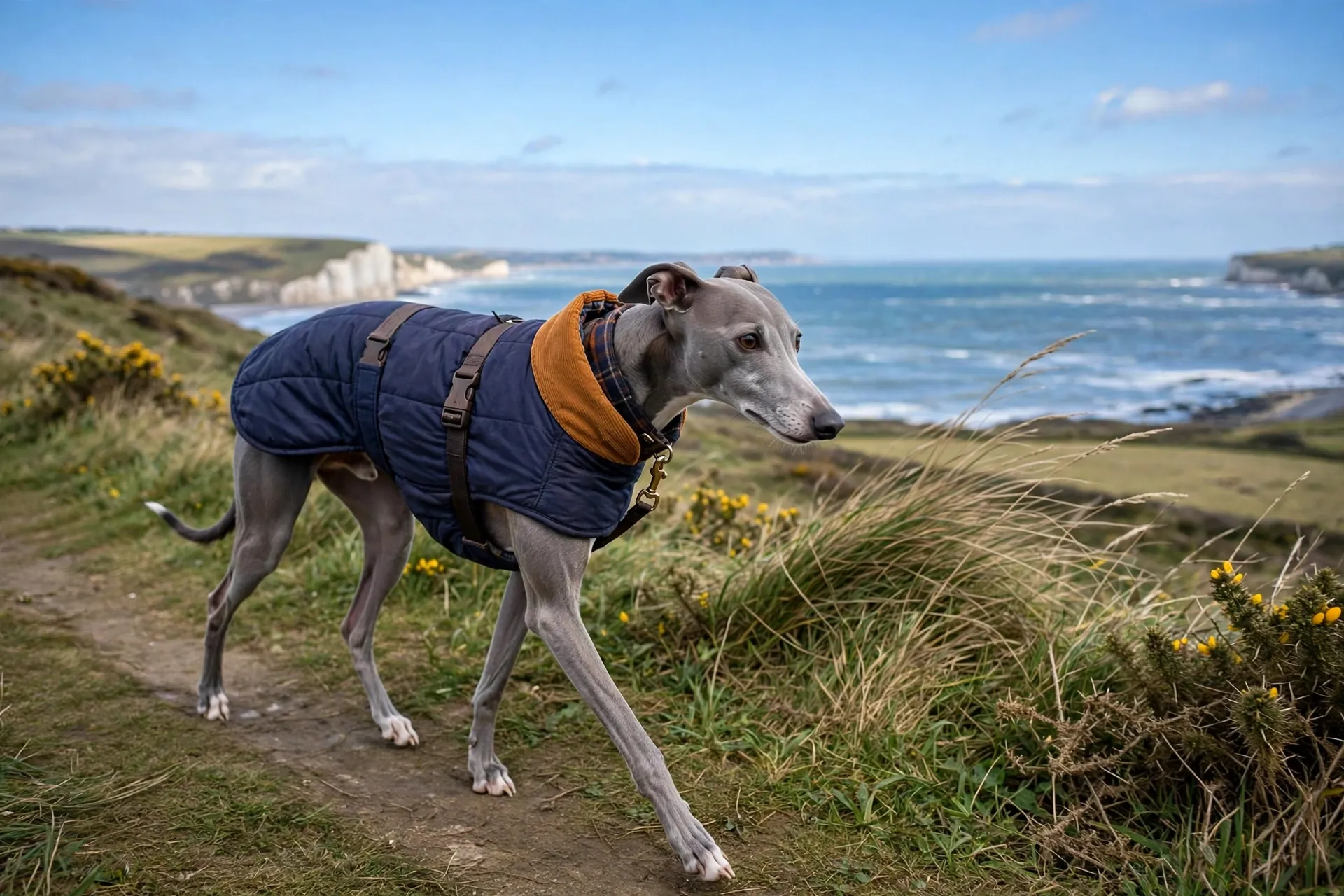
A Greyhound carries almost no insulation. The breed has a short, fine, single coat and very little body fat — the lean build that makes the speed possible — which means she feels the cold in conditions where a Labrador is still comfortable, and a wet, windy British walk can chill her quickly. Owners new to the breed sometimes resist dog coats as dressing up; with a Greyhound, in the cooler two-thirds of the British year, a well-fitted coat is closer to equipment than costume. Look for a coat shaped for the breed's deep chest and long back, covering the neck and chest well, with fleece for dry cold and a waterproof outer layer for wet days — many owners carry both on a winter trip.
Fit is breed-specific, so measure rather than guessing from a generic size chart: length along the back, depth and girth of the chest, and neck size all matter, and a coat made to a Greyhound pattern will stay in place where a standard rectangle slides sideways at the first shake. Indoors, the same insulation logic applies in reverse — she will seek the warmest, softest spot in the property, which is your cue to provide one deliberately rather than negotiating over the sofa cushions: her own deep bed near, but not against, a heat source. Elderly Greyhounds and those with health conditions may feel cold more still; if your dog shivers, curls tightly and persistently seeks heat, add layers and warmth, and mention ongoing cold-sensitivity to your vet at her next check.
Summer inverts the problem only partly. The thin coat and lean build handle warm weather better than heavily coated breeds do, but pale or thinly coated skin can sunburn — particularly on ears, nose and any sparse areas — and no dog of any build should be exercised hard in heat or left in a warm car. Light shade, water, morning and evening walks in a heatwave, and dog-safe sun protection on vulnerable skin where your vet advises it cover most of the risk. Our general guide to travelling with a dog in hot weather sets out heatstroke signs for every breed, and it applies to a sprinting breed with particular force: a short, intense gallop on a hot day is exactly the exertion pattern to avoid.
Bedding: deep, soft and defended from hard floors
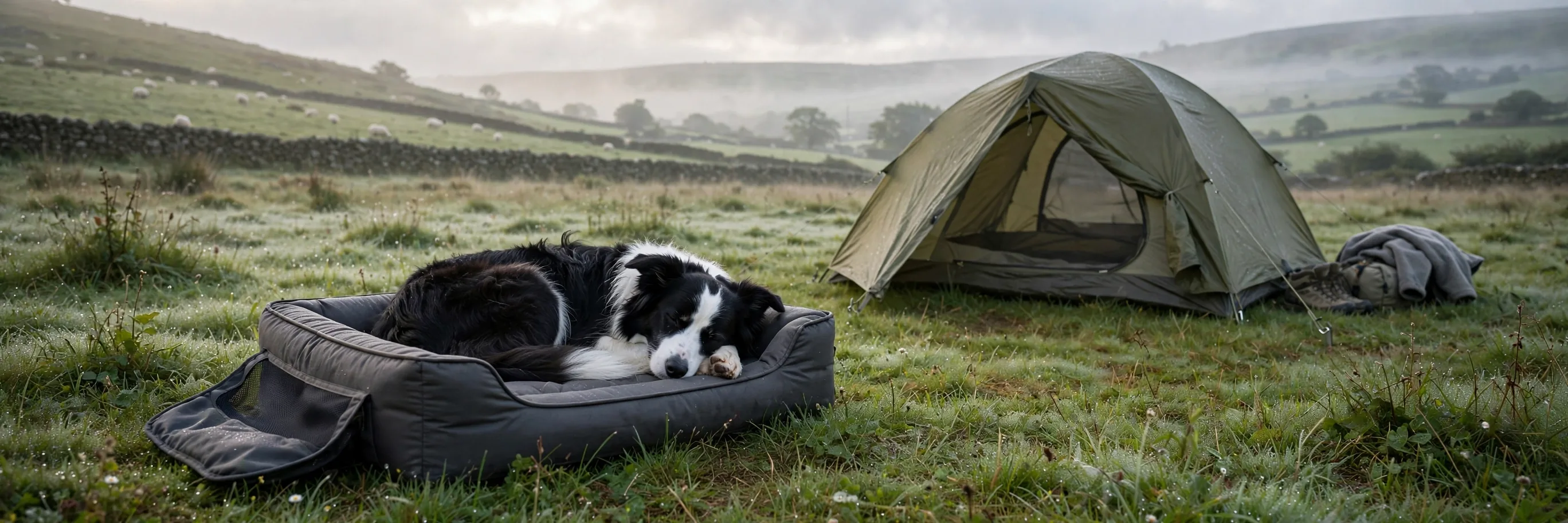
If one purchase decides a Greyhound holiday, it is the bed. Those prominent bones — hips, elbows, spine — have minimal natural padding, and a dog who would sleep contentedly for eighteen hours on a deep, soft surface will rest fitfully and rise stiff from a thin mat on a hard floor. Take the bed she uses at home wherever space allows; if it will not fit the car, take the closest travelling equivalent — a thick, washable, supportive bed she can stretch fully along, which for a Greyhound means longer than you first think — and read our guide to choosing a travel dog bed with her dimensions in hand. A folded duvet under a blanket is a respectable improvisation and often beats a cheap thin pad bought in hope.
In the property, audit every surface she will use. Hard floors throughout are the commonest problem: lay her bed as the main station, add rugs or blankets to create an island route between bed, water and door if she must cross polished wood or tile repeatedly, and never expect her to lie on a bare kitchen floor while you cook — give her the mat in the corner or accept the world's longest sigh from the doorway rug. If the property allows dogs on furniture and she is a sofa dog at home, a throw protects the upholstery and keeps the arrangement honest; if furniture is forbidden, the bed must be genuinely good enough to win the argument, which means deep, warm and positioned where the people are.
Older Greyhounds, and racers whose careers have left them with old aches, benefit from the senior touches: a bed away from draughts, a low step if she still insists on a raised sleeping place she can no longer reach comfortably, and ramps or help rather than jumping down from car boots. Our senior dog travel guide covers travelling with older dogs in full, and retired racers often qualify as honourary seniors earlier than their years suggest. The principle never changes: comfort is not indulgence for this breed, it is the mechanism by which the dog recharges for the walks you came for.
Gentle walks: pace, distance and the gallop question
On the lead, the Greyhound is a walking companion of unusual civilisation: loose-lead manners come naturally to many racers from their training, the pace is a comfortable human amble, and an hour is a satisfying expedition rather than a warm-up. Build the holiday around two or three such walks a day on varied, interesting routes — coastal paths in the cooler months, parkland, canal towpaths, quiet beaches where dogs are permitted — and most Greyhounds will be thoroughly content. Endurance hiking is not the breed's forte despite the athletic silhouette: a fit dog can build to longer days gradually, but a retired racer fresh from kennels should start with the modest pattern above and add distance over weeks, guided by her enthusiasm and recovery, not by the route map's ambitions.
Surfaces matter more than mileage. Pavement pounding all day is dull and jarring; mix in grass and earth paths where her feet and joints will thank you. Check paws after walks on shingle, flinty paths or rough ground, as the breed's feet can be softer than their racing history suggests, particularly in dogs retired for some time. In winter, grit and salt on pavements irritate paws — rinse them on return, and dry between the toes. And protect the famous burst carefully: a Greyhound who spots something and launches from standing reaches full speed in a few strides, so the lead should be held properly, the harness or collar well fitted, and the handler's attention genuinely on the dog in squirrel country.
The gallop itself deserves planning rather than prohibition. In a secure hired field or a truly enclosed private space, most Greyhounds will give themselves a few joyous circuits and then, remarkably, be finished — ready to resume the important business of the day. Ten minutes is often the whole show. That brevity is your friend: the breed's deepest exercise need can be met in a short, bookable session, leaving the rest of the holiday gloriously unhurried. Never be tempted to substitute an unsecured space, however empty it looks; a dog who covers a hundred metres in seconds has no margin for a gate you did not notice, which brings us to the two remaining management topics: stairs and sight.
Stairs, floors and other household mountaineering
Stairs are the retired racer's Everest, for a simple reason: kennels do not have them, and many Greyhounds arrive in homes having never climbed a step more demanding than a ramp. Some learn in an afternoon; others regard a staircase — particularly a steep, narrow, open-tread holiday cottage staircase — as an unsolved problem for weeks. On holiday, the kind solution is to book ground-floor accommodation, or a property where everything the dog needs is on one level, and treat upstairs as human territory behind a closed door or gate. That single booking choice removes the breed's most common holiday stressor entirely, and it matters more as dogs age, since descending steep stairs is harder on shoulders and confidence than climbing them.
If your dog is a confirmed stair-user at home, still inspect holiday stairs before inviting her up: open treads that let a long leg slip through gaps, polished wood, tight turns and ladders to loft bedrooms are all different propositions from your carpeted home flight. Go first, keep her on a lead for the first ascents and descents, carpet runners or non-slip socks can help some dogs, and never carry a Greyhound on stairs except in a genuine emergency — a long, heavy, wriggling dog and a narrow staircase are a fall waiting for both of you. If she hesitates, believe her, and rearrange sleeping so she does not have to: her bed downstairs with someone, or everyone's beds moved, beats a frightened dog and a midnight standoff.
The floor audit from the bedding section completes indoors: laminate, tile and polished boards are skid risks for a dog who may move suddenly — a startled leap sideways at a strange noise is the classic Greyhound tumble — so rugs in her main areas, a non-slip mat under food and water bowls, and calm first explorations on a lead all reduce the risk. Add the glass-door check for new racers, and a property stops being an obstacle course. None of this is difficult; it is simply a different checklist from a Labrador's, which is rather the theme of holidaying with this breed well.
Prey drive, leads and the muzzle question, answered sensibly
Greyhounds are sighthounds: they hunt by sight and movement, and a fleeing squirrel, rabbit, deer or cat can trigger a chase that is silent, instant and utterly committed. Combined with the speed, that makes the lead rule absolute in unenclosed places — she is on it, always, however reliable she seems at home — and makes livestock fields a zone for a short lead and a wide berth, as with any dog but with less margin for error. Retired racers in particular may have strong, well-practised chase instincts, and part of the adopter's early work is learning their individual dog's triggers: some are electrified by small dogs running at distance, some by birds lifting, some, mercifully, by almost nothing this side of an actual hare.
Which raises the muzzle, a topic surrounded by misunderstanding that this guide will try to settle plainly. Racing Greyhounds are accustomed to wearing muzzles from their careers — a properly fitted basket muzzle is familiar equipment, not a punishment, and it allows panting, drinking and treat-taking while preventing a grab. Wearing one on walks is a sensible, kind choice where your dog has a strong chase drive, where small animals or cats are likely at close quarters, where she can be grabby or competitive with other dogs at play, or where a particular venue requires it. It says nothing bad about your dog; it says her owners understand physics. If you adopt the idea, use a Greyhound-pattern basket muzzle fitted so she can pant fully, introduce or reintroduce it gradually with rewards if she has not worn one for a while, and never use a fabric muzzle that closes the mouth for exercise.
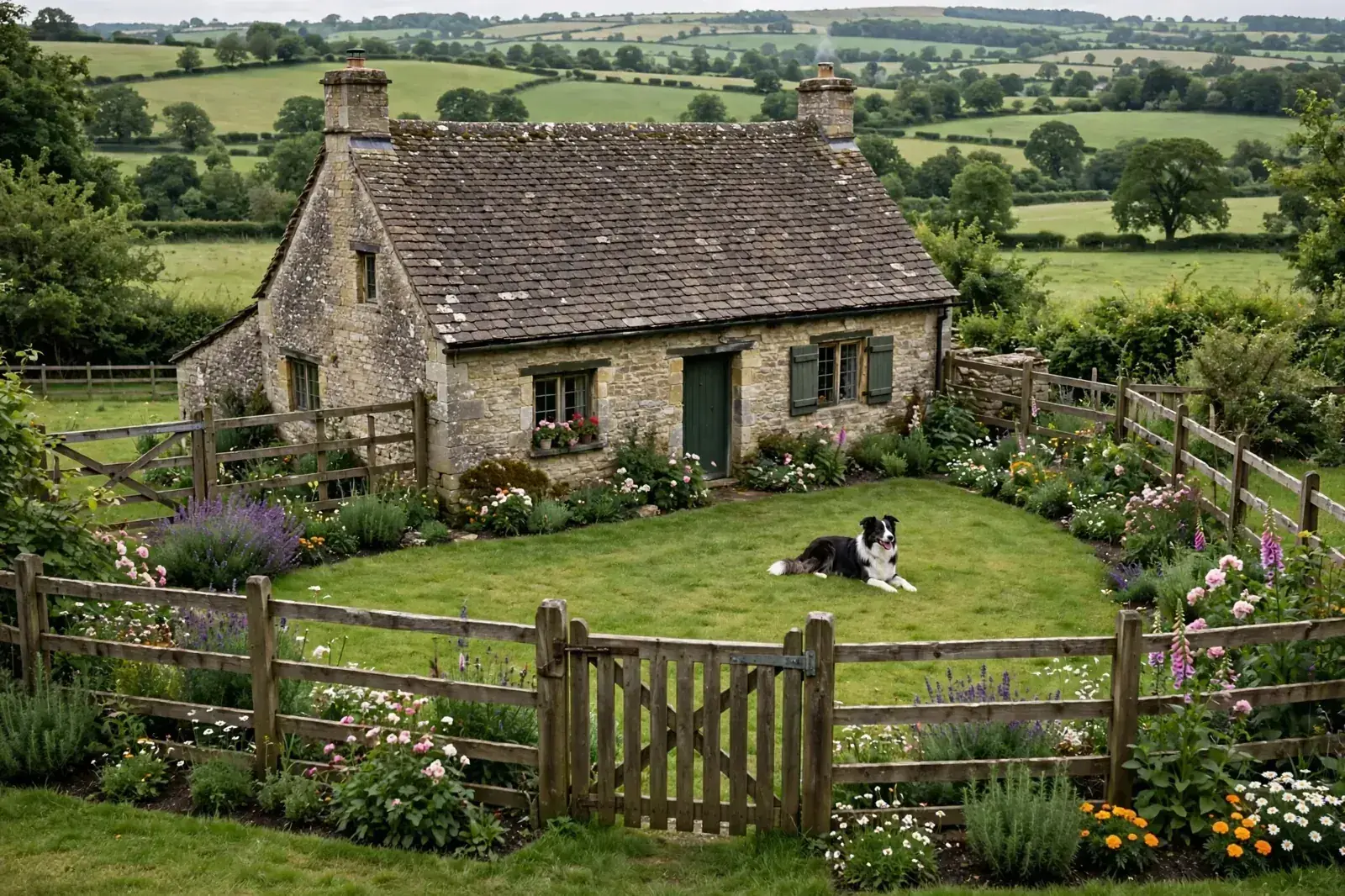
Small print completes the picture. Keep her microchip details current and a tag with your mobile number on her collar — if a lead is ever dropped, speed makes the first minutes count, and our guide to a dog lost on holiday is worth reading in advance. Choose enclosed fields for freedom, gardens with proper fencing for cottage life — a Greyhound at full stretch reaches a low gate from a standing start, so apply the secure-garden questions from our secure garden guide with the fence height taken seriously. Managed this way, prey drive stops being a worry that shadows every walk and becomes what it should be: one known trait of a known dog, planned for like the coat and the bedding.
Destinations and a model Greyhound day
The ideal Greyhound base is a warm, ground-floor cottage or inn room with a small secure garden, soft flooring or rugs, walks from the door, and a pub with a fire within an evening stroll — which is to say, half the villages in Britain qualify in the cooler months. Coastal bases suit the breed particularly: long flat beaches for the morning walk, a coat against the sea wind, and fish and chips eaten at a pace no Greyhound has ever objected to. Avoid itineraries built on steep, stepped climbs, all-day city pavement tours in crowds, and properties up flights of stairs with hard floors throughout; the breed can do a version of almost anything once, but a holiday is a week of repetitions, and repetitions should be of things she enjoys.
A model day runs like this. Wake without an alarm set by ambition; morning walk along the beach or the lanes, forty-five minutes, coat on if the wind is up. Breakfast, then the deep midday sleep — humans read, visit the dog-free attraction in turns, or simply join the dog in taking the day slowly. A potter in the afternoon, perhaps to a garden or a village, with a mat under the cafe table and water offered. One evening in three, or once in the trip, a booked secure field for the gallop, timed before supper. Evening stroll, supper, and then the position she will hold, with minor adjustments, until morning: horizontal, warm, and taking up more of the rug than seems geometrically possible.
Pack accordingly: the deep bed or its travelling equivalent, fleece and waterproof coats, a spare blanket, the basket muzzle if your dog uses one, a well-fitted collar and harness with a lead you trust, food, any medication, and the vet's number plus a local practice saved at the destination. Then go, and let the trip teach you the breed's open secret: a holiday does not have to be full to be complete. The Greyhound, asleep by the fire of a cottage she has inspected, approved and upholstered with herself, is not missing the adventure. By her ancient and considered judgement, this was the adventure.
Practical questions
Before you go
How much exercise does a Greyhound actually need on holiday?
Far less than the athletic build suggests. Most healthy adults thrive on two or three lead walks totalling roughly one to two hours a day, at a comfortable pace, plus the chance for a short off-lead gallop in a secure enclosed space once or twice a week. Retired racers new to pet life should start gently and build up gradually. The rest of the day is for sleeping — often eighteen hours or more — which should be protected, not filled.
Do Greyhounds need a coat in the UK?
In cool, wet or windy weather, yes — the breed has a short, fine coat and very little body fat, so it feels cold that a thick-coated dog would shrug off. A fleece coat for dry cold and a waterproof for wet days, both fitted to the breed's deep chest and long back, are standard kit for most of the British year. Indoors, provide a deep, warm bed near the household's centre but out of draughts.
Can a retired Greyhound manage stairs in a holiday cottage?
Some can, many cannot at first — kennels have no stairs, and steep, open-tread or polished cottage staircases are genuinely difficult and frightening for a dog learning the skill, as well as risky for older dogs. The simplest solution is ground-floor accommodation with everything the dog needs on one level. If stairs are unavoidable, inspect them first, use a lead for early attempts, add grip where you can, and never carry a Greyhound on stairs.
Should my Greyhound wear a muzzle on walks?
It is a sensible choice for many Greyhounds, particularly retired racers with a strong chase drive. A properly fitted basket muzzle — familiar equipment to ex-racers — still allows panting, drinking and treats, while preventing a grab at wildlife, cats or during excited play with other dogs, and some venues require one. It reflects good management of a fast sighthound, not a problem dog. Never exercise a dog in a fabric muzzle that holds the mouth closed.
Are Greyhounds good dogs for a quiet cottage holiday?
They are among the best: calm, quiet, clean, undemanding of space while asleep — which is most of the time — and content with gentle walks. The requirements are specific rather than difficult: deep soft bedding, warmth and a coat for cold weather, ground-floor living or manageable stairs, secure fencing, and a lead at all times in open places because of their speed and prey drive. Meet those, and few breeds settle into a cottage faster.