This guide is independent and contains no paid placement. If affiliate links are added later, they will be clearly marked and will not change our editorial checks.
Hartington rewards a slow plan: park once, explore the village on foot, then choose one dale walk that fits your dog. Keep dogs on a lead near livestock, carry water and a towel, and check the official guidance before you travel for any shop or pub policy that may have changed.
Arriving and parking without stress
Hartington is small enough that the best decision you make all day is where you leave the car. The village car park and the streets around the green fill first on fine weekends, and a dog that has already waited through a long drive does not benefit from a second wait while you circle for a space. Arrive early if you can, give the dog a short toilet walk before you head for the village centre, and agree the day's route before you set off. That ten-minute pause prevents the most common Hartington mistake: starting the longest dale walk with a dog that is already tired, thirsty or overexcited.
Think about the return journey as well as the outward one. Limestone dales look gentle on a map, but the paths can be uneven, the river crossings need care after rain, and a dog that bounded happily downhill may need encouragement on the way back up. A circular route sounds tidy, yet an out-and-back walk along the same valley often suits dogs better, because you know exactly how far you have come and you can turn around at any point without worrying about an unknown second half. If you are travelling with children, older walkers or a dog that tires quickly, choose the shorter option and enjoy the village afterwards rather than pushing for distance.
Before leaving home, check the official guidance before you travel for parking charges, road closures and any temporary path restrictions. Peak District lanes are narrow, and farm traffic, delivery vans and walkers all share the same roads around Hartington. Keep the dog secured in the car, load water and a bowl where you can reach them without unpacking everything, and pack a towel near the top of the bag. The first hour of a village day should feel unhurried, and that feeling starts with a calm arrival rather than a perfect itinerary.
The village centre and the cheese shop
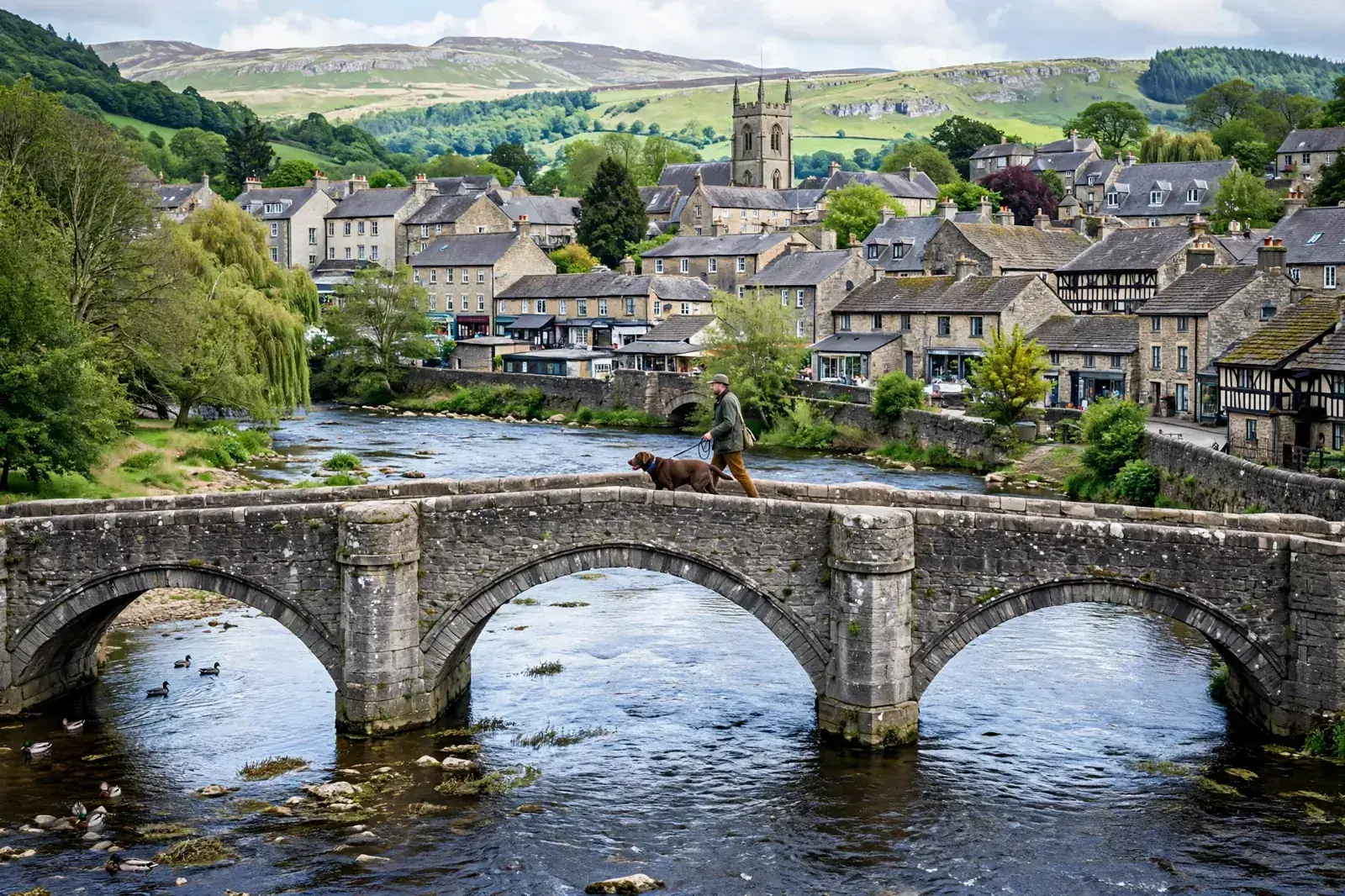
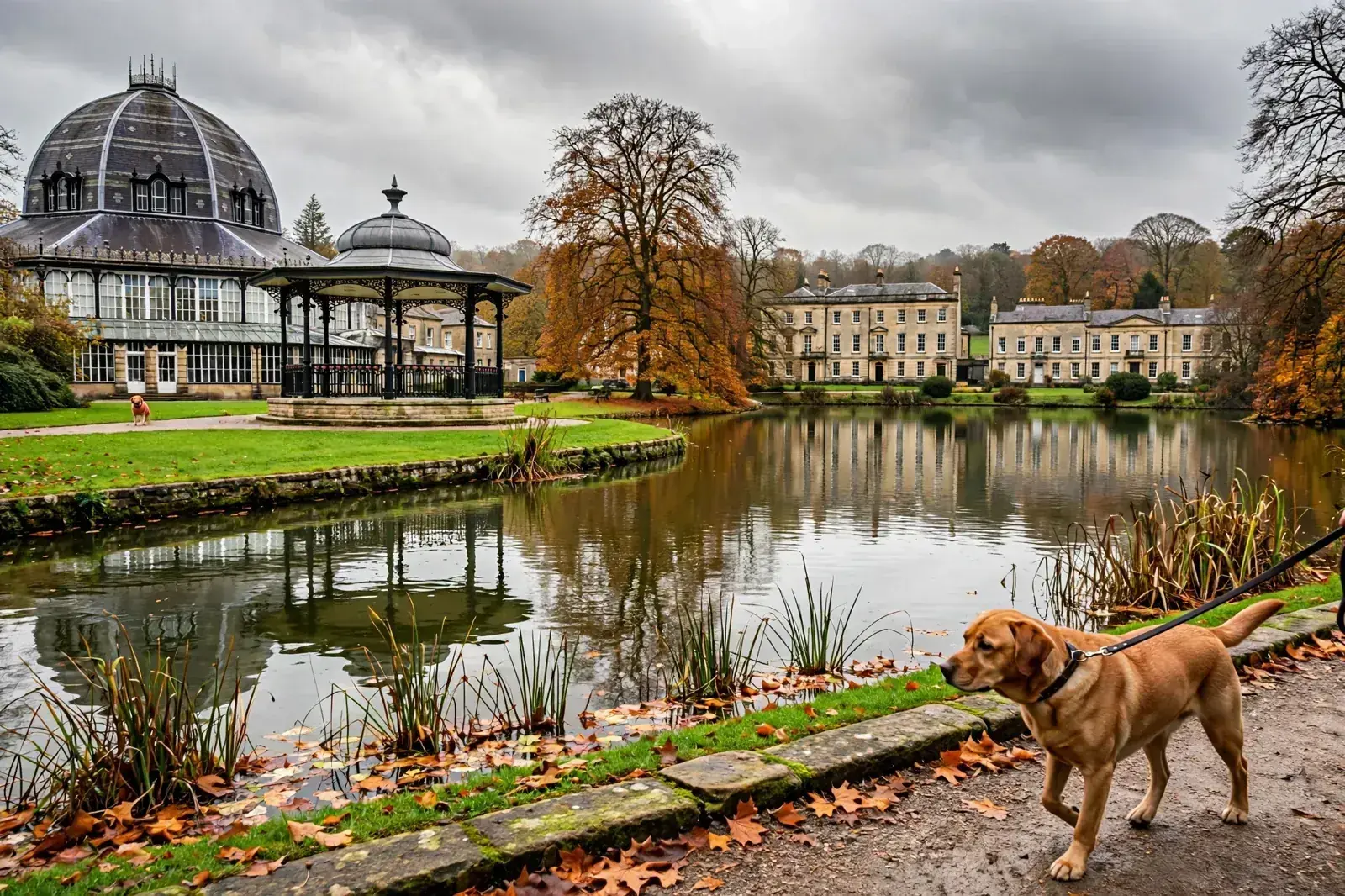
Hartington's centre is compact, stone-built and easy to explore on a lead. The green, the church, the duck pond area and the small cluster of shops sit within a short stroll of each other, which makes the village ideal for a dog that is still learning to settle in busy places. Walk the loop once at the dog's pace, let them sniff the walls and gateways, and stop for water before you queue anywhere. Dogs that get a proper sniffing walk first are far easier companions in a shop doorway or outside a cafe than dogs dragged straight from the car to a queue.
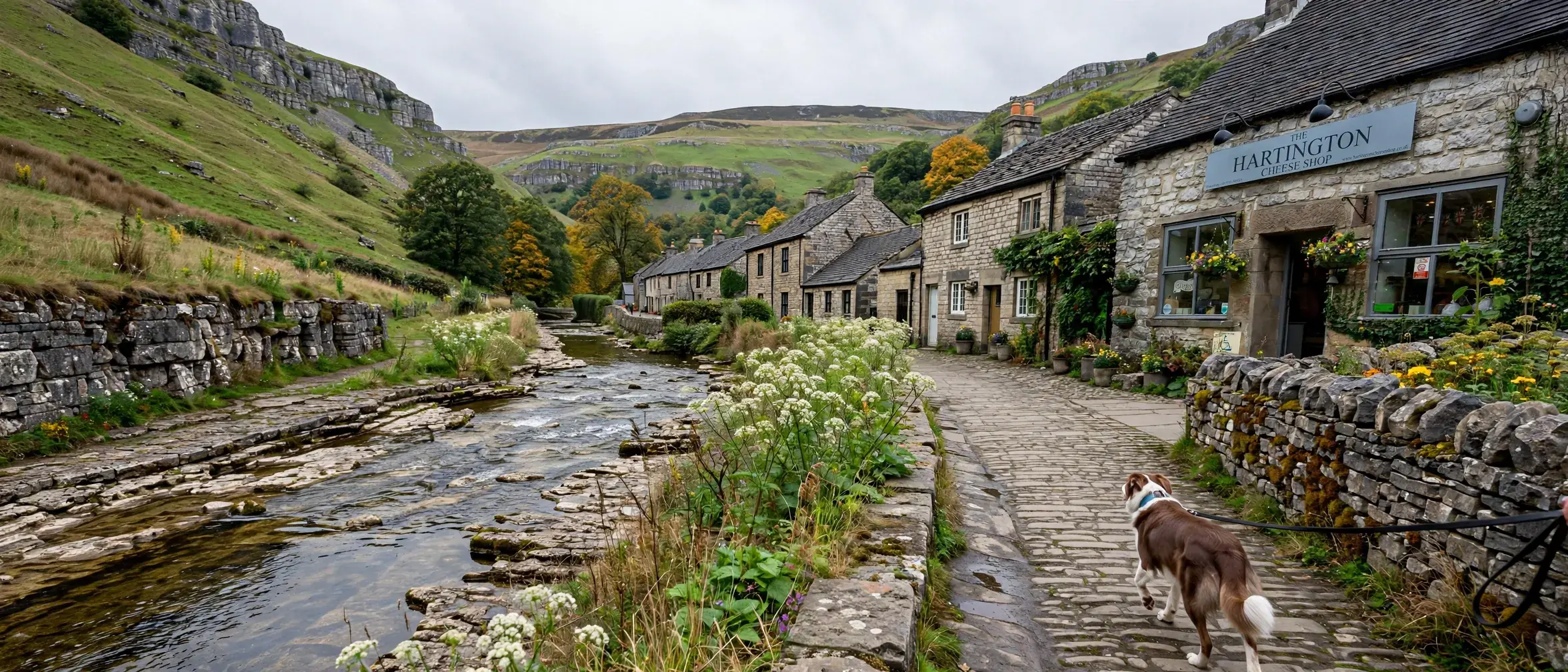
The cheese shop is the village's best-known stop, and it deserves a plan rather than an assumption. Food shops change their dog rules with staffing, layout and the time of year, so check the official guidance before you travel and be ready to adapt. One person can browse inside while the other waits outside with the dog, or the dog may be welcome in a defined area near the entrance. Either way, keep the lead short, keep the dog off tasting counters and other shoppers' feet, and avoid blocking the doorway. A calm dog that waits quietly is welcome back; a dog that lunges at samples is remembered for the wrong reasons.
Use the village as a training ground in the best sense. Stone walls, narrow pavements, passing dogs, cyclists and the occasional tractor all appear within a few streets, and each one is a small lesson in walking nicely on a lead. Reward calm behaviour, cross the road early if another dog looks tense, and do not let a long lead trail across a pavement where it can trip someone. If your dog is nervous, the quieter lanes behind the main street give you space to decompress before you return to the centre for lunch or a second look at the shops.
The River Dove and the village walk
The River Dove gives Hartington its gentlest walking, and it is the right first choice for most dogs. Riverside paths follow clear water past meadows and limestone outcrops, with plenty of places to stop, sniff and paddle where it is safe and allowed. The appeal is not drama but rhythm: flat ground, shade in summer, and a route you can shorten without feeling you have missed the point. For older dogs, puppies on a first Peak District trip, or dogs recovering from an injury, this is the walk to choose, and there is no need to apologise for choosing the easy valley.
Water needs a level head, especially after rain. The Dove can rise quickly, stepping stones can disappear under a strong flow, and a confident swimmer in a calm pool can be in trouble in a fast current. Keep dogs on a lead near fast water, slippery banks and weirs, and never throw a ball into a river you have not checked for depth and flow. Blue-green algae is a separate summer hazard in still water elsewhere in Britain, so if water looks scummy, green or unusually still, keep dogs out and check local advice. Our broader guide to dog-friendly beaches and seasonal rules in the UK explains the same check-before-you-swim habit for coastal water, and the principle transfers directly to rivers.
Turn the riverside walk into a loop only when the map, the ground and the dog all agree. Look for stiles, gates and field boundaries before you commit, because a route that crosses three stiles with a large dog is a different walk from one that crosses none. Carry a collapsible bowl and offer water even when the river looks inviting, since river water is not a reliable drink. Finish back in the village with a towel-down and a rest, and you will have a dog that is tired in the good way: settled, hydrated and ready for a pub garden rather than wired from a walk that went on too long.
Beresford Dale, step by step
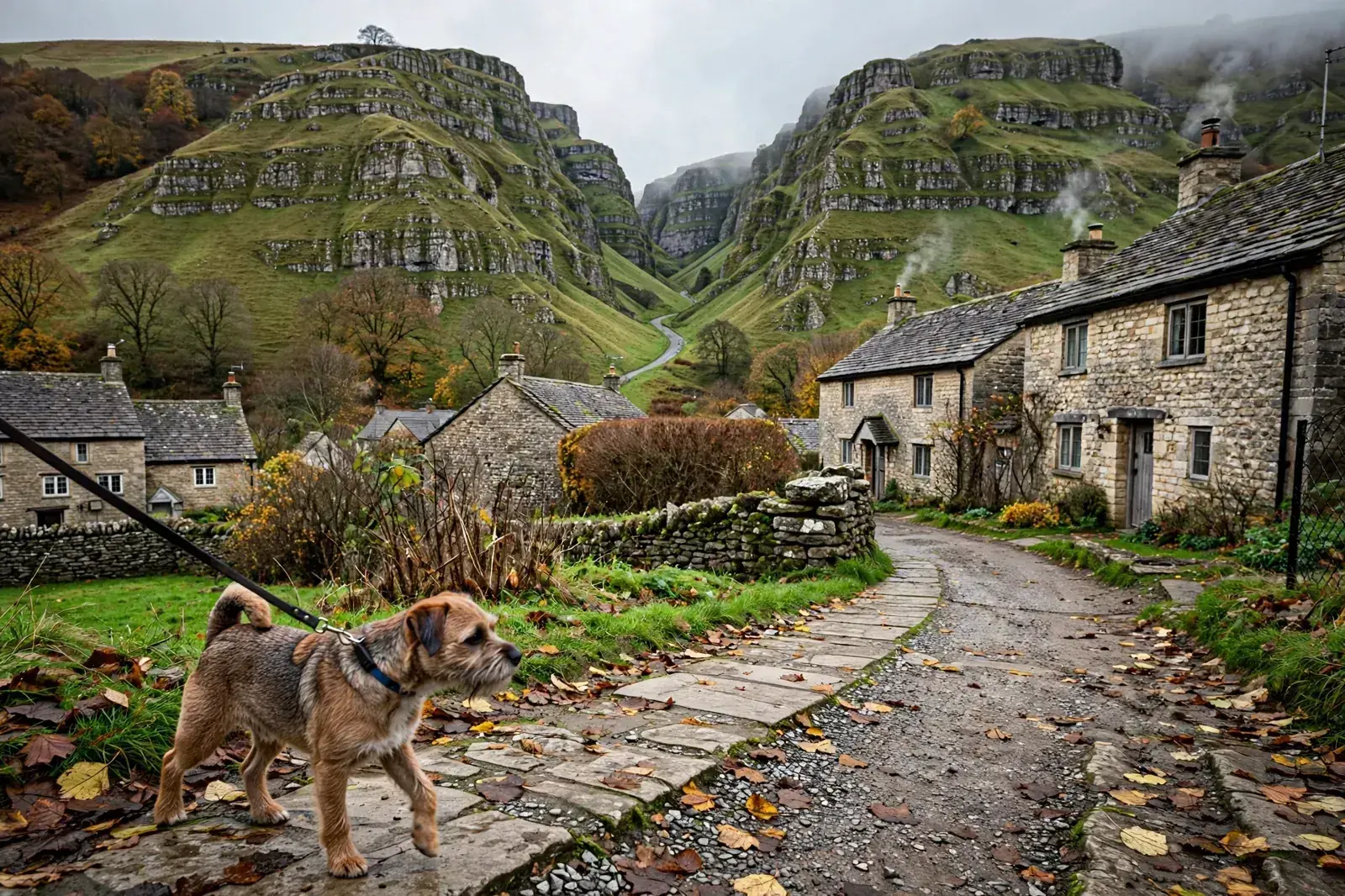
Beresford Dale, south of the village towards the Dove valley, is the classic Hartington extension for walkers who want a little more character than the village loop. The dale is narrow, wooded in places and lined with limestone, and the path follows the river closely enough that the sound of water stays with you for much of the walk. Dogs tend to love this kind of ground: shade, smells, cool air and frequent chances to stop. Owners should love it for the same reason, provided they plan for the narrow sections where two dogs passing need a short lead and a step to one side.
Break the walk into stages rather than treating it as a single march. Walk to the first bridge or clear landmark, offer water, check paws for grit and mud, and decide whether to continue. Limestone paths are beautiful but unforgiving: wet stone is slippery, loose gravel collects between toes, and a dog that runs every descent will pay for it on the climb back. A steady pace with sniffing breaks suits the dale far better than a forced march, and it also gives you time to notice the dippers, the old mill remains and the way the light changes under the trees.
Navigation matters more here than in the village. Phone signal can be patchy in a steep-sided dale, so download an offline map, carry a paper map if you use one, and note the last clear exit point before you enter the narrowest stretch. If the weather turns, a dale funnels rain and wind, and the path back can be muddier than the path out. Turning back early is not a failed walk; it is the decision that keeps the next walk possible. Finish with the same routine every time: towel, water, paw check and a quiet few minutes before the car.
Wolfscote Dale and quieter water
Wolfscote Dale, a little further along the Dove, offers a quieter alternative when Beresford Dale is busy. The valley opens and narrows by turns, with meadows, riverside flats and limestone slopes that make a varied walk without a long drive from Hartington. It suits dogs that prefer open ground to enclosed woodland, and walkers who like to see further ahead before choosing a path. As with every dale walk, the quieter reputation only holds if you arrive early or late; midday on a bank holiday brings walkers to every valley in the White Peak.
Quieter water still needs the same care as busy water. Keep dogs away from deep pools they cannot climb out of, watch for steep banks hidden by vegetation, and keep a lead handy even on open stretches, because sheep often graze the meadows above the river. The reward for that care is a walk with real variety: riverside flats for a gentle warm-up, a climb for a view, and a flat return where a tired dog can amble. Dogs that chase birds or squirrels need a long line here rather than freedom, since open ground gives a chase a long head start.
Linking dales into one long day is tempting, and sometimes it works, but it should be a deliberate choice rather than a drift. Two dales plus a village visit can easily become fifteen kilometres of limestone, which is a great deal for a small dog or an older walker. A better pattern is one dale in the morning, lunch and rest in the village, and a short evening stroll if the dog still wants one. That rhythm leaves room for the cheese shop, the pubs and the simple pleasure of sitting on the green, which is after all why a village like Hartington exists.
Livestock, leads and limestone ground
Sheep and cattle are part of the working landscape around Hartington, not a backdrop, and the lead rules exist because a loose dog can cause real harm even without touching an animal. Keep dogs on a short lead in every field with livestock, and on a lead on paths between fields where animals may be just over a wall. If cattle show interest, move calmly and steadily, keep the dog close and behind you where possible, and do not run. If a dog chases livestock, the legal and practical consequences are serious, so prevention is not optional etiquette but the core safety rule of the whole day.
Limestone ground adds its own hazards. Wet limestone is slick, dry limestone is hard on paws over a long walk, and the gaps between rocks can trap a small foot. Check paws at every stop, especially after a descent, and watch for limping, licking or a sudden reluctance to walk, which usually means grit, a cut or a sore pad rather than tiredness. A dog that is used to grass parks will need a shorter first limestone walk than a dog that regularly walks rocky ground, so build distance gradually across a holiday rather than saving it all for day one.
Gates and stiles deserve the same attention as livestock. Close every gate behind you, even if it was open when you arrived, and check that the latch has caught before you walk away. Lift small dogs over stiles rather than letting them scramble, and use a harness handle where it helps. If you are planning a longer stay, our guide to dog-friendly holiday parks in the UK covers the same boundary and gate questions for accommodation, and the habit of checking every exit transfers directly to dale walking.
Pubs, cafes and picnic stops
Hartington's pubs and cafes are part of the day, not an afterthought, and a little planning makes them enjoyable rather than stressful. Check the official guidance before you travel for each place you hope to visit, because dog areas can be the bar, the garden, or a specific corner, and the rules can differ between lunch and evening. Arrive with a mat, a water bowl and a chew or stuffed toy for settling, and choose a table away from the main walkway so the dog is not stepped over by every passer-by.
Pub garden manners repay the effort. Keep the dog on a lead even in a garden, keep them off other tables and other dogs' food, and clean up immediately. If your dog barks at other dogs, sit with your back to the entrance and a clear view of approaching animals so you can redirect early. The full etiquette, from lead length to water bowls, is set out in our guide to dogs in pub gardens in the UK, and Hartington's small gardens are exactly the places where those habits matter most. A dog that settles under a table is a dog that will be welcomed back.
Picnics are often the simplest refreshment of all. The village green, a riverside flat or a quiet field edge can be a better lunch spot than a crowded pub, provided you take all litter home, keep food away from other dogs, and avoid grazing land. Pack a second lead so one person can hold the dog while food is unpacked, and never leave food unattended while a dog investigates. A picnic also solves the timing problem: you can eat when the dog is ready to rest, rather than queuing for a table at the busiest hour.
Staying overnight with a dog
Hartington works as an overnight base because it is quiet after the day walkers leave, and the lanes are peaceful for a last evening toilet walk. Accommodation ranges from village cottages and small guesthouses to farm stays and campsites in the surrounding dales, but dog policies vary widely even within the same village. Confirm in writing whether the dog can be left alone, whether there is a secure garden, what the cleaning charge covers, and whether stairs, shared entrances or livestock nearby will affect your dog. A booking that looks dog-friendly on a listing page can still be a poor fit for a dog that cannot do stairs or cannot be left alone.
Pack for the accommodation as carefully as for the walk. Bring the dog's own bed, food and bowls, a familiar blanket, a torch for the last walk, and a towel for wet paws at the door. Agree a routine for the first evening: a short walk, food, a settle on the bed, and a quiet night, rather than a late pub visit that leaves a tired dog alone in a strange room. Dogs settle faster when the first night copies home as closely as possible, and a settled first night makes every later day easier.
Use Hartington as a hub rather than a single destination. Bakewell with a dog offers a livelier market town day, Buxton with a dog adds spa town gardens and a different kind of walk, and the Monsal Trail gives a flat, surfaced option when the dales are muddy. Rotating village, trail and dale days across a week keeps the dog interested without repeating the same ground, and it spreads the driving so no single day becomes a chore.
Seasons, weather and mud
Spring is Hartington at its freshest, with lambs in the fields, wildflowers along the dale edges and longer evenings, but it is also the season when livestock rules matter most. Keep dogs on a lead near lambing fields without exception, and expect some paths to be closed or diverted for lambing or conservation work. Summer brings shade, river paddling and busy weekends; start early, carry extra water, and watch for hot stone and warm car interiors. Never leave a dog in a parked car, even for a quick shop visit, since temperatures rise far faster than most people expect.
Autumn may be the best season for a dog in Hartington. The crowds thin, the light softens, the dales colour, and the ground is usually firm enough for a good walk without the summer heat. Rain still matters: a wet week turns limestone paths slippery and meadow paths muddy, and a dog that swims in autumn needs a proper dry-off before the car. Winter brings short days, frosty stone and the chance of ice on steps and bridges, so shorten walks, carry a torch, and keep a drying coat in the car. A winter village visit with a pub lunch can be just as satisfying as a summer dale walk, provided the plan respects the light.
Whatever the season, the kit list stays much the same, with only the layers changing. A lead and a long line, poo bags, water, a bowl, a towel, a first-aid kit and a phone with an offline map cover most situations. Add a drying coat and a second towel in wet months, sun protection and extra water in summer, and a torch and reflective gear in winter. Check the official guidance before you travel for any seasonal path closure, and remember that a walk postponed by weather is a walk saved for a better day, not a day wasted.
Practical questions
Before you go
Can dogs go into the cheese shop in Hartington?
Policies can change, so check the official guidance before you travel. Many village food shops welcome dogs at the door or in a defined area, while tasting counters and production areas stay dog-free. If in doubt, take turns going inside or ask staff where dogs are welcome that day.
Is the River Dove walk from Hartington suitable for dogs?
The riverside paths suit many dogs, but they are narrow in places, can be muddy after rain, and pass livestock. Keep dogs on a lead near sheep and cattle, carry water, and choose a shorter out-and-back route if your dog is older or the ground is wet.
Where can dogs be off the lead near Hartington?
Use open access land and quiet fields only where no livestock is present and local signs allow it. Much of the dale walking is through farmland, so off-lead time is best saved for enclosed spaces, a secure field, or a clearly signed stretch away from animals and other walkers.
Are Hartington pubs dog-friendly?
Several village pubs welcome dogs, often in the bar or garden rather than the main restaurant. Check the current policy before you travel, keep dogs on a lead under the table, and bring a mat and water bowl so a busy lunchtime stays calm.
What should I pack for a Hartington walk with a dog?
Pack a lead and a long line, poo bags, water and a bowl, a towel, a drying coat in wet weather, and a basic first-aid kit. Limestone paths can be slippery when wet, so wear boots with grip and keep a spare lead in case one gets muddy or tangled.
Is Hartington a good base for a longer Peak District dog holiday?
Yes, for walkers who like quiet villages. Hartington sits within reach of the White Peak dales, Bakewell, Buxton and the Monsal Trail, so it works well as a calm base with a different valley walk each day, provided your accommodation confirms its dog rules in writing.