Nothing in this guide is paid placement. Huskies differ in escape artistry, stamina and heat tolerance, and health material here is background reading rather than veterinary advice. Ask your vet about your dog, and verify current rules officially before a trip.
A Husky holiday in the UK succeeds on security, temperature and mileage. Assume your dog can climb, dig under or slip any ordinary garden fence, so book genuinely secure gardens and hired enclosed fields, and keep her on a lead or long line everywhere else. Choose cooler seasons and regions, walk early and late in any warm spell, and provide the very high daily exercise this breed needs through long walks and safe running. Add a plan for prey drive around livestock and wildlife, industrial quantities of shed hair, and a vocal dog in someone else's property.
The escape artist: plan as if the fence will be tested
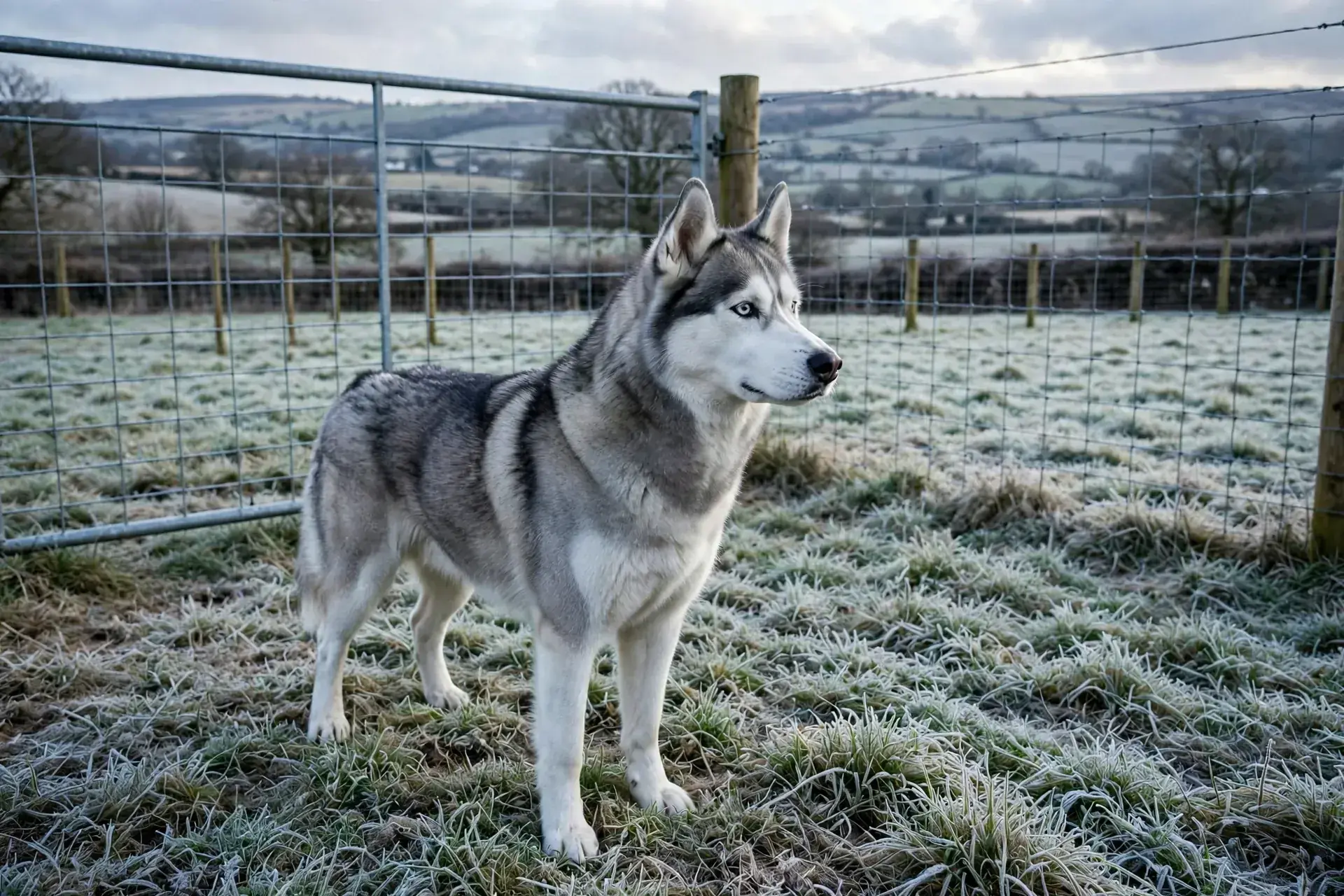
Begin with the breed's defining holiday fact: Siberian Huskies are among the most accomplished escape artists in the dog world. They climb chain-link, dig under fence panels with excavator enthusiasm, squeeze through gaps that look implausibly small, learn how gate latches work, and treat a momentarily open door as a starting pistol. A Husky who gets loose is then exceptionally hard to recover — fast, enduring, largely deaf to recall once running, and capable of covering serious distance across unfamiliar countryside. None of this is disobedience in any meaningful sense; it is what a dog bred to run all day, thinking independently at a distance from humans, is for. Your holiday planning must simply refuse to give the talent an opportunity.
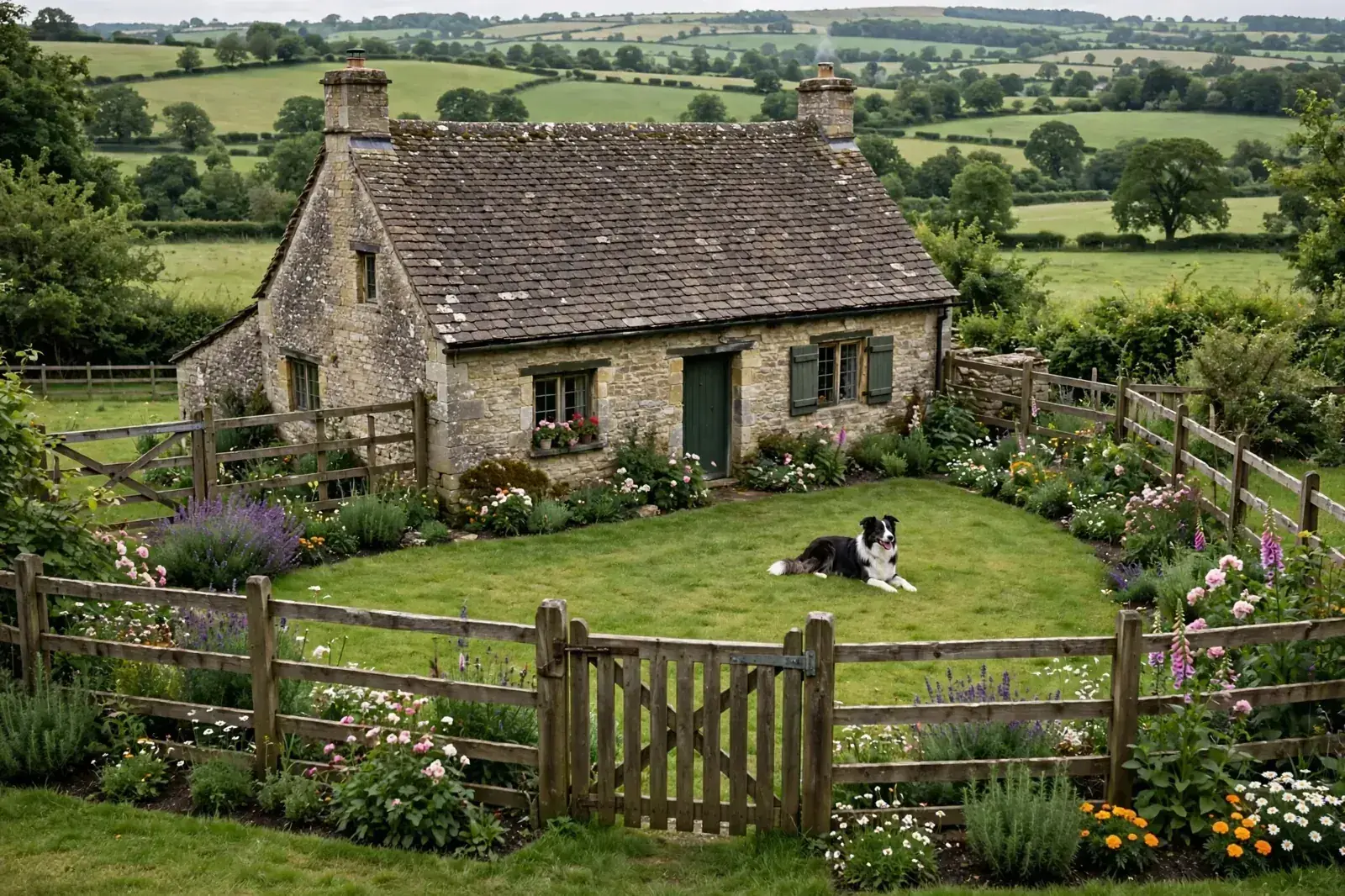
That refusal starts with accommodation, and it must be forensic. The words enclosed garden, which serve most breeds well enough, are not sufficient evidence for a Husky. You need height — many owners look for fencing around six feet — construction she cannot climb, so solid panels rather than chain-link or open rails; a base she cannot dig under, meaning panels to the ground, a hard edge, paving or buried mesh rather than a hedge over soft soil; and gates that latch securely, ideally self-closing, with no gap at the bottom. Ask the host for photographs of the actual fencing and gate, and ask directly whether the garden has contained large, athletic dogs. Our guide to stays with secure gardens lists the standard questions; for this breed, treat every answer as needing evidence, not reassurance.
Even with a good garden, run a Husky protocol for the whole stay. Never leave her unsupervised in the garden, however secure it looks — supervision is your real fence. Check the perimeter on a lead on arrival, before the first off-lead moment, looking for the loose board, the compost heap that shortens the effective fence height, the wheelie bin parked helpfully against the wall. Keep doors on latches, brief every member of the party — including visiting children — that doors and gates are closed immediately, every time, and keep her collar, with a tag carrying your mobile number, on at all times. If the worst happens despite all of it, our step-by-step guide to a dog lost on holiday in the UK is the one to have saved on your phone before you need it.
Leads everywhere: the non-negotiable walking rule
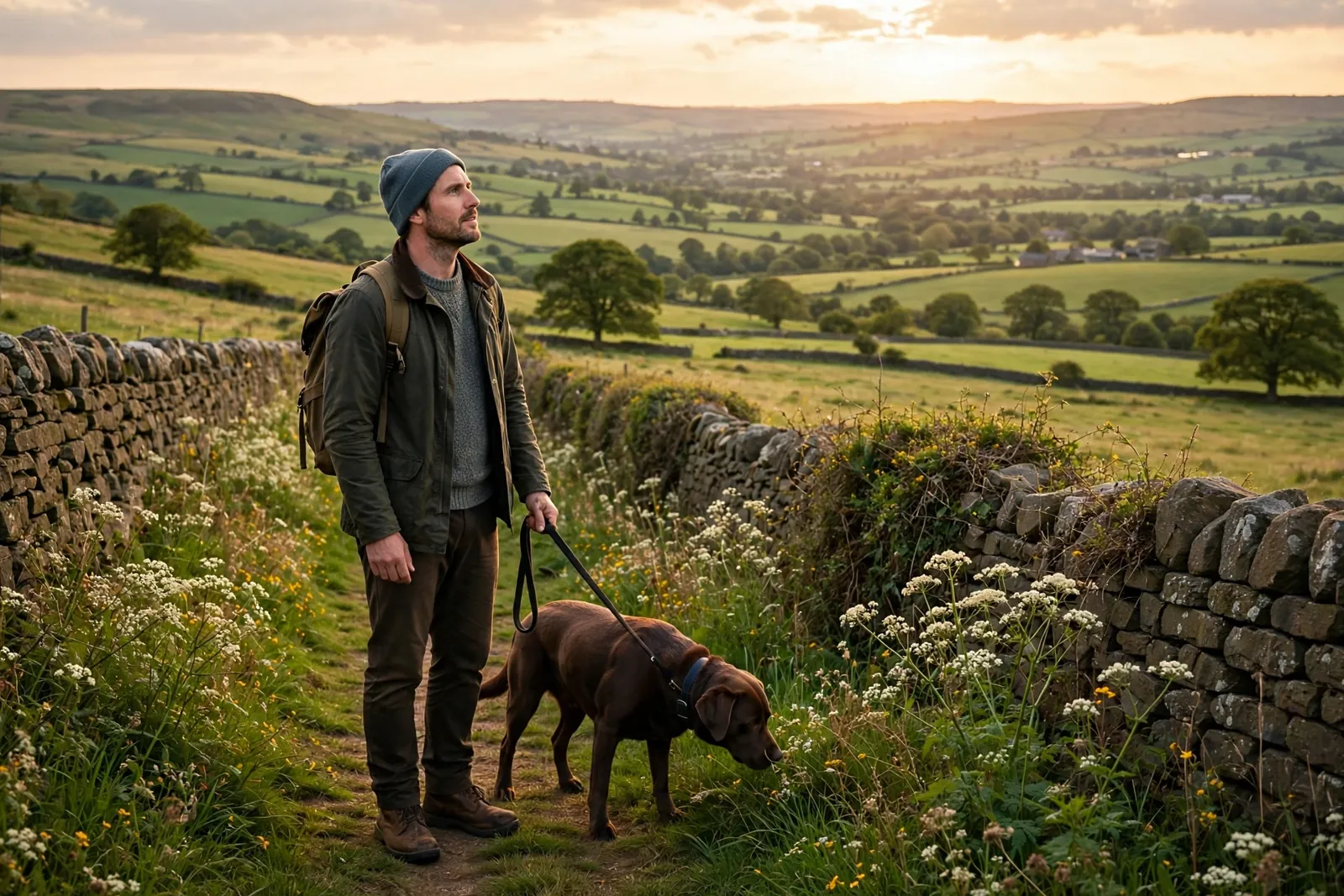
The second rule follows from the first: outside genuinely secure, enclosed spaces, a Husky stays on a lead. This is not a comment on your training. Huskies were bred to make their own decisions at distance, their prey drive is strong, and their recall — however reliable in a training hall — is the first casualty of a deer, a rabbit or an interesting horizon. A long line on open walks gives her room to range, sniff and trot while keeping the connection physical; a shorter lead suits pavements, livestock areas and busy paths. Many owners use a harness with a waist belt for the handler, which spreads the load of a powerful pulling dog and keeps hands free — set it up properly and practise before the holiday, not during the first exciting walk.
For the running she genuinely needs, use hired enclosed dog fields, which now operate across much of Britain and can be booked by the half hour. Check the field as you would a garden — fence height and construction, gate security, digging opportunities — before unclipping, and let the first visit be an inspection lap on the lead. A secure field session every day or two transforms a Husky holiday: she gets genuine off-lead speed in safety, and the rest of the week on the lead feels fair to both of you. Between fields, bikejoring, canicross and other harness sports exist for suitable dogs and properly equipped, experienced handlers, but a holiday is not the moment to improvise a new high-speed sport with an unfamiliar dog; build that at home first.
Livestock discipline sits inside this section because the consequences are severe. In sheep country — which is much of upland and lowland Britain — a loose dog among sheep can cause catastrophic harm in minutes, farmers are legally entitled to protect their animals, and dogs must be kept under close control around livestock; many owners keep the lead short and the dog close in any field with stock, or choose another route entirely. A Husky's combination of speed, prey drive and independence makes this the highest-stakes rule in the guide. Treat every livestock field as a lead-short, no-exceptions zone, and give grazing animals a wide, calm berth.
Heat limits: a winter dog in a British summer
A Husky's coat is engineered for Arctic cold, insulating in both directions but leaving the dog with limited tolerance for sustained heat and exercise in warm weather. Britain's climate suits the breed for most of the year; its summer heat spikes do not. Plan Husky holidays for the cooler months where you can — autumn, winter and spring in Scotland, the uplands, the north and the coast are close to this breed's idea of perfection — and if you do travel in summer, restructure the day around temperature: the serious walk at dawn, a short shaded outing in the evening, and the middle of the day given over to rest in the coolest room of the property with water always available.
Never shave or clip a Husky's double coat to help with heat; the coat's structure regulates temperature and protects the skin, and cutting it can damage regrowth — manage warmth through timing, shade, water and rest instead. Watch for the signs that she is too warm: heavy panting, seeking shade or cool floors, reluctance to continue, and general dullness are your cue to stop, rest and cool her, and our guide to dogs in hot weather explains heatstroke warning signs and first steps in full — read it before any warm-weather trip. Hot pavements, midday hill walks in full sun and enclosed cars are all hard nos: she is never left in a parked car in warm weather, for any duration, under any circumstances.
Choose summer accommodation with a cool dog in mind: stone or ground-floor rooms, tiled floors she can spread out on, a shaded garden for evening air, and ideally a location with a breeze — coastal and upland bases stay meaningfully cooler than inland cities in a heatwave. Pack a cooling mat if she will use one, plan water into every walk route, and be willing to cancel the big walk on an exceptional day. A Husky sprawled on cold slate at noon in July is not missing out; she is telling you the itinerary was written for the wrong climate, and the right response is a dawn walk tomorrow instead.
Very high exercise: budgeting miles honestly
Now the joyful part of the breed, and the reason owners accept everything above: a fit adult Husky needs, and loves, a great deal of exercise. Expect to budget around two hours or more of activity on a holiday day — long walks at a purposeful trot, hill days in cool weather, secure-field running, play and training — adjusted for your dog's age, fitness and any veterinary advice. Puppies, adolescents and older dogs need modified workloads, and a dog unfit from a quiet home routine should be built up over weeks before the trip rather than launched at a mountain on day two. But a holiday that assumes a Husky will be content with a village stroll and a pub lunch will produce a coiled, frustrated dog and a noisy, destructive evening.
Structure the mileage into the destination choice. Bases that work: a cottage on a long-distance trail in the cooler months, a farm stay with fields and tracks, a coastal base with miles of permitted beach, forest holidays with endless waymarked routes. Incidentally, this is where Britain quietly suits the breed — a country of footpaths, cool uplands and long twilights offers a Husky more honest work than most. Rotate the big days with a steadier one midweek, keep water and a collapsible bowl in the pack, and build in sniffing and free investigation on the long line, because a working mind tires in a way that pure mileage sometimes does not.
Evenings are the audit. A properly exercised Husky settles with theatrical completeness — the full-length flop, the sigh, the upside-down sleep — and that settle is your confirmation the budget was right. If instead she is pacing, vocalising, mouthing and inventing games with the furniture at ten at night, the answer tomorrow is more exercise, earlier, and probably a secure-field session, not a telling-off. Owners sometimes describe holidaying with this breed as an endurance sport with a dog attached; the accurate version is that the dog is the athlete and you are the support crew, and support crews who plan well have wonderful trips.
Prey drive and wildlife: managing the chase instinct
Closely related to the escaping, but worth its own section, is what happens when a Husky sees something move. Deer, rabbits, squirrels, pheasants, cats, sheep and occasionally joggers' trailing shoelaces can all trigger a chase response that is fast, committed and not easily interrupted. On holiday you will meet more wildlife, in closer quarters, than at home — dawn rabbits on the cottage lawn, deer crossing forest rides, red squirrels in Scottish and island woods, ground-nesting birds on moorland and coast in spring and summer — so plan routes, leads and attention accordingly rather than discovering her thresholds at full stretch.
Practical management is mostly anticipation. Keep the lead or long line on in any habitat where game is likely, shorten up at blind corners, field edges and woodland margins, and scan ahead the way you would for traffic. Seasonal rules help you as well as wildlife: many moorland and coastal areas ask for dogs on short leads during ground-nesting bird season, and nature reserves may restrict dogs to particular paths — read the signage and follow it, since it usually maps exactly onto the places your Husky would most like to investigate. Where a property's garden backs onto fields, assume rabbits will visit it, which is one more reason the garden is used supervised and the perimeter check matters.
Training can improve the picture but holidays are for management, not miracles. If you have been working on recall around distractions at home, a quiet holiday field on a long line is a good place to practise with rewards she values; a live deer is not a training opportunity, it is an emergency to be prevented by the lead. Carry high-value treats, reward every check-in and disengagement from wildlife lavishly, and end walks while she is still listening rather than after she has stopped. The goal by the end of the trip is a dog who has seen more of Britain's wildlife than most — from the civilised end of a lead.
Shedding: the coat that redecorates
Twice a year, typically, a Husky blows her coat, shedding the dense undercoat in quantities that new owners describe with disbelief and experienced owners with sandbags. Outside those peaks she sheds moderately and continuously. On holiday this means hair — on cottage floors, in the car, on your clothes, in the bed she is not supposed to be in — and the only sensible approach is to plan for it as weather: unavoidable, manageable, and much easier if you prepare. A thorough brush-out before you leave, ideally outdoors, removes the loosest coat at home; short brushing sessions every couple of days during the trip keep the migration orderly and give you a daily check of skin, paws and ears at the same time.
Choose and equip the stay accordingly. Hard floors forgive hair; pale deep-pile carpets do not. Take throws for any furniture she is allowed on, a lint roller for yourselves, and use the property's vacuum little and often rather than in a departure-day panic — and never be tempted by the thought of bathing the coat into submission mid-trip, since a full wash of a double coat takes hours to dry properly and can worsen shedding if the undercoat is not dried and brushed through. If your trip coincides with a full coat blow, warn the host in advance; owners who communicate and clean as they go are remembered fondly even by hosts who found husky hair in unexpected places until Christmas.
In the car, a boot liner or an old sheet under her contains most of the evidence, and a dedicated dog towel and blanket that live in the car stop the coat travelling into every stop on the journey. It is also worth carrying spare human clothes in the top of a bag rather than underneath a dog-adjacent layer. None of this is glamorous, and all of it is cheaper than a cleaning charge — and in exchange you get to holiday with an animal whose coat, gleaming and intact, is one of the sights of any northern landscape she walks through.
Noise in stays: the Husky voice and your neighbours
Huskies talk. The breed is famously vocal — howling, wooing, grumbling commentary and full operatic complaint — and while many individuals are quiet for long stretches, excitement, frustration, separation and the sound of another dog or a siren can all start a performance. In a detached farmhouse this is local colour. In a hotel room, a terraced cottage or a caravan on a quiet site, it is a neighbour problem and potentially a booking problem, so plan for the voice as carefully as for the fence. Tell hosts honestly that you are bringing a Husky, choose detached or end-of-row properties where you can, and ask about the site's noise expectations before booking anywhere with close neighbours.
Most holiday noise is situational, and the situations are manageable. A well-exercised dog settles more quietly; a dog left alone in a strange property may howl the place down, so do not leave her unattended — many lets forbid it anyway, and for this breed it is a welfare issue as much as a rule. Evening routines help: last walk, water, a chew, lights low, and her bed in the room with you if the property allows, since much Husky commentary is a request to rejoin the social group. If she kicks off at night noises — owls, other dogs, farm sounds — a familiar blanket over part of a crate for crated sleepers, white noise from a phone, and calm, boring responses from you reduce the encore rate night by night.
Finally, be a good ambassador in public spaces. Keep greetings with other dogs brief in pubs and cafes if your dog vocalises with excitement, choose the garden table over the snug, and apologise cheerfully and move on if she does announce herself — most people are charmed by a Husky serenade exactly once, at a reasonable hour, from a reasonable distance. Managed with exercise, company and honesty, the voice becomes part of the holiday's soundtrack rather than its complaint file, and you will almost certainly come home with a recording of it that you play to people voluntarily.
Where and when: Britain at Husky temperature
Pull the threads together and a clear picture of the ideal trip emerges: cool season, secure base, big country. Autumn in the Scottish Highlands or the Lake District, late winter in Northumberland, spring on the North York Moors or the Welsh uplands — these combinations give the breed its weather, its miles and its scenery at once, and give you empty paths and fires to come home to. Pack for the human version of the same climate: waterproofs, layers, and the rainy-day kit that keeps a long-line handler functional, because a Husky's enthusiasm for a wet November hillside will not be moderated by your discomfort.
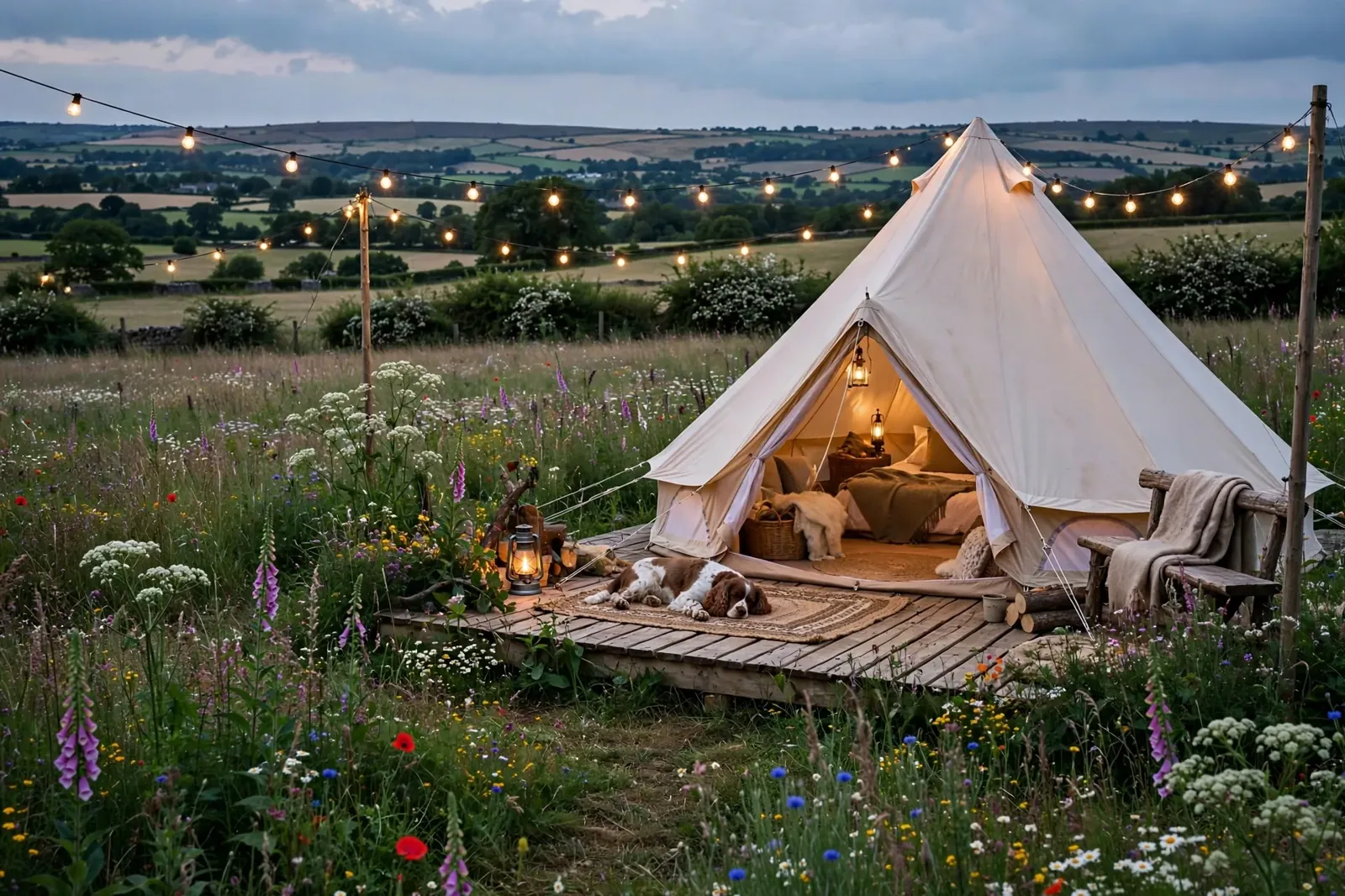
Glamping and camping can suit the breed in cool weather — many Huskies adore outdoor living — provided the security analysis is done twice as hard: a tent is not a containment system, so the dog is tethered appropriately or crated within your supervision, never left, and the site's rules on leads and noise are checked in advance; our glamping with a dog guide covers the set-up questions. Whatever the format, the non-negotiables travel with you: tag and current microchip details checked before departure, vet and local practice numbers saved, exercise built up beforehand, and the first evening kept short, supervised and secure.
Do all of that and the breed repays you completely. There are few sights in British travel to match a Husky trotting ahead on a long line up a frosty ridge, in her element, in her weather, doing a version of the job she was made for — with the crucial modern improvement that the run ends at a cottage, a full bowl and a dog asleep by the fire, rather than at the horizon. The escape artist, given nothing to escape from and everything to run towards, turns out to be a magnificent holiday dog.
Practical questions
Before you go
Can a Husky ever be let off the lead on holiday in the UK?
Only inside genuinely secure enclosed spaces, such as a well-checked hired dog field or a garden with tall, solid, dig-proof fencing — and even then, supervise her. Huskies have strong prey drive and unreliable recall around wildlife despite good training, so on open walks use a lead or long line. Around livestock, keep the lead short and give animals a wide berth; the risks to sheep and to your dog are severe.
What fencing does a holiday cottage need for a Husky?
Look for solid fencing around six feet high that the dog cannot climb, with no gap at the base and ground she cannot dig under — panels to the ground over a hard edge rather than hedging over soil — plus a securely latching, ideally self-closing gate. Ask the host for photos and whether the garden has contained large athletic dogs, inspect the perimeter on a lead when you arrive, and never leave the dog in the garden unsupervised.
Are Huskies okay in a British summer holiday?
With restructuring, yes: choose cooler coastal or upland bases, walk at dawn and in the evening, rest the dog in the coolest room through the middle of the day, and cancel big walks in heat spikes. Never shave the double coat, never leave her in a parked car, and know the signs of overheating. Many owners simply prefer autumn, winter and spring trips, when the climate suits the breed best.
How much exercise does a Husky need on holiday?
A fit adult typically needs around two hours or more of activity a day — long, purposeful walks, secure-field running and mental work — though puppies, older dogs and any dog should be guided by fitness and veterinary advice. Build fitness up before the trip, rotate big days with steadier ones, and judge by the evening: a properly exercised Husky settles completely, while a pacing, vocal one is telling you the budget was short.
Do Huskies shed a lot in holiday accommodation?
Yes — moderately all year and spectacularly during the twice-yearly coat blow. Brush thoroughly before you leave and briefly every couple of days during the trip, choose hard-floored properties, take throws and a lint roller, vacuum little and often, and warn your host if your stay coincides with a full coat blow. Managed openly, shedding is a cleaning routine rather than a problem — unannounced, it can cost you your deposit.