This guide is independent and contains no paid placement. If affiliate links are added later, they will be clearly marked and will not change our editorial checks.
Walk the Royal Albert Dock and the Mersey promenade early, use Sefton Park and Princes Park for proper off-lead time, treat the big museums as split visits because most gallery interiors are assistance-dogs only, and base yourself near the waterfront or the Georgian Quarter for quiet morning streets. Check each venue on its official site before you go.
Start on the waterfront, not in the shops
Liverpool makes sense from the river. The waterfront runs in one long, legible line from the Royal Albert Dock past the Pier Head, the ferry terminal and the museum quarter, and for a dog it is the kindest possible introduction to the city: wide pavements, few road crossings, water on one side and landmarks on the other. A first morning here does three jobs at once. It burns off travel energy after a train or car journey, it orients you without a map, and it shows you which parts of the centre your dog will enjoy and which parts — the busiest shopping streets around Liverpool ONE at lunchtime, for example — are better crossed quickly or saved for a dog-free hour.
The promenade continues south towards Otterspool, where the path leaves the docks behind and becomes a genuine riverside walk with grass, trees and room to breathe. That southern stretch is where many local owners do their real walking, and it pairs naturally with a stay in the southern neighbourhoods. Northwards, the waterfront is more monumental than green, so treat it as sightseeing on a lead rather than exercise. Wind is the constant: the Mersey estuary funnels it, and a calm street two blocks inland can be a blustery quayside. Pack a layer for yourself and consider a coat for thin-coated or older dogs outside high summer, even when the forecast looks mild.
Set your Liverpool rhythm around that contrast. Waterfront and parks in the morning, when the light on the river is at its best and the pavements are quiet; neighbourhood cafes and pubs for lunch; one focused piece of sightseeing in the afternoon, split between adults if it is an indoor attraction; then a short evening loop rather than a second expedition. Dogs that arrive to a plan built this way cope noticeably better with the city's busier set pieces — the Albert Dock on a Saturday, a matchday crowd, a festival weekend — because those moments are additions to a calm base, not the whole day.
Albert Dock and the Pier Head with a dog
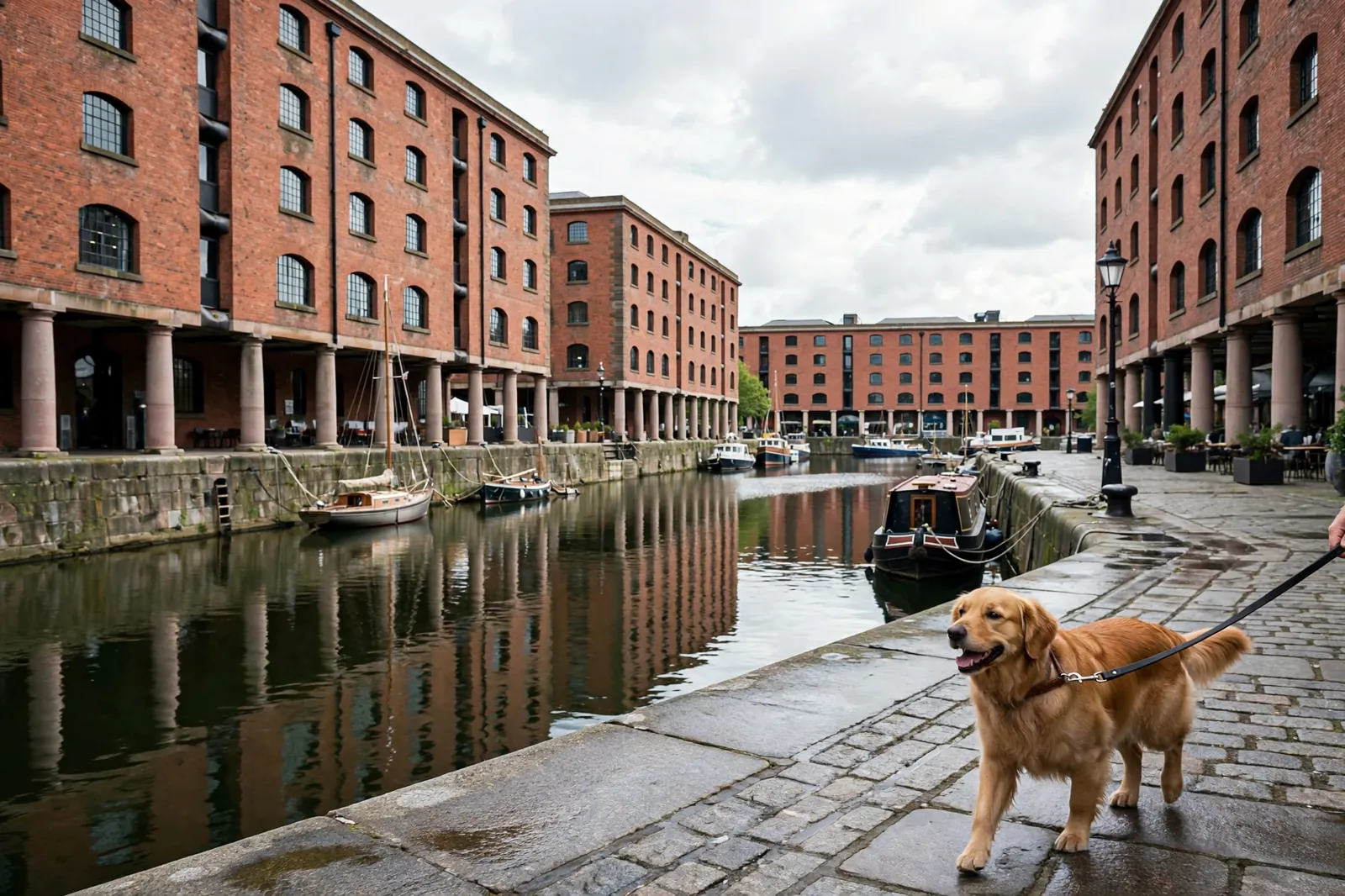
The Royal Albert Dock is the centrepiece: a ring of Grade I listed warehouses around enclosed water, with colonnaded quays that are flat, step-free in most places and generous enough for a dog to walk at heel without weaving through every passer-by. Dogs on leads are a normal sight on the quays and around the Pier Head, where the famous statues, the ferry terminal and the open plaza give you views across to Birkenhead and the Wirral. Go early for the version of the dock that suits dogs best. By midday on a fine weekend the quays fill with tour groups, families and queues, and the sensible move is to complete your circuit, take photographs and retreat to a quieter street rather than push a hot or crowded dog through another lap.
Water discipline matters here. The dock water is deep, the edges are drops, and swans, geese and gulls are permanent residents with strong opinions about dogs. Keep a short lead near the edge, do not let a dog drink dock or river water, and be ready for the gull factor: dropped chips are everywhere around the Pier Head, and a dog with a practised pavement-scavenging habit will find the area a full-time job. A leave-it cue rehearsed before the trip pays for itself within the first hour. The same applies around food stalls and outdoor tables, where staff are usually welcoming but need dogs settled and out of walkways.
The dock also works as your bad-weather anchor, with one caveat explained in the museums section below: most interiors are not open to pet dogs, so the dock in the rain is a waterproof-coat walk between overhangs and colonnades rather than an indoor day. That is still worthwhile — the warehouses shelter long stretches of quay — but bring the towel and plan a drying routine at your accommodation. For a longer waterfront route that links the sights together, our UK weekend breaks with dogs guide shows how to pace a two-day city itinerary without overloading either day.
Sefton Park, Princes Park and the green south
Sefton Park is Liverpool's great dog asset: a large Victorian park in the south of the city with a palm house at its centre, a lake, broad meadows, woodland edges and enough space for a proper run rather than a token trot. This is where you come for off-lead time, with the usual judgement — leads or close control near the lake and its waterbirds, around the cafe and play areas, on shared paths with cyclists, and anywhere signage asks for it. The park's size means reactive dogs can usually find a quieter corner at off-peak hours, especially on weekday mornings, while confident dogs get the social, busy version near the main paths at weekends. Allow at least ninety minutes; Sefton rewards a full circuit rather than a dash across one field.
Princes Park, Sefton's older neighbour towards Toxteth, offers a calmer, more local alternative, with a lake, mature trees and a relaxed pace that suits older dogs and owners who want a shorter green loop close to the southern neighbourhoods. Between the two parks, the streets of Lark Lane and the surrounding area give you one of the city's best concentrations of independent cafes and pubs, many of them used to dogs — verify each one, as policies change, and aim for off-peak tables. Add Calderstones Park, further south-east, to a longer stay: another generous park with gardens and wide grass, useful if you are based that side of the city or driving in.
The practical point is that Liverpool's best dog days are southern days. If your accommodation choice is still open, weigh a base near Sefton or Princes Park against a waterfront hotel: the centre gives you the dock on the doorstep but a pavement walk at 7am, while the south gives you a park within minutes and a short bus ride or a longer pleasant walk to the river. Neither is wrong, but the dog's morning and evening routine should decide it, not the view from the window. In wet weather the Sefton meadows hold water and the paths around the lake muddy quickly, so boots for you and a paw-rinse routine for the dog keep the park enjoyable from October to April.
Museums, galleries and the Beatles question
Manage expectations early: Liverpool's major museum and gallery interiors — including the big national museums on the waterfront and in the city centre, and the main Beatles attractions — generally admit assistance dogs only, not pet dogs. Policies are set venue by venue and can change for exhibitions and events, so check the official site before you go for every attraction on your list rather than relying on a general rule, and never arrive at a ticket desk hoping the rule will bend. The good news is that Liverpool is unusually well suited to the split visit. Many headline sights sit on or beside excellent dog walking: one adult can tour a museum while the other walks the dock, the promenade or the Pier Head, and the dog's half of the bargain is a proper outing, not a wait on a pavement.
The Beatles story needs the same treatment with an outdoor twist. The music history is woven into streets your dog can walk freely: the waterfront statues, the Cavern Quarter from the outside, and the Georgian streets around Hope Street between the two cathedrals, where both cathedral exteriors and the surrounding streets make a fine lead walk even though interiors follow their own dog policies — again, check each official site before you go. Coach-style tours and indoor exhibitions are for the human half of a split visit. Solo travellers should either enjoy Liverpool as an outdoor city, which it rewards generously, or book trusted local dog care for a single museum window; leaving a dog alone in a car or unfamiliar room is not a fair substitute.
Build one indoor highlight per day at most, book timed tickets where they are offered so the dog's walk can be planned around a fixed slot, and keep a wet-weather alternative that does not depend on a pet dog being admitted anywhere. Our guide to assistance dog access rights in the UK explains how assistance dog access differs from pet policies, which helps make sense of the signage you will see at venue doors across the city.
Where to stay with a dog in Liverpool
Choose the neighbourhood before the property. The waterfront and Albert Dock area puts the promenade at your feet and suits dogs who are content with lead walks and city noise; the Georgian Quarter around Hope Street and Rodney Street offers quieter streets, handsome terraces and an easy walk down to the dock or up towards the parks; the Lark Lane and Sefton Park fringe is the dog-first choice, with green space minutes away and a village feel, at the price of a bus ride or a half-hour walk to the Pier Head. Each base changes the shape of the day, so match it to your dog's age, energy and tolerance for crowds rather than to a single sightseeing list.
Then interrogate the dog policy in detail, as you would anywhere: which rooms accept dogs, is there a per-dog fee per night or per stay, are there size or number limits, can the dog join you in the bar or breakfast room or is there a separate arrangement, and can the dog be left alone in the room at all — a rule that decides your museum and evening plans. Our national guide to dog-friendly hotels in the UK lists the full set of booking questions. Liverpool adds two local ones: ask about the immediate late-night toilet walk, because a waterfront tower block and a Lark Lane terrace have very different answers, and about stairs and lifts, since converted Georgian properties may involve several flights that matter to older or large dogs.
Self-catering apartments and aparthotels often give dogs the easiest stay — hard floors, a door routine you control and room for a familiar bed — but confirm the floor, the nearest grass and whether any courtyard is genuinely enclosed rather than merely described as private. Whatever you choose, bring the settling kit: the dog's own bed or blanket, a chew for the first evening, bags in every coat, and a towel stationed by the door. Liverpool weather off the river will test that towel in every season, and a dog that smells home settles faster in a city room than any amount of new-toy bribery achieves.
Cafes, pubs and eating together
Eating with a dog in Liverpool is straightforward if you verify each venue rather than assuming. The strongest ground is the independent scene: cafes around Lark Lane and the Georgian Quarter, pubs with traditional bar areas across the city, and waterfront terraces in good weather where a settled dog under the table is a familiar sight. Formal dining rooms are less likely to welcome pet dogs, and chain venues vary by branch, so a quick check of the venue's own website or a phone call the day before is the reliable route — policies change with refurbishments and management more often than listings are updated. The etiquette that keeps welcomes warm is covered in our UK dog-friendly cafes guide: walk and toilet the dog first, keep the lead short and out of walkways, keep dogs off seats, and settle the dog on a mat if you carry one.
Timing shapes the experience more than the venue list. The Albert Dock and the central food areas peak hard at weekend lunchtimes and on matchdays, when even a dog-friendly terrace becomes a queueing and crowd-management exercise. Eat early or late, favour the larger spaces with room between tables, and on matchdays check the fixture list before choosing where to eat — a home game changes the temperature of the whole city centre for a few hours, which some dogs love and many merely endure. In the southern neighbourhoods the same lunch is calmer at almost any hour, which is another quiet argument for the Sefton-side base.
Carry the small kit that rescues outings: a portable water bowl, a long-lasting chew for waits, and bags for the inevitable. If your dog cannot settle indoors, Liverpool picnics beautifully — delis and bakeries near the parks, a bench circuit of Sefton, or fish and chips eaten on the Otterspool promenade with the river for company, gulls permitting. Keep human food and dropped scraps as a managed risk around the waterfront in particular, and rinse paws after dockside walks in winter when grit and salt are down.
Getting around: trains, buses and Merseyrail
Most owners will walk Liverpool's centre, because the waterfront, the dock and the main streets form a compact, mostly flat core. For longer hops — down to Sefton Park, out to Crosby, or back from a one-way promenade walk — the local rail and bus networks do the heavy lifting. Dogs are generally carried on trains in Britain under the conditions set out in our guide to taking a dog on UK trains: on a lead, off the seats, and considerate of other passengers, with local operators applying their own conditions, so check the latest official guidance before you travel. Liverpool Lime Street is the main arrival station and a busy, echoing space; give a nervous dog a calm pause after the platform before tackling the streets at rush hour, and note that the walk from Lime Street to the waterfront is downhill and straightforward.
Merseyrail's underground loop stations in the centre involve lifts and escalators; dogs generally need to be carried on escalators or use the lift, so a large dog and a deep station are a combination to plan around — surfacing at street level a stop earlier is often the simpler answer. Buses fill the gaps to the southern parks, and dogs travel at the driver's discretion on a lead in the usual British pattern: travel off-peak, keep aisles clear, and do not let the dog sit on seats. Taxis and private hire vary by operator and driver, so state the dog at booking, not at the kerb, and carry a clean blanket for the seat or footwell.
Drivers should treat the centre as a place to park once and walk. Waterfront and city-centre parking is available but priced for it, matchdays and event days change availability sharply, and the city's pleasures are mostly pedestrian. If you are day-tripping to Crosby Beach for the statues on the shore, check tide times before you go — the beach is tidal, dogs need close control around the figures and the water, and the official safety guidance on the day is the authority, not habit. Build the return leg into the plan before you set out, because a tired dog, a rising tide and an unfamiliar bus stop is a combination nobody enjoys.
Crosby, seasons and a calmer itinerary
Crosby Beach, a short hop north of the centre, is Liverpool's great extra: a long, open, tidal beach famous for its cast-iron figures standing in the sand and looking out to sea. For dogs it offers space the city cannot, but it demands respect for the tide tables, close control near other beach users and the figures, and care around soft sand and mud in places. Go with time in hand, keep the dog out of deep channels as the tide turns, and check the official guidance before you go, including any seasonal notices. Paired with a Sefton Park morning, Crosby turns a city break into something closer to a coastal holiday, and dogs that find the dock stimulating usually find the beach restorative.
Season by season, Liverpool asks for small adjustments rather than different trips. Spring brings the parks into their best condition and the waterfront into long, light evenings; it is arguably the easiest season for a first visit. Summer adds festivals, outdoor events and the busiest dock days — walk early, rest the dog through the middle of the day, and treat shade and water as planned items, because the quays offer little of either. Autumn is the connoisseur's season: quieter pavements, dramatic river light and parks in full colour. Winter is a waterproofs trip — short days, real wind off the estuary and slippery setts when wet — but the museums-by-split-visit pattern, the pub lunches and the empty promenade give it a character many owners prefer.
Whatever the season, leave one half day unplanned. Liverpool rewards wandering: a Georgian street you had not intended to walk, a park corner, a cafe that turns out to welcome the dog warmly. Save the details of a local veterinary practice and its out-of-hours service near your accommodation before you need them, carry your own vet's number and insurance details, and check legs and belly for ticks after park and coastal walks in season. A schedule with slack in it, a base chosen for its morning walk and a dog that has been exercised before it is asked to behave — that is the whole secret of this city, and it is a kind one.
Practical questions
Before you go
Can dogs go into the museums at Albert Dock?
Most major museum and gallery interiors in Liverpool, including those around Albert Dock and the waterfront, admit assistance dogs only rather than pet dogs. Policies vary by venue and can change for exhibitions and events, so check the official site before you go for each attraction. Travelling pairs usually split the visit, with one person touring while the other walks the dog on the dock quays and promenade.
Are dogs allowed on Crosby Beach?
Dogs can enjoy Crosby Beach, but it is a tidal beach, so check tide times before you go and follow the official safety guidance on the day. Keep dogs under close control near other beach users and the iron figures, watch for soft sand, mud and channels as the tide turns, and allow plenty of time for the return walk. Seasonal notices may apply, so verify the current position before travelling.
Where can dogs go off lead in Liverpool?
Large parks such as Sefton Park and Princes Park offer the best off-lead opportunities where a dog is under reliable recall and away from lakes, waterbirds, play areas, sports and shared cycle paths. Always follow local signage, use a lead near roads and car parks, and choose a long line if recall is not secure around other dogs, joggers and picnics. The waterfront and Albert Dock are lead-walking areas.
Are dogs allowed on trains and buses in Liverpool?
Dogs are generally carried on trains in Britain on a lead and off seats, subject to the operator's conditions, and on local buses at the driver's discretion provided the dog is well behaved and does not block aisles. In Merseyrail underground stations, use lifts where possible, as dogs may need to be carried on escalators. Travel off-peak where possible and check the latest official guidance before you travel.
When is the best time to visit Liverpool with a dog?
Spring and autumn usually give the best balance of daylight, milder weather and manageable crowds on the waterfront. Summer brings festivals and the busiest Albert Dock days, so walk early and plan shade and water. Winter visits suit hardy dogs and owners who enjoy quiet pavements and pub lunches, but expect strong estuary wind, short days and slippery surfaces, and check matchday and event dates before booking.