This guide is independent and contains no paid placement. If affiliate links are added later, they will be clearly marked and will not change our editorial checks.
Start early at Wollaton Park and keep a respectful distance from its deer, treat Nottingham Castle as a split visit unless its latest rules say otherwise, use Colwick Country Park and the River Trent for the big walks, base yourself near a park rather than only in the centre, and check every venue, tram and stay rule before you visit.
Start at Wollaton: deer at first light
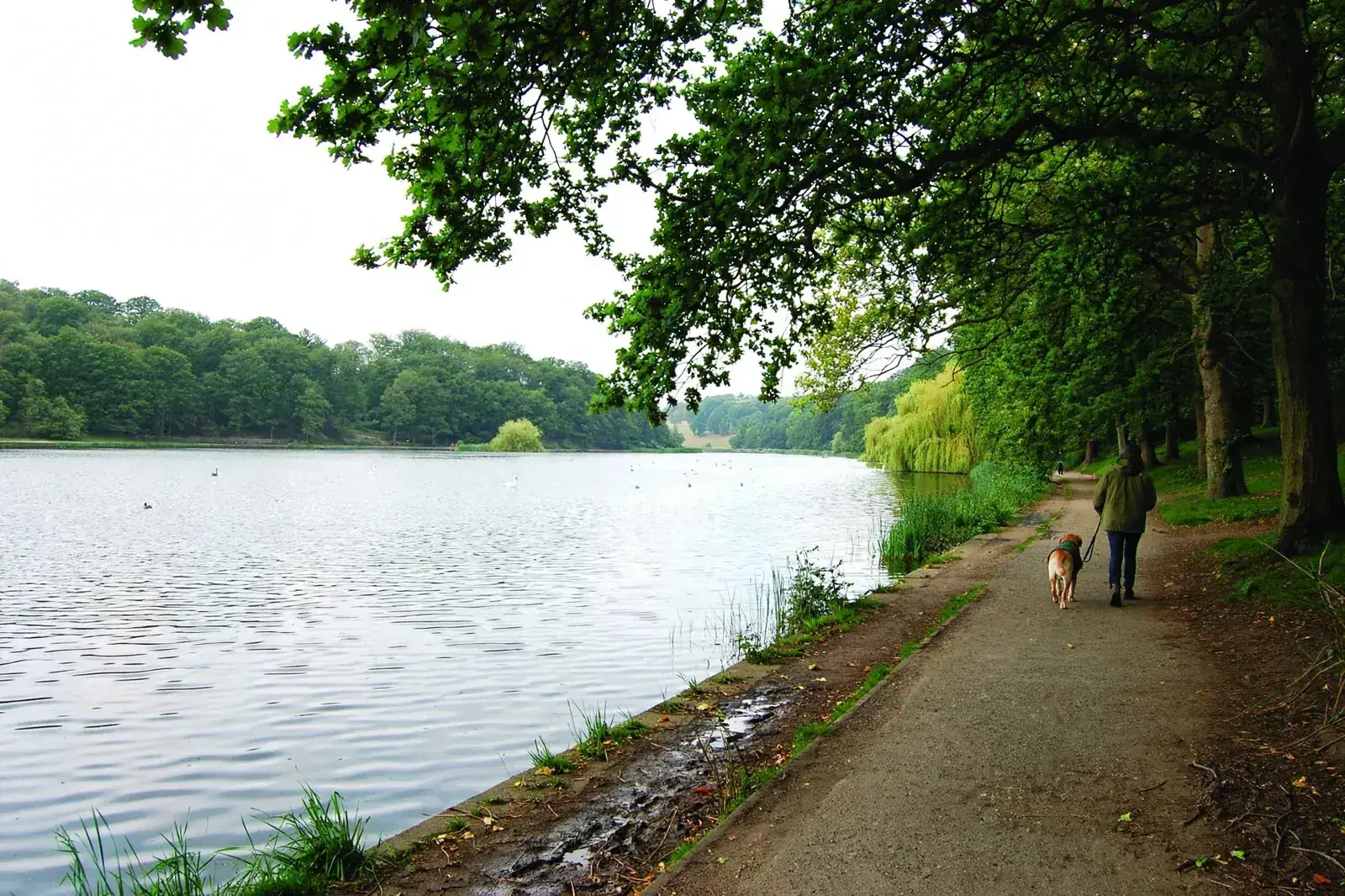
The best Nottingham dog morning does not start in the city centre at all. It starts in the deer park, early, when Wollaton Park is still quiet, the grass is wet, mist sits low over the lake and the deer are grazing at a distance across the open ground. That first hour sets the tone for the whole stay: unhurried, outdoors, and honest about the fact that this is a shared landscape. Wollaton, a few miles west of the centre, is a large historic park surrounding Wollaton Hall, with parkland, woodland edges, a lake and long views that make a dog walk feel like a countryside expedition without leaving the city. For many visitors it will be the walk they remember, and it deserves the best part of a day rather than a hurried circuit before lunch.
The deer are the reason for both the magic and the discipline. Red and fallow deer roam the park, and they are wild animals, however calm they may look in photographs. Keep your dog on a lead or under very close control, stay on paths where requested, give any deer a wide berth and never allow a dog to approach, bark at or chase them. Distance matters most during the autumn rut and the late spring and early summer calving season, when animals are more protective and less predictable. If deer move towards you, change direction calmly rather than trying to pass close for a better view. Follow signage on the day and check the park's official information before you visit, because events, conservation work and seasonal arrangements can change which areas are open.
Wollaton Hall itself, the museum and any indoor or enclosed garden areas should be treated separately from the parkland. Do not assume a pet dog that is welcome on the park paths is also welcome inside the hall, cafe interiors or formal areas; check the venue's latest rules before visiting and plan a split visit if the interior matters. One person can look inside while the other continues the lake and woodland circuit, which is rarely a hardship. Parking, event days and popular weekends change the experience considerably: festivals and large events can fence areas, fill car parks and alter access, so check the listing for your dates. Arrive early, carry water, allow time for a full loop rather than a token turn, and use Wollaton as the anchor walk on at least one morning of the stay. A dog that has had Wollaton at first light will settle through a much busier city afternoon.
Nottingham Castle: an honest access guide
Nottingham Castle occupies the hill that explains the city: a prominent sandstone outcrop west of the central shopping streets, with views, grounds and a long history running from a medieval fortress through to the ducal palace and museum that followed it. It is natural to put it first on a sightseeing list, and equally natural to assume a dog can simply come along. That assumption is where an honest guide has to be careful. Plan on pet dogs not going inside the castle museum and galleries, where assistance dogs are the usual exception. Arrangements for grounds, terraces, caves tours, play areas and outdoor spaces are set by the venue, vary by area and can change with exhibitions, events and seasons, so check the venue's latest rules before visiting rather than relying on a listing, a review or a previous trip.
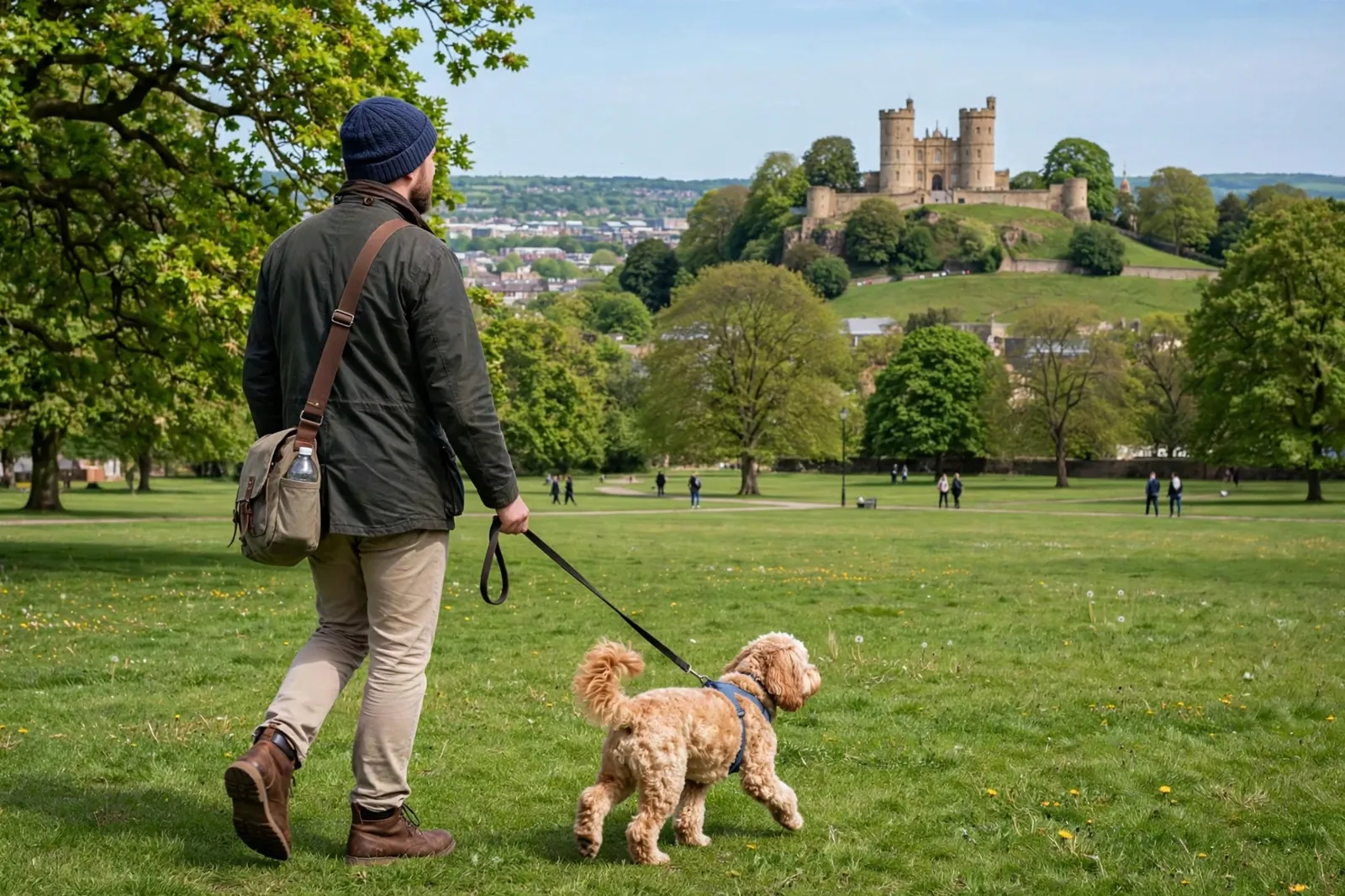
That position does not make the castle a wasted stop for a dog party; it makes it a split visit to design well. If there are two adults, one tours the interior while the other takes the dog on a proper surrounding walk rather than waiting at a gate. The streets around the castle quarter, the walk towards the city centre and the green spaces within reach turn the other half of the visit into an outing in its own right, and you can swap if you both want time inside, provided the dog is never left unattended in a car or tied up outside. Solo travellers face a clearer choice: enjoy the hill, the views and the surrounding area with the dog, save the interior for a future trip without the dog, or arrange trusted local dog care for that specific window. What not to do is arrive at a busy entrance hoping an exception will be made for a quiet, well-behaved dog; that is how disappointment and difficult conversations at ticket desks happen.
The same verify-first pattern applies across Nottingham's other headline interiors, including its caves attractions, museums, galleries and theatres. Some have outdoor elements, some are entirely indoors, and some run special events with different rules, so there is no single city rule to memorise. Check each official site shortly before you go, note the answer for pet dogs separately from the answer for assistance dogs, and build the day around what you actually confirmed. Our guide to assistance dog access rights in the UK explains why that distinction appears on venue signage and why it does not change the position for pet dogs. Planned this way, the castle remains a highlight: a hill to climb together, a view to share, and an interior that one of you can enjoy properly while the dog enjoys an equally deliberate walk.
Colwick Country Park and the east side
If Wollaton is the west-side anchor, Colwick Country Park is its eastern counterpart: a large country park built around lakes beside the River Trent, a few miles east of the centre, with waterside paths, meadows, woodland and a much more open, local feel than the central parks. It suits the second big walk of a stay, or the main walk for anyone based on the east side, and it combines well with a Trent-side route rather than duplicating Wollaton. Dogs get long, varied exercise here — surfaced paths for wet days, grass and meadow edges for sniffing, and enough distance to make a half day feel unhurried. It is also a useful reminder that Nottingham's best dog days are not confined to its famous names.
Colwick's water needs the same caution as its welcome. The lakes are used in connection with watersports, fishing and wildlife, and different banks and areas can have different expectations. Do not assume dogs may swim, enter the water or be off lead everywhere. Keep dogs out of the water unless a specific spot clearly permits it, use a lead or close control near anglers, watersports activity, car parks, play areas and wildlife, and follow local signage on the day. Check the park operator's current guidance before you visit for opening, parking, any charges and any seasonal restrictions. After heavy rain, low-lying and unsurfaced sections can be muddy or flooded, while the main paths usually remain the practical choice; in summer, carry water and plan shade, because open lakeside walking can be more exposed than it looks on a map.
Colwick also changes where it makes sense to stay. A base in the eastern suburbs or along the Trent puts this park and the riverside on the morning routine instead of making them a special drive, while a central base can still reach it as a planned half-day by bus, taxi or car. Pair Colwick with a picnic rather than relying on facilities being open or dog-welcoming inside, toilet the dog before any cafe stop on the way home, and rinse paws after muddy or gritted paths. For dogs who prefer space and birdsong to city stimulation, Colwick may quietly become the favourite walk of the trip — less celebrated than Wollaton, often calmer, and generous with the one thing holiday dogs value most: time to move and sniff at their own pace.
River Trent and embankment walks
The River Trent gives Nottingham its longest, simplest dog-walking idea: follow the water. South of the centre, the Victoria Embankment and the riverside paths around Trent Bridge, the sports grounds and Wilford offer broad, largely level walking with open views, mature trees and room for a proper lead walk that can be extended or shortened to suit the day. In the other direction, paths connect the city with greener stretches towards Colwick and beyond, while on the city side the canal and riverside areas near the station and Castle Marina provide shorter, paved texture for an evening circuit. None of this needs a ticket or a booking, which is precisely its value on a city break: when a museum visit runs long or the weather improves unexpectedly, the river is always there.
Riverside craft is straightforward but non-negotiable. Keep dogs on a lead near roads, bridges, sports crowds, anglers and moored boats, and under close control on shared paths where cyclists pass quickly and quietly. Do not let dogs enter the water from steep or slippery banks, near weirs or in fast-flowing sections, and be especially careful after heavy rain, when the Trent can rise, flood low paths and leave debris and mud behind. Check local conditions and any flood or path-closure information before setting out on the wettest days, and turn back rather than wading a flooded section with a dog. In winter, gritted and icy surfaces call for a paw rinse afterwards; in summer, the open embankment can be hot at midday, so use early and late walks and carry water even for a route that follows a river — a dog cannot safely drink its way along the Trent.
The river also explains Nottingham's sporting calendar. Cricket at Trent Bridge and football on both sides of the river bring crowds, road closures, busy trams and a different atmosphere to the embankment on match days. That need not spoil a walk — a dog exercised early experiences match day as distant colour — but a crowd-sensitive dog should not have its main walk timed for the hour when thousands of supporters are crossing the bridges. Check fixtures before you fix the day's plan. Used well, the Trent is the connective tissue of the whole stay: a morning in Wollaton, an afternoon along the embankment, and a city that feels coherent at dog pace rather than a list of separate attractions reached by transport.
City parks and daily routines
Big anchors make a trip memorable, but daily routines make it work, and Nottingham has a useful layer of smaller parks for the first and last walks of the day. The Arboretum, a short walk north of the centre, is the city's historic public park: tree-lined paths, lawns, a lake and a calm, local atmosphere that suits a morning circuit for central stays. It is a lead-walk park in spirit — busy paths, wildlife and other visitors mean close control matters — and it rewards a slower pace rather than being treated as an off-lead exercise field. To the north, the Forest Recreation Ground offers larger open grass and is well known as the site of the annual Goose Fair; outside fair time it provides space and long views, while during the fair itself the area is transformed and a dog routine should move elsewhere. Check event dates before relying on any park that hosts major city events.
Neighbourhood choices depend on the base. Woodthorpe Grange Park to the north-east, Vernon Park, local recreation grounds and the green corridors along the River Leen each serve their districts in the unglamorous, essential way: a familiar circuit, somewhere for a toilet walk after dark on lit paths, and a place a dog can learn in a day and relax into by the second morning. That familiarity matters more on a short break than novelty. A dog that knows its morning park walks calmly, toilets reliably and returns ready for breakfast, which sets up the people for the day's sightseeing. Ask a stay host or a local dog walker which park regulars actually use at your hours, rather than choosing solely from a map; the nearest green shape is not always the most practical after dark or after rain.
Whichever park carries the routine, the shared rules repeat: leads near play areas, sports, water, wildlife and roads, close control or a long line only where it is appropriate and permitted, waste picked up even on out-of-the-way grass, and signage obeyed on the day. Nottingham's parks are well used by families, runners, sports teams and other dogs, and a visiting dog that follows the local pattern is quickly unremarkable in the best sense. Layer the walks as this guide suggests — Wollaton or Colwick for the expedition, the Trent for the journey, a neighbourhood park for the routine — and no day has to repeat the same circuit three times.
Pubs, cafes and eating together
Nottingham has a long pub tradition and a lively independent cafe scene, and a dog owner will find welcoming options in most districts — but the honest version of that sentence ends with a check, not a promise. Policies belong to each venue, change with management, refurbishment and how busy a service is, and can differ between a pub's bar, lounge, garden and restaurant areas. Treat any listing, including this guide's general guidance, as a lead: check a venue's own website or phone ahead before you build an evening around it, ask where in the building dogs are welcome, and accept a garden-only or bar-only answer as useful information rather than a lesser welcome. Pubs with gardens and traditional bar areas are often the most flexible format, cafes near the big parks are used to walkers, and the areas around Wollaton, the Arboretum, West Bridgford and the city centre each have their own clusters to explore.
The etiquette that keeps those welcomes open is universal. Arrive with a dog that has been walked and toileted, keep the lead short and out of walkways, keep dogs off seats and out of food preparation areas, and settle the dog on a mat or blanket if you carry one rather than letting it sprawl across a thoroughfare. Carry a portable water bowl instead of assuming one will appear, bring a chew or settle aid for waits, and choose off-peak times for popular spots: a post-Wollaton weekend brunch and a Trent Bridge match-day pub run at very different temperatures, and a nervous dog will have a better time an hour either side of the peak. Our UK dog-friendly cafes guide covers the full routine, from ordering at a counter with a dog to knowing when a venue is simply too crowded for that particular dog on that particular day.
Plan a food fallback that does not depend on an interior at all. Nottingham picnics well: bakery or market supplies eaten in the Arboretum, a takeaway coffee on a Wollaton bench away from the deer, fish and chips on the embankment with a view of the river, or a pub garden in West Bridgford after a Trent walk. Keep the usual vigilance about dropped food, chicken bones and litter in busy central areas at night, and about hot pavements in summer when a garden table in full sun is no kindness to a dog. A dog that arrives exercised, emptied and ready to rest is welcome in more places, and welcomed back in all of them — which, over a weekend of repeat visits to the same local, is the outcome actually worth aiming for.
Where to stay with a dog in Nottingham
Choose a Nottingham base by its morning walk, not only by its distance from the castle. A Wollaton or western suburbs base puts the deer park on the daily routine and suits drivers and self-catering stays, with a bus or tram ride into the centre for sightseeing. A city-centre base puts the station, the Arboretum, the castle quarter and the tram network on foot, and works best for a short, car-free break provided the first and last walks of the day are planned rather than improvised on busy pavements. A West Bridgford or Trent-side base, just across the river to the south, offers a more local, cafe-filled neighbourhood feel with the embankment as its front garden and the centre a walk or short ride away — often the most balanced choice for a dog that needs calm evenings. A Colwick or eastern base suits visitors prioritising the country park and river, and those arriving from that side of the region.
Whichever district you choose, ask the full booking questions before committing, and get the answers in writing where possible: which rooms or units accept dogs, the fee per dog per night or per stay, any size, breed or number limits, where the dog may go in the building, whether it may be left alone and for how long, and the practical access details — stairs, lifts, floor, distance to the nearest grass and whether any garden or yard is genuinely enclosed. City hotels in converted buildings can involve long corridors and interesting level changes; self-catering can offer hard floors and your own door routine but may have a shared courtyard rather than a private garden. Our dog-friendly hotels in the UK guide sets out the complete checklist to work through for any of these options.
Prices and availability move with Nottingham's calendar: university arrivals and graduations, football and cricket fixtures, arena events and city festivals all fill the dog-welcoming stock, so check what is on before fixing dates and book well-located rooms early for those weekends. Pack the settling kit that makes any base work — the dog's own bed or blanket, a first-evening chew, bags in every coat pocket, a towel stationed by the door and a plan for wet paws. Between Wollaton grass, Colwick mud and Trent-side paths, that towel will earn its place from autumn through to spring, and a dog that sleeps in a familiar bed in a new city wakes up ready to learn its morning park.
Getting around with a dog
Nottingham is one of the easier English cities to use without a car, which helps a dog party considerably. The tram network links the centre with districts and park-and-ride sites in several directions, buses cover the rest, and Nottingham station places rail arrivals close to the centre, the canal and the walk south towards the river. Dogs are commonly carried on buses and trams under operator conditions — usually on a lead, off seats and under close control, with bus carriage often at the driver's discretion — but policies can change, so check the tram and bus operators' latest guidance before you travel rather than assuming a national rule applies unchanged. Our guide to taking a dog on UK trains covers the rail pattern for the journey to and from Nottingham: lead on, off seats, consideration for other passengers and operator conditions applying.
Use transport to make the walks better, not just shorter. The classic Nottingham version is to travel out to Wollaton or Colwick when legs are fresh, walk the big park properly, and ride back with a tired dog rather than retracing a road route; or to walk the Trent in one direction and return by bus or tram, turning an out-and-back into a journey. Travel off-peak where possible, especially with a large or nervous dog, allow extra time at the busy station, keep dogs out of aisles, doorways and tram doors, and hold a plan B for a full service on a match or event day. Taxis and private hire vary by operator and driver, so declare the dog at booking, confirm any charge, and carry a clean blanket for the seat or footwell.
Drivers should park once and walk. Central parking is priced for demand, match and event days change availability around the sports grounds and arena, and the streets around the castle and the university reward a parked car and good shoes more than repeated short drives. Wollaton and Colwick car parks fill on fine weekends, so arrive early or use public transport for the anchor walks on peak days. However you move, keep the dog's exercise on foot rather than in transit: transport should carry a rested or a happily tired dog between proper walks, never replace them, and a day built that way rarely feels rushed for either end of the lead.
A one-day plan and a weekend plan
For a single day, give Nottingham the order this guide opened with. Start early at Wollaton Park while it is quiet, walk a full lake and parkland circuit at deer-respecting distance, and finish with a takeaway coffee away from the animals. Late morning, head into the castle quarter: walk the hill and the surrounding streets together, then, if the interior matters and you have confirmed the latest rules, split the castle visit so one person tours while the other continues exploring with the dog — or, if you are solo, enjoy the exterior and the quarter and leave the interior unforced. Lunch in a venue you have checked in advance, or as a picnic, then spend the afternoon on the River Trent: an embankment walk from Trent Bridge towards Wilford or back towards the city, paced to the dog rather than to a distance target. Finish with an early evening circuit of the Arboretum if you are based centrally, or of your local park if you are not, and a pub garden supper where the dog can settle under the table. That is a complete Nottingham day with no venue promise stretched and no walk repeated.
A weekend allows the layers to separate properly. On Saturday, keep the one-day shape but slow it down: Wollaton in the morning, a split castle and city-centre afternoon, and an evening in your base neighbourhood rather than a second trip across the city. On Sunday, move east: Colwick Country Park for the big morning walk, a Trent-side extension if legs and weather allow, a checked pub lunch on the way back, and a gentle neighbourhood-park afternoon before travel. Leave one half day deliberately unplanned for the place your dog liked best — many parties return to Wollaton at a different hour, when the light and the deer are in different places — and keep departure routines calm, with a proper walk before a train or a long drive rather than a rushed toilet stop at the station or services.
In every season, add the standard checks that make a city dog break finish well. Save the number of a local vet and the out-of-hours arrangement near your base before you need it. Check for ticks after Wollaton and Colwick woodland and long-grass walks in season, rinse paws after gritted winter paths and muddy lakeside sections, and watch for blue-green algae warnings or water-access notices at any lake in warm weather, keeping dogs out of affected water. Check park event listings, fixtures and venue rules once more on the morning itself, because those are the facts most likely to have changed since booking. Nottingham asks a dog owner for nothing exotic — distance from deer, honesty about interiors, care beside a big river — and in return it offers a castle hill, two very different large parks and a riverside that ties them together. Plan around the dog in front of you, and it is a city that is easy to get right and pleasant to return to.
Practical questions
Before you go
Can dogs go inside Nottingham Castle?
Plan on pet dogs not going inside the castle museum and galleries, where assistance dogs are the usual exception. Arrangements for the grounds, terraces and outdoor areas can change with events and seasons, so check the venue's latest rules before visiting and build a split visit if the interior matters to you: one person tours while the other walks the dog in the surrounding streets and parks.
Are dogs allowed in Wollaton Park and near the deer?
Wollaton Park is a major dog-walking park, but its red and fallow deer are free-roaming wildlife, not an attraction to approach. Keep dogs on a lead or under very close control, give deer a wide berth, never let a dog chase or approach them, and take particular care in the rutting and calving seasons. Follow signage on the day and check the park's official information before you visit.
Can dogs swim at Colwick Country Park?
Do not assume dogs may swim at Colwick. The park has lakes used for watersports and fishing and areas managed for wildlife, so access to the water, lead rules and any seasonal restrictions follow local signage and the park operator's current guidance. Check before you visit, keep dogs out of the water unless it is clearly permitted in that spot, and use the park's paths and meadows as the main exercise.
Are dogs allowed on trams and buses in Nottingham?
Dogs are commonly carried on Nottingham buses and trams under operator conditions, usually on a lead, off seats and under close control, with bus travel often at the driver's discretion. Policies can change, so check the tram and bus operators' latest guidance before you travel, travel off-peak where possible, and keep dogs out of aisles and doorways.
When is the best time to visit Nottingham with a dog?
Spring and autumn usually give the best balance for Nottingham: long enough days for Wollaton and Colwick, milder weather for Trent-side walks, and fewer of the summer event crowds that can close park areas. University term dates, football fixtures and city festivals fill stays and transport at any time of year, so check what is on before booking and check park event listings for your exact dates.