This guide is independent and contains no paid placement. Access, parking and dog rules change, so check the latest official guidance before you travel.
Shropshire rewards a checklist, not a rush. Pick a walk with honest parking, water for the dog, a genuinely sheep-free stretch if you want off-lead time, and a town or pub at the end — then match it to the Long Mynd, Stiperstones, Ironbridge Gorge, Wenlock Edge or the Severn at Shrewsbury. Keep the lead short around livestock everywhere.
First, the checklist: what a good Shropshire dog walk actually needs
Shropshire is a quiet county, and that is precisely its appeal — and its trap. There is no dense network of visitor centres to rescue a badly planned day, no cafe on every corner, and often no phone signal on the plateau when you realise the car park is full or the path crosses a field of sheep. So start differently from most guides. Before naming any hill, run through a short checklist and score every route against it. A walk that fails two or more items is not a bad walk; it is simply the wrong walk for today, for this dog, in this weather.
- Parking you can actually use. Is there a named car park, does it fill early, does it take card or app payment, and what is your backup if it is full? A beautiful route with nowhere legal to leave the car is not a plan.
- Water, twice over. Is there a stream, trough or river your dog can drink from safely on route, and have you still packed a bottle and bowl? Hill water disappears in dry spells, and river water is not always reachable or suitable.
- A sheep-free stretch, honestly identified. Not “probably no sheep”, but a named enclosed woodland, towpath or valley section where you can relax the lead discipline a little if the rules allow. If a route has no such stretch, plan it as an on-lead walk from the start.
- An exit and a shortening option. Can you cut the route in half at a lane, bridge or bus stop if the weather turns or an older dog tires? Ridge routes in particular need a descent you have identified in advance.
- A pub, cafe or town at the end. Not as a reward for you alone — a warm, dog-welcoming stop means water, shade, a towel-down and a toilet break, and it turns a walk into a day that works for everyone.
- Ground your dog can handle. Heather moor, limestone edge, gorge steps and riverside mud suit very different paws. Puppies, seniors and small dogs need an honest match, not optimism.
Apply that checklist and the county sorts itself. Carding Mill Valley scores on parking, water and a cafe, but you must be honest about sheep on the tops. Shrewsbury scores on water, flat ground and food, but not on solitude. Ironbridge scores on interest, paths and pubs, but not on off-lead freedom. The Stiperstones score on drama and views, but demand the most care with weather, rock and livestock. None of that is a flaw. The checklist simply stops you expecting one place to do everything, which is the single most common reason dog walks disappoint in a rural county like this one.
One more item belongs on every Shropshire list: time. Distances here are deceptive. Lanes are narrow and slow, car parks sit a drive apart, and a “nearby” second walk can be forty minutes away. Plan one main walk well rather than three rushed ones, build in an hour you do not need, and let the quietness be the point. If you are used to busier hill country, compare the approach with our Snowdonia dog guide — Shropshire asks for less queueing and more self-reliance.
Long Mynd and Carding Mill Valley: the plateau to learn on
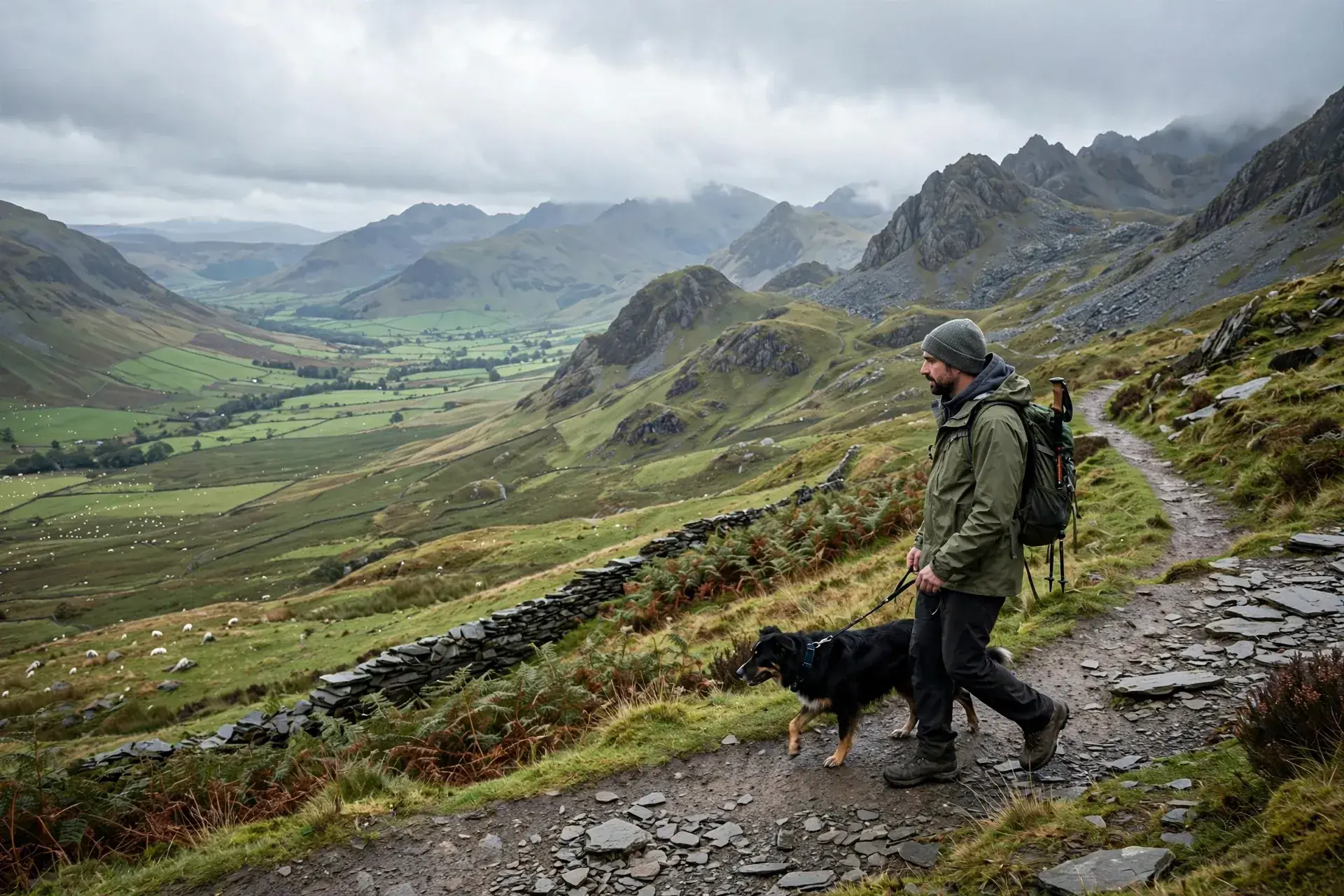
The Long Mynd is the long, whale-backed plateau west of Church Stretton, and Carding Mill Valley is its best-known eastern doorway. Together they make the most practical introduction to Shropshire hill walking with a dog: signed parking, a valley floor that works for gentler days, streams for hot paws, and a high top for dogs and owners who want a proper climb. The valley is managed for visitors in a way most of Shropshire is not, which is why it belongs first in this guide — learn the county’s habits here, where help, water and a cafe are close, before heading to quieter hills.
Start on the valley floor if your dog is young, old, recovering or simply new to hill country. The lower valley gives you grass, water and room to practise lead manners around other dogs without committing to the plateau. Follow the stream, let the dog sniff rather than march, and turn back while energy remains. On a hot day this shaded, watered valley walk is a complete outing in its own right, not a failed summit attempt. Watch for algae in slow water in summer, rinse paws after paddling, and keep dogs out of any water that looks green or scummy — check the latest official guidance on water safety where signs are posted.
For a fuller day, climb from the valley onto the plateau and follow the broad top tracks. The walking up there is surprisingly gentle once the height is gained: wide paths, huge skies and views across to the Stiperstones and Wales. That openness is also the exposure. There is little shelter in wind or driving rain, the plateau can be in cloud while the valley is clear, and sheep graze freely across much of it. Treat the top as on-lead country by default. Use a long line only on a clearly stock-free stretch, in good visibility, with a dog whose recall you would trust with a hare bursting from the heather — which, honestly assessed, rules out many dogs, and there is no shame in that.
Practicalities matter here more than anywhere else in the county. The main car park is popular and can fill on sunny weekends and school holidays, so arrive early or choose a weekday. Expect to pay, and check payment methods and any membership arrangements in advance rather than at a queue. Take water even though the valley has a stream, because the plateau does not. Pack a layer for the dog as well as yourself if you will stop for long on top, especially for lean, short-coated breeds. And note the descent before you climb: several paths drop steeply into side valleys, and tired legs — two or four — make mistakes on loose descents late in the day.
Done well, a Long Mynd day has a satisfying shape: valley warm-up, plateau miles, a careful descent, then Church Stretton for food. Done badly, it is a full car park, a thirsty dog and sheep appearing over every rise. The checklist at the top of this guide was written with this hill in mind. Use it, and this becomes the walk most people return to first.
Stiperstones: quartzite drama, handled carefully
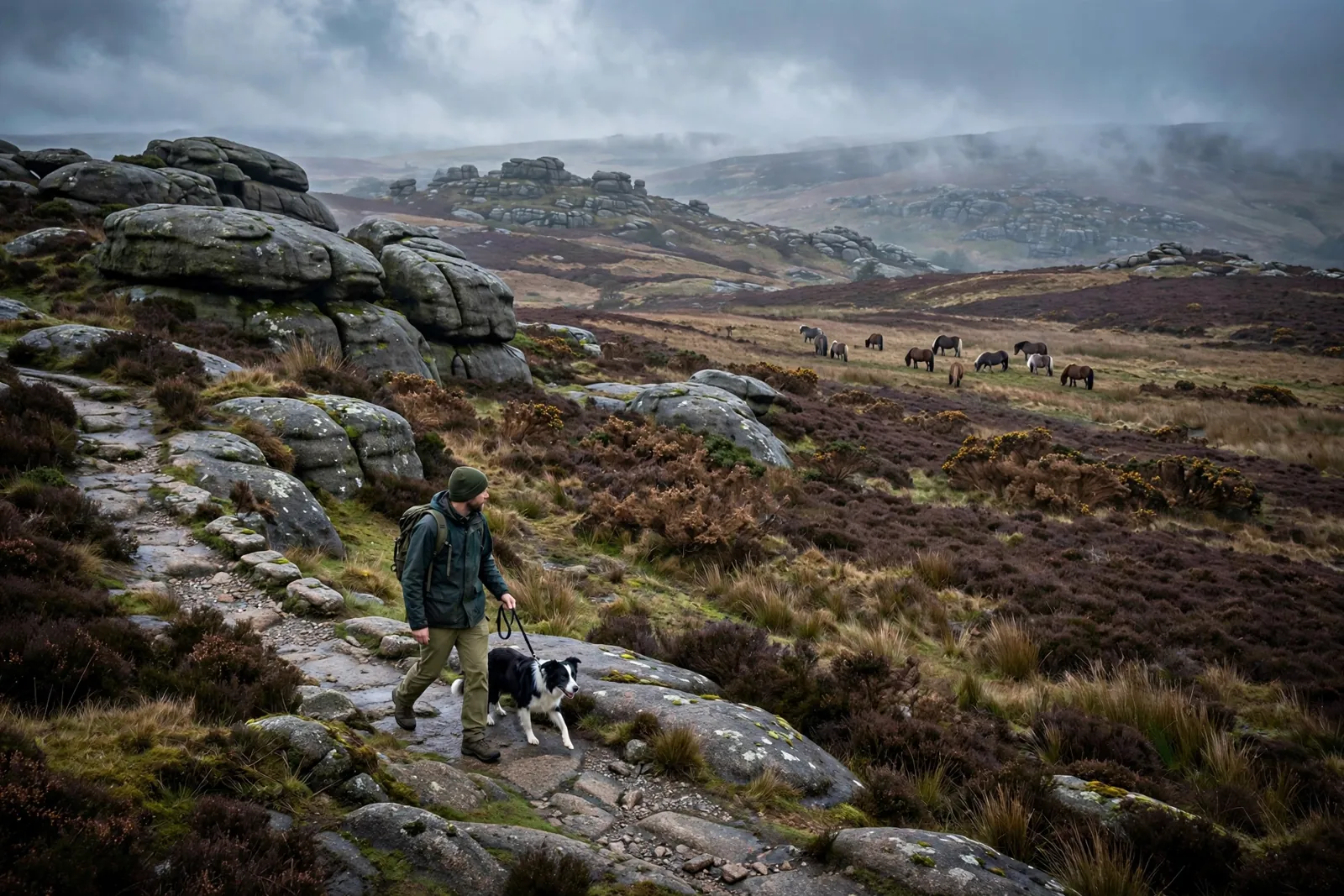
If the Long Mynd is a broad back, the Stiperstones are a spine. A jagged quartzite ridge runs across the skyline west of the Mynd, its tors — including the well-known Devil’s Chair — giving Shropshire its most recognisable silhouette. For dogs, this is the county’s most exciting and least forgiving walk. The rock is shattered and ankle-turning in places, the ridge is exposed to weather from the Welsh hills, and the surrounding heather moor is sensitive ground for birds and grazing animals. Choose it for a fit, steady dog on a clear, calm day, not as a default Sunday stroll.
The classic approach follows the ridge path between signed parking areas, linking the tors in a linear walk, with shorter out-and-back options from the main access points. Linear routes need logistics: two cars, a lift, or a willingness to retrace your steps, which on rock is slower than the map suggests. Build the return into your time estimate from the start. Shorter visits work well too — park, climb to the nearest tor, enjoy the view and descend the same way — and for many dogs that hour on the ridge is plenty, especially in heat, when pale rock reflects warmth and there is no water on top.
Paw care is the detail people miss. Quartzite fragments can be sharp, and dogs that bound between boulders can cut pads or strain shoulders and elbows jumping down. Keep the pace deliberate, lift small dogs over the worst rock rather than letting them leap, and check pads at every stop. Boots or paw balm help some dogs, but only if the dog has worn them before; a first outing in new boots on a rocky ridge is a recipe for a miserable walk. After the walk, check between toes for grit and small stones, which cause more limping the next day than the walk itself.
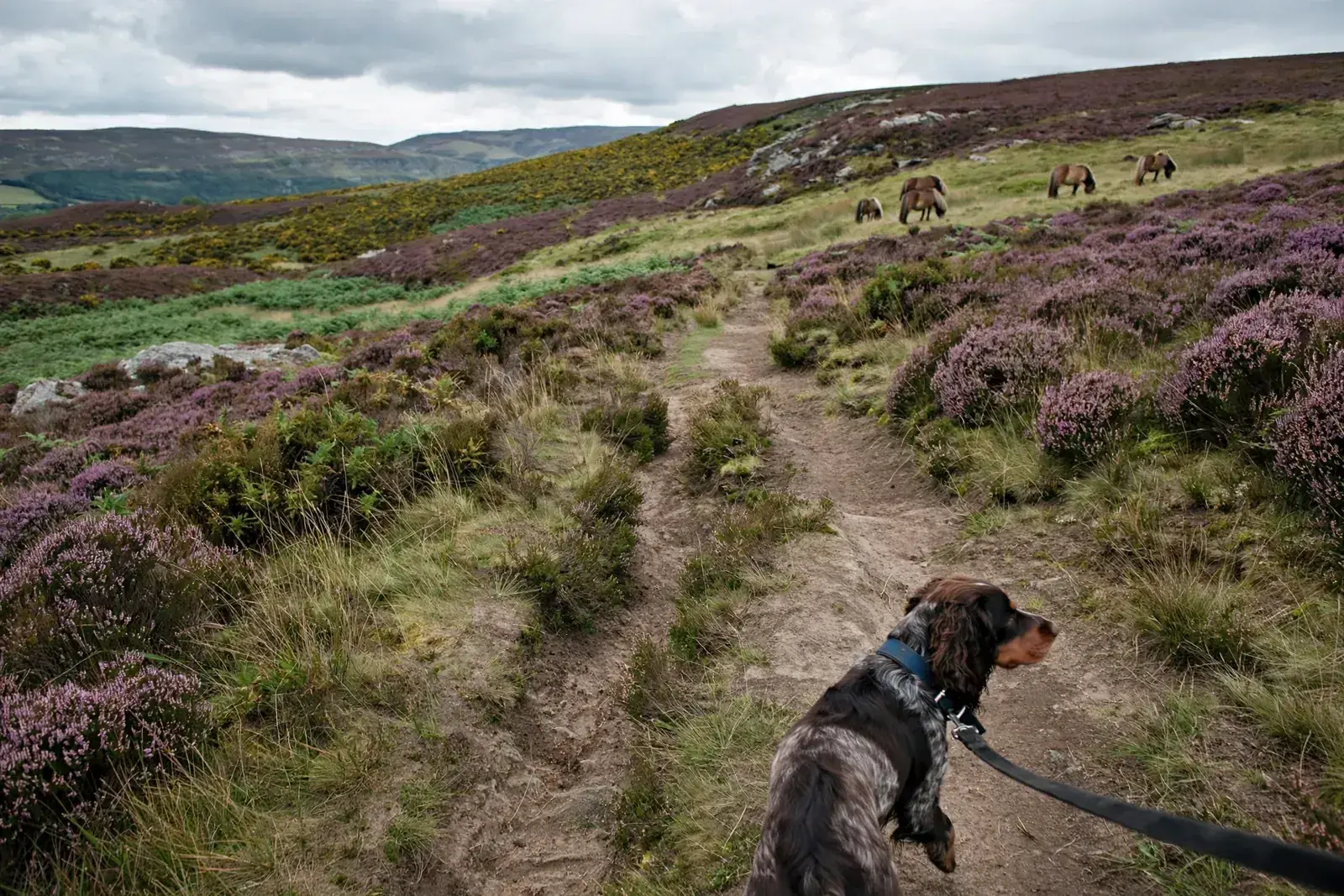
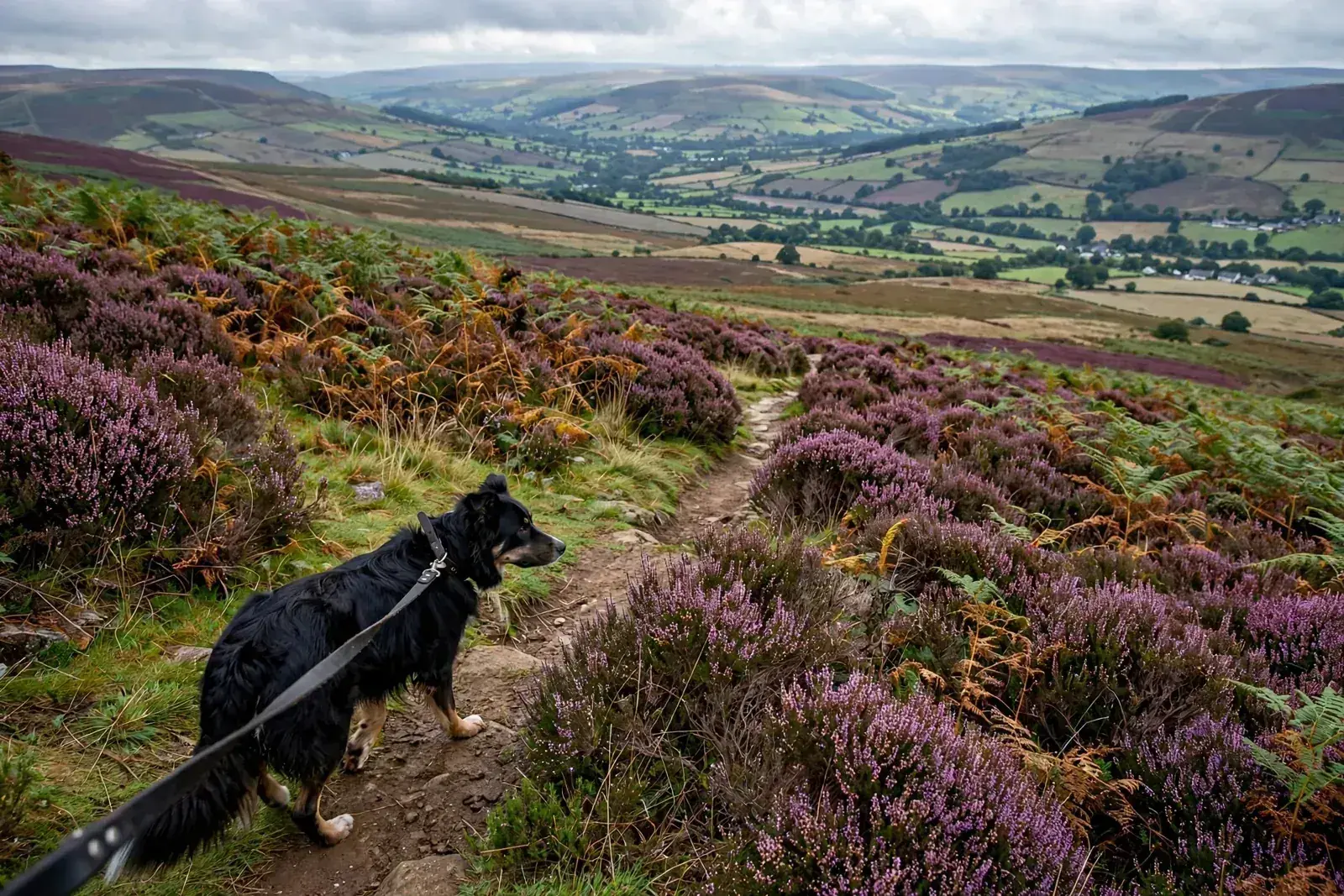
The heather is not just scenery. Moorland here supports ground-nesting birds in season and is grazed and managed, so keep to clear paths, keep dogs close or on a lead as signs require, and never let a dog range through deep heather in nesting season. In late summer the flowering heather is spectacular and draws photographers; go early for quieter paths and softer light, and give other walkers room on the narrow ridge sections. In mist, the tors distort distance and the ridge loses its obvious line — if you cannot see the next marker or tor, turning back is the skilled decision, not the timid one.
Pair the Stiperstones with a lower-level second half of the day rather than another summit. A pub stop in one of the villages below the ridge, or a gentle lane and woodland wander, balances the effort. Dogs that have concentrated on rock for two hours need sniffing time on soft ground to decompress. That contrast — hard, bright ridge, then slow valley — is Shropshire walking at its best.
Ironbridge Gorge: industry, river paths and dogs on leads
Ironbridge Gorge is the walk for a day when you want interest under your feet rather than height under them. The Severn cuts a wooded gorge here, spanned by the famous iron bridge, lined with museums, workshops, cafes and riverside paths. For a dog, it offers variety in a small area: towpath-style walking by the river, woodland climbs on the gorge sides for those who want them, and a town full of water bowls and doorways to investigate. It is a lead-on day, and it is better for accepting that from the start.
Plan the day outdoors-first. Riverside paths link the settlements along the gorge, so you can walk a stretch, stop for coffee where dogs are welcome, visit an outdoor museum area that admits dogs, then walk on rather than backtracking. Individual museums and attractions set their own dog policies, and some interiors do not admit pet dogs at all, so check each one before building your day around it — check the latest official guidance on the attraction pages, and never assume yesterday’s policy still holds. A flexible plan with two or three possible stops survives a refusal; a single must-see interior with a dog in tow may not.
The gorge sides give you the exercise the riverside lacks. Woodland paths climb steeply between the river and the rim, with steps, roots and mud after rain. A dog that pulls on steps is a fall risk for both of you, so use a short lead, take descents slowly, and consider a harness with a handle for steadying older dogs. In return you get quiet woods surprisingly close to a busy heritage town, views down to the bridge, and shaded walking on hot days when the riverside is in full sun. Watch for cyclists on shared paths, keep dogs close at blind bends, and step aside with treats rather than letting two dogs negotiate a narrow path nose to nose.
River awareness applies here as it does everywhere on the Severn. The river can rise and move faster than its calm surface suggests, banks can be undercut, and flood debris collects at access points. Let dogs drink and paddle only at obvious, gentle entry points in low conditions, keep them out entirely after heavy rain, and rinse them if they have been in silty water. Blue-green algae can occur in still side waters in warm spells; if water looks green, paint-like or scummy, keep your dog out and find a tap or your own bottle instead.
Food and stays are part of the Ironbridge appeal. The town and neighbouring settlements have pubs and cafes that welcome dogs, though policies for dining rooms versus bars and terraces differ, so ask when booking. As a base, the gorge suits a shorter break built around one heritage day, one hill day on the Mynd or the Wrekin side of the county, and evenings by the river. It is also the most forgiving base in this guide for mixed groups, where one person wants museums, another wants miles, and the dog wants — as ever — a bit of both, with lunch.
Wenlock Edge: a limestone woodland line for quiet miles
Wenlock Edge is a long limestone escarpment running south-west from Much Wenlock, mostly wooded, mostly quiet, and ideal for dogs that do better away from crowds. Where the Long Mynd gives you sky, Wenlock Edge gives you shade, birdsong and a sense of walking inside the landscape rather than on top of it. The path along the edge links car parks, lanes and villages, so you can build anything from a one-hour woodland loop to a long linear day, and the gentle gradients suit older dogs far better than the Stiperstones rock.
Woodland walking has its own disciplines. Tree roots and limestone can be slippery, especially after rain and in autumn leaf-fall, and some sections cross or follow lanes where traffic, though light, can surprise. Keep dogs on a lead near roads, car parks and any livestock in adjoining fields, and be ready for horses on bridleways: step aside, keep the dog close and still, and let riders pass at their pace. Deer move through these woods, and a dog that chases deer needs a lead or long line here regardless of how empty it feels — a quiet wood can produce a deer in a second, and a chase through undergrowth ends in lost dogs, injuries and real distress for wildlife.
The edge is also a good classroom for seasonal awareness. Spring brings bluebells and other protected woodland flowers in places — admire them from the path, keep dogs out of flower drifts, and never pick them. Autumn brings fungi, acorns and conkers, all of which some dogs will attempt to eat; supervise scavengers and teach a solid leave-it before you rely on it among windfalls. Winter brings mud and short days: the woods are lovely in low sun, but plan to be back at the car well before dusk, because unlit lanes and woodland paths are no place to be navigating by phone torch with a tired dog.
Because facilities are spaced out, carry more than you think you need. Water for the dog, a snack for you, a tick remover in season and a small first-aid kit cover most eventualities. Ticks are a fact of woodland and bracken across Britain; check the dog thoroughly after the walk, especially ears, armpits and belly, and remove ticks promptly with a proper tool. Our guide to ticks on dogs in the UK explains safe removal and the signs that need a vet. Prevention, checking and calm removal beat panic every time.
Use Much Wenlock as the natural anchor for this section: a small town with food, supplies and an easy end to the day. An Edge walk plus a town wander is a complete, unhurried outing that suits nervous dogs, new rescues building confidence, and owners who measure a walk by how relaxed everyone is at the end rather than by height gained. Not every good walk needs a summit, and Wenlock Edge is the proof.
River Severn towpaths at Shrewsbury: the flat, forgiving option
Every hill county needs a flat day, and at Shrewsbury the Severn provides it beautifully. The river loops almost completely around the town centre, and the riverside paths and meadows inside that loop give you level, scenic, dog-friendly walking with cafes, water and transport never far away. For older dogs, puppies on shorter outings, owners managing their own injuries, or a rest day between hills, this is the most useful walking in Shropshire — and on a fine evening, with the town’s spires across the water, it is far from a consolation prize.
The loop structure is the advantage. You can walk as much or as little of the riverside circuit as suits the day, leaving the path at bridges and streets whenever you have had enough. That makes it ideal for building a young dog’s fitness or checking how a senior dog is coping before committing to the Mynd. Surfaces are mostly good, but riverside grass stays wet, flood-prone sections can be closed or muddy after high water, and shared paths mean cyclists, runners, rowers carrying boats and plenty of other dogs. Keep leads short at pinch points, give space at slipways and landing stages, and treat every other dog as if it needs room, even if yours is friendly.
River safety deserves a full paragraph here because flat, easy access invites complacency. The Severn at Shrewsbury is a large river. After rain it rises, speeds up and carries debris, and banks that were gentle last week can be eroded this week. Dogs should swim, if at all, only at familiar, shallow entry points in low, clear conditions, and never during or after floods. Many dogs are better kept to paddling at the edge on a long line. Watch for fishing lines and hooks near popular pegs, keep dogs away from swans and other waterbirds especially when they have young, and wash your hands after handling a dog that has been in the river. Check the latest official guidance and any local flood or path-closure notices before you go.
Shrewsbury itself is a strong dog base. As the county town it offers the widest choice of accommodation, food and supplies in this guide, plus a station for car-free arrivals. Dog policies vary by venue, as everywhere, so book food in advance and state the dog clearly, particularly for evening meals. A pattern that works well is a riverside morning loop, a long lunch where the dog can settle under the table, then an afternoon in the meadows on the opposite side of the loop at a slower pace. Market days are lively and fun but crowded; a reactive dog will enjoy the river paths early in the morning and a quiet retreat by midday far more than a full day in town.
If flat river walking suits your dog, it is worth comparing styles of route across Britain: the valley and towpath planning in our Dartmoor dog walks guide shows a different, wilder version of waterside care, while Shrewsbury offers the civilised end of the spectrum. Both need the same respect for moving water. Choose Shrewsbury when you want the walk to support the day — food, rest, errands, a vet or a shop within reach — rather than dominate it.
Offa’s Dyke sections near Clun and Knighton: border country, in slices
Offa’s Dyke Path runs the length of the Welsh border, and its southern Shropshire sections near Clun and Knighton give you some of the most characterful walking in the county: steep green hills, river valleys, hillfort country and villages that feel a long way from everywhere. Do not attempt to “do” the Dyke with a dog in a casual day. Walk it in slices — a few miles out and back, or a one-way stretch with transport arranged — and let the border country set a slower pace.
These are working landscapes first and a national trail second. Fields alternate with open hill, and livestock are a constant rather than an occasional presence, so plan for an on-lead walk throughout unless a specific enclosed section clearly allows otherwise. Gates and stiles are frequent. Check that your dog can manage stiles, or choose sections and diversions that avoid them; lifting a large, muddy, unwilling dog over a stile is an injury waiting to happen, and some older dogs should simply not be asked. A route description that mentions stiles is information, not a challenge.
Clun makes a gentle entry point, with valley walking, castle ruins to look at from outside with the dog, and a village scale that suits a half-day. The hills around it are steeper than they look from below, and weather rolls in from Wales quickly, so carry the same hill kit you would take on the Mynd: map, water, layers, charged phone and a plan for getting down. Knighton, just across the border side of this walking country, is a natural trail town with supplies and Dyke-related information; check the latest official guidance for path conditions, diversions and any livestock or forestry notices before setting out, because long-distance paths are regularly diverted for land management.
Two border-country habits will keep you right. First, keep dogs out of crops and on the clear line of the path across farmland, closing every gate as you found it. Second, be generous with greetings and space: these paths are used by local farmers, riders and long-distance walkers carrying everything they own, and a controlled dog at your side, stepped off the path, is appreciated everywhere. If your dog is not yet reliable around sheep, do the training elsewhere first — our explainer on livestock worrying law sets out why the stakes are so high, for the sheep, for the dog and for you.
Reward the effort properly at the end of a Dyke day. This is picnic and pub country rather than cafe country, so carry lunch, plan the pub for later, and check opening hours, which in small border villages can be limited, especially midweek and in winter. A slice of the Dyke, honestly walked and unhurried, gives many owners their favourite Shropshire memory — it just refuses to be squeezed into the leftover hours of a day.
Livestock and grouse moor cautions: the rules that protect your dog
No section of this guide matters more than this one. Shropshire’s hills, moors and border farmland are grazed, and some moorland is managed for grouse. Sheep worrying is a serious offence and a genuine welfare disaster: even a dog that does not bite can cause sheep to abort, separate lambs, or injure themselves in panic. Farmers are entitled to protect their stock, and every year dogs are shot in the act of worrying. The lead in your hand, used early and without embarrassment, is what stands between your dog and that outcome.
Work to simple, non-negotiable habits. Put the lead on before you can see livestock, not after your dog has noticed them. Keep it short in fields and on grazed moor, and give animals a wide berth, especially ewes with lambs in spring and cattle with calves from spring into autumn. Never walk between a cow and her calf. If cattle follow or approach, stay calm, move steadily to a gate or edge, and if they come too close, let go of the lead — the dog can outrun cattle, and you are safer apart; regroup once the herd has settled. Never let a dog chase birds. On grouse moor, ground-nesting birds and managed shooting activity in season add further reasons to keep to paths and follow every temporary sign, flag and keeper instruction. Check the latest official guidance on access and any seasonal restrictions before you go.
Season shapes the risk. Lambing concentrates vulnerable animals and protective mothers in spring. Bird nesting on moor and heath runs through spring and summer, when dogs ranging off paths do the most damage. The grouse season in late summer and autumn brings shoot days on managed moors, when some areas are best avoided entirely with a nervous or gun-shy dog. Harvest and silage bring machinery to lanes and fields. None of this closes Shropshire to dog walkers; all of it rewards the walker who reads signs, asks locally and adjusts the plan. A changed route is a small price. A preventable incident is not.
Train for this landscape at home. A reliable recall under distraction, a strong leave-it, walking to heel on a lead past interesting things, and settling while you open gates and check maps are the four skills that make Shropshire safe and enjoyable. Practise them in boring places until they hold in exciting ones, and use a long line as a bridge, never as a substitute for control around stock. If you also walk wilder moorland elsewhere, the same discipline underpins our Exmoor dog guide — the county changes, the sheep do not.
Finally, clear up after your dog everywhere, including moorland paths, field edges and towpaths, and take waste home where there is no bin. Livestock can be harmed by diseases spread in dog waste, other walkers step where your dog has been, and the welcome for the next dog owner depends on the behaviour of the last one. Quiet counties notice. Leave every gate, path and village as welcoming as you found it.
Market-town bases: Ludlow and Church Stretton for food and stays
Where you sleep decides how Shropshire walks feel. Two bases cover most trips well, and they suit different dogs. Church Stretton sits directly under the Long Mynd, so walks start at the door, evenings are quiet, and the whole trip can be car-light once you arrive. Ludlow, in the south, is the food town: a famous market, delis, pubs and restaurants, with the Mortimer Forest and southern hills on its doorstep and the Dyke country within reach. Choose Stretton for hill-first trips and Ludlow for food-first trips, or split a longer stay between them — the drive is part of the sightseeing.
Church Stretton’s virtue is simplicity. Stay here and Carding Mill Valley is your morning walk, the plateau your big day, and the Stiperstones a short drive. That matters for dogs that travel badly, for owners who dislike daily packing, and for anyone building fitness gradually across a stay: the same valley, walked a little further each day, is a kind and effective training plan. Book dog-friendly accommodation with hard floors or a utility space if you can — Shropshire mud is persistent — and ask about garden security in writing, as you would anywhere. A genuinely enclosed garden transforms evenings with a young dog.
Ludlow rewards a different rhythm. Walk in the morning — forest paths above the town give shaded, varied miles — then give the afternoon to the market, food shops and a long, booked lunch where the dog is welcome. State the dog when booking any meal, ask where dogs sit, and take a mat or blanket so the dog has a defined place to settle; restaurants remember the dogs that lay down quietly, in the best way. On busy market days, time town wandering for early or late in the day with a crowd-sensitive dog, and use the riverside and castle-area green spaces for decompression walks away from the stalls.
Whichever base you choose, apply the same stay checks. Confirm the dog fee, the number and size of dogs allowed, whether the dog can stay in your room while you eat if that is your plan, and where the nearest late-night toilet walk is. Save the number of a local vet and an out-of-hours provider before you need them, and locate the nearest shop that sells your dog’s food, because rural opening hours will not rescue a forgotten bag on a Sunday evening. Check the latest official guidance and your accommodation’s own current terms before travelling, as policies change between seasons.
End the trip the Shropshire way: one last checklist walk, scored honestly. Parking easy, water carried and found, a sheep-free stretch enjoyed without pushing your luck, a shortening option you did not need, and a pub or town at the end doing its quiet work. If your dog is asleep in the car before you leave the car park, you planned it right. Shropshire does not shout, and neither do its best dog walks — they simply work, mile after mile, in one of England’s most underrated walking counties.
Practical questions
Before you go
Are dogs allowed off lead on the Long Mynd?
Only where livestock, ground-nesting birds and other walkers allow it, and never as a default. Much of the Long Mynd is open access land grazed by sheep and ponies, so keep your dog on a short lead around animals, during lambing and bird-nesting season, and whenever signs ask for it. Use a long line on quiet, stock-free stretches only if recall is reliable, and check the latest official guidance before you go.
Is Ironbridge Gorge dog-friendly for a full day out?
Yes for outdoor exploring, with limits indoors. Dogs on leads are generally welcome on the riverside paths, bridges and many outdoor areas of the gorge, and several cafes and pubs welcome dogs, but individual museums set their own rules and some interiors do not admit pet dogs. Assistance dogs are treated separately. Check each museum and cafe policy on the day, and plan an outdoor-led itinerary so a refusal does not spoil the day.
When do I need extra care for livestock and grouse on Shropshire moors?
All year around sheep and cattle, and especially in spring lambing and the late-summer to autumn grouse season on managed moors. Keep dogs on a short lead near livestock, give cattle with calves a wide detour, never let a dog chase birds or sheep, and follow temporary signs and keeper advice. If cattle approach, let go of the lead and get yourself out calmly. Check the latest official guidance before you go.
Where can I walk an older or reactive dog in Shropshire without hill climbs?
Try the River Severn towpaths and riverside meadows at Shrewsbury, shorter Wenlock Edge woodland sections from signed car parks, and valley-floor paths in Carding Mill Valley rather than the plateau tops. Go early on weekdays, choose wide paths with good sightlines, and keep a lead and distance from other dogs. Avoid narrow stiles, busy market days in Ludlow and peak weekends at popular valley car parks.
Do I need to pay for parking at Carding Mill Valley and other Shropshire Hills car parks?
Expect to pay at the main managed car parks, including Carding Mill Valley, and at many town and countryside car parks across the Shropshire Hills. Charges, card or app payment, and any member exemptions change over time, so check the latest official guidance and the signs on arrival, and carry a payment backup. Arrive early on sunny weekends, when the most popular car parks can fill by mid-morning.