This guide is independent and contains no paid placement. If affiliate links are added later, they will be clearly marked and will not change our editorial checks.
Base yourself once, near Wroxham and Hoveton, and let Norfolk do the work. Saturday is for flat Broads paths and water; Sunday is for the north Norfolk coast, marsh boardwalks and seals. Keep every drive short, build in a long lunch and a proper rest, and treat the seal trip as the one paid highlight rather than filling the weekend with paid attractions.
Why Norfolk suits a slow weekend
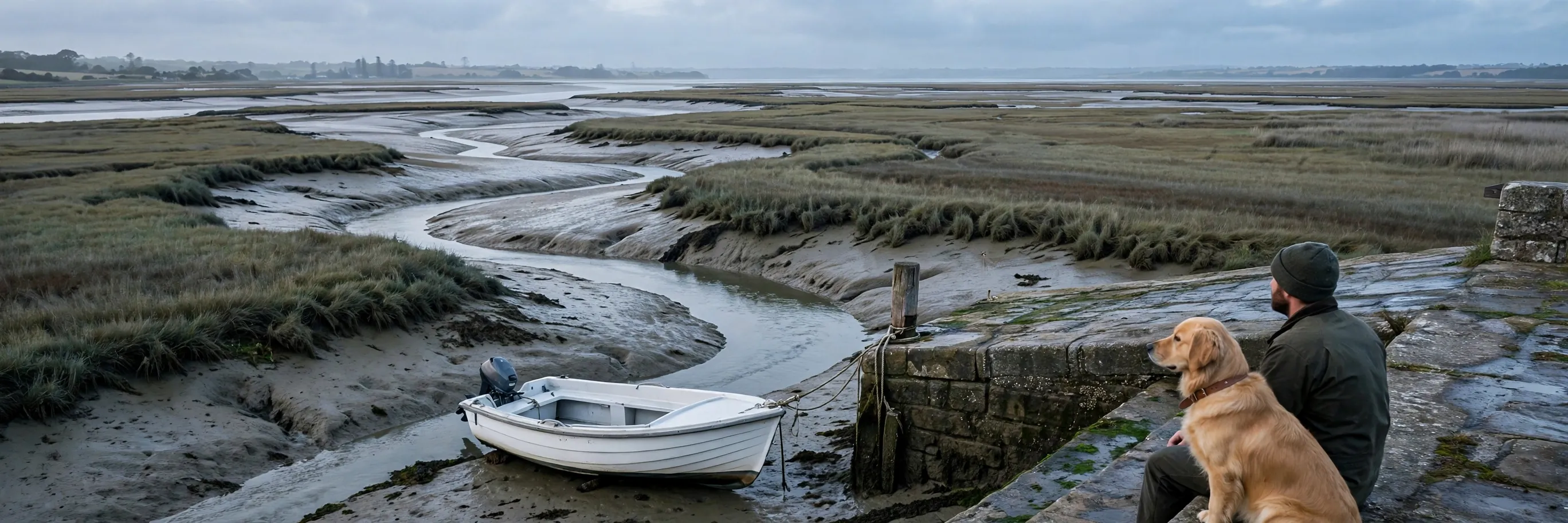
Norfolk is not dramatic in the way that mountain counties are dramatic, and that is exactly the point of this weekend. The land is low, the horizons are wide, and many of the best walks follow rivers, old railway lines, boardwalks and promenades rather than climbing over hills. For an older dog, a dog recovering its fitness, a puppy that still needs short outings, or a first-time weekender who is not yet sure how their dog copes away from home, that flatness removes a whole layer of worry. You can judge a walk by its length and its surface, not by whether there is a steep descent waiting at the far end.
Flat does not mean featureless. The Broads are a network of rivers, broads and reedbeds where water, sky and birds do most of the work. A short riverside walk can feel completely different from a marsh boardwalk, even though both are level, because the light, the wind and the wildlife change. On the north coast, the same flatness gives you huge beaches, salt marsh and long views out to sea, with villages tucked behind shingle banks and dunes. Dogs that love to sniff, paddle and watch the world tend to be very happy here, and owners who prefer a gentle pace do not have to pretend otherwise.
This itinerary is deliberately built for first-time weekenders as well as for older dogs. It assumes you will arrive on Friday evening or Saturday morning, sleep in one place, and go home on Sunday afternoon feeling rested rather than exhausted. It does not try to cover the whole county. It does not ask you to drive from the Broads to the west Norfolk coast and back again in a single day, and it does not stack three paid attractions into one afternoon. One good walk in the morning, one unhurried outing in the afternoon, a pub or a market stop, and a proper rest in between will give most dogs a better weekend than a packed schedule ever will.
That slow pace also suits Norfolk in practical ways. Many of the walks in this guide are short loops or out-and-back paths, so you can turn round whenever the dog tells you to. If the weather turns, you can swap a beach for a village, a boardwalk for a cafe, or a boat trip for a longer pub lunch without unravelling the whole plan. If your dog is tired after Saturday, Sunday can shrink to a single marsh walk and a beach paddle. The itinerary below shows the full version first, then a cut-down version for a single day, so you can scale it to the dog in front of you rather than to an ideal dog on paper.
A note on seasons matters here too. Norfolk in late spring and summer brings long evenings, busy beaches and boat trips in full swing, while autumn and winter bring quieter paths, big skies and, at the right beaches, seal pups. Neither season is simply better. Summer needs more care with heat, shade, water and crowded car parks. Winter needs more care with wind, mud, short daylight and wet ground. The structure of this weekend stays the same in both: flat walks, one base, seals when the season allows, and plenty of time to stop. Check the official guidance before you travel for beach rules, boat times and reserve access, because all three change through the year.
One base, no long drives
Pick one base and stay there for both nights. This guide uses Wroxham and Hoveton, the twin villages at the heart of the Broads, as the suggested base, because they put Saturday's water and Sunday's coast within a short, easy drive. From there, the Broads are on your doorstep, the north coast villages are a straightforward drive north, and you are not packing and unpacking between stays. If you prefer a coastal base instead, Cromer or Sheringham also work, and our wider weekend breaks with dogs in the UK guide explains the same one-base principle for other short breaks. The key point is the same whichever base you choose: one bed, one familiar evening routine, and no hotel change in the middle of a short trip.
Keeping drives short is a kindness to dogs as well as to drivers. A dog that spends two hours in a car each day arrives at the walk already restless or already tired, and a dog that dislikes cars may spend the whole weekend dreading the next leg. This plan keeps each drive well under an hour, and most legs much shorter, so the car becomes a brief hop between walks rather than the main event. Plan fuel, water and a toilet stop before you set off, keep the dog secure and ventilated, and never leave a dog alone in a car in warm weather. On arrival at each walk, give the dog five unhurried minutes to sniff around the car park and settle before you set off properly.
When you choose accommodation, look for the practical details that matter on a flat, muddy weekend rather than the prettiest photograph. A ground-floor room or a cottage with few steps helps an older dog. A secure garden, even a small one, makes last thing at night and first thing in the morning far easier. A hard floor near the door, a place to dry a wet dog, and somewhere to leave muddy boots all matter more than a view. Ask whether dogs are welcome in the bar or on the terrace if you plan to eat out, whether there is a charge per dog, and whether the garden is genuinely enclosed. Confirm the answers in writing, because a vague promise on a listing page is not the same as a booking condition.
Arrive with a Friday-evening routine if you can, even if you only arrive late. A short toilet walk, water, food at the usual time, the dog's own bed in the same spot you will use all weekend, and a quiet evening will set up Saturday far better than a late-night exploration. Dogs read consistency as safety, and a new place is already full of new smells and sounds. Keep the first night boring on purpose. Saturday morning will feel easier for it, and an older dog in particular will thank you for a calm start rather than a long first evening.
Finally, decide your budget shape before you leave home. This weekend is designed to be budget-conscious, which here means that the walks, the beaches, the boardwalks and the village wandering are free or low cost, and the one thing you might pay properly for is a seal boat trip or a pub lunch. Markets and farm shops can fill a picnic for less than a cafe lunch for two, and a flask of tea on a beach costs almost nothing. That shape leaves room for one treat without turning every stop into a ticket queue, and it means a wet-weather change of plan does not waste money already spent.
Saturday morning: the Broads at walking pace
Start Saturday on the Broads, slowly. From Wroxham or Hoveton, a riverside walk along the River Bure gives you water, boats, ducks and reeds without any climbing at all. Walk out for twenty or thirty minutes, then turn back the same way, and you have already had a proper morning. Dogs that like to watch boats will be entertained for ages, dogs that like to sniff will find a new smell every few metres, and owners who need coffee can stop at a riverside cafe without feeling that they have cut a grand expedition short. The point is not distance. It is the combination of flat ground, interesting smells and water to watch.
Keep the lead rules in mind from the start. The Broads are working waterways as well as wildlife habitats, with boats, anglers, cyclists and other walkers sharing narrow paths. A short lead on towpaths and near moorings is courteous and often required, and a long line can work well on open grass where it is safe to use one. Keep dogs out of the water unless you know the spot is safe, the current is gentle and the dog is a confident swimmer, and rinse muddy paws before the dog gets back in the car. Check the official guidance before you travel for the current access and lead rules on the exact stretch you plan to walk, because different broads and reserves have different conditions.
For an older dog, break the morning into two short walks with a rest in between rather than one long march. A riverside loop in the morning, a snooze back at the base, and a second short outing later will usually produce a happier dog than a single three-hour walk that leaves stiff legs by evening. Bring water and a collapsible bowl even on a cool day, because wind on open water can be drying, and bring a drying coat or a towel for the inevitable paddle or muddy bank. If your dog is small, arthritic or reluctant on wet boardwalks, choose a surfaced riverside path over a narrow wooden walkway, and check the surface before you commit to a longer route.
By late morning, stop for a proper break. Sit somewhere the dog can lie down, not just stand beside a table, and let the dog watch the water while you eat. This is also the moment to check the afternoon plan against the weather and the dog's energy. If the morning walk went well and the dog is still bright, the afternoon can be a little longer. If the dog is already flopping, shorten the afternoon to a village wander and a pub garden. A slow weekend is not a failed weekend. It is a weekend that listened to the dog.
Before you leave the Broads for the afternoon, note the practical details that save time later: where you parked, whether parking is timed, where the nearest toilets are, and where a dog can have water. Rural car parks can fill quickly on a fine Saturday, and a second visit to the same area later in the trip will feel much easier if you already know the layout. Take a photograph of any parking signs or route boards if that helps you remember, and keep the dog's lead, water and bags in one bag by the door so the afternoon outing starts without a hunt through luggage.
Saturday afternoon: reedbeds, a boat and a village stop
Saturday afternoon is for a change of texture rather than a change of county. Head to a reedbed reserve or a second broad, where boardwalks cross marsh and open water, and the walk feels wilder even though the ground stays level. Ranworth Broad and the surrounding reedbeds are a good example of this kind of afternoon: flat paths, a boardwalk, birds overhead, and a village church tower in the distance. Keep the walk short, keep the dog on a lead where wildlife is close, and stop often to look. Reedbed walks reward slow looking far more than fast walking, and a dog that is allowed to sniff the edges of a path will often settle better than a dog hurried along it.
If the weather and the dog allow, a short Broads boat trip can be the gentle highlight of Saturday. A slow cruise on flat water suits many older dogs better than another walk, because the dog can lie down, watch the banks go by and feel the breeze without using its legs. Not every boat welcomes dogs, and not every dog enjoys a boat, so check the operator's dog policy, boarding arrangements and shade before you book, and choose a short trip for a first attempt. Bring a non-slip mat, water, and something familiar for the dog to lie on. If your dog is nervous on water, skip the boat entirely. A reedbed walk and a pub garden are a complete afternoon on their own, and no itinerary is worth a distressed dog.
After the walk or the boat, allow time for a village stop. Norfolk villages reward wandering: a green, a church, a farm shop, a bakery, a second-hand bookshop, and dogs dozing outside cafes. This is where the market thread of the weekend begins, even on a Saturday afternoon, because farm shops and village stores often sell the picnic supplies that make Sunday cheaper and easier. Pick up bread, cheese, fruit and something for the dog's usual meals if you need it, and keep the shopping trip short. A dog that has already walked twice does not need a long browse through a busy shop as well.
Budget note for Saturday afternoon: this is the part of the weekend where costs can creep up without adding much pleasure. A boat trip, a reserve car park, a cream tea and a round of drinks can add up quickly if every stop becomes a purchase. Choose one paid item and enjoy it properly, then let the rest of the afternoon be free. A boardwalk, a village green and a long sit by the water cost little, and they are often the parts of the day that both dogs and owners remember most clearly.
Return to base in good time for a rest before the evening. Give the dog a proper toilet walk, a drink, a brush if the coat has picked up reed seeds or mud, and a quiet hour on its own bed. Older dogs in particular benefit from a real rest between outings, not just a car journey that looks like rest but is not. If the dog sleeps, let it sleep. Saturday evening will be better for a dog that has actually recharged, and you will enjoy the pub far more if you are not managing a tired, overstimulated dog under a table.
Saturday evening: pubs, markets and an early night
Saturday evening in Norfolk is best kept simple: a dog-friendly pub, a meal you do not have to cook, and an early night. Look for pubs that genuinely welcome dogs rather than merely tolerate them, which usually means water bowls, space under or beside tables, and staff who are relaxed about a dog settling on a blanket. Arrive a little earlier than the busiest dinner rush if your dog is nervous in crowds, choose a table away from the main walkway to the bar, and bring the dog's own mat or blanket so it has a defined place to lie. A tired dog that knows where to settle is a much easier pub companion than a dog expected to lie on a cold, slippery floor.
Pub etiquette matters on a weekend like this, because it decides whether the next dog is welcomed too. Keep the dog on a lead, keep it off other tables, clean up promptly, and do not feed the dog from your plate if the pub asks you not to. If your dog barks at other dogs, choose a quieter corner, keep visits short, and be ready to take the dog outside for a calm break rather than waiting for the barking to escalate. A short, successful pub visit beats a long, stressful one, and there is no prize for staying for dessert if the dog has had enough.
Markets fit naturally into this slow weekend, though their timing needs a little planning. Many Norfolk towns and villages hold weekly markets, farmers markets or monthly food markets, and a Saturday morning market can be a lovely start to the weekend if your base is near one, while a Sunday market can shape the journey home. Treat a market as a short, structured outing rather than a long browse: go for specific stalls, keep the dog on a short lead in crowds, watch for dropped food, and leave before the dog becomes tired or overexcited. If you find a market you love, note its day and times for a future trip rather than trying to rearrange this weekend around it. Check the official guidance before you travel for market days, because seasonal markets change dates and venues.
Food shopping on Saturday evening can also keep Sunday cheap. A picnic bought from a farm shop or a village store, plus a flask and a couple of extra poo bags, will cover a beach morning for far less than a cafe lunch, and it gives you flexibility if the weather or the dog changes the plan. Pack the picnic the night before if you can, and keep the dog's food, medication and water in the same bag as your own supplies so nothing is forgotten in the morning rush. A little preparation on Saturday night is what makes Sunday feel relaxed rather than rushed.
End Saturday early, on purpose. A last toilet walk in daylight or early dusk, water, the usual bedtime routine, and a quiet house or cottage will help the dog sleep well and wake ready for the coast. If you are tempted to add a late-night walk or a second pub, ask whether it serves the dog or only the itinerary. On a 48-hour trip, rest is not wasted time. It is the reason the second day works at all, especially for an older dog or a first-time weekender who is still learning what a weekend away feels like.
Sunday morning: marshes, Blakeney and seals
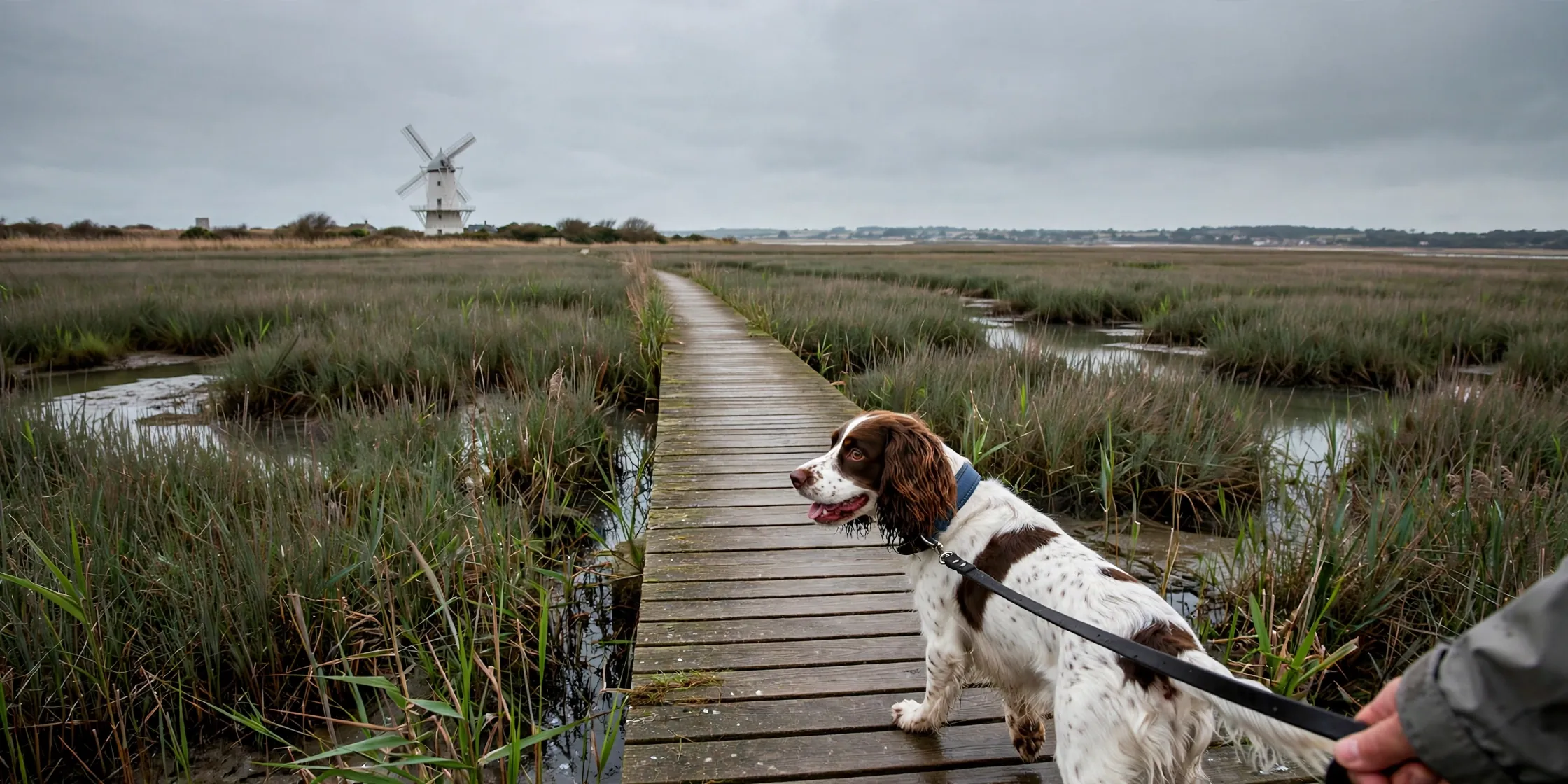
Sunday morning belongs to the north Norfolk coast, and to the marshes that make it so distinctive. Start at Cley-next-the-Sea, where boardwalks cross reedbeds towards a shingle beach and a famous windmill watches over the village. The walk is flat, the views are enormous, and the birdlife rewards slow walkers. Keep dogs on a lead on the boardwalks and near nesting or feeding birds, stay on marked paths through the marsh, and give other walkers room on narrow sections. A short out-and-back walk here is enough. You do not need to reach the sea to have had a proper marsh morning, and turning back early still counts as a walk.
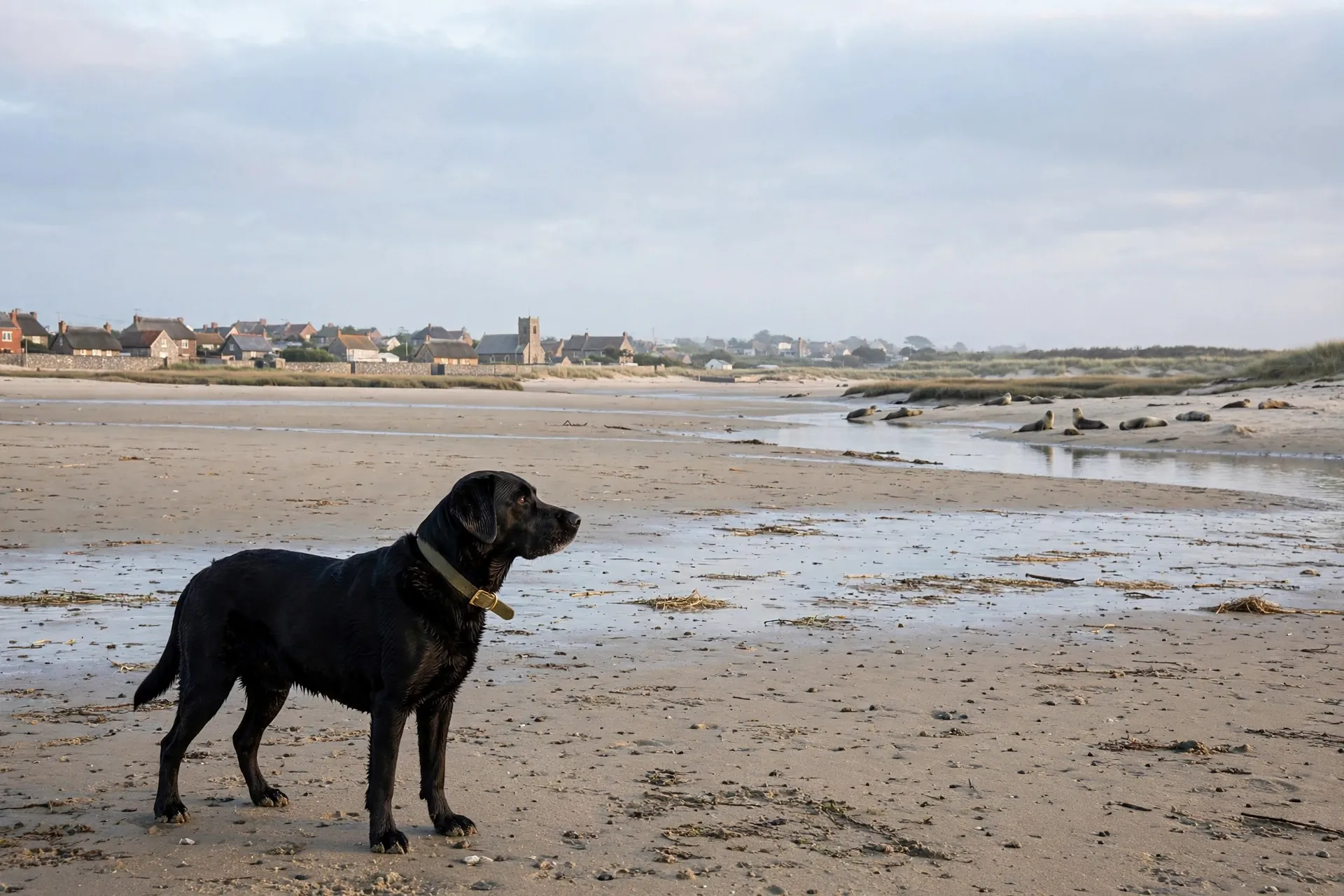
From Cley, the short drive to Blakeney is one of the pleasures of the weekend. Blakeney is a working harbour village with a quay, a channel out to the sea, and a long relationship with seals. Our Blakeney with a dog guide covers seal-trip boat rules, harbour walks and dog-friendly pubs in more detail, and it is worth reading before you decide whether a boat trip fits your dog. In summer, boat trips to see seals on Blakeney Point are the classic Norfolk experience, with grey and common seals hauled out on sandbanks. In winter, the focus shifts to beaches where seals come ashore to pup, and viewing is from a distance on land. Either way, the rule is the same: keep your distance, keep dogs on a lead, stay in marked viewing areas, and never approach, feed or try to touch a seal, especially a pup that may look abandoned but is often simply resting while its mother is at sea.
Seal-watching needs a little honesty about your dog. Some dogs watch seals calmly from a boat or a viewing point. Others bark, lunge or try to swim, and a boat or a crowded beach is a poor place to discover which kind yours is. If your dog is reactive to wildlife, choose a land-based viewpoint at a distance, keep the visit short, and be ready to walk away. If your dog is calm and the operator welcomes dogs, a short boat trip can be wonderful, but check boarding, shade, lifejackets and toilet arrangements before you book. Check the official guidance before you travel for current seal colony access, seasonal restrictions and viewing advice, because colonies, tides and wardened areas change through the year.
If seals are not the priority, or if the season or the weather makes a boat trip unwise, the marsh walk itself is a complete Sunday morning. Sit on the quay at Blakeney, watch the boats and the birds, buy a coffee, and let the dog sniff the harbour air. Dogs do not measure a weekend by the number of species seen. They measure it by interesting walks, calm rests and time with their people, and a harbour morning gives them all three without any extra cost or stress.
Before you leave the marshes, check the tide and the wind. North Norfolk beaches and marsh paths behave very differently at high tide, and a path that is easy at low water can be cut off or very muddy later in the day. Shingle beaches are harder work for small or arthritic legs than sand, so choose a sandy stretch for a long paddle and keep shingle walks short. Rinse salt water and sand from paws and belly fur after a beach walk, offer fresh water, and watch for a dog drinking sea water, which can upset its stomach. A short, happy beach visit with a clean-up afterwards is better than a long one that ends in sore paws.
Sunday afternoon: Cromer, a beach and the journey home
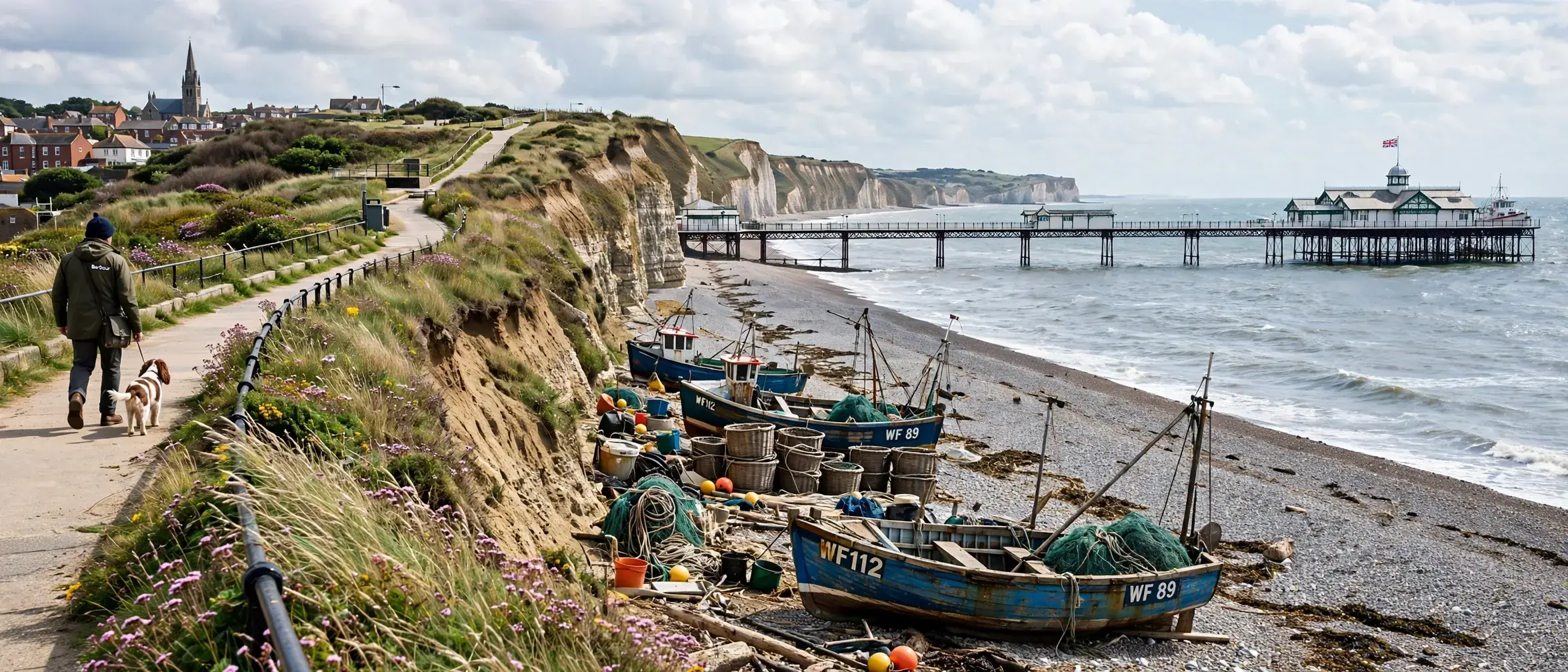
Sunday afternoon moves east along the coast to Cromer, where a pier, a promenade and a long beach give you a classic seaside ending without a long drive. Our Cromer with a dog guide covers beach zones, the clifftop walk to Overstrand, parking and cliff safety, and it is worth checking before you go because beach dog rules change by season and by zone. On a slow weekend, the best version of Cromer is simple: a short promenade walk, a paddle if the tide and the rules allow, a look at the crab boats, and a final ice cream or coffee while the dog rests on its mat. You do not need to walk the whole clifftop path to enjoy Cromer, and an older dog will often prefer the promenade to the cliff steps.
Cliff safety deserves a clear note here. North Norfolk cliffs can be unstable, and the safest place for a dog is on a lead, away from the edge, and on marked paths rather than on the beach directly beneath overhanging cliffs where falls can occur. Keep dogs away from cliff bases, follow local warning signs, and check the official guidance before you travel for current cliff and beach safety advice. A promenade walk with sea views is just as enjoyable as a cliff-edge walk, and it removes a risk that is easy to avoid.
If Cromer feels too busy, or if your dog is tired, swap it for a quieter coastal village or a shorter beach stop on the way home. Burnham Market shows the other side of north Norfolk village life, with a green, independent shops and coastal walks towards Holkham, though it lies further west and only makes sense if it sits naturally on your route home. The principle matters more than the specific village: finish with one calm, familiar-feeling stop rather than squeezing in another destination. A dog that ends the weekend relaxed will travel home better than a dog that ends it overstimulated.
Allow plenty of time for the journey home. Pack the car with the dog's bed, water and a familiar blanket within reach, plan a toilet and stretch stop part-way home, and keep the final walk short. Dogs that have walked on sand, mud and shingle all weekend may have tired legs even if they still seem enthusiastic, so do not mistake enthusiasm for unlimited energy. A calm drive, a quiet evening at home, and a normal feeding routine will finish the weekend well. If your dog is stiff the next day, keep Monday gentle, with short garden walks rather than a long outing.
Before you leave Norfolk, do a simple end-of-trip check. Look for anything left at the accommodation, check the dog for ticks after marsh and reedbed walks, rinse muddy gear, and note what worked for next time: which walk suited your dog best, which pub was easiest, which beach surface was kindest on paws, and whether the boat trip was worth repeating. That short note turns one good weekend into a template for future trips, and it helps you choose a different base or a different season next time without starting from scratch.
If you only have one day
If you only have one day in Norfolk, do not try to compress this whole weekend into it. Choose one half and do it properly. The simplest one-day version is the coast version: Cley marsh boardwalk in the morning, Blakeney quay and seals in the middle of the day, and a short Cromer promenade or beach stop in the afternoon. That gives you marshes, harbour, seals and seaside in a single, fairly compact coastal day, with drives of only a few miles between stops. Pack a picnic, keep each walk short, and build in a long lunch rest so the dog does not spend the day hopping from car park to car park.
The alternative one-day version is the Broads version: a riverside walk at Wroxham or Hoveton in the morning, a reedbed boardwalk in the afternoon, and a pub garden to finish. This version suits older dogs, dogs that dislike busy beaches, and anyone travelling from the south who wants the shortest possible drive into Norfolk. It also suits wet or windy days, because Broads paths and village stops offer more shelter than an exposed beach. Choose the Broads version if your dog prefers water and birds to sand and crowds, and choose the coast version if seals are the main reason for the trip.
Whichever one-day version you choose, cut ruthlessly. One walk in the morning, one walk or boat trip in the afternoon, and one meal out is a full day for most dogs. Drop the second village, drop the extra beach, and leave earlier than you think you need to. A one-day trip that ends with a relaxed dog and a calm drive home is a success, while a one-day trip that ticks every box but exhausts the dog is not. The full weekend will still be there for another time, and Norfolk rewards return visits far more than rushed first visits.
For a one-day trip, timing matters even more than on a full weekend. Check tide times for the coast, boat times for Blakeney, and parking for the busiest villages before you leave home, and have a wet-weather alternative ready. If the beach is closed to dogs in the season you visit, or if a boat trip is cancelled by weather, the marsh boardwalk or a Broads walk can take its place without spoiling the day. Flexibility is not a backup plan here. It is the plan, and it is what keeps a short trip enjoyable when conditions change.
Keeping the weekend budget-conscious
A budget-conscious Norfolk weekend is not about doing less. It is about spending money where it changes the experience and saving it where it does not. The walks in this itinerary, the marsh boardwalks, the harbour wandering and the beach time are the core of the weekend, and they cost little beyond parking and fuel. A picnic from a farm shop or a village store, a flask of tea, and a pub lunch as the main meal of the day will usually cost far less than three cafe meals, and they give you more flexibility when the dog needs a rest.
Choose one paid highlight and protect it. For many visitors that will be a seal boat trip from Blakeney, and it is worth paying for a reputable operator, checking the dog policy in advance, and choosing a shorter trip if that suits the dog better. For others, the highlight might be a special pub dinner on Saturday evening, or a night in a cottage with a secure garden that makes the whole weekend easier. Spending on the thing that genuinely improves the trip, and skipping the rest, is a better budget strategy than trying to do everything cheaply and enjoying nothing properly.
Watch the small costs that add up on a dog weekend. Parking at several coastal and reserve car parks, a second coffee stop, a bag of treats at every shop, and a takeaway on the way home can quietly double the daily spend. Keep a simple running note of parking and food costs, carry water and bags from home rather than buying them at each stop, and use the accommodation kitchen if you have one for at least one meal. None of this requires strict budgeting. It only requires deciding in advance which costs are part of the treat and which are simply habit.
Accommodation is usually the largest cost, and it is where the one-base rule saves money as well as stress. Two nights in one place often works out cheaper than two single nights in different places, and a cottage or a dog-friendly bed and breakfast with a kitchen, a garden and a drying area can save on meals and laundry. Ask about dog charges, cleaning fees and single-night supplements before you book, and compare the total cost for the whole stay rather than the nightly headline price. A slightly higher nightly rate with no dog charge and a secure garden can be better value than a cheap room with a per-dog fee and nowhere for a last toilet walk.
Finally, remember that free does not mean low quality in Norfolk. A sunrise over a broad, a seal surfacing near a boat, a marsh harrier over reeds, a dog asleep in a pub garden after a good walk, and a village market full of local food are all free or nearly free, and they are the moments people describe when they get home. Build the weekend around those moments, spend on one highlight, and let the flat landscape and the slow pace do the rest. That is the budget-conscious version of luxury, and Norfolk does it unusually well.
Practical notes: tides, leads, livestock and weather
Tides shape the north Norfolk coast more than any other single factor. Some beaches disappear at high tide, some marsh paths become wet or impassable, and boat trips depend on water levels and weather as well as on the timetable. Check tide times for the day you visit, plan beach walks around low or falling water where possible, and never let a dog chase wildlife across wet sand towards incoming water. If you are unsure about a path, ask locally or choose a higher, surfaced alternative. Check the official guidance before you travel for tide, access and safety information for the exact beach or reserve you plan to visit.
Leads, livestock and wildlife need a consistent approach across the whole weekend. Keep dogs on a lead near livestock, on boardwalks, on busy quays, near seals, and wherever signs ask for it. In open fields with sheep or cattle, a lead is not just polite. It is essential, because a dog chasing livestock can cause serious harm and can put the dog itself in danger. On beaches, follow the seasonal zone rules, keep dogs under control near other dogs and children, and pick up after your dog every time, including on remote stretches where it is tempting to assume nobody will notice. Good behaviour on this trip helps keep these places welcoming for the next dog.
Weather in Norfolk is changeable, and wind is often more important than rain. A flat landscape offers little shelter, so a bright day can still feel cold on an exposed beach or a broad, and a dog that is wet from a paddle will chill quickly in wind. Pack a windproof layer for yourself, a coat for the dog if yours feels the cold, and a drying coat or towels for after beach and marsh walks. On hot days, reverse the advice: walk early or late, carry extra water, watch for heat exhaustion in flat-faced breeds and older dogs, and never leave a dog in a parked car. Shade on a shingle beach can be hard to find, so a beach umbrella or a move to a shaded village stop may be needed.
Health and safety basics round out the practical picture. Check your dog for ticks after reedbed and marsh walks, especially around ears, armpits and belly, and remove any ticks promptly with a proper tick remover. Rinse salt, sand and mud from paws, check for cuts from shingle or shells, and watch for a dog drinking sea water or eating unknown items on a beach. Save the number of a local vet before you travel, and know where the nearest emergency vet is from your base. Most weekends need none of this, but having it ready means a small problem stays small.
Packing for this weekend is about layers and practical items rather than specialist gear. A lead and a long line, a harness that fits well, water and a bowl, poo bags, a torch, a first-aid kit, medication, a familiar bed and blanket, a non-slip mat, towels or a drying coat, and a waterproof bag for muddy leads will cover almost every situation in this guide. Add a map or a charged phone with offline maps for rural lanes, a spare lead in case one breaks, and a change of clothes for yourself after a muddy walk. Pack the night before, keep the dog's bag by the door, and you will start Saturday and Sunday without a last-minute search.
Practical questions
Before you go
Is Norfolk really flat enough for an older dog?
Yes, in the places this itinerary uses. The Broads paths, marsh boardwalks and many coastal promenades are level or gently graded, with short loops that let you turn back early. That does not make every Norfolk path easy, so check surface, distance and livestock rules for the exact route before you go, and plan rest stops rather than one long walk.
Do dogs need to stay on a lead near seals and on the Broads?
Keep your dog on a lead near seals, around livestock, on busy quays and where signs ask for it. Seals rest on sandbanks and beaches and can be disturbed or frightened by a loose dog, and a dog that runs into water or mud can quickly be in trouble. Check the official guidance before you travel for the current rules at the exact beach, colony or reserve you plan to visit.
Which part of the weekend is best for seal-watching?
It depends on the season. Summer boat trips from Blakeney are the classic way to see seals on the Point, while the winter pupping season brings seals to beaches such as Horsey Gap. Both need care: keep your distance, stay on marked viewing areas, keep dogs on a lead, and check the official guidance before you travel, because access and viewing arrangements change through the year.
Can we do this weekend without a car?
It is harder without a car, but a shorter version is possible. Choose a coastal base with a station, such as Cromer or Sheringham, and build the weekend around walks from that town rather than trying to cover both the Broads and the far coast. Buses and trains in rural Norfolk can be infrequent, so check timetables and dog rules before you travel and keep each day to one area.
What should we pack for a flat, windy Norfolk weekend?
Pack for wind, mud and changeable weather rather than for distance: a warm, windproof coat for the dog if yours feels the cold, a drying coat or towels, a long lead, fresh water and a bowl, poo bags, a torch for dark lanes, and a non-slip mat for pub floors and wet car boots. Add a dog first-aid kit, any medication, and a familiar bed so evenings in a new place stay calm.