This guide is independent and contains no paid placement. If affiliate links are added later, they will be clearly marked and will not change our editorial checks.
Winterton-on-Sea is one of the wildest and emptiest beaches on the Norfolk coast, reached over rolling dunes and shared with a large grey seal colony. The whole trip works if you keep dogs on a lead near the seals, give wildlife a wide berth, plan for wind, and choose a dune route that matches your dog's fitness.
Start with the dunes, not the beach
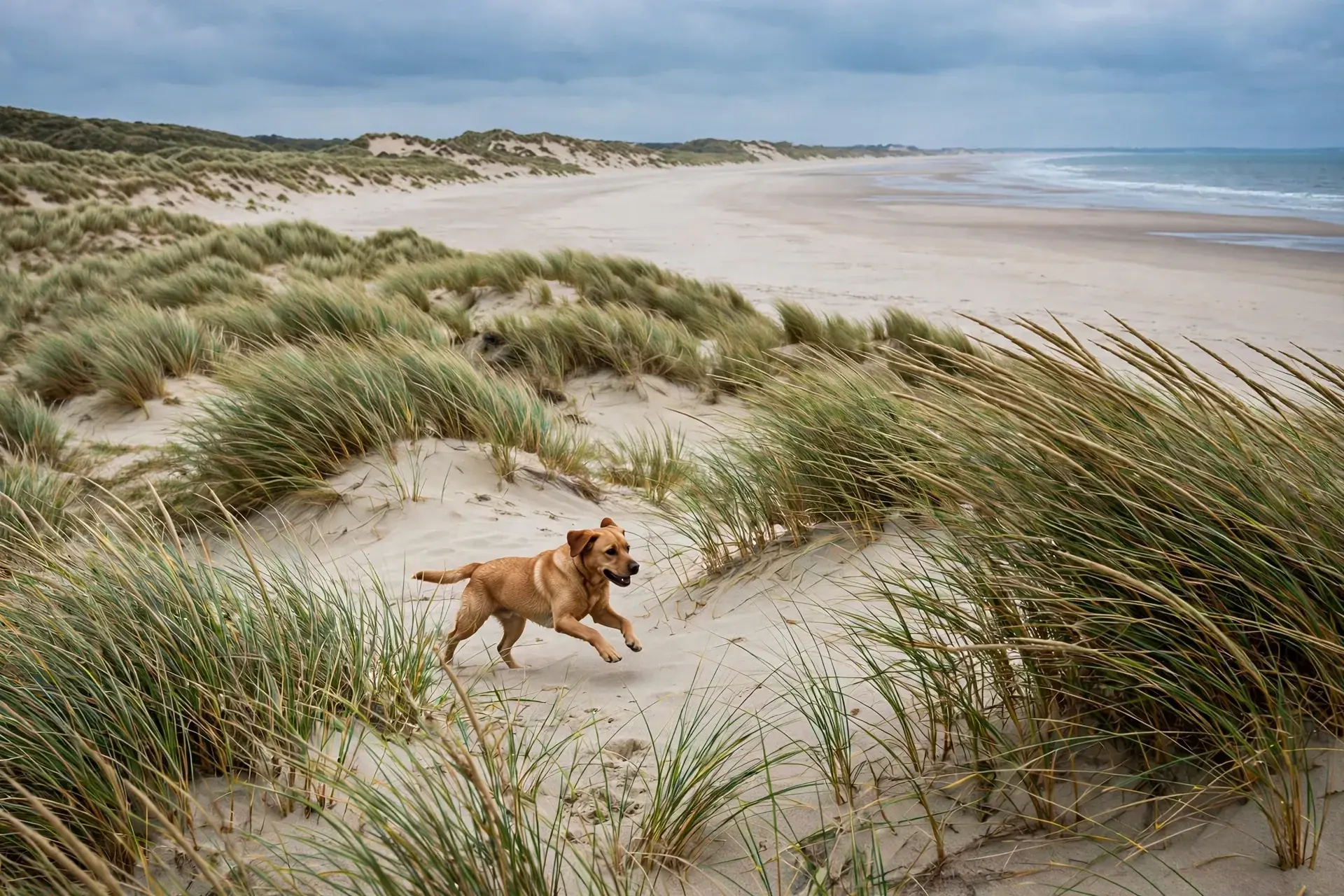
Most Norfolk beach days start with the sand. At Winterton, start with the dunes, because they are the experience and the effort. The dune system here is broad, rolling and covered in marram grass, and the walk from the car park to the sea crosses soft sand and climbs that are surprisingly tiring. Dogs love it: the dunes are full of scents, dips to explore and long views. But soft sand is hard work, especially for small dogs, older dogs and dogs that are not used to it. Plan the dune crossing as part of the walk, not as a warm-up you rush through, and let your dog set the pace over the first few climbs.
Stay on the established paths through the dunes where they exist. The dune system is a fragile habitat, and paths exist to protect the marram grass that holds the whole system together. Dogs that run freely across the dunes can damage vegetation and disturb nesting birds, and the ground itself can hide rabbit holes, sharp dune grass stems and uneven drops. A long line works well in the dunes: it gives a dog freedom to explore the dips and hollows while keeping them on the path network and away from the steepest drops and the most sensitive areas.
The dunes also change the walk in a way that matters for recall. A dog that disappears over a dune crest is out of sight in seconds, and the wind carries sound away, so a whistle or a voice that works in a park may not work here. Before you let a dog off lead anywhere at Winterton, test recall in the open dunes near the access point, where you can see what happens. If recall is shaky, keep the long line on for the whole walk: the dunes are big enough that a dog on a long line still gets a proper adventure, and you keep the ability to bring them back when wildlife appears.
For dogs that struggle with the dunes, there is a simpler approach. Walk the beach itself rather than the dune tops, using the flatter access routes and keeping the dune crossing as short as possible. The beach is wide and flat, which suits older dogs and dogs with stiff joints far better than soft sand climbs. You still get the Winterton atmosphere — the big sky, the empty sand, the sound of the sea — without asking a dog to climb dunes all day.
Seals: the rules that matter most
Winterton shares its coastline with one of the best-known grey seal colonies in England, centred on the beaches between Winterton and Horsey. Seals haul out on the sand to rest, moult and, in the winter pupping season, to give birth and nurse their pups. This is a genuine wildlife spectacle, and it is also the reason dogs need the most careful handling at Winterton. A dog that runs at a seal colony can cause panic, and panicked seals can stampede into the sea, abandon pups or injure themselves on the sand. The rule is simple and non-negotiable: keep dogs on a lead near the colony, keep a generous distance, and move on calmly.
What counts as a generous distance depends on the situation, but as a working rule, if the seals lift their heads to watch you, you are too close. Back off, give them a wide arc, and keep walking. Do not let a dog approach a seal for a photograph, do not let children approach a seal pup, and do not assume a pup alone on the beach is abandoned: mothers leave pups on the sand while they feed at sea, and a pup that looks alone is often being watched from the water. If a seal appears injured, entangled or genuinely in distress, do not touch it; contact a local wildlife rescue organisation or the coastguard and describe the location and what you have seen.
The pupping season, roughly from November to January, is when the colony is at its most sensitive and its most popular. Visitor numbers rise sharply, wardens and volunteers may be on the beach, and temporary guidance or cordons may be in place. Follow any local instructions, keep dogs on a lead throughout the colony area even if your dog is normally reliable, and expect to share the beach with many other visitors. If your dog cannot cope with crowds, visit on a weekday, walk away from the main colony viewing areas, or choose a different Norfolk beach for that day and return to Winterton when the season is quieter.
One more point about seals and dogs: seals carry diseases that can affect dogs, and close contact is a health risk as well as a welfare issue. Keep dogs away from seal carcasses and from any dead marine animals washed onto the beach, and wash your dog's paws and mouth area if they do make contact. If your dog has had close contact with a seal, watch for illness in the following days and mention the contact to your vet. Prevention is straightforward: distance and a lead.
The beach itself: space and tide
Once you are through the dunes, Winterton beach is a revelation: a vast, flat expanse of sand that stretches a long way in both directions, with far fewer people than the better-known Norfolk beaches. The beach is generally open to dogs throughout the year, but local rules can change and seasonal wildlife guidance near the colony may apply, so read the signs at your access point and check the official guidance before you travel. The beach is the place for a proper run, a long game of fetch, or a long-line sniffing walk that lets a dog cover ground at their own pace.
Tides matter here too, though differently from a narrow cove beach. At low tide the sand is enormous and flat, which suits fetch and running. At high tide the sea reaches further up the beach, and the walkable sand narrows, though it rarely disappears completely. Check tide times before you go, and plan to be on the beach during the falling or low tide if you want the widest sand. After storms, watch for debris, including timber, fishing gear and seaweed banks that can hide sharp objects, and keep scavenging dogs close.
The sea at Winterton is the North Sea: cold, with currents that can be strong. Most dogs are content paddling at the edge, and there is no need to encourage swimming in deep water. Throw a ball along the shoreline rather than into the sea, and watch for the moment a swimming dog starts to tire. After a paddle, rinse sandy paws and check between the toes, and dry the dog before a long car journey in cold weather. Salt water in quantity is not drinking water, so carry fresh water even on a short walk.
Because the beach is so open, it is easy to lose track of distance. A walk that feels short on the way out can feel long on the way back, especially into the wind. Use landmarks — a distinctive dune, a groyne, a gap in the cliffs — to mark how far you have come, and turn back while your dog is still enjoying the walk rather than when they are exhausted. The dunes on the return journey are harder than they were on the way out, because the dog is already tired.
Three routes for three kinds of dog
There is no single best Winterton route, because the right route depends on the dog. Here are three patterns that cover most dogs. The first is the short dune-and-beach loop: over the dunes by the shortest path, a twenty-minute beach walk, and back over the dunes. This suits puppies, older dogs, first visits and dogs that are still building fitness. It gives the full Winterton flavour — dunes, sea, open sand — without a long commitment.
The second is the long beach walk: over the dunes, then a long stretch along the sand in one direction, and back the same way. This suits fit, energetic dogs that need to run and cover ground. The beach is flat, so the distance is the challenge rather than the terrain, and you can turn back at any point. Keep an eye on the tide and the wind, and remember that the return journey into a headwind feels longer than the outward leg.
The third is the wildlife-watching walk: a shorter route that keeps to the paths and viewing areas near the colony, with dogs on a lead throughout, binoculars for the humans, and a calm pace. This suits dogs that are good on a lead and owners who want to see the seals properly. It is also the best option during pupping season, when the colony is the main event and the priority is giving the seals space. Whichever pattern you choose, build in a rest stop with water, and finish with a calm few minutes before the car rather than a final sprint.
Wind, weather and exposure
Winterton is exposed. There is little shelter on the dunes or the beach, and the wind off the North Sea can be strong even on a day that feels calm inland. Wind changes the walk in practical ways: it carries sand into eyes and ears, it makes recall harder, it chills a wet dog quickly, and it can turn a pleasant walk into a battle for a small or older dog. Check the forecast, including wind speed and direction, before you go, and choose a shorter, sheltered route on a windy day rather than a long exposed one.
For the dog, wind protection is simple: a coat for short-coated and older dogs in cold wind, and a drying coat or towel for after a wet walk. For the humans, a windproof jacket and something to keep sand out of the car make the day more enjoyable. On a hot summer day the opposite problem applies: the dunes offer almost no shade, and the sand can be hot underfoot. Walk early or late, carry extra water, and watch for overheating in brachycephalic breeds and older dogs. The beach is at its best on a bright, breezy, mild day, which Norfolk delivers often enough to make the trip worthwhile.
Sea fret, the haar that rolls in off the North Sea, can reduce visibility suddenly, especially in spring and summer. If visibility drops, keep dogs close, use a lead, and head back by a known route rather than pushing on into the murk. The dunes all look similar in fog, and it is easy to lose the path. A phone with a map, charged before you set out, is a sensible backup, but do not rely on it alone: note the access point and the direction of the car park before you start.
Wildlife beyond the seals
Seals are the headline, but Winterton's dunes and beach support much more wildlife, and dogs need to give it all space. Birds nest in the dunes and rest on the beach, including species that are sensitive to disturbance during the breeding season. Keep dogs on a lead in signed nesting areas, and do not let a dog chase flocks of birds on the shoreline: repeated flushing exhausts birds and can separate chicks from parents. The same applies to the rabbits and other small mammals that live in the dunes, which are a strong temptation for dogs with a high prey drive.
Plants matter too. Marram grass is protected because it stabilises the dunes, and trampling damages it. Keep to paths, and do not let a dog dig in the dunes. Some coastal plants are also toxic to dogs if eaten, so keep scavengers close and discourage grazing on unfamiliar vegetation. After the walk, check for ticks, which are common in dune grass and scrub, especially in spring and summer. Run your hands over the dog's ears, neck, armpits and groin, and remove any ticks promptly with a tick remover.
If you are interested in the wildlife, bring binoculars and keep your distance. Watching seals and birds from a respectful distance is more rewarding than a close approach that disturbs them, and it is the behaviour that keeps Winterton welcoming for both wildlife and dogs. The wardens and volunteers on the beach during pupping season are a good source of advice: ask them where the seals are, what the current guidance is, and which routes are best for dogs that day.
Parking and getting onto the sand
Winterton has a car park near the beach access, and the walk from car to sand crosses the dunes. On fine weekends and during seal pupping season it can fill early, so arrive in the morning if you can. If it is full, avoid parking on verges or blocking access roads: use an alternative car park in the area and walk in, or come back on a quieter day. Rural roads around Winterton are narrow, and inconsiderate parking causes real problems for local residents and emergency access.
Before you open the car door, have the lead on and a plan for the dune crossing. Dogs that leap out and charge into the dunes start the day over-aroused and can be out of sight in seconds. Instead, walk the first stretch slowly, let the dog toilet and sniff, and build the walk up gradually. At the end of the day, the same calm routine helps: a few quiet minutes on the beach or in the car park before the journey home, a brush for sand, and a check for ticks and cuts.
Never leave a dog alone in a parked car, even for a short stop. Cars heat up fast in sun and cool down fast in winter, and a dog alone in a car at a popular beach is also at risk of theft. If you need to visit a shop or cafe that does not allow dogs, take turns with another adult or skip it. For visitors without a car, check bus services to Winterton village before you travel, because rural services can be infrequent, especially on Sundays and in winter, and the walk from the village to the beach adds to the day.
If you are combining Winterton with other Norfolk days, our guide to Mundesley with a dog covers a gentler village beach nearby, and the winter dog walks on the UK coast guide covers cold-weather beach care in more detail. The dog-friendly beaches rules guide explains how seasonal restrictions and wildlife guidance work across the country.
The village and where to eat
Winterton-on-Sea itself is a quiet village a short walk inland from the beach, with a more low-key feel than the larger Norfolk resorts. That is part of its charm, but it also means facilities are limited: bring what you need for the walk, including water, food and bags, rather than assuming you can buy everything on arrival. The village has places to eat and drink that welcome dogs in at least some areas, but policies can change, so ask before you sit down and keep your dog on a lead under the table.
For a longer stop, the nearby larger villages and towns offer more choice, and a drive to a dog-friendly pub after the walk is a good way to end the day. Pack a mat and a water bowl for the cafe stop, choose a corner table away from the door, and keep the stop as calm as the walk: a dog that has run on the beach for an hour may need time to settle before they can lie quietly under a table. If your dog cannot settle, take food away or cut the stop short rather than pushing through a long meal.
As with every small coastal village, clean up after your dog, including on the beach and the dune paths, and use the bins provided or take bags home if bins are full. Dog fouling on a wildlife beach is noticed quickly, and it is the behaviour that most often leads to tighter restrictions. Carry more bags than you think you need, and pick up after your dog even on the empty stretches where nobody seems to be watching.
Winter: pupping season and short days
Winter is arguably the best season at Winterton, and also the one that needs the most planning. The seal pupping season brings the colony to its most active, the beach is at its quietest, and the light over the dunes is beautiful. But the days are short, the wind is cold, and the pupping colony needs the most space. Plan a morning visit, be off the dunes well before dark, and keep the walk shorter than you would in summer: cold, wind and soft sand tire dogs faster than you expect.
Dress the dog for winter as well as yourself. A coat helps short-coated, older and lean dogs, and a drying coat or towel after a wet or sandy walk prevents chilling on the drive home. Watch for ice on the paths in hard frosts, and for the way salt water and sand can dry out paws: a paw balm before the walk and a rinse afterwards help. In the pupping season, expect wardens, volunteers and many other visitors near the colony, and follow their guidance even if it differs from what you read online: local conditions on the day take priority.
Winter also brings its own hazards. Storms can wash debris onto the beach, including timber and fishing gear, and the sea can be rough. Stay off the beach in severe weather, keep away from the waterline when waves are large, and do not let a dog swim in a rough sea. The seals, the dunes and the beach will still be there on a calmer day, and a postponed visit is always better than a risky one.
Packing for a dune day
A Winterton day needs a little more kit than a park walk, because of the dunes, the wind and the wildlife. Start with the essentials: a lead and a long line, a harness that fits well when wet, poo bags, water and a bowl, and a towel or drying coat. Add binoculars if you want to watch the seals properly, a tick remover, and a first-aid kit with tweezers for thorns and dune grass cuts. A phone with a charged battery and a map is a sensible backup for navigation in the dunes.
For the car, pack a waterproof seat cover or crate liner, a brush for sand, and a bag for wet towels. In winter, add a dog coat, a warm blanket and a flask of warm water for rinsing sandy paws. In summer, add extra water, sun protection for dogs with pink noses and thin coats, and shade if you plan a long stay on the sand. Never rely on the sea as drinking water: salt water in quantity causes vomiting and dehydration.
Finally, pack the information. Tide times, the forecast including wind, the location of the car park, the number of the nearest vet, and a note of the seal colony guidance for the season are all worth having before you leave. Winterton rewards visitors who arrive prepared: the dunes, the beach and the seals are all at their best when you have planned the walk around them, and the dog in front of you gets the day they actually enjoy.
Practical questions
Before you go
Can dogs go on Winterton beach all year round?
Winterton beach is generally open to dogs throughout the year, but local rules can change and seasonal wildlife restrictions may apply near the seal colony, especially during the pupping season. Always read the signs at the access point you use and check the official guidance before you travel.
How close can my dog get to the seals at Winterton?
Keep a generous distance at all times, and keep your dog on a lead near the colony. Seals resting on the beach need quiet and space, and a dog running up to them can cause panic, stampedes and abandoned pups. If seals are hauled out nearby, give them a wide berth and move on calmly.
Are the Winterton dunes hard walking for dogs?
The dunes are soft sand and marram grass with some steep climbs, which is tiring for small, older or unfit dogs. Choose a route that stays on the flatter paths and the beach itself if your dog struggles, and build in rest stops with water. Avoid the hottest part of a summer day, when deep sand is hardest work.
Where do I park for Winterton beach with a dog?
There is a car park near the beach access at Winterton, with a walk over the dunes to reach the sand. It can fill on fine weekends and during seal pupping season, so arrive early. Never leave a dog alone in a parked car, and have the lead on before you open the door.
What should I do if my dog chases a seal or a bird at Winterton?
Call your dog back immediately, put them on a lead, and move away from the wildlife. If a seal appears injured or a pup seems abandoned, do not approach or touch it; contact a local wildlife rescue organisation or the coastguard for advice. Prevention is better: keep dogs on a lead near the colony and in areas where birds nest or rest.
Is Winterton-on-Sea a good winter visit with a dog?
Yes, winter is one of the best times, because the beach is quiet, the light is beautiful and the seal pupping season brings wildlife to watch from a distance. Dress for wind and cold, keep walks shorter for older dogs, and remember that the days are short, so plan to be off the dunes well before dark.