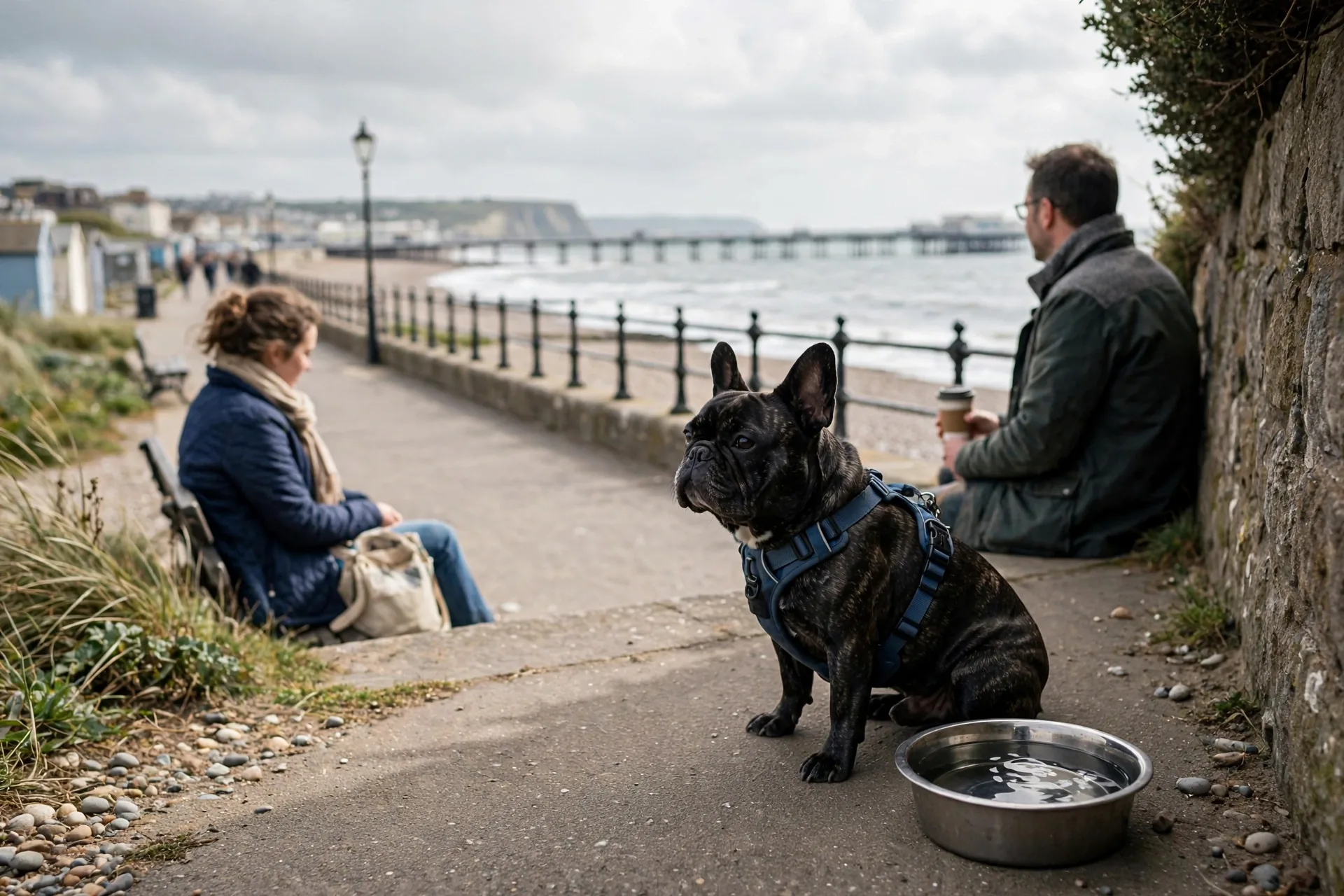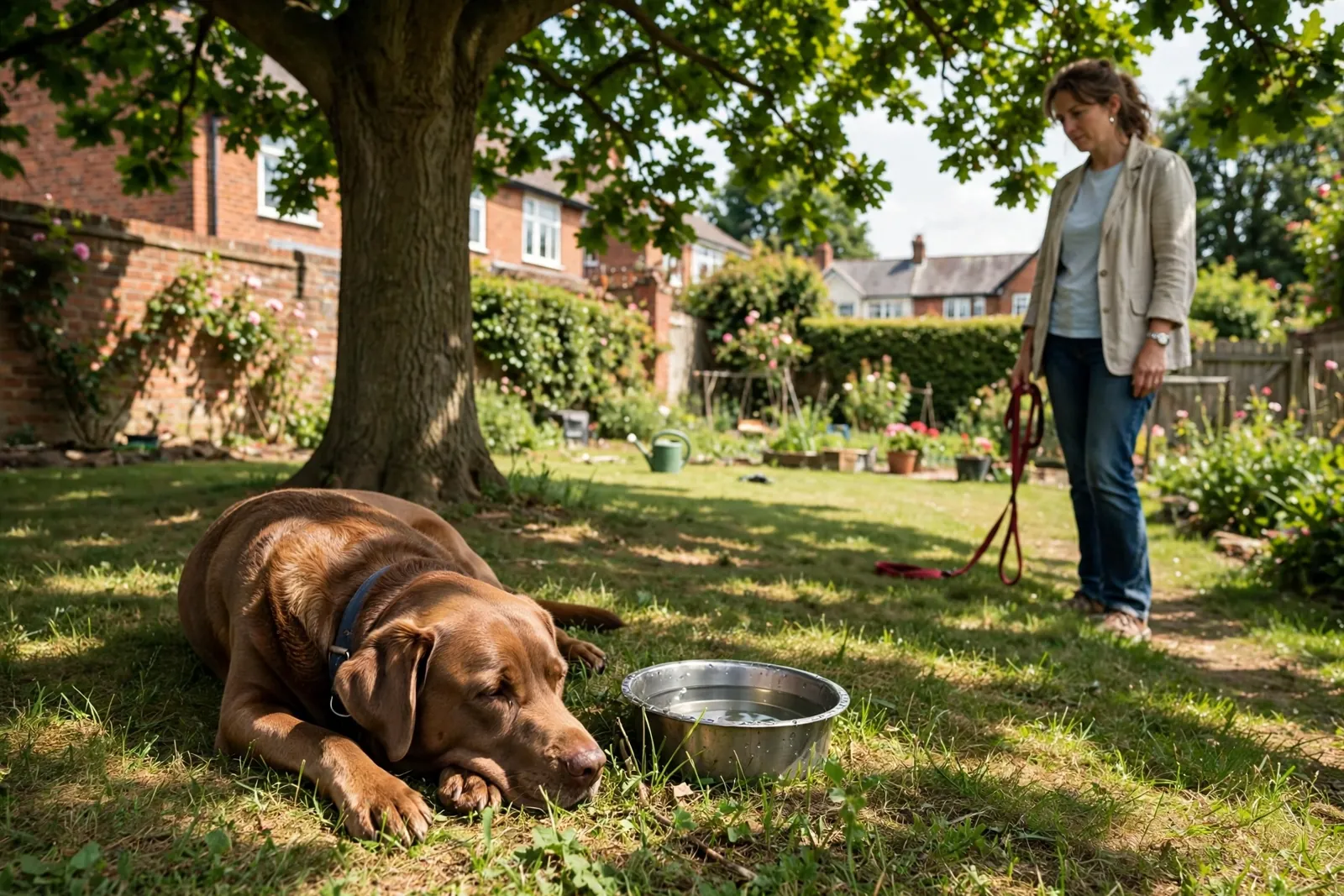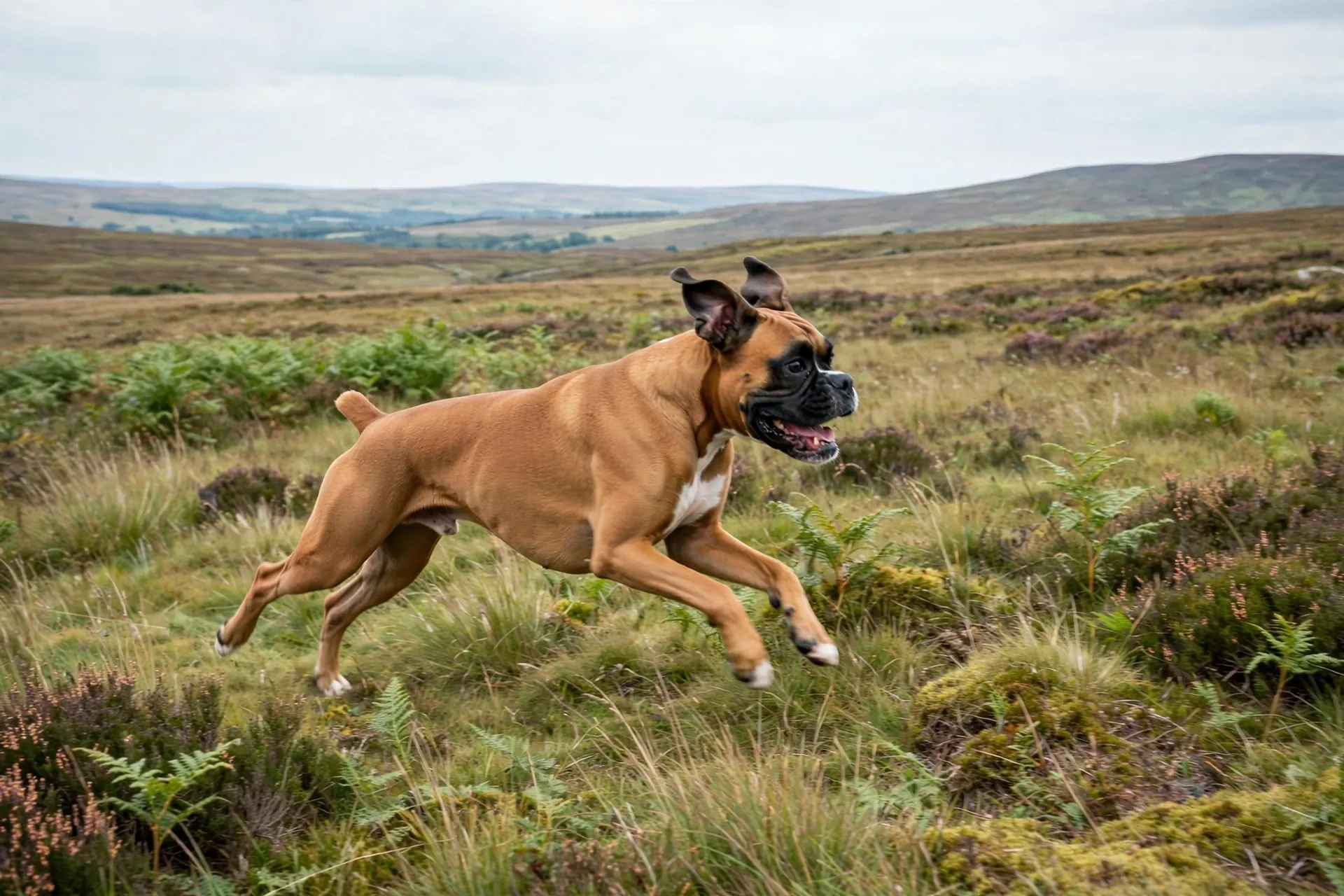
This guide is written specifically for boxer owners and focuses on the three things that make or break their holidays: heat management, energy outlets and jumping manners. General UK travel rules, such as the Highway Code requirement to restrain dogs in vehicles, are referenced where they matter most for this breed.
Book the holiday around the dog's engine, not just the view. You need a secure field for daily sprints, walks that last over an hour, shade and water strategy for a heat-prone breed, a car plan that keeps the air moving, house rules for jumping decided before arrival, and a stay with fencing, space and wipeable floors. Get those six right and a boxer is the most joyful holiday companion there is.
The boxer holiday personality: why this breed needs its own plan
Every breed travels differently, and the boxer travels like an athlete with a toddler's impulse control. They are powerful, joyful, people-obsessed dogs in the 25–35 kg range with a famous spring-loaded greeting: the bounce that gave the breed its name. On holiday, that same physicality turns ordinary moments — a stranger at the cottage gate, children running across a beach, the first sight of open grass after a three-hour drive — into full-body celebrations. The plan is not to suppress that joy. It is to give it somewhere safe to go.
Three traits shape every decision in this guide. First, stamina: an adult boxer needs far more than a stroll around a pretty village, and an under-exercised boxer in a rental property invents its own entertainment. Second, heat sensitivity: the short muzzle cools inhaled air less efficiently than a longer nose, dense muscle generates heat fast during play, and boxers famously ignore early fatigue signals while they are having fun. Third, the bounce: jumping up is social currency for boxers, adorable at 12 weeks and genuinely hazardous at 30 kg when it meets a toddler, an elderly relative or a cottage full of breakables.
The good news is that all three are manageable with structure rather than willpower. Energy becomes a schedule: sprint outlets, long walks and mental work distributed across the day. Heat becomes a routine: cool travel, shaded rests and strict midday limits. Jumping becomes a house system: greetings handled outside, arrivals managed, everyone in the household briefed. Do this and the boxer's best holiday qualities come forward — the clownish affection, the loyalty, the way they settle like a weighted blanket at the end of a properly tired day. Skip it and the same dog becomes the guest everyone remembers for the wrong reasons.
Boxers also tend to be Velcro dogs: happiest pressed against their people. That is an asset on holiday — they settle well when the family is nearby — but it means they rarely thrive being shut away alone for long stretches. Plan holidays where the dog is part of the day: pub gardens, walks, beach time, terrace dinners. A boxer relegated to a utility room while the family goes out sightseeing will bark, bounce and redecorate. If your plans include dog-free attractions, budget for a proper day of exercise first and a dog sitter or doggy daycare option at the destination rather than hoping confinement works.
Secure fields and sprint sessions: the daily energy release
A boxer cannot live on walks alone. They are sprinters and wrestlers by nature — the joy of a boxer is flat-out running, sudden turns, play-bowing and mock-fighting with a friend. Twenty minutes of that does more for a boxer's mood than two hours of plodding on a lead. On holiday, the single most valuable booking you can make is not the accommodation upgrade but a nearby secure dog field where your boxer can run off-lead safely every day.
Secure fields — also listed as dog paddocks, enclosed exercise fields or dog walking fields — are fenced acres rented by the slot, usually 30–50 minutes, bookable online for around £8–£15 per session. Search for them before you book the accommodation, not after, because their locations should influence where you stay. The features that matter for a boxer: fencing at least 1.8 metres high with no gaps at the base (boxers are strong and surprisingly determined), a double-gated entrance so one open gate never means freedom, no livestock in adjacent fields that will send your dog into fence-line frenzy, and a water supply for drinking and cooling down. Some fields advertise agility equipment or sandpits, which are a bonus for boxers that love to climb and dig.
Use the field with a plan. Boxers overdo it — they will sprint until they drop, then get up and sprint again — so you manage the session like a coach. Start with five minutes of sniffing and lead walking to warm up, then alternate short bursts of chase games with pauses for water and shade. A flirt pole or a long throw toy channels the sprint urge without you having to run yourself. End with five calm minutes: a slow lead walk around the field, some simple known cues, treats scattered in the grass to sniff out. This cool-down matters because boxers do not self-regulate; the walk out of the field should feel boring after the excitement inside it.
If your boxer has a reliable playmate, field sessions with one other suitable dog are gold. Boxers play rough — body slams, mouthy wrestling, the full bounce repertoire — and most non-boxer dogs find it overwhelming. One compatible friend of similar size and play style beats a chaotic group. If you are holidaying with another family whose dog your boxer knows, agree the field rules in advance: who manages whom, what the recall plan is, and when play gets paused for water. Our guide to self-catering stays with secure gardens also covers what to check when the garden itself is the sprint space, though a rented field remains better for full-speed running on most properties.
Frequency matters more than duration. One long field session a day, every day, transforms a boxer's holiday behaviour. Two shorter sessions beat one marathon that overheats the dog. And never schedule the sprint right after a meal: deep-chested breeds including boxers carry a risk of bloat (gastric dilatation-volvulus), so rest the dog for at least an hour after feeding before vigorous exercise, and the same after the session before the next meal. This is the one health rule in this guide that admits no flexibility.
Long walks that actually tire a boxer
The sprint session handles the athlete; the long walk handles the brain. Boxers are clever, curious dogs that settle best after their noses have been busy. Aim for one substantial walk a day of 60–90 minutes, rich in sniffing, and you will notice the difference in the evening: the boxer that chewed the remote at home becomes the boxer that snores through the film.
Choose terrain that works the whole dog. Coastal paths with sea air and varied surfaces, forestry trails with fallen logs to investigate, and riverside meadows where a boxer can wade all give more mental workout per kilometre than a flat pavement loop. Britain's long-distance trails are excellent for boxers in the cooler months — sections of the South West Coast Path, the Cleveland Way or the Fife Coastal Path offer hours of varied walking with regular water stops. In summer, swap exposed clifftop routes for woodland where the canopy keeps temperatures bearable, and walk early morning or late evening when the ground is cool underfoot.
Let the nose lead. A boxer marching at human pace burns calories; a boxer allowed to sniff every hedge burns stress. Use a long line (5–10 metres) on walks where off-lead is not safe rather than a short lead — the extra range doubles the sniffing opportunities and halves the pulling. Scatter feeding at rest stops, simple find-it games with treats hidden in bracken, and practising loose-lead turns every few minutes all turn the walk into training without it feeling like school. If your boxer pulls like a freight train, fit a well-fitted front-clip harness before the holiday rather than fighting the lead on day one; sore shoulders ruin walks for everyone.
Water is a boxer's favourite holiday feature, and swimming is superb low-impact exercise — but introduce it carefully. Not every boxer swims confidently on the first try; heavy chests and short muzzles mean some sink before they learn the rhythm. Start in shallow, calm water with a long line attached, never throw toys far out on the first visit, and watch for the frantic vertical paddling that means the dog is struggling rather than playing. Our dog swimming safety guide covers currents, blue-green algae and exit points in detail — read it before the beach day, not during it. Always rinse salt water off after sea swims; boxers' short coats dry fast but salt irritates skin, and the post-swim zoomies on a sandy beach are best followed by fresh water and shade.
Build the week with variety. Alternate a big walk day with a lighter day: field sprint plus a short local loop, or a village wander with café stops. Boxers' joints — particularly elbows and hips — thank you for the rest days, and older boxers (the breed ages visibly from around seven or eight) should have their long walks shortened with more sniffing built in. Puppies under 18 months need the five-minutes-per-month-of-age rule applied strictly: a boxer puppy's enthusiasm for running far exceeds what growing joints should take, so use short lead walks, garden play and mental games instead of the adult programme.
The heat plan: cars, midday breaks and the warning signs
This is the section that matters most. Boxers overheat faster than most breeds their size, and British summers — while milder than many places — still produce the hot-car headlines every year. The mechanics are simple: a short muzzle moves less air over the cooling surfaces of the nose and mouth, a muscular body builds heat quickly during exertion, and many boxers have dark brindle or fawn coats that absorb sun. Add the breed's signature trait — playing hard while ignoring fatigue — and you have a dog that needs its humans to make the heat decisions for it.
Start with the car, because the journey is where holidays most often go wrong. Boxers should travel in the coolest part of the vehicle, ideally a well-ventilated crate in the boot area or a harnessed spot on the back seat with airflow from open rear windows or air conditioning. Our dog car safety guide covers restraint options in full; for boxers specifically, a crash-tested crate is worth the investment because a 30 kg dog becomes a serious projectile in a sudden stop, and crates double as a familiar den at the destination. Travel with the air conditioning on whenever the temperature climbs, and in traffic jams — where a stationary car heats up fast — crack windows for cross-ventilation and watch the dog, not just the satnav.
Plan the journey like a heat operation. Drive in the cool hours: set off early morning or travel in the evening rather than crossing the country at 2pm in July. Stop every 90 minutes to two hours for water, a short shaded walk and a toilet break — boxers drink enthusiastically and then want to play, so keep breaks calm and brief. Park in shade whenever you stop; if shade is unavailable, use a windscreen shade and reflective window covers, and never, ever leave the dog in the parked car. Cracked windows do not prevent lethal temperature rises, and this applies in minutes, not hours. If you must leave the vehicle — fuel, food, toilets — one adult stays with the dog, every time, no exceptions.
Pack a cooling kit and actually use it. The essentials: a large water bottle plus a portable bowl, a damp cotton towel or cooling mat that can be re-wet at stops, a battery fan for the crate if your car lacks rear vents, and a thermometer if you want to be precise about crate temperature. A paddling pool at the accommodation is the holiday luxury worth having — five minutes of standing in cool water after the morning walk resets a boxer completely. Cooling vests help some dogs on walks, though fit matters on a deep chest; test one at home before relying on it on holiday.
Learn the warning signs and act early. Normal boxer panting after exercise is noisy but rhythmic; heat distress looks different — frantic rapid panting, thick ropey drool, a tongue and gums turning bright red or purple, glazed eyes, unsteadiness or reluctance to keep walking. At the first sign, stop all activity, move to shade, offer small amounts of cool water (not ice water, and never force it), and cool the dog with airflow and damp towels on the body, especially the belly and groin where blood vessels run close to the skin. If the dog does not improve within minutes, or shows vomiting, collapse or confusion, get to a vet immediately — heatstroke is a genuine emergency in boxers. For a deeper dive, our hot-weather travel safety guide and our flat-faced breed travel guide cover cooling routines and the physiology of short-muzzled dogs in more detail.
Finally, reshape the holiday day around the thermometer. In warm spells, the pattern is: big exercise before 9am, rest and shade through midday, gentle evening activity after 6pm. Boxers accept this rhythm happily if the morning session is substantial. Treat 20°C-plus as the threshold for shortening exercise, 25°C-plus as a day for shade, water play and training games only, and remember that humidity makes panting less effective — a muggy 22°C can trouble a boxer more than a dry 26°C. Check the forecast each morning and be willing to cancel the planned hike; the beach at dawn is still the beach.
Jumping and accommodation manners: the house system
Jumping up is the boxer's love language, and it is also the fastest way to lose a damage deposit — or a friendship. A 30 kg dog launching at a host's elderly mother, a toddler with an ice cream, or a B&B breakfast table is not being naughty; it is being a boxer in a novel, exciting place. The solution is management first and training second, decided before you arrive rather than improvised on the doorstep.
Start with arrivals, because the first ten minutes set the tone. Boxers feed off greeting energy: the more fuss people make at the door, the higher the dog bounces. Brief every human in advance — hosts, friends joining the trip, the cottage owner popping round with the keys. The script is simple: no high-pitched greetings, no leaning over the dog, no pushing the dog down (which reads as a wrestling invitation to a boxer). Instead, visitors turn slightly sideways, keep hands low, and reward the dog for four paws on the floor with calm attention. Ask people to meet the dog outside or in the garden first, where there is space and nothing breakable, before moving indoors.
For the first day or two in a new place, keep a lead or house line on the dog indoors. This is not punishment — it is a steering wheel. When someone approaches, you can calmly guide the dog to a sit or simply prevent the launch, then reward the calm choice. It also stops the boxer discovering that the kitchen worktop is exactly nose-height and that the sofa is a superb trampoline. Many owners find that two managed days teach the dog the house rhythm; after that the line can come off for longer stretches.
Give the bounce a legal outlet. Boxers that are never allowed to jump at all can get more frantic, not less. Teach a clear alternative: a sit for greetings, or for very bouncy individuals, an invitation-only jump onto a specific low platform or your lap when you are seated and braced. The rule the dog learns is not "never jump" but "jumping happens only when invited, and only on this person, in this position". Practice this at home for weeks before the holiday — the rental is not the place to start.
Protect the property as if the deposit depended on it, because it does. Boxers drool, especially after drinking and in warm weather; bring old towels for wiping jowls and floors, and place a washable mat under water bowls. Their claws click loudly on hard floors and can scratch laminate, so keep nails trimmed before the trip and bring a couple of rugs for the main traffic routes. Crate the dog or use a stair gate when you cannot supervise, particularly in the first 48 hours when the novelty of the place is highest. And photograph the property on arrival — scuffs that were already there should not come out of your deposit.
Noise is the other accommodation manner worth planning. Boxers are vocal: the famous "woo-woo" talking, play growls that alarm strangers, and alert barking at unfamiliar sounds in a strange house. In a detached cottage this is character; in a terraced B&B or a flat with thin walls it is a complaint. Bring a white-noise machine or leave a radio on low, tire the dog properly in the evening, and have a settle routine — a stuffed Kong, a chew, a familiar bed in the same spot each night — that signals the day is over. If your boxer is a known barker, choose accommodation with space around it rather than hoping for the best.
Choosing a stay that survives a boxer
Not every "dog-friendly" listing suits a boxer, and the filters on booking sites will not tell you which. Read listings with a boxer's needs in mind: space to move, boundaries that hold, floors that forgive, and rules you can actually live with for a week.
Garden security is the first filter. "Enclosed garden" in a listing can mean anything from a six-foot fence to a knee-high hedge with a public footpath beyond it. Ask directly: how high is the fence, are there gaps under or between panels, and do the gates latch securely? Boxers can clear surprisingly low obstacles when motivated and will test every weak point in the first hour. A garden that is genuinely secure changes the whole holiday — the dog can potter, play and toilet safely without a lead, and you can have a coffee without performing perimeter security. Ground-floor access matters too: boxers are heavy to carry if injured, and older boxers struggle with steep stairs, so a property where the dog's living space is all on one level removes a daily friction.
Inside, look for hard floors and space. Boxers take up room — they sprawl, they spin, they do the full-body shake that sprays drool across a three-metre radius. Carpeted cottages with white sofas and a "dogs must stay in the kitchen" rule are a recipe for a miserable week; a farmhouse with stone floors, a big kitchen-diner and a utility room for drying off is a boxer palace. Ask whether dogs are allowed on furniture, because boxers consider sofas their birthright — if the answer is no, bring the dog's own raised bed and make it the most comfortable spot in the room so the rule is easy to follow.
Think about the neighbours and the setting. A boxer in a cottage attached to the owner's house, with the owner's cat visible through the patio doors, is a management project. The same boxer in a standalone barn conversion with fields around it is a holiday. Detached properties with no shared walls are worth the premium for vocal, bouncy breeds. Also check the immediate surroundings: a cottage next to a sheep field needs flawless recall management, while one backing onto a woodland with a footpath from the gate gives you the morning walk without the car.
Finally, match the property type to your dog's temperament. Confident, social boxers do well in lively holiday parks with space to run; noise-sensitive or reactive boxers do better in isolated cottages where they can decompress. If you are considering a park, read our reactive dog holiday guide for the site-selection tactics that also help excitable boxers — edge pitches, distance from play areas and quiet arrival times all apply.
Boxers and children: making the family holiday work
Boxers and children are a classic pairing — the breed's patience and playfulness with kids is legendary — but a family holiday adds variables that need managing. The core truth is that boxers are big, strong and clumsy in their affection. A boxer that leans, spins or launches a play-bow next to a toddler can knock the child over without any bad intent at all. Supervision is not optional; it is the whole plan.
Structure the days so the dog's needs are met before the children's. A boxer that has had its morning sprint and sniff is a different animal around kids: calmer, softer, more tolerant of the chaos. Schedule the dog's big exercise first, then family outings, then a calm evening. Trying to do it the other way round — children playing all day while the boxer waits, then a rushed evening walk — produces the bouncing, mouthy, over-aroused dog that ruins the barbecue.
Teach the children the boxer rules, and make it a game rather than a lecture. The rules that matter: greet the dog calmly with a hand to sniff, never run screaming at or away from the dog (running triggers chase), never take food or toys from the dog's mouth, and leave the dog alone when it is on its bed or eating. Very small children should not walk the dog on a lead — a boxer that spots a squirrel can pull a child off their feet. Older children can join in training games, which boxers love, but an adult should always hold the lead.
Give the dog a child-free zone. Even the most tolerant boxer needs somewhere to decompress from the noise and unpredictability of a family holiday. A crate with a cover in a quiet corner, or a gated utility room with the bed and a chew, works as a retreat — teach the children that the dog's den is out of bounds, like a bedroom door. This is especially important at mealtimes and when friends' children visit, because excitement is contagious and a boxer's excitement is physical.
Watch the specific flashpoints. Doorways and stairs are where collisions happen — a boxer barrelling through a doorway meets a child coming the other way. Ball games in the garden need rules: the boxer will want to join, and a 30 kg dog tackling for the ball is not the same as the children playing. Either include the dog with its own ball and clear turns, or exercise the dog separately first and settle it with a chew while the children play. Swimming together is wonderful but supervise closely; an enthusiastic boxer can climb on a child in the water in play, which is frightening even when the dog means no harm.
The payoff for all this management is real. Boxers are famously gentle and protective with "their" children once the rules are clear, and many families say the dog becomes the children's favourite part of the holiday — the companion for beach adventures, the warm weight against small backs during film night, the clown that makes everyone laugh. That version of the holiday is entirely achievable; it just needs the adult humans to run the schedule.
Packing for a boxer break
Boxers are not a breed you can pack light for, but the right kit prevents most holiday problems. Think in four categories: cooling, control, comfort and clean-up.
Cooling: a large water bottle and a clip-on bowl for the car and walks, a cooling mat or damp towels, a battery-operated fan if your car lacks rear air vents, and a paddling pool if the accommodation allows it. A spray bottle with water doubles as a quick cool-down and a training interrupter for over-aroused moments. Control: a well-fitted harness (front-clip for pullers), a standard lead, a 5–10 metre long line for sniffy walks and beach recalls, and a house line for the first days indoors. Add a muzzle if your boxer is reactive or if you will use public transport where rules may require one — a basket muzzle fitted and conditioned at home, not bought the day before.
Comfort: the dog's own bed or a raised travel bed (boxers prefer sleeping where the family is, so bring something that fits in the living room, not just a corner of the kitchen), a familiar blanket that smells of home, a stuffed Kong and long-lasting chews for settle time, and any medication with a written dosage schedule. If your boxer takes heart medication or has a known condition, pack the vet's summary and know the nearest emergency vet at the destination — save the number before you need it. Clean-up: old towels (at least four), a pack of baby wipes for paws and jowls, poo bags in bulk, a waterproof throw for the car boot, enzyme cleaner for accidents, and rugs to protect the rental's floors on the main routes.
Food deserves its own note. Bring the full supply of the dog's normal food plus two extra days' worth — rural shops may not stock your brand, and a sudden diet change causes the digestive upset that ruins a holiday. Pre-portion meals into bags or containers so feeding stays consistent whoever does it, and keep the feeding schedule unchanged: same times, same amounts, same one-hour rest before exercise. Boxers with sensitive stomachs should travel with their usual treats too, since rich holiday treats and dropped picnic food are already enough novelty for one gut.
A sample holiday day: the boxer's rhythm
It helps to see the whole system in one day. This is a template for a summer holiday day with an adult boxer in good health — adjust the timings for your dog's age, fitness and the weather, and treat the midday rest as sacred on warm days.
6:30–8:00 — The big morning. Out early while the air is cool. This is the day's main exercise: either the secure field session with sprints and play, or the long sniffy walk. Water before, during and after. Breakfast waits until the dog has rested for at least an hour after vigorous exercise — the bloat rule from earlier. While the dog rests and digests, the humans have their own breakfast in peace.
8:00–12:00 — Settled morning. The boxer, properly tired, sleeps. This is the window for the humans' plans: a slow breakfast, a village wander, a castle or garden visit where the dog cannot go. If someone stays with the dog, a short garden potter mid-morning keeps things comfortable. If the whole family goes out, this is the slot for it — the dog is at its calmest.
12:00–16:00 — The shade shift. Midday belongs to rest. Keep the dog cool and quiet: shaded garden, cool room indoors, paddling pool if you have one, a stuffed Kong or chew for mental occupation. No walks, no field, no car journeys in the heat of the day. Children play, adults read, the boxer recharges. On cooler or overcast days you can shift a gentle activity into the afternoon, but in warm spells this block is non-negotiable.
16:00–18:00 — The evening stretch. As the heat eases, a second outing: a relaxed walk, a swim, a training session in the garden, or a second short field visit. Keep it lighter than the morning — this is maintenance, not the main event. It is also the best slot for social things: a pub garden visit, where a tired boxer can lie under the table and charm the staff, works far better now than at midday.
18:00–22:00 — Family evening. Dinner (dog's meal timed an hour clear of exercise, as always), then the settle routine: chew or Kong, familiar bed in the living room, the family film. A last toilet walk before bed — short, calm, on lead. The boxer that has lived this day is the boxer asleep before the credits roll, and the humans get an evening that actually feels like a holiday.
Notice what this rhythm does: it front-loads the dog's needs, protects the heat-danger hours, and leaves the middle of the day free for human plans. Most boxer holiday problems — the bouncing, the barking, the wrecked rental — come from inverting it: a lie-in, a midday hike in the sun, and an under-exercised dog expected to behave through dinner. Run the dog's day first and the rest of the holiday runs itself.
Practical questions
Before you go
Can a boxer cope with long car journeys in summer?
Yes, with planning: travel early or late, park in shade at every stop, run air conditioning continuously, and offer water plus a damp cooling towel at each break. Never leave a boxer in a parked car — even with windows cracked, temperatures climb fast. If your dog pants heavily or seems restless in traffic, extend the break before moving on.
How do I stop my boxer jumping on people at the holiday rental?
Treat jumping like a holiday management task, not a training emergency. Greet guests outside first, keep a lead or long line on for the first arrivals each day, and reward four paws on the floor every time. Brief visitors to turn away rather than push the dog down, and keep greetings low-key — excitement at the door is the trigger.
Are boxers good with children on family holidays?
Boxers are famously affectionate with children but clumsy and strong, so close supervision is essential — especially around toddlers, stairs and doorways. Set up child-free rest zones for the dog, keep mealtimes and games structured, and teach children to greet calmly rather than run at the dog. A tired boxer is a gentle boxer, so schedule the dog's exercise before family outings.
What sort of exercise does a boxer need on holiday?
Plan for two solid exercise blocks a day: one off-lead session in a secure field or empty beach for sprints and play, and one long sniff-heavy walk of 60–90 minutes. Alternate intensity across the week to protect joints, add mental work such as scent games on rest days, and keep midday exercise minimal in warm weather.
Why does my boxer overheat faster than other dogs?
Boxers have a short muzzle that cools air less efficiently on the way in, dense muscle that generates heat quickly during sprints, and often a dark coat that absorbs sun. They also play hard and ignore early warning signs. Watch for frantic panting, thick drool or a bright-red tongue, and stop activity at the first sign — cool with shade, water and airflow rather than ice water.
What should I ask before booking a stay with a boxer?
Ask about fence height and gate security in the garden, whether the ground floor is large enough for a 25–35 kg dog, and if dogs are allowed on sofas — boxers climb. Check stair access if your dog is older, confirm the property tolerates drool on floors, and ask where the nearest secure field and emergency vet are.