You do not need a car to give a dog a proper weekend. Pick routes where the station lands you on the walk, sleep within sight of the platform if you can, and keep luggage to one bag: dogs travel free on most trains, and every route below starts and ends at a station with a clear trail out of it.
Why some dogs travel better by train
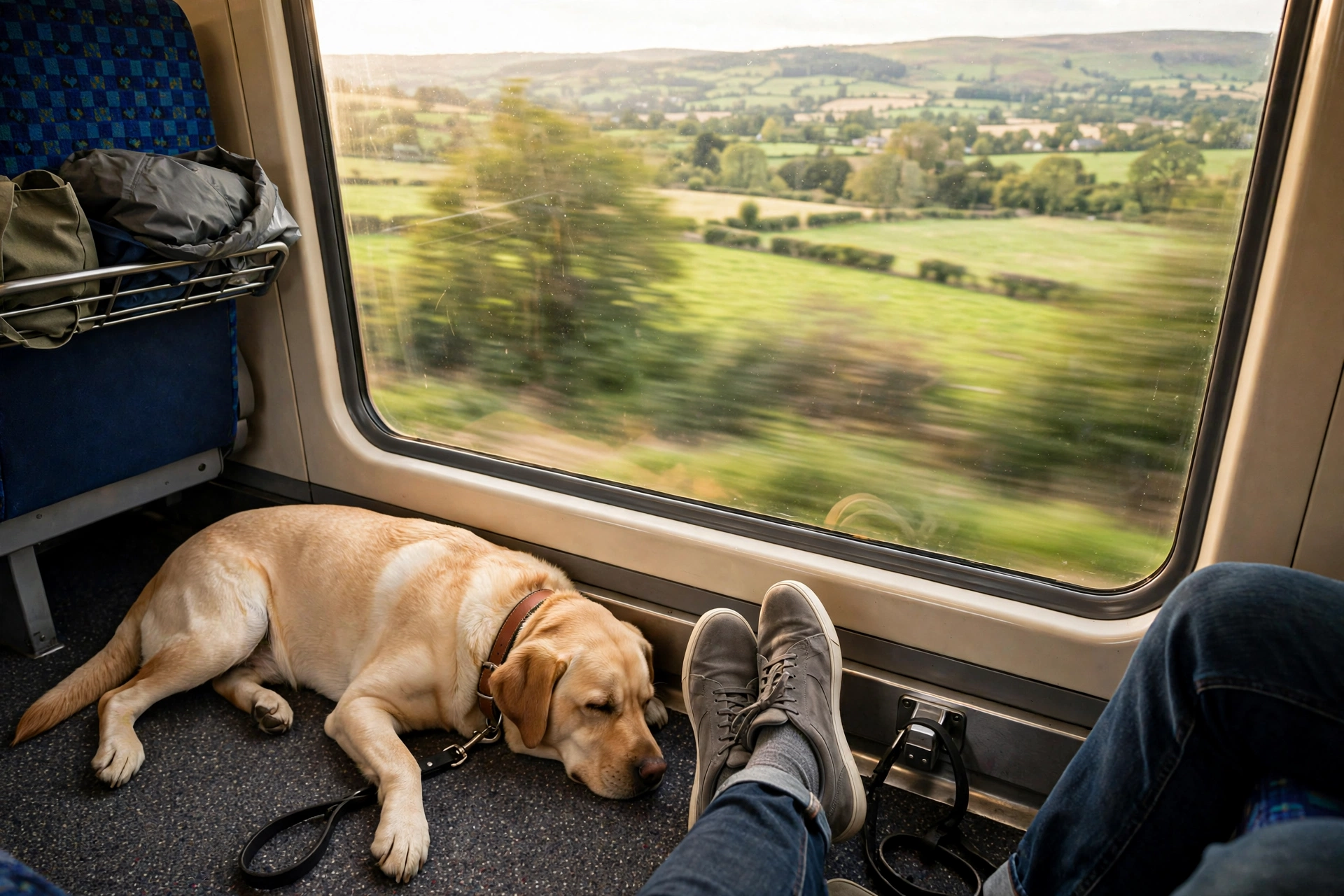
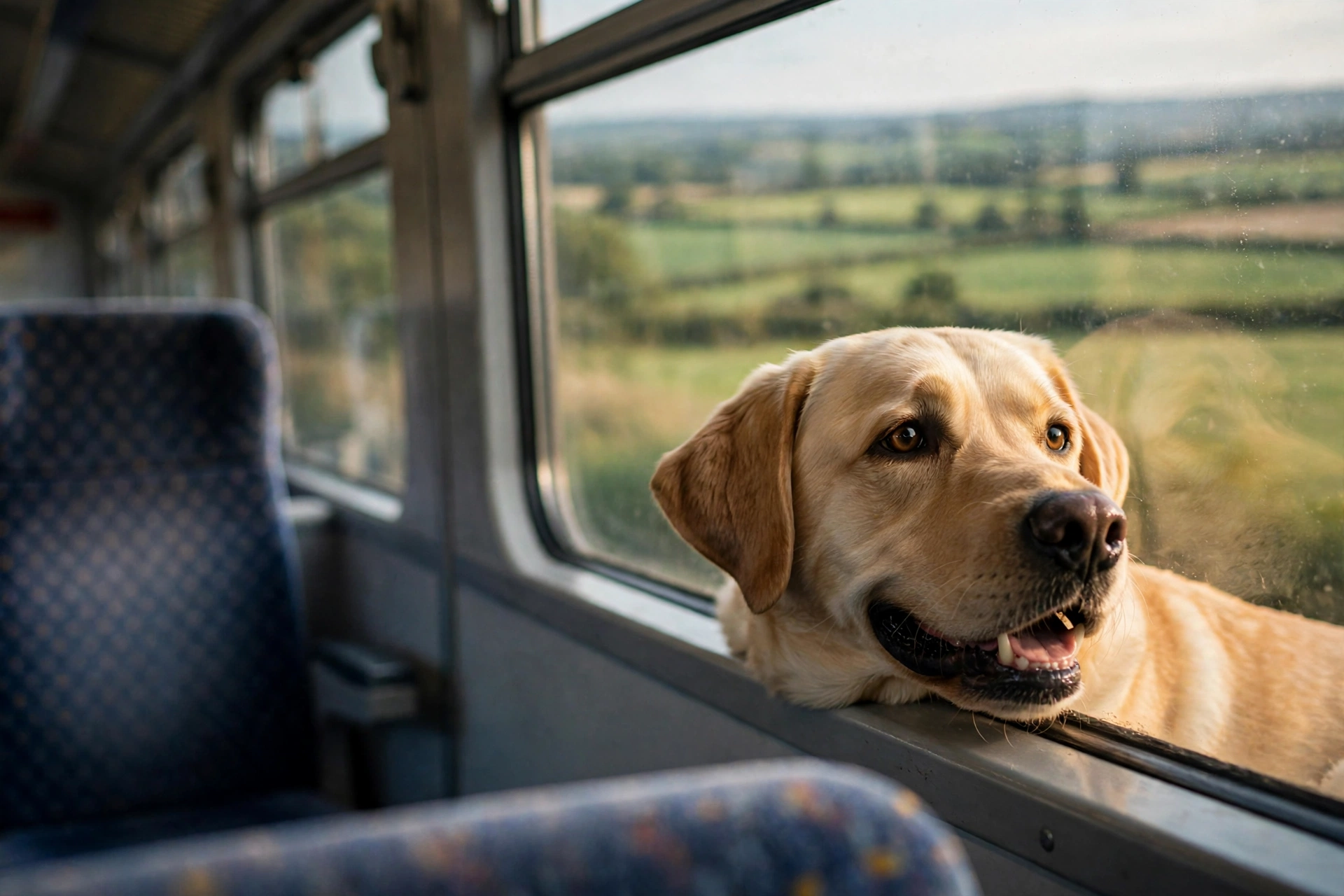
A car lets you carry the world; a train asks you to carry the right things. For many dogs that trade is a gift. The rhythm of a railway journey — settle, watch, wait, walk — suits dogs that get carsick, dogs that pace between rest stops, and dogs that never really switch off when every services halt smells of lorries. On a train the dog has a job with one step: lie down and stay. Two hours later it steps off into a landscape where the walk starts at the station boundary.
Car-free weekends also force a kind of planning that usually improves the break. When you cannot drive to dinner, you find the pub with the flagstone floor that welcomes dogs at the bar instead of the restaurant that tolerates them in the car park. When you cannot drive to the walk, you stay somewhere the first mile is already interesting, which is almost always the prettier half of the trip. And because you cannot load the boot with spares, you learn which three bits of kit actually matter — and travel lighter next time too.
There are genuine constraints to respect. Dogs travel free on most National Rail services but you are typically limited to two dogs per person, and dogs must stay on a lead or in a carrier, on the floor rather than seats. Busy Friday-evening commuter trains are nobody's idea of a holiday start, so the routes below are built around off-peak timing: leave mid-morning or early afternoon, or travel on a Sunday morning when services are thin but platforms are calm. Our UK train rules guide covers operator differences in detail; read it once and you will never pack wrong again. Train times and fares change, so before you commit to any route below, check the current timetable and prices with the relevant operator and confirm the details shortly before departure. For longer car-free journeys, note that coaches are stricter than trains: see our guide to dogs on National Express, where pet dogs cannot ride at all.
The five routes were chosen so that each one differs in region, terrain and character. Each gives you a home station, the walks within reach on foot, where to eat with the dog, and where to sleep without needing a taxi afterwards. If your dog has never been on a train, start with the shortest journey on the list and treat the first trip as a rehearsal, not a holiday: one calm ride and a good walk beats a heroic distance with a stressed dog.
Route 1: Limestone dales from Grindleford — Peak District
Home station: Grindleford (Hope Valley line, Sheffield–Manchester). The trains are small and slow, which suits dogs: the line threads through the Hope Valley past Hathersage, and the carriage doors open directly onto fields. From the platform a surfaced footpath crosses the main road into the village of Grindleford itself, and from there the valley opens up both ways.
The Saturday walk should follow the River Derwent south through the woods toward Froggatt and Curbar, then up onto Curbar Edge for the long gritstone view back down the valley. The lower path is shaded and damp in places — good for dogs that run hot — while the edge path gives an hour of open, off-lead-safe ground well above the road. The round trip from the station and back is roughly nine miles if you take the full loop, but it breaks naturally at any stile: turn around at Froggatt for a four-mile there-and-back if the dog is older or the weather turns.
On Sunday, walk north out of Grindleford along the river toward Hathersage. The riverside path is flat, the distance is whatever you make it, and Hathersage has the better lunch stop: several pubs there keep water bowls by the door and dogs on the bar side as a matter of routine rather than tolerance. Trains from Hathersage back through Grindleford make the return leg a loop rather than a retrace — change nothing except which platform you wait on.
Sleep in one of the guest houses or the bunkhouse-style inns within ten minutes' walk of Grindleford station. This is a walking valley, so book a room that expects muddy boots and ask about the drying room when you reserve: a wet October spaniel dries itself overnight only with a radiator and patience. Eat both evenings at pubs within the village — there are two — so the dog never has to be left alone in the room while you go looking for dinner. If the forecast is wet, the shorter northern walk to Hathersage works in any weather because half of it follows the tree line; in summer heat, take the riverside sections early and rest the dog by the Derwent at midday.
Route 2: Chalk downs from Lewes — East Sussex
Home station: Lewes (direct from London Victoria and Brighton). This route suits dogs that thrive on open country rather than enclosed lanes: the South Downs Way crosses the town, and within twenty minutes of stepping off the train you can be above the rooftops on chalk grassland with the sea haze on the horizon.
Saturday's walk goes east along the Downs toward Ditchling Beacon, roughly four miles of roller-coaster downland with a steady pull of wind at the top. The path is firm chalk, kind to paws, and the views carry for miles on a clear day. There is very little shade, so in hot weather this walk belongs in the early morning or late afternoon, with water carried rather than hoped for. In the other direction, the Lewes-to-Mount Caburn walk westward is shorter — about three miles round — and ends back in town for lunch.
Lewes itself is the heart of this break. It is a compact town that a dog can explore on foot without crossing a busy road every ten minutes: independent pubs with garden seating, a riverside path along the Ouse, and castle walls to circle from the outside while one person goes in. The evening choice that matters most here is the pub with the beer garden that faces west — dogs settle faster with a view to watch, and the sun does the settling for you.
Sleep in the town's dog-friendly inns or B&Bs, all within a quarter-hour walk of the station; the hillside ones above the town are quieter at night but cost you a climb on arrival, so if the dog is old, choose the flatter end of town near the river. Sunday is for the villages the railway passes through: take the train two stops to Glynde and walk back to Lewes across the downs with the river below you, which takes about three hours and ends exactly where your luggage is. If the dog hates wind, reverse the plan: spend Saturday in the sheltered Cuckmere valley bus-free on foot from Lewes, and keep the high ridge for a calm Sunday morning.
Route 3: A city that walks like a village — York
Home station: York (East Coast Main Line, direct from London, Edinburgh, Manchester and Birmingham). Not every dog wants a hill weekend. Some dogs — the ones that lie flat on a station concourse and take it all in — do their best travelling where the interesting things come to them. York is that city: compact enough to cross on foot, flat enough for old legs, and lined with dog-friendly pubs in almost every street.
Plan the two days around walking loops rather than single destinations. The city walls make a natural circuit of about two miles, though dogs are not allowed up on the wall walk itself — walk the circuit at ground level instead, cutting through the Museum Gardens and along the River Ouse. Saturday can be the east loop: the Shambles, the Minster precinct from the outside, and the riverside path to Rowntree Park, where there is proper grass for a run. Sunday crosses the river: the west bank path toward Clifton Ings is a proper waterside walk with fields at the end, and hardly anyone walks it compared with the centre.
For food, York's advantage is density: if one pub is full, the next dog-friendly one is two minutes away, so nobody eats standing up holding a lead in the rain. Many pubs accept dogs throughout, not just in the bar; ask at the door rather than guessing, and favour the ones with water bowls already out — that small detail correlates strongly with how relaxed the staff will be about a big dog under the table. Book dinner for Saturday night in advance if it is a weekend in term time; the city fills with visitors from Friday.
Stay within the walls if the budget allows, or in the guest houses clustered north of the station around Bootham, all dog-friendly as a category rather than an exception. From a station-side stay, every walk starts on foot: no taxi, no bus, no calculation. The rainy-day plan is built in rather than bolted on — the National Railway Museum is a short walk from the station and its Great Hall is vast and dry, though dogs cannot go inside, so treat it as the human activity with the dog walked thoroughly first and settled with a companion outside if you are travelling as a pair. In summer, the Ouse riverside is the place to be at dusk: wide paths, evening light, and hundreds of locals doing exactly what you are doing.
Route 4: Forest trails and waterfalls from Betws-y-Coed — North Wales
Home station: Betws-y-Coed (Conwy Valley line from Llandudno Junction). The journey itself is part of the break: the little line climbs the Conwy valley past waterfalls and forests, and the carriages are quiet enough that a dog can settle properly before the walking even begins. Change at Llandudno Junction from the main line; the connection is short and the platform is small, so transfers are calm.
From the station, the village is a five-minute stroll, and the forest begins where the village ends. Saturday belongs to the Gwydir Forest walks: the Miner's Bridge trail and the Llyn Parc circuit run through conifer woodland on made paths, cool in summer and sheltered in rain, with the kind of steady gradients that tire a dog without tiring the owner. Both can be done on foot from the village centre; neither needs a bus or a car park. Keep the dog on a lead through the forest plantations — timber operations move around, and the rangers' notices at the trailheads are worth reading rather than skimming.
Sunday is for the water. Swallow Falls is a famous walk from the village, roughly four miles there and back along the river, with the falls themselves as the turning point. The path is rougher than the forest trails — proper boots for humans, and short leads for dogs near the unfenced drops above the river. An easier alternative is the riverside walk west toward Llanrwst, flat and grassy, which suits dogs that prefer sniffing verges to scrambling rocks.
Betws-y-Coed has the full range of dog-friendly accommodation — inns, bunkhouses and guest houses — within a ten-minute walk of the station, and several pubs serve food all day so you can eat when the dog dictates rather than when the kitchen opens. Book a room with the river-facing side if offered: the sound of water settles dogs surprisingly well. Midges can be fierce near the river in warm still weather from June to August, so pack repellent that is safe around the dog and plan the evening sit-out accordingly. In winter, daylight is short and the valley holds shade, so start walks by mid-morning and be back before the last light leaves the forest.
Route 5: Big skies and riverside pubs from Hoveton & Wroxham — Norfolk Broads
Home station: Hoveton & Wroxham (Wherry Lines from Norwich, direct to Wroxham in about fifteen minutes). This is the gentlest route on the list and the best first car-free weekend for a dog that has never travelled by train: one short hop from Norwich, a flat landscape with no climbs to misjudge, and a pub culture where dogs are simply part of the furniture.
The Saturday walk follows the River Bure east from Wroxham along the riverside path toward Salhouse Broad, about three miles of level riverside walking where the dog can watch boats and you can watch the dog watching boats. The path is well made and the turns are forgiving: if the dog is tired at a mile and a half, turn and come back without losing anything. The Bure Valley Railway, a narrow-gauge steam line running from Wroxham to Aylsham, accepts dogs in the carriages — check its current policy before travelling — which makes Sunday a different kind of day: ride the steam train out, walk the gentle route back along the old railway line, and let the dog enjoy being the main event in the compartment.
Food is the Broads' quiet strength. Riverside pubs at Wroxham, Horning and Ranworth serve proper lunches with dogs welcome in the bar and gardens; the boat traffic gives the dog something to monitor from under the table, which most dogs consider a job well done. Ranworth's church tower is a local landmark the humans can climb while the dog rests with a companion below — dogs do not go up the tower, so plan this as a take-turns moment if you travel as a pair.
Stay in Wroxham itself or in Hoveton, both within easy reach of the station: riverside inns, guest houses and a handful of dog-friendly holiday cottages that rent for short weekend lets. Because everything is flat, the deciding factor for accommodation is the garden — a secure outside space matters more here than a view, since the walks are all at doorstep level. The seasonal note is the winter one: the Broads are exposed and the paths can flood after prolonged rain, so check recent local reports before booking a January weekend, and bring the drying kit from the packing section regardless of the forecast.
One rucksack for the pair of you
Car-free packing is a discipline, not a sacrifice. The rule is simple: one bag you can carry in one hand while holding a lead in the other, because you will be doing exactly that through every ticket barrier of the trip. Anything that needs two hands to move does not come.
For the dog: food measured for two days in a sealed bag (enough for a slight overfeed, because walking dogs eat like they earned it), a collapsible bowl plus one backup bowl, the dog's regular lead and a long line if the route has off-lead sections, poo bags in embarrassing abundance, a familiar mat or blanket that smells of home for the train floor and the accommodation, one chew or stuffed toy per journey, any medication, and a drying coat or towel. A paper copy of the dog's insurance details and the number of a vet near your destination belongs in the same bag; our emergency vet guide explains how to find one before you leave rather than at midnight. A spare collar with an ID tag is worth more than half of this list on a weekend the original collar breaks.
For you: waterproof jacket, warm layer, walking boots or shoes already broken in, a small first-aid kit, a phone charger, and the booking confirmations saved offline. Everything else is negotiable. The most common mistake is packing for a hypothetical week: you are away for two nights, not moving house. If you cannot decide whether something earns its weight, leave it out — the train will still be there and the dog will not notice.
Boarding is where the packing pays off. The dog goes last through the barrier and first onto the platform; you want the bag already on your shoulder and both hands free for the lead. Set up the dog's floor spot before you sit down — mat down, water offered, chew produced — so the dog's first experience of the carriage is a place to settle rather than a puzzle to solve. If your dog is anxious on transport, read our calming travel guide before the trip and run one practice ride on a local service before committing to a weekend route.
Car-free booking tactics
Book the accommodation before the train tickets. The station-side rooms with gardens and drying facilities sell first, and everything else in the plan flexes around where you sleep. When you reserve, tell them you are arriving by train: dog-friendly places near stations have heard this before and will often advise on the best platform exit, the shortest walking route, or whether to use the front or back door after dark.
Buy train tickets in the right order. Advance tickets are cheapest but lock you to a specific train, which is a risk with a dog you have not travelled with before. For a first rail weekend, consider off-peak returns with flexible timing; the extra cost is usually less than the cost of missing a non-refundable service because the dog refused to toilet at the station. Split ticketing is legal in the UK and can reduce fares, but only split where the train actually stops at the splitting station — do not engineer a journey you cannot explain to a conductor.
Time the journey like a dog owner. Mid-morning departures beat the commuter crush and arrive in time for a proper afternoon walk. Friday evening services are the worst combination of crowded carriages and tired travellers; a Saturday-morning departure that gets you there by lunchtime is calmer for everyone. Return on Sunday afternoon rather than Sunday evening to avoid the end-of-weekend scramble, and always leave an hour of slack between the last walk and the homeward train — a muddy dog needs a towel-down buffer, not a sprint across the concourse.
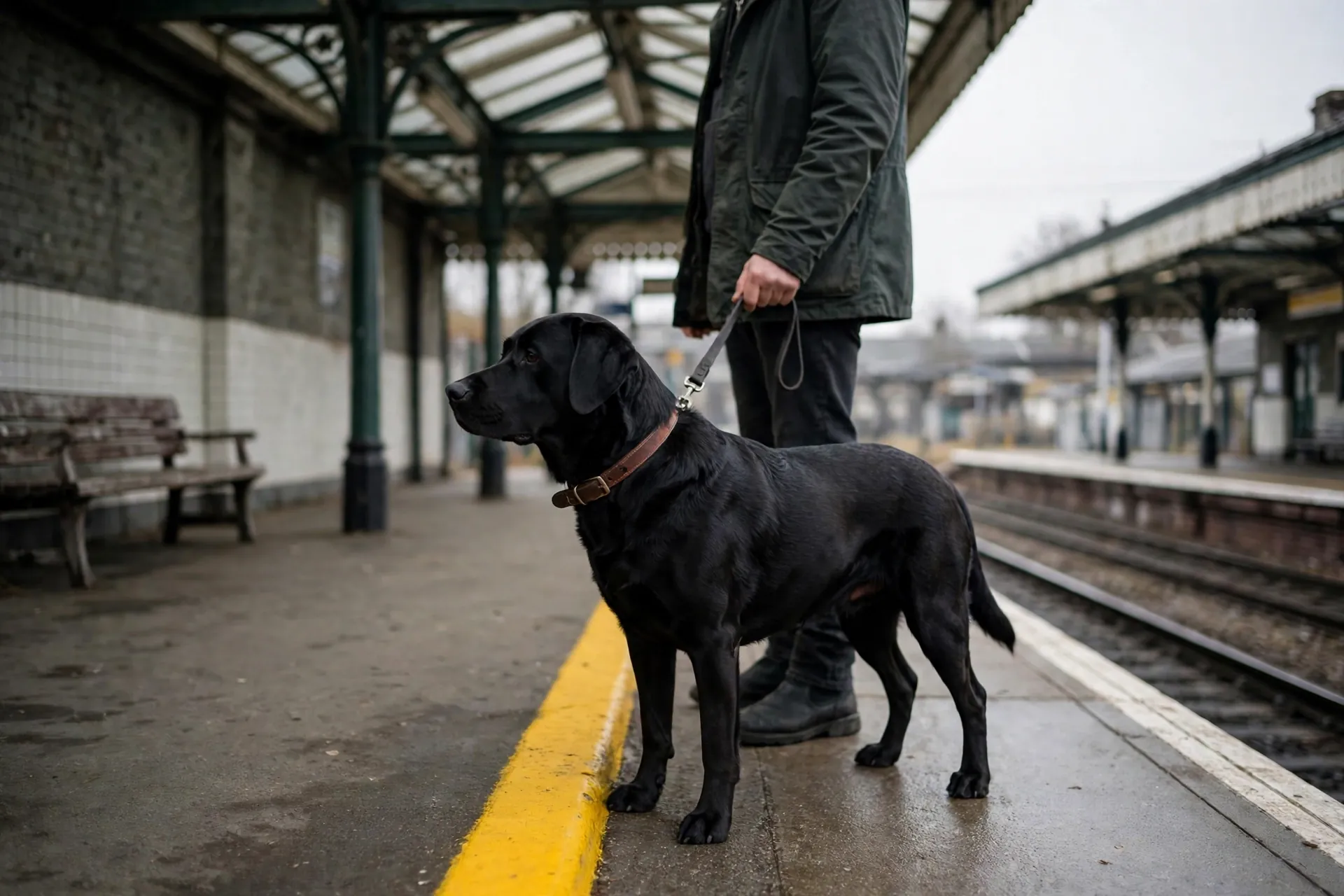
Pre-book the gaps a car would fill. Any taxi you might need — station to cottage, late-night pub return — should be booked as a dog-friendly taxi before you travel, with the dog declared at booking. The same applies to anything the destination requires: steam train seats, tower visits, dinner reservations. Car-free weekends fail at the one unbooked link, so write the full plan as a list of timed connections and check that each one has a confirmation attached. Stations deserve the same attention as any other part of the trip: our platform safety guide covers leads, yellow lines, escalators and unstaffed stations in detail.
Pick accommodation by the last hundred metres. The difference between a great car-free weekend and a tiring one is usually the final approach: a well-lit path from the station, no busy road crossing, a secure garden for the last toilet trip. Ask for these specifics in the booking message rather than assuming them from photographs. Dog-friendly B&Bs are often the best car-free choice because the hosts know the footpaths from the station personally; our B&B guide covers what to ask before you commit. Youth hostels that accept dogs are another strong option for rail travellers, since they cluster near stations by design.
Practical questions
Before you go
Do dogs need a ticket to travel on UK trains?
No. Under National Rail conditions, most train operators let you bring up to two dogs per person without a ticket or fare, and assistance dogs travel free without counting towards that limit. Keep the dog on a lead or in a carrier, and keep it off seats unless the operator explicitly allows it. Check the specific operator's policy before travel, as timetables and prices change — confirm details with the operator before departure.
Where is the best place for my dog on the train?
The floor space by a table seat or in the vestibule, on a familiar mat with a chew or stuffed toy. Doorway areas are busy and doors rattle, so pick seats mid-carriage away from the doors. Sit on the side away from the platform at stations so the dog does not have to watch crowds rush past. Book quieter off-peak services where possible and let your dog empty out before boarding.
What if my accommodation is too far to walk from the station?
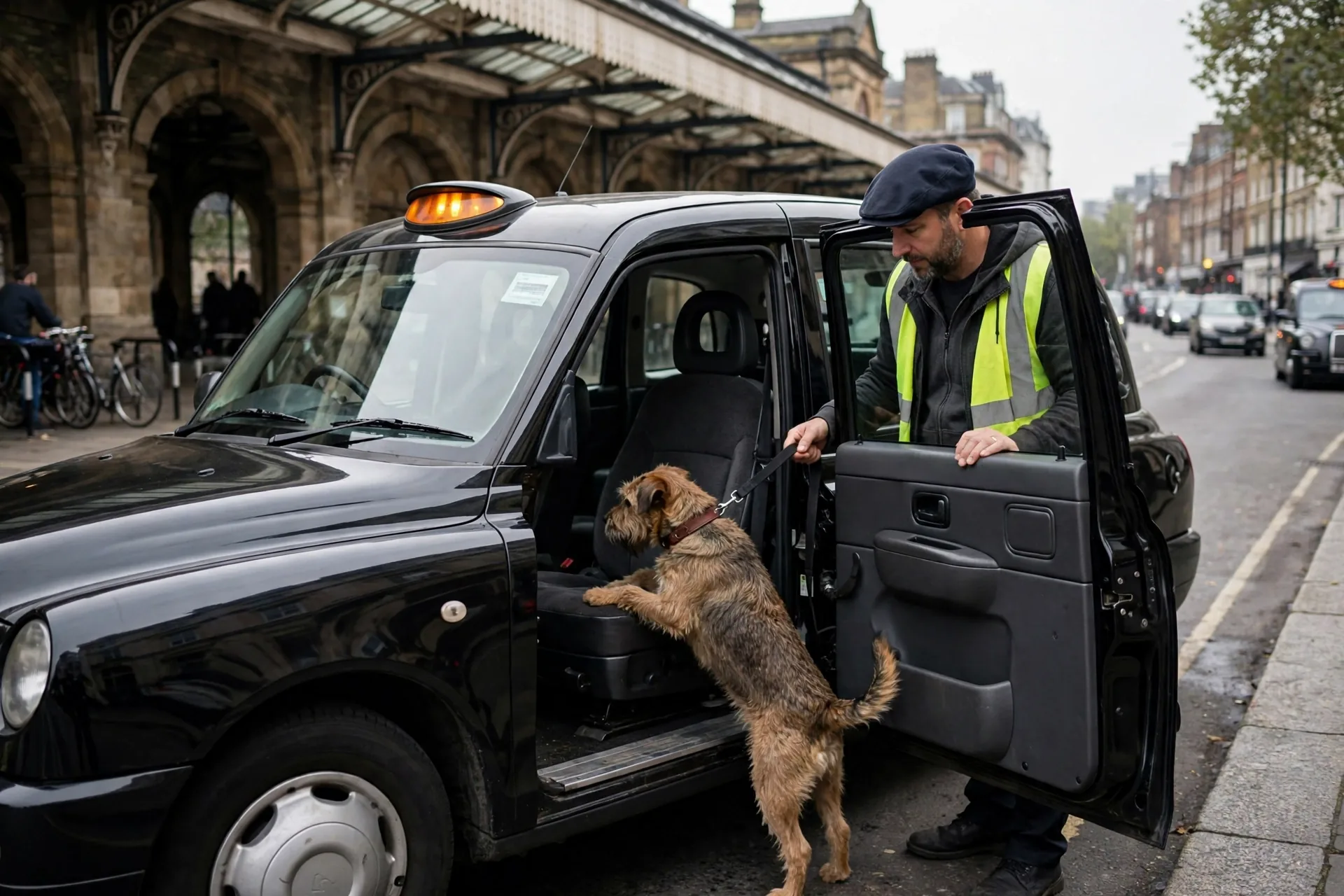
Book a taxi that takes dogs before you travel, and mention the dog when booking so the driver arrives with a clean car and space. Most station taxi ranks cannot guarantee a dog-friendly driver, so arrange one in advance through a local firm or an app and confirm the evening before. Many countryside pubs, B&Bs and inns lie within 20 minutes of a station, and our dog-friendly taxi guide explains how to phrase the booking so nothing goes wrong on arrival.
Can I take my dog on a rail replacement bus?
Usually not. Most rail replacement coaches and buses do not carry dogs except assistance dogs, and the driver can refuse. If engineering works are planned on your route, check before the day: either reroute via a line without works, travel on a different day, or choose a route where the whole journey stays on trains. Engineering schedules change often, so re-check the week you travel.
How do I handle toilet breaks on a long train journey with a dog?
Exercise and toilet the dog at the departure station before boarding, and plan any toilet stop around your connections rather than expecting mid-journey breaks. Many stations have grassy areas or patches just outside the entrance — station staff can point you to the nearest one. On very long journeys, choose services with a connection at a quieter interchange station where you have twenty to thirty minutes, walk the dog outside, then board the next train.
Can my dog sit on the train seat next to me?
In most cases, no. National Rail conditions and most operators require dogs to stay on the floor or in a carrier, and many specifically ban dogs from seats for hygiene reasons. A blanket on the floor beside your seat works as well as a seat for most dogs. Small dogs in carriers can usually travel on your lap. The practical exception is some sleeper services and heritage railways with their own rules, so check the operator before you assume.