This guide is independent and contains no paid placement. If affiliate links are added later, they will be clearly marked and will not change our editorial checks.
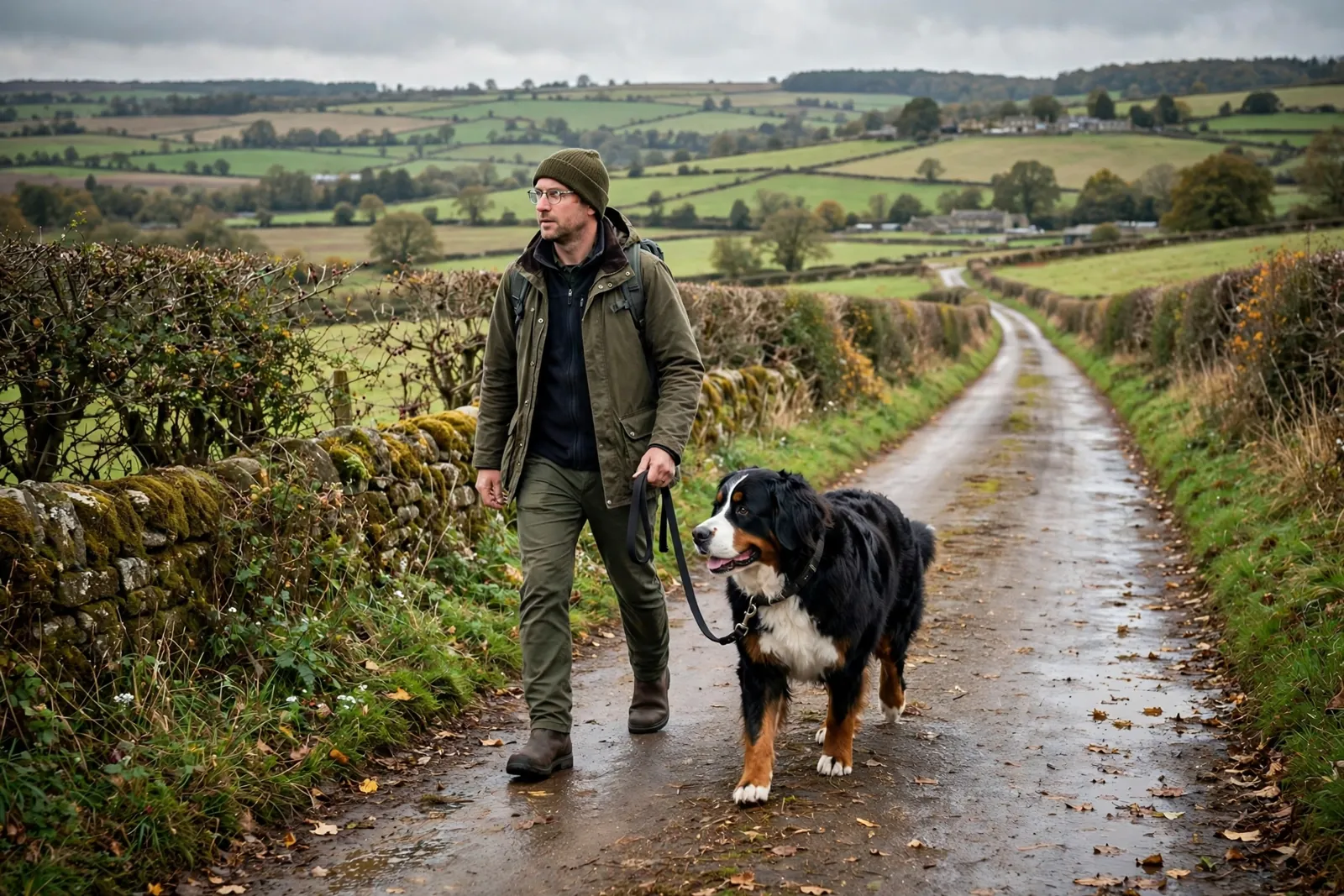
Cycling with dog in the UK works three ways: a fit adult dog trotting beside the bike on a suitable attachment, a dog riding in a trailer, or a small dog in a secure basket or carrier. Puppies, older dogs and flat-faced breeds should ride, not run. Build distance gradually, choose traffic-free routes, respect local bylaws, and stop for water and paws long before the dog asks.
The decision that comes before any equipment
Before a single product is bought, answer the only question that matters: should this dog run beside a bicycle at all? Running alongside suits healthy adult dogs of suitable build who are fully grown — growth plates in young dogs are vulnerable, so puppies and adolescents should ride in a trailer rather than run, whatever their enthusiasm suggests. It does not suit older dogs with stiff joints, dogs recovering from injury, very small dogs whose stride cannot match even a slow wheel, or brachycephalic breeds whose breathing limits sustained running, as our flat-faced dog travel guide sets out in detail. For every dog in those groups, cycling together is still possible and often delightful — they simply ride while you pedal.
Temperament votes too. A dog who lunges at squirrels, cyclists, joggers or other dogs is a hazard attached to a moving vehicle at handlebar height. That dog belongs in a trailer while training continues elsewhere, not on a lead beside a wheel where one sideways surge can put both of you on the tarmac. Equally, a dog terrified of traffic noise will not be converted by exposure at cycling speed; choose traffic-free routes or the trailer, and build confidence on foot first.
Your riding is the third factor. Confident, slow, predictable cycling on quiet routes is the platform everything else stands on. If you are returning to cycling after years away, regain your own balance and braking habits solo before adding a dog to the equation. The combined system — rider, bike, dog — is only as steady as its least practised part.
Finally, be clear about the outing's purpose. A dog-centred ride is shorter, slower and stop-heavy compared with your solo training ride, and it always will be. Owners who accept that from the outset have wonderful rides; owners who try to smuggle a personal workout inside a dog outing end up with an overheated dog, a resentful ride, or both. Plan the dog's ride. Do your workout another day.
Running alongside: attachment, pace and hard limits
Never ride with a lead wrapped around your hand, wrist or handlebars. If the dog stops, surges or crosses the wheel, the lead becomes the mechanism of the crash. Purpose-designed bike attachments — a rigid or sprung arm mounted to the frame or seat post, keeping the dog beside the rear wheel at a fixed distance — exist precisely to break that chain of events, giving the dog a consistent position, absorbing some sideways pull, and keeping lead and paws clear of spokes. Whatever system you choose, the dog wears a well-fitted harness, never a collar, so any sudden force spreads across the body rather than the neck.
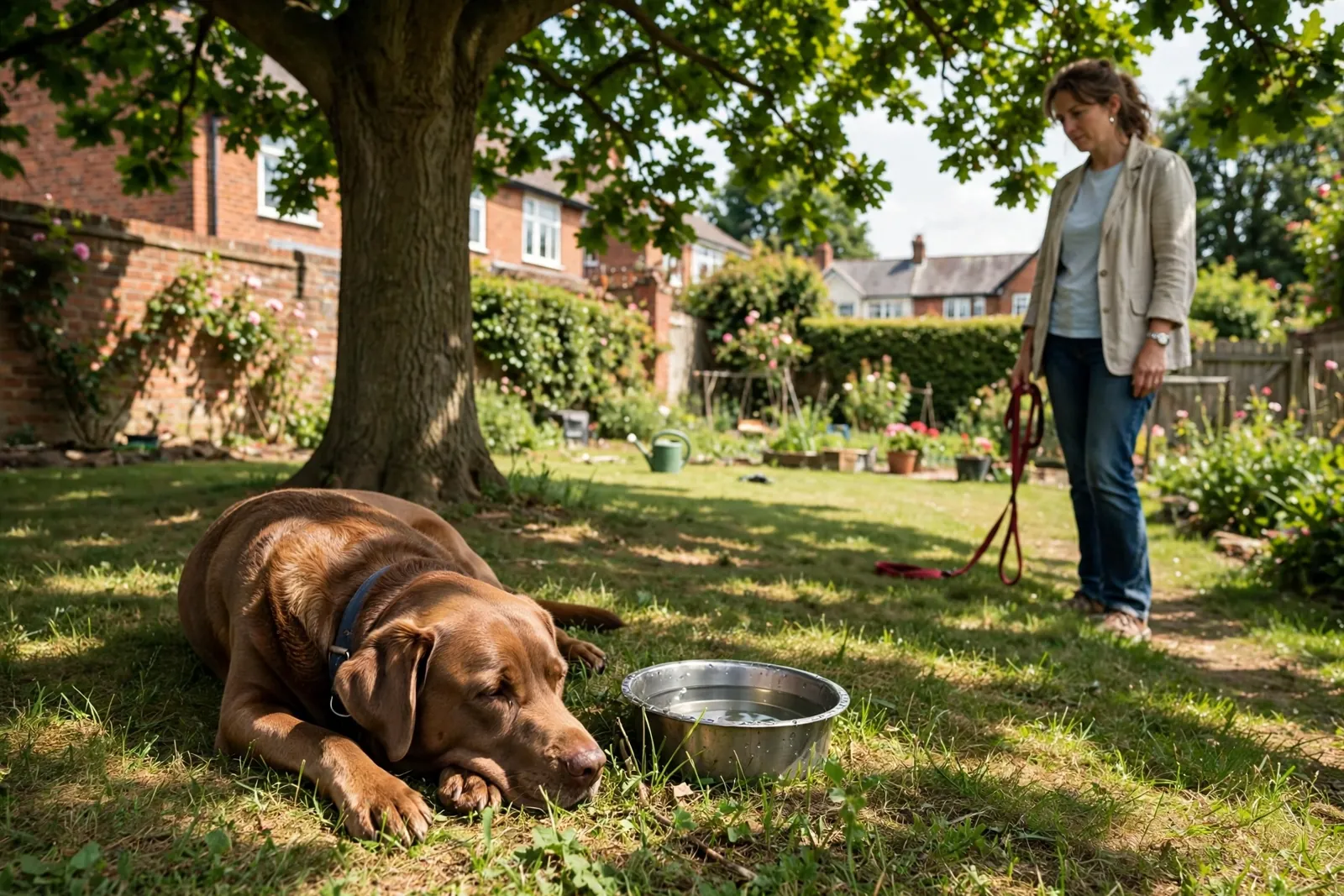
Pace belongs to the dog. A comfortable trot is the ceiling for most dogs beside a bike; a flat-out run is for very short, safe bursts on soft, empty ground, if at all. Watch effort continuously — breathing, stride, enthusiasm for the next stretch — and treat a dog who starts lagging, weaving or pulling toward shade as a dog who is finished, not a dog who needs encouragement. Heat builds fast in a running dog, so ride in the cool of the day, carry water for the dog as deliberately as for yourself, and stop to offer it every fifteen to twenty minutes on warm days, more often for heavy-coated breeds.
Distance must be earned gradually, exactly like a runner's training plan. Start with a few hundred metres on a quiet path, mixed with walking, and add a little at a time over weeks while checking paws and recovery after each ride. A dog who is stiff the next morning did too much yesterday, however keen they looked at the time. Many healthy dogs happily build to several miles of trotting with breaks; very few need more, and none need it daily. Rest days are part of the programme, not a failure of it.
Surfaces decide paw health. Hot tarmac in summer can burn pads — if you cannot hold the back of your hand on it comfortably for several seconds, do not ask paws to run on it. Grit, gravel and winter salt all punish feet over distance, so inspect pads after every ride, rinse salt away, and consider the soft verge where it is safe. A dog who begins favouring a foot mid-ride gets a walk home or a trailer ride, never a run to finish the loop.
Trailers, baskets and carriers: letting every dog ride
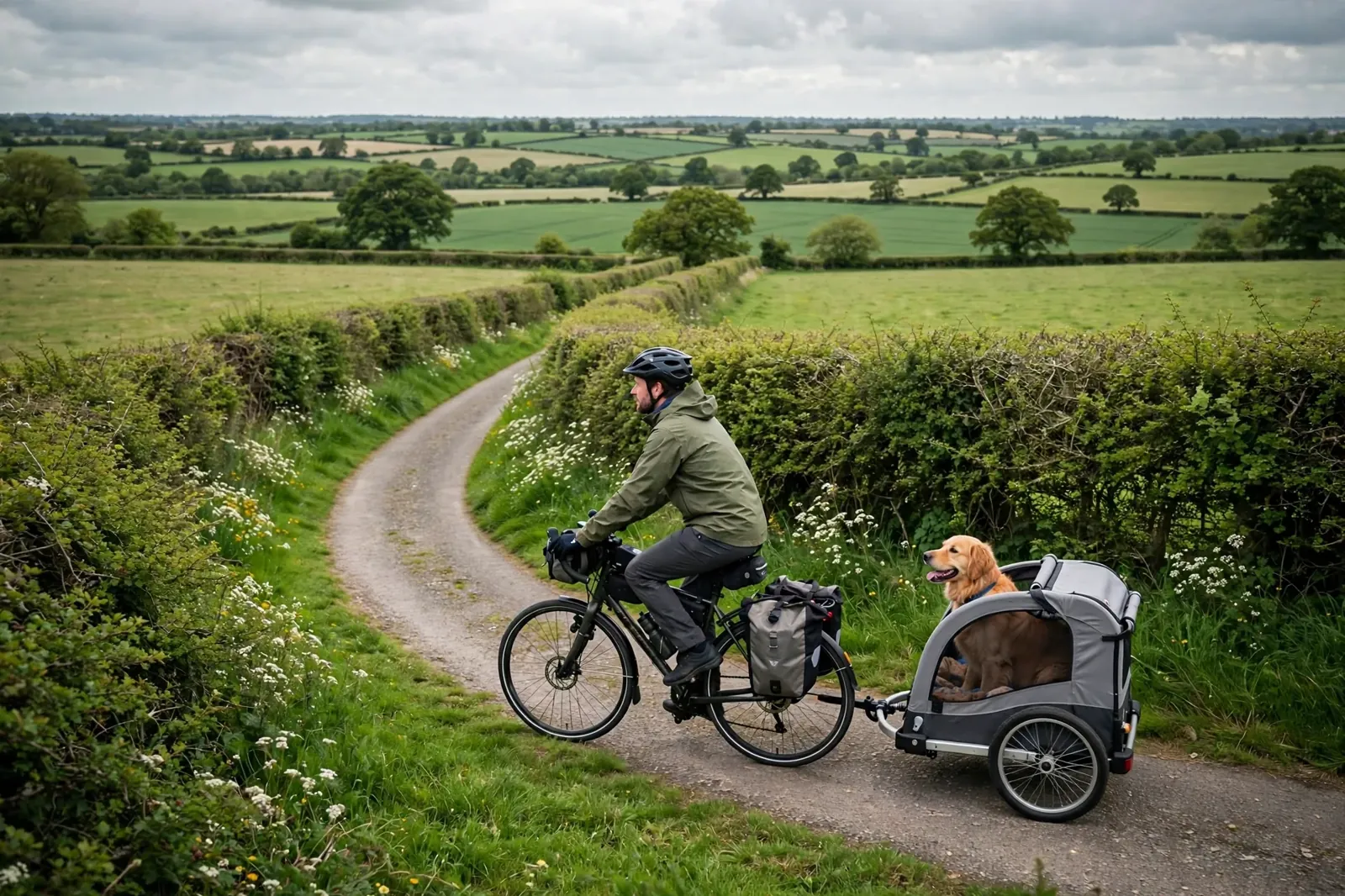
A dog trailer converts cycling into transport any dog can enjoy. Look for a low centre of gravity, a solid floor with a washable mat, mesh ventilation on several sides, a harness anchor point inside, weather protection and wheels suited to the surfaces you will actually ride — towpaths and park paths punish small hard wheels and their passenger alike. Size it by the dog lying down comfortably, not sitting for the photograph, and train in stages: trailer stationary at home with treats inside, then wheeled by hand, then attached for short quiet rides. Most dogs accept a trailer within a few sessions when nobody rushes the staircase.
Small dogs have a second option: a front or rear basket or carrier designed for animals, with a solid base, secure sides and a short harness clip inside. Keep within the carrier's stated weight limit, understand that a high front basket changes steering feel, and practise unloaded first. A carrier dog is still a passenger who needs shade, water stops and protection from wind chill at cycling speed, which arrives faster and colder than owners standing still ever guess.
Riding changes the risk picture rather than removing it. Trailers sit low, so visibility help matters: a flag, bright panels and lights in dull weather make the outfit legible to drivers and other riders. At junctions, remember you are longer — the trailer is still crossing after the bike has cleared. On narrow paths, be ready to stop and let others pass rather than squeezing a wide rig through a gap that looked bigger at speed.
Cost planning helps here too, because a decent trailer is a considered purchase alongside the harness, attachment and lights. Our dog travel costs guide puts this kind of kit in the wider budget of travelling with a dog, and second-hand trailers are worth inspecting carefully — wheel bearings, fabric integrity and the all-important internal anchor point — before trusting them with a passenger.
Training progression: from garden path to first real ride
Teach the pieces on foot before the wheels turn. The dog should walk calmly on the side where the attachment will place them, respond to a clear stop and wait, and be used to the bike being wheeled beside them without ducking from it. Practise mounting and dismounting without the dog tangling in pedals or frame. Reward heavily at this stage; the bike should predict good things arriving at a relaxed pace, long before it predicts exercise.
Then roll, briefly. A quiet car park, park path or empty lane is the classroom: a few minutes of slow riding with the dog trotting or the trailer occupied, an easy stop, water, praise, done. Repeat across several days, adding one variable at a time — a gentle bend, a passing pedestrian at distance, a different surface. If the dog surges, panics or shuts down, the next session goes back a step. Progress measured in calm repetitions survives; progress measured in miles on day one is how accidents and aversions are made.
Build the stop into the training as a skill in itself. Both running and trailer dogs need a reliable pattern for junctions, gates and encounters: slow, stop, dog settles beside or inside, world passes, ride on. Practise it deliberately on quiet ground until it is dull. On real routes, that rehearsed boredom is what carries you safely past the off-lead dog, the horse, the child on a scooter and the pheasant with a death wish.
Know when not to ride. A dog who is lame, unwell, recovering, frightened by the setup after fair gradual training, or simply having a day of refusing the harness has voted, and the answer is a walk instead. Cycling together is an enrichment, not an obligation, and protecting the dog's willingness matters more than any streak of consecutive rides.
Routes and rules: where dogs and bikes genuinely mix
Route choice makes most of cycling with a dog work or fail. Favour traffic-free and low-traffic options: canal towpaths, disused railway trails, forest tracks, park circuits and quiet lanes, ridden at the dog's hours — early morning and evening in summer, midday only in cool seasons. National Cycle Network routes include many traffic-free sections ideal for a dog outfit, but surfaces and rules vary locally, so check the specific stretch rather than assuming. Dogs must be under close control around other users everywhere, and some promenades, parks and estates apply seasonal rules or lead requirements — confirm local bylaws and signage before you ride, and follow the latest local guidance on the day.
On bridleways and shared paths, ride at a pace that respects walkers, horse riders and other dogs: slow right down, call out politely, give horses maximum room and stop if a horse is unsettled. Farm land brings livestock rules with teeth — a dog chasing sheep, even playfully through a fence-line surge, is a serious legal matter in the UK, covered fully in our guide to livestock worrying law. Near livestock, the trailer or a very short, controlled running position and a walking pace are the professional choices; if in doubt, dismount and walk the section.
Public roads are the least suitable environment for a running dog, and many owners avoid them entirely for that mode. If a short road link is unavoidable between trails, keep it brief, slow and controlled, with the dog on the side away from traffic where the setup allows, visibility gear on, and a willingness to dismount and walk instead whenever the traffic feels wrong. A trailer outfit on roads needs lights, reflectors and road presence planned as seriously as any other vehicle's.
Finish every route plan with exits: where can you cut the loop, call a taxi that accepts dogs, or sit in shade with water while help comes? Our dog friendly taxis guide explains how to arrange that backup before you need it. A ride with a planned bail-out is a relaxed ride; a ride without one makes every small problem bigger than it needed to be.
Gear list, weather calls and after-ride checks
Keep the kit tight and purposeful. For the dog: a well-fitted harness, the frame-mounted attachment or the trailer with its internal anchor checked, water and a bowl, poo bags, a small first-aid kit including paw care, and identification on the dog in case of separation. For the rider: helmet, lights, a pump and basic repair kit that accounts for the trailer's wheels as well as the bike's, and a phone with the vet's number and your route saved. Hi-vis and reflective elements for both bike and trailer earn their place in any dull weather, which in Britain is most of the year.
Weather calls should be made conservatively and early. Heat is the obvious stop — reschedule to dawn, shorten radically, or do not ride. Cold wind chills a trailer passenger who cannot generate their own heat by running, so add a blanket and check the dog at stops; a running dog, by contrast, may overheat under a coat that seemed sensible at the door. Heavy rain reduces everyone's visibility and braking margins and turns towpath surfaces treacherous. There is always another day, and dogs are notably unbothered by a postponed plan.
After every ride, run the two-minute check. Paws: pads, between toes, any cuts or embedded grit. Body: breathing fully settled, gait even on a short walk, water taken willingly. Kit: attachment mount tight, trailer anchor sound, harness straps un-frayed. Log distance and surface honestly for the first months; the pattern of what your dog recovers from easily is the truest training plan you will ever own.
Review monthly, especially with young, old or changing dogs. Fitness rises and falls, joints age, confidence grows or wobbles. The owners who enjoy years of cycling together are not the ones who set a regime once; they are the ones who keep adjusting the ride to the dog in front of them, season by season — which, not coincidentally, is the principle behind every guide on this site.
Practical questions
Before you go
Is it legal to cycle with a dog in the UK?
There is no single UK law banning cycling with a dog, but you must keep the dog under proper control, follow local bylaws and signage on promenades, parks and towpaths, and avoid causing danger on the highway. Never ride holding a lead wrapped around your hand or bars. Check local rules before riding a new route, as requirements vary by place.
How far can a dog run beside a bike?
Build up gradually from a few hundred metres over weeks, always at a comfortable trot with water breaks, and let recovery decide: stiffness the next day means yesterday was too much. Many fit adult dogs manage several miles with stops. Puppies, older dogs, very small dogs and flat-faced breeds should ride in a trailer instead of running.
What age can a dog start running beside a bike?
Wait until the dog is fully grown — commonly at least 12 to 18 months depending on breed and size — because developing joints and growth plates are vulnerable to repetitive impact. Your vet can confirm when your individual dog is ready. Until then, a trailer lets a young dog join rides without running.
Trailer or basket: which is better for a small dog?
A trailer offers more space, a lower centre of gravity and room to lie down, suiting longer rides and nervous dogs. A purpose-designed basket or carrier, with a solid base and internal harness clip, suits very small dogs on shorter, slower rides. In both cases the dog must be clipped in by harness, and you should practise with the setup before longer trips.
What should I do if my dog lunges at things while attached to the bike?
Stop riding with the dog running alongside. A lunge at handlebar height can bring both of you down, and it signals the dog is over threshold. Use a trailer while you work on the underlying behaviour on foot with reward-based training, choose quieter routes, and only reconsider running alongside when the dog is reliably calm at walking pace first.