This guide is independent and contains no paid placement. If affiliate links are added later, they will be clearly marked and will not change our editorial checks.
Walk the River Wear loop first — about three miles of woodland and meadow beneath the cathedral, mostly on leads near the banks. The cathedral and castle interiors are not for pet dogs, so split those visits from Palace Green, then use the wooded banks, Aykley Heads and the Houghall woods for longer walks. Durham is steep and compact: short distances, real hills.
The riverside loop: the walk that defines Durham
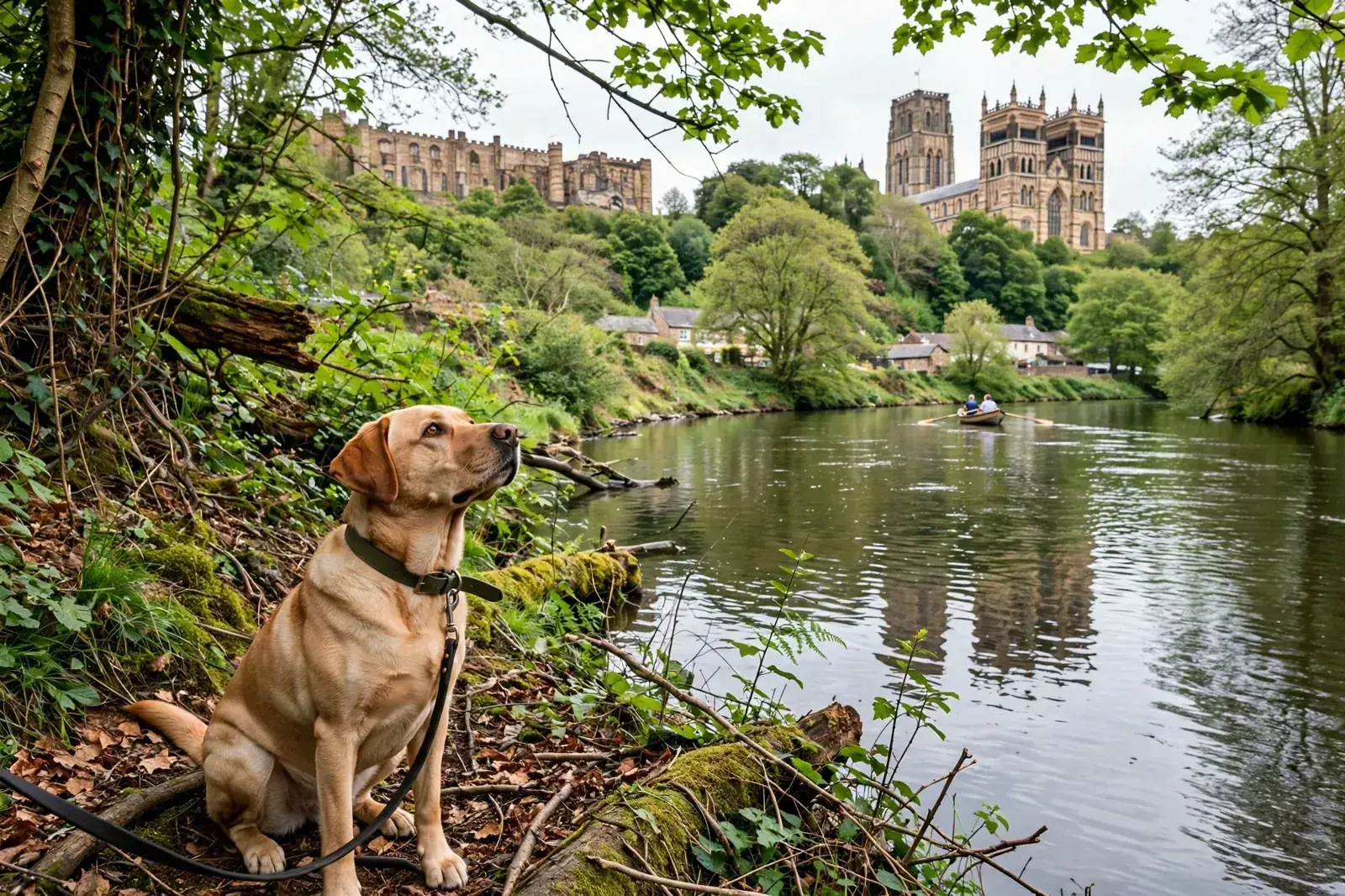
The River Wear bends almost full circle around Durham's cathedral peninsula, and the path that follows it is the city's defining dog walk. A complete loop — down from Framwellgate Bridge along the wooded western bank, under the cathedral's cliff of trees, past the old fulling mill and the rowing reaches, across at the footbridges and back along the eastern bank beneath the castle — runs to roughly three miles and takes an hour and a half at a dog's pace. There is no better introduction to Durham, and for many dogs it will be the best walk of the trip, repeated daily at different hours.
The two banks have different characters, and knowing them helps you plan. The western bank below the cathedral is woodland: steep, shaded paths through mature trees, with the river below and the cathedral appearing and disappearing through the leaves. It is beautiful, cooler in summer, muddier in winter, and in places the path narrows to single file above drops to the water — short leads, no extending leads, and care with dogs that pull toward the river. The eastern bank, below the castle and the university buildings, is more open: meadows, the racecourse ground used by the regatta, sports fields and broader grass where, away from the path and any activities, a dog with reliable recall gets better exercise.
Water discipline matters on the Wear. The river looks inviting in summer and rowing boats, swimmers at the traditional bathing places and dogs have shared it for generations, but it is a real river with a current that rises fast after rain on the Pennine hills upstream. Keep dogs out entirely when the river is up or coloured, use only the gentle, shallow entry points in settled weather, and keep them clear of rowing landing stages, boat houses and regatta infrastructure at all times. Herons, dippers and otters are all part of this river's life; a dog under close control on the banks is how they stay part of it.
Time the loop like a local: early morning for mist on the water and the woods to yourselves, the hour before sunset for the cathedral lit above the trees. On regatta days, university race days and the busiest summer weekends, the eastern bank fills with spectators, boats and marquees — walk the western woods instead, or take the loop in the opposite direction and finish before the crowds build. In winter flood conditions, sections of the low path close or become impassable; respect any barriers, because the Wear does not negotiate.
Cathedral and castle: precinct rules for dogs
At the top of the peninsula, reached by the steep cobbled climb of the Bailey or the gentler lanes, stand the cathedral and castle together on Palace Green — a World Heritage pairing, and the reason most people come. The dog rules follow the national pattern for great churches and working university buildings: pet dogs are not generally admitted inside Durham Cathedral, and Durham Castle is visited only on guided tours that pet dogs cannot join. Assistance dogs are a different matter, and anyone travelling with one should contact the venues ahead for the current arrangements. For everyone else, check the official site before you go, because visiting arrangements, charges and event closures change.
What a dog can share is the setting, and the setting is half the experience. Palace Green itself, the cathedral precinct and the College area behind the cathedral are outdoor spaces for a lead walk among some of the finest Norman architecture in Europe, and the views from the Green and the Bailey across to the riverbanks you have just walked tie the whole city together. Plan the interior as a split visit: the cathedral deserves a full unhurried hour at least, and while one person is inside, the other has the loop's best hour available below, or a quiet circuit of the Green, the bookshop streets and the riverside cafes to choose from. Reunite and swap, or save the second interior for the next morning.
The climb itself deserves a note for older dogs and anyone with a pushchair-sized sense of humour about hills: the Bailey is steep and cobbled, slippery when wet, and the alternative route up from the river via the woodland paths is longer but kinder underfoot. Choose by your dog, not by the map. Solo travellers face the standard cathedral-city decision — arrange care, choose accommodation whose rules genuinely allow a settled dog to be left for the visit window, or enjoy Durham from outside its two great interiors, which this city makes easier than almost any other, because its masterpiece is a landscape as much as a building.
The old city: market place, lanes and bridges
Durham's old city is small, steep and student-filled in term time. The Market Place, with its town hall and statue, is the hub; from it, Saddler Street climbs cobbled toward the cathedral past small shops and cafes, Silver Street drops to Framwellgate Bridge and the river, and the indoor market and the Prince Bishops shopping area handle the practical end of a visit. For a dog, this is all lead-walking pavement work, best done early or in the evening when the student and shopping crowds thin, and best treated as the connective tissue between river walks rather than the destination itself.
The bridges are the city's viewpoints, and each deserves a pause with the dog safely at the wall side. Framwellgate Bridge gives the classic postcard: cathedral and castle stacked above the Wear, with the weirs below. Elvet Bridge, at the older eastern crossing, leads to Old Elvet's Georgian streets, university buildings and some of the city's calmer cafes — a good lunch direction with a dog, away from the steepest crowds. The newer footbridges and the Kingsgate bridge complete the loop options that let you vary the riverside walk daily without repeating a step.
Two city habits will serve you well. First, park the push of the day early: Durham's centre rewards a seven-thirty start like few cities, when the market place is empty and the light is on the cathedral. Second, expect the term-time rhythm — the university dominates the calendar, and graduation weeks, freshers' week and parents' weekends transform both crowds and accommodation prices, while the vacations return a sleepy cathedral city to its dogs. Check the term dates as part of your planning, not as an afterthought.
Longer walks: woods, gardens and the Wear beyond the loop
When the loop becomes routine — give it at least three walks before it does — Durham's edges extend the range. South of the centre, the Houghall woods and the university's land along the river offer shaded woodland walking that links back to the eastern bank, ideal in summer heat. The Botanic Garden sits in this direction; its pet dog policy has historically been assistance only, so check the official site before you go and treat the woods, not the garden, as the dog's share of that outing.
North and west, Aykley Heads provides the city's big open parkland: grass, woodland edges and views, well used by local dog walkers and suitable for proper off-lead exercise away from the roads and car parks. Wharton Park, above the station, is the Victorian alternative — terraced gardens, views over the viaduct and the cathedral, and a lead-walk circuit that pairs with an arrival or departure day. Further afield, the Wear continues to reward exploration in both directions, toward Finchale Priory downstream — a riverside ruin in a wooded loop of the river that makes a classic half-day — and upstream into the Durham dales foothills.
Durham also works as the southern base for a wider county and coast trip, and our Northumberland dog guide covers the castles-and-beaches county to the north for those extending the journey in that direction. For a stay based in Durham itself, though, the honest advice is depth over breadth: this small city's combination of river, woods and hilltop architecture repays repetition more than mileage.
Where to stay with a dog
Accommodation in Durham splits between the old city — hotels on and around Old Elvet, the Bailey area and the market place — the modern hotels near the river and station, and guest houses and self-catering in the residential streets of Gilesgate, Crossgate and the viaduct area. Old-city stays put the loop and the cathedral climb at your door, with pavement routines for the last walk and the earliest starts on the river. The residential districts give quieter nights, gardens in some cases, and a ten-minute walk that most dogs experience as a feature, not a cost.
Ask the booking questions in full — which rooms, what fee, size or number limits, dogs in dining areas, and whether a dog may be left alone in the room, the answer that decides your cathedral plan — and add Durham's two specifics: stairs and hills (a room up three flights in a converted Bailey townhouse is a real consideration for an older dog), and event pricing around graduation, the regatta and the Christmas festival, when the city sells out. Our national guide to dog-friendly hotels in the UK works through the general checklist in the detail it deserves.
Self-catering in the terraced streets suits longer stays: your own door, hard floors in the best cases, and a local routine that forms fast. Check the yard or garden fencing properly — Durham gardens run steeply downhill in many streets, with gates at levels a determined dog can test — and locate the nearest patch of grass and a bin for the late walk before the first night, not during it.
Eating and drinking with a dog
Durham's pubs are its dog-friendly stronghold, as in most northern university cities: traditional pubs in Old Elvet, around the market place and down toward the river welcome dogs in their bar areas as a matter of course, and several have the kind of stone floors and fireside corners that were designed by centuries of wet walks. Cafes on Saddler Street, in the indoor market area and in Old Elvet are a mixed picture at peak student hours — small rooms fill fast — so the pattern is the familiar one: ask at the door, aim off-peak, and keep pub gardens and the riverside terraces for summer. Every venue's policy is its own, so check the official site before you go when a specific lunch matters.
The regatta and graduation compress everything: on those weekends, eat early, book where booking is possible, or picnic — the eastern bank meadows and Wharton Park take a picnic as well as anywhere in the county, and the market and delis supply them. In winter, the Durham pub lunch after a cold loop of the Wear, dog asleep under the table while the river runs high outside the window, is the city's essential experience, and it is available most days of the year without a reservation arms race if you arrive by noon.
Keep the standing etiquette: walked and toileted first, short lead, dog on the floor and off the seats, a mat and chew in the bag, and a quick paw check at the door after the woodland bank in wet weeks. Durham mud is honest mud, and pubs forgive it more readily when it arrives in small quantities.
Getting there, parking and seasonal tips
Durham station sits on the East Coast Main Line above the city, with fast trains from London, York, Newcastle and Edinburgh, and one of the great arrival views in England as the line crosses the viaduct beneath the cathedral. Dogs travel free on UK trains on a lead or in a carrier and off seats. The walk down from the station into the centre is steep in places — choose the gentler descent with an older dog or heavy luggage. Drivers should use the city's car parks and the park-and-ride sites rather than attempting the peninsula, where parking is minimal and the streets were laid out several centuries before the car; confirm current arrangements on the official site before you go.
Season by season: spring brings the woodland banks into flower and the rowing season onto the river, with term-time life at full stretch. Summer adds the regatta's big weekend, long evenings on the loop and the need for shade planning for thick-coated dogs, because the eastern bank is open and the western woods are the cool route. Autumn is the photographer's and the dog walker's Durham — colour in the Wear valley, misty mornings, quieter midweeks. Winter is atmospheric and demanding in equal parts: short days, a river that commands respect, ice on the Bailey cobbles, and the Christmas festival filling the peninsula on its weekend.
The backup list, done before you need it: a Durham veterinary practice number and the out-of-hours arrangement saved; a paw and coat check after woodland walks for ticks in season and mud always; a harness rather than a collar for the steep, slippery streets; and one spare half day in the plan. Durham is a city of second looks — the cathedral from a new bend of the river, the loop walked backwards — and a dog, who never tires of the same walk at a new hour, is the perfect companion for discovering that.
North from Durham into Northumberland
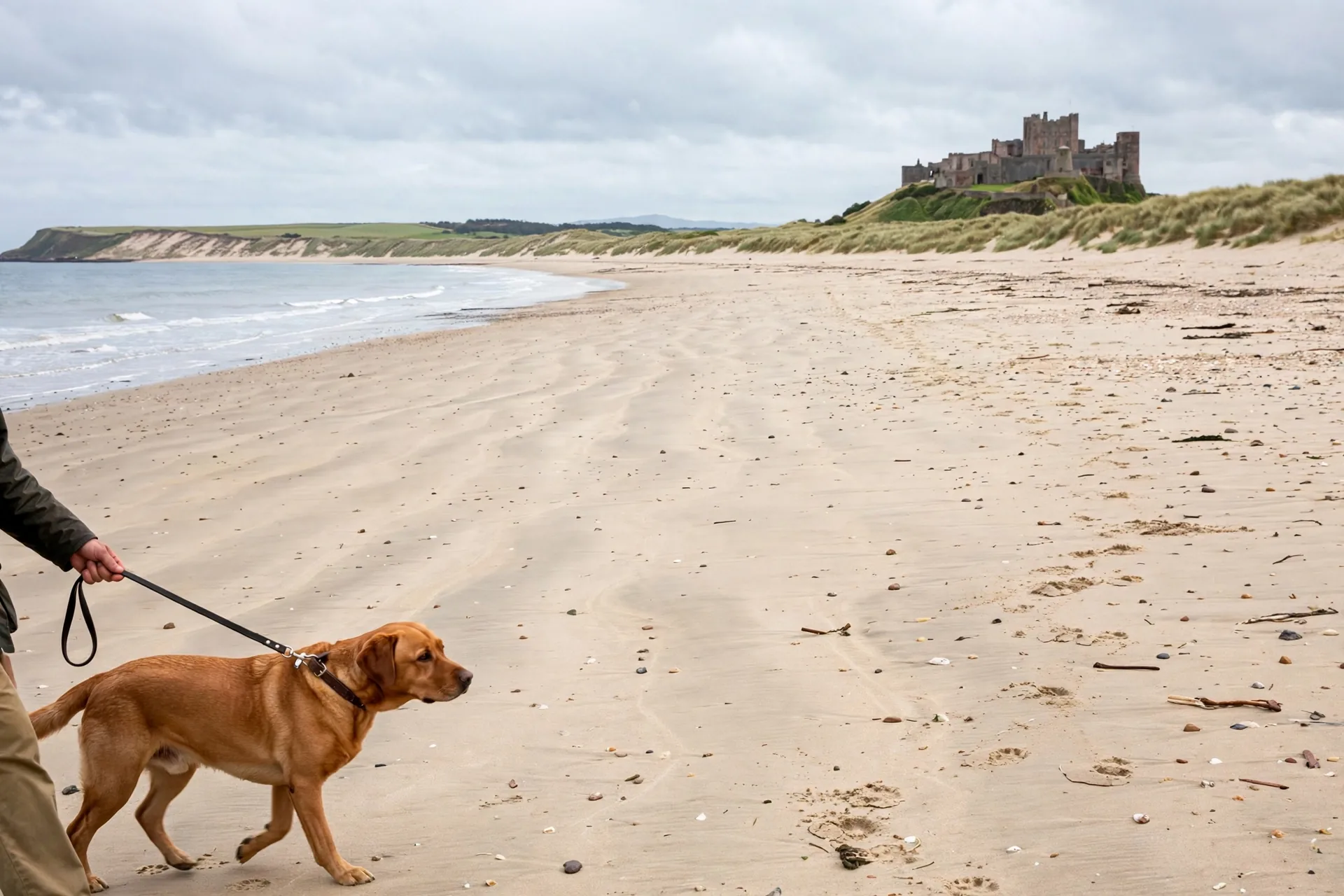
Durham is a natural staging post for Northumberland, and the towns to the north each have a full dog-friendly guide: Hexham with a Dog and Corbridge with a Dog in the Tyne valley, Alnwick with a Dog further north, and Bamburgh with a Dog on the coast for the castle, the beach and the dunes. Read them alongside this guide to plan a Durham-plus-Northumberland trip.
Practical questions
Before you go
Can dogs go inside Durham Cathedral?
Pet dogs are not generally admitted inside Durham Cathedral; assistance dogs are welcome. The cathedral's surrounding precinct, the College and Palace Green area are outdoor spaces you can enjoy with a dog on a lead, subject to any event arrangements on the day. Check the official site before you go for the current visiting rules, and plan a split visit for the interior, which deserves at least an hour.
Are dogs allowed in Durham Castle?
Durham Castle is a working university college, visited on guided tours, and pet dogs cannot join the tours; assistance dogs should be discussed with the venue in advance. The castle is best enjoyed with a dog from outside, from Palace Green and from the riverbanks below, where the classic views of castle and cathedral together are found. Check the official site before you go for tour times and any changes to access.
Where can dogs go off lead in Durham?
The best off-lead exercise near the centre is on the wider riverside meadows and woodland edges along the Wear beyond the busiest loop sections, and in the city's larger parks away from play areas and sports pitches. The cathedral peninsula streets, the market place and the main riverside loop paths are lead-walking territory. Always follow local signage, keep dogs under close control near rowers' landing stages, wildlife and other walkers, and use a long line where recall is uncertain.
Can dogs go in the Durham Botanic Garden?
The university botanic garden has historically admitted assistance dogs only, with pet dogs not allowed in the garden itself. Policies at university-run attractions do change, so check the official site before you go. The surrounding woodland walks at Houghall and the riverside paths nearby offer a good alternative outing with a dog on the same side of the city.
When is the best time to visit Durham with a dog?
Late spring and autumn suit Durham best: the riverside woods are at their most beautiful, the university term keeps the city lively without the peak summer crowds, and the light on the cathedral is superb. The regatta in June and the Christmas festival period bring heavy crowds to the peninsula and riverbanks. In winter the loop is still walkable but short days, high river levels and muddy banks need care and the right footwear.