This guide is independent and contains no paid placement. If affiliate links are added later, they will be clearly marked and will not change our editorial checks.
Walk the Quayside bridge loop early, give the dog its run on the Town Moor, explore the Ouseburn valley and Jesmond Dene on leads, and ride the Metro to Tynemouth and Whitley Bay for the coast — minding the seasonal beach rules. Galleries and museums are split-visit interiors; the city's pubs, quays and parks are the dog's Newcastle, and they are excellent.
The Quayside and its seven bridges
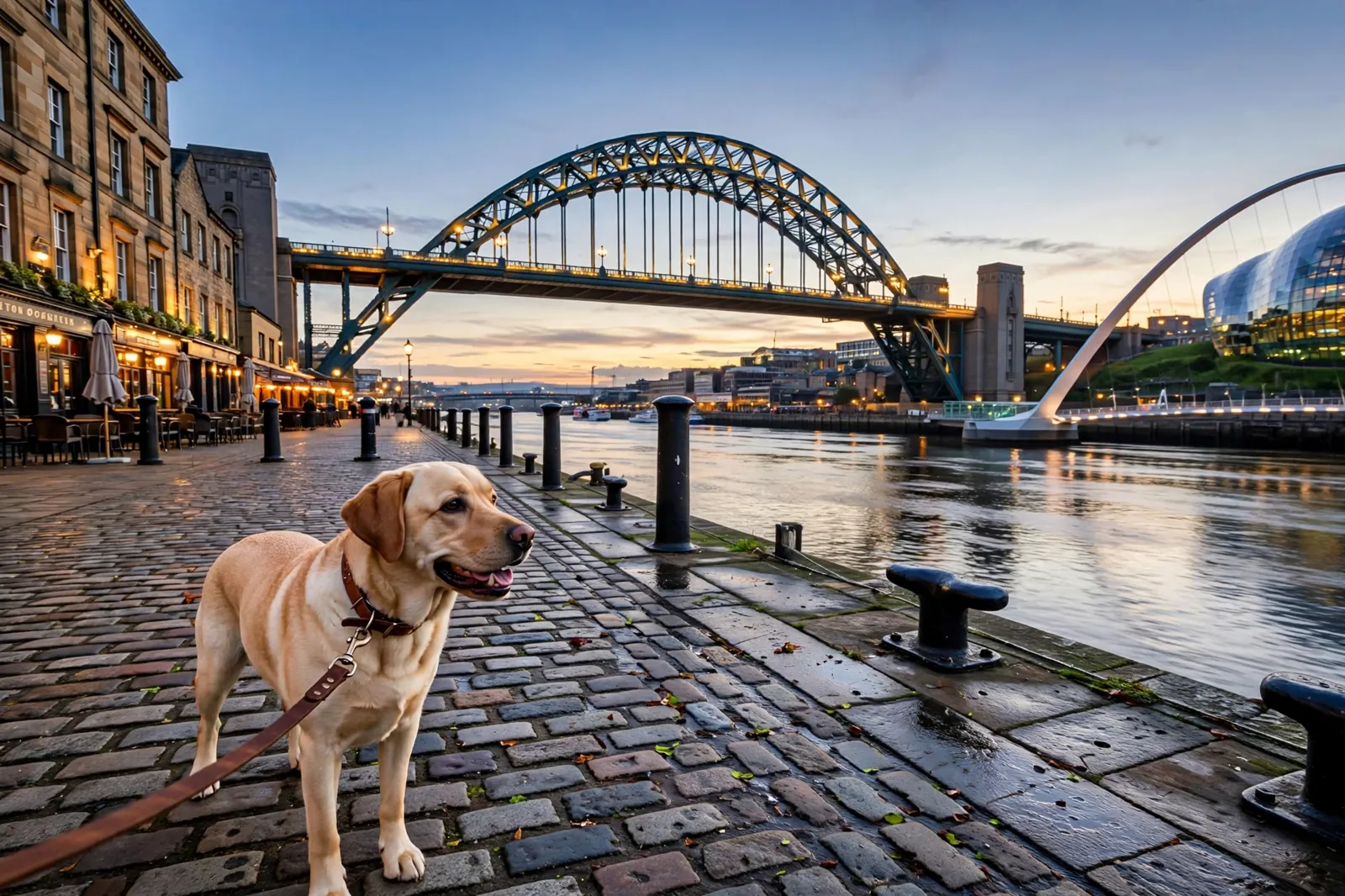
The Tyne gorge is Newcastle's front room, and the Quayside loop across its bridges is the walk to do first, early, while the river is quiet. Seven bridges cross the Tyne in the city reach, and a dog on a lead can share the pedestrian ones in a single satisfying circuit: down the Newcastle bank from the Tyne Bridge, across the tilting Millennium Bridge to the Gateshead side, along past the Glasshouse music centre and the BALTIC gallery in its converted mill, and back across the Swing Bridge or up to the Tyne Bridge again. The full loop with pauses runs to about two miles of flat, paved, endlessly photogenic walking.
Each bridge has its own dog note. The Millennium Bridge is the calmest crossing — pedestrians and cyclists only, wide, with the tilting mechanism that occasionally clears the river traffic and draws a crowd; the Tyne Bridge has pavements and traffic thunder, fine for confident dogs and best crossed promptly; the High Level Bridge combines trains above, road below and the best mid-river views of the gorge, with an exposed, windy feel nervous dogs may dislike. Choose the crossings by your dog's temperament and the weather, and keep leads short at the bridge ends where cyclists and runners converge.
The Quayside itself is lead-walking territory in the best sense: broad promenades, the Sunday market to browse at its quieter early hour, kittiwakes nesting noisily on the Tyne Bridge towers in season — a famous urban colony, and a reason to keep dogs close and unbothered rather than barking up at the ledges — and riverside pubs and cafes at both ends. The steep streets climbing from the Quayside to the city centre, the Side and Dean Street among them, are the historic routes up, stepped and cobbled in places; the gentler gradients suit older dogs, and everyone should take the climb once at dawn, when the gorge light does its famous work.
Ouseburn: the creative valley walk
East of the centre, the Ouseburn valley cuts a green, inventive seam through the city: a small river running under great Victorian viaducts to join the Tyne, lined with artists' studios, small farms, pubs and some of the best dog walking in Newcastle. Start where the valley meets the Quayside and follow the burn upstream — the path passes the city farm (admire the animals from outside the enclosures with a dog, and expect excitement at the fence line), the stables, the creative workshops under the arches, and a sequence of green spaces that feel improbably rural for a postcode this central.
The Ouseburn's pubs are part of the walk's design — this valley has built a genuine reputation among local dog owners, with several of its pubs welcoming dogs as a matter of identity rather than tolerance — and the valley pairs a morning walk with lunch better than anywhere else in the city. Policies still belong to each venue, so check the official site before you go if a particular stop matters, and keep the standard rules: leads in the busy pub gardens, dogs off the furniture, and respect for the farm animals and the valley's ducks, for whom your dog is the day's most interesting event.
Continue upstream and the valley leads naturally toward Jesmond Dene, connecting two of the city's green highlights in one line. Cyclists share the valley paths, the burn floods its lowest sections after heavy rain, and the paths under the viaducts can be dim and dripping in winter — all manageable, all worth knowing. As an evening walk in summer, with the studios closed and the pubs lit, the Ouseburn is Newcastle at its most likeable.
Town Moor, Exhibition Park and Jesmond Dene
The Town Moor is Newcastle's dog-walking crown: a thousand acres of open common, larger than many country parks, beginning a few minutes from the city centre's northern edge. This is where Newcastle dogs actually run. Away from the roads that cross it and the herds of cattle that graze parts of it in season, a dog with reliable recall can exercise at full stretch; near the cattle, on a lead or a long line and giving the herd a wide, calm berth, because grazing livestock on a common is a working arrangement, not a petting zoo. The Moor hosts the Hoppings funfair in June and other major events, when fencing, crowds and fairground noise change everything — check dates and give event weeks a miss with a nervous dog.
Exhibition Park, at the Moor's southern edge by the university and the Hancock museum, is the formal counterpart: lake, cafe, bandstand and lead-walk avenues, good for a gentler hour and for dogs who prefer their exercise social and supervised. The museum itself is an assistance-dogs interior; the park outside it is the dog's share. Leazes Park, the Victorian park on the city's west by St James' Park stadium, plays the same role for stays on that side, with the matchday caveat addressed below.
Jesmond Dene, the steep wooded valley of the Ouseburn in the suburb of Jesmond, is the city's beloved beauty spot: waterfalls, bridges, woodland paths and a pets' corner (view from outside with a dog, leads short near the enclosures). It is a lead-and-close-control walk — narrow paths, water, wildlife and many other dogs — and it is at its best early, in autumn colour, and after rain has filled the burn, when the falls earn their audience. Combine it with the Ouseburn for the city's great green through-route, and with Jesmond's cafes for the recovery.
Galleries and attractions: the honest version
Newcastle and Gateshead together hold a serious cultural hand — the BALTIC Centre for Contemporary Art in the great flour mill on the Gateshead bank, the Glasshouse music centre in its glass curves, the Laing Art Gallery, the Hancock's natural history collections, the Discovery Museum, the castle that gave the city its name — and the dog rule across almost all of it is the national one: interiors are for people and assistance dogs. That is not a complaint; it is a planning fact, and Newcastle makes the split visit unusually painless because the attractions cluster on the Quayside and the dog's half of every exchange is the bridge loop, the Ouseburn or the Moor.
Work it as a relay with short legs. The BALTIC's viewing terraces and the castle's exterior and surrounding streets, the cathedral quarter and the Grainger Market's arcades — check each venue's official site before you go, because foyer, shop and cafe access differs from gallery access and changes with exhibitions — while the other person takes the dog on the river. Newcastle Castle itself, the keep and gatehouse by the cathedral, is a compact visit that pairs neatly with a Quayside hour. Solo travellers should either book care for a chosen interior or accept the outdoor city, which here includes two thousand years of visible history from the Roman wall line to the Georgian streets of Grainger Town, all of it walkable with a dog and none of it ticketed.
For the wider region's heritage-with-dogs pattern — which castles welcome dogs in their grounds, and how the rules differ between organisations — our Northumberland dog guide is the natural next read, since most Newcastle-based owners end up spending their weekends in that county anyway.
The coast on the Metro: Tynemouth and Whitley Bay
Newcastle's secret weapon is a seaside twenty-five minutes away by Metro. The line runs out through North Shields to Tynemouth and Whitley Bay, dogs ride the Metro under the rules in the FAQ below, and the day-trip writes itself: out in the morning, beaches and promenades all day, back for the evening. Tynemouth offers the priory ruins on the headland (grounds access for dogs follows the heritage pattern — check the official site before you go), the village's cafes and pubs, and Longsands, a mile of golden beach sweeping north. Whitley Bay adds its long promenade, the restored Spanish City dome and more sand running toward St Mary's Lighthouse, which you can walk to at low tide across the causeway — check tide times with the same seriousness as any tidal crossing, and never let a dog's enthusiasm set the return time.
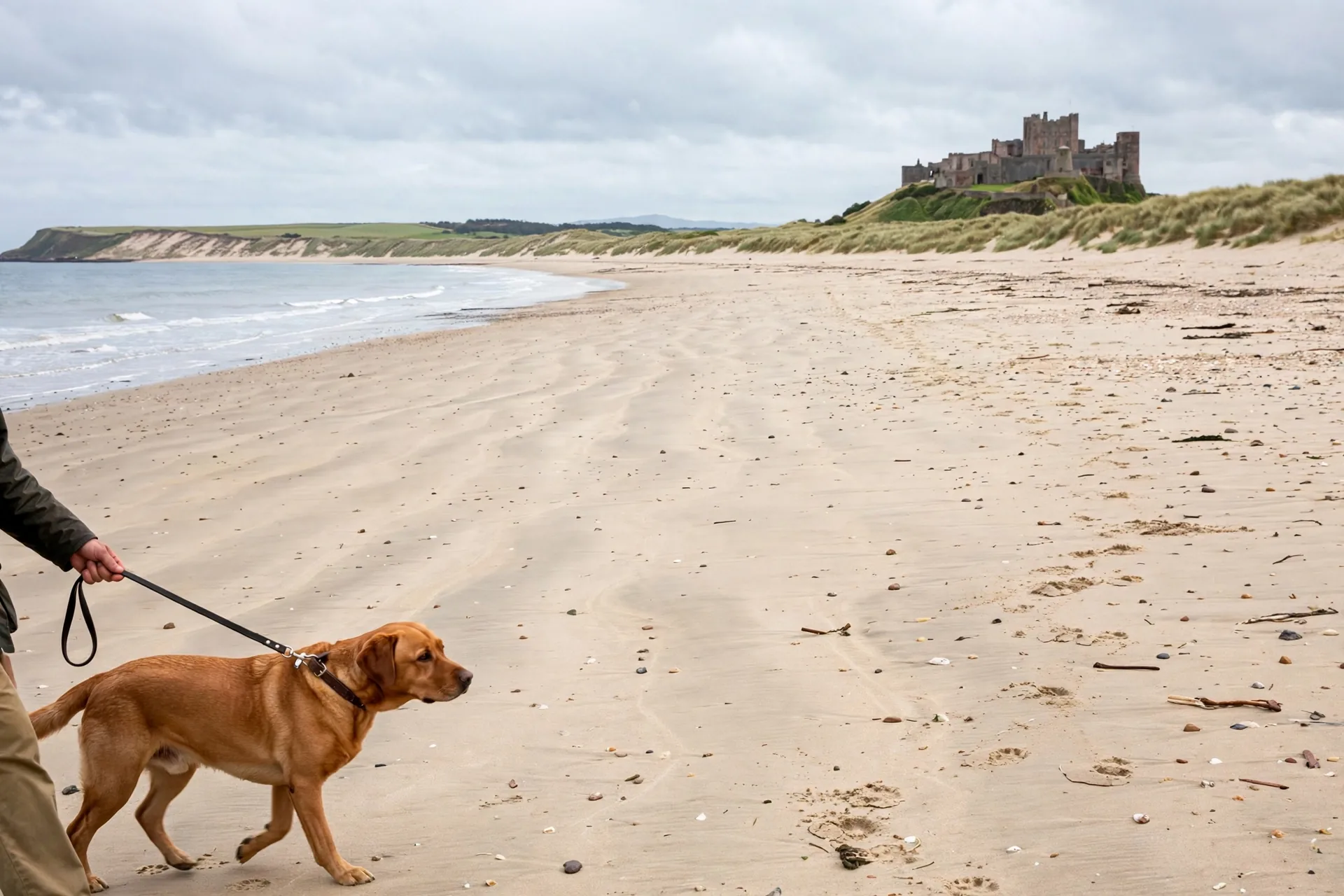
Beach rules here are seasonal and sectional, and getting them right is the whole game. The busiest central sections of the main beaches restrict dogs during the summer season; other sections, and the quieter beaches along the coast, welcome dogs all year, and the promenades are lead-walking routes in every month. Read the signs on arrival, check the council's official site before you go, and in summer aim your dog's beach time at the permitted sections without complaint — there is plenty of sand to go round. Outside the season, from autumn to spring, the restrictions lift on most sections and these beaches become some of the finest dog walking in the north-east: big skies, hard sand and the North Sea doing its dramatic best.
Practical coast notes: the wind off the North Sea is a season of its own, so pack the dog's coat and your own layers even in June; fresh water is worth carrying, as beach taps are seasonal; and the fish-and-chips tradition at both resorts is best enjoyed on the promenade with the dog at your feet, watching the weather decide what it is doing. For more north-east eating-with-a-dog practice, our UK dog-friendly restaurants guide covers the booking and etiquette ground in full.
Where to stay with a dog
Stay on the Quayside if the river is the point: hotels along both banks put the bridge loop at your door for the first and last walks, with the trade-off of a lively weekend nightlife scene on the Newcastle bank that light-sleeping dogs — and owners — should weigh. Stay in Jesmond if routine is the point: the leafy suburb north-east of the centre has guest houses and hotels on quiet streets, the Dene as your morning walk, cafes that know dogs by name, and a Metro line that puts the centre ten minutes away. Stay near the station and Grainger Town for the Georgian streets and the easiest arrivals, accepting pavement routines and a walk to the Moor or the Quayside for real grass.
Ask the full set of questions before you book: which rooms and floors, what fee per dog, size and number limits, dogs at breakfast or in the bar, and whether the dog may ever be left alone in the room — the answer that shapes gallery and restaurant plans. Newcastle adds two local filters: matchday and event pricing around St James' Park fixtures and the Great North Run, when the city fills to the doors, and late-night noise in the Bigg Market and Quayside nightlife zones on Fridays and Saturdays. Self-catering in Jesmond, Gosforth and the Ouseburn suits dogs best of all for longer stays; verify the garden fencing and the exact distance to the Dene or the Moor for the late walk.
Book early for September's run weekend, graduation weeks and the Christmas market period. Otherwise Newcastle is one of the better-value big cities in England for a dog trip, and midweek stays outside event dates often cost markedly less than the same rooms on a match weekend.
Eating and drinking with a dog
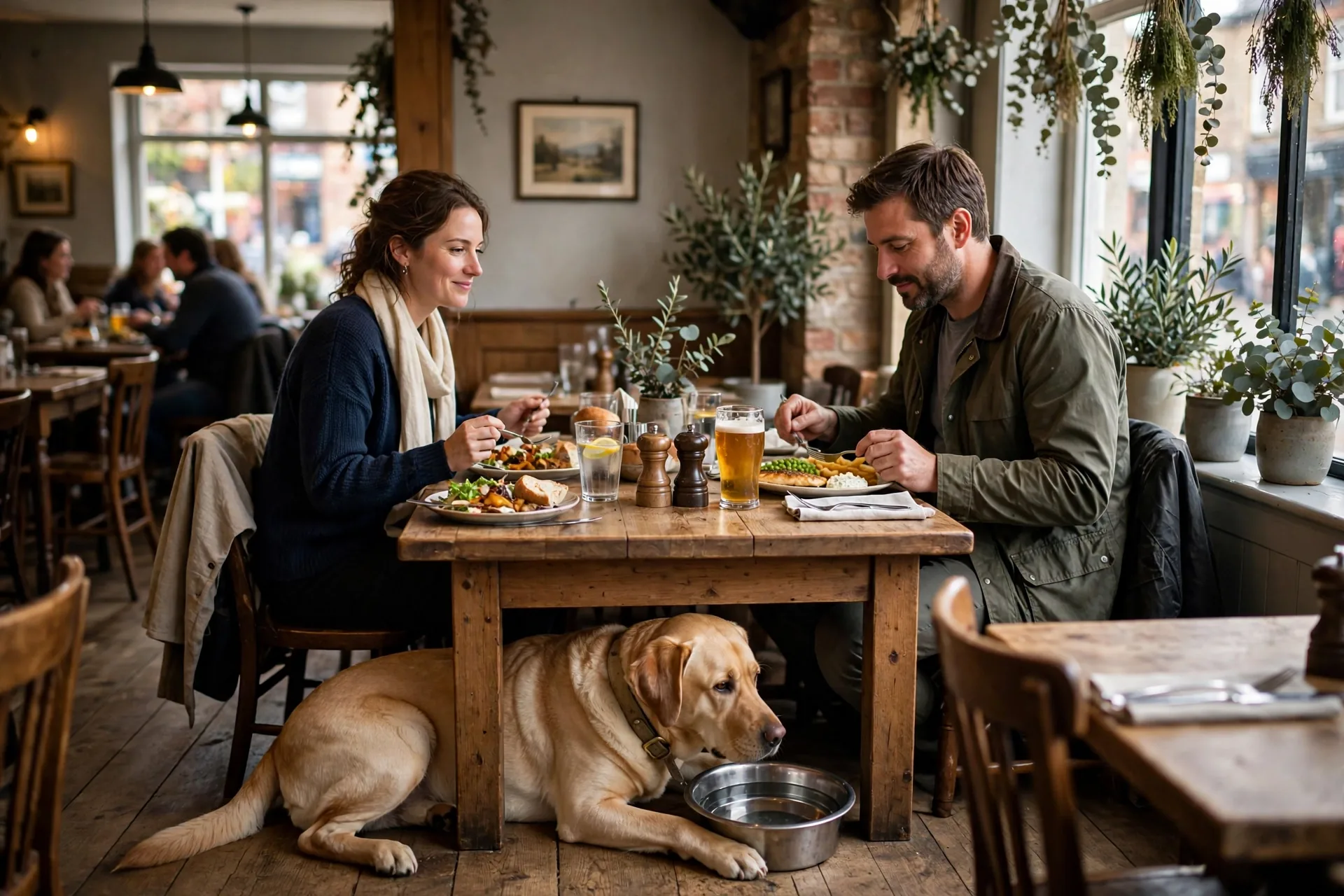
Newcastle's pub culture is famously warm, and dogs share in it: traditional pubs across the centre, the Quayside, the Ouseburn and Jesmond welcome dogs in their bars as a matter of course, and the city's newer cafe scene — Jesmond, the Ouseburn, the side streets off Grainger Street — is largely dog-positive too. The exceptions follow the usual logic: formal dining rooms, the busiest pre-match and Saturday-night venues, and anywhere so full that a dog under a table becomes a trip hazard. Check the official site before you go for a specific venue, ask at the door otherwise, and let the Ouseburn and Jesmond carry most of your eating — they will not let you down.
Matchdays deserve their own paragraph. When Newcastle United are at home, the city centre and the routes to St James' Park fill for hours around the match, pubs near the ground are packed to the doors, and the atmosphere — joyful as it is — is too much for many dogs. With a dog, eat in Jesmond or the Ouseburn on match afternoons, walk the Moor's far side or the coast, and return to the centre in the evening when the crowds have celebrated and dispersed. The fixture list is published far ahead; make it part of your planning, as you would the tide times.
Keep the etiquette that keeps the welcome: walked and toileted before you sit down, short lead, dog on the floor, mat and chew in the bag, and no feeding from the table in a busy room. In summer, the Quayside's terraces and the Ouseburn's pub gardens are the city's dog dining rooms; in winter, a fireside bar after a wind-scoured coast walk is worth the whole trip north.
Getting around, matchdays and seasons
Newcastle Central Station, one of Britain's great Victorian stations, lands you in the city centre minutes from the Quayside; dogs travel free on UK trains on a lead or in a carrier and off the seats. The Metro knits the whole trip together — centre to coast, airport to city — and carries dogs under the conditions set out in the FAQ, including care on escalators. Drivers will find the Quayside and centre workable with the city's car parks but should plan around matchday road closures and event days; the honest advice for a central stay is to arrive, park once, and let the Metro and your feet do the rest.
Season by season: spring opens the coast and the Dene, with the kittiwakes returning to the Tyne Bridge and the Moor at its greenest. Summer is festival Newcastle — Quayside markets, beach season under its section rules, long northern evenings that make a nine-o'clock walk feel like afternoon. Autumn brings the Great North Run's great weekend, colour in the Dene and the beaches back to the dogs. Winter is for the hardy and the pub-minded: short days, big seas at Tynemouth, Christmas market crowds in the centre to be timed early, and a city that stays warm indoors like nowhere else in England.
Close with the backup routine: save a Newcastle vet and the out-of-hours service; rinse salt and sand from paws after coast days; check for ticks after Dene and Moor walks in season; and keep one eye on the two calendars that govern this city — the fixtures and the tides. A dog does not care about either. Its owner, planning well, gets the bridges at dawn, the beach at the right hour and a city that feels, by the second day, remarkably like it was designed for the two of you.
Out of the city: four Northumberland towns
Newcastle works best as a base with day trips, and the four towns closest to the Tyne valley now have dedicated guides: Hexham with a Dog for the abbey and the riverside, Corbridge with a Dog for the Roman town and the village, Alnwick with a Dog for the castle and gardens, and Rothbury with a Dog for a quieter riverside village. All four are an easy drive or train ride from the city.
Practical questions
Before you go
Are dogs allowed on the Tyne and Wear Metro?
Dogs are carried on the Tyne and Wear Metro, on a lead and under control, and must not sit on seats; escalator stations require care, and dogs should be carried on escalators or use lifts and stairs where provided, following the operator's current rules. Check the official site before you go for the latest conditions, travel off-peak with a nervous dog, and keep platforms and carriage doors clear at busy times.
Can dogs go into Newcastle's galleries and attractions?
Most of Newcastle's indoor galleries, museums and attractions, including the BALTIC on the Gateshead bank, admit assistance dogs only, which is the standard pattern for indoor cultural venues. Outdoor spaces, the Quayside, castle exterior areas and parks are where a dog shares the sightseeing. Check each venue's official site before you go, and plan split visits for interiors, using the Quayside and Ouseburn walks as the dog's half of the exchange.
Are dogs allowed on Tynemouth and Whitley Bay beaches?
The North Tyneside beaches operate seasonal dog rules: the busiest sections of the main beaches, including parts of Tynemouth Longsands and Whitley Bay, restrict dogs during the summer season, while other sections and the quieter beaches welcome dogs all year. The promenades are lead-walking routes year-round. Read the signs on arrival, check the official site before you go, and plan summer beach time on the sections where dogs are permitted.
Where can dogs go off lead in Newcastle?
The Town Moor is Newcastle's great off-lead space, a huge open common minutes from the centre where dogs with reliable recall can run properly away from the roads and any grazing cattle. Exhibition Park, Jesmond Dene and the Ouseburn are lead-walking or close-control territory in their busy sections. Always follow local signage, keep dogs away from livestock on the Moor, and use a long line where recall is not secure around other dogs and sports.
When is the best time to visit Newcastle with a dog?
Late spring and early autumn give the best balance of beach access, daylight and manageable crowds, and the Great North Run weekend in September and home matchdays at St James' Park are the dates to plan around rather than discover. Summer brings the full Quayside and coast season with seasonal beach restrictions in force. Winter visits suit the pubs, the Dene in hard light and a bracing coast, with short days and North Sea weather to dress for.