This guide is independent and contains no paid placement. Route conditions, access rules and transport timetables change, so check the latest official guidance before you travel.
The North Coast 500 is a 516-mile loop from Inverness around Scotland's northern coast, and it is superb dog country — provided you plan it as a dog trip rather than a driving challenge. Allow at least seven days, drive no more than about three hours a day, book dog-welcoming stays ahead in season, keep the lead on around livestock and cliffs, and expect midges, single-track roads and long gaps between vets. Slow down: the route rewards it.
First, the rhythm: this route punishes rushing and rewards dogs
Most North Coast 500 disappointments have the same cause: a driving itinerary wearing a holiday's clothes. The loop is officially 516 miles, but the number lies by omission. Much of the west and north coast sections run on single-track roads with passing places, where twenty miles can take an hour and a queue behind a motorhome is a fact of life. Drivers attempting the loop in three or four days spend it staring through a windscreen, and their dogs spend it in a stationary car in lay-bys. Both species come home having technically completed a route and actually experienced almost none of it.
Plan instead for a dog's rhythm. Seven days is a workable minimum; nine to ten is better, and two weeks turns the loop into the trip it deserves to be. Cap driving at roughly two to three hours a day, and build every day the same way: a proper morning walk before the car, a driving block broken by a leg-stretch stop with grass and water, a main stop with the day's real walk in the afternoon, and an evening base where the dog can be out of the car, fed, and settled while there is still light. Dogs that get that rhythm travel contentedly for a fortnight; dogs subjected to six-hour car days start refusing to get in by day four, and they are right.
Direction is worth one decision. Clockwise from Inverness — up the east coast first — saves the more dramatic west coast for the second half and lets nervous passengers and dogs alike graduate from easier A-roads to single-track by degrees. Anti-clockwise puts Applecross and the Bealach na Ba early, which suits confident drivers wanting the west coast fresh. Either way, book accommodation ahead from May to September: dog-welcoming rooms, cottages and campsite pitches on this route are finite, famous and gone early. Check the latest official guidance before you travel for seasonal roadworks and local events that can change a day's plan entirely.
The east coast leg: dolphins, distilleries and easy miles
The run north from Inverness up the A9 is the gentlest driving of the loop, and a good place to establish routines. The Black Isle, just north of the city, makes an ideal first or last night: quiet lanes, woodland walks, and Chanonry Point, where bottlenose dolphins are regularly watched from the shingle beach on a rising tide. Dogs are welcome on the beach on a lead — bring one, because the point gets busy and the shore drops to the water — and the spectacle of dolphins a few metres offshore with your dog sitting beside you is an NC500 memory that costs nothing but timing and patience.
North through Easter Ross and Sutherland's east coast, the pattern is fishing villages, castle gardens and beaches that never fill. Dornoch offers a cathedral town's calm and a long sandy beach where dogs can run properly outside any seasonal restrictions — verify current arrangements locally, as individual beaches set their own rules. Golspie pairs a beach with woodland walks to the Big Burn waterfall, an ideal drive-break combination. Dunrobin Castle's gardens, further north, have historically welcomed dogs on leads in the grounds; policies at attractions change, so check the latest official guidance before you travel rather than building a day around any single venue.
By Wick and Thurso the coast turns a corner in character: flatter, bigger-skied, with sea stacks at Duncansby Head near John o' Groats that justify the walk out along the cliff path — on a short lead throughout, because these are unfenced cliffs above a serious sea, and seabird colonies in season deserve distance as well as admiration. This eastern leg is also where you should quietly note the locations of veterinary practices as you pass through the larger towns. The far north-west has long gaps between vets, and knowing your nearest options before you need one is the kind of boring preparation that defines a well-run dog trip.
The north coast: white sand, sea lochs and very few people
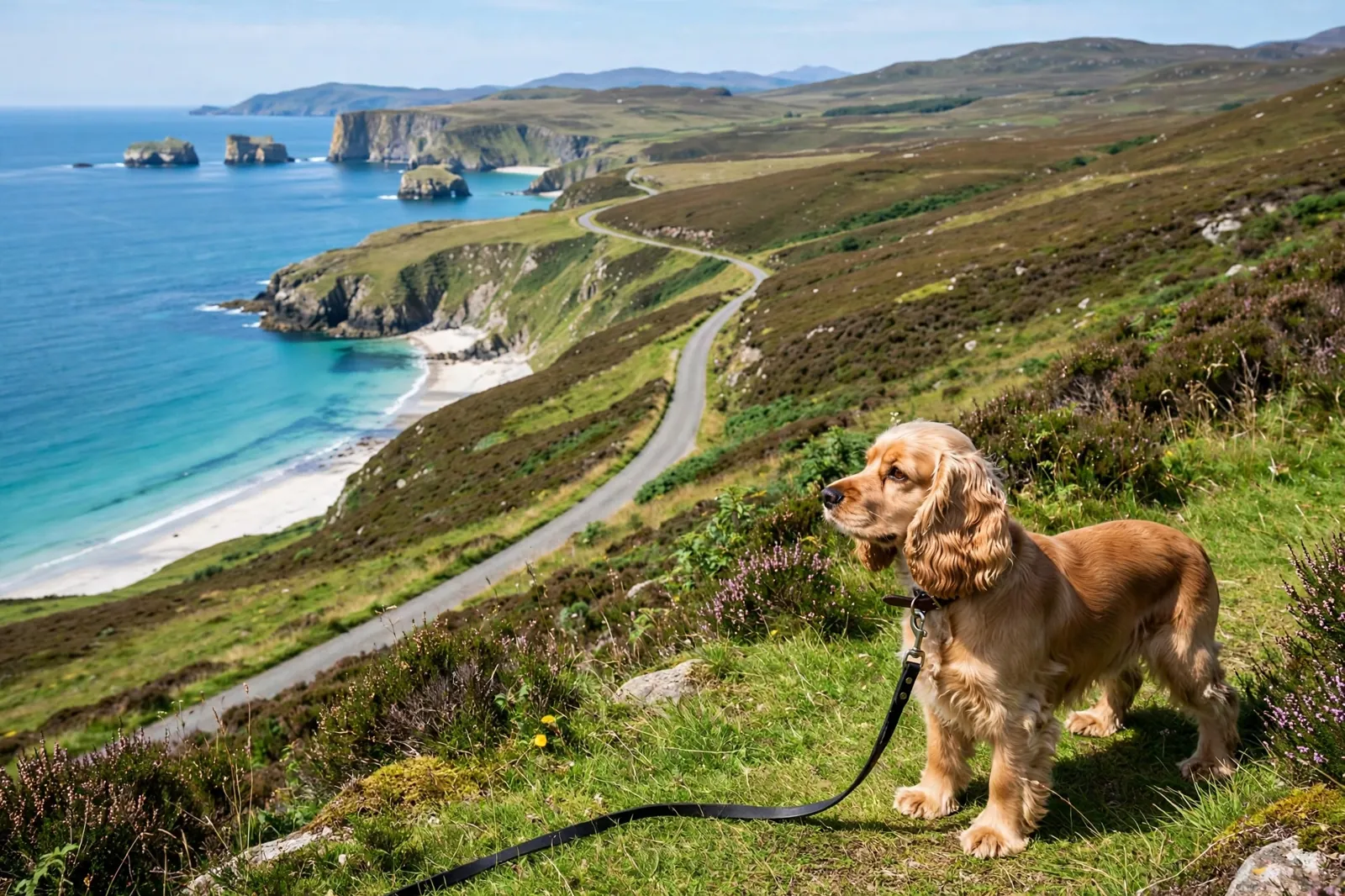
West from Thurso, the loop becomes the NC500 of the imagination. The north coast strings together a series of bays that would headline any beach guide in Britain: Melvich and Strathy, Armadale, Bettyhill's Farr Beach, the vast sweep of Torrisdale Bay at the mouth of the River Naver, and Coldbackie looking across the Kyle of Tongue. For dogs, this is the finest sustained stretch of the whole route — clean sand, clean water, room to run where local rules allow, and crowds measured in single figures even in August. It is also working crofting land: sheep graze the machair and the unfenced verges, deer wander onto the road at dawn and dusk, and the lead is a constant companion anywhere off the open sand.
The Kyle of Tongue causeway and the long, empty miles to Durness set the trip's tempo: slow, scenic and punctuated by stops you choose rather than stops the road imposes. Smoo Cave, at Durness, is the coast's famous sea cave; the cave itself and its boat trips are not a dog activity, but the walk around the inlet and the clifftops is, with the dog close on the lead near the blowhole and the edges. Balnakeil Bay, just west of the village, gives the dog the better end of the arrangement anyway: a huge curving beach backed by dunes and an old church, with the craft village nearby for the humans.
Practicalities thin out up here, and planning absorbs the difference. Fuel, food and dog supplies should be topped up in the larger settlements rather than assumed at the next village; mobile signal is patchy for long stretches, so download maps and your accommodation details offline; and evening daylight in midsummer lasts almost indefinitely, which flatters late walks but can unsettle a dog's routine — blackout blinds or a van with curtains earn their place for light-sensitive sleepers. Our Isle of Skye guide covers a natural extension of this trip, and many dog parties bolt Skye onto the loop's southern end with exactly the same slow rhythm.
The west coast: single-track theatre from Lochinver to Applecross
South of Durness the route enters its most celebrated and most demanding driving: the long descent of the west coast through Scourie, Lochinver, Ullapool, Gairloch, Torridon and Applecross. The scenery escalates mountain by mountain — Suilven, Stac Pollaidh, the Torridon giants — and the dog walking escalates with it. Achmelvich Bay near Lochinver, with its white sand and turquoise shallows, is a legitimate contender for the best dog beach stop on the entire loop. Ullapool, the west coast's small ferry port, is the natural re-supply and rest-day town: vets, shops, dog-welcoming cafés and a shore path for evening miles.
Single-track manners are the west coast's social contract, and a dog trip depends on them more than most. Use passing places to let traffic pass — never park in them, including for dog stops, photographs or a quick paddle; a blocked passing place on a single-track road creates the kind of jam that poisons a whole valley's day. Plan dog breaks at car parks, beaches and designated stops instead, and accept the slower average speed as the price of the landscape. Dogs prone to travel sickness face their hardest test on these twisting sections: the remedies — slow driving, fresh air, regular stops, smaller meals before driving blocks — are all in our dog car safety guide, which also covers the harnesses and crates that keep a dog secure when the road demands a sudden stop.
The Bealach na Ba, the famous pass to Applecross, is the route's driving climax: the steepest ascent in Britain, hairpins included, and unsuitable for nervous drivers, large vehicles — and, frankly, for some dogs, who find the combination of gradient, engine note and exposure through the windows genuinely distressing. There is no shame in the coastal alternative via Shieldaig, which is beautiful in its own right and kinder to every passenger. Applecross itself, reached either way, rewards the effort with a shore road of tiny settlements, a famous inn where dogs are part of the furniture in the bar area, and evening light across to Raasay and Skye that justifies every slow mile.
Where to sleep: hotels, crofts, campsites and the dog rules that vary
Accommodation on the NC500 spans the full range, and the dog rules vary more than the scenery does. Hotels and inns in the larger settlements commonly accept dogs in specific rooms for a nightly charge, with bar-area dining the norm — your dog eats with you, but not in the formal restaurant. Self-catering cottages and croft houses offer the most dog-friendly format of all: enclosed gardens exist but must be confirmed, not assumed, because a Highland garden fence is often a croft boundary that a spaniel regards as a serving suggestion. Ask the height-and-gaps questions in our holiday parks guide — they translate directly to croft lets.
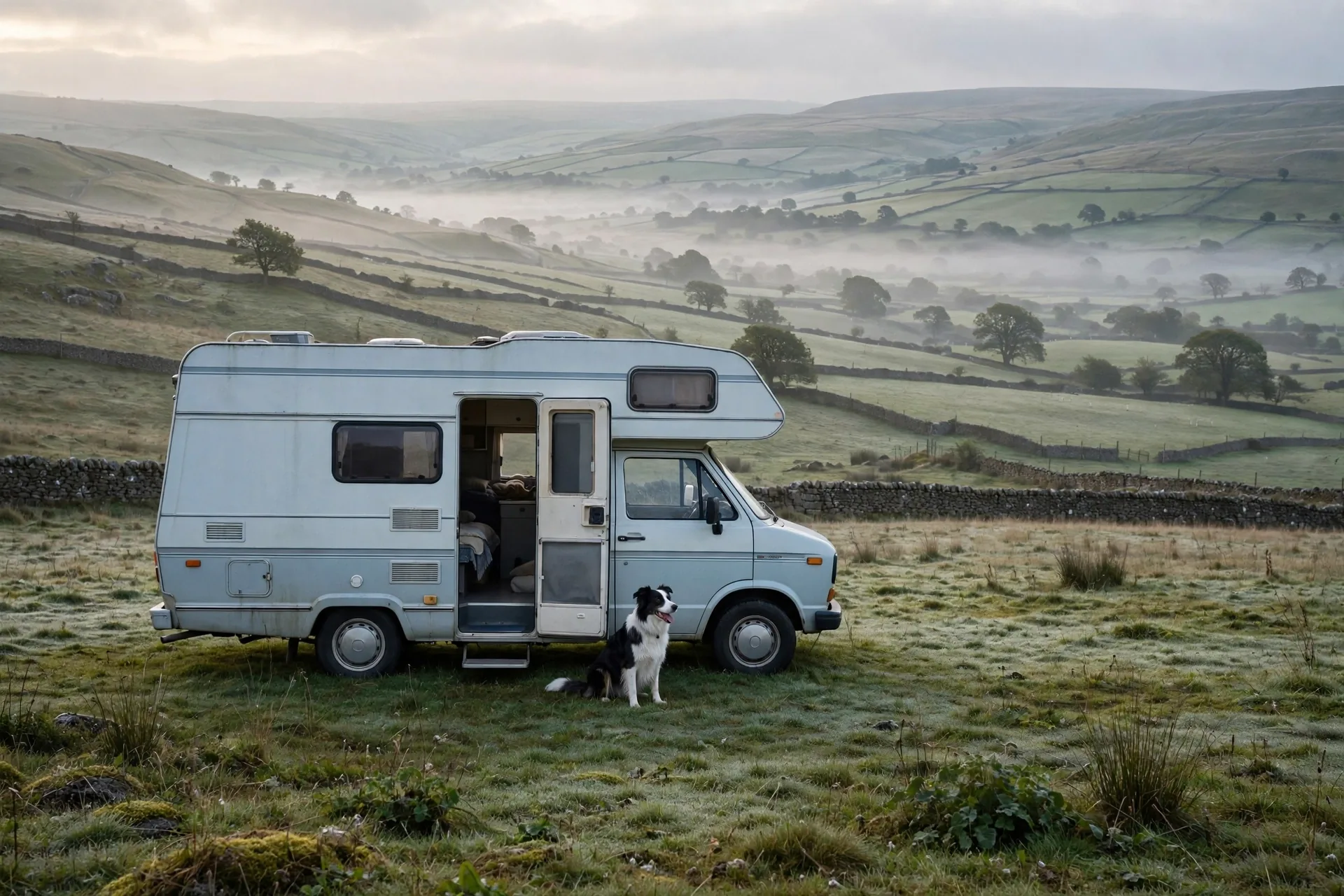
Camping and campervanning suit this route particularly well, and many NC500 travellers with dogs choose serviced sites for at least part of the loop: predictable dog rules, showers, laundry, and neighbours who expect dogs. Site rules typically require leads on site, set a maximum of dogs per pitch, and provide a dog walk or exercise area — the good Highland sites are used to muddy spaniels and stock towels accordingly. Our camping with a dog guide covers kit and site etiquette in depth, and our motorhome with a dog guide covers the vehicle version, including the overnight-parking responsibility that matters greatly in the Highlands.
Wild camping with a dog is legal in Scotland under access rights, within the Scottish Outdoor Access Code's conditions, but on a route this popular the serviced-site option is usually the better citizen's choice as well as the more comfortable one: it supports the communities the road passes through and removes grey areas about where a vehicle may stop overnight. Where informal overnighting is tolerated locally, the rules are absolute — arrive late, leave early, leave nothing, and never empty anything anywhere but a proper disposal point. One inconsiderate van costs every following dog party goodwill that took years to build.
Midges, ticks, adders and deer: the Highland field guide for dogs
From late May to September, the Highlands' most famous residents are midges, and dogs are not exempt: thin-skinned areas — bellies, ears, muzzles — get bitten, and a dog tormented in a still, damp evening will be as miserable as any human. Time walks for breeze and brightness, use the sea beaches on midge evenings because the insects cannot fly in wind off the water, and keep repellent choices dog-safe — products made for humans, especially those containing DEET, should not be applied to dogs; ask your vet about dog-specific options before the trip. A van or tent screened against midges transforms evenings, and many site shops sell the head nets that mark you instantly as someone who has learned the local lesson.
Ticks are the year's longer season and the more serious one. Bracken, long grass and deer country — which is to say, most of the NC500's walking — carry them, and the routine is the one set out in our ticks on dogs guide: check the dog daily, especially ears, armpits, groin and between toes; remove promptly with a proper tick tool; and know the early signs of Lyme disease. Adders, Britain's only venomous snake, bask on warm paths in the northern summer; dogs should be kept on paths and on leads in adder habitat in warm weather, and any suspected bite is an immediate vet emergency — carry the dog if possible and go, which is another reason those noted vet locations from the east coast leg matter.
Deer deserve a driver's paragraph of their own. Red deer graze the road verges and cross the single-track sections constantly, most dangerously at dawn, dusk and through the night, and a collision helps nobody. Slow down where deer are visible, expect the follower you cannot see when one crosses, and never let a dog out of the car uncontrolled where deer are near — a chase across a road is the worst scene on this route. Sheep, finally, are everywhere and always: the lead rule from Sutherland to Applecross is not a formality, and crofters' patience with tourist dogs is earned dog by dog.
Closing the loop: the Great Glen return and the journey home
From Applecross the route runs inland through Torridon and Glen Torridon — give the dog a proper walk beneath Liathach and Beinn Eighe rather than admiring them through glass — then turns south through Achnasheen and Garve towards Inverness. The final leg re-enters easier country: Beauly and the Black Isle repay a last night, Inverness itself is a genuinely dog-welcoming small city for a final urban day, and the loop closes where it began. Many parties add a coda down the Great Glen — Loch Ness's shores offer woodland walks and the Caledonian Canal towpath at Fort Augustus, where the locks give a dog plenty to supervise — before the long drive south.
The journey home is part of the trip's welfare, not an afterthought to it. Break the drive south with the same discipline as the loop: two-hourly stops, a main walk at the midpoint, water offered at every halt, and never a dog left in a warming car at a service station while the humans queue for coffee. If the dog has travelled well all trip, protect that record on the hardest day rather than spending it. A dog that arrives home associating the car with good management becomes a dog that loads happily for the next adventure — and the NC500 has a way of generating next adventures.
That, in the end, is the route's gift to dog owners. It is not the fastest loop, the easiest loop or the loop with the most facilities. It is 516 miles of the emptiest, cleanest, most dog-shaped coastline in Britain, asking in return only that you slow down to a dog's pace, respect the crofts and cliffs it passes, and let the passenger with the least say in the matter have the best of every day. Plan it that way, and the North Coast 500 is not a drive you took your dog on. It is the trip your dog took you on, with you as the designated driver.
Practical questions
Before you go
How many days does the North Coast 500 take with a dog?
Allow at least seven days, and ideally nine to fourteen. The loop is 516 miles, but long sections are single-track roads where progress is slow. Cap driving at two to three hours a day so the dog gets a proper morning walk, breaks during driving and a real afternoon walk. A three-day dash is a driving exercise that neither you nor the dog will enjoy.
Are dogs allowed on North Coast 500 beaches?
Most beaches on the route welcome dogs, and many are empty enough that your dog will have the sand largely to itself. Individual beaches can have seasonal rules, and all are surrounded by crofting land where sheep graze, so keep the lead on until you are on open sand, follow any local signs, and clean up everywhere. Check the latest official guidance before you travel for specific beaches.
What are the rules for dogs at NC500 campsites and hotels?
Rules are set by each business and vary. Campsites typically require dogs on leads on site, limit numbers per pitch and charge a small fee or none. Hotels and inns usually accept dogs in designated rooms for a nightly charge, with dogs welcome in bar areas rather than formal restaurants. Confirm the specific property's rules, dog limit and charges in writing when you book.
How do I protect my dog from midges on the NC500?
Walk in breeze and bright weather when midges cannot fly, favour sea beaches on still evenings, and keep the dog out of damp bracken at dusk. Do not use human repellents, especially DEET products, on dogs. Ask your vet about dog-safe repellent options before the trip, and choose accommodation or a vehicle with midge screens for comfortable evenings from late May to September.
Is the Bealach na Ba pass suitable for travelling with a dog?
The pass itself is a road, so any dog in a car can cross it, but it is very steep with hairpin bends and is unsuitable for nervous drivers and large vehicles. Some dogs also find the gradient and exposure unsettling. The longer coastal route via Shieldaig is a fully scenic, kinder alternative, and choosing it is a normal decision, not a failure.
Where are the vets on the North Coast 500?
Veterinary practices are concentrated in the larger settlements — Inverness, Dingwall, Dornoch, Wick, Thurso, Ullapool and Fort William at the route's edges — with long gaps along the far north-west coast. Note practice locations and emergency arrangements as you plan each leg, save the numbers offline, and check the latest official guidance before you travel, as out-of-hours cover arrangements change.