This guide is independent and contains no paid placement. Access rules for historic sites, rivers and estates change, so check the latest official guidance before you travel.
Base yourself in Melrose, Peebles or Kelso, keep your dog on a short lead in abbey grounds and near livestock, walk the Tweed in town-to-town sections, and treat the long-distance routes as a series of planned day stages rather than one continuous push. That gives you history, water, food and exits without the stress of a rushed Highlands dash.
The stop everyone skips — and why dogs prefer it
Here is the myth worth busting first: the Scottish Borders are not just the bit you drive through on the way to somewhere more famous. On the road north, the pattern is familiar. The car is packed, the Highlands are still hours away, everyone is calculating fuel and daylight, and the dog gets whatever can be managed at a motorway service area — a noisy verge, a hot patch of tarmac, five minutes on a short lead while lorries reverse and somebody queues for coffee. It is legal, it is convenient, and for most dogs it is the worst possible break: loud, airless, full of dropped food and strange dogs in a confined space, with nowhere to actually settle, sniff and reset.
Turn off that road, even for half a day, and the equation changes completely. The Borders are a landscape scaled to a dog's pace rather than a driver's timetable. The distances between towns are short. The River Tweed threads through almost everything, so a proper walk is rarely more than a few minutes from where you parked. The ruined abbeys sit in open grounds rather than behind city walls. The hills — the Eildons above Melrose, the rolling ground around Peebles and Kelso — are real hills, but they do not demand the full expedition kit, weather window and early start that a Highland Munro day does. You can have a substantial, satisfying walk and still be back in a town for lunch, which is exactly what most dogs, and most people travelling with them, actually want.
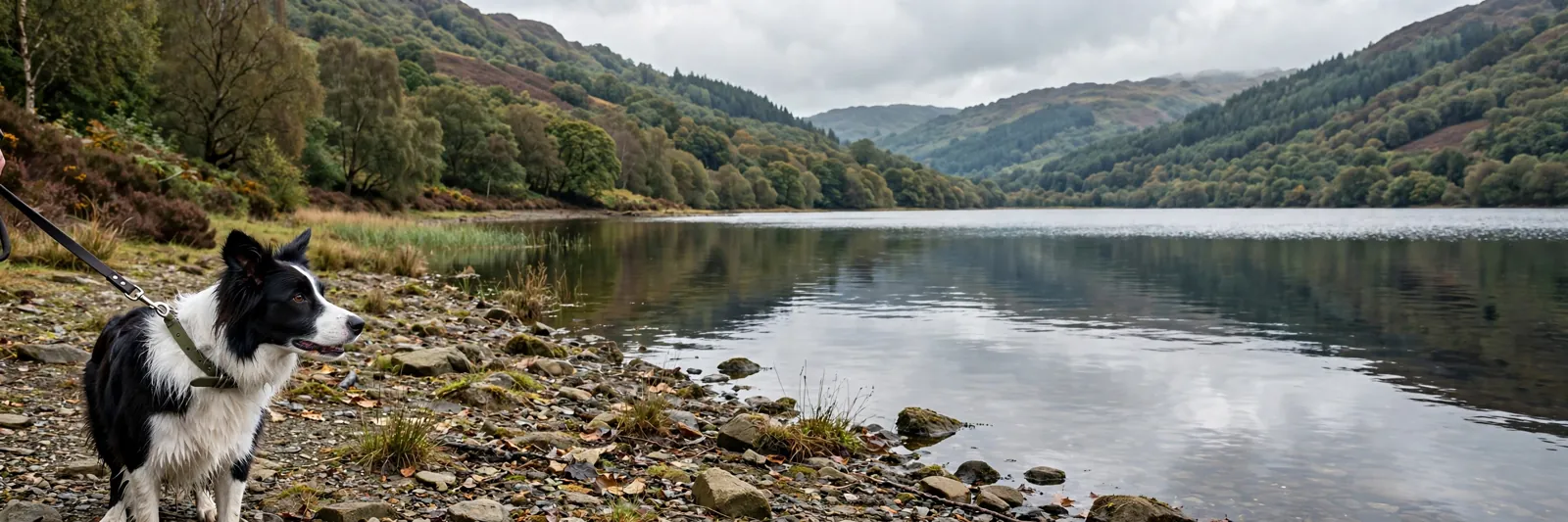
There is a second, quieter advantage: space without emptiness. Parts of the Highlands and the Lake District can feel, at peak times, like a queue of dogs all trying to use the same stile. The Borders receive far fewer visitors for a landscape of comparable quality, so paths are calmer, car parks are less frantic, and reactive or older dogs get the breathing room that makes a holiday feel like a holiday. That does not mean empty — Melrose on a market day and Peebles on a sunny weekend are lively — but it does mean choice. If one riverside section is busy with anglers, another a mile upstream will not be. If that sounds like the kind of flexibility you value further north too, the same base-and-day-walk logic works well in our Loch Lomond dog guide, where choosing the right shore matters more than covering the most miles.
None of this requires romanticising the region. The Borders are a working landscape of farms, estates, fishing beats and small towns that get on with their own business whether visitors arrive or not. That working character is precisely why dog rules here matter and why this guide spends so much time on leads, livestock and seasons. Respect those rules and the welcome is genuine. Ignore them and you will quickly understand why access depends on trust. The reward for getting it right is a region you can return to in different seasons and still find new combinations of abbey, river and town to explore.
Ruined abbeys with dogs: grounds, interiors and honest limits
Four great abbeys anchor most Borders itineraries: Melrose, Dryburgh, Jedburgh and Kelso. All four were founded in the twelfth century, all four were repeatedly damaged in wars between Scotland and England, and all four survive as ruins of very different character. For a dog owner, the key distinction is not which ruin is most beautiful — that argument could fill the whole trip — but what a dog can actually access, and the answer is almost always a version of the same sentence: the grounds are the dog's experience, the interiors are mostly yours.
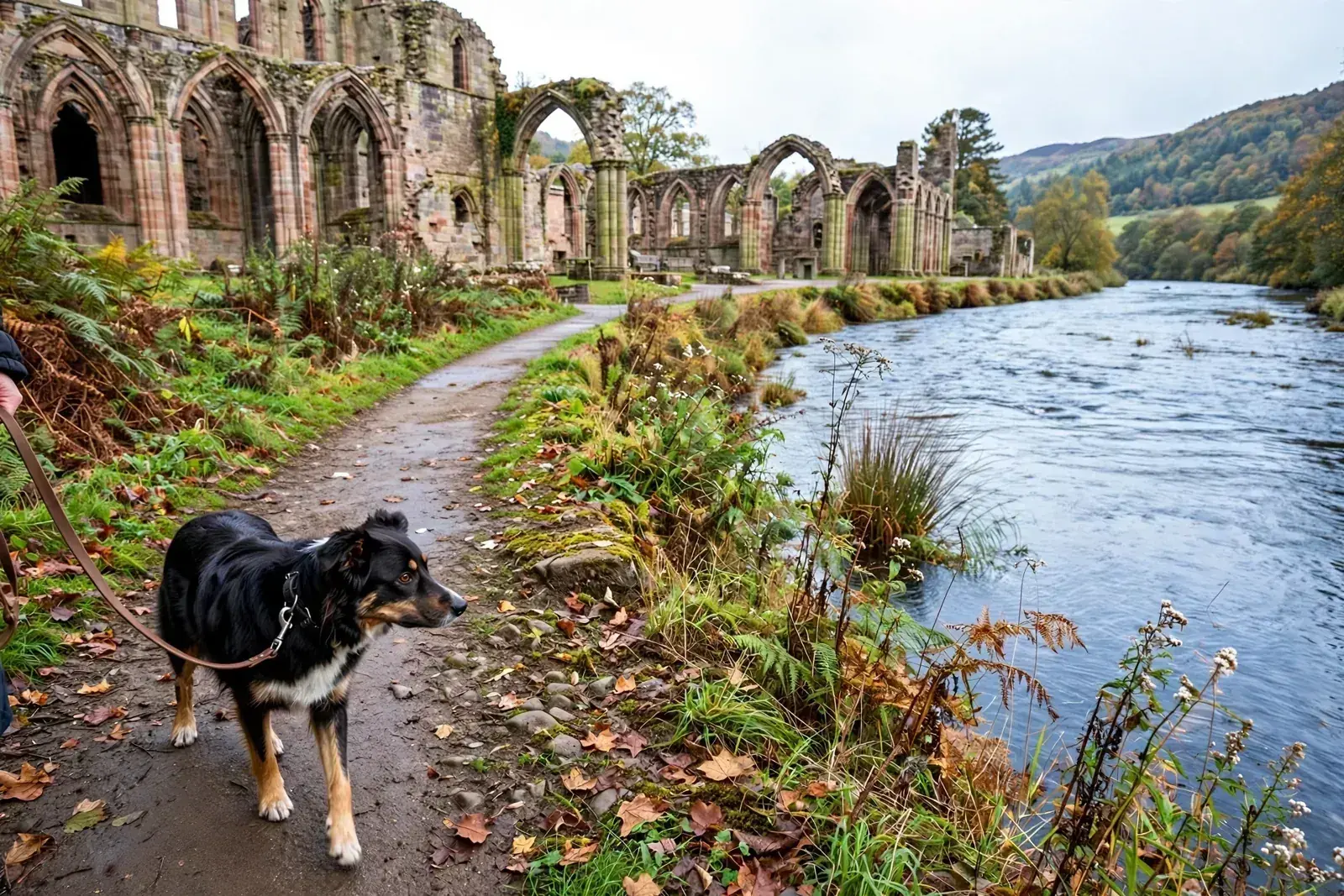
Melrose Abbey is the most celebrated of the four, famous for its ornate stonework and its association with Robert the Bruce, whose heart is said to be buried here. The ruin stands right in the town, so it combines easily with cafés, shops and a Tweed walk in a single half day. For dogs, plan on exploring the extensive outdoor grounds on a short lead: grass, cloister outlines, carved stonework at human eye level and plenty of sniffing interest along the walls. Do not assume access to any roofed or enclosed exhibition space, museum display or shop interior. Those areas commonly restrict dogs, sometimes with an exception for assistance dogs, and the rule can differ between the ticket area and the open grounds. Check the latest official guidance from the site operator before you travel, and if visiting the interior matters to you, take turns — one person walks the grounds with the dog while the other goes inside — rather than arriving and hoping.
Dryburgh Abbey is the romantic counterpoint to Melrose: quieter, set in a loop of the Tweed among mature trees, and associated with the burials of Sir Walter Scott and Field Marshal Haig. The setting is the point here. Even a dog that knows nothing of history will appreciate a shaded, sheltered grounds walk on a warm day, and the approach through woodland makes Dryburgh feel like a destination rather than a roadside stop. The same grounds-versus-interiors rule applies: lead on, outdoor areas as the plan, any indoor or enclosed element treated as a bonus to be confirmed in advance. Dryburgh also pairs naturally with a riverside section, so build extra time into the visit rather than treating the abbey as a tick-box photo stop. Dogs that need to decompress after a car journey will do far better with forty unhurried minutes here than with ten rushed ones.
Jedburgh Abbey rises dramatically above its town, its great nave still conveying the scale these buildings once had. Jedburgh the town gives you practical services close at hand, and the abbey grounds again offer the main dog-friendly experience. Jedburgh also rewards attention to levels and surfaces: historic sites often combine grass, gravel, steps and uneven stone, which matters for older dogs, dogs recovering from injury, and anyone pushing the pace in wet weather when stone turns slippery. Take the grounds slowly, watch footing on steps, and keep leads short where other visitors are reading interpretation panels in narrow spaces — a long line trailing across a cloister walkway helps nobody.
Kelso Abbey is the most fragmentary of the four — what survives is essentially part of the west front and tower of what was once one of the richest abbeys in Scotland — but it may be the easiest to combine with a dog day, because it stands in the centre of a handsome town with the Tweed, a large square and dog-welcoming stops all within a short walk. Kelso is a reminder that not every abbey visit needs to be a major expedition. A short, respectful look at the ruin, a riverside loop and lunch in town can be a complete and satisfying plan, especially on a travel day.
Across all four sites, a few disciplines hold. Keep dogs on a short lead throughout, not a retractable line at full extension. Stay off fragile stonework and out of cordoned areas, however inviting a ruined arch looks for a photograph. Carry waste bags and take everything away — historic grounds are not a place to leave anything behind. Expect other visitors, including guided groups, children and occasionally other dogs in a confined space, so if your dog struggles with close encounters, visit early in the day or in quieter months. And repeat the core advice once more, because it protects your trip: access policies change, restoration work closes sections, and events alter arrangements, so check the latest official guidance for each abbey shortly before you go rather than relying on any guide, including this one.
River Tweed paths: town-to-town walking at a dog's pace
If the abbeys are the Borders' landmarks, the River Tweed is its connective tissue. One of Britain's great salmon rivers, the Tweed runs from the hills near Tweedsmuir through Peebles, Innerleithen, Galashiels, Melrose, Kelso and on to Berwick-upon-Tweed and the sea. Riverside paths follow much of its course, in places as formal promenades, in others as grassy tracks through farmland and woodland. For dog walking, the river's great virtue is modularity: you can walk twenty minutes or four hours, town to town or out and back, and almost every section gives a dog the sensory richness — water sounds, birdsong, riverside smells — that makes a walk feel complete without needing a summit.
Start by respecting what kind of river this is. The Tweed is a working salmon fishery of international reputation. Anglers may have paid a great deal for a day on a beat, standing waist-deep and watching the water with intense concentration. A dog crashing through a pool, swimming across a fisher's line or barking at a wading figure is not a minor faux pas; it can ruin a day and create genuine conflict. Keep your dog out of fishing pools, on a lead or under genuinely close control near anglers, and never throw sticks or balls into the river where people are fishing. Where a path passes a beat, a quiet word and a wide berth cost nothing. Many anglers are dog people themselves, but they are entitled to the water they are fishing.
Water safety deserves equal honesty. A famous salmon river is not a paddling stream. Currents are strong, banks can be undercut and slippery, and levels rise quickly after rain in the hills. Dogs that love water should swim, if at all, only in shallow, slow, clearly safe margins you have assessed first — never in fast main flow, never near weirs, and never by jumping from high banks. After heavy rain, keep dogs out altogether and enjoy the river from the path. Cold water is a year-round factor in Scotland, so even in summer, limit swimming, watch for shivering, and dry an older dog properly afterwards. If your dog drinks river water greedily, carry fresh water and offer it often to reduce the temptation.
Wildlife shapes lead decisions too. Swans nest and rear cygnets along quieter stretches, ducks and dippers work the shallows, and otters — rarely seen, often present — use the banks at dawn and dusk. A dog chasing water birds can injure wildlife, exhaust itself in dangerous water and put you in breach of the law protecting wild birds. Close control near the water's edge, and a lead wherever birds are nesting or signs ask for one, is the baseline. The same applies on farmland sections, where the path is a right of way through someone's workplace: close gates, stay on the line of the path, and keep dogs out of standing crops.
For route planning, think in sections anchored by towns and bridges, because those give you parking, food, bail-out points and public transport options. Peebles to Innerleithen, the paths around Melrose and the Eildon Hills, and the Kelso riverside loops are all examples of sections that can be lengthened or shortened on the day depending on weather, energy and how your dog is coping. That flexibility matters on a multi-day trip: a dog that walked hard yesterday may need a flat, shaded riverside hour today, and the Tweed provides it without anyone feeling short-changed. Check local path information before you travel, because riverside routes flood, close for bank repairs and divert around works, and the latest official guidance will reflect that in a way a printed plan cannot.
Two long-distance routes: St Cuthbert's Way and the Southern Upland Way
The Borders are crossed by two of Scotland's best-known long-distance routes, and both can be wonderful with a dog — provided you treat them as a series of carefully planned day sections rather than a romantic continuous trek improvised as you go.
St Cuthbert's Way runs for about 62 miles from Melrose to Lindisfarne — Holy Island — off the Northumberland coast, following the story of the seventh-century saint from the abbey town where his life in monastic community began to the island where he lived as a hermit and bishop. For a dog owner based in Melrose, the opening sections are the accessible prize: eastwards along the Tweed, up over the Eildon Hills with their commanding views, and on through countryside toward the Cheviots and the border. These stages combine history, river and hill in a way few waymarked routes match. Practical cautions are real, though. You will meet livestock frequently. You will encounter stiles and gates that a large, arthritic or nervous dog may not manage — a lifting harness can make the difference between a manageable obstacle and the end of a walk. Water for dogs is not available on every upland stretch, so carry more than you think you need. And if you ever plan to walk the full route to Lindisfarne, remember the island is tidal: the causeway crossing is governed by safe-crossing times that are absolute, and the final section must be planned around published tide tables, not optimism. Check the latest official guidance before any attempt.
The Southern Upland Way is a different scale of undertaking: roughly 212 miles coast to coast from Portpatrick on the west coast to Cockburnspath on the east, passing through the Borders on its way. Nobody should start it casually with a dog, but its Borders sections — through the hills and valleys around St Mary's Loch, Traquair and Galashiels among others — make superb day walks for fit dogs and experienced owners. The character here is remoteness. You may walk for hours without a road, a shop or another person, which is glorious in good weather and serious in bad. Navigation, waterproofs, food, water, a charged phone and a clear bail-out plan are not optional extras. Dogs need fitness built gradually, paw checks on rough ground, and protection from exposure on open moor where there is no shade in summer and no shelter in winter.
For both routes, the dog-specific planning list is consistent. Build distance over weeks, not days, and watch for the quiet signs of a dog that has had enough: lagging, lying down at gates, excessive panting or paws being licked on the move. Keep leads on around livestock without exception — Scotland's access code, discussed below, is explicit on this. Plan accommodation for each stage in advance and confirm the dog is welcome in the specific room, because end-of-day alternatives may be miles away. Consider baggage transfer services if you walk consecutive stages, so the dog is not the reason you carry an overloaded pack badly. And be willing to stop. A route will still be there next year; a dog injured or frightened by being pushed beyond its capacity may not forgive the experience as easily. If multi-day walking in Scotland appeals, compare the approach with our Cairngorms dog guide, where altitude and weather impose a similar discipline of shorter stages and honest exits.
Border towns for food and stays: Peebles, Melrose and Kelso
A dog holiday succeeds or fails on its towns as much as its hills, because towns are where you eat, sleep, dry wet gear and find a vet if you need one. The Borders are unusually well served, with three bases that each suit a slightly different trip.
Peebles, on the upper Tweed, is the outdoors base. Surrounded by hills and forests, with the river running through it and a handsome, independent high street, it suits walkers who want a proper hill or forest day and a proper town evening. Expect a good choice of cafés — many Borders cafés welcome dogs in at least part of the premises, though always check the current policy at the door — plus pubs, takeaways and shops where you can replace a lost lead or buy local food. Accommodation ranges from hotels to self-catering and bed-and-breakfasts; for dogs, self-catering with a secure garden and hard floors is often the most relaxing option after wet Tweed walks, but confirm the garden is genuinely enclosed and check any per-dog fee before booking. Peebles also works as a first or last night for travellers heading between Edinburgh and the south, breaking a long drive at a humane point for the dog.
Melrose is the history base and, for many first-time visitors, the natural centre of a Borders trip. The abbey, the Eildon Hills rising directly behind the town, the Tweed a short walk away and St Cuthbert's Way starting here mean you can fill several days without driving far at all — a real advantage with a dog that dislikes repeated car journeys. Melrose has a compact centre with delis, cafés, pubs and small hotels, and a village feel in the evenings once day visitors leave. Book dog-friendly rooms early in peak season and for event weekends, because the number of genuinely dog-welcoming rooms is smaller than the number of rooms overall. Ask the practical questions: is there a dog charge, a limit on size or number, somewhere to rinse muddy paws, and a short, lit last walk for the evening? The answers shape your stay more than thread count ever will.
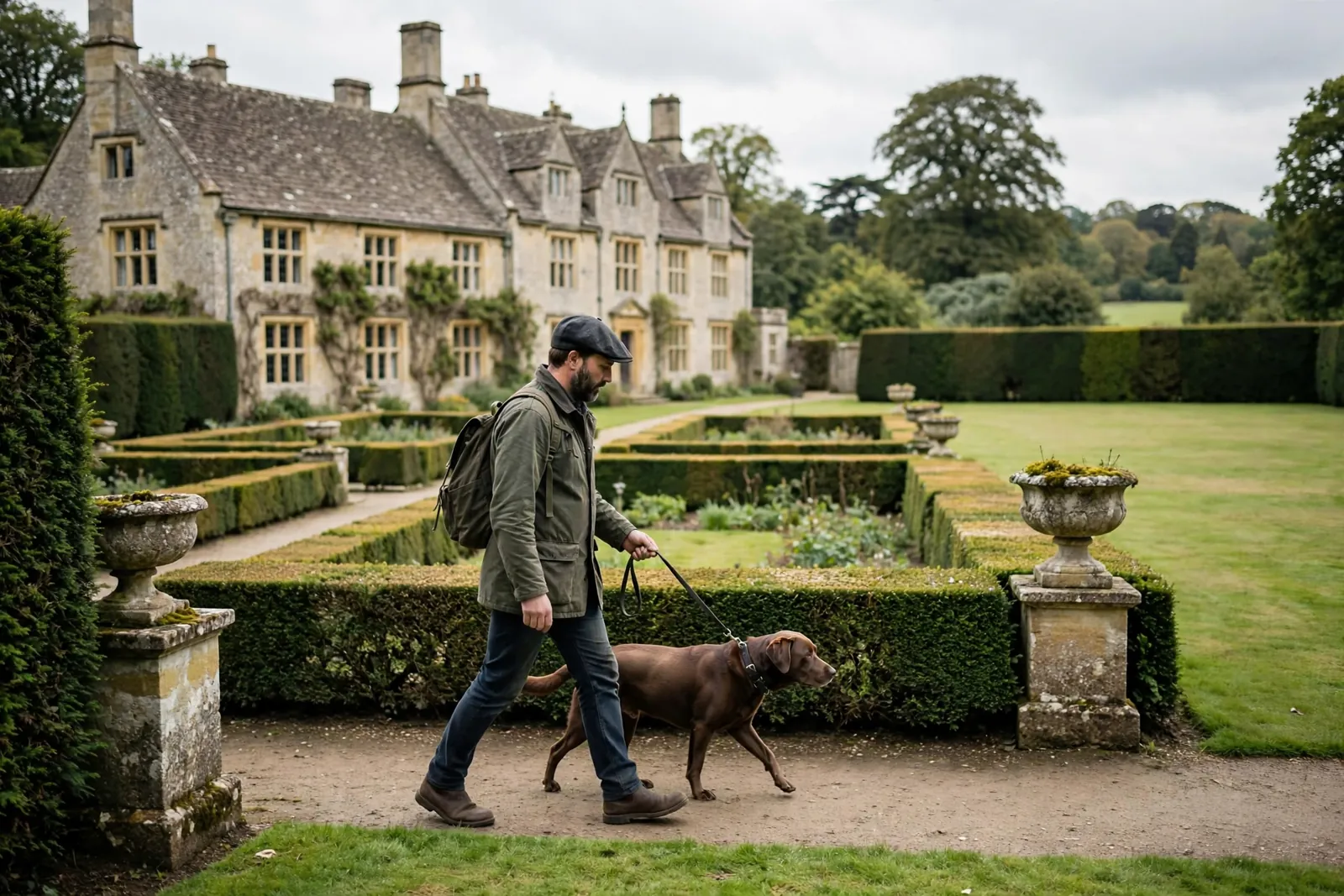
Kelso, where the Teviot joins the Tweed, is the elegant base: a cobbled square said to be among Scotland's finest, Georgian streets, the abbey fragment at its heart and Floors Castle and its grounds nearby. Kelso suits travellers combining a Borders stay with day trips south into Northumberland, because the border is minutes away. Its riverside walking is excellent for lower-energy days, and the town has a strong food offering for its size. A note on Floors and on estate grounds generally: policies for dogs in designed landscapes, gardens and parkland vary — often grounds on a lead are welcome while formal gardens, play areas and interiors are not — so check the latest official guidance for the specific property before building a day around it. Our dog-friendly National Trust guide explains how to read grounds-versus-gardens policies, and the same habit of checking the paw rating and the map before you set off will serve you well on estate visits on both sides of the border.
Whichever base you choose, apply the same booking discipline. Confirm in writing that your dog — its size, breed and number — is accepted in the unit you have booked. Ask about stairs if your dog cannot manage them, about secure outdoor space using the tests in our secure-garden thinking, and about the nearest vet and out-of-hours arrangement. Save that vet number in your phone on arrival day, not on the day you need it. Small towns reward early planning: the best dog-friendly tables and rooms go first, especially around festivals, race meetings at Kelso and autumn colour season.
Livestock, access and game seasons: the rules that keep the welcome
Scotland's outdoor access rights are generous — among the most generous in Europe — and they come with responsibilities set out in the Scottish Outdoor Access Code. For dog owners the code's message is clear and non-negotiable: keep your dog under proper control, keep it on a short lead or close at heel in fields with livestock, never let it worry sheep or cattle, and take particular care during lambing. Farmers are entitled to protect their animals, and a dog chasing sheep can legally be stopped by force. This is not bureaucratic fine print; sheep worrying is a real and recurring cause of animal deaths, farmer distress and dogs being shot. One incident also damages access and welcome for every dog owner who follows.
Lambing, roughly March to May in the Borders though dates vary by farm and altitude, is the most sensitive season. Ewes in late pregnancy can abort from the stress of being chased, and newborn lambs are acutely vulnerable. In spring, assume every field of sheep deserves a wide berth: dog on a short lead before you enter the field, not after the dog has noticed the flock. If a route allows you to avoid a lambing field altogether, take the alternative. Cattle deserve equal respect, particularly cows with calves, which can be genuinely dangerous to a person holding a dog. If cattle approach, let the dog off the lead and get yourself to safety — trying to protect a dog by holding on has caused serious injuries — and rejoin your dog once clear. Signs asking you to use another route around cattle should always be obeyed.
Game seasons add a second calendar. Grouse shooting traditionally opens on 12 August — the so-called Glorious Twelfth — and runs into December, while pheasant shooting generally runs from October to the end of January or early February, with partridge from September. Exact dates and local arrangements vary, and estates may display notices or request that walkers keep to paths, keep dogs on leads or avoid particular moors on shoot days. You are unlikely to stumble unknowingly into the middle of a driven shoot — beaters, vehicles and signage usually make it obvious — but the correct response if you encounter one is simple: stop, put the dog on a lead, make yourself visible, follow any instructions from estate staff, and reroute or wait. Planning autumn and winter hill walks with these seasons in mind, and checking estate information before you travel, avoids the problem entirely on most days. Deer stalking in season can also affect hill access in parts of Scotland, so the same habit — check before you go — applies.
Ground-nesting birds complete the seasonal picture. On moorland and rough grazing, birds such as curlew, lapwing and skylark nest on the ground in spring and early summer, invisible until you are almost upon them. Keeping dogs on a lead or very close on moorland paths from roughly April to July protects nests that a single bounding dog can destroy in seconds. None of these seasonal rules diminish a Borders trip. They simply mean the region rewards a visitor who reads the landscape's calendar — lambs in spring, birds in early summer, shooting in autumn and winter — and plans walks accordingly. That attentiveness, more than any single viewpoint, is what makes you and your dog welcome back.
Crossing into England: the easiest border day trip in Britain
One of the Borders' distinctive pleasures is how casually international a day can become. The border with England is an open line across hills and rivers — marked in places by stones, signs and the occasional lay-by viewpoint, but with no checks, no paperwork and no change in what you need to carry for your dog. Travelling between Scotland and England with a dog requires no documentation beyond what you would normally have: lead, waste bags, water, and ideally your vet's details and microchip information accessible on your phone. There is no quarantine, no pet passport requirement for internal UK travel and no border post at which anyone will ask. You may cross several times in a single walk without noticing.
What does change, subtly, is the legal and access framework. In Scotland, access is governed by the statutory rights and responsibilities described above. In England, public access generally depends on public rights of way, open access land and permissive arrangements, so a path that feels continuous on the ground may have a different status on either side of the line. The practical response is not to carry a law textbook but to follow local signs, stay on clear paths in England unless you are sure of open access land, and keep the same livestock discipline on both sides — English farmers' sheep are no less vulnerable than Scottish ones. Site rules also remain site-specific: an abbey or castle in England may be managed by a different heritage body with a different dog policy, so check each property's latest official guidance individually rather than assuming the Borders pattern repeats.
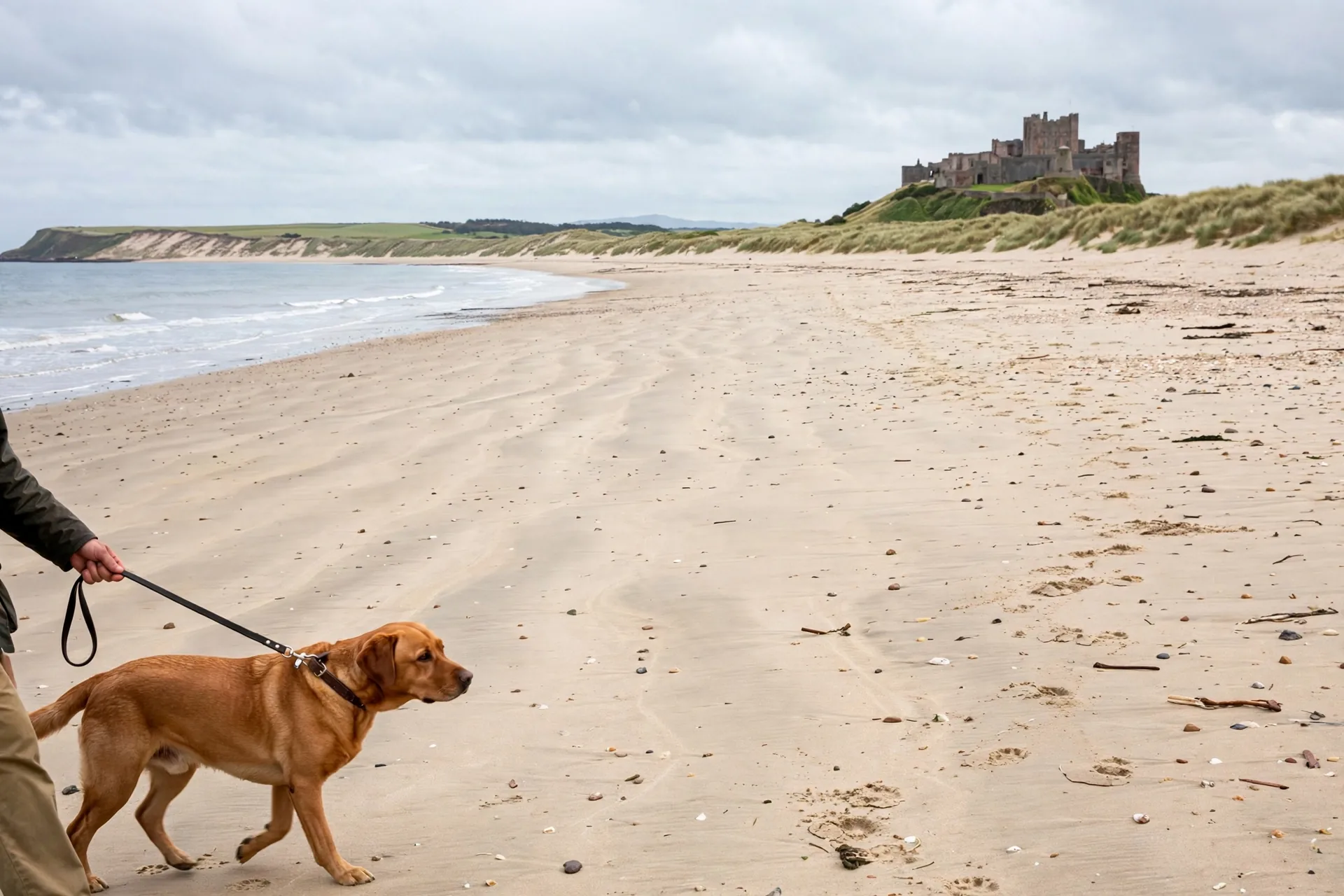
As a destination, the obvious pairing is Northumberland. From Kelso or Jedburgh, the Cheviot foothills, the market towns of Wooler and Rothbury, and eventually the great castles and beaches of the Northumberland coast are all within day-trip range. Our Northumberland dog guide covers that county in the depth it deserves, from beach rules to castle grounds, and planning the two regions together turns a long weekend into a genuinely rich week: abbeys and the Tweed on the Scottish side, castles and vast beaches on the English side, and a border you cross as easily as a field gate. Build in one practical caution — mobile signal in the border hills is patchy on both sides, so download maps, screenshot bookings and tell someone your plan before a remote walk, whichever nation you are in.
Logistics for a cross-border stay are otherwise refreshingly simple. Fuel, supermarkets and vets exist on both sides; your money, driving licence and insurance need no adjustment; and dog-friendly accommodation in a Borders base lets you day-trip south without repacking. If you are travelling further — using the Borders as a stop between England and the Highlands or the Scottish islands — the region also functions as the humane pause that prevents a single marathon drive. A night in Peebles or Melrose, a real walk, a good meal and a settled dog will do more for the rest of your journey than an hour saved on the road ever will. That, in the end, is the whole argument of this guide in miniature.
A practical Borders checklist before you set off
Pull the threads together into a short routine and a Borders trip becomes straightforward to run. A week or a day before you travel, confirm each abbey or property visit against the latest official guidance, note which parts are grounds-only for dogs, and plan a turn-taking arrangement for any interior you care about. Check riverside and long-distance sections for closures, diversions and flooding notices. If your trip falls in lambing, bird-nesting or shooting season, choose routes with that calendar in mind and pack a short fixed lead as well as your usual walking lead.
Pack for a working, changeable landscape: waterproofs for you, a drying coat or towel for the dog, spare waste bags in every pocket and bag, a portable water bowl and more water than the distance seems to require, paw balm or boots if you plan rough moorland stages, and a lifting harness if stiles feature on your chosen route. Save the number of a vet near your base and the out-of-hours provider. Photograph your dog's vaccination and microchip details to your phone. None of this is glamorous, and all of it is the difference between a small problem and a ruined day when you are an hour from the car.
On the day, work in the rhythm the region invites. Walk in the morning when abbey grounds and riverside paths are quietest, eat in a town where the dog can settle under the table or on a terrace, and keep an easier afternoon option in reserve for the day the weather turns or an older dog tells you it has done enough. Keep drives short by basing yourself well rather than relocating every night. Leave every gate as you found it, every path free of waste and every angler, farmer and estate worker glad you passed. Do that, and the Borders stop being the place you drove through. They become the place you plan around — and the place your dog, given the choice between a riverside path by a ruined abbey and a service-station verge, would unhesitatingly choose again.
More Borders towns, each with its own dog-friendly guide
If the Borders have won you over, the neighbouring towns each deserve a day of their own. Our town-by-town guides cover Jedburgh with a Dog, Hawick with a Dog, Selkirk with a Dog, Galashiels with a Dog, Innerleithen with a Dog, Eyemouth with a Dog, with riverside routes, abbey grounds, parking and cafe notes for each place, so you can string two or three towns into one unhurried trip.
Practical questions
Before you go
Can dogs go inside the Border abbeys?
Dogs on a short lead are generally welcome in the outdoor grounds of the ruined Border abbeys, but access to roofed interiors, visitor centres, shops and exhibitions varies by site and can change. Assume grounds-only access until you have checked the latest official guidance for Melrose, Dryburgh, Jedburgh or Kelso before you travel.
Do dogs need to be on a lead along the River Tweed?
Keep your dog on a lead or under close control near anglers, swans, livestock and busy town sections, and on a lead wherever signs require it. The Tweed is a working salmon river, so never let a dog swim through fishing pools, disturb anglers or chase water birds, and check local guidance before you visit.
Can I walk St Cuthbert's Way or the Southern Upland Way with a dog?
Yes, both long-distance routes can be walked with a fit dog in sections, but you will meet livestock, stiles, ladders and long stretches without water or exits. Plan shorter stages, carry water and a lifting harness, keep your dog on a lead around stock, and check the latest official guidance on diversions before setting out.
When are livestock and game shooting seasons in the Borders?
Lambing is most sensitive in spring, roughly March to May, when dogs should be on a short lead near ewes and lambs. Grouse shooting traditionally runs from 12 August and pheasant shooting from October into winter, so expect possible access advice on moors and estates and check local notices before you go.
Is it easy to cross into England with a dog from the Borders?
Yes. There is no border check for dogs travelling between Scotland and England, and towns such as Kelso and Jedburgh make natural bases for day trips into Northumberland. Keep normal lead, livestock and site rules in mind on both sides, carry water and waste bags, and check parking and access guidance for each stop.